



















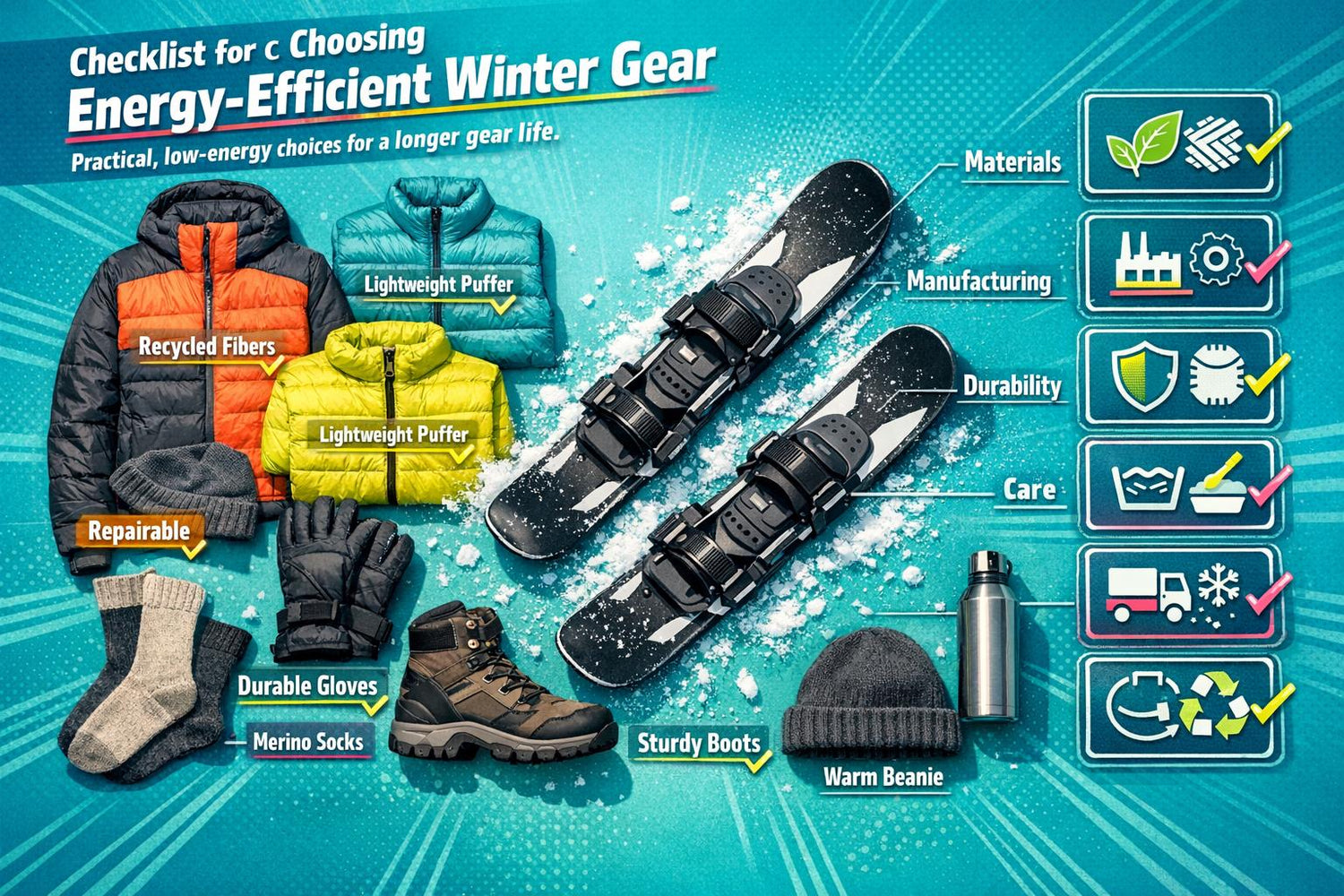
When it comes to winter gear, staying warm doesn’t have to come at the planet’s expense. The key? Choosing gear designed to reduce energy use throughout its entire life - from production to disposal. Here’s what to look for:
- Eco-Friendly Materials: Opt for items made with recycled or responsibly sourced materials like recycled polyester or repurposed components.
- Efficient Manufacturing: Check for certifications like bluesign® or Fair Wear, and brands using renewable energy in their production.
- Durability: Long-lasting gear with replaceable parts saves energy and resources over time.
- Layering and Care: Use a three-layer system for warmth and energy savings. Wash in cold water and air dry to reduce energy use by up to 90%.
- Compact and Lightweight Options: Smaller gear like Snowfeet* mini skis cuts material use, shipping energy, and storage needs.
- Recycling Programs: Look for brands with take-back or recycling initiatives to reduce waste.
Smart choices mean you’ll stay warm, save energy, and reduce your carbon footprint - all while enjoying the slopes. Let’s dig into the details!
Checklist for Materials and Manufacturing
When choosing gear, the materials and manufacturing methods matter a lot. They directly impact energy consumption and resource use, so it's worth paying attention to these details.
Material Sourcing
Start by checking if the gear uses recycled or responsibly sourced materials. A great example is the "Project 83 Eco" ski from Extrem Ski Co, created in partnership with Skistar for the 2025/26 winter season. These skis incorporate 70% recycled ABS, 50% recycled bases and topsheets, and 20% recycled steel edges. With this design, their carbon footprint is kept under 28.8 kg (63.5 lb) CO₂ per pair.
Another standout is Jones Snowboards' "Re-Up Tech", which repurposes discarded boards into structural reinforcements. This process replaces virgin carbon fiber and recovers up to 95% of materials.
Once you've ensured the materials are sustainable, take a closer look at how the product is made. A low-energy manufacturing process is just as important.
Energy Use in Manufacturing
Certifications can make life easier when evaluating manufacturing practices. For example, the bluesign® label indicates that a product was made with cleaner methods, reducing energy, water, and chemical use. Fair Wear is another certification worth noting, though it focuses more on ethical labor practices.
You can also check the brand's website for specifics. Extrem Ski Co, for instance, powers its Åre facility with 100% renewable hydroelectric energy. Since 2020, they've even implemented a heat recovery system to redirect excess heat from machinery into the local district heating grid. If a brand can't clearly explain its energy sources or production methods, that's often a warning sign.
After evaluating materials and production, shift your focus to durability - it plays a big role in reducing energy demand over time.
Durability and Repairability
Durability is key to energy efficiency. Gear that lasts longer means fewer replacements, saving both energy and resources. Look for features like reinforced high-wear areas, replaceable parts (like zippers or straps), and materials with a reputation for lasting performance.
For example, fiberglass-reinforced polyamide is an excellent material for hard gear like skis and snow equipment. Snowfeet* highlights that its PRO model, made from this material, outlasts traditional woodcore models.
Durability also ties into repairability. Products designed with replaceable components or backed by repair services can extend their lifespan even further. When comparing options, consider whether the brand offers easy access to replacement parts or repair programs. These factors can make a big difference in the long-term value of your gear.
Checklist for Design and Use-Phase Efficiency
Once you’ve assessed the materials and manufacturing, it’s time to think about how your gear performs in everyday use. This step is often overlooked, but it can lead to significant energy savings. According to a UK Environment Agency life-cycle study, up to 75% of a garment's climate impact comes from washing and drying.
Thermal Performance and Layering
After addressing production sustainability, focus on how the design of your gear can help save energy during use.
A three-layer system - moisture-wicking base, insulating mid-layer, and windproof shell - is much more energy-efficient than a single bulky jacket. Why? It lets you adjust your warmth levels to reduce sweating (and the need for frequent laundering) while staying comfortable at lower indoor temperatures. This is a big deal since heating accounts for almost 29% of residential energy use.
When comparing outerwear, look for features like pit zips, adjustable cuffs, and vented pockets. These allow you to release excess heat during intense activities without removing layers. Plus, fabrics like merino wool, which resist odors, can be worn multiple times before washing - cutting down on laundry energy use even more.
Care and Maintenance
Simple care habits can make a big difference in energy use. Washing in cold water and air drying can slash energy consumption by up to 90% compared to hot washing and machine drying. Did you know that machine drying can use 3–5 times more energy per load than washing? Choosing gear labeled for cold wash and line dry (or tumble dry low) makes these practices easier.
For snow gear, pick bases that work with low-temperature or fluorine-free waxes. Traditional hot waxing, done at 248–284°F, not only uses a lot of energy but also releases harmful compounds. Newer eco-labeled waxes are a better alternative. For example, Snowfeet* mini skis have a smaller base area, meaning waxing requires less time and energy compared to full-length skis.
"We recommend waxing the base regularly to make Snowfeet* and Skiskates even faster and prevent snow from sticking to the base." - Snowfeet Team
Mobility and Transport
Traveling to ski areas often generates 50–75% of a trip’s CO₂ emissions. Roof racks and external ski carriers increase aerodynamic drag, and every extra 100 lbs of weight can reduce fuel economy by about 1–2%.
Compact gear, like Snowfeet* mini skis, offers a smart solution. Unlike traditional skis that need roof racks and add significant weight, Snowfeet* mini skis fit into a backpack. This eliminates the need for bulky carriers, reduces fuel consumption, and makes carpooling, buses, or trains much more practical. Ranging from just 17.3 to 39 inches long, they’re a lightweight and efficient option. As Snowfeet* aptly puts it:
"No more hauling heavy lumber around. These fit into a backpack, making them perfect for travel or combining a winter hike with a fun ride down."
Compact Gear vs. Full-Size Winter Equipment
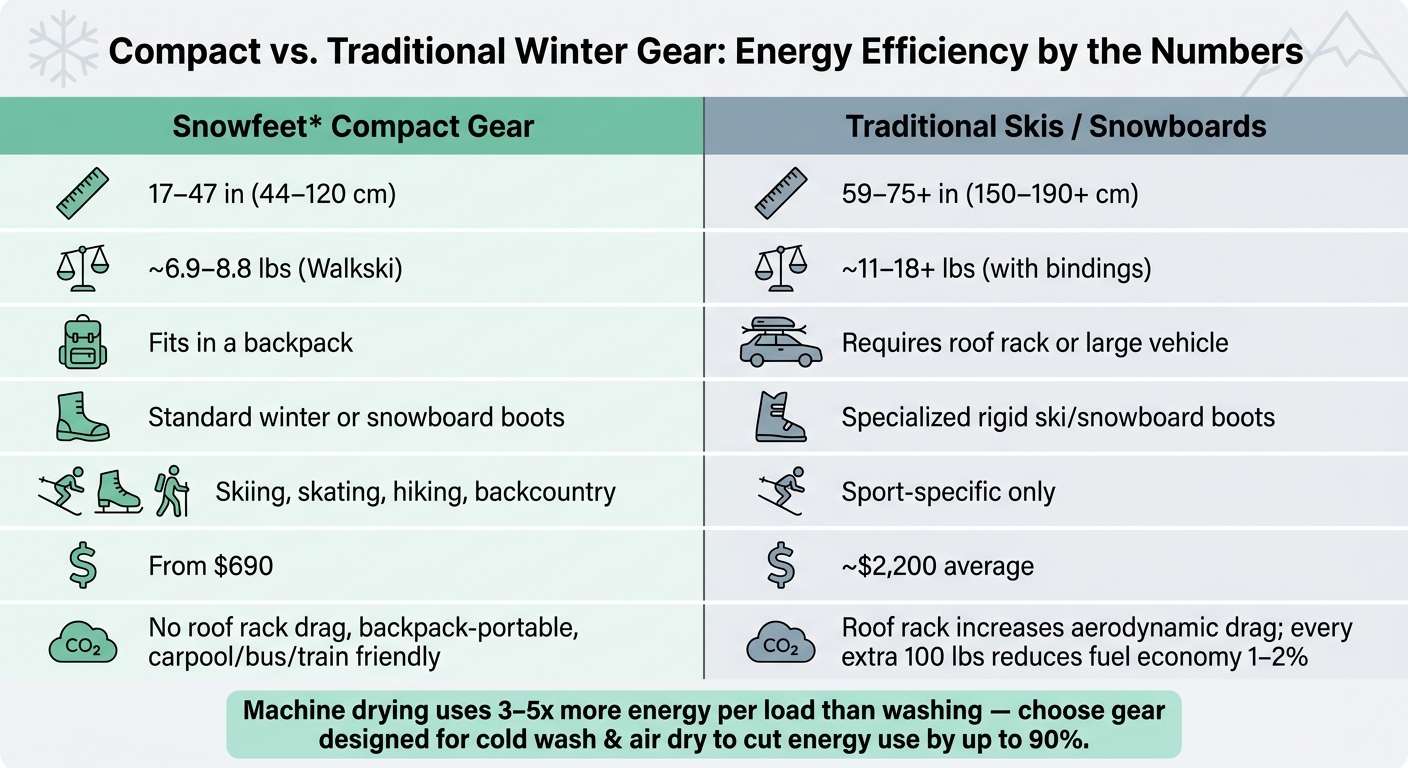
Compact vs. Traditional Winter Gear: Energy Efficiency by the Numbers
Compact winter gear offers a modern alternative to traditional equipment by cutting down on materials, production energy, shipping costs, and storage space - all while simplifying your gear setup.
Material and Weight Efficiency
Let’s talk numbers. Traditional alpine skis are typically 59–75+ inches long and weigh between 11–18+ lbs (bindings included). In comparison, Snowfeet* models range from 17 to 47 inches, with the Walkski weighing in at just 6.9 lbs. That’s a significant drop in material usage, which translates to less energy spent on everything from raw material extraction to production and shipping.
What’s more, Snowfeet* gear features universal bindings that work with standard winter or snowboard boots. This eliminates the need for energy-hungry production of specialized ski boots.
"Short skis are lighter, more fun, and easier to control - long skis are heavier and less playful." - Snowfeet*
This lightweight design isn’t just practical - it also makes transportation and storage a breeze.
Transport and Storage
Compact Snowfeet* gear is small enough to fit in a standard backpack. That means no more roof racks, which not only saves you hassle but also reduces transport-related emissions. And when it comes to home storage, you won’t need to clear out half your garage. Plus, since Snowfeet* gear is made locally in the Czech Republic, long-distance shipping emissions are kept to a minimum.
But the benefits don’t stop there. These compact designs also pack in versatility.
Multi-Use Potential
Here’s where compact gear really shines. Take the Snowfeet* Walkski, for example. Priced between $690 and $750, it combines four functions - walking, skiing, and two climbing modes - into a single 100 cm unit. Compare that to traditional backcountry gear, which can cost around $2,200 for separate items. Fewer products mean less energy used for manufacturing, packaging, and shipping.
By opting for compact, multifunctional gear like Snowfeet*, you’re not just saving space and money - you’re also cutting down on energy use from start to finish.
| Feature | Snowfeet* Compact Gear | Traditional Skis / Snowboards |
|---|---|---|
| Length | 17–47 in (44–120 cm) | 59–75+ in (150–190+ cm) |
| Weight (per pair) | ~6.9–8.8 lbs (Walkski) | ~11–18+ lbs (with bindings) |
| Storage | Fits in a backpack | Requires roof racks or large vehicle |
| Boot Compatibility | Standard winter or snowboard boots | Specialized rigid ski/snowboard boots |
| Multi-use | Skiing, skating, hiking, backcountry | Sport-specific only |
| Cost (Backcountry) | From $690 | ~$2,200 average |
sbb-itb-17ade95
End-of-Life and Sustainability Programs
Managing the end-of-life phase of winter gear is a big deal when it comes to reducing waste and emissions. In Europe alone, 6.5 million pairs of ski boots are tossed every year. That adds up to 9 million kilograms of waste and 16,000 tons of CO2 emissions annually. It’s clear: we need smarter ways to handle gear after it’s no longer usable.
Recycling and Take-Back Programs
Some brands are stepping up with programs to tackle the waste problem head-on. Take Tecnica Group, for example. Their Recycle Your Boots (RYB) program, available at over 800 SKISET drop-off locations, has recycled more than 28,000 pairs of boots as of April 2025. This effort has prevented over 330 tons of CO2 emissions. By disassembling old boots and reusing materials in new products, they’ve managed to slash the carbon footprint per boot by 53% compared to traditional manufacturing methods.
Rossignol has also made waves with its Essential Ski, which boasts a 77% recyclability rate - a huge leap from the industry average of about 10%. David Bouvier, Senior Marketing Director at Rossignol, sums it up perfectly:
"Improving end-of-life management for a product means better design right from the start. We're not just designing a ski, we're redesigning the way the industry thinks about sustainability."
Salomon is taking a tech-driven route with its INDEX.02 shoes. A QR code on the shoe’s tongue lets users scan and send them back for recycling. The materials are then repurposed into new alpine ski boots.
Secondhand and Upcycling Potential
Secondhand markets and upcycling are also playing a role in keeping gear out of landfills. Take Snowfeet* gear, for example. Their universal bindings not only boost the product’s lifespan but also make it more appealing for resale. Resale is one of the easiest ways to extend a product’s life, and it’s gaining traction. In 2024, U.S.-based Geartrade processed over 50,000 pounds of used winter gear - a whopping 80% increase from the previous year. By teaming up with brands like DPS Skis and Flylow, they’ve created a system where sellers can earn brand credit for their old gear.
Patagonia’s Worn Wear program is another standout. It accepts snow gear for repair or resale, ensuring fewer items end up in the trash. Products with universal or adjustable designs, like Snowfeet* gear, naturally do better in the secondhand market. Their universal bindings fit standard U.S. sizes 6–13 (EU 38–47), making them easier to resell, share, or pass along compared to traditional skis that require specialized boots.
Conclusion: How to Choose Energy-Efficient Winter Gear
Picking energy-efficient winter gear comes down to a few key factors: materials that are eco-friendly, construction that lasts, production methods with minimal environmental impact, and thoughtful disposal options. By focusing on these aspects, you can ensure your gear is both effective and kinder to the planet.
Look for gear made with certified sustainable materials, like wood cores or fiberglass-reinforced builds designed for durability. Choosing locally made products, such as Snowfeet* from the Czech Republic, also helps cut down on transport emissions. High-quality options like Snowfeet* are crafted to balance durability and energy efficiency, making them a smarter choice compared to cheaper, less reliable alternatives.
When it comes to design, think about efficiency and convenience. For instance, Snowfeet* models, ranging from 38 to 120 cm, are compact enough to fit in a backpack and compatible with standard winter footwear. This portability makes them a practical and energy-efficient alternative to traditional, bulkier gear. As Snowfeet* puts it:
"Shorter skis provide more fun and freedom of movement, they are playful, responsive, lightweight on your feet, easier to stop, and for many skiers easier to ride as opposed to cumbersome long skis."
Lastly, consider the long-term value of your gear. Equipment with universal bindings can be used longer and retain its worth over time. Regular care, like waxing the base periodically, can also extend its lifespan. Compact, versatile, and locally made gear like Snowfeet* offers a durable setup that's built to last while supporting responsible disposal practices when the time comes.
FAQs
How can I tell if a winter gear brand’s sustainability claims are legit?
To evaluate a brand’s sustainability efforts, pay attention to specifics like the use of certified sustainable materials, sturdy construction, and openness about production methods. For example, brands such as Snowfeet* set themselves apart by using top-notch materials, eco-conscious packaging, and working with small, family-run factories to minimize their environmental footprint. Additionally, products that are long-lasting, repairable, and versatile often reflect a true commitment to sustainability over the long haul.
What are the easiest ways to cut energy use when caring for winter clothing?
To save energy on the slopes, stick to a smart three-layer clothing system: a moisture-wicking base layer, an insulating mid-layer, and a breathable outer shell. This setup helps prevent overheating and cuts down on constant wardrobe adjustments.
For gear, consider lightweight options like Snowfeet* skiskates or skiblades. These weigh 30–50% less than standard skis, which means less strain on your muscles and reduced fatigue. The result? You can move more efficiently and enjoy longer days out in the snow.
Are Snowfeet* mini skis a greener choice than traditional long skis?
Snowfeet* mini skis offer a greener and more efficient alternative to traditional long skis. Weighing 30–50% less than standard ski gear, they cut down on energy use with every turn. Their lightweight build also means you’ll use less effort, letting you enjoy longer sessions on the slopes. On top of that, their compact size fits neatly into a standard 30L backpack - no need for roof racks or large vehicles. This makes them a smart, eco-conscious choice compared to bulkier equipment.












Leave a comment
This site is protected by hCaptcha and the hCaptcha Privacy Policy and Terms of Service apply.