







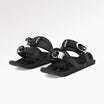












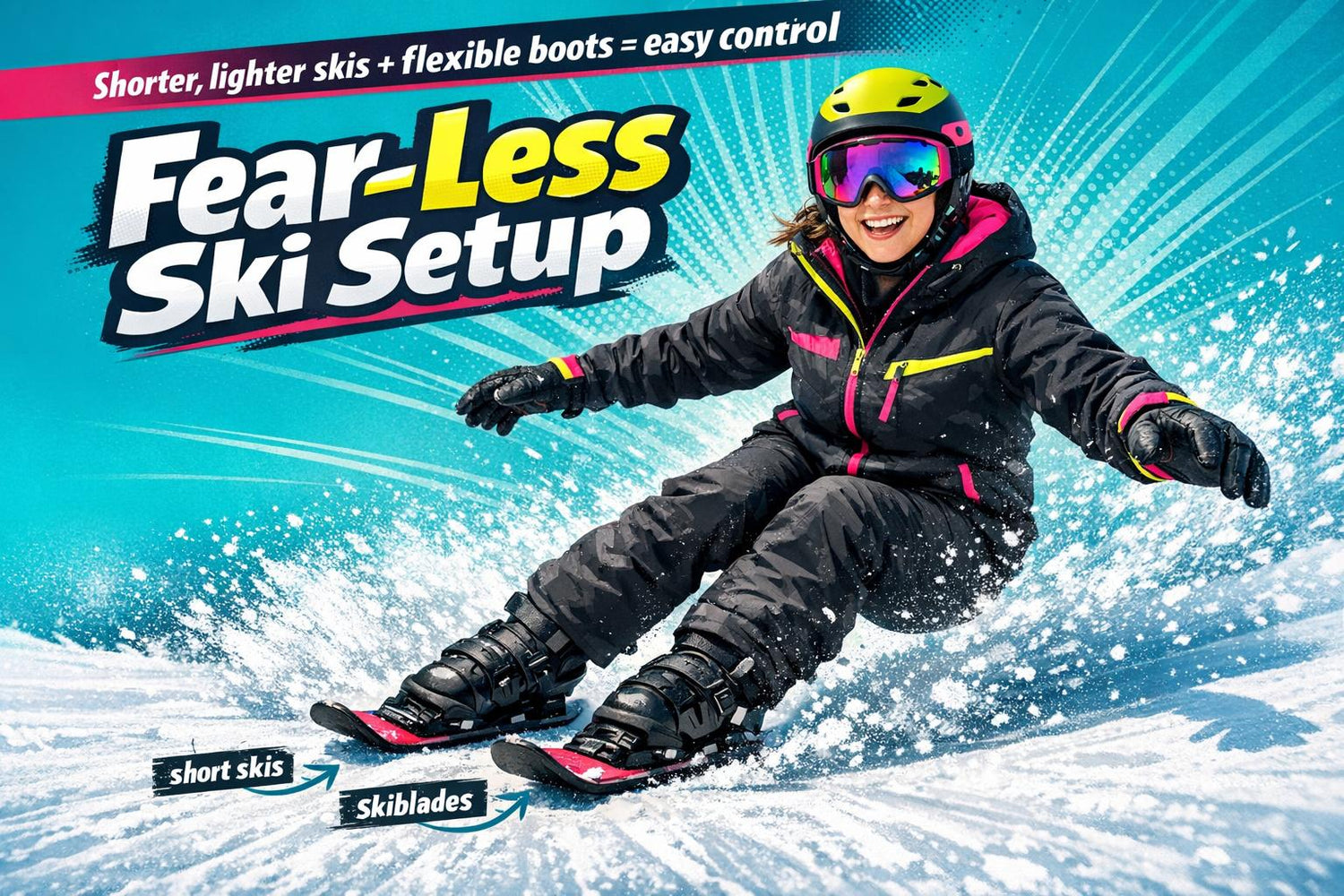
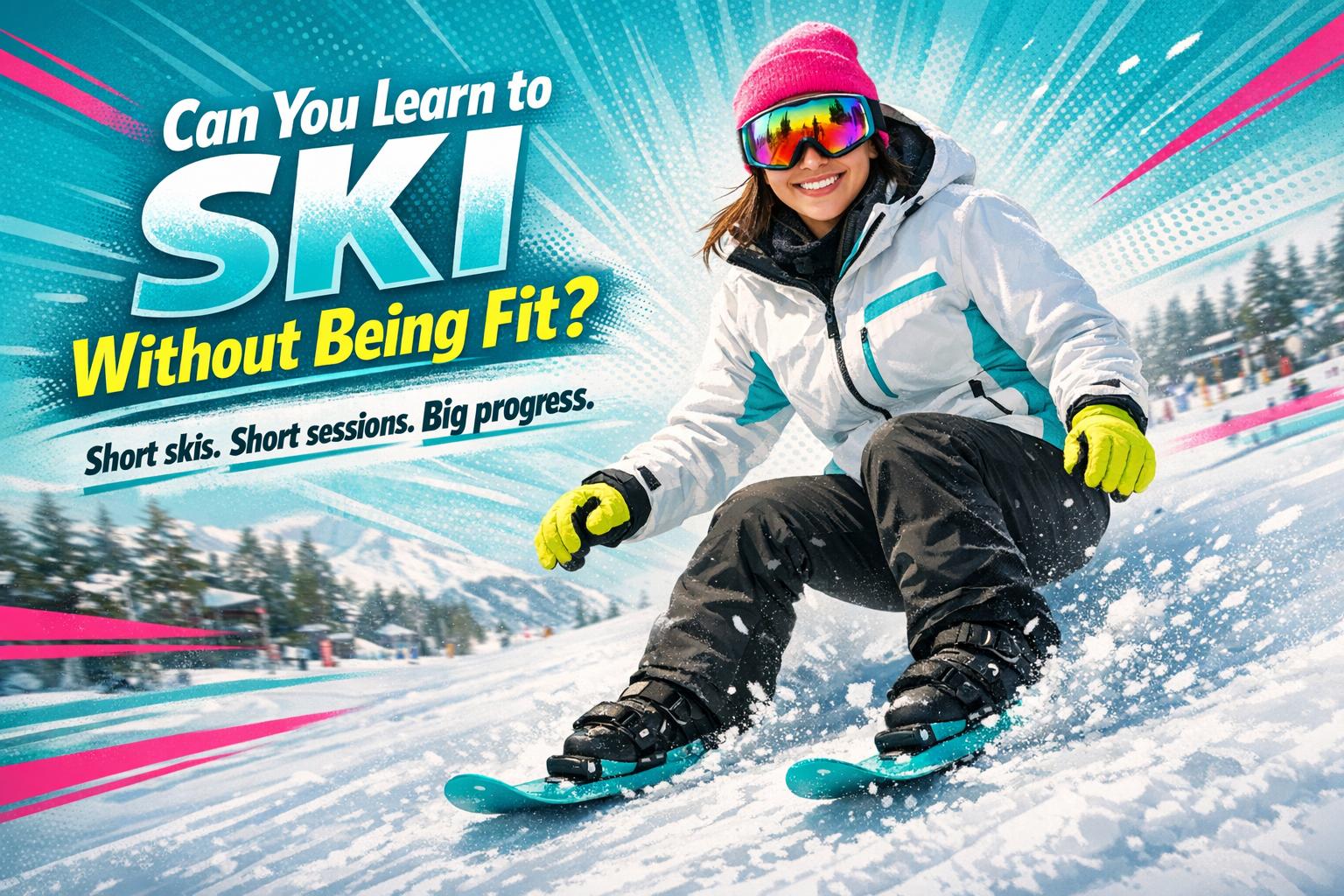
If skiing makes you nervous, you’re not alone. Falling is a big concern for many beginners, but the right gear can make all the difference. Shorter, lighter skis - like Snowfeet* Skiskates and Skiblades - are easier to control, turn, and stop, helping you feel more confident on the slopes. These compact options reduce the risk of catching edges or crossing tips, making skiing less intimidating and more fun.
Key Takeaways:
- Why shorter skis work: They’re more forgiving, respond quicker to movements, and help you stay balanced.
- Snowfeet* options: Skiskates (17 inches) for maximum control, or Skiblades (26–47 inches) for a mix of stability and agility.
- Lightweight design: Reduces fatigue, so you stay in control longer.
- Boot compatibility: Works with snowboard or ski boots, giving you flexibility and comfort.
If you’re new to skiing or coming back after a break, starting with shorter skis tailored for beginners can help you focus on enjoying the ride instead of worrying about falling.
Are Short Skis Better for Beginners?
Understanding the Fear of Falling and How Equipment Can Help
Feeling nervous on the slopes? You're not alone. Whether it's your first time skiing or you're returning after a long break, that flutter of anxiety at the top of a hill is completely normal. It’s just your brain reacting to a new and unfamiliar challenge. The good news? The right equipment can make a world of difference, turning fear into confidence.
Why Skiing Can Be Intimidating for Beginners
For most first-timers, the fear boils down to three things: losing control, crashing into someone, and getting hurt. Think about it - you’re standing on slippery snow, strapped to unfamiliar gear, on a slope that’s slanted downhill. It’s a lot to take in! Traditional long skis, which usually measure between 63 and 71 inches, require precise technique. That can make them feel overwhelming for beginners. On the other hand, shorter skis offer a more forgiving, manageable option.
And let’s face it, the fear isn’t unfounded. Statistics show that knee injuries make up 27–41% of all ski-related injuries. Interestingly, most beginner falls happen on gentle slopes at low speeds. These aren’t from daredevil stunts but from simple things like catching an edge or losing balance. This highlights how critical it is to choose the right equipment, even on easy runs. For beginners, shorter skis are often the smarter choice.
How Shorter Skis Improve Balance and Control
Shorter skis are a game-changer for beginners. With less length in front and behind your boots, they respond instantly to small weight shifts, making turns easier and more intuitive. From a biomechanics perspective, shorter skis bring the contact area closer to your body’s center of mass. This means small adjustments lead to smooth, predictable movements rather than sudden edge catches or unexpected bursts of speed. That’s a huge confidence booster for anyone feeling unsure on the slopes.
Snowfeet* products take these benefits to the next level. Their shorter ski designs are all about control and responsiveness. As Snowfeet* explains:
"Shorter skis give freedom of movement and carving even at lower speeds, so you can enjoy the ride at your own pace."
This is exactly what nervous skiers need. Snowfeet* Skiskates, measuring just 17 inches, and Skiblades, ranging from 26 to 47 inches, are designed to keep things simple. No crossed tips, no frustrating delays - just smooth, quick turns that help you stay in control. One user, Brad Tolin, summed it up perfectly:
"These ski blades are a blast to use. Super easy to control, quick to turn, and way more forgiving than traditional skis."
Here’s a quick comparison of how shorter skis stack up against traditional long skis for cautious skiers:
| Aspect | Traditional Long Skis (63–71 in.) | Short Skis / Skiblades (26–47 in.) |
|---|---|---|
| Turning effort | Requires speed and pressure; harder for beginners | Turns easily at low speeds with minimal effort |
| Edge catching | More likely on small mistakes | Less abrupt and more forgiving |
| Perceived control | Can feel "runaway" for nervous skiers | Compact and responsive underfoot |
| Learning curve | Steeper; more frustrating early falls | Gentler; quicker sense of progress |
With equipment that reacts predictably and supports your movements, you’ll find your fear starting to melt away. That confidence boost? It happens quicker than you might expect.
Key Features to Look for in a Confidence-First Ski Setup
Not all ski gear is built the same, especially when your main goal is staying upright and feeling in control. If you're a nervous skier, three things matter most: ski length, weight, and binding compatibility. Nail these, and the slopes will feel a whole lot less intimidating.
Short Length for Easier Turns
Short skis are a game-changer when it comes to control. Why? They're easier to steer. Traditional skis, which usually range from 59 to 71 inches, can feel bulky and overwhelming for beginners. In contrast, Snowfeet* Skiskates, at just 17 inches, are incredibly compact. They pivot effortlessly, making tight turns at low speeds feel natural. If you're looking for options, Skiblades offer a range of lengths:
- 26 inches for maximum agility
- 39 inches for a balance of stability and easy turning
- 47 inches for those who want a bit more length without the heft of traditional skis
Shorter skis also solve two major beginner headaches: crossed tips and catching edges. With less length to manage, the risk of snagging is significantly reduced, which means fewer surprise falls. Snowfeet* designs these skis to help you feel more in control and less anxious.
Another bonus? Short skis require less energy to maneuver, so you'll stay fresher on the slopes.
Lightweight Build to Reduce Fatigue
Heavy gear can wear you down faster than you'd think, and tired legs mean you're more likely to lose balance. Keeping that slightly bent-knee stance - the key to staying upright - becomes tough when your muscles are burning. Snowfeet* gear is designed with a lightweight build, which helps minimize fatigue.
This feature shines in two common scenarios for beginners: toward the end of the day, when your energy is flagging, and in flat or crowded areas near lifts, where you're shuffling or stepping more than skiing. Lighter skis make these moments much easier to handle. You'll move more fluidly, stay relaxed, and avoid locking your knees - a common mistake that often leads to falls.
Pairing a lightweight build with the right ski length creates a setup that feels intuitive and easy to control, setting the stage for secure and flexible binding options.
Bindings and Footwear Compatibility
Bindings are just as important as the skis themselves. A secure fit enhances stability, while poorly fitting bindings can make your edges feel unpredictable - eroding your confidence quickly. Snowfeet* bindings use a ratchet-strap system that locks your boots snugly in place. Adjustments are tool-free and simple, and each product comes with safety leashes to keep your gear attached in case of a fall.
What really stands out is Snowfeet*'s dual boot compatibility. You can use Skiskates and Skiblades with either snowboard boots (US sizes 6–14.5) or ski boots (US sizes 4.5–14.5). For beginners, snowboard boots are often the better choice - they’re softer, easier to walk in, and less intimidating than stiff ski boots. One verified user shared their experience:
"I got the snowboard binding version, so extremely comfortable with snowboard boots. Not as fast as regular skis, which might be a good thing as you get older." - heyjerz, Verified User
As you gain confidence and want more precise edge control, you can switch to ski boots without needing to invest in new gear. This flexibility allows you to grow into your setup at your own pace.
| Boot Type | Best For | Ankle Support | Comfort Level |
|---|---|---|---|
| Winter shoes | First-time, casual use on gentle terrain | Low | Very high |
| Snowboard boots | Beginners wanting comfort + ankle stability | Medium | High |
| Ski boots | Skiers ready for more precise edge control | High | Moderate |
sbb-itb-17ade95
Choosing the Right Snowfeet* Product for Your Skill Level
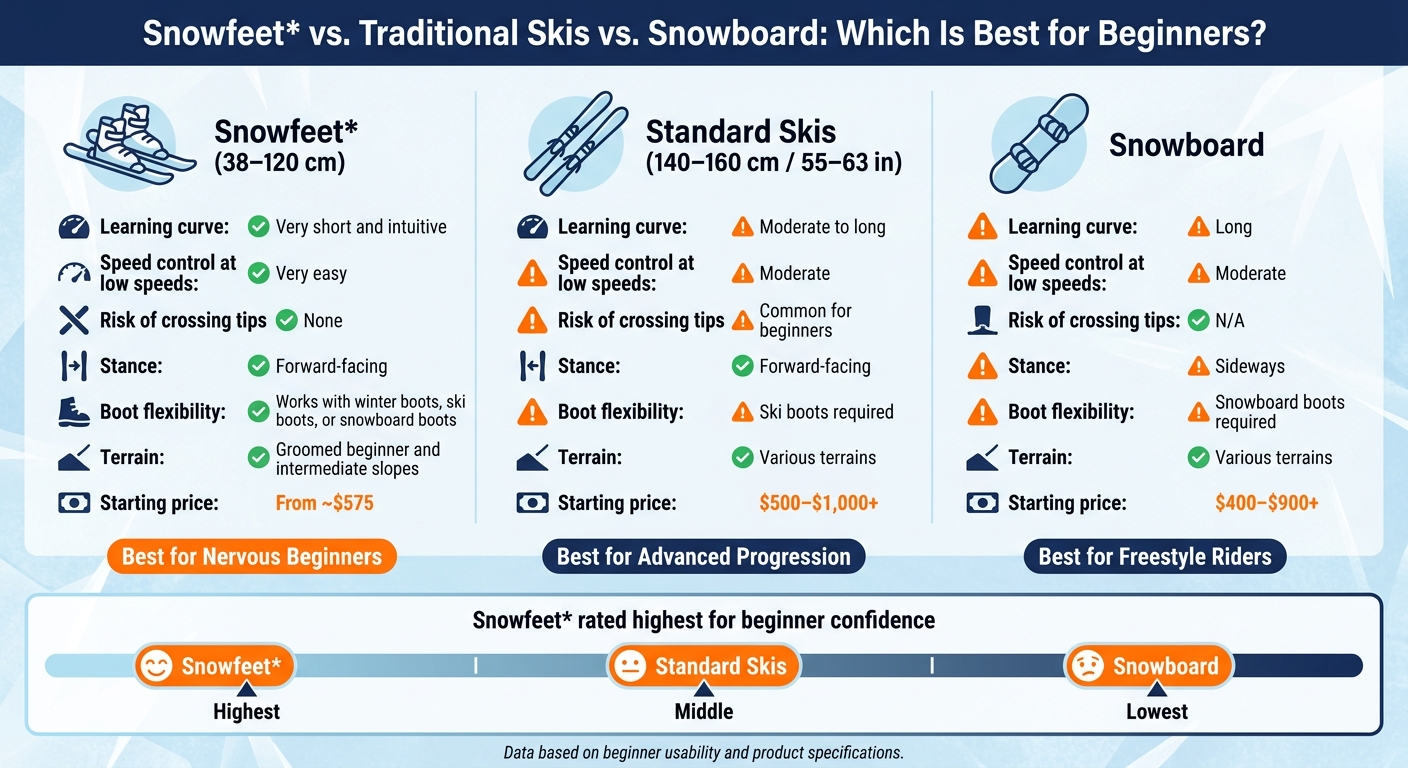
Snowfeet vs. Traditional Skis vs. Snowboard: Beginner Comparison Guide
Snowfeet* Product Line Overview
Snowfeet* has gear tailored to different skill levels, offering options from compact Mini Ski Skates (15 inches/38 cm) to 47-inch (120 cm) Skiblades. Each length provides a unique experience, so you can find the right fit for your needs.
- Mini Ski Skates (38 cm): These ultra-short skates are great for low-speed runs. They essentially extend your boots, making them an excellent choice if you’re just starting out and don’t want to pick up too much speed.
- Skiskates (44 cm): Slightly longer, these provide more glide while staying easy to turn and stop. Plus, they work with regular winter boots, so you can skip renting ski boots.
- 65 cm Skiblades: A step up in stability and edge grip, these are ideal for cautious skiers ready to move from green to easy blue runs.
- 99 cm Skiblades: These strike a balance between stability and quick turning, making them a great option for skiers progressing on varied terrain.
- 120 cm Skiblades: The longest option, these feel closer to traditional skis but remain shorter than full-length skis. They’re perfect for longer runs and offer more stability without the commitment of traditional skis.
By understanding what each product offers, you can pick the right length for your skill level and comfort.
Matching Ski Length to Your Confidence Level
Here’s how to choose the right length based on your experience and confidence. If you’re unsure, starting shorter is always a safe bet.
| Your Situation | Recommended Length | Why It Works |
|---|---|---|
| Never skied, very scared of falling | Mini Ski Skates (38 cm) | Smallest platform, lowest speed, easiest to stop |
| Total beginner, want a little more glide | Skiskates (44 cm) | Easy to turn and works seamlessly with winter boots |
| Comfortable on green runs, trying easy blues | Skiblades (65 cm) | Enhanced edge grip while still quick to pivot |
| Progressing on blue runs, building confidence | Skiblades (99 cm) | Stable on varied terrain, yet shorter than traditional skis |
| Coming from snowboarding or longer skis | Skiblades (120 cm) | Offers a familiar feel and is more forgiving |
If you’re worried about control or stopping, stick to the shorter options. It’s always easier to move up in length than to handle gear that feels overwhelming.
Snowfeet* vs. Standard Skis and Snowboards
Snowfeet* gear stands out when compared to traditional skis and snowboards, especially for beginners. The biggest advantage? How quickly you feel in control.
Traditional skis for adults usually start at 55–63 inches (140–160 cm) and can cost $500–$1,000+ with skis, bindings, and boots. Snowfeet* Skiskates start at around $575, while Skiblades begin at about $635. Plus, Snowfeet* products are much easier to learn on, especially for beginners.
Snowboards, on the other hand, have their own challenges. Learning to ride sideways, managing heel- and toe-side edges, and navigating lifts with one foot unstrapped can make the learning curve steeper. Snowfeet* gear’s forward-facing stance simplifies the process, helping you feel in control faster.
Here’s a quick comparison:
| Feature | Snowfeet* (38–47 in) | Standard Skis (55–63 in) | Snowboard |
|---|---|---|---|
| Learning curve | Very short and intuitive | Moderate to long | Long |
| Speed control at low speeds | Very easy | Moderate | Moderate |
| Risk of crossing tips | None | Common for beginners | N/A |
| Stance | Forward-facing | Forward-facing | Sideways |
| Boot flexibility | Works with winter or ski/snowboard boots | Ski boots required | Snowboard boots required |
| Terrain suitability | Groomed beginner and intermediate slopes | Various terrains | Various terrains |
| Starting price (equipment only) | From ~$575 | $500–$1,000+ | $400–$900+ |
While full-length skis and snowboards excel at high-speed stability and advanced terrain, Snowfeet* gear offers a smoother, less intimidating start for new skiers. If your priority is enjoying the slopes without stress, Snowfeet* is a fantastic option.
Safety Tips to Help You Fall Less
Start on Beginner-Friendly Terrain
Sticking to beginner-friendly slopes can make a huge difference in how often you fall. In U.S. ski resorts, green-circle runs are the way to go. These slopes are wide, smooth, and gently graded, giving you plenty of space to practice without feeling like you’re hurtling downhill. Look for areas with flat run-outs and avoid spots with narrow paths or blind corners that might catch you off guard.
If you're using shorter gear like Skiskates (44 cm) or 65 cm Skiblades, even small changes in slope angle can feel dramatic. If you start picking up more speed than you’re comfortable with, step back onto flatter terrain instead of trying to power through. Another tip? Hit the slopes during weekday mornings or quieter, non-holiday periods. Fewer people around means less stress and a lower chance of collisions. Once you're comfortable with the terrain, the right protective gear can take your confidence to the next level.
Wear the Right Protective Gear
Good protective gear doesn’t just protect you - it can actually make you feel more secure and help you ski more naturally, which means fewer falls. A properly fitted helmet is a must, reducing the risk of head injuries by 35–60%. Wrist guards are another smart choice since wrist injuries are common for beginners who instinctively reach out to break their falls. Padded shorts can save your tailbone and hips from those backward tumbles that are so common when you’re just starting out. And don’t forget goggles - they’re essential for clear vision in poor lighting or snowy conditions, which helps you spot terrain changes that could trip you up.
Once you’re geared up, the next step is learning how to control your speed and turns.
Practice Controlled Turns and Speed Management
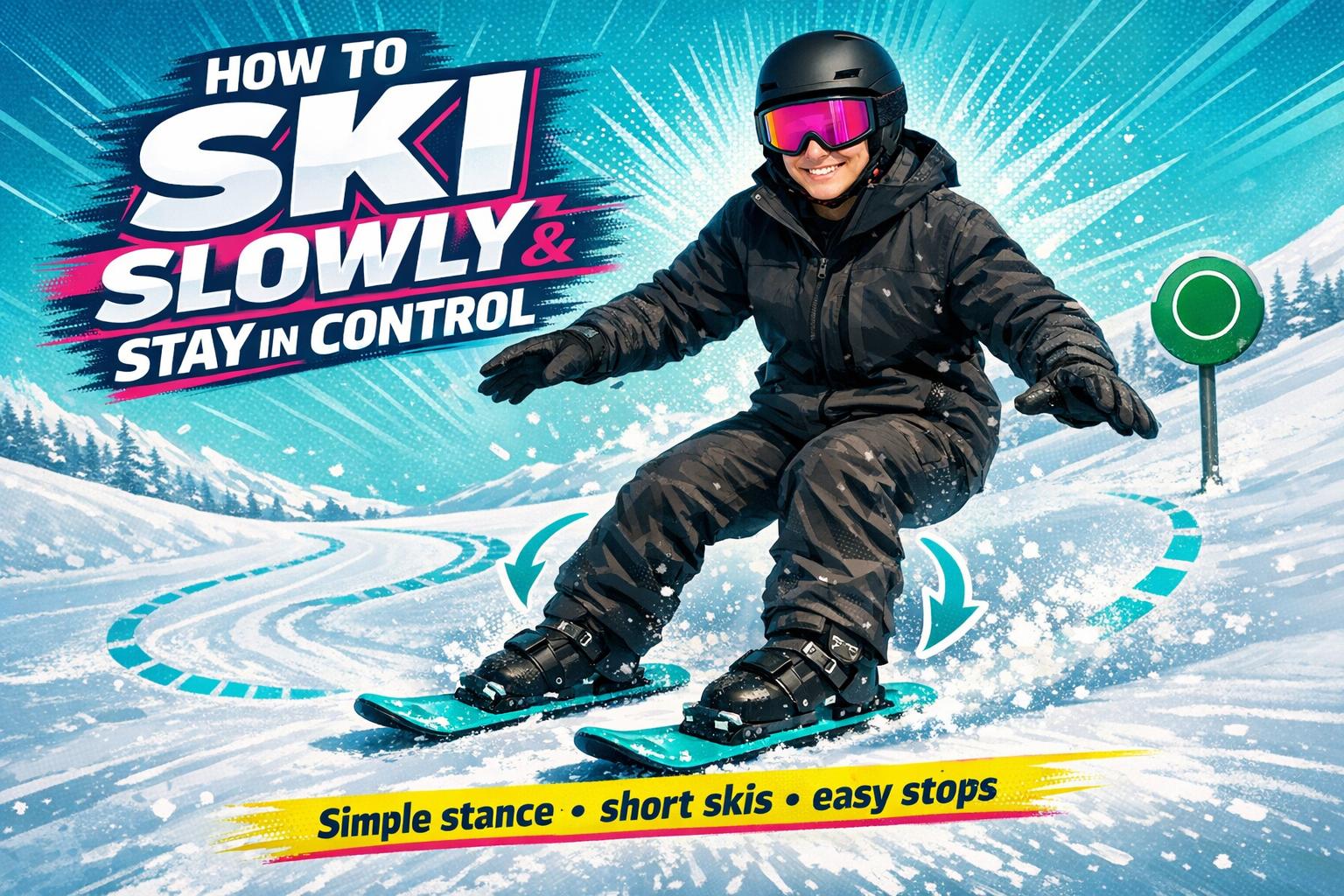
Controlling your speed is all about controlling your turns. Instead of pointing your skis straight downhill, think about carving gentle S-shaped curves across the slope. Each turn naturally slows you down without the need for sudden braking. With Snowfeet* gear, the shorter length means even small adjustments in your movements can have a noticeable effect, making it easier to steer and manage your pace.
After every few turns, pause and come to a full stop. Take a moment to look uphill before continuing. These quick speed checkpoints, combined with the agility of Snowfeet*, help you stay in control and build confidence as you go.
One last thing - don’t overlook the role of fatigue. Tired legs and a wandering mind can lead to more falls, so limit your sessions to one to two hours at a time when you’re starting out. If you feel your legs getting shaky or your focus slipping, it’s time to take a break. Better to rest and recharge than risk a fall from pushing too hard.
Conclusion: Building a Ski Setup That Puts Confidence First
Key Takeaways
The main takeaway here? Your gear should work with you, not against you. If you're worried about falling, the last thing you need is equipment that feels bulky or tough to handle.
Snowfeet* Skiskates (44 cm) and Skiblades (65–120 cm) are designed to make turning and stopping feel smooth and intuitive. Their compact size responds quickly to even small movements, so you’re not fighting to stay balanced. Plus, their lightweight build helps reduce leg fatigue, which means you can stay steady and in control for longer sessions.
Compared to traditional skis that often measure 140 cm or more, Snowfeet* gear feels far less intimidating. While standard skis and snowboards are great for tackling high speeds and steep slopes, they’re not always beginner-friendly. Snowfeet* options, on the other hand, are built for moderate speeds, steady progression, and precise control - perfect for building confidence.
Your Next Steps with Snowfeet*
Ready to get started? Here’s how to build your confidence-first setup. Pick a Snowfeet* model that fits your skill level. For maximum agility, go with the Snowfeet* Skiskates (44 cm – $575). If you’re looking for a mix of glide and control, try the Skiblades (65 cm – $635). As you gain experience, you can step up to the 99 cm ($675) or 120 cm ($775) options.
Don’t forget the essentials: a helmet, wrist guards, and padded shorts. Start on a quiet weekday morning on an easy green run, and set small, manageable goals. With each run, you’ll feel more in control and more at home on the slopes with Snowfeet*.
FAQs
How do I pick the right Snowfeet* length for my confidence level?
Choosing the right Snowfeet* length boils down to your skill level and what you want to achieve on the slopes. If you're just starting out, go for the shorter models like the 38 cm or 44 cm Skiskates. They're light, easy to handle, and perfect for building confidence.
Want a bit more stability? The 65 cm Skiblades are a solid choice. For those looking for a mix of control and quick movements, the 99 cm Skiblades hit the sweet spot.
If you're tackling advanced terrain, the 120 cm Skiblades are your go-to. They offer top-notch stability without sacrificing maneuverability.
Are Snowfeet* Skiskates or Skiblades easier to stop than regular skis?
Yes, Snowfeet Skiskates and Skiblades are easier to stop with compared to traditional skis. Thanks to their shorter length and lighter build, they offer less leverage, making techniques like hockey stops or wedge stops much simpler. Since your feet stay closer to your center of gravity, these skates provide better responsiveness, allowing you to slow down and navigate tight spaces with ease. This makes them a great option for beginners who want more control and confidence while hitting the slopes.
Do I need ski boots, or can I use snowboard boots or winter shoes?
You don’t need stiff, bulky ski boots to enjoy Snowfeet products. Most models are made to work with flexible winter hiking boots or even snowboard boots - chances are, you already have a pair at home. This means you can avoid the hassle, discomfort, and cost of traditional ski boots. While a few of the longer Snowfeet models are compatible with ski boot bindings, the majority let you hit the slopes comfortably in your own footwear.











Leave a comment
This site is protected by hCaptcha and the hCaptcha Privacy Policy and Terms of Service apply.