



















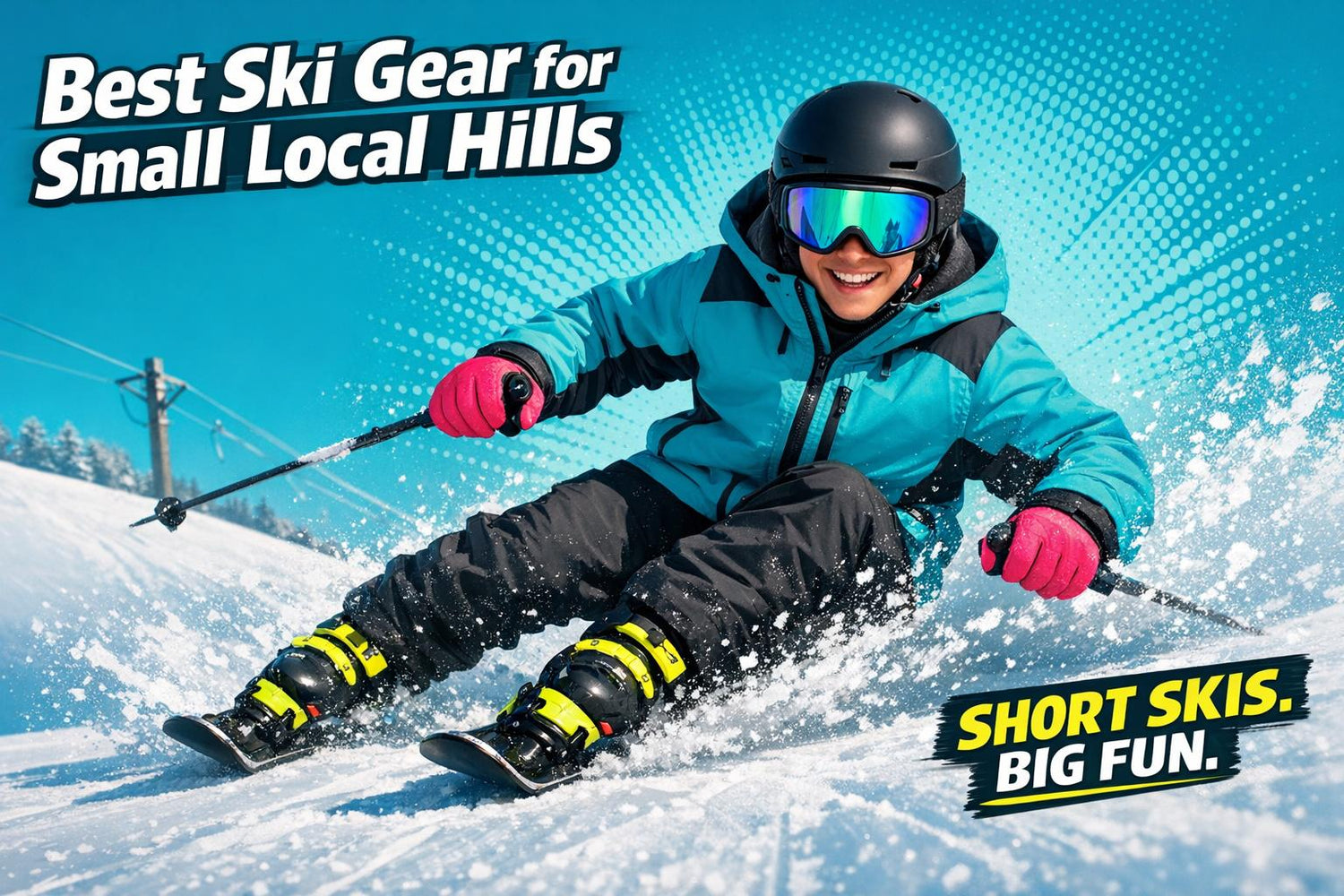
Looking for ski gear that’s perfect for smaller, local hills? Here’s the deal: you don’t need long, heavy skis designed for massive mountain resorts. For shorter runs, tighter turns, and slower speeds, you’ll want lightweight, compact gear that’s easy to carry and maneuver. That’s where Snowfeet* products shine. They’re portable, beginner-friendly, and built for fun on community slopes.
Top Picks for Local Hills:
- Mini Ski Skates (44 cm): Ultra-portable and great for quick, casual outings.
- Skiskates (44 cm): Compact with sharp carving ability for crowded slopes.
- Skiblades (65 cm): Playful and nimble for tight turns and terrain parks.
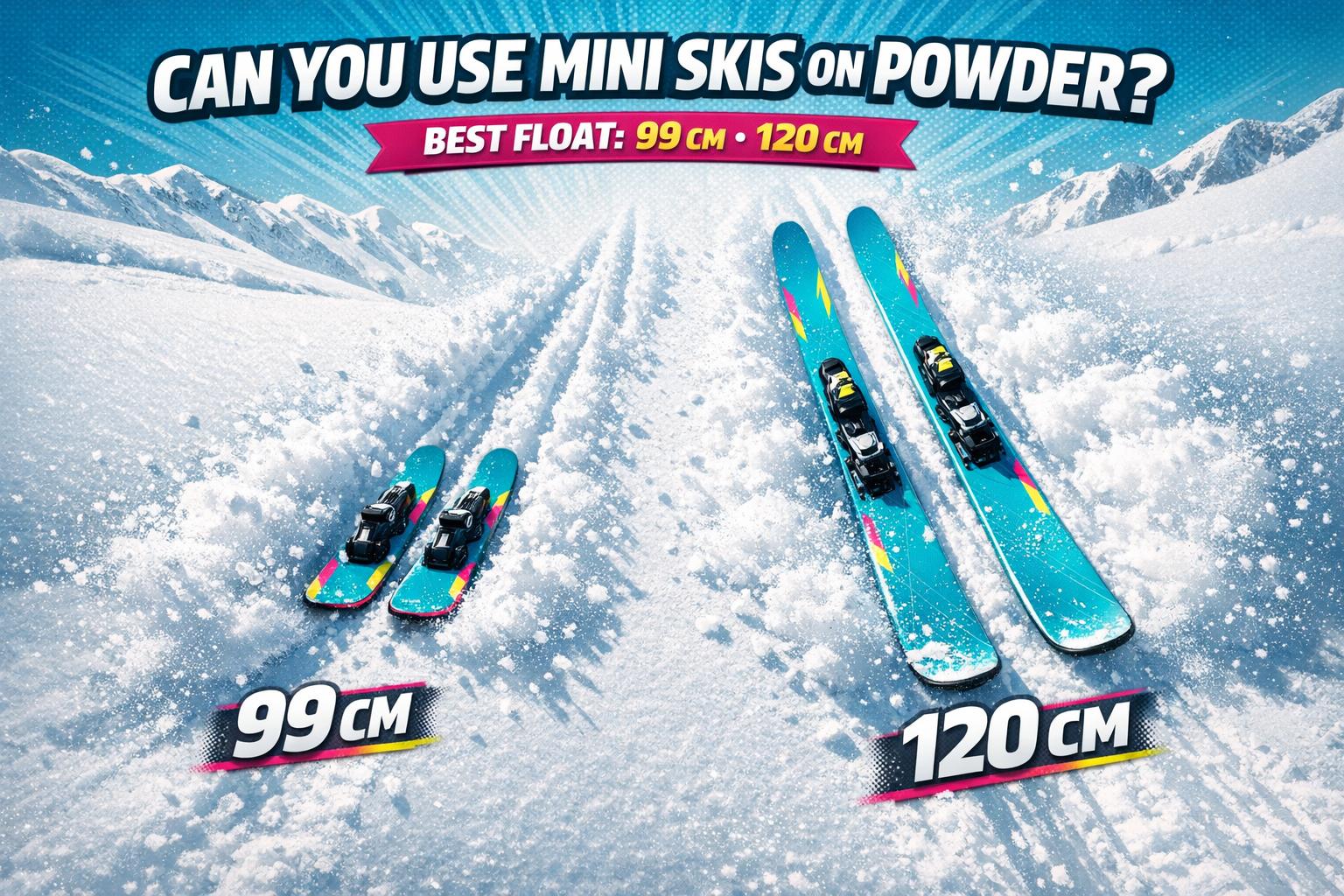
- Skiblades (99 cm): A versatile option offering more stability at speed.
- Short Skis (120 cm): Combines a ski-like feel with easier handling for longer runs.
Each option caters to different needs, from portability to control. Whether you’re a beginner or an experienced skier, there’s something here to match your style and skill level.
Quick Comparison:
| Product | Length | Portability | Best For | Price |
|---|---|---|---|---|
| Mini Ski Skates | 44 cm | Fits in a backpack | Casual outings, groomed runs | $635 |
| Skiskates | 44 cm | Backpack-friendly | Tricks, quick carving | $635 |
| Skiblades (65 cm) | 65 cm | Compact and light | Tight turns, playful rides | $635 |
| Skiblades (99 cm) | 99 cm | Easy to transport | Stability, smooth runs | $675 |
| Short Skis (120 cm) | 120 cm | Trunk-friendly | Longer runs, varied terrain | $775 |
For quick after-work sessions, go for the Mini Ski Skates or Skiskates. Prefer a playful ride? The 65 cm Skiblades are a blast. Need stability for icy conditions? The 99 cm Skiblades are your go-to. Want a ski-like experience without the bulk? The 120 cm Short Skis are a solid pick. Whatever your local hill vibe, Snowfeet* has you covered.
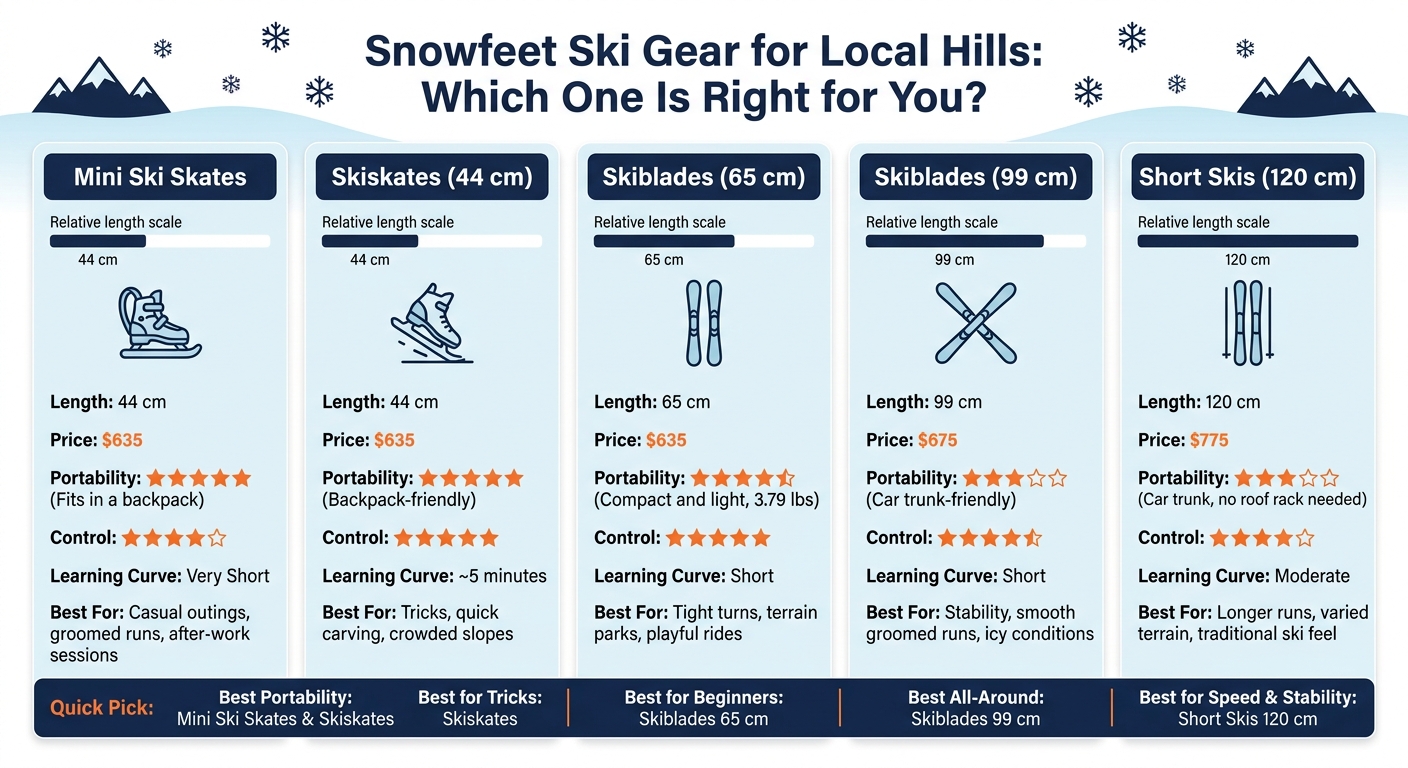
Snowfeet Ski Gear Comparison: Best Options for Local Hills
Ultimate Short Skis for Any Mountain ⛷️🤩
1. Snowfeet* Mini Ski Skates
These skates are perfect for quick trips to your local hill. They’re small, light, and let you skip the bulk of traditional skis without giving up on performance.
Portability
Measuring just 17 inches (44 cm), Snowfeet* Mini Ski Skates easily slide into a standard backpack. No need for roof racks or oversized carriers - just toss them in and go. For skiers heading to nearby slopes, this convenience is a total game-changer. Plus, their compact size makes navigating tight spots a breeze.
Control and Maneuverability
Thanks to their short length and parabolic shape, these skates offer quick, smooth edge-to-edge transitions. On smaller hills with rolling terrain, this level of control is a huge plus. You can carve tight turns, dodge slower skiers, and stop on a dime - no need for the big arcs required by longer skis. This agility works well across various snow conditions, so you’re not limited to one type of run.
Terrain Compatibility
Snowfeet* Mini Ski Skates shine on groomed or packed snow, which is common on smaller hills with machine-made runs. They’re ideal for beginner areas, park features, and blue trails. However, they’re not built for steep black diamonds or deep powder, where bigger skis are better for grip and float.
Learning Curve
If you’re an experienced skier or snowboarder, you’ll likely get the hang of these in a single session. Beginners might take a little longer, focusing on edging and speed control, but the short runs at local hills are perfect for practice. With a 5.0/5 rating from 123 reviews, users often highlight how easy and fun these are compared to traditional ski gear.
2. Snowfeet* Skiskates
If the Mini Ski Skates are all about quick convenience, the Skiskates bring a more performance-driven edge to your local hills. At just 44 cm (17 inches) long, these are ideal for riders seeking a responsive, high-energy experience without lugging around traditional ski gear.
Portability
Heading out to a neighborhood hill or a small slope with a tow rope? Transporting Skiskates is a breeze. They fit neatly into a standard backpack, sparing you the hassle of oversized carriers that traditional skis (often over 150 cm long) require. No more struggling to haul bulky gear - just pack and go.
Control and Maneuverability
The Skiskates are designed with a parabolic shape and narrow waist, making them perfect for quick, sharp carving. Their shorter length lets you pivot and stop effortlessly, which is a game-changer on crowded slopes where you're dodging beginners or kids. While both Mini Ski Skates and Skiskates offer agility, these are fine-tuned for sharper, more precise turns. Think of them as the skiing equivalent of ice hockey skates - dynamic, fast, and thrilling.
As Zbyněk, Snowfeet*'s founder, explains:
"In my opinion, Skiskates is the best product for slopes we developed so far. I love how easy they are to ski and skate and how many different kinds of tricks I can perform without much effort and almost no restrictions."
With metal edges and a graphite sintered base, they deliver reliable stopping power and smooth rides on packed snow.
Terrain Compatibility
Skiskates shine on groomed, packed snow - the kind you’ll find at most U.S. community hills. They handle moguls and small features well, thanks to their quick edge response, and even manage light icy patches with ease. However, they’re not built for deep powder or steep, challenging resort runs. If you're dealing with 6–8 inches of fresh snow (common in the Midwest or Northeast), they might feel a bit unstable. But for mellow, local slopes? They’re absolutely in their element.
Learning Curve
Most people pick up the basics within a single session. Snowfeet* estimates a learning curve of just 5 minutes for getting started. Reviews back this up, with users raving about the fast turn initiation and lively feel, earning the Skiskates a 5.0/5 rating from 123 reviews.
Ice skaters and inline skaters adapt quickly, finding the edging and weight transfer mechanics second nature. For complete beginners, it might take 2–4 short sessions to master speed control and stopping. But since local hills often have shorter runs, you’ll get in more practice per hour compared to learning on a sprawling resort slope.
This mix of performance and ease makes Skiskates a standout choice as we dive into Snowfeet*'s Skiblades next.
3. Snowfeet* Skiblades 65 cm
If the Skiskates are all about speed and performance, the Skiblades 65 cm bring the fun factor to smaller hills. At just 65 cm (26 inches) long - about a third of the length of standard adult skis - these skiblades are built for quick turns and playful rides.
Portability
Weighing only 3.79 lbs per pair (bindings included), these skiblades are super easy to carry. Whether you're walking from the parking lot or throwing them in your car trunk, their compact size makes them perfect for quick trips to the slopes. You can even sling them over your shoulder for those after-work hill sessions.
Control and Maneuverability
With a 4-meter turning radius, a parabolic sidecut, and a slim 9.5 cm waist, these skiblades are designed for tight, sharp turns. They transition quickly from edge to edge, making them ideal for weaving through crowded slopes or tackling narrow trails. The asymmetrical twin tips let you ride backward or try spins, making them a great choice for terrain park tricks that traditional skis might struggle with.
As Jan from Snowfeet* says:
"65 cm is the sweet spot - quick to learn, fast on groomers and super agile even between trees."
That said, their shorter length can feel a bit "twitchy" at higher speeds. It’s best to start at moderate speeds on groomed runs to get a feel for their responsiveness before cranking things up. Their agility shines on smaller hills, delivering reliable performance where it matters most.
Terrain Compatibility
These skiblades excel on groomed, hard-packed snow - the kind of conditions you'll find at most U.S. community hills, where temperatures typically range from 10°F to 32°F. They handle moguls and small terrain park features with ease, but their compact size means they’re not suited for deep powder or steep, challenging runs. If you’re dealing with heavy snowfall, you might want to consider the longer 99 cm or 120 cm models for better flotation and stability.
Learning Curve
Thanks to their agile design, these skiblades are fairly easy to pick up. Skiers who are comfortable with parallel turns can adapt in just a few runs. Tripp, a verified user, shares:
"The learning curve was quick. They maneuver as easily as skates, but are surprisingly fast down the mountain. The most fun was weaving through the woods."
While complete beginners can use them, those new to skiing might prefer a slightly longer model for added stability while building confidence. Unlike traditional ski setups, which often sacrifice maneuverability on smaller hills, these skiblades are all about lightweight, nimble performance.
At $635, the 65 cm Skiblades cater to intermediate and advanced skiers who want a playful, agile ride - or ambitious beginners ready to tackle gentle slopes. They’re not a one-size-fits-all solution, but for small-hill fun, they’re hard to beat.
sbb-itb-17ade95
4. Snowfeet* Skiblades 99 cm
If the 65 cm Skiblades are all about quick, playful moves, the 99 cm Skiblades hit the sweet spot for those who want a bit more stability without losing that fun, agile feel. These are a great middle-ground option, offering a balance between the short, zippy skiblades and the longer, more traditional 150–170 cm skis.
Portability
At 99 cm, these skiblades are compact enough to fit easily in the trunk of a car - no need for a roof rack. That’s a game-changer if you’re heading out for a quick session after work. They’re also short enough to store vertically in a closet or tucked into a corner of your apartment, which is a big deal if you’re working with limited space. As Brad Tolin, a verified buyer, puts it:
"Also a big plus - they're lightweight and much easier to carry around than full-size skis."
This portability doesn’t just save space; it also adds to their practicality on the slopes.
Control and Maneuverability
The 99 cm model shines when it comes to control. With increased edge engagement, they grip firmly on icy, hard-packed snow - the kind of conditions you’ll often find at busy community hills in the Midwest or along the East Coast. The parabolic sidecut and narrow waist make switching edges quick and precise, so you can easily weave through slower skiers, hug tight turns near terrain park features, or make quick stops at lift unloads without feeling like you’re fighting your gear. Mike E., another verified user, puts it best:
"SUPER comfortable, easy to control, very agile, easy on the knees and ankles because they are so light, great for beginners."
Terrain Compatibility
These skiblades are built for groomed runs, small jumps, and light chop - basically, the bread and butter of local U.S. hills. Thanks to their metal edges and graphite base, they hold up well on hardpack and man-made snow when properly maintained. They’re not ideal for deep powder, but let’s face it - on most groomed hills, that’s not going to be an issue.
Learning Curve
Most riders get the hang of these within a few runs. Beginners will appreciate how easy it is to pivot and the reduced chance of crossing tips, while intermediate skiers transitioning from longer skis will quickly enjoy the looser, more playful ride. This mix of stability and ease makes them a great option for anyone looking to switch things up from traditional ski setups.
Priced at $675, the 99 cm Skiblades strike a nice balance - offering more stability than the 65 cm version, more agility than the 120 cm short skis, and perfectly suited for the shorter, groomed runs common at most U.S. local hills.
5. Snowfeet* Short Skis 120 cm
The 120 cm Short Skis from Snowfeet* take the agility of shorter skis and combine it with a more traditional skiing experience. These are the longest in the Snowfeet* lineup, designed for those who want the familiar feel of standard skis without the hassle of full-length gear. Priced at $775, they’re the premium option in the collection, and it’s clear why.
Portability
Measuring just 120 cm and weighing less than traditional skis, these are a breeze to transport. They fit neatly in the trunk of an SUV and can be stored upright at home. Plus, carrying them from the parking lot to the lift is far less of a workout compared to lugging around full-sized skis.
Control and Maneuverability
Thanks to their parabolic shape, the 120 cm Short Skis make turning a cinch. They grip well on icy or hard-packed snow, which is common at many local ski hills during winter. Unlike snowboards, these skis allow independent leg movement, which can reduce muscle strain. As Sunshine Straiges noted:
"I had no muscle soreness after using these because I can change my leg position, unlike the snowboard which is set." – Sunshine Straiges
Terrain Compatibility
These skis shine on groomed trails, light moguls, and even in terrain parks. Their shorter length makes navigating bumpy snow in the afternoon much easier compared to traditional 170 cm skis. While they’re not ideal for deep powder, they perform well on the packed, man-made snow often found at community hills.
Learning Curve
Experienced skiers will adapt to these quickly - usually within a couple of runs. Their shorter length and lighter weight reduce the chance of crossing tips, making them more forgiving than traditional skis. For beginners, starting on flat, groomed terrain is best to build confidence and balance before tackling steeper slopes.
The combination of portability, control, and ease of use makes these skis an interesting alternative to traditional gear.
| Feature | Snowfeet* 120 cm Short Skis | Traditional Long Skis (160–170 cm) |
|---|---|---|
| Portability | Fits in a car trunk; easy to store | Requires roof rack or ski bag |
| Maneuverability | High; quick turns, easy pivoting | Lower; more effort to initiate turns |
| Stability at Speed | Moderate | High |
| Learning Curve | Short | Moderate to long |
| Price | $775 | Varies; often $500–$1,500+ for gear alone |
Pros and Cons
Every Snowfeet* product in this lineup is built to help you decide based on what matters most - portability, control, terrain compatibility, and how easy it is to pick up. Here’s a side-by-side comparison to make your choice simpler.
| Product | Portability | Control | Terrain Compatibility | Learning Curve |
|---|---|---|---|---|
| Mini Ski Skates | Super portable - fits in a backpack and works with regular winter boots | Agile and skate-like, though less stable at higher speeds | Best for groomed slopes, flat trails, and snow parks | Short learning curve, great for those with skating or inline experience |
| Skiskates (44 cm) | Ultra-portable - fits in a backpack, no ski boots needed | Extremely agile for tight turns and tricks | Perfect for groomed slopes, parks, and mild moguls | Easy to learn, takes about 5 minutes |
| Skiblades (65 cm) | Compact and easy to carry - fits across a car trunk | High control, great for quick pivots and moguls | Excels on groomed runs, narrow trails, and terrain parks | Short learning curve; intermediate skiers adapt quickly |
| Skiblades (99 cm) | Moderately portable - bulkier than the 65 cm version | Stable and smooth, especially at higher speeds | Works well on groomed runs and light off-piste areas | Short learning time; feels closer to traditional skis |
| Short Skis (120 cm) | Least portable - needs ski boots and careful transport | Top-notch edge hold and speed stability | Handles groomed runs, variable snow, and light powder with ease | Moderate learning curve; best for experienced skiers |
This breakdown shows why Snowfeet* products are such a hit for local hills. Shorter options shine in portability and playful handling, while longer models focus on stability and performance.
If you're looking for a sweet spot between portability and control, the 65 cm Skiblades are an excellent choice. For beginners craving a more traditional ski feel, the 99 cm Skiblades are a great fit. As user Brad Tolin shared:
"Only trade-off is at higher speeds, where longer skis still feel more stable - but for overall fun and maneuverability, these are hard to beat."
For those who prioritize edge hold and stability, the 120 cm Short Skis are the way to go. They’re perfect for longer blue runs or variable snow but less convenient for quick, casual outings. If your goal is fast, after-work fun, the shorter models are unbeatable for ease and enjoyment.
Conclusion
Picking the right Snowfeet* gear for your local hill comes down to a few key factors: portability, your skill level, and the type of riding you enjoy. Each model in the lineup offers something tailored to those needs, from easy transport to solid stability.
For quick, after-work sessions, the Mini Ski Skates or Skiskates are perfect. They're super portable, don’t require ski boots, and are ideal for lively, local slopes. If you're new to skiing and want something easy to control, the 65 cm Skiblades are a great choice - they keep speeds comfortable and make turning feel natural.
For adults looking for a versatile setup that can handle just about anything - family laps, evening groomers, or even icy East Coast conditions - the 99 cm Skiblades are a fantastic all-around option. And if your local hill has steeper pitches or you want a more traditional skiing feel without the bulk, the 120 cm Short Skis offer a great balance of agility and convenience.
Whichever you go with, every Snowfeet* product is designed for the kind of skiing most Americans enjoy - short runs, quick laps, and making the most of a few hours at a nearby hill.
FAQs
Which Snowfeet* length should I choose for my local hill?
The best length for Snowfeet* depends on your skill level and how you like to ride. If you're a beginner, 65 cm Skiblades are a solid choice - they're easy to control and super agile, making it simpler to get the hang of things. On the other hand, if you've got some experience and want a mix of fun and versatility, go for the 99 cm Skiblades. They strike a nice balance and are great for zipping around on smaller slopes. Pick what feels right for your comfort and the kind of ride you're after!
Do Snowfeet* products work with regular winter boots or ski boots?
Snowfeet* products are made to clip right onto your regular winter shoes or snowboard boots - no special ski boots required. This means you can hit the slopes with the footwear you already own, making them super convenient and easy to use.
Are Snowfeet* options safe and stable on icy, hard-packed snow?
Snowfeet* products, such as the Snowfeet PRO (50 cm) and Skiblades (65 cm), are built with fiberglass-reinforced materials and feature metal edges for improved stability and reliable stopping power. Thanks to their compact size and quick responsiveness, they’re perfect for tackling icy, hard-packed snow. Compared to traditional skis or snowboards, these are easier to maneuver and offer better control, making them a great choice for smaller hills and beginners looking to build confidence on the slopes.











Leave a comment
This site is protected by hCaptcha and the hCaptcha Privacy Policy and Terms of Service apply.