



















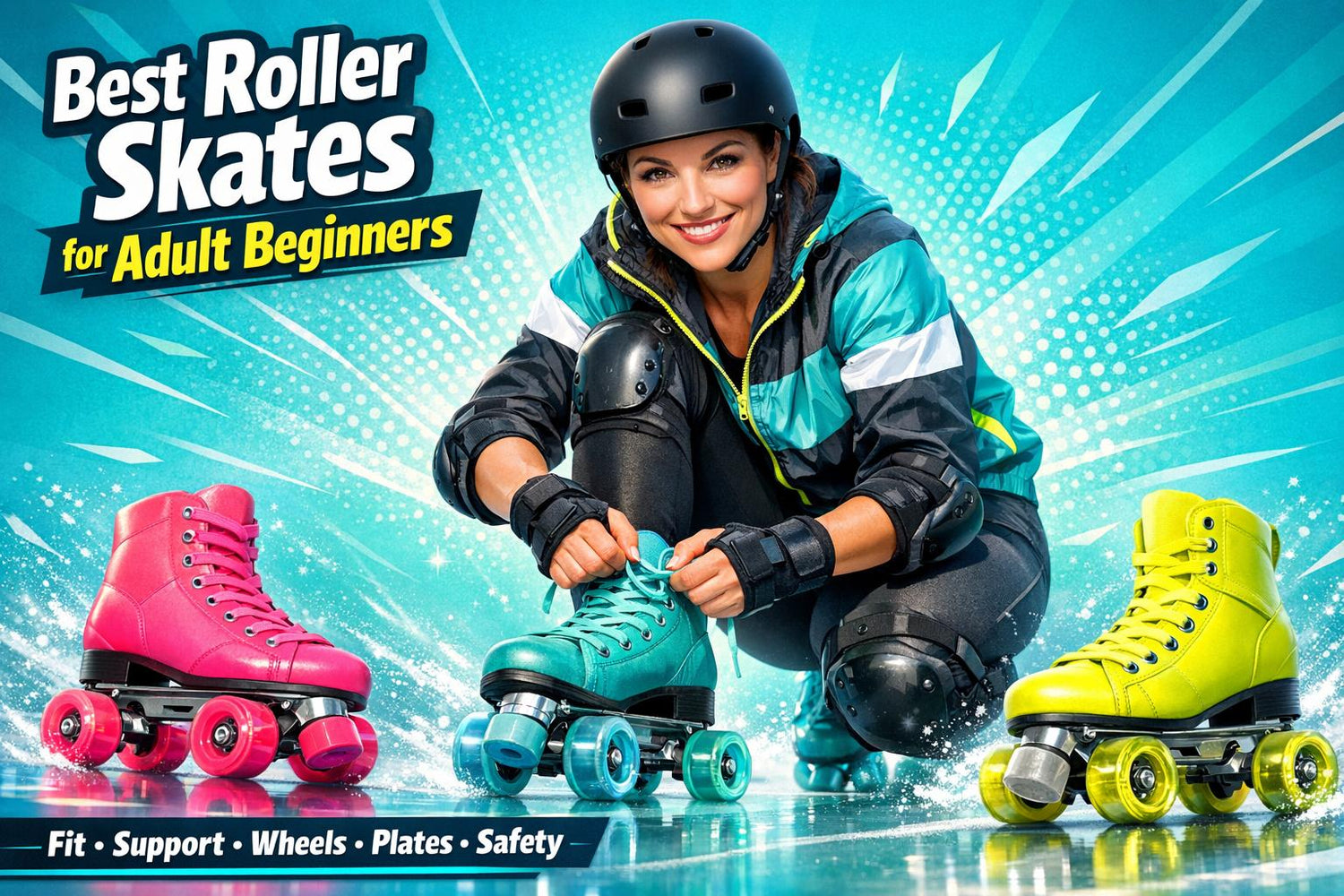
Roller skating is back in a big way, with over 12 million people skating worldwide, and adults making up 60% of recent skate sales. If you're just starting out, picking the right skates for beginners is crucial to learning faster and enjoying the process. Here's what you need to know:
- Budget: Quality beginner skates cost between $150 and $250. Avoid the cheap $40 options - they're harder to balance on and can slow your progress.
- Boots: Choose high-top boots for better ankle support. Suede boots mold to your feet quickly, while vinyl offers more stiffness but takes longer to break in.
- Wheels: Softer wheels (78A–85A) are ideal for outdoor skating, absorbing bumps and cracks better than harder wheels.
- Plates: Look for aluminum or reinforced nylon plates. Skip plastic - it flexes too much and reduces stability.
Top Beginner Skates:
- Riedell R3 ($199): Great for indoor skating and derby, but requires strong ankles.
- Impala ($84–$124): Affordable, stylish, and beginner-friendly, though narrow-fitting.
- Pacer GTX 500 ($59.99): Budget pick for casual indoor skating.
- Moxi Rainbow Rider ($69): Best for wider feet; good outdoor performance.
- Sure-Grip Boardwalk ($169–$199): High-quality suede boots for comfort and durability.
Pro Tip: Don’t forget safety gear! Wrist guards, helmets, and knee pads are non-negotiable for new skaters. It's also vital to learn how to balance on roller skates to prevent falls.
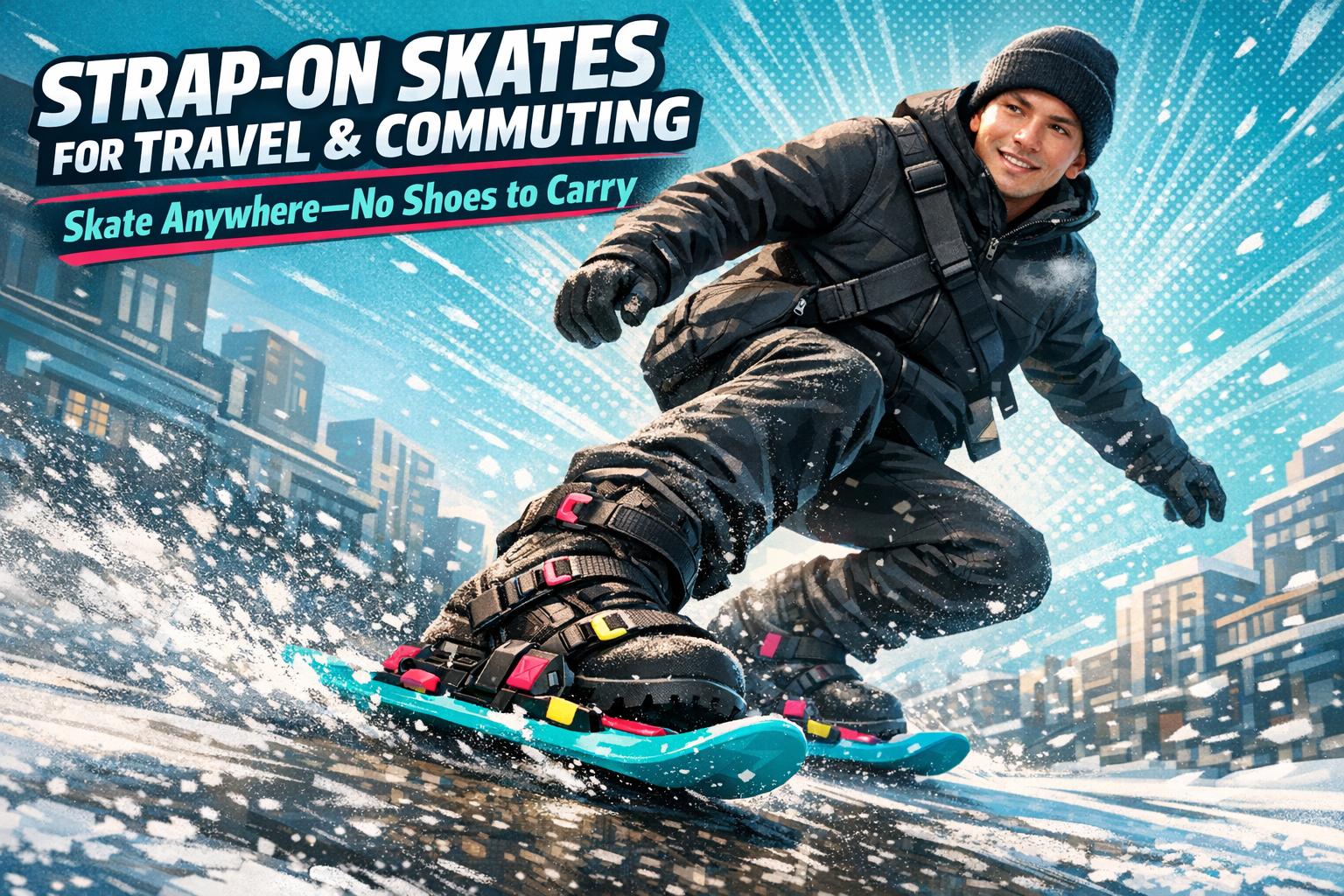
Want to keep the fun going in winter? Try Snowfeet Mini Ski Skates - a snow-friendly alternative to roller skates that attach to your regular boots for $250.
Ready to roll? Let’s dive into the details.
Learning To Roller Skate As An Adult - Watch BEFORE You Roll!
Key Features to Look for in Beginner Roller Skates
Picking the wrong pair of skates can make learning frustrating. For beginners, the essentials boil down to three things: comfort and fit, stability and support, and durability. Nail these, and you're setting yourself up for a smoother start. Let’s break them down.
Comfort and Fit
A poor fit can ruin your skating experience with blisters, cramps, and fatigue. If you're new, consider suede boots - they mold to your feet quickly and don’t need much break-in time. Vinyl boots, on the other hand, are stiffer and offer more immediate ankle support, but they take longer to feel comfortable. Look for skates with padded liners, tongues, and collars to prevent chafing, especially during long sessions. On average, expect about 10 hours of skating before your boots feel like a natural extension of your feet.
When it comes to sizing, most skate brands use men’s sizing as the standard. Women usually need to size down by one to two sizes. A quick fit check: stand straight - your toes should just touch the front of the boot. When you lift your knee, your heel should stay snugly in place. Also, try skates on in the afternoon or evening since feet tend to swell throughout the day.
"When new skaters get into lessons, they wonder why they're not able to do certain movements. It's because the boot is not allowing them to." - Joshua Batsmoke Smith, Performer and Trainer
Stability and Support
For beginners, stability is everything. quad skates provide better side-to-side balance compared to inline skates because of their wider base. High-top boots are another must - they wrap around your ankles, reducing wobbling and helping you stay upright.
The skate plate (the frame that holds the wheels) is another key part to check. Skip the cheap plastic ones and go for reinforced materials like aluminum or nylon for added stability and durability. As for wheels, wider and softer options (rated between 78A and 85A) are perfect for beginners. They absorb vibrations from uneven surfaces, making outdoor skating easier and more stable.
"For beginners, wider and larger wheels provide better stability." - Francesca Gold, World-Class Competitive Figure Skater and Teacher
Now, let’s discuss what makes skates durable enough to handle the bumps and scrapes of learning.
Durability and Materials
Learning to skate means your gear will take some hits - think falls, scuffs, and heavy use. That’s why the materials in your skates are just as important as their design.
| Material | Component | Key Benefit |
|---|---|---|
| Suede | Boot | Molds to your foot and lasts with proper care |
| Vinyl | Boot | Firm support, easy to clean, vegan-friendly |
| Aluminum | Plate | Stays rigid under weight, no flex |
| Reinforced Nylon | Plate | Lightweight, absorbs vibrations |
| Urethane | Wheels | Great grip and shock absorption |
| Plastic | Plate/Wheels | Tends to flex under pressure |
Urethane wheels are now the go-to choice because they grip well and handle impacts far better than hard plastic. If you’re on the heavier side or planning to skate a lot, aluminum plates are a smart pick - they’ll hold up under frequent use without bending.
Top Roller Skate Picks for Adult Beginners
When you're just starting out with roller skating, comfort, stability, and durability are key. Whether you're on a tight budget or looking for a long-term investment, these beginner-friendly skates have you covered. Let’s dive into five solid options for adult beginners.
Riedell R3 Roller Derby Skates
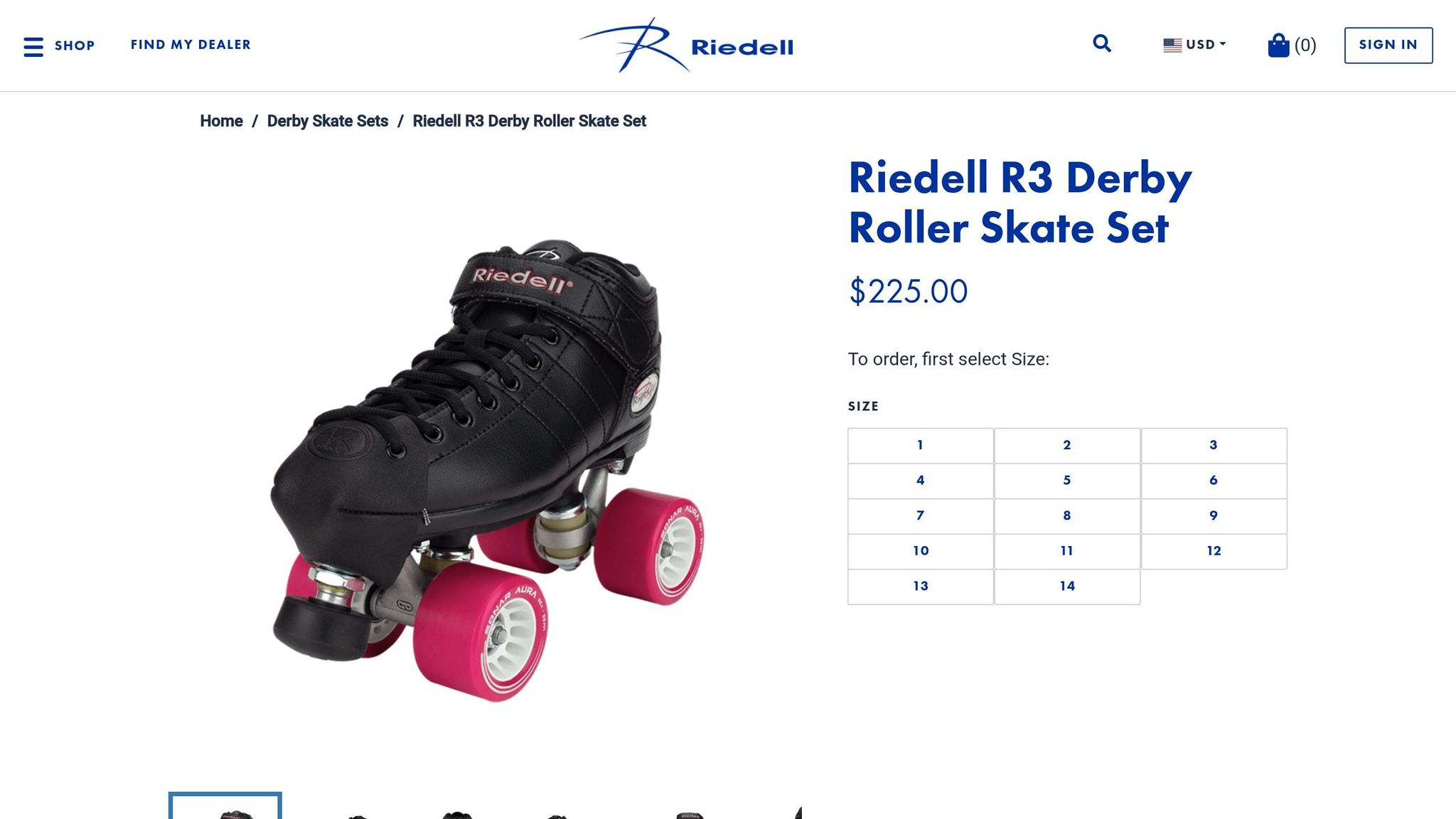
The Riedell R3 is a popular choice for those stepping into derby-style skating. Priced around $199, it features a low-cut vinyl boot that allows for greater ankle mobility, although it does require stronger ankles to maintain control, so you'll want to learn how to start, stop, and turn early on. The boot is comfortable right out of the box, and its durable design includes adjustable toe stops. One thing to note - the flat sole offers less natural balance compared to heeled boots, so you might need a little time to adjust.
Impala Roller Skates
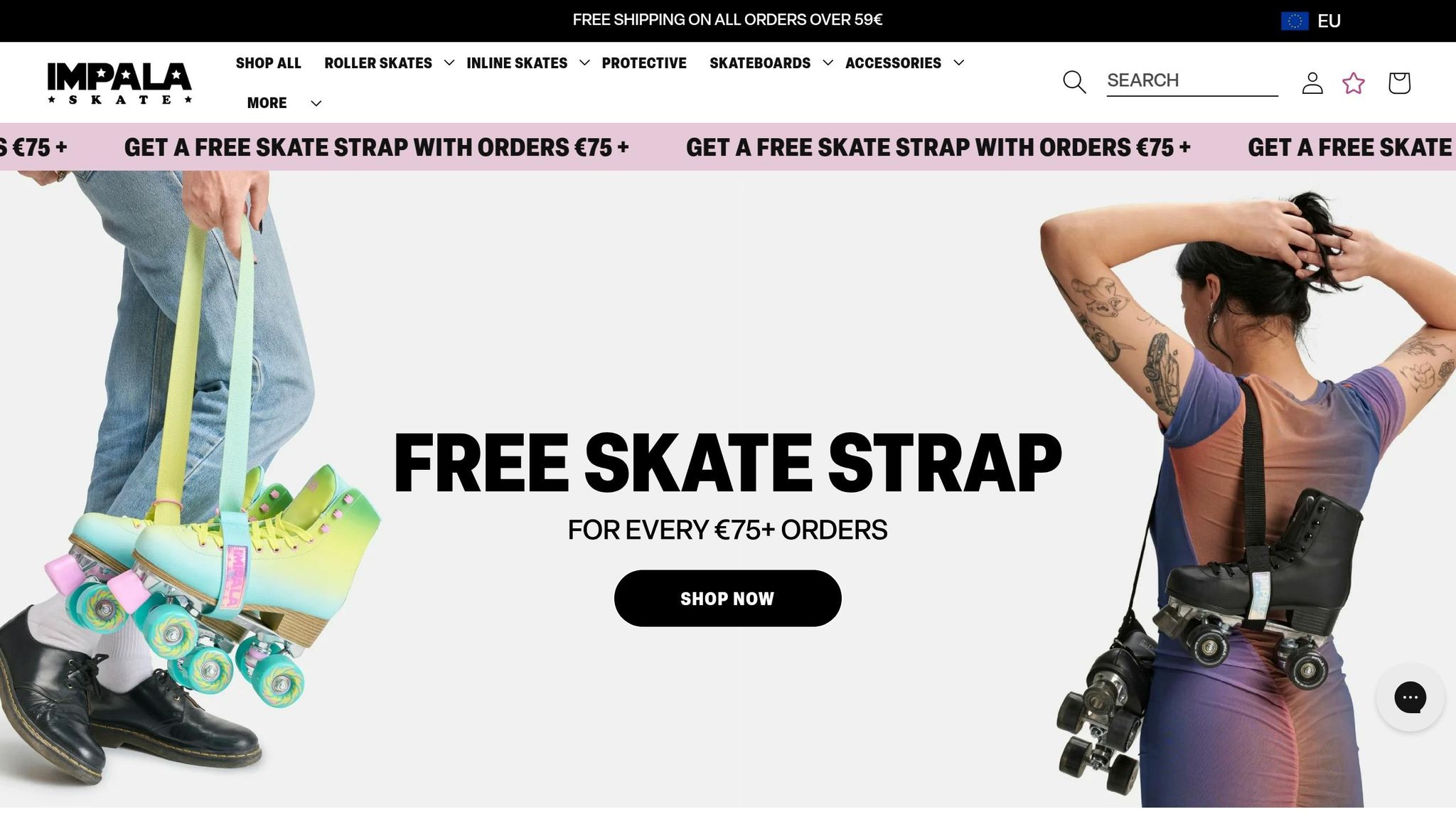
If you’re after affordability with a splash of personality, Impala skates are a great pick. With prices ranging from $84 to $124, these high-top, heeled PVC boots help keep you balanced during those early sessions. Ranked the #2 best beginner skate for 2024 by Pigeon Skates, they come in a variety of fun colors and patterns. However, lower-end models lack adjustable toe stops, and skaters with wider feet may need to size up for a better fit.
Pacer GTX 500 Quad Roller Skates
For those on a tight budget, the Pacer GTX 500 is a wallet-friendly option at just $59.99. Its lightweight synthetic materials make it easy to move in, and the low-cut design allows decent ankle flexibility. However, the lighter construction sacrifices some stability and durability, making it better suited for casual indoor skating.
Moxi Rainbow Rider
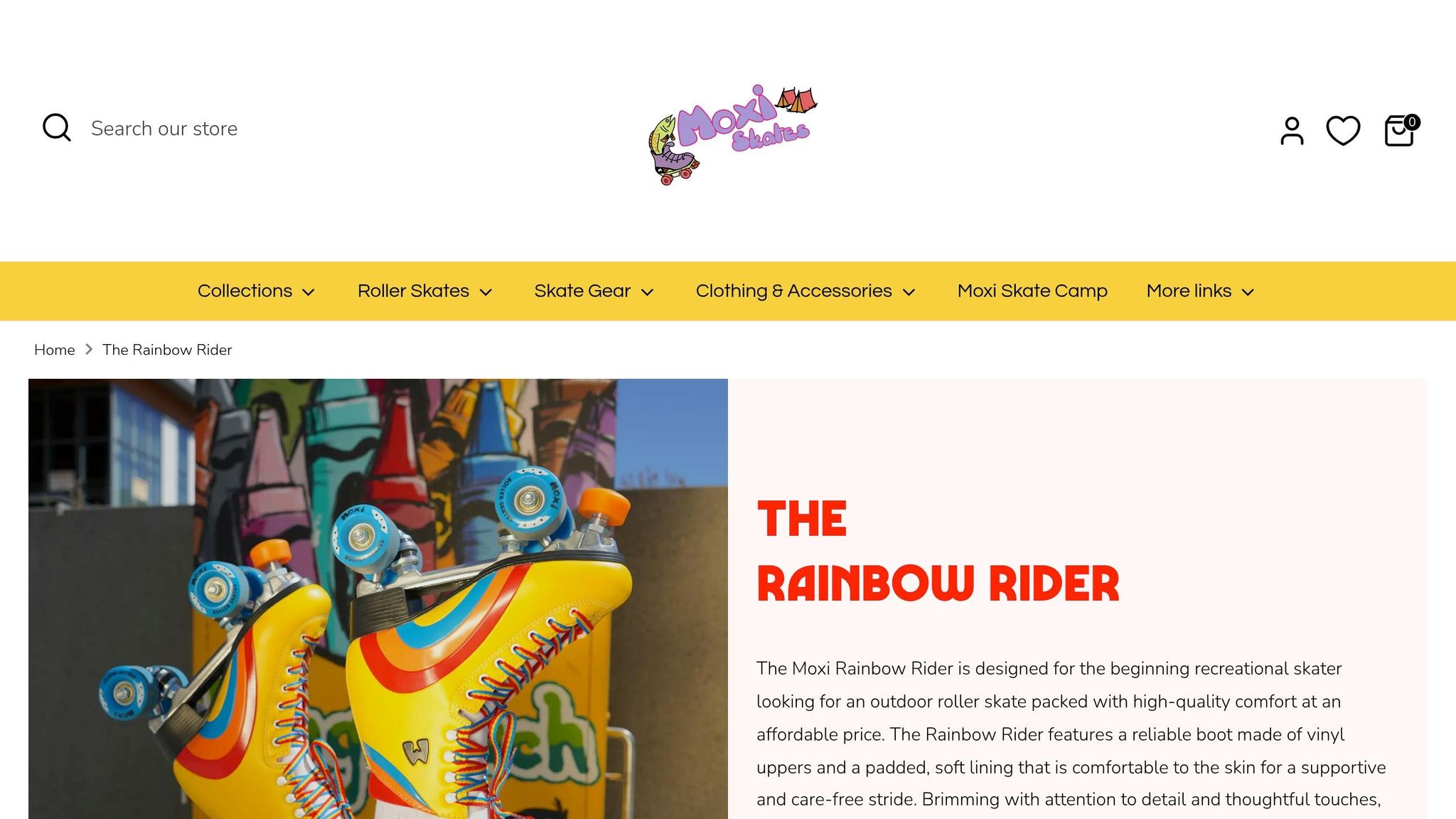
The Moxi Rainbow Rider, priced at about $69, is a solid choice for beginners - especially if you have wider feet. Its stiff, high-top vinyl boot includes a heel, which helps prevent tipping backward (a common issue for new skaters). Ranked the #4 best beginner skate for 2026, it also features adjustable toe stops and provides good support after the vinyl softens with use.
Sure-Grip Boardwalk Skates
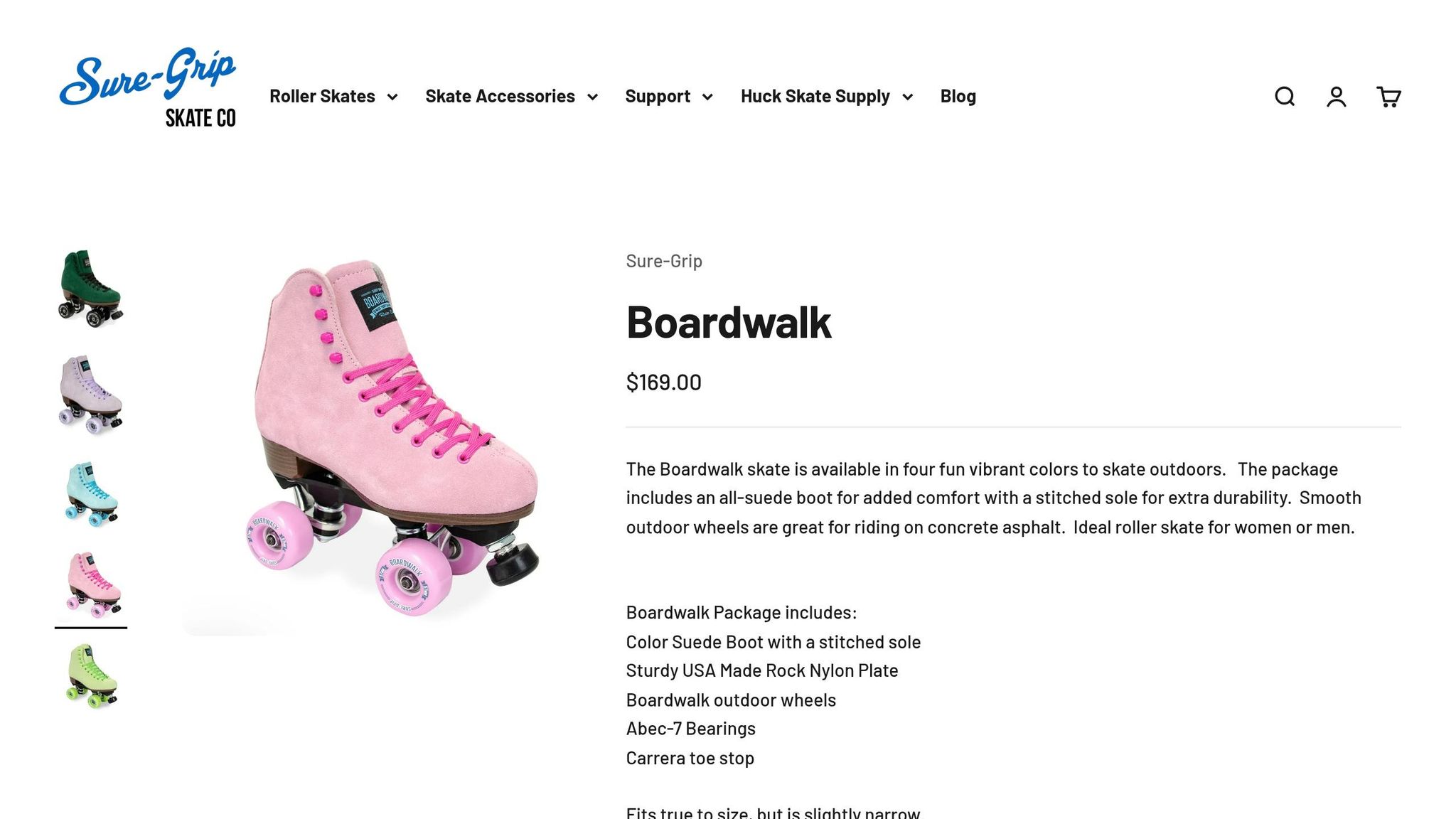
For those willing to invest a bit more, the Sure-Grip Boardwalk stands out as a premium option, priced between $169 and $199. Its high-top suede boot molds to your foot over time, while the padded collar ensures comfort during longer skating sessions. Named "Best for Beginners" by Yahoo Health/Fitness, this skate is built to offer both stability and comfort from day one.
| Model | Price | Boot Style | Best For |
|---|---|---|---|
| Riedell R3 | ~$199 | Low-cut, flat | Mobility & derby-style skating |
| Impala | $84–$124 | High-top, heeled | Style & affordability |
| Pacer GTX 500 | ~$59.99 | Low-cut, flat | Budget indoor skating |
| Moxi Rainbow Rider | ~$69 | High-top, heeled | Wide feet & beginner support |
| Sure-Grip Boardwalk | $169–$199 | High-top, heeled | Long-term comfort & stability |
For something outside the box, you might want to check out Snowfeet Mini Ski Skates - they’re a fun alternative to traditional roller skates!
Side-by-Side Comparison of Top Roller Skates
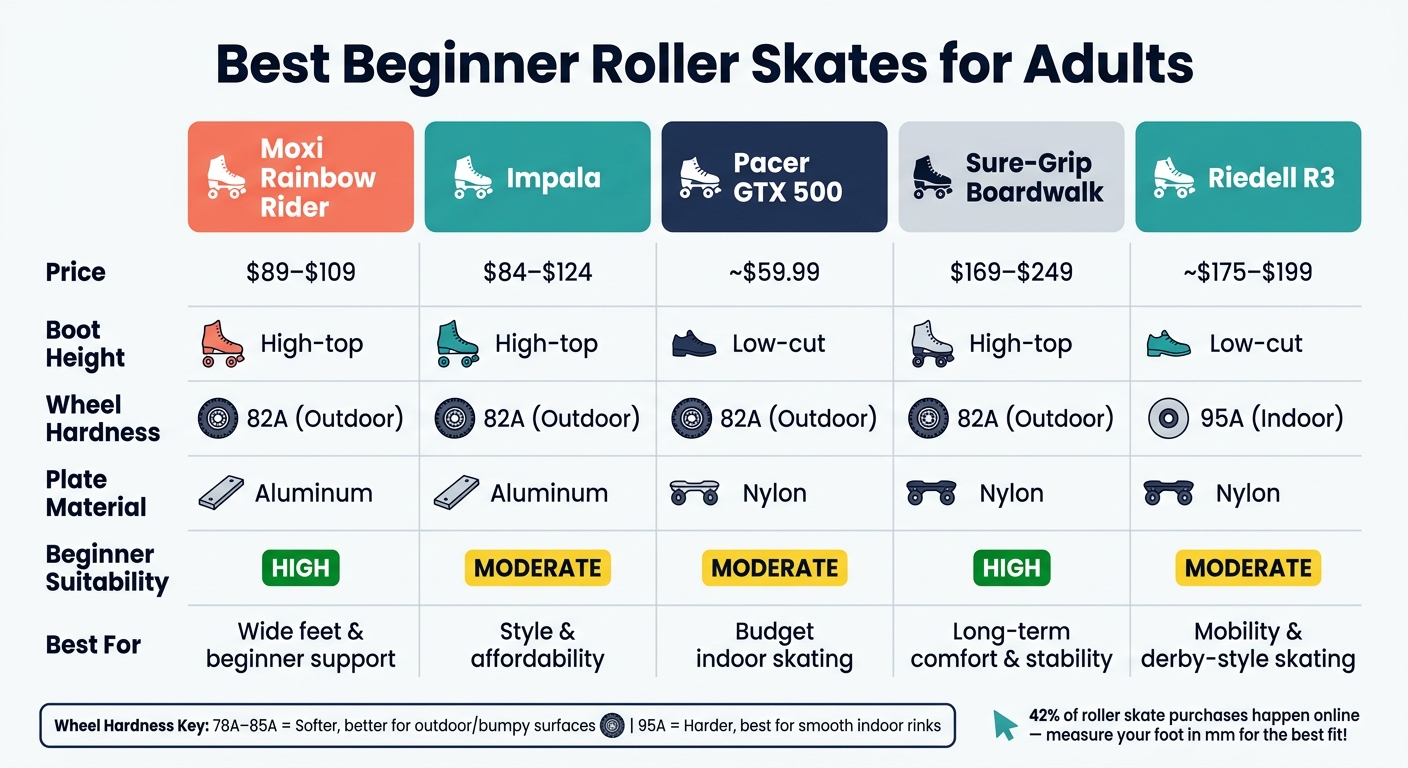
Best Beginner Roller Skates for Adults: Side-by-Side Comparison
Picking the right pair of skates can feel tricky, but breaking down the key specs makes it much easier - especially for beginners. Below, you’ll find a table comparing some of the most affordable roller skates for beginners based on factors like boot height, wheel hardness, plate material, and how beginner-friendly they are.
| Model | Price | Boot Height | Wheel Hardness | Plate Material | Beginner Suitability |
|---|---|---|---|---|---|
| Moxi Rainbow Rider | $89–$109 | High-top | 82A (Outdoor) | Aluminum | High – stable heel, wide fit |
| Impala | $84–$124 | High-top | 82A (Outdoor) | Aluminum | Moderate – fixed toe stop, narrow fit |
| Pacer GTX 500 | ~$59.99 | Low-cut | 82A (Outdoor) | Nylon | Moderate – lightweight but less stable |
| Sure-Grip Boardwalk | $169–$249 | High-top | 82A (Outdoor) | Nylon | High – suede molds to foot, wide fit |
| Riedell R3 | ~$175–$199 | Low-cut | 95A (Indoor) | Nylon | Moderate – built for rinks; needs ankle strength |
Now, let’s unpack what these specs mean for your skating experience.
Key Takeaways for Beginners
The Riedell R3 stands out as the only skate here specifically designed for indoor rinks. Its 95A wheels are perfect for smooth surfaces but can be a bit harsh on outdoor terrain compared to the softer 82A wheels on the other models. If you’re planning to skate outside, the softer wheels on skates like the Moxi Rainbow Rider or Sure-Grip Boardwalk are a better choice - they handle cracks and bumps much more comfortably.
Boot height is another critical factor. High-top boots - like those on the Moxi Rainbow Rider, Impala, and Sure-Grip Boardwalk - offer excellent ankle support, which is a big help for beginners still finding their balance. On the other hand, low-cut designs like the Riedell R3 and Pacer GTX 500 give more freedom of movement, but they require stronger ankles and are generally better for experienced skaters.
When it comes to plate material, aluminum (used in the Moxi Rainbow Rider and Impala) is more durable and rigid, making it great for heavier use. Nylon (found in the Sure-Grip Boardwalk, Riedell R3, and Pacer GTX 500), while lighter, can reduce leg fatigue during long skating sessions. For casual beginners, though, the difference in weight isn’t a huge deal.
Lastly, fit can make or break your skating experience. The Sure-Grip Boardwalk and Moxi Rainbow Rider are better for wider feet, while the Impala tends to run narrow. If you’re shopping online (which, fun fact, accounts for 42% of roller skate purchases), measuring your foot in millimeters can help you find the best fit, rather than relying solely on standard shoe sizes.
And if roller skates aren’t quite your thing, there’s always Snowfeet mini ski skates. These offer a unique mix of stability and flexibility, making them a fun alternative for beginners. Up next, we’ll dive into how these stack up and share some practical tips for getting started.
sbb-itb-17ade95
Snowfeet Mini Ski Skates as a Roller Skate Alternative
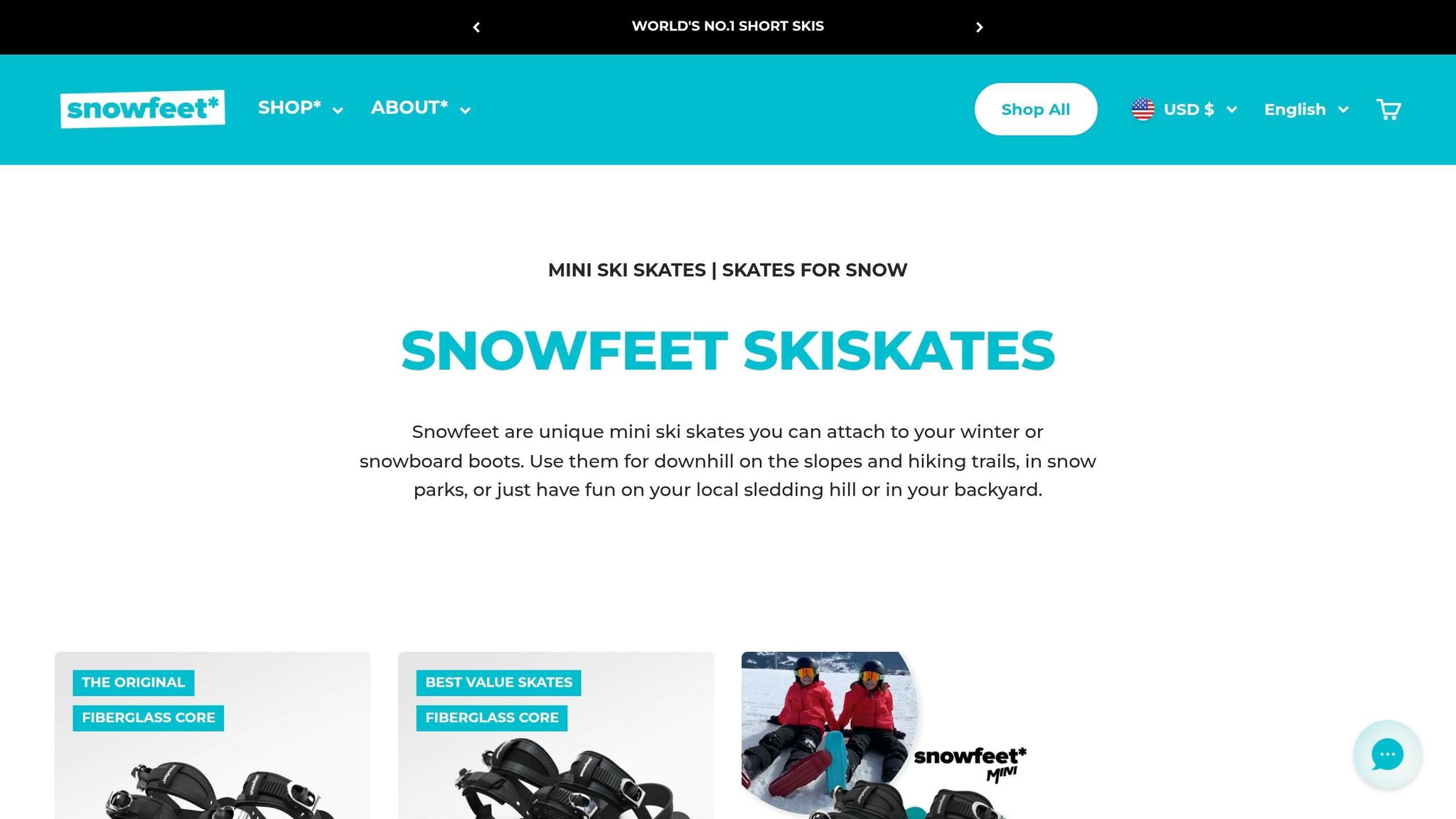
Ever thought about swapping your roller skates for something a little different when the snow starts falling? Snowfeet Mini Ski Skates might just be what you're looking for. While they’re not your typical roller skates, they’re a fantastic option for adults who want to dive into a winter sport without the steep learning curve of skiing or snowboarding. Let’s break down what makes Snowfeet stand out.
These mini ski skates are designed specifically for snow. Think of them as a hybrid between skating and skiing, but without the bulk of traditional skis. Measuring only 15 inches (38 cm), they’re compact enough to fit in a backpack - way easier to carry around than most skating or skiing gear. Plus, they attach directly to your regular winter boots, so there’s no need to invest in extra equipment.
Here’s where they really shine: while roller skates need smooth pavement or indoor surfaces, Snowfeet are built for snow-covered trails, slopes, and even sledding hills. They’re also among the easiest winter sports for beginners. Unlike skiing or snowboarding, which often require pricey lessons and hours on beginner slopes, Snowfeet offer a much quicker path to fun. And speaking of costs, a traditional skiing or snowboarding setup can easily exceed $500, not including all the required gear. Snowfeet, on the other hand, come in at $250 for the whole package - no special boots or bindings needed. That’s a solid deal for anyone just starting out in winter sports.
While they won’t replace your roller skates for summer cruising, Snowfeet are a great way to keep that skating vibe alive all year. Glide on snow in winter, roll on wheels in summer - it’s a win-win for skating enthusiasts looking to mix things up.
Getting Started Tips for Adult Roller Skating Beginners
So, you've got your skates - now what? Starting roller skating as an adult might feel a little daunting, but with the right setup, some basic skating techniques, and a smart practice plan, you'll be cruising in no time. Most people start feeling steady after just 3–5 sessions, and with around 10–15 hours of practice, you'll likely feel truly at ease on wheels.
Gear and Safety Basics
Safety first! Before you even think about rolling, make sure you're equipped with the right protective gear. Wrist guards are a must - wrist injuries are the most common issue for beginners who skip this step. Add a CPSC-certified helmet, knee pads with sturdy caps, and flexible elbow pads to the mix. You can grab a solid set from brands like Triple Eight, Smith Scabs, 187 Killer Pads, or Pro-Tec Street for about $100–$120. Trust me, that's way cheaper than dealing with an injury.
"The difference between geared-up and non-geared beginners? The first group comes back next week." - TSKKC
Another pro tip: wear thick socks that go higher than your skate's collar. This simple trick can save you from blisters and rubbing while your skates are breaking in.
Basic Skating Techniques
Start small - literally. Begin on grass or carpet to get used to the skates without the risk of rolling away. Once you're ready for pavement, get into the "ready position": feet shoulder-width apart, knees slightly bent, and a gentle forward lean to keep your weight balanced over the wheels.
Next, try the "penguin walk" - short, shuffling steps instead of long glides. It’s the quickest way to build confidence. When you're feeling stable, move on to the "Magic V". Point your toes outward slightly, push one foot diagonally, and bring your feet back together. This simple move is the foundation for skating forward.
Where to Practice Safely
Finding the right practice spot can make all the difference. Smooth, predictable surfaces are key when you're just starting out. Here are some great options:
- Tennis courts: These are smooth and often have a fence to grab if you lose balance. Just make sure they're not in use!
- Empty parking garages: Flat and often covered, they're great for bad weather. But keep in mind, concrete can be unforgiving if you fall.
- Skating rinks: The ultimate beginner-friendly spot. For about $10, you get a smooth, controlled environment free of outdoor obstacles.
- Bike paths: These are great for practicing longer glides but watch out for gravel, debris, and pedestrians.
- Grass or carpet: Perfect for balance practice, though you won’t be able to work on actual gliding.
| Practice Spot | Best Feature | Watch Out For |
|---|---|---|
| Tennis Courts | Smooth surface + fence for support | May be occupied by players |
| Parking Garages | Flat, weather-protected | Hard concrete if you fall |
| Skating Rinks | Predictable, quality flooring | Entry fee (~$10) |
| Bike Paths | Good for longer glides | Gravel, debris, pedestrians |
| Grass / Carpet | Safe for balance-only practice | Can't practice actual gliding |
Avoid sidewalks early on - they're full of cracks, pebbles, and uneven surfaces that can easily trip you up before you’ve built up your reflexes.
With these tips, you'll be rolling with confidence in no time. 🛼
How to Maintain Your Roller Skates
Taking care of your roller skates isn’t just about keeping them looking good - it’s about ensuring they perform well and stay safe to use. A little maintenance goes a long way in extending their lifespan and keeping you confident on your wheels. The good news? Skates, especially Snowfeet products, are pretty low-maintenance compared to other sports gear, making upkeep simple and stress-free.
Cleaning and Lubricating Bearings
Bearings may be small, but they’re the heart of your skates. If they get clogged with dirt or debris, you’ll notice your wheels slowing down or hear unpleasant grinding noises when you roll. To keep them in top shape:
- Wipe down enclosed bearings to remove grime.
- Use bearing oil to lubricate non-enclosed bearings for smoother performance.
Bones Reds bearings are a popular choice because they stay smooth longer with regular care. Neglecting your bearings can lead to slower speeds and even risky wobbles while skating. After taking care of the bearings, don’t forget to check your wheels and brakes to keep everything running smoothly.
Checking Wheels and Brakes
Wheels wear out over time, and it’s easy to miss the early warning signs. One common issue is "coning", where the wheels wear into a slanted shape instead of staying flat. This can mess with your balance and grip. You might also notice uneven wear patterns or that your skates don’t roll as easily. Plan to replace your wheels every 6–12 months, though heavy outdoor use might mean swapping them out sooner.
For brakes (or toe-stops), keep an eye on their shape and height. If they start to wear at an angle, wiggle, or look degraded, it’s time for a replacement. Worn brakes make it harder to stop safely. Replacement wheels and toe-stops are easy to find and typically start around $19.99. Lastly, always check your axle nuts before skating - too tight and your wheels won’t spin freely; too loose and they could fall off mid-skate.
Snowfeet products are designed with durable, low-maintenance components that hold up well, even in snowy conditions, giving you one less thing to worry about.
Storing Skates the Right Way
Moisture is your skates’ worst enemy. After every session, loosen the laces, take out the tongue and insoles, and let the inside air out. This simple step prevents odor and moisture damage.
When storing your skates, pick a cool, dry spot. Avoid leaving them in places like a hot car or near a sunny window, as heat can warp or crack the boot material. A ventilated skate bag with mesh pockets is perfect for transport and short-term storage. If you have leather boots, condition them every month or two to keep them from cracking. For an extra touch, toss a moisture-absorbing sachet inside the boots overnight to keep them fresh. With consistent care and proper storage, your skates - and Snowfeet mini ski skates - will stay in great shape season after season.
| Maintenance Task | How Often | Why It Matters |
|---|---|---|
| Post-session care | After every session | Keeps grime, odor, and moisture damage at bay |
| Check axle nuts and hardware | Before every session | Ensures wheels stay secure and spin properly |
| Inspect wheels for wear | Monthly or every 10 uses | Maintains balance and traction |
| Condition leather boots | Every 1–2 months | Prevents cracking and extends boot lifespan |
| Replace wheels | Every 6–12 months | Restores grip and rolling performance |
Conclusion
Getting into roller skating as an adult is completely doable - you just need the right gear to start off strong. As Dirty Deborah Harry, Founder of Dirty School of Skate, says:
"If you've never skated before, you could get a very inexpensive pair of skates, but that may hinder you from actually learning to skate."
Investing in quality skates makes a huge difference. It helps you build skills and confidence with the easiest roller skates for beginners that lower-quality gear might hold back. Whether you go for the Riedell R3 for rink skating, the Sure-Grip Boardwalk for outdoor adventures, or the Moxi Rainbow Rider for its beginner-friendly design, these skates provide a great starting point for your journey.
And if you're looking to mix things up during winter, consider trying Snowfeet Mini Ski Skates. They’re compact, easy to use, and versatile - offering a fun alternative to traditional skis or snowboards without the bulk or high cost.
Don’t forget safety gear like a helmet, wrist guards, and knee pads as you learn the ropes. With well-maintained skates, regular practice, and a focus on safety, you’ll be gliding confidently in no time. Plus, keeping an open mind to new options like Snowfeet* can add a whole new layer of excitement to your winter activities.
FAQs
Should I buy indoor or outdoor skates first?
Beginners often find it easier to start with indoor skates. Why? Indoor surfaces are smooth and controlled, making it simpler to focus on building balance and perfecting your technique. Without the distractions of uneven terrain, you can concentrate on the basics. Once you feel steady and confident indoors, moving to outdoor skates opens up a whole new world of fun. Outdoor skating adds a bit of adventure with its varied surfaces, but starting indoors gives you a solid foundation to handle those challenges.
How do I know if my skates fit correctly?
To get the right fit for your skates, they should feel snug yet comfortable. They need to support your ankle and foot without pinching or causing pain. Pay attention to heel lift - it should be minimal - and your toes should gently touch the front without feeling squished. Snowfeet's adjustable models make it easier to get a fit that feels just right, offering both comfort and stability. A proper fit isn't just about comfort; it's also essential for staying safe and feeling confident on the ice.
What should I upgrade first: wheels, bearings, or toe stops?
For those just starting out, upgrading your wheels is usually the smartest move. It can make a big difference in stability and give you a much smoother ride. Go for medium-hard wheels - they offer better control, which is super helpful as you’re learning.
After that, think about upgrading your bearings. Better bearings can boost your speed and reduce friction, making your skates feel more effortless. As for toe stops, they’re less of a priority unless you’re looking for better stopping power or specific features for your skating style.
Start with wheels if you want the biggest improvement right away.











Leave a comment
This site is protected by hCaptcha and the hCaptcha Privacy Policy and Terms of Service apply.