



















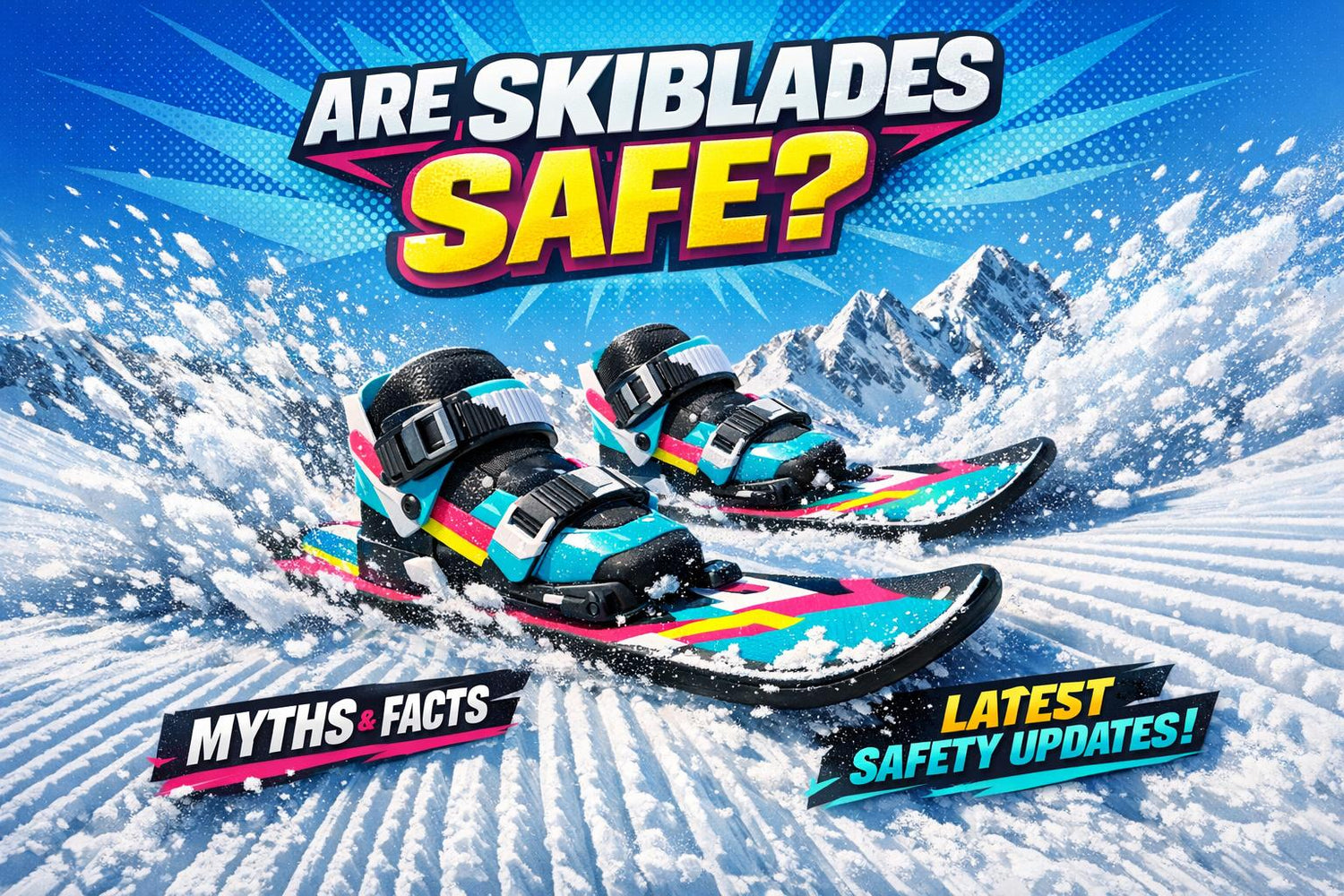
Skiblades, or mini skis, are a compact and fun alternative to traditional skiing gear. But are they safe? The short answer: Yes, when used correctly. Here's why:
- Speed and Control: Skiblades can handle high speeds on groomed runs and are highly responsive, allowing for precise turns and quick stops.
- Terrain Versatility: While best suited for groomed slopes and snow parks, longer skiblades can tackle more challenging conditions like light powder.
- Injury Risks: Skiblades' lightweight, shorter design reduces strain on joints and makes falls less severe compared to traditional skis or snowboards.
- Resort Compliance: Skiblades with metal edges and proper bindings meet U.S. ski resort safety standards.
Whether you're a beginner or an experienced skier, skiblades offer a portable, easy-to-learn, and safe option for winter sports. Stick to groomed slopes, wear protective gear, and start with the right size for your skill level to maximize safety and enjoyment.
All you need to know - Snowfeet* | Skiskates | Skiboards | Snowblades | Skiblades FAQ
Common Skiblade Safety Myths Explained
Let’s clear up some common misconceptions about skiblade safety, especially when comparing them to traditional skis and snowboards.
Myth 1: Skiblades Can't Handle High Speeds
Think skiblades are slow? Think again. These compact skis are designed to perform at high speeds, especially on groomed runs. Their narrow build reduces the surface area touching the snow, cutting down resistance on hard-packed slopes. This makes them not only quick but also highly responsive, giving you precise control even at faster speeds. Snowfeet Skiskates, for example, are described as "professional and faster", specifically built for ski slopes [4, 8]. While their shorter length changes how you manage speed, it doesn’t cap your velocity. Instead, it enhances agility, letting you switch edges quickly and carve tighter turns - all without sacrificing stability.
Now, let’s talk about how they fare on challenging terrains.
Myth 2: Skiblades Don't Work on Difficult Terrain
It’s true that shorter skiblades, like Snowfeet models in the 38–50 cm range, are best suited for groomed runs, snow parks, and hiking trails. They’re not ideal for deep powder (over about 4 inches) or extremely steep, ungroomed terrain [11, 4, 13]. But here’s the thing: longer skiblades - like the 99 cm and 120 cm versions - are a whole different story. These models are better equipped for carving, handling snow parks, and even tackling powder conditions [11, 12]. Plus, features like metal edges provide excellent control, helping you navigate a wide variety of conditions [11, 4, 13]. And let’s not forget, even traditional skis can struggle in deep powder.
Finally, let’s address concerns about injuries.
Myth 3: Skiblades Cause More Injuries
Worried that skiblades might be riskier? The truth is, falling while using Snowfeet skiblades is often safer than with traditional skis or snowboards [13, 4]. Their lightweight design and shorter length reduce the strain on your joints, making them a beginner-friendly option with a lower risk of injury. The wider, shorter design also improves balance, further minimizing the chances of strain. On top of that, safety features like metal ski edges and built-in heel brakes give you extra control - exactly what you’d want in high-quality equipment [13, 4].
As the Snowfeet Store puts it:
"Falling is safer than with skis or snowboards." – Snowfeet Store
With these myths out of the way, it’s time to dive into the real safety features and limitations of skiblades. Stay tuned!
Skiblade Safety Facts and Limitations
Now that we’ve cleared up some myths, let’s dive into what skiblades are great at - and where they might fall short.
How Skiblades Handle Different Snow Conditions
Skiblades shine on groomed, compact snow thanks to their metal edges, which allow for precise carving. Snowfeet, in particular, perform best on firm surfaces like hiking trails, cross-country paths, and sledding hills. They even handle icy terrain well because staying on edge provides excellent control. That said, they’re not the best choice for deep powder - just like even the most advanced carving skis struggle in those conditions. These performance traits highlight the importance of having the right equipment, which brings us to the next point.
Bindings and Equipment Requirements
Snowfeet Skiblades come with adjustable bindings that fit US ski boot sizes 4.5–14.5 and snowboard boot sizes 6–14.5. For the best experience, pair them with waterproof shoes that offer solid ankle support, like winter boots or snowboard boots. Learning the "hockey stop" is key to maintaining control. Here’s a tip: keep the bottom of your Snowfeet waxed. This helps you go faster and prevents snow from sticking - especially useful on longer outings. Once you’ve got the right setup, the next step is figuring out who these are best suited for.
Who Should Use Skiblades: Skill Level Guide
Skiblades are designed to accommodate a wide range of users. Beginners often find them easy to pick up, sometimes mastering the basics in just minutes without lessons. If you’ve got experience with ice hockey, ice skating, or inline skating, you might find them even easier to learn since the balance feels familiar. Chan Saelee, a lifelong snowboarder, described Snowfeet as feeling "more like ice skating on snow." While it took some getting used to, he was carving S-turns as a first-timer.
Experienced skiers also love skiblades for their agility and playfulness. They’re lighter and more responsive than traditional long skis, making them a fun alternative. Plus, their shorter design makes falls less intimidating - you can get back up as easily as you would with skates.
Safety Standards and Resort Rules
Before hitting the slopes, make sure your gear checks all the boxes for resort standards. The good news? Snowfeet Skiblades are designed to meet all standard equipment requirements at U.S. ski resorts.
Requirements for Retention Devices and Metal Edges
U.S. ski resorts have some basic rules: your gear needs to have metal edges and bindings that securely attach to your boots. Snowfeet Skiblades deliver on both fronts with metal ski edges, meeting this key requirement.
Another must-have is a way to prevent runaway equipment. Snowfeet's non-release bindings include a safety leash for each leg, keeping everything in check. For models over 99 cm, release bindings with built-in brakes handle this job, so there's no need for leashes.
These features ensure Snowfeet Skiblades align with the technical standards most resorts require.
US Ski Resort Equipment Policies
Now, let’s take a closer look at how U.S. resorts approach skiblades.
The latest policies show that most ski resorts, slopes, and snow parks in both Europe and the U.S. allow Snowfeet, as well as similar skiboards, snowblades, and skiblades. According to the Snowfeet Team, "the odds of being banned because of Snowfeet are very, very low".
"Most ski resorts usually let you use Snowfeet and similar 'short skis' on their slopes, but there might be some exceptions. Based on our experience, if you act like you're using regular skis, people usually won't bother you. If someone does, you can explain that Snowfeet have the same metal ski edges as other skis, which is a common requirement for ski resorts."
- Snowfeet Store
While individual resort rules may differ slightly, Snowfeet Skiblades consistently meet the general standards. To avoid surprises, it’s always smart to double-check your resort’s specific guidelines before heading out.
sbb-itb-17ade95
Snowfeet Skiblades vs. Traditional Skis and Snowboards
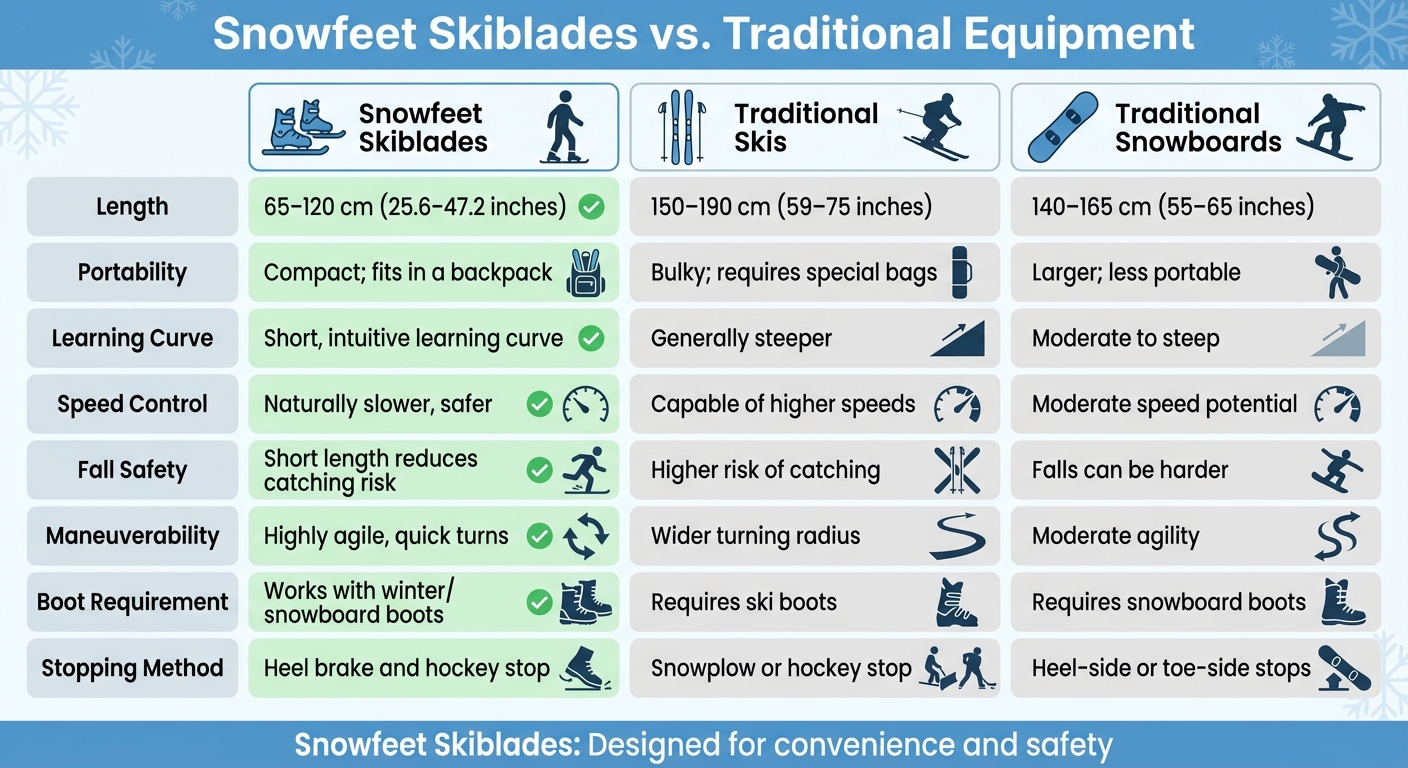
Snowfeet Skiblades vs Traditional Skis and Snowboards Comparison
Choosing between Snowfeet Skiblades and traditional winter sports gear isn’t just about size - it’s about portability, safety, and ease of use. These compact skiblades bring a fresh twist to the slopes, offering unique benefits that go beyond what traditional skis or snowboards provide.
Let’s start with size. Traditional skis, which are typically 5 to 6 feet long, can be a hassle to carry and store. Snowfeet Skiblades, on the other hand, range from just 65 to 120 cm (about 25.6 to 47.2 inches), making them small enough to fit in a backpack - no special equipment bags required.
Safety-wise, Snowfeet Skiblades stand out. Unlike traditional skis, which rely solely on release bindings, these skiblades feature metal edges and a built-in heel brake for better control. Their shorter length also reduces the risk of catching on snow, which can lead to falls. In fact, falling with Snowfeet is generally less risky compared to traditional skis or snowboards. For beginners, this added safety and their intuitive design make Snowfeet easier to handle, with fewer chances of collisions and smoother, more precise turns.
The compact design doesn’t just help with safety - it also makes them incredibly agile. Quick turns and controlled stops are a breeze, and some models even offer a broader base for extra stability, which can be helpful for those with knee issues. Below is a quick comparison of Snowfeet Skiblades versus traditional skis and snowboards to highlight these differences.
Comparison Table: Snowfeet Skiblades vs. Traditional Equipment
| Feature | Snowfeet Skiblades | Traditional Skis | Traditional Snowboards |
|---|---|---|---|
| Length | 65–120 cm (25.6–47.2 inches) | 150–190 cm (59–75 inches) | 140–165 cm (55–65 inches) |
| Portability | Compact; fits in a backpack | Bulky; requires special bags | Larger; less portable |
| Learning Curve | Short, intuitive learning curve | Generally steeper | Moderate to steep |
| Speed Control | Naturally slower, safer | Capable of higher speeds | Moderate speed potential |
| Fall Safety | Short length reduces catching risk | Higher risk of catching | Falls can be harder |
| Maneuverability | Highly agile, quick turns | Wider turning radius | Moderate agility |
| Boot Requirement | Works with winter/snowboard boots | Requires ski boots | Requires snowboard boots |
| Stopping Method | Heel brake and hockey stop | Snowplow or hockey stop | Heel-side or toe-side stops |
Snowfeet Skiblades are clearly designed for convenience and safety, making them a fantastic choice for beginners or anyone looking for a more portable and user-friendly option on the slopes.
How to Use Skiblades Safely
Getting the most out of your skiblades starts with choosing the right gear and sticking to smart safety habits. Snowfeet Skiblades come in a variety of sizes, each tailored to different skill levels and riding styles. Picking the right size can make all the difference in your experience on the slopes. With that in mind, here’s how to stay in control and reduce risks while enjoying your Snowfeet Skiblades.
Choosing the Right Snowfeet Skiblade Size
Snowfeet offers skiblades in three main lengths: 65 cm (25.6 inches), 99 cm (39 inches), and 120 cm (47.2 inches). Each size is designed with specific users in mind:
- Beginners should go for the 38 cm Mini Ski Skates or the 65 cm model. These shorter options provide better control and stability, making it easier to build confidence.
- Intermediate riders - those who’ve nailed the basics - might prefer the 99 cm models. They balance speed and control, making them perfect for carving on groomed trails and having fun in snow parks.
- Advanced skiers looking for speed and precision can opt for the 120 cm Short Skis. These offer the performance of traditional skis but with the added agility of shorter equipment.
It’s worth noting that all Snowfeet products are designed for packed or groomed snow. They’re not made for deep powder, which helps keep conditions consistent and your ride more predictable - key factors for staying safe.
Once you’ve picked the right size, it’s time to focus on safety practices.
Safety Best Practices for Skiblade Users
To stay safe and in control, follow these tips:
- Stick to groomed slopes with even, predictable conditions, especially when starting out.
- Always wear protective gear like helmets, wrist guards, and knee pads. These can make a big difference in the event of a fall.
- Double-check your gear before hitting the slopes. Ensure bindings are properly adjusted, metal edges are sharp, and the built-in heel brake is working.
- Progress gradually. Start with easy runs and work your way up to steeper terrain as you get more comfortable. Avoid very steep slopes or deep powder until you’re confident in your skills and equipment.
Why Snowfeet Skiblades Are Safer Than Traditional Skis
Snowfeet Skiblades have some built-in safety advantages that set them apart from traditional skis.
First, their compact size means less momentum during a fall, allowing for quicker recoveries. That means you can react faster, make adjustments, and regain balance more easily.
Second, unlike traditional skis that require heavy, rigid boots, Snowfeet work with regular winter shoes or snowboard boots. This setup allows for more natural ankle movement, which can reduce the risk of injury during a fall. Plus, the metal edges and built-in heel brake provide dependable stopping power, giving you more control when it matters most.
Another perk? Snowfeet’s shorter learning curve. Beginners can pick up the basics faster, spending less time in that tricky phase where falls are more common. The intuitive design helps build confidence quickly, letting you focus on enjoying the ride. And because they’re lightweight and compact, there’s less strain on your body, which means fewer awkward movements that might lead to spills.
Conclusion: Skiblades Are Safe for Winter Sports
Skiblades are a safe option for winter sports when used with proper equipment and guidelines. Concerns about speed, terrain, and injury risks often don't hold up against the facts. Snowfeet Skiblades, for example, meet all U.S. resort safety standards. They come equipped with metal edges, secure bindings, and built-in retention devices that comply with 2026 safety policies.
The ski industry itself supports their use. Resorts like Telluride Ski Resort in Colorado and Arizona Snowbowl explicitly allow skiblades on their lifts, provided they are commercially manufactured with metal edges and proper retention devices. This acceptance highlights that skiblades are recognized as safe, reliable equipment when used responsibly.
Throughout this article, we've seen how Snowfeet Skiblades' compact design and flexible boot compatibility can reduce risks during falls. Their smaller size minimizes fall momentum, making it easier to recover and maintain control compared to traditional skis. Plus, the option to wear snowboard boots or regular winter shoes instead of stiff ski boots adds comfort and reduces joint strain.
Whether you're starting out with the 65 cm (25.6 inches) model, carving groomed runs on the 99 cm (39 inches) version, or tackling advanced terrain with the 120 cm (47.2 inches) option, there’s a size suited to your skill level. Stick to groomed slopes, wear a helmet and protective gear, and ensure your bindings are properly adjusted. This combination of thoughtful design and user-friendly features makes Snowfeet Skiblades a safer and more comfortable choice for winter sports enthusiasts.
FAQs
Are skiblades safer than traditional skis?
Skiblades, especially Snowfeet Skiblades, are often seen as a safer choice for beginners compared to traditional skis. Why? For starters, they’re lightweight, easy to handle, and designed to work with regular winter boots. This means less risk of injuries tied to rigid, non-release bindings. Plus, their lower speeds and simple controls make them perfect for first-timers, reducing the chances of high-speed crashes or binding-related mishaps.
On the other hand, traditional skis are built for higher speeds and require more skill to navigate, which can make them trickier - and riskier - for beginners. While many traditional skis come with advanced release bindings to prevent injuries, some short-ski setups have been associated with an increased risk of ankle and tibia injuries. Compared to these, Snowfeet Skiblades offer a more beginner-friendly, safer, and stress-free way to enjoy snow sports, making them a great alternative to conventional alpine skis.
Can skiblades handle all types of terrain effectively?
Skiblades are a versatile choice for tackling various terrains, making them a great pick for both beginners and seasoned riders. They shine on groomed slopes, where their control and easy maneuverability really stand out. While they can manage light powder and some off-piste adventures, their sweet spot is packed snow and moderate terrain. For deeper powder or rough, uneven surfaces, though, traditional skis or snowboards might be the better option.
Snowfeet Skiblades bring something extra to the table - they’re designed to be safer and more beginner-friendly than traditional skis. Their shorter length (available in sizes like 65 cm, 99 cm, and 120 cm) gives you more control and lowers the risk of injury, making them accessible for just about anyone. If you’re after snow gear that’s fun, portable, and reliable, Snowfeet Skiblades are built to give you a safe and enjoyable day on the slopes.
What makes Snowfeet Skiblades a safe choice for winter sports?
Snowfeet Skiblades are all about keeping things simple, safe, and fun. Built from fiberglass-reinforced materials, they strike a balance between being sturdy and lightweight, giving you better control on the slopes. Plus, they work with your regular winter boots - no need for those clunky ski boots or bindings that can feel overwhelming, especially if you're just starting out.
For safety, it's smart to gear up with a helmet and UV-protective goggles. These will help protect you from impacts and shield your eyes from the sun's glare. Thanks to their compact size, Snowfeet Skiblades are easier to handle, which can mean fewer spills compared to managing longer skis or snowboards. They’re a practical, user-friendly option for anyone looking to dip their toes (or boots!) into a winter sport that’s both fun and approachable.











Leave a comment
This site is protected by hCaptcha and the hCaptcha Privacy Policy and Terms of Service apply.