



















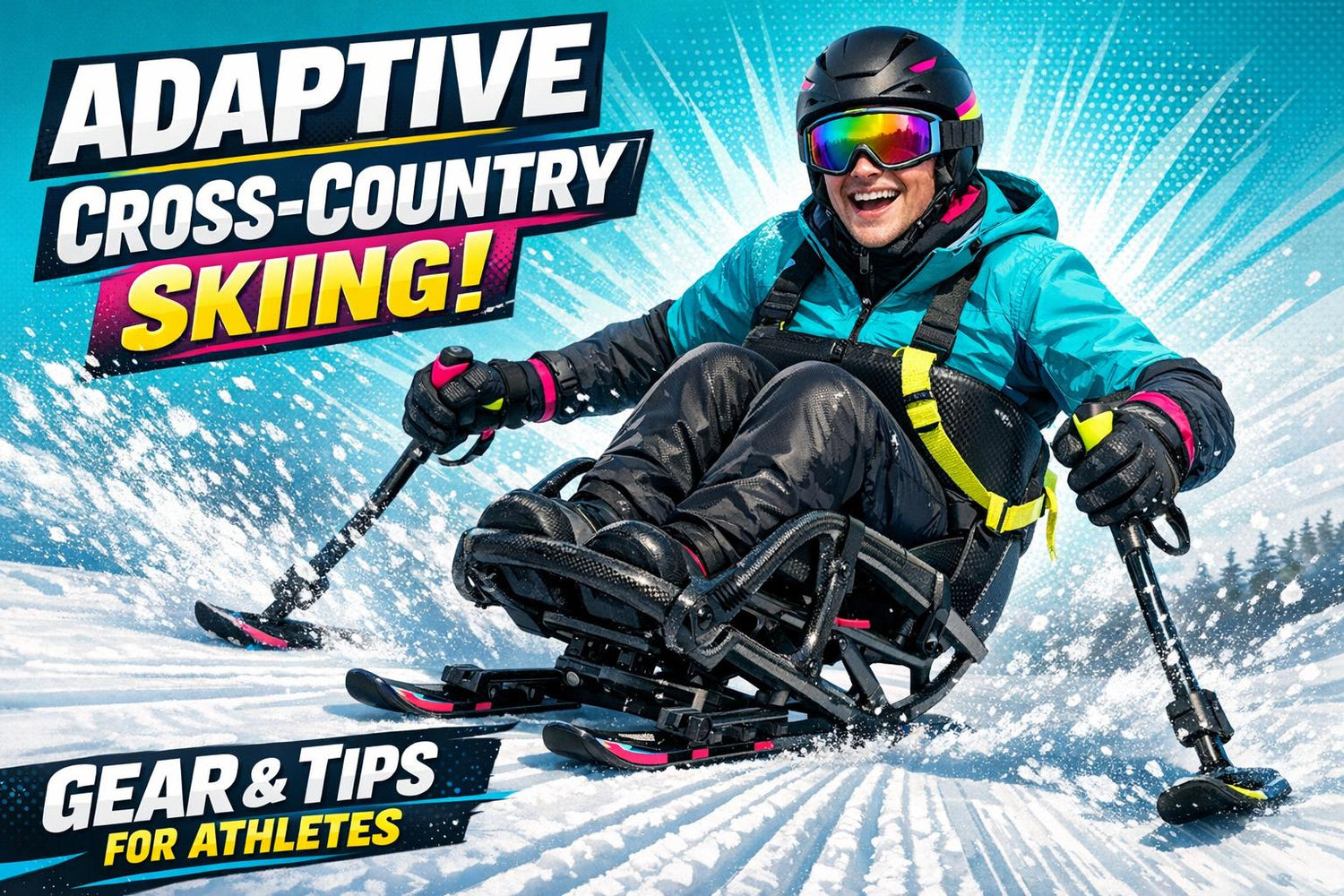
Adaptive cross-country skiing makes Nordic skiing accessible to athletes with disabilities through specialized gear and techniques. Whether you're using sit-skis, outriggers, or shorter skis like the Snowfeet* NORDIC Cross-Country Skate Skis, the right equipment can make skiing safer, easier, and more fun. Here's what you need to know:
- Sit Skis: Designed for lower-body disabilities, these provide stability and use adjustable poles for propulsion.
- Outriggers: Help with balance and steering for standing or sit-skiing athletes.
- Snowfeet* Skis (90 cm): Lightweight, compact, and compatible with regular winter shoes - perfect for varied terrains and easier to handle than long skis.
- Safety Gear: High-contrast vests, voice amplifiers, and guide communication systems are essential for visually impaired skiers.
Why Snowfeet* Skis? They're portable, budget-friendly (around $250), and work on multiple terrains, unlike traditional long skis or sit skis. Plus, they eliminate the need for specialized ski boots.
Ready to hit the trails? Start with gear tailored to your needs, practice key techniques, and stay safe by maintaining your equipment and communicating clearly with guides or partners. Whether you're a beginner or a seasoned skier, there's a setup that works for you.
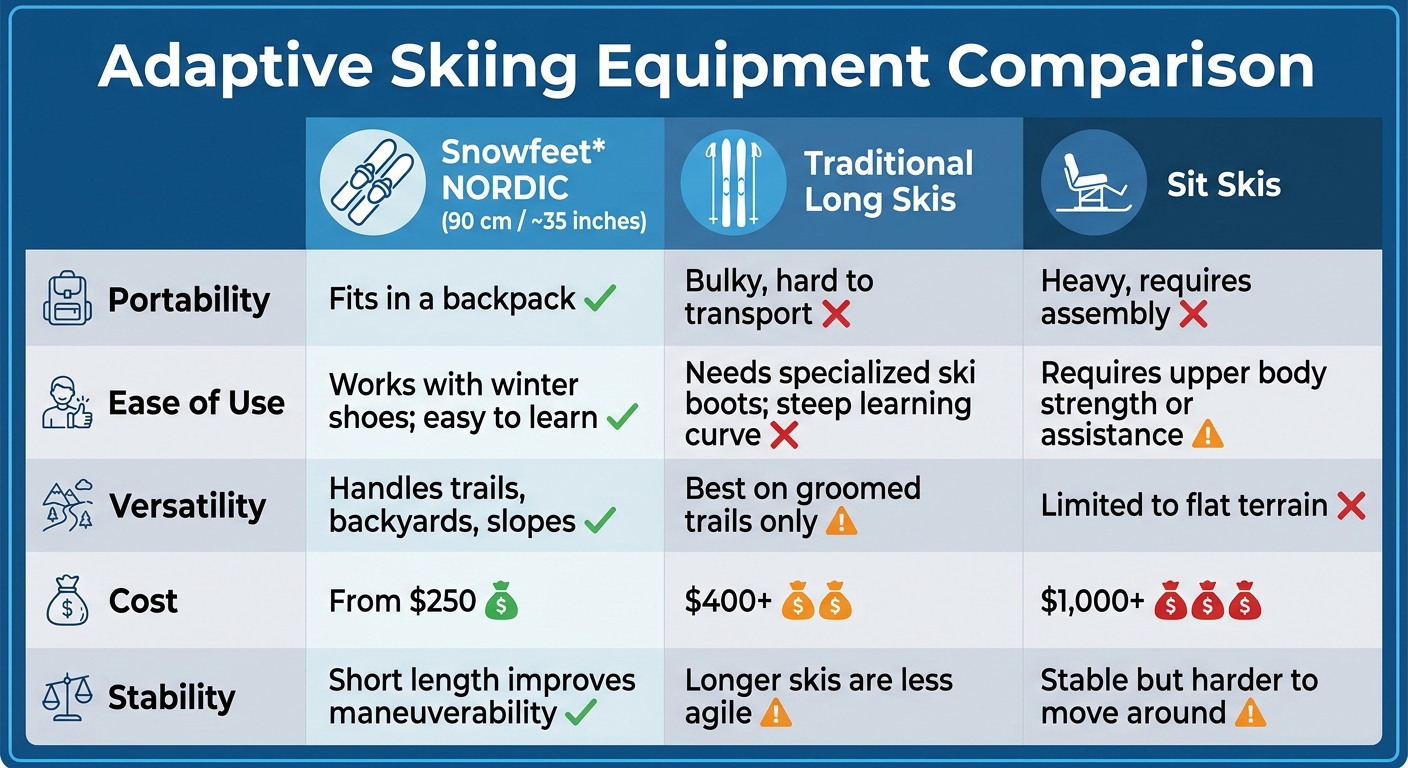
Snowfeet NORDIC vs Traditional Cross-Country Skis vs Sit Skis Comparison
Adaptive cross-country skiing for people with disabilities
Adaptive Gear for Cross-Country Skiing
Adaptive cross-country skiing gear enables athletes with disabilities to ski with greater independence, comfort, and performance. Here's a closer look at some of the equipment designed to meet different needs, boosting both safety and efficiency on the trails.
Sit Skis for Lower-Body Disabilities
Sit skis are designed for athletes with conditions like spinal cord injuries, cerebral palsy, multiple sclerosis, or lower-body amputations. These skis feature a molded seat (often called a "shell") attached to a frame with a suspension system mounted on Nordic skis. This setup provides a low center of gravity, ensuring stability while navigating classic track systems.
Athletes use adjustable-length poles for propulsion. For those with more severe mobility challenges, many sit skis come with a detachable rear push handle, allowing a guide to assist on tough terrain or longer outings. A harness system keeps the skier securely fastened to the frame, offering better control during turns or over uneven surfaces.
Outriggers and Three-Track Skis for Balance Support
Outriggers - essentially forearm crutches with small skis attached - are a game-changer for balance, steering, and braking. They’re used by both sit-skiers and standing athletes. U.S. Paralympic Gold Medalist Stephani Victor highlighted their importance, saying:
"Again, I want to thank you and Enabling Technologies for your continued support through sponsorship of the best outriggers made in the world! There's just no skiing without them!"
Three-track skiing combines one standard ski with two outriggers to create a stable tripod, making it ideal for single-leg amputees. On the other hand, four-track skiing uses two skis and two outriggers, offering more stability for athletes with cerebral palsy, post-stroke conditions, or coordination difficulties. For beginners, outriggers with saw-tooth tails provide extra grip for better speed control and braking. Instructors also teach skiers to extend their arms outward during falls to reduce the risk of injury.
High-Contrast Vests and Voice Amplification for Visually Impaired Athletes
Visually impaired athletes depend on a buddy system, with a sighted guide leading the way. High-contrast vests make both the skier and guide easier to spot, especially in snowy or low-light conditions. Voice amplification devices further enhance communication, allowing guides to relay real-time directions and warnings clearly.
Adaptive programs, like those offered by Central Cross Country Skiing (CXC), have introduced laser biathlon equipment, enabling visually impaired athletes and veterans to participate in target shooting events. In competitions, athletes are classified based on their vision levels, and a factoring system adjusts finish times to ensure fair competition. Gear like this, along with innovations like Snowfeet* short skis, continues to push the boundaries of adaptive skiing possibilities.
Snowfeet* NORDIC Cross-Country Skate Skis (90 cm / ~35 inches): Why They Work Better
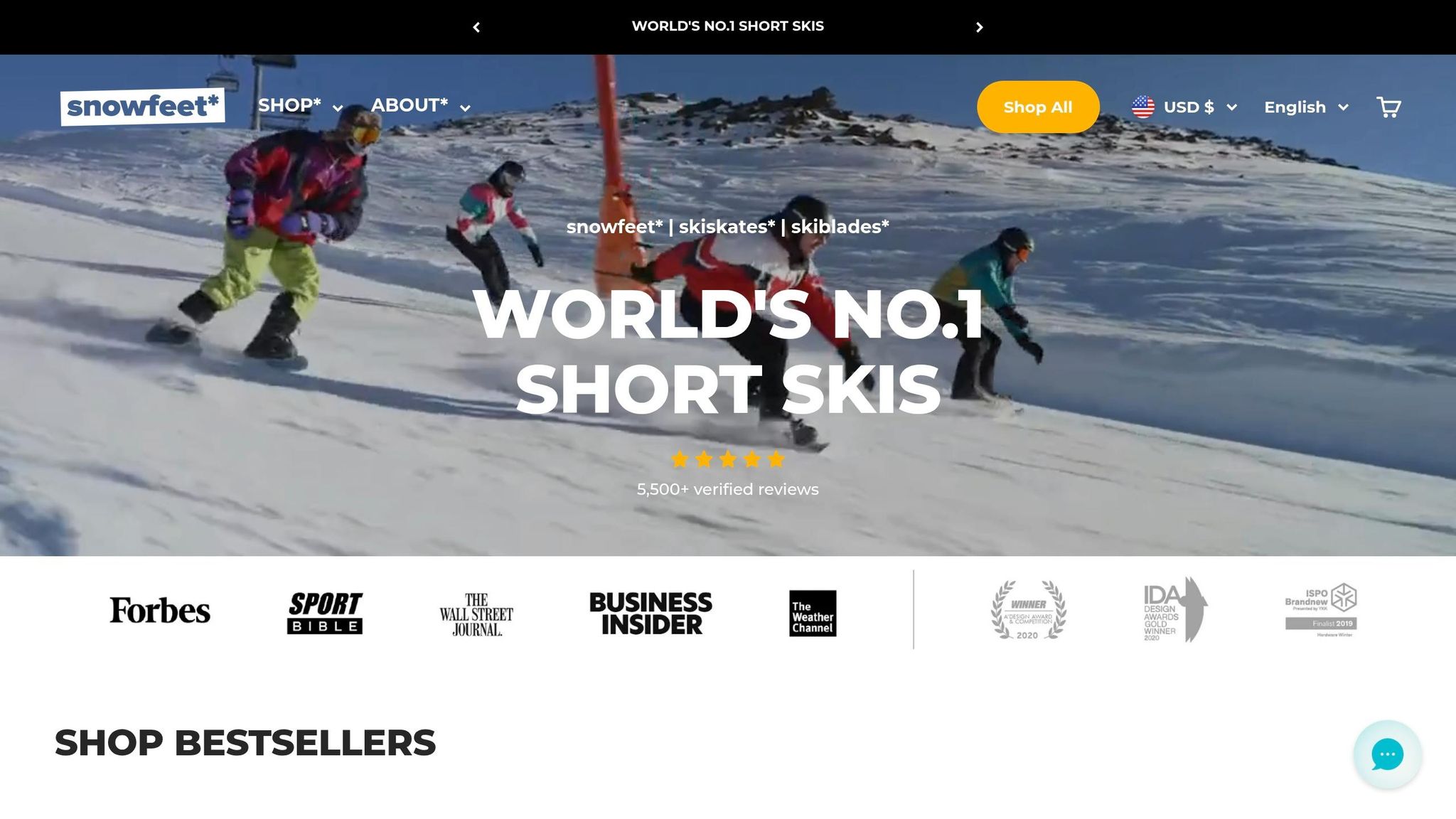
Snowfeet* NORDIC Cross-Country Skate Skis bring a fresh approach to adaptive skiing. These 90 cm (~35 inches) skis are designed for better control and maneuverability compared to traditional long skis. Plus, they ditch the need for restrictive, specialized ski boots - just pair them with your regular winter shoes. This makes them a game-changer for athletes who find traditional ski boots difficult to use. Let’s dive into what makes Snowfeet* stand out and why they’re a better fit for many skiers.
Features and Benefits of Snowfeet* Short Skis
The compact size of Snowfeet* is a major win for adaptive athletes. These skis are small enough to fit in a backpack, making transportation a breeze. Forget about lugging around long, awkward skis or dealing with heavy sit skis that require assembly. Traditional cross-country skis can stretch up to 6–7 feet, while Snowfeet* keep things light and easy to carry.
Another standout feature? Their versatility. While traditional cross-country skis are mostly limited to groomed trails, Snowfeet* shine on a variety of terrains - backyards, slopes, and uneven trails. They’re also much easier to learn, making them accessible for beginners and athletes with cognitive disabilities. And at $250, they’re far more budget-friendly than traditional long skis (often $400+) or sit skis (which can cost $1,000 or more).
Snowfeet* vs. Traditional Cross-Country Skis and Sit Skis
Here’s how Snowfeet* stack up against the competition:
| Feature | Snowfeet* NORDIC (90 cm / ~35 inches) | Traditional Long Skis | Sit Skis |
|---|---|---|---|
| Portability | Fits in a backpack | Bulky, hard to transport | Heavy, requires assembly |
| Ease of Use | Works with winter shoes; easy to learn | Needs specialized ski boots; steep learning curve | Requires upper body strength or assistance |
| Versatility | Handles trails, backyards, slopes | Best on groomed trails | Limited to flat terrain |
| Cost | From $250 | $400+ | $1,000+ |
| Stability | Short length improves maneuverability | Longer skis are less agile | Stable but harder to move around |
One of the biggest advantages of Snowfeet* is the freedom they offer with footwear. Traditional ski boots can be a real challenge - especially for adaptive athletes - but Snowfeet* let you skip that hassle entirely. The shorter length also gives skiers more control, making it easier to handle turns and navigate different terrains. This thoughtful design makes skiing more accessible and enjoyable for a wide range of athletes, setting the stage for even more refined techniques in the next section.
sbb-itb-17ade95
Technique Adjustments for Athletes with Disabilities
Fine-tune your skiing approach to boost control and make the most of your time on the trails, no matter your disability or equipment.
Poling and Propulsion for Sit Ski Users
Mastering pole technique and timing can make a big difference for sit ski users. Double poling - using both arms simultaneously - is ideal for flat terrain or mild slopes, offering efficient forward motion. On gradual inclines, switch to single poling to maintain a steady rhythm and save energy.
To maximize efficiency, engage your core by leaning forward slightly and adding a hip thrust. This helps distribute the effort, reducing strain on your arms. For pole length, aim for poles that reach your head when seated. Longer poles provide extra power for uphill sections but require more upper body strength to handle effectively.
When it comes to turning or stopping, lean in the direction you want to go and use your poles or outriggers to create resistance. Applying glide wax to your skis can also reduce friction, helping you glide farther with each push.
Equally important is clear communication for visually impaired skiers sharing the trails.
Guide Communication and Tethering for Visually Impaired Skiers
Strong communication between skier and guide is absolutely essential. In cross-country skiing, guides typically ski alongside the skier in parallel tracks, providing a continuous stream of information about the terrain ahead. Commands should always come before the skier needs to act, giving them enough time to adjust their position and prepare for changes.
Before hitting the trail, agree on a set of simple, consistent cues. Examples include "Turn 3 O'Clock" for right turns, "Hold" to maintain your line, and "Curb Up/Down" for elevation changes. As APH ConnectCenter explains:
"Your sighted guide is your eyes, responsible for describing the surroundings, choosing the line of descent, and managing safety".
It's crucial to ensure both skier and guide interpret commands the same way to avoid any confusion, which could lead to unsafe situations.
For slower or flatter sections, the Pole-to-Shoulder technique works well. Place your hand on your guide's shoulder or hold a shared pole to move in sync. Tethers can also come in handy for gentle braking and steering, especially when wind noise makes it hard to hear verbal instructions.
Balance and Turning with Snowfeet* Short Skis
Adaptive techniques get an extra boost with Snowfeet* short skis, which are designed to enhance balance and turning. The Snowfeet* NORDIC model, at 90 cm (~35 inches), offers excellent stability and responsiveness. Their shorter length makes them easier to maneuver than traditional 6–7 foot cross-country skis, requiring less effort to initiate turns and providing better control on varied terrain.
For athletes with limb differences or balance challenges, outriggers can add stability and help with turning. The compact size of Snowfeet* makes them easier to handle, so you can focus on refining your skills without struggling with oversized equipment.
Proper weight distribution is key here. Keep your weight centered over the skis and use small, deliberate movements to steer. Since Snowfeet* work with regular winter shoes instead of stiff ski boots, you’ll enjoy better ankle mobility and a more natural foot position. This added flexibility improves balance and makes turning feel smoother and more intuitive.
Gear Fitting, Maintenance, and Safety
Getting the right fit, keeping your gear in top shape, and following smart safety practices can make adaptive skiing a smooth and enjoyable experience.
Adjusting Equipment for Different Disabilities
The right fit is non-negotiable when it comes to adaptive skiing gear. For sit skis, ensuring the seat and frame match your body measurements is crucial - it helps prevent injuries and gives you better control. Adjustable-length poles are a game-changer, too. They let you tweak propulsion mechanics to suit your sit-ski frame height or standing posture.
Snowfeet* NORDIC skis offer a unique advantage: they work with regular winter boots, skipping the need for stiff ski boots. This setup enhances ankle mobility, feels more natural, and eliminates the hassle of boot fitting that traditional cross-country skis require. Just strap on your winter shoes, adjust the bindings, and you're good to go.
Matt Feeney, Co-Founder of Adaptive Adventures, highlights the importance of equipment like outriggers:
"Superlite outriggers have revolutionized adaptive skiing for disabled skiers around the world. The light-weight design, comfortable cuffs and adjustability make them perfect for teaching or ripping the steeps!"
Similarly, Snowfeet* skis stand out with their compact 90 cm (~35 inch) design and lightweight build. They’re easier to handle and adjust compared to traditional longer skis. Once your gear fits perfectly, keeping it in good condition is the next step.
Waxing and Storage for Snowfeet* Skis
Taking care of Snowfeet* skis is refreshingly simple compared to traditional cross-country skis. Before each outing, apply a layer of glide wax to the base. This reduces friction, improves glide, and helps conserve your energy on the trails.
After skiing, wipe down your skis to remove moisture and debris. Store them in a cool, dry spot, away from direct sunlight, to avoid warping or damage to the base. While Snowfeet* skis are built to be durable and need less frequent servicing, it’s still a good idea to occasionally check the bindings and straps to ensure they’re secure and in good shape. With well-maintained gear, you’re ready to focus on staying safe on the trails.
Safety Protocols on Trails
Safety starts with preparation. Assess your abilities and make sure your equipment fits properly before heading out. Determine if you’ll need assistance based on the trail and your skill level. Reliable gear is a must for both safety and performance.
For added balance, especially when learning or tackling steeper sections, lightweight outriggers can provide excellent support. If mobility is a challenge, sit skis with detachable rear push handles allow guides to assist with navigation and ensure safety. Open communication with your guide or ski partner is essential - discuss trail conditions, upcoming turns, and any potential hazards.
Snowfeet* short skis bring an extra layer of safety. Their compact design makes them easier to control, allowing for quick directional changes and smooth navigation around obstacles. Stay mindful of other trail users, keep your speed under control, and always carry essential emergency supplies like a phone, whistle, and first-aid kit. A little preparation goes a long way in keeping your adventure safe and fun.
Conclusion
Adaptive cross-country skiing opens up winter trails to athletes of all abilities, thanks to specialized gear like sit skis and shorter skis that make the sport more accessible. Whether you’re skiing with a guide, using balance supports, or skiing independently, having the right equipment can transform the experience into something empowering and enjoyable.
One standout option is the Snowfeet* NORDIC Cross-Country Skate Skis. These compact 90 cm (35-inch) skis offer better control and maneuverability compared to traditional long skis. Plus, they work with regular winter boots, removing the hassle of finding specialized ski boots and letting you focus on the joy of skiing. This kind of innovation has not only enhanced personal experiences but also helped grow a thriving adaptive skiing community across the country.
From Vermont to Colorado, adaptive skiing programs are flourishing. Events like the CXC Adaptive Cup, which started in 2018, and organizations such as Central Cross Country Skiing (CXC) - recognized as a Gold Medal Paralympic Sport Club Excellence Program - are creating more opportunities for athletes to compete and connect.
If you’re ready to dive in, start by exploring local clubs and seeking expert guidance. Resources like the MyXC Network of Clubs can help you find programs nearby. Instructor manuals can offer tips on fitting equipment properly, and starting with shorter skis is a great way to build confidence. With the right gear, skilled instructors, and a welcoming community, adaptive cross-country skiing can be your next winter adventure.
FAQs
Which adaptive setup is best for my disability?
When it comes to finding the right setup for adaptive skiing, it all boils down to your personal mobility or visual requirements. For many athletes, Snowfeet products have become a go-to choice. Take the Snowfeet Nordic Cross-country Skate Skis (90 cm), for example. These skis are lightweight, easy to carry, and simple to use. They offer a more straightforward option compared to traditional skis or snowboards. Their design focuses on mobility and ease of use, making them a fantastic choice for adaptive skiing and ensuring athletes of all abilities can enjoy the slopes to the fullest.
Can I use Snowfeet* with my winter boots?
Snowfeet* are made to be easy to carry and adaptable, working with many types of footwear, including winter boots. This makes them stand out compared to traditional skis, which usually need specialized ski boots.
Do I need a guide or outriggers to start?
Starting cross-country skiing with adaptive equipment is often straightforward, especially if you're using something like the Snowfeet NORDIC Cross-country Skate Skis. These are designed to be easy to use, making it possible for skiers to enjoy the sport without needing extra tools like outriggers or constant guidance.
That said, if you're new to skiing, having a guide or instructor can be super helpful. They can teach you proper techniques and help you handle different terrains more confidently. While outriggers are typically used in traditional skiing for balance and control, the simplicity of Snowfeet gear might make them unnecessary for many beginners.











Leave a comment
This site is protected by hCaptcha and the hCaptcha Privacy Policy and Terms of Service apply.