



















Snowboard Binding Angles Guide
Start With a Setup That Matches Your Riding
Choosing the right snowboard binding angles can make a huge difference in comfort, control, and confidence on the mountain. A rider who spends the day in the park usually benefits from a more balanced duck stance, while someone focused on carving groomers or chasing powder often prefers a more directional setup. That’s why a one-size-fits-all answer rarely works.
How This Tool Helps
This Snowboard Binding Angles tool gives you a practical starting point based on riding style, skill level, stance preference, and your goal. If you want comfort, it keeps things moderate. If you’re aiming for tricks, it nudges the setup toward a more symmetrical stance. For carving or deep snow, it shifts the recommendation toward a stronger front angle and a more directional rear foot.
Fine-Tune for the Best Feel
Every rider stands a little differently, so the best setup is the one that feels natural on snow. Use the recommendation as your baseline, then adjust with your stance width, knee alignment, and overall comfort in mind. A good snowboard stance should help you move freely, stay balanced, and ride with less strain from first chair to last lap.
FAQs
What binding angles should a beginner start with?
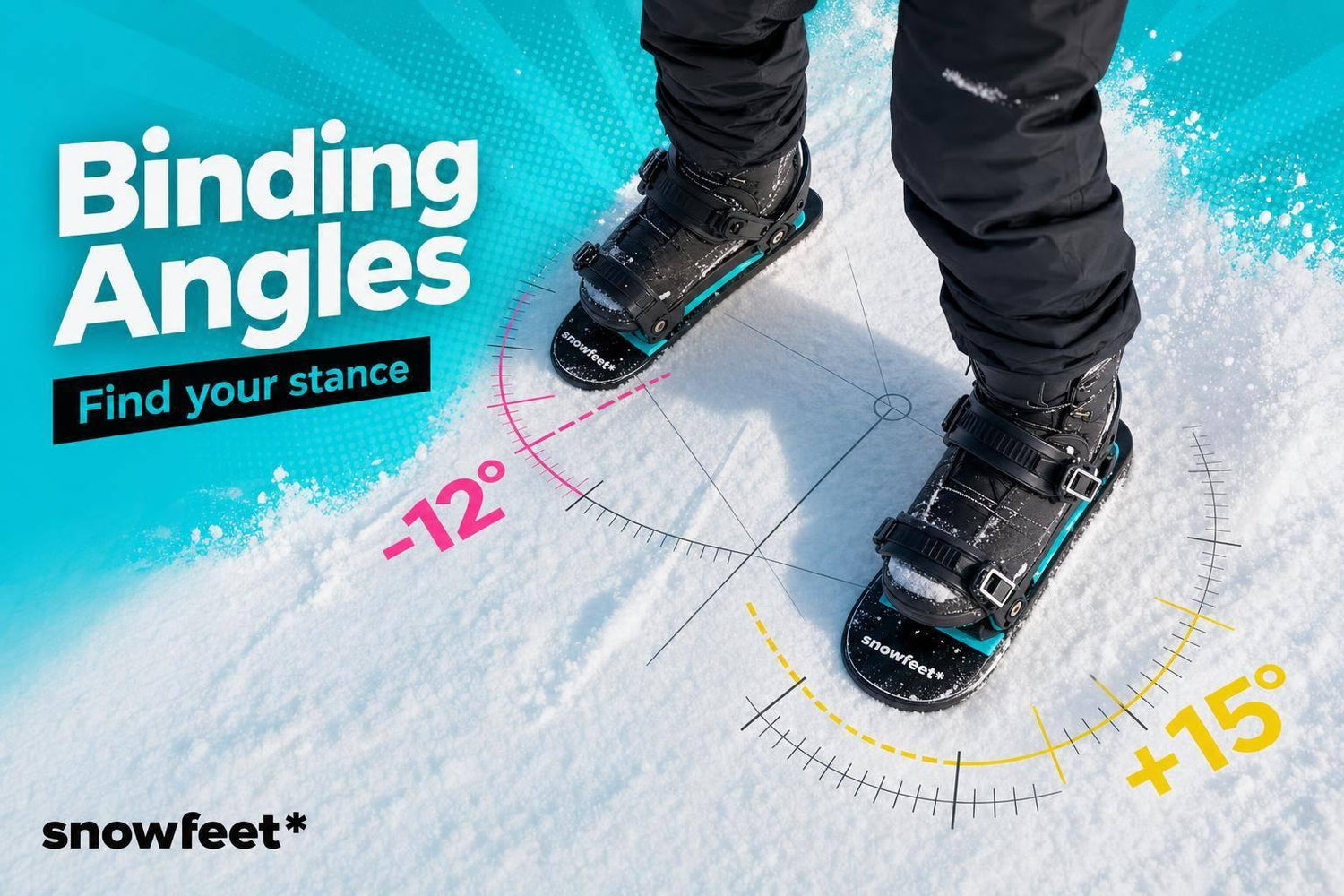
For most beginners, a mild duck stance is the easiest place to start because it feels balanced and forgiving. Something around +12 to +15 on the front foot and -3 to -9 on the rear foot often works well for all-mountain riding. It helps with basic turns, keeps your stance feeling natural, and usually puts less awkward stress on the knees than a more extreme setup.
What’s the difference between a duck stance and a directional stance?
A duck stance means the front foot points forward and the rear foot points backward, which creates a more centered, symmetrical feel. That setup is popular for freestyle and park riding because it makes riding switch and landing tricks feel easier. A directional stance uses a more forward-facing front foot and a rear foot that is less negative, flat, or even slightly positive, which tends to suit freeride, carving, and powder riding better.
Are the suggested angles exact, or should I change them?
They’re a starting recommendation, not a strict rule. Small changes can make a big difference depending on your hip mobility, boot size, board width, and how your knees track over your feet. If something feels awkward, adjust a few degrees at a time and pay attention to comfort, edge control, and whether your stance feels relaxed when you ride.











コメントを残す
このサイトはhCaptchaによって保護されており、hCaptchaプライバシーポリシーおよび利用規約が適用されます。