



















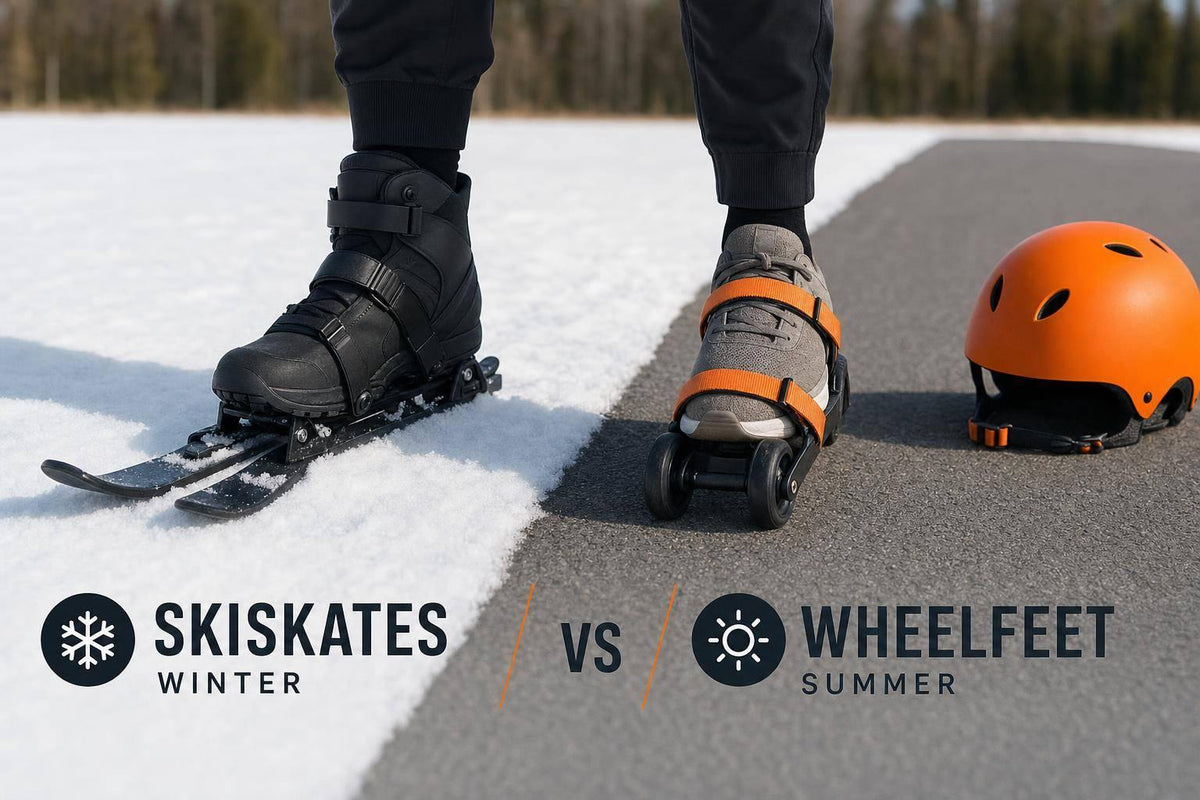
If you ride snow, get Snowfeet. If you ride pavement, get Wheelfeet. That’s the whole call in one line.
I’d keep it simple:
- Snowfeet 38 cm: best for casual snow days, local hills, and riders who want to use winter boots
- Skiskates 44 cm: best for ski-area laps, carving, and a more ski-like feel
- Snowfeet PRO 50 cm: best for riders who want more stability on snow at a lower starting price than Skiskates
- Wheelfeet: best for dry pavement, short rides, and regular athletic shoes
A few numbers help set the stage:
- Skiskates 44 cm: from $460
- Snowfeet PRO 50 cm: from $299
- Wheelfeet: $199 non-electric / $674 electric
- Electric Wheelfeet top speed: 15.5 mph
- Electric Wheelfeet range: about 15.5 miles per charge
- Skiskates length: about 17 inches
So, if you mostly hit ski slopes, packed snow, or small hills, I’d pick Snowfeet. If you mostly cruise bike paths, sidewalks, or smooth streets, I’d pick Wheelfeet. Wrong surface, wrong tool - and that’s where the fun drops off fast.
Snowfeet* & Skiskates Complete Guide | All you need to know about Skiskating
Quick Comparison
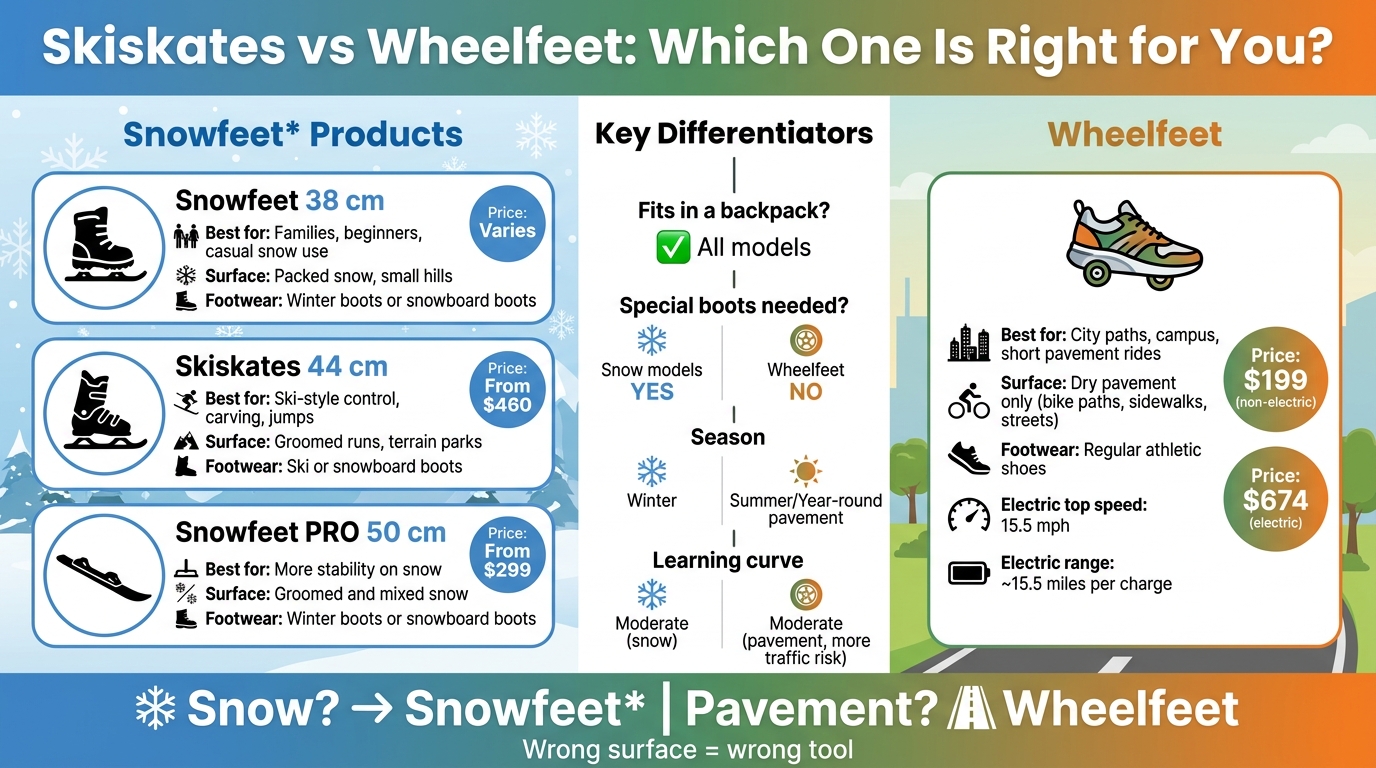
Skiskates vs Wheelfeet: Side-by-Side Comparison Guide
| Product | Best surface | Shoes/boots | Best for | Price |
|---|---|---|---|---|
| Snowfeet 38 cm | Packed snow, small hills | Winter boots or snowboard boots | Families, beginners, casual snow use | Varies |
| Skiskates 44 cm | Groomed runs, terrain parks | Ski or snowboard boots | Ski-style control, carving, jumps | From $460 |
| Snowfeet PRO 50 cm | Groomed and mixed snow | Winter boots or snowboard boots | More stability on snow | From $299 |
| Wheelfeet | Dry pavement only | Regular athletic shoes | City paths, campus, short pavement rides | $199 / $674 electric |
Here’s my short take: Snowfeet wins for winter. Wheelfeet wins for summer. If you want one setup for both, uh, that’s not how these work :)
For a quick look at similar riding styles, you can also check snow skating and skating clips on YouTube:
Now let’s get into the short version of who should buy what.
What Each Product Does Best
Each product has its own lane: Snowfeet* for snow, Wheelfeet for dry pavement.
Snowfeet* Skiskates 44 cm, Snowfeet 38 cm, and PRO 50 cm on Snow
Snowfeet* Skiskates are built for groomed ski slopes, terrain parks, and local snowy hills. The 44 cm Skiskates are small enough to fit in a backpack. That alone is pretty handy. They work with ski or snowboard boots and give you a skating-style feel on snow that many riders find easier to pick up than regular skiing.
The 38 cm Snowfeet clip onto regular winter boots, which makes them a simple way in for casual snow days, backyard hills, or anyone who wants shoe-based riding without buying ski boots. The PRO 50 cm gives you more stability than the 38 cm, so it can feel a bit more planted underfoot.
Best use cases include:
- Packed snow
- Groomed runs
- Terrain parks
- Short hills
That leads right into the next part: how they stack up on footwear, control, and portability.
Wheelfeet on Pavement
Wheelfeet are made for smooth, dry pavement like bike paths, boardwalks, and neighborhood streets. The electric version tops out at 15.5 mph and goes about 15.5 miles per charge, which makes it a solid fit for short commutes and campus trips.
Here’s the big catch: Wheelfeet are not designed for snow, ice, wet conditions, gravel, or rough off-road use. Pavement is their home turf. Snow and ice? Nope. That’s like bringing flip-flops to a ski hill.
Next up is the side-by-side look at terrain, footwear, learning curve, and portability.
sbb-itb-17ade95
Side-by-Side Comparison: Terrain, Footwear, Learning Curve, and Portability
Where You Can Ride Each One
These products are made for two very different worlds.
Snowfeet* gear is for snow: groomed resort runs, terrain parks, backyard hills, and light powder up to about 4 inches deep. Wheelfeet is for dry pavement only, like bike paths, sidewalks, and smooth city streets.
So, once the ground is set, the next thing to look at is pretty simple: footwear, control, and how easy it is to carry around.
| Snowfeet 38 cm | Skiskates 44 cm | Snowfeet PRO 50 cm | Wheelfeet | |
|---|---|---|---|---|
| Surface | Snow: groomed, packed, light powder | Snow: slopes and terrain parks | Snow: groomed and varied snow | Dry pavement only |
| Speed & stability | Nimble, playful | Agile, responsive | Most stable at speed | Fast on pavement, but more exposed to traffic and surface hazards |
| Weather limits | Avoid deep powder beyond about 4 in | Avoid deep powder | Handles varied snow well | Avoid rain, ice, and loose gravel |
Footwear Requirements and How They Affect Convenience
This is where the day-to-day difference hits hardest.
Skiskates 44 cm use ski or snowboard boots. Snowfeet 38 cm and PRO 50 cm work with winter shoes or snowboard boots. Wheelfeet strap onto regular athletic shoes. That last part is a big deal if you want to head out without packing extra gear.
All three Snowfeet* models fit in a backpack, and Wheelfeet does too. But Wheelfeet has one clear perk: no special boots needed. For commuting or travel, that’s tough to ignore.
That gap matters most for casual riders, city users, and anyone who doesn’t want their gear list to get out of hand.
| Snowfeet 38 cm | Skiskates 44 cm | Snowfeet PRO 50 cm | Wheelfeet | |
|---|---|---|---|---|
| Footwear type | Winter shoes or snowboard boots | Ski or snowboard boots | Winter shoes or snowboard boots | Regular athletic shoes |
| US size range | US 6–13 | US 4.5–14.5 (ski) / US 6–14.5 (snowboard) | US 6–13 | US 6–13 |
| Fits in a backpack? | Yes | Yes | Yes | Yes |
| Travel convenience | Easy to carry, but snow-specific footwear required | Easy to carry, but requires ski/snowboard boots | Backpack-friendly, snow-specific footwear required | High - uses regular shoes and is easy to carry |
Learning Curve, Control, and Safety
Your background changes which one will feel natural.
If you ski or snowboard, you’ll usually adjust faster to Skiskates 44 cm and PRO 50 cm. If you come from skating or rollerblading, Snowfeet 38 cm and Wheelfeet tend to make more sense right away.
On snow, stopping uses moves many riders already know: snowplow (pizza) stance, carving turns, and side-slipping. The PRO 50 cm is the easiest of the three Snowfeet* options for many beginners because the extra length adds more stability and makes speed control feel less twitchy.
Skiskates 44 cm can feel sharp and fun, but they also reward clean technique. A common beginner mistake is catching an edge at speed. Snowfeet 38 cm sits a bit closer to a skating feel, which can help some riders, but icy patches and edge catches are still part of the learning process.
Wheelfeet is a different beast. It uses skate-style braking, so beginners need more room and better control. On pavement, there’s less margin for error, especially near cars, rough patches, or loose gravel.
Start Wheelfeet in an empty lot before riding near traffic.
| Snowfeet 38 cm | Skiskates 44 cm | Snowfeet PRO 50 cm | Wheelfeet | |
|---|---|---|---|---|
| Best prior experience | Ice skating, inline skating, rollerblading | Skiing, snowboarding | Skiing, snowboarding | Inline skating, rollerblading |
| Beginner-friendliness | Moderate to high on gentle hills | Moderate | High - most stable option | Moderate on quiet paths |
| Stopping difficulty | Moderate | Intermediate | Easiest of the three | Higher on pavement |
| Protective gear | Helmet + wrist guards + knee pads | Helmet + wrist guards + knee pads | Helmet + wrist guards + knee pads | Helmet + wrist guards + knee/elbow pads |
| Common fall risk | Edge catch, icy patches | Edge catch at speed | Misjudging varied snow | Surface hazards and traffic |
Those control differences feed straight into the lifestyle and budget choice next.
Which One Fits Your Lifestyle and Budget
Best Pick for Resort Riders, Families, and Winter Fun
Now that the terrain and footwear differences are clear, the last piece is simple: your budget and how often you ride.
If your winters include ski trips or family mountain days, Snowfeet* is the best pick for occasional resort use. For people who ride now and then, compact gear is a lot easier to justify than a full ski setup. It takes up less space, it’s easier to carry, and it doesn’t feel like a whole production just to have fun.
The right model comes down to what you want from a day on snow:
- Snowfeet 38 cm is the best fit for casual riders and families who want to try something new on a local hill.
- Skiskates 44 cm (from $460) give you more of a ski-like feel, with room for carving and small jumps.
- Snowfeet PRO 50 cm (from $299) works best for riders who want more control without going all the way to a full ski setup. It’s also easy to pack for travel.
When Wheelfeet Make More Sense
If you ride on pavement more than snow, then Wheelfeet is the comparison that matters.
Wheelfeet ($199 for the non-electric version, $674 for the electric version) strap onto regular athletic shoes and are made for smooth pavement: bike paths, quiet neighborhood streets, and paved routes. So, if your plan looks more like cruising around town than heading to the mountain, that setup makes more sense.
But there’s a catch. Rough ground, gravel, potholes, and cobblestones are a bad match, and the electric version asks for more braking skill than most snow gear.
That leaves season and surface as the final tiebreakers.
Conclusion: Choose Snowfeet* for Snow, Wheelfeet for Pavement
After looking at terrain, footwear, control, and portability, it comes down to one simple question: where do you ride most?
Snowfeet* Skiskates are built for snow and ski-style control. They work with ski or snowboard boots, which makes them a strong pick for groomed runs and packed snow. Wheelfeet are made for dry pavement, not snow.
Wheelfeet, on the other hand, belong on smooth pavement. They’re for streets and paths, not winter slopes. If you use either one on the wrong surface, control drops and the chance of getting hurt goes up.
| Your situation | Best pick |
|---|---|
| Ski resort weekends, snowy hills, winter trips | Snowfeet* Skiskates (44 cm or PRO 50 cm) |
| Local snow hills, families, beginners | Snowfeet* 38 cm |
| City streets, bike paths, dry pavement | Wheelfeet |
| Both surfaces | Buy both only if you need both |
If you ride on snow more than pavement, Snowfeet* is the better buy. They’re small enough to fit in a backpack and give you real ski-style fun without dragging around a full setup. If you mostly ride pavement and rarely get snow, Wheelfeet fit that job well.
Skiskates for snow. Wheelfeet for pavement.
FAQs
Can I use one setup year-round?
No. Snowfeet products and wheeled skating alternatives are made for different surfaces and seasons.
Snowfeet are built for snow. Their metal edges and bases aren’t made for pavement. If you use them on asphalt, you can damage the gear and make things less safe.
So, for winter snow and summer pavement, you’ll need separate setups.
Which Snowfeet* model is easiest for beginners?
For beginners, the easiest Snowfeet* model is Snowfeet PRO 50 cm*.
It’s the most forgiving option and the easiest one to learn on. You get a stable, confidence-building ride, but it still feels light and fun from day one. And that matters. Nobody wants their first run to feel like a wrestling match :)
It also skips the downsides that come with less stable models or setups that work only with ski boots.
Are Wheelfeet safe for commuting?
Generally, no. Wheelfeet aren’t a good pick for commuting. They don’t have the stability of full-sized skates, and they can struggle on uneven, cracked, or crowded city streets.
If you still want to use them, keep it to smooth, flat, empty pavement. And yeah, gear up every time:
- CPSC-certified helmet
- Wrist guards
- Elbow pads
- Knee pads
City pavement can be rough, and Wheelfeet don’t give you much room for error.











コメントを残す
このサイトはhCaptchaによって保護されており、hCaptchaプライバシーポリシーおよび利用規約が適用されます。