



















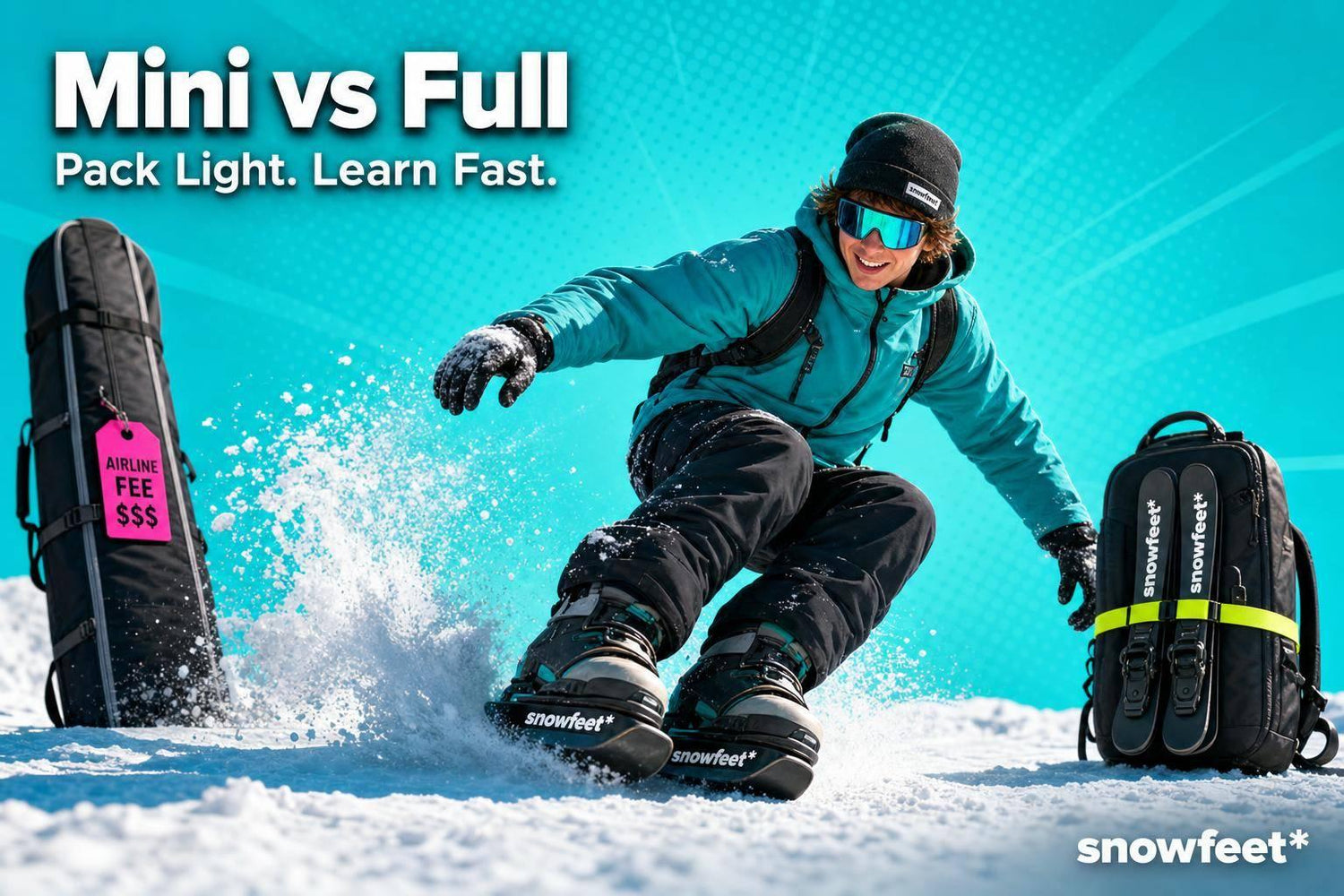
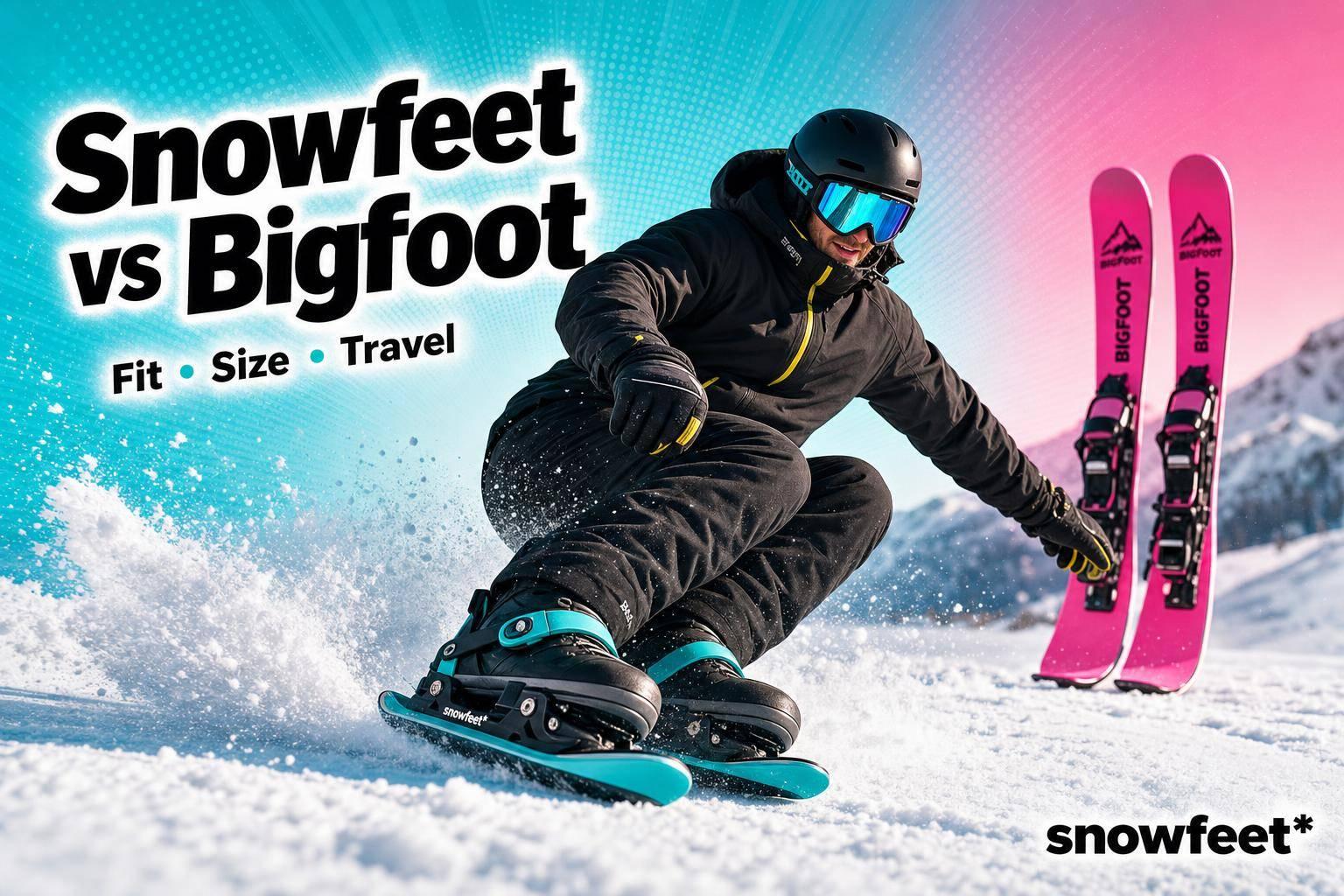
If I’m traveling light, I’d pick mini skis. For most 2–3 day trips, they’re easier to pack, easier to fit in a car, and less of a pain at the airport. Full-length skis still win for long, fast runs and deep powder, but they ask for more space, more gear, and more effort.
Here’s the short version:
- Mini skis (44–120 cm) are better for flights, trunks, closets, and short resort days
- Full-length skis (about 170–190 cm for many adults) are better for speed, edge hold, and deeper snow
- 44 cm and 65 cm mini skis can fit in standard luggage, and some setups may skip the ski bag
- Airline ski bag fees can hit about $60 each way on some U.S. trips
- Mini skis work well for families, beginners, and weekend riders
- Full-length skis fit advanced riders who care more about downhill feel than travel ease
If you want the simple answer: pick mini skis for travel, pick full-length skis for all-day resort performance.
Mini Skis vs Full-Length Skis: Travel & Performance Comparison
Snowboarder tries Snowfeet* | Which Snowfeet* Short Ski is the Best? | Snowblades 44, 65, 99 Review
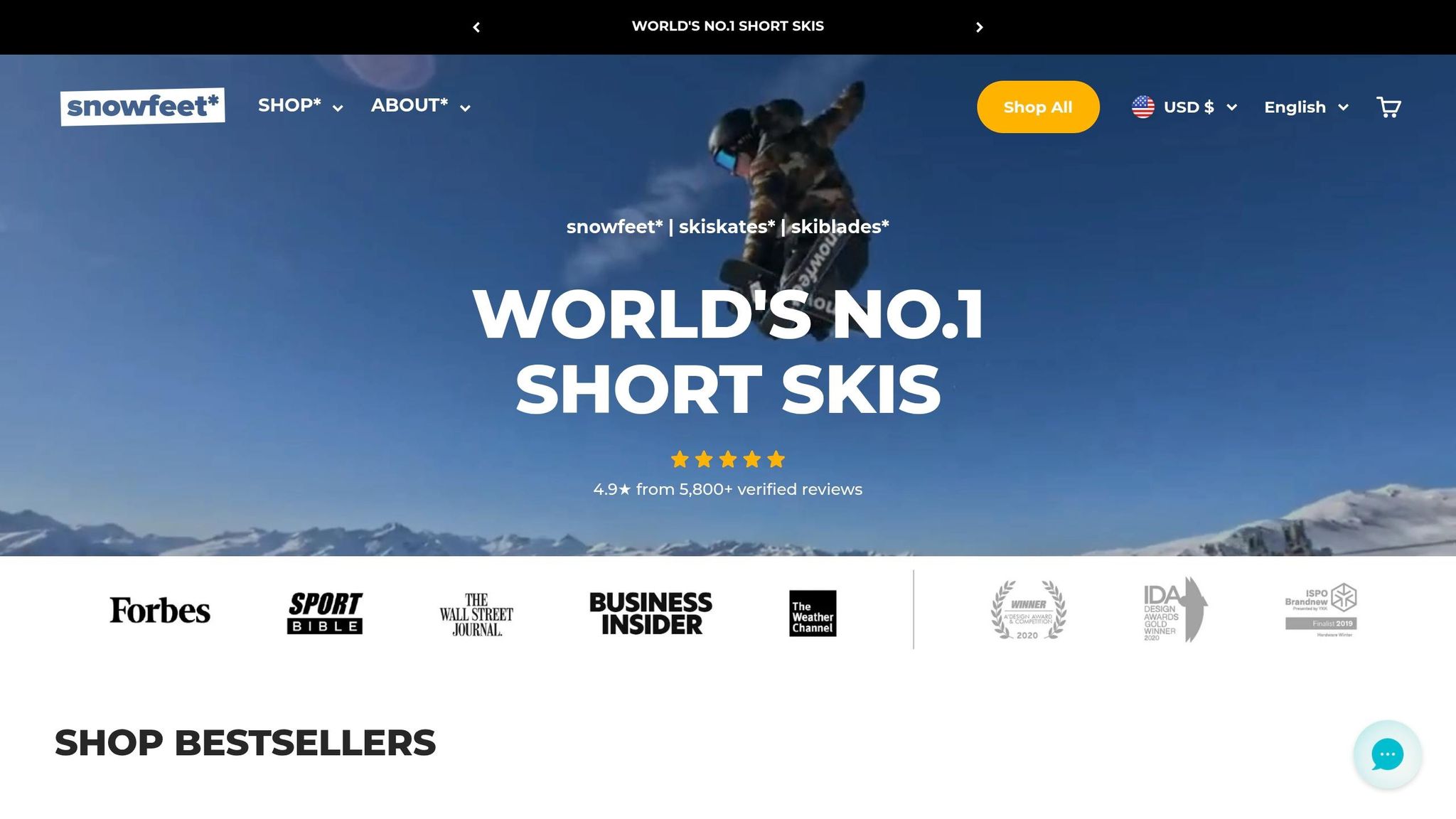
Quick Comparison
| Ski type | Travel ease | Flight setup | Car fit | Learning curve | Speed/stability | Powder |
|---|---|---|---|---|---|---|
| Mini skis | High | Often fits normal luggage | Fits small cars much easier | Easier for many riders | Lower to mid | Weak to fair |
| Full-length skis | Low | Usually needs ski bag | Often needs folded seats or rack | Harder for new riders | High | Best |
What I like here is how simple the trade-off is: small skis save hassle, long skis save your legs at speed. So if your trip looks like a carry-on, a compact rental car, and a few fun laps with the family, mini skis make a lot of sense. If it’s a full resort week with powder on the forecast, full-length skis still earn their spot.
A couple of helpful videos if you want to see the feel on snow:
Packing and Transport: Mini Skis Are Much Easier to Move
Moving mini skis is just plain easier. A pair of Snowfeet* Skiskates at 44 cm can fit inside standard luggage or even a carry-on, while full-length skis usually need a dedicated ski bag and are a pain to drag through airports, shuttles, and rental cars. If you're flying, driving, or just trying to keep the trip low-stress, that gap matters.
| Portability | Airline Handling | Car Storage | Home Storage | |
|---|---|---|---|---|
| Snowfeet* Skiskates 44 cm | Very light and compact; fits in a carry-on or standard bag | Travels like standard luggage | Fits in a trunk, back seat, or footwell | Easy to stash in a closet or under a bed |
| Snowfeet* Skiblades 65 cm | Light and compact; fits in a carry-on or checked bag | Easy to pack with normal luggage | Fits easily in most trunks | Small storage needs |
| Snowfeet* Skiblades 99 cm / 120 cm | Moderate bulk; still far shorter than full skis | Much easier to manage than long skis | Fits in most trunks without folding seats | Easier to store than full-length skis |
| Full-length skis | Heavy and bulky | Usually requires a ski bag, tighter baggage limits, and more airport hassle | Less convenient in compact cars | Needs more storage space |
Flying With Skis: Regular Luggage vs Ski Bag Hassle
Flying with full-length skis can feel like hauling a ladder through the airport. You usually need a ski bag, and baggage limits can get tighter fast. That means more hassle at check-in, more bulk to manage, and less room for error.
Snowfeet* Skiskates and the 65 cm Skiblades are much simpler. They fit inside standard luggage or even a carry-on. The 99 cm and 120 cm Skiblades take up more room, sure, but they're still far shorter than traditional skis. So they're easier to keep within airline size and weight limits than a full-length setup.
Car Trunks, Closets, and Small Spaces
A 44 cm pair of Snowfeet* Skiskates fits in a trunk, footwell, or behind the seats. Full-length skis often need a folded seat, roof rack, or ski carrier. If you're dealing with a compact rental car, that's not a small thing.
The same goes once you get where you're staying. Mini skis take far less room in a closet, hotel room, or condo. You can tuck them away and move on with your day, instead of playing gear Tetris every time you open the door.
Once packing gets easier, the next question is how fast the skis fit your boots and riding style.
sbb-itb-17ade95
Boots, Setup, and Learning Curve: Why Snowfeet* Works Better for Casual Travel
Once your bags get lighter, the next pain point shows up fast: boots. And on a ski trip, boot setup can make the day feel smooth or like a chore.
| Boot Compatibility | Extra Gear Needed | Beginner Friendliness | |
|---|---|---|---|
| Snowfeet* Skiskates 44 cm | Winter boots, ski boots, or snowboard boots | Minimal | Very beginner-friendly |
| Snowfeet* Skiblades 65 / 99 / 120 cm | Ski boots or snowboard boots (sizes ~5–14 US / 36–49 EU) | Minimal | Easy to learn |
| Full-length skis | Alpine ski boots required | Ski bag, boot bag, poles | Steeper learning curve |
Boot Compatibility Can Change the Whole Trip
Traditional skis lock you into alpine ski boots. That adds weight, extra bags, and one more rental headache. More gear means more stuff to carry, sort, and strap on before you even hit the lift.
Snowfeet* cuts out a lot of that mess. The Skiskates 44 cm work with regular winter boots, so you may not need to pack ski boots at all. That’s a big deal for short trips or flights. The Skiblades work with ski or snowboard boots across a broad size range, which helps if you already own snowboard boots. Less boot drama means faster mornings and less gear spread all over the hotel room.
Shorter Skis Are Less Intimidating for Beginners
Full-length skis usually run 160–190 cm for most adult resort skiers, or about 63–75 inches. That’s a lot of ski to control, plain and simple. Turns take more commitment, and when you make a mistake at speed, it can feel rough.
Short skis react faster and tend to feel more forgiving. That matters when you’re on a weekend trip and only have a little time on snow. If you’re new, rusty, or only ski a few days each year, that faster learning curve can help the first run feel less sketchy and more fun.
Full-length skis still have the edge in high-speed stability and rougher snow. But for casual riders, families, and weekend trips, Snowfeet* often feels easier to manage.
That convenience stands out most on short trips; speed and stability are the next trade-off.
On-Snow Trade-Offs: Convenience vs High-Speed Stability
Short skis are easier to carry and easier to whip through tight turns. Full-length skis do a better job when you want speed or deep snow. So on a travel trip, the usual move is simple: pick convenience first, then look at what you’re giving up once you’re on snow.
| Maneuverability | High-Speed Stability | Powder Performance | Groomed Runs | Short Resort Days | |
|---|---|---|---|---|---|
| Snowfeet* Skiskates 44 cm | Highest; easiest to pivot | Low | Weak | Good on smooth slopes | Best |
| Snowfeet* Skiblades 65 cm | Very agile and playful | Low to moderate | Better on packed snow or light soft snow | Good | Strong |
| Snowfeet* Skiblades 99 / 120 cm | Agile, with more stable than the shortest models | Moderate | Better on packed snow or light soft snow | Very good | Strong |
| Full-length skis | Less nimble | Best | Best | Best for edge hold and carving control | Weak |
In plain English, that makes Snowfeet* a better fit for quick, flexible runs.
Where Mini Skis Feel Better on the Mountain
Snowfeet* shines on playful, lower-speed riding during short trips and fast laps. The 44 cm Skiskates pivot in a snap. That makes them a great fit for tight turns, small slopes, terrain parks, and crowded beginner areas where quick footwork matters more than top speed. Short skis also turn faster and feel easier to fix mid-run if you get a little off line.
Move up to the 65 cm Skiblades, and you keep that nimble feel with a bit more ski under your feet. That’s a nice setup for terrain parks and mixed-use resort days when you want something light, fun, and easy to control.
The 99 cm and 120 cm Skiblades land in a nice middle ground. They’re still much smaller than full-length skis, but they add enough stability for groomed runs while staying easier to handle than standard skis. Kind of like the middle seat that no one hates :)
Where Full-Length Skis Still Make More Sense
Full-length skis still have a clear edge in a few spots. At higher speeds, they feel calmer and more planted. They also hold an edge better on choppy or icy snow. In deeper powder, the extra surface area helps you stay on top of the snow instead of sinking into it.
That matters most on long resort days, not short weekend laps. If your trip is all about long, fast runs, hard carving, or deep storm snow, full-length skis still come out ahead for speed, edge hold, and powder performance.
Choose Snowfeet* if you want easy packing and quick turns. Go with full-length skis if speed and powder are the whole point. The better pick comes down to this: are you planning short sessions, or full resort days?
Best Choice by Trip Type and Rider
Best for Weekend Getaways, Families, and First-Time Buyers
The travel trade-offs are clear. So now it comes down to how you ski and who's coming with you.
For most U.S. travelers heading out for a 2- to 3-day ski weekend, families packing a sedan, or first-time buyers who just want a fun day on the mountain, Snowfeet* mini skis are the best choice.
Here’s why: the 44 cm Skiskates ($460) and 65 cm / 99 cm Skiblades ($590–$690) fit into a standard suitcase right next to your clothes. No giant ski bag. No awkward airport shuffle. On airlines like American, a ski bag can cost about $60 each way, based on fare and bag rules. That adds up fast.
For families, this gets even easier. Mini skis can slide into the trunk of a compact car without folding the back seats down. That’s a small thing until you’re trying to fit boots, jackets, snacks, and three people's "must-have" stuff for the drive :)
| Rider Profile | Best Snowfeet* Pick | Why |
|---|---|---|
| Weekend traveler flying light | Skiskates 44 cm or Skiblades 65 cm | No ski bag needed |
| Family with kids in a small car | Skiblades 65 cm / 99 cm | Compact, easy to store |
| First-time buyer on a short trip | Skiblades 99 cm | Quick learning curve |
| Intermediate wanting more stability | Short Skis 120 cm ($950) | More stable than shorter models |
Best for Full Resort Days and Advanced Riders
For long resort days, the trade-off changes.
Full-length skis make more sense when speed and stability matter more than easy travel. That usually means long runs on icy or mixed snow, deep powder days, or carving lessons where you want that longer platform under you.
In those cases, the ski bag, extra hassle, and storage needs are a fair swap for the ride you get. But for most casual riders, especially those taking short trips, Snowfeet* is still the better travel pick.
FAQs
Are mini skis allowed as carry-on?
Yes - many Snowfeet mini skis and short skis are small enough to work as carry-on luggage on most major U.S. airlines.
Models like the 38 cm Mini Ski Skates and 44 cm Skiskates are much smaller than standard skis. In many cases, they can fit within common carry-on size limits of 22 x 14 x 9 inches.
That said, airline rules can vary a bit from one carrier to the next. But in general, Snowfeet products are often treated as sports equipment, which makes them a much simpler option than hauling around big, bulky ski gear.
Which mini ski length is best for beginners?
For beginners, shorter mini skis are usually the best place to start. They’re easier to control, easier to turn, and less of a handful than standard skis.
A great middle ground is Snowfeet Skiblades in 65 cm*. They give you a nice mix of stability and quick movement, which helps a lot when you're still getting the feel for things.
If you want the smallest option, the 38 cm Mini Ski Skates are also beginner-friendly. They’re simple to get started with and work with regular winter boots, which is a nice bonus.
Can mini skis handle icy or choppy runs?
Yes. Snowfeet* Skiblades use carbide-tipped edges, so they hold well on icy terrain and do a solid job on hard-packed snow and groomed slopes.
In choppy snow, poles can help with balance and speed control. Full-length skis are still a common pick for steep, icy black runs. But for recreational riders dealing with mixed resort conditions, Snowfeet* gives you a capable, responsive option.











コメントを残す
このサイトはhCaptchaによって保護されており、hCaptchaプライバシーポリシーおよび利用規約が適用されます。