



















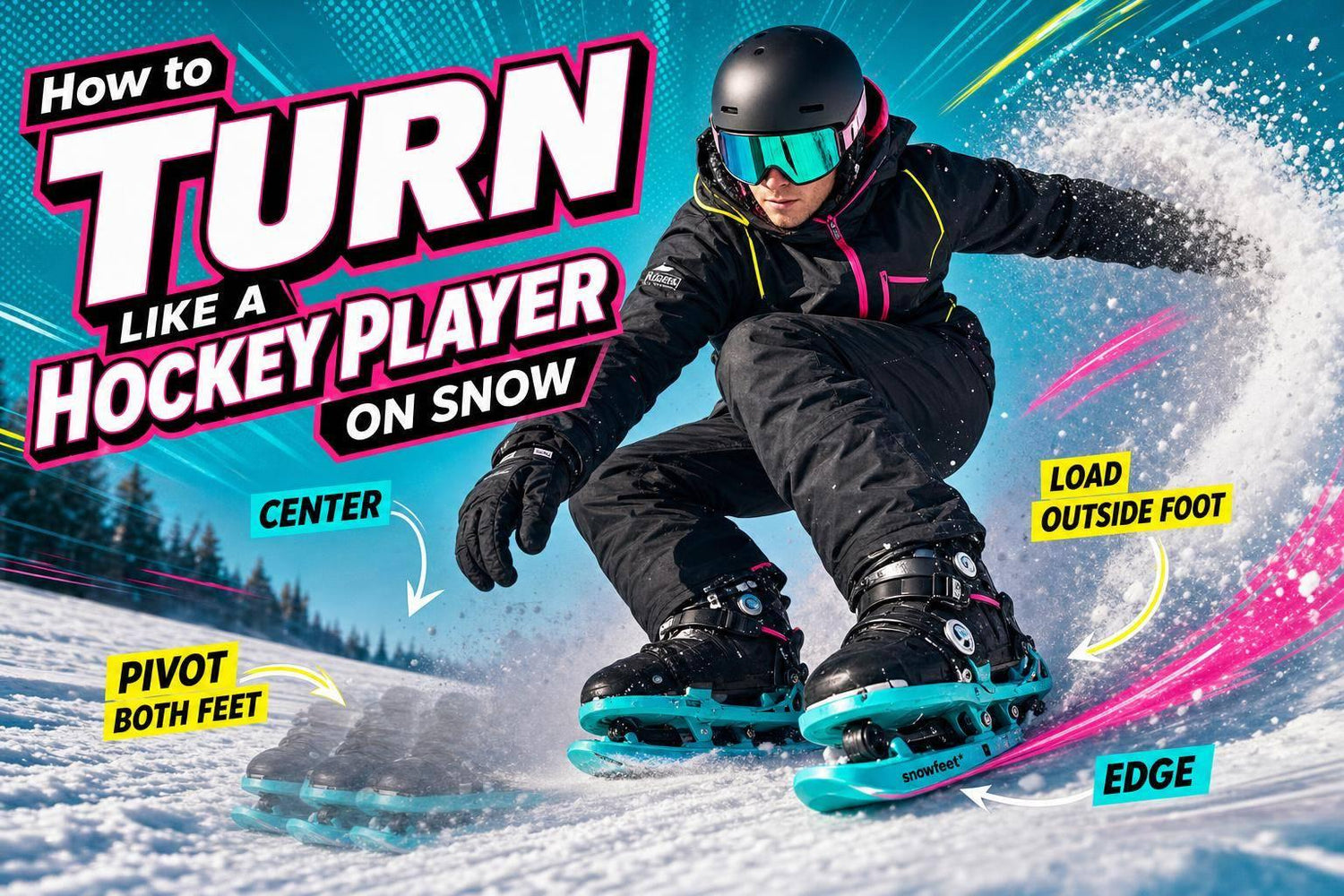
Want that sharp, sideways hockey turn on snow? I’d boil it down to this: stay centered, tip the edges with your ankles and knees, load the outside foot, and let both feet pivot across the slope.
If you’re on a green or easy blue run, you can start working on it in one short session. The move uses 4 core parts:
- Stance: low, centered, hands forward
- Edges: tip, hold, then flatten to release
- Pressure: more on the outside foot
- Pivot: feet and hips turn; shoulders stay calm
A few key notes before you jump in:
- Short snow gear turns with less effort than long skis
- A hockey stop and a hockey-style turn use almost the same move
- Most wipeouts come from leaning back or twisting the shoulders too much
- Start slow on groomed snow and add speed later
Here’s the short version I’d tell a friend at the lift:
- Get in an athletic stance
- Feel the edges grip
- Shift pressure to the outside foot
- Turn both feet across the hill
- Release and switch edges for the next turn
If you can do that, you’re not far off from that clean snow-spray turn everyone likes to show off a little :)
Quick comparison
| Gear | Feel in short turns | Pivot effort | Best fit for learning |
|---|---|---|---|
| Snowfeet* Skiskates (44 cm) | Very nimble | Low | Tight pivots, fast edge feel |
| Snowfeet* Skiblades (65–120 cm) | Nimble with more platform | Low to medium | Learners who want agility plus a bit more support |
| Long skis (150–175 cm) | More work in tight turns | High | Bigger turns, more input needed |
What I like about this approach is that it keeps the goal simple: turn, scrub speed, and stay in control. That’s the whole game.
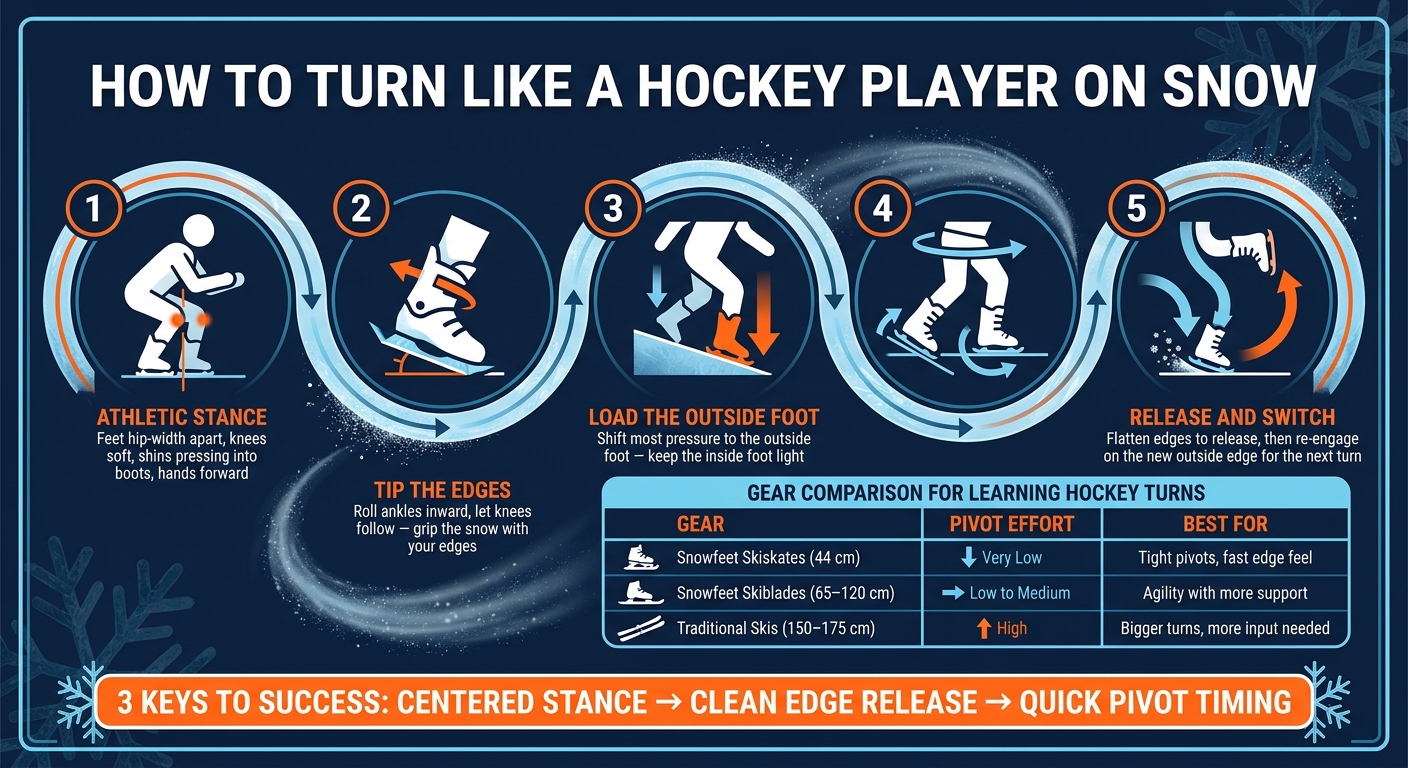
How to Turn Like a Hockey Player on Snow: 5-Step Visual Guide
Snowfeet* & Skiskates Tutorial - How to Become a PRO Skiskater
1. Ready position and safe setup
Before you try a hockey stop or a sharp pivot, set your stance first. Get low, stay centered, and be ready to move.
Body position for quick turns
Stand with your feet about hip-width apart. Flex your ankles, let your shins press lightly into your boot cuffs, and keep your hips over the middle of your feet. If you sit back, every turn gets slower. Keep your chest up, look ahead, and hold your hands in front to help with balance. A simple check: if you can bounce lightly without falling back, you’re in a good stance.
Once you can stay centered, edge control gets a lot easier.
Practice on a wide, groomed green run or an easy blue run at moderate speed. Wear a certified helmet, gloves, and goggles. Calm, steady snow makes it easier to feel how short gear reacts when you put pressure on it.
Best gear for learning agile turns
Short gear turns faster and takes less effort. Snowfeet* Skiskates (44 cm) and Snowfeet* Skiblades (65 cm, 99 cm, and 120 cm) keep the platform short under your feet. That means small pressure changes over the middle of your foot show up right away. You can feel each pressure shift, edge bite, and pivot timing sooner than on long skis.
| Factor | Snowfeet* Skiskates (44 cm) | Snowfeet* Skiblades (65–120 cm) | Traditional Skis (150–175 cm) |
|---|---|---|---|
| Pivot effort | Very low; rotates easily underfoot | Low to moderate depending on length | High; long tails and tips resist quick rotation |
| Edge engagement | Immediate; small movements work | Responsive across all lengths | Requires more committed ankle and knee drive |
| Beginner-friendly | High; forgiving of small mistakes | High; easier to control than long skis | Moderate; tips can cross, tails can catch |
The 44 cm Skiskates pivot the fastest. The 65 cm, 99 cm, and 120 cm Skiblades still feel agile, but give you more platform length underfoot. That short platform makes it easier to stay centered and in control.
With your stance dialed in, the next step is learning how to tip the edges without losing balance.
2. Edge control for fast direction changes
Once your stance is centered, edge tipping becomes your main steering tool. The idea is pretty simple: tip your gear onto one edge, hold that pressure, then let it go cleanly so you can change direction.
How to tip and hold an edge without losing balance
Start at the ankles. Roll them first, then let your knees follow. Tip onto the inside edge of the turn and let your knee move over your toes. Keep your hips stacked over the middle of your feet.
If you're a beginner on groomed snow, start with a small edge angle. That usually gives you a clean grip without making the turn feel jumpy. If the snow feels slippy and you drift before the turn even starts, add a bit more edge angle. If the turn feels jerky or it knocks you off balance, you tipped too far too soon. It happens fast, and yeah, your gear will let you know right away.
Carving keeps the turn clean. Skidding helps you pivot and stop fast. You’ll use both.
Keep your shins in light contact with the boot cuffs so your weight stays centered. That same edge pressure will matter in the next step, when you use it to stop and pivot.
Short gear vs. long skis: a side-by-side look
Shorter gear changes edges faster underfoot. Snowfeet* Skiskates (44 cm) react fastest to ankle input. Snowfeet* Skiblades (65–120 cm) still feel quick, but they give you a bit more stability. Long skis take more force to tip on edge and don’t like tight pivots as much.
Once you can hold and release an edge cleanly, the next move is shifting pressure to start the turn.
sbb-itb-17ade95
3. Weight transfer and rotation
Shift pressure to start the turn
Once your edge is set, the turn begins with a pressure shift. Not with a big upper-body swing.
Put most of your pressure on the outside foot and keep the inside foot light. Smooth is the goal here. Don’t dump all your weight at once. And don’t let the inside foot go limp, either.
Here’s a quick gut check: at the midpoint of the turn, try to lift or tap the inside foot. If you stay balanced, you’ve loaded the outside foot the right way.
When that outside foot is doing the work, your hips can guide the pivot without giving up edge grip.
Use hips and shoulders to guide the pivot
Let your hips lead a few degrees into the new turn. Keep your shoulders quiet, and keep your chest mostly facing downhill. Then let the legs and feet follow into the new arc.
If you twist your shoulders too hard, your upper body gets ahead of your feet. That’s when the edges wash out. Not fun.
With Snowfeet* Skiskates and Skiblades, a small hip turn plus a clean pressure shift is usually all you need for a fast pivot across the slope. Long skis often need more input, and that makes shoulder over-rotation more likely.
That same pressure-and-rotation timing also helps set up hockey stops and pivot turns.
4. Hockey stops and pivot turns
Once you’ve got edge control and weight transfer dialed in, the next move gets fun fast: the same motion can either stop you or snap you into the next turn.
From snowplow stop to hockey stop
Start with a snowplow stop. It helps you slow down while you learn how edge pressure works. Then, bit by bit, you turn that same idea into a hockey stop.
Here’s the key point: the same edge angle that helps you carve a sharp turn can also help you stop with control. Both skis or skates turn sideways across the slope, your downhill edges bite at the same time, and you skid to a stop as one unit. It’s sharper and faster than a snowplow.
Start on a gentle, wide green run. Then work through it in stages:
- Narrow your snowplow until both feet end up side-by-side across the slope
- Rotate both feet to about 30–45 degrees
- Then work toward 90 degrees
Stay centered the whole time. Keep your shins pressing into the front of your boots and your hips over the middle of your feet. If your weight drifts back, the stop gets messy in a hurry.
Shorter Snowfeet* gear can help here. The shorter length gives you less lever pulling your weight backward, so it’s easier to stay centered during the stop.
Once you can stop cleanly, you can use that same release to change direction without having to build speed all over again.
Turn the stop into a sharp pivot
A hockey stop isn’t just a stop. It’s also the setup for a fast pivot.
The pattern is simple: release the edges, rotate both feet, then re-engage on the new edge.
At the end of your hockey stop, ease off your ankle and knee pressure just a bit to flatten the edges. That’s the release. Keep pressure on the outside foot until that moment, then turn your hips and feet together while your shoulders stay quiet. After that, tip your ankles and knees into the new outside edge to re-engage, and the snow pulls you right into the next turn.
On short gear like Skiskates or 65–99 cm Skiblades, this happens fast. Short gear reacts sooner, so the pivot wraps up sooner too. Long traditional skis usually need more input to get the same result. That’s a big reason shorter snow gear makes this kind of turning easier to learn.
Use this move on steeper or crowded terrain when you need to scrub speed fast.
5. Practice drills, common mistakes, and key takeaways
Practice progression for one session
Now it’s time to put the turn mechanics together: edge control, weight transfer, and rotation. Keep the reps short. Start slow. Then add speed only when each move feels clean.
Do these drills in order on a mellow groomed slope. Think of it like stacking bricks: balance first, then edge slips, then shallow skidded turns, then linked hockey turns, and only then faster direction changes.
- Static balance - Stand with your feet about hip-width apart. Keep your knees soft and your shins lightly pressed into the boots. Hold a centered, athletic stance.
- Edge slips - Tip your ankles and knees to one side until the edges bite, then ease off. Feel the grip, the release, and your balance. Speed can wait.
- Shallow skidded turns - Start the turn with light pressure. Let the skis slide a bit, and steer with your feet and knees.
- Linked hockey-style turns - Put the pieces together: start turn → glide → finish turn → switch sides. Keep the rhythm controlled.
- Faster direction changes - Add speed only after the linked turns feel steady. At that point, the pivot should start to feel automatic.
Reset and repeat each drill until it feels clean before you move on. Snowfeet* Skiskates (44 cm) and Skiblades (65–120 cm) fit this progression well. Their short length reacts to small foot movements right away, so you can feel what each drill is doing almost at once.
Mistakes to fix early
If the drills feel shaky, one of these four habits is usually the culprit.
- Standing too tall - Stay low and ready. A tall stance hurts edge control.
- Leaning back - Keep your nose over your toes. If your weight drifts behind center, pressure transfer falls apart.
- Twisting only the upper body - Let your knees and feet do the steering. If you twist from the shoulders, the pivot gets messy.
- Linking turns before you can stop - Nail the stop first. That’s the base this pivot sits on.
Conclusion: The keys to turning like a hockey player on snow
Hockey-style turning on snow comes down to three things: a centered stance, a clean edge release, and quick pivot timing. Get those in that order, and fast direction changes start to click. Short Snowfeet* gear gives faster feedback, easier pivots, and a simpler path to learning than long skis.
FAQs
How fast should I go to practice hockey-style turns safely?
Aim for about 8 to 10 mph. At that pace, your Snowfeet edges respond smoothly, which helps you carve clean, rounded turns with more control.
Start on a gentle, wide slope where you feel fully at ease. As you get better, Snowfeet’s compact, responsive design makes speed control and sharp stops easier than with long skis.
When should I use a hockey-style turn instead of a regular turn?
Use a hockey-style turn when you need max agility, fast deceleration, or tight control in spots where long skis start to feel like a lot to handle.
Snowfeet* skiskates are more than 70% shorter than standard 63-inch skis, which makes this move work especially well on moguls, narrow trails, and busy slopes. They shine when you need sharp direction changes, quick cuts, or sudden stops - basically any moment when precision and speed control matter most.
Which Snowfeet* length is easiest for learning quick pivots?
For learning quick pivots, the 44 cm Snowfeet Skiskates* are the easiest pick. At just 17 inches long, they feel a lot like ice skates. That makes edge control simpler and helps quick weight shifts feel more natural.
Longer Skiblades give you more stability, sure. But if you want the most agility for tight, hockey-style turns without fighting the gear, 44 cm is the sweet spot.











コメントを残す
このサイトはhCaptchaによって保護されており、hCaptchaプライバシーポリシーおよび利用規約が適用されます。