



















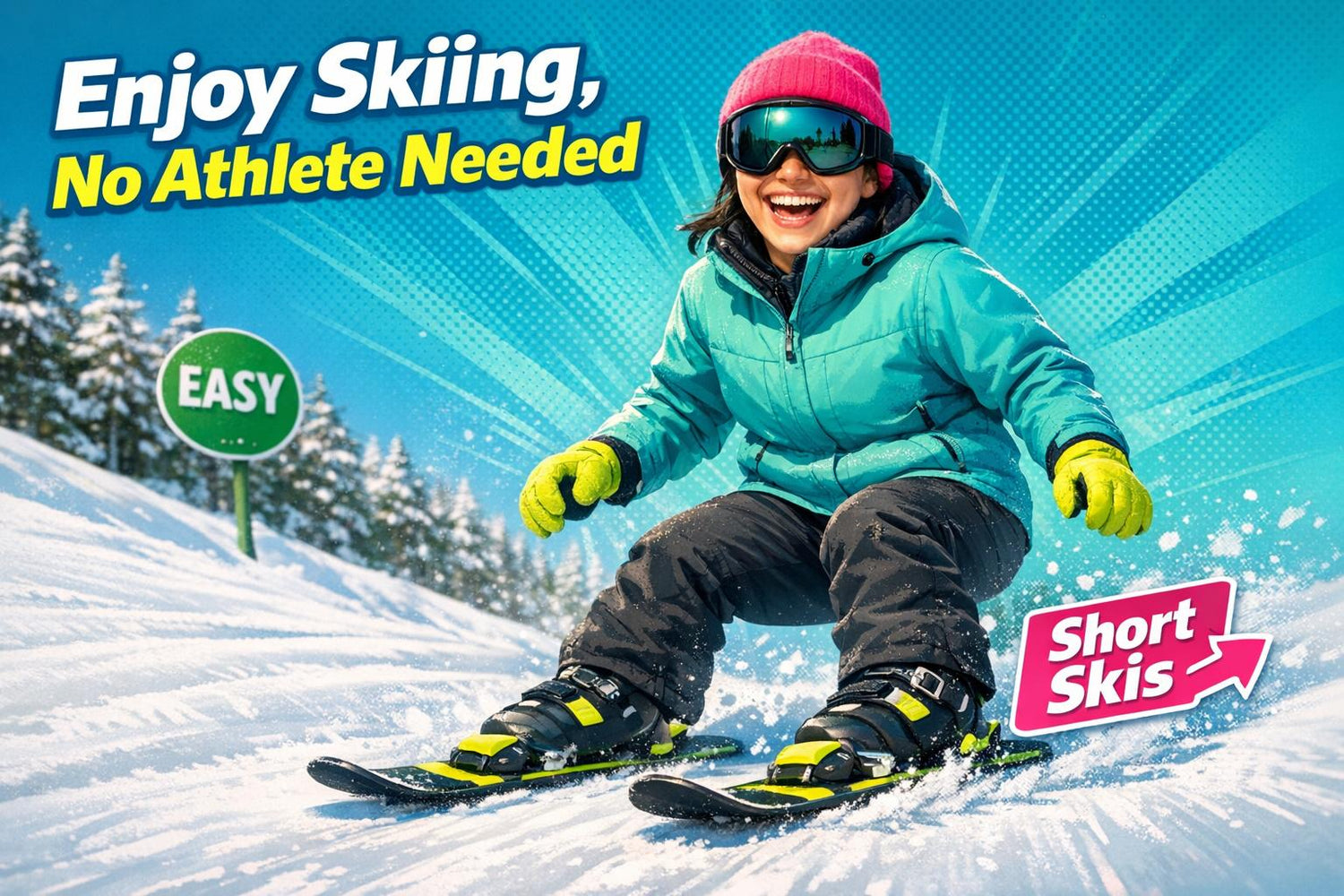
Yes, you can! Skiing isn’t just for athletes or thrill-seekers - it’s for anyone who wants to enjoy winter fun. Whether you’re in your 40s, 50s, or beyond, you don’t need to be super fit to slide down a gentle slope. The key? Start with the right mindset and gear that makes learning easier.
Here’s why skiing is more accessible than you think:
- Fear of falling? Beginner skiing is slow and safe. Most falls are harmless, like tipping over at low speed.
- Worried about the workout? New compact gear like Snowfeet’s skiblades and mini skis are lighter and easier to handle, so you won’t feel exhausted.
- Think skiing is for the young and fit? Many ski schools teach adults of all ages. It’s more about technique than fitness.
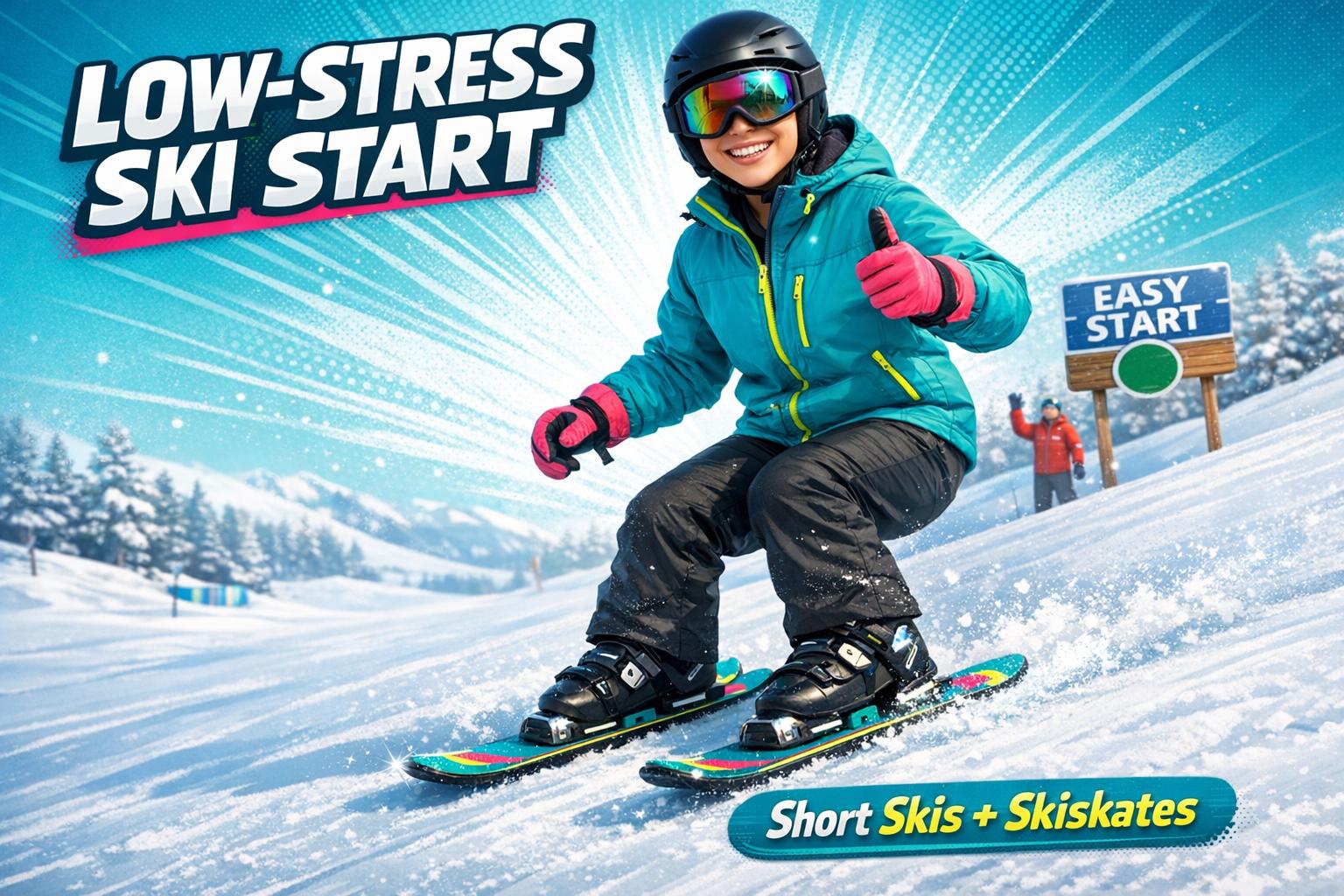
Snowfeet’s shorter, lighter skis make skiing less intimidating for beginners. They’re easier to control, reduce fatigue, and can even be used with regular winter boots. With prices starting at $250, they’re a practical way to try skiing without the hassle of bulky, heavy equipment.
If you’ve ever hesitated to ski because you’re “not athletic,” now’s the time to rethink that. Grab some beginner-friendly gear, find a gentle slope, and enjoy the ride. The slopes are for everyone! :)
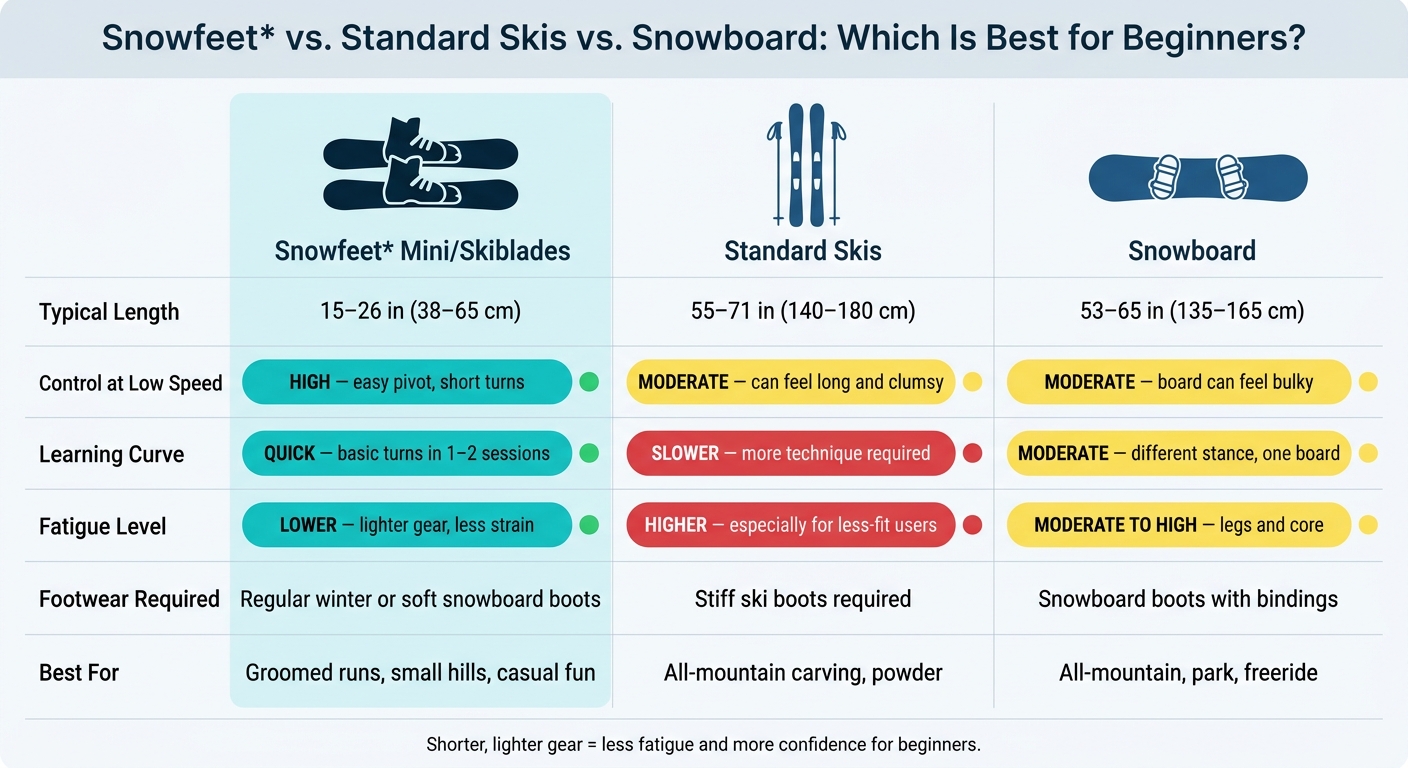
Snowfeet vs. Standard Skis vs. Snowboard: Beginner's Gear Comparison
4 EASY TIPS | How to ski as an adult
Why Non-Athletic People Avoid Skiing
Skiing may seem like the perfect winter activity - think cozy lodges, fresh snow, and fun with family. But for many non-athletic folks, fear, hesitation, and practical concerns keep them off the slopes.
Fear of Falling or Getting Hurt
Thanks to TV coverage of Olympic skiers, many people think skiing is all about high-speed runs and daring jumps. But beginner skiing? It's slow, cautious, and far less dramatic.
In fact, studies on ski injuries show that alpine skiing has an injury rate of about 2–4 injuries per 1,000 skier days. That’s a lot lower than people expect. For beginners on easy slopes, most falls are low-speed and pretty harmless - think sliding sideways, sitting down suddenly, or tipping over while barely moving. Bruises and sore muscles are much more common than anything serious.
Still, the fear of falling is real. Traditional ski gear can make even small mistakes - like shifting your weight or twisting your hips - lead to a fall. Crossing ski tips or catching an edge can feel overwhelming, especially for someone with slower reflexes or less strength in their stabilizing muscles. Newer, lighter gear can help reduce these risks, making skiing feel less intimidating.
Physical Demands of Skiing
Even before you hit the slopes, skiing can feel like a workout. Walking in stiff ski boots? Awkward and tiring. Carrying long skis through parking lots, up stairs, and into crowded lift lines? That’s no small feat, especially for someone who's used to sitting at a desk all day.
Once you're on the snow, it’s your legs that take the brunt of the effort. Constantly bending your knees and getting up after falls can leave underused muscles screaming by lunchtime. For first-timers, this can feel overwhelming - burning thighs, sore feet, and general exhaustion. Knowing how physically demanding skiing can be, many non-athletic people decide it’s just not worth the effort. Compact gear like Snowfeet* makes moving around easier and helps reduce fatigue, turning these challenges into manageable steps.
The Myth That Skiing Is Only for the Young and Fit
There’s a common misconception that skiing is only for the young, athletic crowd. Many adults think it’s a sport for college kids or outdoor enthusiasts - not for someone who hasn’t exercised since gym class or gets winded climbing stairs.
This belief is completely false, but it’s powerful. Self-efficacy, or the belief in your ability to succeed, plays a huge role in whether adults try new physical activities. If you tell yourself, “I’m not athletic enough for this,” you’re less likely to even give it a shot. Research in sports psychology shows that labeling yourself as “not sporty” lowers confidence and increases avoidance.
Here’s the truth: ski schools across the U.S. regularly teach beginners in their 40s, 50s, and beyond. On beginner terrain, proper technique matters far more than raw fitness. The biggest barriers are often mindset and gear, not physical ability. With tools like Snowfeet*, skiing can feel approachable for anyone willing to challenge those misconceptions.
How Snowfeet* Makes Skiing Easier for Beginners
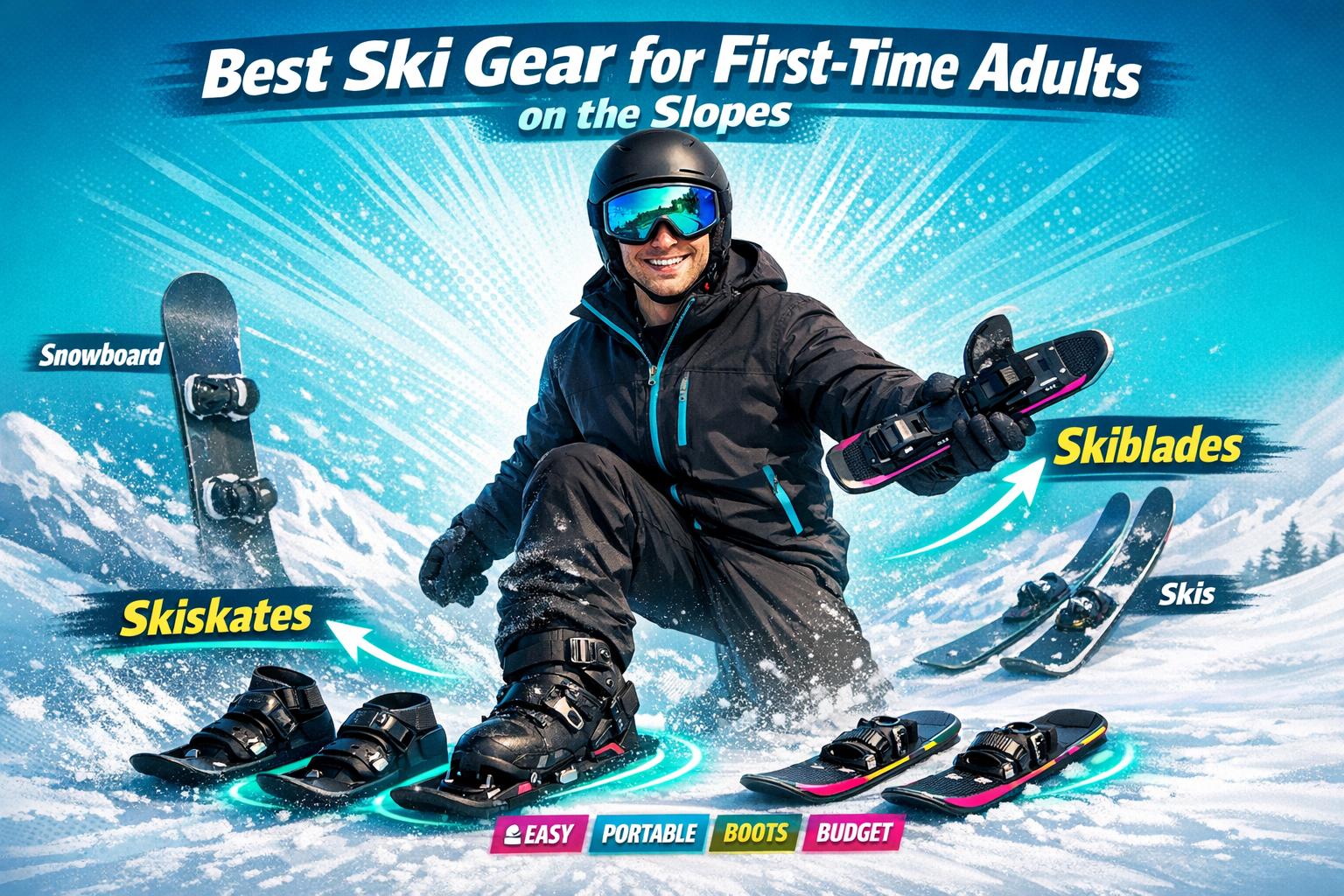
When you're new to skiing, bulky gear can make the learning curve steeper. Heavy equipment, long skis, and stiff boots often lead to fatigue, fear, and a lack of confidence. Snowfeet* changes the game with its compact and approachable design, making skiing less intimidating and more fun for first-timers.
Why Short Skis and Skiskates Are Easier to Control
Snowfeet* gear tackles beginner challenges by offering better control right from the start. The length of your skis plays a huge role in how easy they are to handle. Traditional adult alpine skis are 55 to 71 inches (140–180 cm) long. That much length can feel overwhelming, with too much edge to manage and wide turns that can pull you off course.
Enter Snowfeet*. Their Skiblades (26 inches/65 cm) and Mini Ski Skates (15 inches/38 cm) are a game-changer. With such short lengths, turns become effortless. A simple weight shift or a slight foot rotation is all it takes - movements that feel as natural as walking or skating. There’s no long tail to trip you up, no tangled ski tips, and no need for aggressive leaning. On beginner-friendly slopes, this means tight, controlled turns at slower speeds, giving you the confidence to enjoy the ride instead of worrying about losing control.
Snowfeet* vs. Standard Skis and Snowboards: A Side-by-Side Look
| Feature | Snowfeet* Mini/Skiblades | Standard Skis | Snowboard |
|---|---|---|---|
| Typical Length | 15–26 in (38–65 cm) | 55–71 in (140–180 cm) | 53–65 in (135–165 cm) |
| Control at Low Speed | High - easy pivot, short turns | Moderate - can feel long and clumsy | Moderate - board can feel bulky |
| Learning Curve | Quick; basic turns in 1–2 sessions | Slower; more technique required | Moderate; different stance, one board |
| Fatigue Level | Lower - lighter gear, less strain | Higher - especially for less-fit users | Moderate to high in legs and core |
| Footwear | Regular winter or soft snowboard boots | Stiff ski boots required | Snowboard boots with bindings |
| Best For | Groomed runs, small hills, casual fun | All-mountain carving, powder | All-mountain, park, freeride |
One standout feature? Snowfeet* gear works with regular winter boots or soft snowboard boots. That means no more dealing with stiff, clunky ski boots that leave your feet aching before you even hit the slopes. This simple change makes skiing feel more approachable for beginners.
Lighter Gear Means Less Fatigue
Traditional skis aren’t just long - they’re heavy too. A single adult alpine ski weighs 3.3 to 4.4 lbs (1,500–2,000 g), not including bindings. Add in heavy ski boots, and you're hauling a lot of extra weight with every turn. For beginners, especially those who aren’t in top shape, this can lead to sore legs, tired backs, and an early end to the day.
Snowfeet* products are much lighter, which means less strain on your legs and more energy for skiing. Each turn feels easier, and everyday movements - like walking to the lift - are no longer a workout. This lighter design lets beginners spend more time on the slopes without wearing themselves out, giving them the chance to build skills and confidence at their own pace. For those just starting out, that extra time makes all the difference.
sbb-itb-17ade95
How to Get Started with Snowfeet*
Getting started with Snowfeet* is straightforward. Start on easy terrain, progress step by step, and use Snowfeet* gear to build confidence from your very first session.
Begin on Small, Easy Slopes
Snowfeet* are designed for smooth control, so the best place to start is a beginner-friendly bunny hill or a designated learning area at your local resort. These areas usually have short, gentle slopes marked as green and often feature a conveyor lift, letting you focus on practicing your moves. If possible, visit during quieter times to enjoy extra space and fewer distractions.
For learning, conditions matter. Snow that's softer and more forgiving - typically found at temperatures between 20–32°F - makes it easier to get the hang of things. Before heading out, check the resort's website or ticket office to confirm that Snowfeet* gear is allowed on their slopes. Most U.S. resorts welcome short skis, but it’s always good to double-check to avoid any hiccups.
A Simple Learning Path from Flat Ground to Gentle Slopes
Start on flat, open snow to get comfortable with your Snowfeet*. Strap them on, bend your knees slightly, keep your feet about hip-width apart, and shift your weight from side to side. Take small steps forward - this stance is your foundation for everything else.
Once you’re steady, move to a gentle slope. Slide 10 to 30 feet and practice stopping by turning your feet across the slope until friction slows you down. Once stopping feels natural, try a single turn. Look in the direction you want to go, shift your weight to the outside foot, and let the short ski guide you. Practice alternating left and right turns, and when you’re ready, link them together.
Keep your first sessions short - 30 to 60 minutes. Fatigue can lead to poor form and falls, so wrapping up while you’re still feeling good will build confidence for the next time.
When you’ve nailed the basics, you can explore different Snowfeet* models to match your style and pace.
Which Snowfeet* Product Is Right for You
Picking the right Snowfeet* model depends on your fitness level, speed comfort, and what kind of experience you’re after. Here’s a quick guide to help you decide:
| Your Situation | Best Snowfeet* Pick | Why It Works |
|---|---|---|
| Low fitness, nervous about falling | Mini Ski Skates (38 cm) - from $250 | Offers controlled turns on beginner slopes; great if speed feels overwhelming |
| Casual adult, looking for fun on small hills | Skiskates (44 cm) - from $575 | Easy to use, playful, and ideal for short groomed runs |
| Already a skater or inline skater | Snowfeet* or Skiskates | Movement feels natural, and independent foot control is familiar |
| Decent balance, wants more glide | Skiblades (65 cm) - from $635 | Provides a balance of stability and glide with quick-turn capability |
| Returning skier with lower fitness | Snowfeet Short Skis (120 cm) - $775 | Mimics traditional skiing but with less weight and easier handling |
With the right gear and a little practice, you’ll be sliding confidently in no time!
Conclusion: Anyone Can Ski with the Right Gear
The days when traditional ski gear made skiing feel out of reach are behind us. Skiing isn’t reserved for elite athletes - it’s a skill anyone can pick up with the right mindset and equipment. For most beginners, the real hurdle isn’t their fitness level - it’s struggling with gear that wasn’t tailored for their needs.
That’s where Snowfeet* gear comes in. With lighter, shorter skis, beginners can enjoy equipment that’s easier to carry, less intimidating, and far more manageable on those gentle, beginner-friendly slopes. This design helps new skiers conserve energy and build confidence from their very first run.
For as little as $250, a desk worker or complete novice can try skiing with Snowfeet* Mini Ski Skates. On a mellow green run, these compact skates make it simple to turn, stop, and enjoy the experience - leaving you with a genuine sense of accomplishment.
The key to enjoying skiing is feeling confident and mastering smooth turns - something Snowfeet* gear makes possible for everyone. It’s not about chasing performance; it’s about having fun.
If you’ve ever thought skiing wasn’t for you, Snowfeet* offers a low-pressure, accessible way to give it a try. Start small - find a gentle hill, plan a quick 60–90 minute session, and see how practical and enjoyable skiing can be, no matter your athletic background. With Snowfeet*, the slopes are yours to explore.
FAQs
Do I need lessons to use Snowfeet*?
You don’t need formal lessons to start using Snowfeet* products. Thanks to their skate-like design, picking up the basics - like balancing, stopping, and turning - is much quicker compared to traditional skis. Most people feel comfortable within just 1–2 hours. To get started, head to flat terrain or easy bunny hills and practice simple moves like the snowplow stop and shifting your weight. You can learn all of this on your own!
Are Snowfeet* allowed at most U.S. ski resorts?
Yes, you can use Snowfeet products at most ski resorts in the U.S. Because they work like skis, they’re generally accepted on slopes and lifts alongside standard equipment. Their small size and lightweight design make them super convenient to carry around the resort, and since they work with regular boots, you won’t need to rent anything special. To be sure, it’s a good idea to double-check your local resort’s rules about smaller ski gear before heading out.
What should I wear for Snowfeet* on the slopes?
For the best experience with Snowfeet, go for firm-soled, waterproof winter or snowboard boots that provide solid ankle support. Layer up with moisture-wicking clothing to stay warm and dry, and make sure to grab the essentials: a helmet, UV-protective goggles, and waterproof gloves. This combo keeps you cozy and nimble, without the heft and exhaustion that can come with traditional ski gear.











コメントを残す
このサイトはhCaptchaによって保護されており、hCaptchaプライバシーポリシーおよび利用規約が適用されます。