




















Yes - if you figure skate, you’ll likely get on skiskates faster than on long skis. The short 44 cm (17 in.) length feels closer to a skate underfoot, so your balance, edge control, and turning habits can carry over well.
Here’s the short answer:
- Best match for skaters: Snowfeet* Skiskates 44 cm
- Better if you want more support: Snowfeet* Skiblades 65 cm
- Best terrain to start on: groomed green runs, then easy blue runs
- Main thing that changes: snow has more drag than ice, and stopping works differently
- Price points in the article: $575 for 44 cm Skiskates and $635 for 65 cm Skiblades
- Big caution: check resort rules before you go, because not every ski area allows every short-ski setup
So, if you can hold a centered stance, switch edges cleanly, and stay calm on one foot, you already have a strong base. But snow is its own beast - and yes, it can humble you fast if you charge in like it’s a Saturday freestyle session at the rink :)
My take: skiskates make the jump from ice to snow feel simpler, but they work best when you start small, wear the right gear, and learn a wedge stop before you try to carve like a hero.
How to Use Snowfeet* Skiskates 44 CM | Skates for Snow | Mini Ski | Snowblades | Snowskates
Quick Comparison
| Option | Length | Feel | Best For | Starting Price |
|---|---|---|---|---|
| Snowfeet* Skiskates | 44 cm / 17 in. | Closest to skating | Figure skaters who want a skate-like ride | $575 |
| Snowfeet* Skiblades | 65 cm / 25.6 in. | More calm underfoot | Skaters who want more support on early runs | $635 |
| Long skis | 150–180 cm / 59–71 in. | Least like skating | Long downhill runs and higher speeds | Varies |
A few key facts stand out from the article:
- 44 cm skiskates sit much closer to your foot than 150–180 cm skis
- Shorter gear makes tight turns and edge changes feel more natural for skaters
- Groomed snow matters a lot, since rough patches can toss short skates around
- A helmet, goggles, gloves, and solid boots aren’t optional
If you’re a figure skater who wants to join friends on the mountain, this setup makes sense. Not because it’s the same as ice. It’s not. But because it gives you a more familiar starting point, with less ski to wrestle and less “uh, what do I do with these giant planks?” energy.
Can Figure Skaters Use Skiskates on Ski Slopes?
Figure skaters often get comfortable on Snowfeet* Skiskates 44 cm pretty fast. The reason is simple: the movement feels familiar. Your stance, edge pressure, and turning pattern carry over well, so it feels more natural than jumping straight onto long skis.
Start on groomed green or easy blue slopes. Wear proper boots and protection. Then give yourself a few runs to get used to snow friction and speed. Shorter skates line up with skating instincts much better than long skis, and that makes a big difference.
Why the Switch Is Often Easier Than Learning Long Skis
The big plus is the short platform. At 17 inches (44 cm), Skiskates stay right under your foot. That means they feel much less bulky than standard alpine skis, which usually range from 59 to 71 inches (150–180 cm). They also turn faster.
With Snowfeet* Skiskates, you steer with weight shift, edge pressure, and body alignment. If that sounds familiar, yeah - it should. Those are the same core moves that guide a skate blade. So the ride feels lighter, quicker, and closer to what your body already knows.
Who Will Pick It Up Fastest
Skaters with strong one-foot balance, smooth edge changes, and linked turns usually learn the fastest. If you can stay centered over your foot and keep your hips stacked over your knees, those habits transfer right away.
Next, the key question is what still feels different on snow - and how to adjust fast.
sbb-itb-17ade95
What Feels Familiar and What Feels Different From Ice Skating
Skills That Carry Over: Balance, Edges, Turning, and Body Position
If you’re a figure skater, Snowfeet* Skiskates 44 cm will feel pretty familiar right away. The big reason? The same centered balance, soft knees, and stacked hips you use on the ice still matter here.
Your rink stance carries over almost one-to-one:
- Ankles flexed
- Core engaged
- Chest lifted
That athletic position works on snow too. It’s not a total reset, which is nice :)
Edge changes transfer well too. Rolling onto an inside or outside edge on skiskates feels a lot like carving a turn on ice. Balance, edge control, turning, and posture all still matter. The main shift is that snow asks for smaller, cleaner moves.
That’s also why 44 cm skiskates feel closest to figure skating, while 65 cm skiblades give you more stability.
What Changes on Snow: Friction, Stopping, Speed, and Terrain
Here’s the part you’ll notice fast: snow is not ice.
The glide is shorter and more cushioned. Instead of building speed with repeated pushes, your speed comes more from gravity and the pitch of the slope. On warmer or softer snow, you’ll slow down faster. On colder or firmer snow, speed can build fast, so staying centered becomes even more important.
Stopping changes too. An ice-style drag stop doesn’t work the same way on snow. Start on freshly groomed green terrain and learn a basic wedge stop first. That means:
- Tips slightly in
- Heels apart
- Inside edges engaged
It’s the simplest way to keep your speed in check.
Icy patches, chopped-up snow, and steeper terrain make control tougher. Best to save those for later, once the basics feel natural.
Once that part clicks, the next choice is simple: go with the pure skating feel of Skiskates, or pick Skiblades for extra support.
Best Snowfeet* Options for Figure Skaters
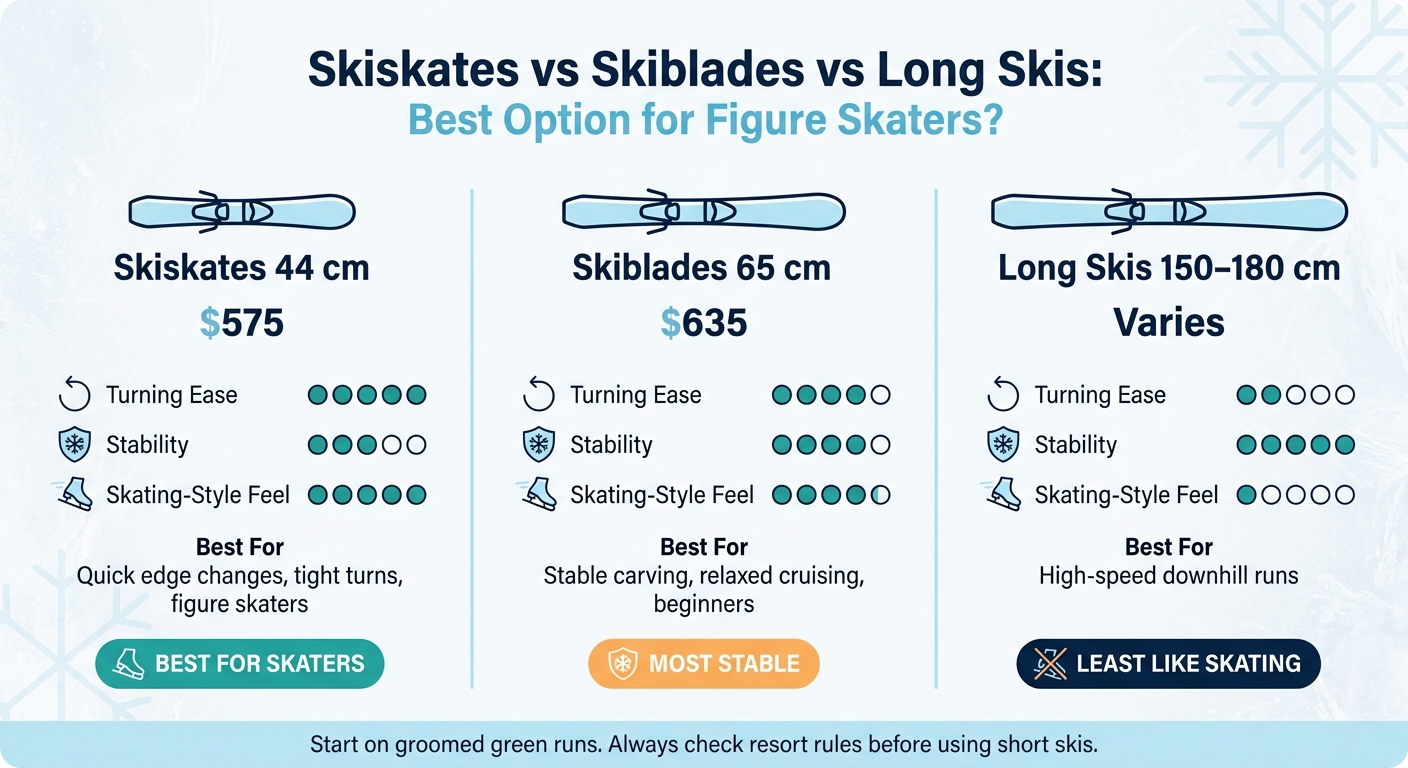
Skiskates vs Skiblades vs Long Skis: Which Is Best for Figure Skaters?
Snowfeet* gives figure skaters two strong picks: Skiskates 44 cm if you want the closest thing to a skating feel, and Skiblades 65 cm if you want a bit more balance under you. Both let you bring your skating skills onto the slope without feeling like you have to start from scratch.
So, the choice is pretty simple: go with maximum skating feel or take a little more stability.
Snowfeet* Skiskates 44 cm: Best Pick for a True Skating Feel
At just 17 inches long, Snowfeet* Skiskates 44 cm react fast to small ankle and knee movements. That makes edge changes and tight turns feel natural for figure skaters. If you're used to making fine, quick adjustments on the ice, these will feel familiar in a good way.
They’re also easy to pack and start at $575. If you'd like a bit more room for mistakes, the 65 cm Skiblades are the next step up.
Snowfeet* Skiblades 65 cm: More Stability With a Short-Ski Feel
Snowfeet* Skiblades 65 cm are a good fit for skaters who want more stability. That extra length helps calm things down on uneven terrain and makes the ride track in a more steady way at easy cruising speeds. In plain English: your first run can feel smoother, without giving up that short-ski vibe.
Entry pricing starts at $635. Here’s how they stack up against the 44 cm Skiskates and long skis.
Skiskates 44 cm vs. Skiblades 65 cm vs. Long Skis: Side-by-Side Comparison
| Feature | Skiskates 44 cm | Skiblades 65 cm | Traditional Long Skis |
|---|---|---|---|
| Turning Ease | Exceptional - quickest to pivot | High - smooth and responsive | Low - wider arcs and more technique |
| Stability | Moderate - skate-like balance | High - more fore-aft support | Very high at speed, harder at low speed |
| Skating-Style Feel | True skating feel | Closer to skating than skiing | No skating feel |
| Best Use Case | Quick edge changes, tight turns | Stable carving and relaxed cruising | High-speed downhill runs |
Once you’ve picked a length, the next move is pairing it with the right boots, bindings, and beginner-friendly slopes. Next up: the boots, bindings, and slope types that help these short skis click.
Gear, Slope Conditions, and When Skiskates Make the Most Sense
Boots, Bindings, and Protective Gear
Once the movement starts to click, it’s time to pair skiskates with the right boots, bindings, and safety gear.
Skiskates 44 cm work best with stiff winter or snowboard boots that have strong ankle support, a grippy sole, and secure laces or BOA closures. Snowfeet* Skiblades 65 cm use standard ski bindings, so you’ll need certified ski boots.
Before you head downhill, do a quick binding check on flat snow. Make sure the boot sits fully in place and stays centered. Tighten all straps or buckles, then twist your foot a bit to check for side-to-side movement. There shouldn’t be any slop. If your setup uses straps, do a short test on flat snow by walking, sliding, and making a few light edging moves. That’s the easy way to catch a loose strap before it turns into a yard sale halfway down the run.
Wear:
- a ski or snowboard helmet
- goggles
- waterproof gloves
- warm layered outerwear
With your gear sorted, the next step is picking the right place to learn.
Best Runs for Learning: Groomed Green and Blue Slopes
With the right setup on your feet, groomed beginner terrain gives you the easiest first turns.
Start on a wide, groomed green run. Once you can control speed and link turns, move to an easy blue groomer. Skip black runs and uneven snow for your first sessions. Short skates can get knocked around by rough patches, so groomed snow lets you focus on edging and body position instead of fighting the surface.
Conclusion: When Figure Skaters Should Choose Skiskates
So yes - figure skaters can use skiskates on ski slopes.
Snowfeet* Skiskates 44 cm are the best place to start if you want fast progress, easy travel, and a feel that’s closer to skating. They’re compact, light, and small enough to fit in a backpack or a checked bag without oversize fees. Snowfeet* Skiblades 65 cm make more sense if you want extra stability underfoot or a ride that feels closer to short skis on longer runs.
If you’re heading into very deep powder or long, fast groomers, long skis still do that job better. For most other days on the mountain, skiskates give figure skaters a quick, natural path onto snow. Check your local resort rules before you go, stay on groomed terrain, and follow the NSAA Responsibility Code: stay in control, be able to stop or avoid people and objects, and choose terrain that matches your ability.
FAQs
Do I need ski lessons if I already figure skate?
Usually not. If you’re an experienced figure skater, your balance, edge control, and body positioning carry over well to Snowfeet* skiskates.
And that makes sense. Snowfeet* products are short, quick to react, and easier to read under your feet than long skis. So if you already know how to stay centered, hold an edge, and move with control, you’ll likely feel at home pretty fast.
That’s the big difference from long skis: the learning curve usually isn’t as steep. For many skaters, Snowfeet* feels more natural and easier to get used to.
Are Snowfeet* Skiskates or 65 cm Skiblades better for my first day?
For a figure skater’s first day, _Snowfeet Skiskates (44 cm)_* are the better pick. They feel closer to what you already know from the rink.
Why? They match the balance, edge control, and side-to-side movement you use on the ice. So the learning curve feels a lot less steep.
The 65 cm Skiblades are beginner-friendly too. They’re nimble and easy to move, but they feel more like regular skis. Still, both options are more responsive and easier to handle than long, traditional skis.
Can I use Snowfeet* at any ski resort?
Yes - Snowfeet* are accepted at most ski resorts in the United States and Europe because they have metal edges, which resorts often require for safety and grip.
That said, Snowfeet* are still pretty new on the slopes. So it’s a good idea to check with your specific resort before you go. In most cases, riders don’t run into issues if they use proper safety gear and ride with respect for the mountain and other people around them.











コメントを残す
このサイトはhCaptchaによって保護されており、hCaptchaプライバシーポリシーおよび利用規約が適用されます。