



















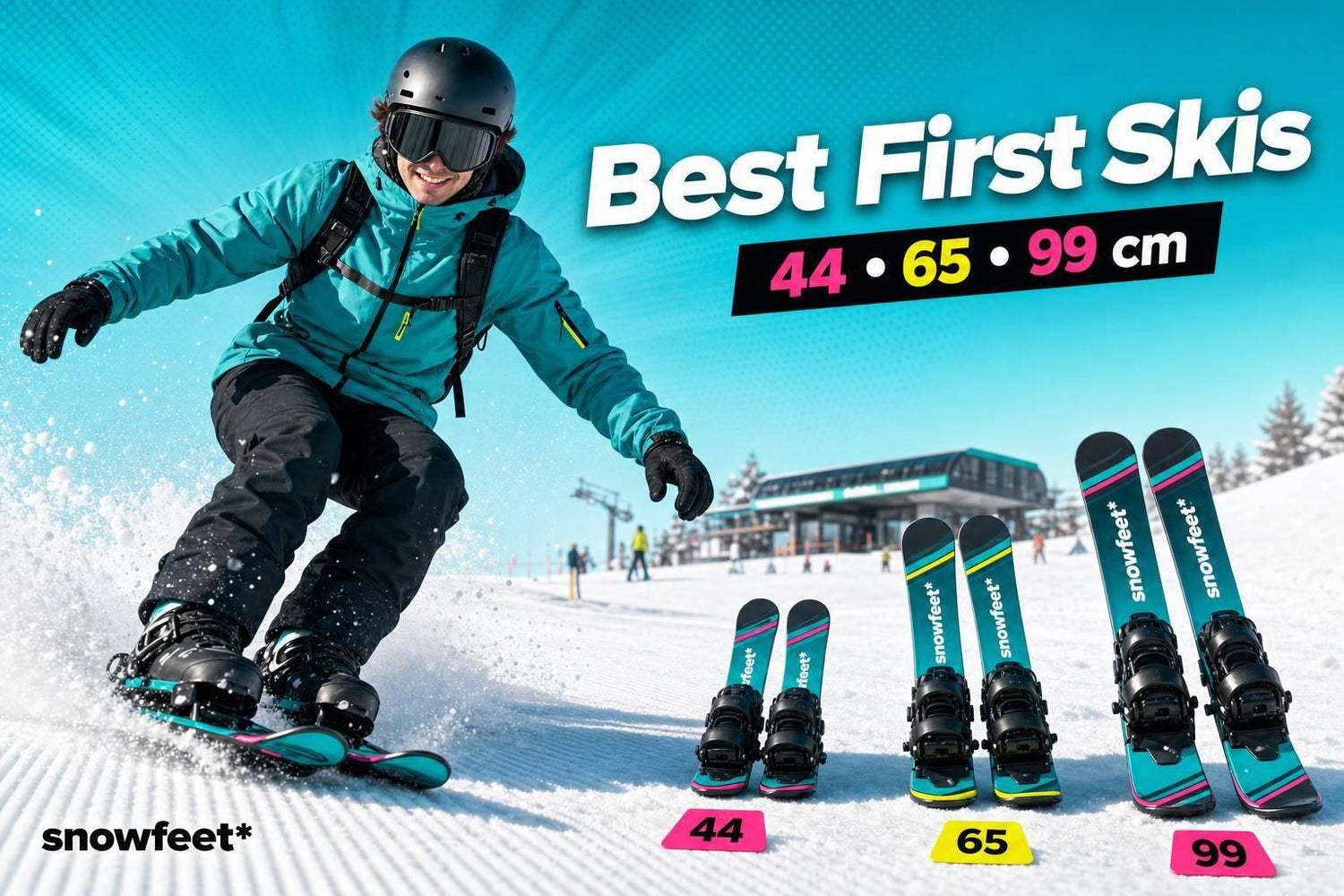
If you’re brand new to skiing, I’d keep it simple: start with the 99 cm Skiblades if you want the easiest all-around first day, or the 44 cm Skiskates if you already skate. Standard beginner skis still feel steadier once speed goes up, but they ask more from you on day one.
Here’s the short version:
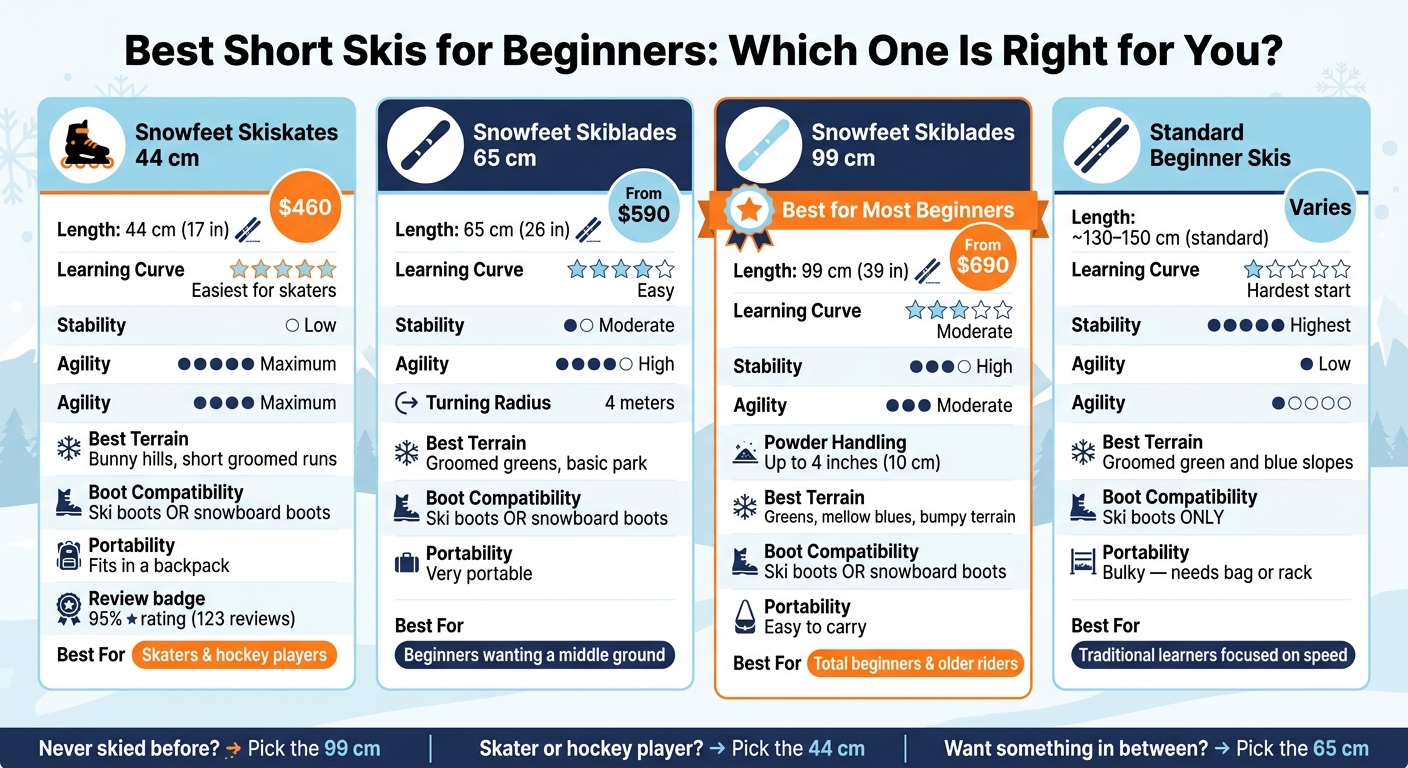
- 44 cm Skiskates - $460: best for skaters, light, tiny, and very easy to turn
- 65 cm Skiblades - from $590: middle-ground pick, with more balance than the 44 cm
- 99 cm Skiblades - from $690: best for most first-timers, easiest to balance and stop
- Standard beginner skis: best for speed and longer runs, but harder to learn at first
A few things stood out to me from the article:
- The 44 cm model has a 95% five-star rating from 123 reviews
- The 65 cm model has a 4-meter turning radius, so it likes short turns
- The 44 cm and 99 cm models can handle about 4 inches (10 cm) of light powder
- Snowfeet* models can use ski boots or snowboard boots on some versions, while standard skis need ski boots only
So, if you want the plain answer:
- Never skied before? Pick the 99 cm
- Played hockey or used inline skates? Pick the 44 cm
- Want something in between? Pick the 65 cm
Snowboarder tries Snowfeet* | Which Snowfeet* Short Ski is the Best? | Snowblades 44, 65, 99 Review
Quick Comparison
Best Short Skis for Beginners: Side-by-Side Comparison
| Option | Price | Learning feel | Stability | Turning ease | Best for |
|---|---|---|---|---|---|
| Snowfeet* Skiskates 44 cm | $460 | Fast start for skaters | Low | Very high | Skaters, short groomed runs |
| Snowfeet* Skiblades 65 cm | From $590 | Easy | Medium | High | Beginners who want a middle pick |
| Snowfeet* Skiblades 99 cm | From $690 | Easiest for most new skiers | High | Medium | Total beginners, older riders |
| Standard beginner skis | Varies | Slowest start | Highest | Low | People who want the usual ski path |
What I like here is that the choice isn’t hard once you know your goal. More balance? Go 99 cm. More skate feel? Go 44 cm. Want both without going too far either way? Go 65 cm. Nice and clean :)
If you want a quick visual before you buy, these YouTube links can help:
1. Snowfeet* Skiskates 44 cm
Price: $460 | Length: 44 cm (about 17 inches)
Learning Curve
The big draw here is how fast they click, especially if you’ve skated before. Most skaters are moving within 5 minutes. That’s a huge win for first-day confidence.
If you’re brand new to skating, give yourself a little more time. The main thing is learning to stay centered over the skis. Start on flat, groomed ground and it gets a lot easier. That simple, low-stress start is a big reason this model is such a good pick for complete beginners.
Stability vs. Agility
The 44 cm model is made for quick turns and snappy handling. In plain English: it feels light, easy to move, and forgiving when you’re learning your first runs.
That said, this model leans more toward agility than planted, straight-line calm. So if you want something that feels nimble and fun on groomers, you’re in the right lane. If you want more length under you, the 65 cm Skiblades make more sense.
Terrain Fit
These work best on groomed runs. They can also handle light powder up to about 4 inches (10 cm). Once the snow gets deeper, though, this short length isn’t the best tool for the job.
Boot and Binding Setup
The 44 cm Skiskates come in two binding versions:
- one for standard ski boots
- one for snowboard boots or sturdy winter boots
The snowboard-boot setup is tool-free, which makes life easier for beginners. The ski-boot version gives you more control.
For total beginners who want the smallest learning curve, this is the easiest Snowfeet* option to start with. And the review score backs that up: it has a 95% five-star rating across 123 reviews.
2. Snowfeet* Skiblades 65 cm
Price: From $590 | Length: 65 cm (about 26 inches)
Learning Curve
The 65 cm Skiblades sit right in the sweet spot of the Snowfeet* lineup. They’re easier to learn on than full-length skis, but they feel steadier than the 44 cm Skiskates. That shorter length gives beginners a nice safety net. If you get a little off balance, it’s easier to get things back under control.
For total beginners, that matters a lot. You don’t need skating experience to get started, which makes this setup a forgiving first pick. If the 44 cm model feels a bit too twitchy, this is the next step that makes the most sense.
Stability vs. Agility
The 65 cm model gives you the best mix of control and stability in the Snowfeet* lineup. It’s steadier than the 44 cm Skiskates, but it still turns more easily than the 99 cm Skiblades. So you get a ski that feels playful without feeling jumpy.
With a 4-meter turning radius, it can make short, quick turns and edge with ease. That’s great for newer riders who want a ski that responds fast. At higher speeds, longer skis still feel calmer. But for first resort runs, this model hits a very nice balance.
Terrain Fit
This is where the 65 cm model feels most at home: groomed slopes and beginner resort runs. That’s its bread and butter. Its compact shape also helps in moguls and narrow tree lines, where a shorter ski can feel less clunky.
That said, it’s not the pick for deep powder or rough off-piste snow. Short skis can get knocked around there. One more thing: your boot setup can change how easy this ski feels on day one.
Boot and Binding Setup
The 65 cm Skiblades come with two binding options:
- Snowboard boot bindings - the easier and more comfortable pick for beginners
- Ski boot bindings - fixed bindings for standard alpine ski boots, with sharper edge control on groomers
Both versions come with safety leashes. If you want simple entry and exit, plus comfort you can live with all day, go with the snowboard boot setup. If you already own ski boots and want a tighter, more precise carving feel, the ski boot version is a solid fit.
3. Snowfeet* Skiblades 99 cm
Price: From $690 | Length: 99 cm (about 39 inches)
The 99 cm model is the best next step for beginners who want something that feels more like a ski, but without jumping straight to full-length skis.
Learning Curve
The 99 cm Skiblades feel the closest to skis in the Snowfeet* lineup. Even so, they’re still much easier to learn on than standard long skis.
"These ski blades are a blast to use. Super easy to control, quick to turn, and way more forgiving than traditional skis. I felt comfortable on them within just a few runs." - Brad Tolin
That’s the big draw here. You get a ski-like ride right away, without the longer learning phase that often comes with standard skis.
Stability vs. Agility
At 99 cm, you get more front-to-back balance and support than with the 65 cm model. So, it feels steadier as your speed picks up, but it still turns far more easily than standard skis. The sidecut also helps it carve smooth turns at beginner speeds.
There is a trade-off, of course. If you’re charging hard and chasing top speed, full-length skis will still feel more settled. But for the speeds most beginners ride, the 99 cm version feels steady, forgiving, and easy to handle.
Terrain Fit
This is where the 99 cm model starts to pull ahead. It handles moguls and bumpy runs well, and it can deal with light powder up to about 4 inches (10 cm). That’s a clear step up from the 65 cm model.
If your mountain gets a bit of fresh snow or throws mixed conditions at you, that extra range is a nice perk. It gives you more room to roam without making the ride feel like work.
Boot and Binding Setup
The 99 cm Skiblades come in three binding setups:
- Simple non-release ski boot bindings - light, tool-free adjustment, fits ski boots in US sizes 4.5–14.5
- Pro release ski boot bindings - a release option for standard alpine boots if you want more of a standard ski feel
- Snowboard boot bindings - the most comfortable pick for all-day wear and easier walking around the resort
Next, standard beginner skis show the stability trade-off that comes with going longer.
sbb-itb-17ade95
4. Standard Beginner Skis (baseline)
Best for: Beginners who want classic resort skiing and care more about stability than day-one ease.
Learning Curve
Standard skis are the baseline. They’re the classic pick for beginners who want the usual downhill ski setup and don’t mind a slower start.
Because they’re longer and heavier than short skis, new riders spend more time getting used to the length and weight before the movement starts to click. Compared with Snowfeet* models, standard skis take more time to feel natural. Short skis are easier to turn, stop, and control. That’s the bar Snowfeet* is built to beat for first-day ease.
Stability vs. Agility
This is the spot where standard skis still win.
At higher speeds, longer skis feel more planted and steady, which is why they fit riders who want to ski fast on open runs. The downside? They’re harder to move around in tight terrain, crowded slopes, narrow trails, or moguls, where fast direction changes matter more than straight-line speed.
Terrain Fit
Standard skis are the go-to baseline for groomed slopes and faster downhill skiing. They do best on open, groomed terrain. On narrow, bumpy, or crowded runs, they’re less forgiving.
Boot and Binding Setup
Traditional skis need alpine ski boots and release bindings, so there’s one more setup step in the mix. Unlike Snowfeet* products, they don’t let you use snowboard boots.
For beginners, that can feel like extra hassle. It’s one more reason Snowfeet* options stay easier for new riders.
| Feature | Standard Beginner Skis |
|---|---|
| Learning Curve | Long |
| High-Speed Stability | High |
| Maneuverability | Low - less nimble in tight terrain |
| Boot Compatibility | Alpine ski boots only |
| Portability | Low - usually needs a bag or rack |
| Knee/ankle demand | More demanding on knees and ankles than short skis |
Next, here’s a direct side-by-side comparison of the four options.
How the Models Compare on Key Criteria
Here’s the quick side-by-side look at all four options. If you want the short path to a decision, the table does most of the work. The notes above it tell the big story: 44 cm is the fastest way to get moving, 65 cm feels like the easiest ski-style next step, and 99 cm gives you the smoothest path toward standard skis. Standard skis still ask the most from a first-timer.
On the feel side, the trade-off is pretty simple. The 44 cm is the nimblest, but it gives up the most stability once speed picks up. The 65 cm sits in the middle and gives you a bit of both. The 99 cm leans more toward stability, while still turning with less effort than standard skis. And if you care most about straight-up stability at higher speed, standard skis still take that one.
Terrain fit matters too. The 44 cm works best on low-speed groomed runs. The 65 cm is a nice match for groomed greens. The 99 cm starts to open the mountain a bit more, including longer greens, mellow blues, and bumpy terrain. Standard skis also work on groomed green and blue slopes, but the early learning phase is steeper.
Boot setup is one of those things people don’t think about until they’re standing in the rental shop line. Snowfeet* models make this part easier than standard skis, and several versions can use snowboard boots. Standard skis need dedicated alpine ski boots, which means one more rental item and one more thing to dial in.
| Criterion | 44 cm Skiskates | 65 cm Skiblades | 99 cm Skiblades | Standard Beginner Skis |
|---|---|---|---|---|
| Learning Curve | Easiest start | Easy start | Moderate start | Hardest start |
| Agility | Maximum | High | Moderate | Low |
| Stability | Low | Moderate | High | Highest |
| Best Terrain | Bunny hills, short groomed runs | Groomed greens, basic park | Greens, mellow blues, bumps | Groomed green and blue slopes |
| Boot Compatibility | Ski or snowboard boots | Ski or snowboard boots | Ski or snowboard boots | Ski boots only |
| Portability | Fits in a backpack | Very portable | Easy to carry | Bulky |
Next: the pros and cons of each option.
Pros and Cons of Each Option
Let’s boil it down to one thing: which model makes those first turns feel the easiest? That’s the heart of the choice.
It’s not about which ski wins in every setting. It’s about which one gives a first-time rider the smoothest start. The table below makes that call a lot easier by lining up stability, portability, and how fast each option clicks.
| Item | Main Pros | Main Cons | Best Match |
|---|---|---|---|
| Skiskates 44 cm | Fits in a backpack; maximum agility; closest to skating on snow; shortest learning curve for skaters | Requires strong front-to-back balance; hardest to stop; not suited for powder or speed | Beginners with ice hockey or inline skating experience |
| Skiblades 65 cm | Best middle ground in the lineup; lightweight; easier to balance than 44 cm | Less stable at speed than 99 cm; less edge hold when carving; less flotation in powder | Kids, teens, and riders who want a skate feel with a bit more front-to-back stability |
| Skiblades 99 cm | Easiest to balance; easiest to stop; closest to a traditional ski feel; easier on knees and ankles | Less portable than the shorter models; not ideal for high-speed runs | Total beginners, older riders, and anyone with knee or ankle concerns |
| Standard beginner skis | Best stability at speed; best range of conditions; familiar learning path | Bulky and hard to carry; slower to turn; steepest early learning curve | Traditional learners who want standard downhill skis |
The short version is pretty simple:
- 44 cm leans toward skaters
- 65 cm gives you a nice mix of agility and stability
- 99 cm is the easiest all-around starting point
The 44 cm setup is the niche pick. It’s the fastest path for skaters, but the least forgiving for most other people. If you’ve spent time in ice hockey skates or on inline skates, it may feel natural. If not, it can feel a bit twitchy, fast.
That’s why the 99 cm model stands out for total beginners who want the most stable first-day ride. It’s easier to balance on, easier to stop, and closer to what people expect when they think of skiing.
Standard skis still win when speed goes up or snow gets deep. But they’re also the hardest to carry around and the least forgiving at the start. If you want the standard downhill skiing path, they’re still an option. But for most beginners on day one, a Snowfeet* model is the better fit.
With those trade-offs out in the open, the next step is simple: match the right model to the right beginner.
Which Short Ski Should a Total Beginner Buy?
Now that the trade-offs are out in the open, the right pick depends on what kind of beginner you are.
If you've never skied or snowboarded, go with the 99 cm model for the steadiest first day. Snowfeet_ Skiblades 99 cm_ are the best fit if you want the most ski-like short setup, with easier control and less work on groomed slopes.
If you have a skating or hockey background, the 44 cm model will likely feel the most natural, right away. In that case, jump straight to the Skiskates 44 cm. The balance tends to feel familiar, and you can get moving within minutes.
If you want something in the middle, the Skiblades 65 cm mix skiing and skating in one setup. That makes them a good pick if you want some room to grow without going all the way to the longer option.
For most beginners on groomed resort slopes, any Snowfeet* model will get you riding faster and with less hassle than standard skis. They’re easier to handle and more fun on day one. Pick standard skis only if your main goal is stability at higher speeds.
FAQs
Do short skis feel too unstable for a first-timer?
No - short skis aren’t too unstable for a first-timer, as long as you pick the right model.
44 cm Skiskates ask more from your balance, so they’re a better fit for people with skating or hockey experience.
For most beginners, 65 cm and 99 cm Snowfeet Skiblades are the easier way in. The 65 cm model feels intuitive and forgiving. The 99 cm gives you more stability and support, but still stays easy to control.
Can I use snowboard boots with beginner short skis?
Yes - most Snowfeet short-ski models work with snowboard boots.
That’s one of the big draws. Snowfeet uses special bindings made for the comfort and flex of snowboard boots. Traditional long skis are a different story. They usually need stiff ski boots to work right.
There’s a nice side perk too: it’s much easier to walk around the resort in snowboard boots. No stiff, clunky ski-boot shuffle :)
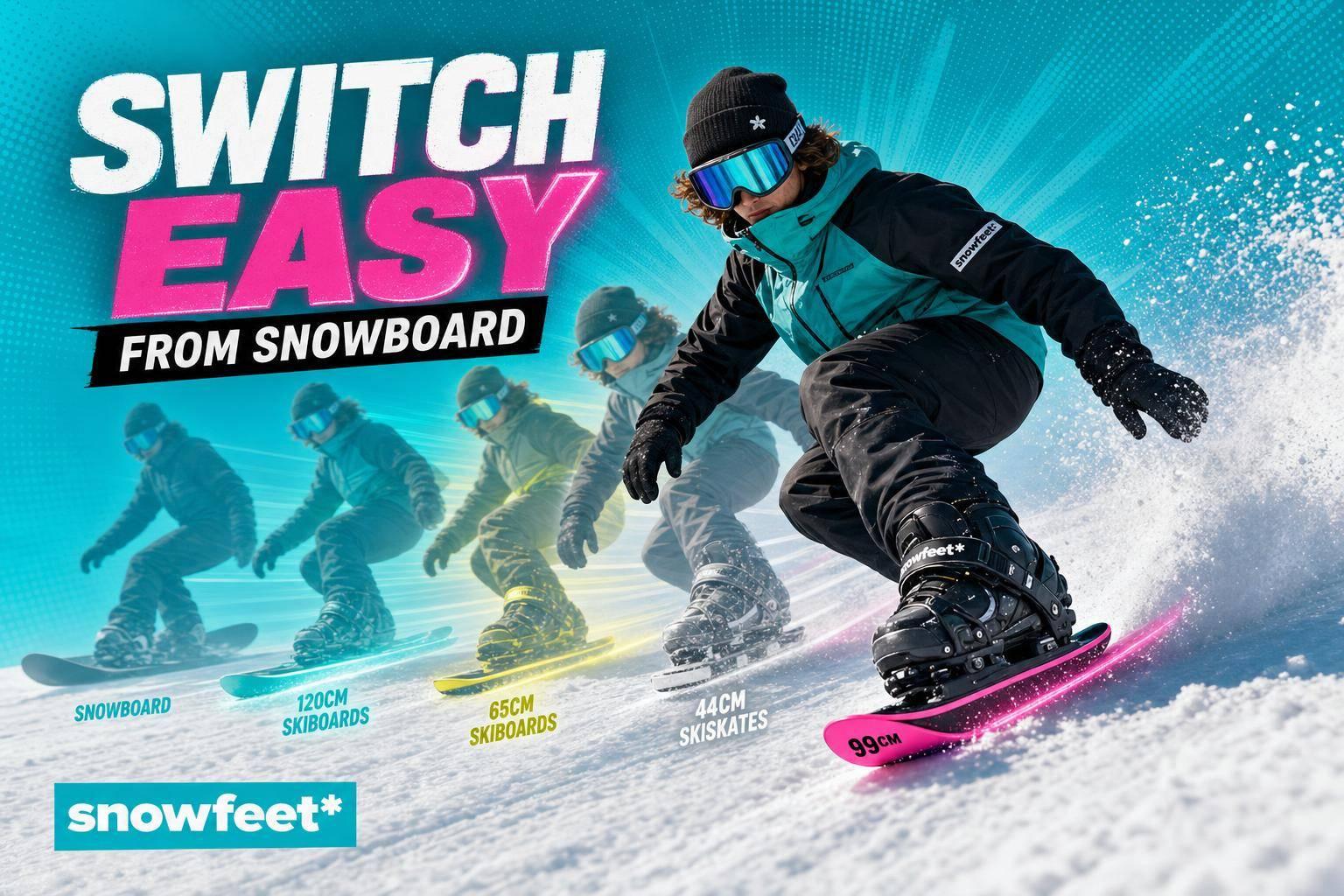
Most 38 cm, 44 cm, 50 cm, and 65 cm models are compatible with snowboard boots. Some longer versions, like the 120 cm blades, may need ski boots instead.
Are 99 cm skiblades better than standard beginner skis?
Yes. 99 cm Snowfeet Skiblades are usually easier to control, turn, and stop than long, standard skis. For beginners, that means they feel less awkward and a lot less bulky.
They won’t be as fast as full-length skis, but that’s part of the appeal. You get better maneuverability, along with more stability and edge grip than you’d get from shorter models. So if you want something that feels more planted and ski-like, with space to build your skills, they’re a strong pick.











コメントを残す
このサイトはhCaptchaによって保護されており、hCaptchaプライバシーポリシーおよび利用規約が適用されます。