



















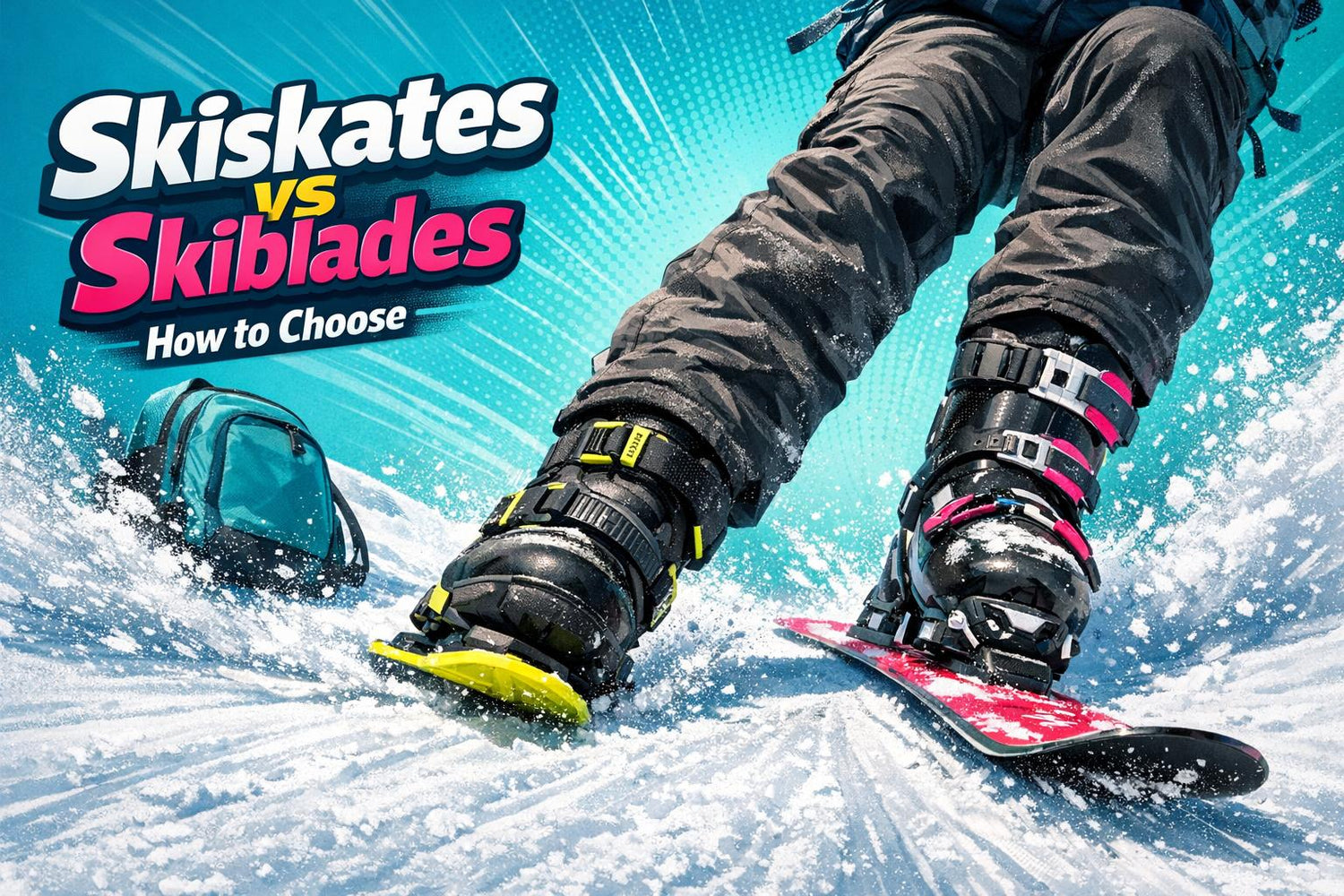
Looking for a compact, fun way to hit the slopes? Skiskates and Skiblades are two great options from Snowfeet that bring a skate-like twist to skiing. Here’s the quick breakdown:
- Skiskates (44 cm): Small, lightweight, and easy to carry. Perfect for groomed runs, quick turns, and playful riding. Works with regular winter or snowboard boots.
-
Skiblades (65–120 cm): Slightly longer for better stability and control. Available in three lengths:
- 65 cm: Great for tricks and park riding.
- 99 cm: Balanced for carving and light powder.
- 120 cm: Offers more control at higher speeds and handles mixed snow conditions better.
Both are affordable alternatives to full ski setups, but which one’s right for you depends on how and where you ride. Skiskates are super portable and beginner-friendly, while Skiblades provide more versatility and stability across different terrains.
Quick Comparison:
| Feature | Skiskates (44 cm) | Skiblades (65 cm) | Skiblades (99 cm) | Skiblades (120 cm) |
|---|---|---|---|---|
| Portability | Fits in a backpack | No | No | No |
| Boot Compatibility | Winter/snowboard boots | Snowboard boots | Ski boots | Ski boots |
| Best Terrain | Groomed runs, parks | Parks, tight turns | Groomers, light powder | All-mountain, mixed snow |
| Skill Level | Beginner-friendly | Intermediate | Intermediate | Intermediate/Advanced |
Want something ultra-portable and easy to learn? Go for Skiskates. Need more control for carving or varied terrain? Skiblades are the way to go. Let’s dive into the details below!
Snowfeet Skiskates: What You Need to Know
What Are Skiskates?
Snowfeet Skiskates are compact mini skis that blend the best of skiing and skating. Unlike traditional skis, these let each foot move independently, making turns feel natural and intuitive. Zbyněk, the founder of Snowfeet, shares his enthusiasm for this design:
"In my opinion, Skiskates is the best product for slopes we developed so far. I love how easy they are to ski and skate and how many different kinds of tricks I can perform without much effort and almost no restrictions." This makes them an excellent alternative to traditional freestyle skis for park riders.
This freedom to move and perform tricks without limitations makes Skiskates a standout option for adventurous riders. Let’s take a closer look at what makes them tick.
Key Features and Benefits
Snowfeet Skiskates are built for performance, combining high-quality materials with practical design. Here’s what they bring to the table:
- Premium Build: A sustainable wood core, full metal edges for grip on firm snow, and a sintered graphite base for speed and durability.
- Convenient Bindings: Adjustable, tool-free bindings that work with both ski and snowboard boots, covering a wide range of U.S. sizes. No need to buy specialized boots!
- Lightweight Design: At just 1–1.5 lbs per unit, they’re light enough to toss in a backpack - no need for bulky ski bags or roof racks.
One user, heyjerz, summed it up perfectly:
"A lot easier to haul around the hills & on vacation than traditional skis!"
These features make Skiskates a breeze to transport and use, whether you’re hitting the slopes or packing for a trip.
Best Use Cases
Skiskates shine on groomed blue and green runs, snow parks, and smaller hills. They’re perfect for carving tight turns, tackling small rollers, and hitting side features. If you’re an urban or suburban rider looking for a playful, easy-to-learn experience without the hassle of bulky gear, these are a great choice.
For skaters, hockey players, and inline skaters, the stance and movement will feel second nature. However, they’re not designed for deep powder, steep black-diamond runs, or high-speed straight-line descents. Stick to groomed terrain and moderate speeds to make the most of their quick, agile performance.
Whether you’re a casual rider or a skater looking to bring your skills to the slopes, Snowfeet Skiskates offer a fun and flexible way to enjoy winter sports.
sbb-itb-17ade95
Snowfeet Skiblades: What You Need to Know
What Are Skiblades?
Snowfeet Skiblades combine the nimbleness of Skiskates with the steadiness of traditional skis. They come in three lengths - 65 cm (26 in), 99 cm (39 in), and 120 cm (47 in). Even the longest option is shorter than most adult all-mountain skis, which typically range from 150 to 180 cm (59–71 in). This shorter length makes them easier to maneuver while still providing a stable skiing experience.
The standout feature of Skiblades compared to Skiskates is their improved stability. They handle speed better, hold a solid edge during longer turns, and offer smoother control on firmer snow. This makes them a great choice for riders looking for more control without committing to full-length skis.
Key Features and Benefits
Snowfeet Skiblades are crafted with high-quality materials you'd expect from premium skis. They feature a certified sustainable wood core, full steel edges, and a durable graphite base. This construction provides a lively and responsive flex that reduces vibrations and enhances rebound. Unlike cheaper foam-core alternatives, these Skiblades deliver a solid and dynamic ride.
They’re compatible with standard alpine ski boots and, for select models, even snowboard boots. The adjustable, tool-free bindings make it easy to switch between boots. This versatility is a huge plus for snowboarders who don’t want to invest in separate ski boots. As one happy customer, Mike E., shared:
"I was nervous about the [snowboard] boots not being stiff enough for skis but it was not an issue at all. SUPER comfortable, easy to control, very agile."
This thoughtful design makes Skiblades a standout option for various terrains and riding styles.
Best Use Cases
Each Skiblade length is tailored to a specific type of skiing. The 65 cm model is the most playful, perfect for quick pivots, tight turns, and tricks in the terrain park. The 99 cm option strikes a balance between agility and stability, making it great for groomed runs and light powder. The 120 cm model feels closest to a traditional short ski, offering better edge grip and float for higher speeds and mixed snow conditions. Here’s a quick breakdown:
| Length | Best For | Terrain |
|---|---|---|
| 65 cm (26 in) | Tricks, tight turns, park riding | Groomed runs, terrain parks |
| 99 cm (39 in) | All-mountain carving, beginner to intermediate | Groomers, parks, light powder |
| 120 cm (47 in) | Faster carving, variable snow | All-mountain, hardpack, mixed conditions |
As Brad Tolin, another verified buyer, put it:
"These ski blades are a blast to use. Easy to control and quick to turn, and way more forgiving than traditional skis. Only trade-off is at higher speeds, where longer skis still feel more stable - but for overall fun and maneuverability, these are hard to beat."
Skiblades excel on groomed runs and hardpack. While the 65 cm model might struggle in deep powder, the 120 cm version handles softer, uneven snow much better. They offer the control and precision of traditional skis but in a lighter, more compact package exclusive to Snowfeet.
Snowboarder tries Snowfeet* | Which Snowfeet* Short Ski is the Best? | Snowblades 44, 65, 99 Review
Skiskates vs. Skiblades: Side-by-Side Comparison
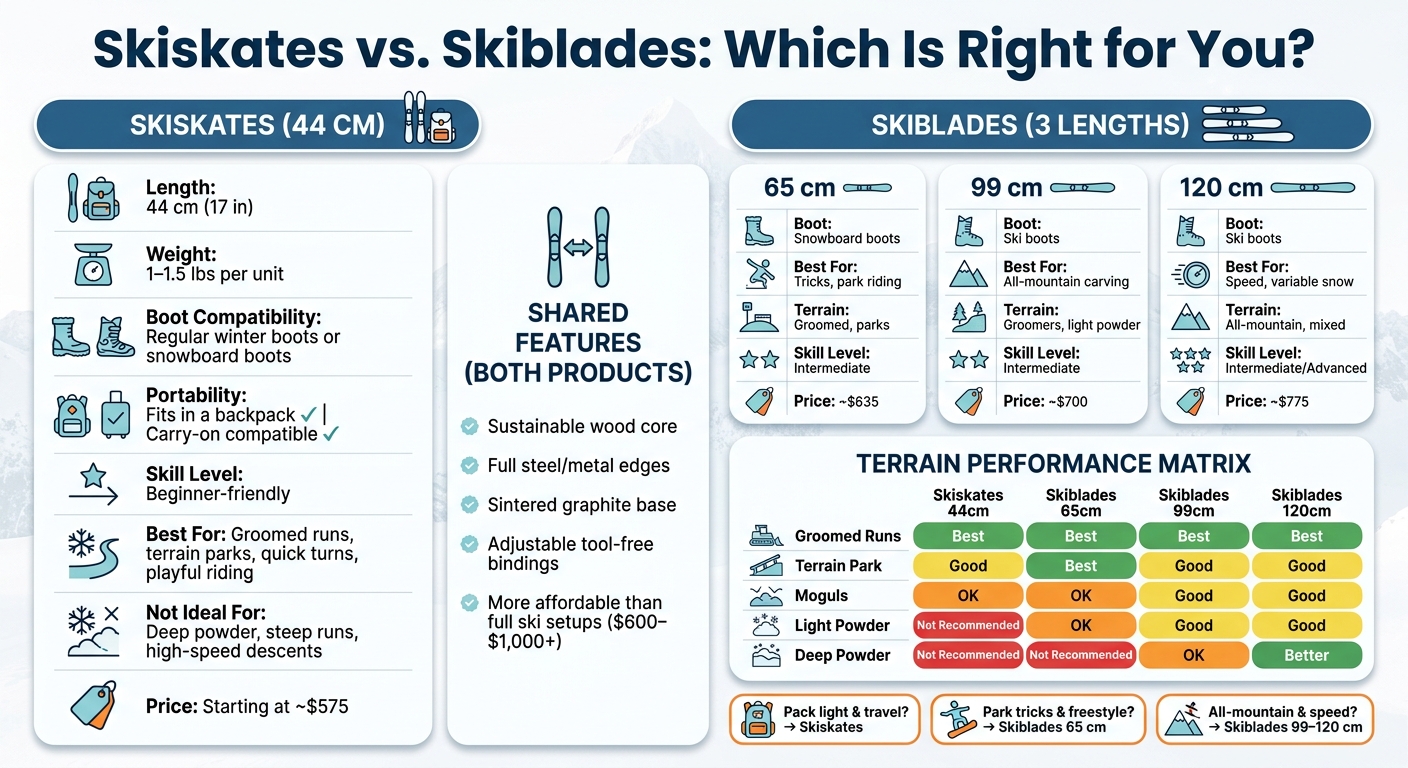
Skiskates vs Skiblades: Full Comparison Guide
Now that we've covered what each product excels at individually, let's see how they compare in this Skiskates vs. Skiblades comparison. We'll dive into portability, ease of learning, terrain performance, and price to help you figure out which option fits your needs.
Portability and Convenience
When it comes to portability, Skiskates take the win hands down. At just 44 cm (17 in), they can easily slip into a standard backpack or carry-on bag, making them perfect for light travelers or impromptu slope trips. Skiblades, on the other hand, range from 65 to 120 cm (26–47 in), so while they're still more compact than traditional skis, you'll need a ski bag or extra trunk space to transport them.
Another bonus for Skiskates? They strap onto regular winter boots, meaning you can skip packing bulky ski boots. Skiblades (99 and 120 cm) require ski boots, which adds to your gear load, though the 65 cm model works with snowboard boots.
| Skiskates (44 cm) | Skiblades (65–120 cm) | |
|---|---|---|
| Fits in a backpack | Yes | No |
| Boot requirement | Regular winter or snowboard boots | Ski boots (99/120 cm), snowboard boots (65 cm) |
| Car trunk space | Minimal | More than Skiskates, less than full skis |
| Travel-friendly | Carry-on compatible | Ski bag recommended |
Learning Curve and Skill Level
Skiskates are quicker to pick up, especially if you have experience with ice or inline skating. The movement feels natural, with short strides, quick turns, and easy edge control. Snowfeet even claims that skaters can feel confident on groomed runs after just one session.
Skiblades require a bit more practice, but the payoff is greater control. The longer edges on the 99 and 120 cm models provide better grip for carving turns and more stability at higher speeds. If you're already a skier, Skiblades will likely feel more intuitive right away compared to Skiskates.
Terrain and Snow Conditions
Skiskates shine on groomed runs and packed snow. They're agile and ideal for resort groomers, local hills, and terrain parks. However, their short edges make them less stable on steep or icy slopes, especially at higher speeds.
Skiblades are more versatile across different terrains. The 65 cm model is perfect for terrain parks, while the 99 cm handles all-mountain conditions, and the 120 cm offers added stability in variable snow. While none of these replace full-length skis for top-speed stability, the 99 and 120 cm Skiblades strike a solid balance between maneuverability and control.
| Terrain | Skiskates (44 cm) | Skiblades 65 cm | Skiblades 99 cm | Skiblades 120 cm |
|---|---|---|---|---|
| Groomed runs | Best | Best | Best | Best |
| Terrain park | Good | Best | Good | Good |
| [Moguls | OK with experience](https://www.snowfeetstore.com/blogs/snowfeet_skiskates_skiboards_snowblades_skiblades_mini_skis_short_skis/short-ski-mogul-tips-for-all-skill-levels) | OK | Good | Good |
| Light powder | Not recommended | OK | Good | Good |
| Deep powder | Not recommended | Not recommended | OK | Better than shorter options |
Price and Value
Both Skiskates and Skiblades are much more affordable than traditional ski or snowboard setups. In the U.S., a beginner ski package - including skis, bindings, and boots - typically costs $600–$1,000+, while snowboard packages fall between $500–$900+. These alternatives offer solid performance at a fraction of the cost, making them a budget-friendly way to enjoy the slopes.
How to Pick the Right Option for Your Riding Style
When deciding on the best fit, think about your riding style, experience, and where you’ll be hitting the slopes. These factors often matter more than any single feature or spec.
For Skaters and Beginners
If you’re into hockey, inline, or ice skating - or you're just starting out on the slopes - the Skiskates (44 cm) are a solid option. They feel natural for skaters and offer a less intimidating experience on groomed runs. Unlike traditional ski setups, these are lightweight, easy to use, and don’t require bulky gear or a steep learning curve. Plus, they’re perfect for anyone looking for quick, agile movements.
If you’re thinking about spending time in the park, there’s another option to check out.
For Freestyle and Park Riders
Love terrain parks, rails, and jumps? The 65 cm Skiblades might be your new best friend. They’re long enough to handle hard landings and offer a solid platform for spins over 180°, but still short enough to navigate tight features with ease. Compared to traditional park skis vs. all-mountain skis, these emphasize agility and compactness while still giving you plenty of control. If you’re used to twin-tip park skis, these will feel like a fun, streamlined alternative.
For All-Mountain and Powder Riders
If you’re tackling a mix of resort terrain, the 99 cm Skiblades are a versatile choice. They carve confidently and stay nimble in tighter spots. But if you’re someone who craves speed or loves chasing powder in the big Western ranges, the 120 cm Skiblades are the way to go. They offer better float in soft snow and hold an edge more securely at higher speeds.
Here’s a quick tip: for firm East Coast runs, stick with the 99 cm model. For wide-open Western terrain and variable snow, go with the 120 cm version. Both models provide mountain versatility, but in a much more compact and user-friendly package than traditional skis.
Conclusion: Choosing the Right Snowfeet Product
Snowfeet products offer a fresh way to enjoy winter sports, making them approachable, fun, and less daunting than traditional long skis. But each product serves a slightly different purpose. The Snowfeet Skiskates (44 cm) are all about agility and portability - perfect for those who like to pack light and enjoy quick, playful runs on groomed slopes. On the other hand, the Snowfeet Skiblades - available in 65, 99, and 120 cm lengths - are built for added stability, better edge control, and versatility across a wider variety of mountain terrains. These differences also influence the price and overall value.
When choosing, think about these three questions: How do you ride? Where do you ride? And how do you transport your gear? If you’re a traveler, Skiskates are an easy pick - they fit in a backpack, saving you the hassle (and cost) of extra baggage. But if you’re heading to a resort for a full day of carving and want something that handles variable conditions with ease, a longer Skiblade might be worth the investment for its stability and control.
Speaking of investment, Snowfeet Skiskates (44 cm) start at around $575, while Skiblades range from $635 to $775, depending on the model and package. If versatility and stability are your priorities, it’s worth spending a bit more on a longer Skiblade. Choose the option that best matches your riding style and needs.
One last tip: check your mountain’s gear policy before buying. Skiblades use standard ski bindings and boots, but Skiskates may have specific rules depending on the resort.
Both Skiskates and Skiblades offer a fun twist on traditional 150–180 cm skis. The right choice comes down to how you ride, where you ride, and how you plan to carry your gear. Happy shredding!
FAQs
Will my ski resort allow Skiskates or Skiblades?
Ski resort rules for Skiskates and Skiblades can differ, but these smaller, more compact alternatives are usually permitted on groomed trails and in snow parks, much like regular skis or snowboards. To avoid any surprises, it’s a good idea to contact the resort directly to confirm their policies on non-traditional gear.
Which Skiblade length should I choose for my height and speed?
For most people, the 99 cm skiblades hit the sweet spot between control, agility, and speed. They work well for a variety of skill levels and are perfect for carving and quick turns on the slopes. If you're taller or chasing higher speeds, the 120 cm option provides extra stability. On the other hand, beginners or younger riders might feel more comfortable starting with the 44 cm skiskates, which are easier to handle and great for learning.
Do I need ski boots, or can I use snowboard/winter boots?
You don’t need special ski boots to enjoy Snowfeet Skiskates or Skiblades. Their adjustable, tool-free bindings are designed to fit a wide range of sizes - US 4.5–14.5 for ski boots and US 6–14.5 for snowboard boots. This means you can use the winter or snowboard boots you already own. It’s a practical and budget-friendly option compared to traditional ski gear, which often demands buying dedicated boots.











Lascia un commento
Questo sito è protetto da hCaptcha e applica le Norme sulla privacy e i Termini di servizio di hCaptcha.