




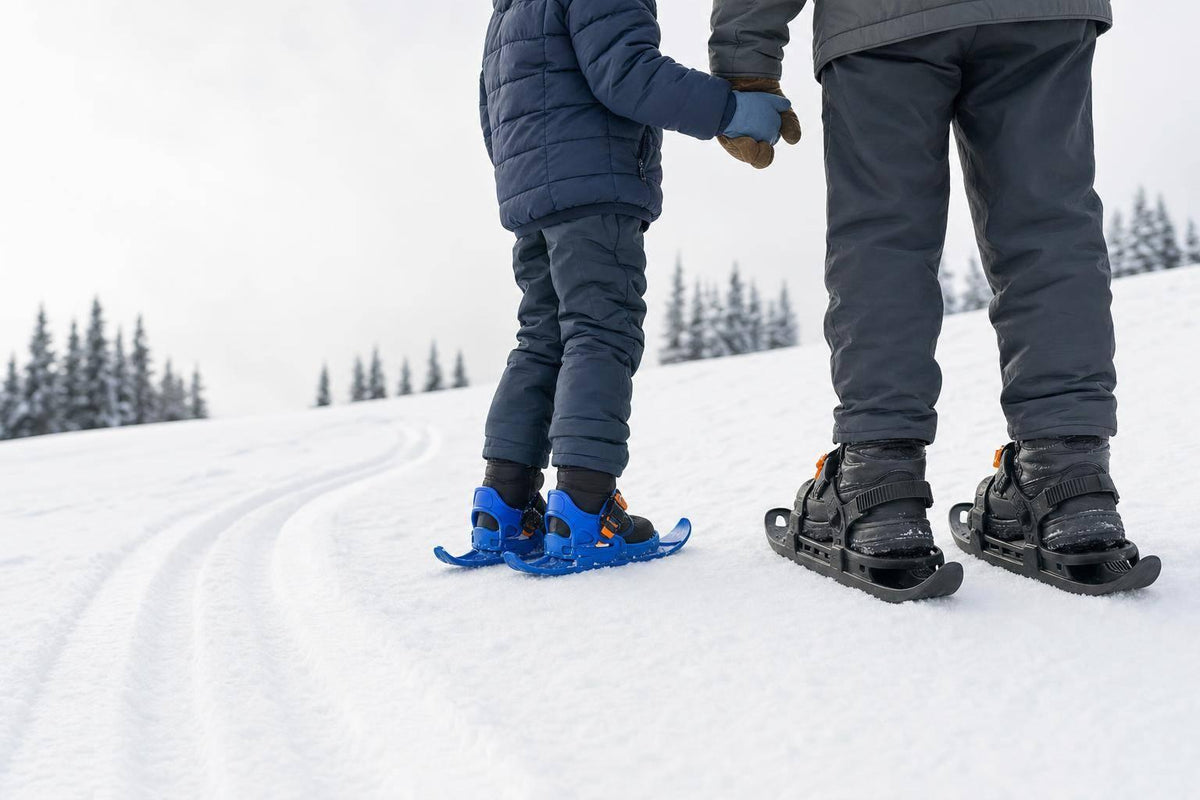
If I had to keep this simple, I’d say this: most families should start with Snowfeet 38 cm, pick Snowfeet MINI KIDS for smaller kids, move to Snowfeet 50 cm for older riders who want more glide, choose Skiskates 44 cm only if you already have ski or snowboard boots, and go with Assled if sitting sounds better than standing.
That’s the whole choice in one line.
I’d make the call based on just 4 things:
- Boot type
- Rider age
- Balance and mobility
- Hill type
And safety comes first. The article points out that in 2022, about 124,700 winter-sports-related injuries were treated in U.S. ERs. So, yeah, helmets matter. Pick a clear hill, check the gear, and keep the speed low.
Here’s the short version of each option:
- Snowfeet MINI KIDS - best for smaller kids on gentle backyard hills
- Snowfeet 38 cm - best first pick for many families
- Snowfeet 50 cm - better for older kids, teens, and adults
- Skiskates 44 cm - best if your family already uses ski or snowboard boots
- Assled - best for seated sliding and mixed ability levels
The ultimate fun skis for kids. 🎿
sbb-itb-17ade95
Quick Comparison
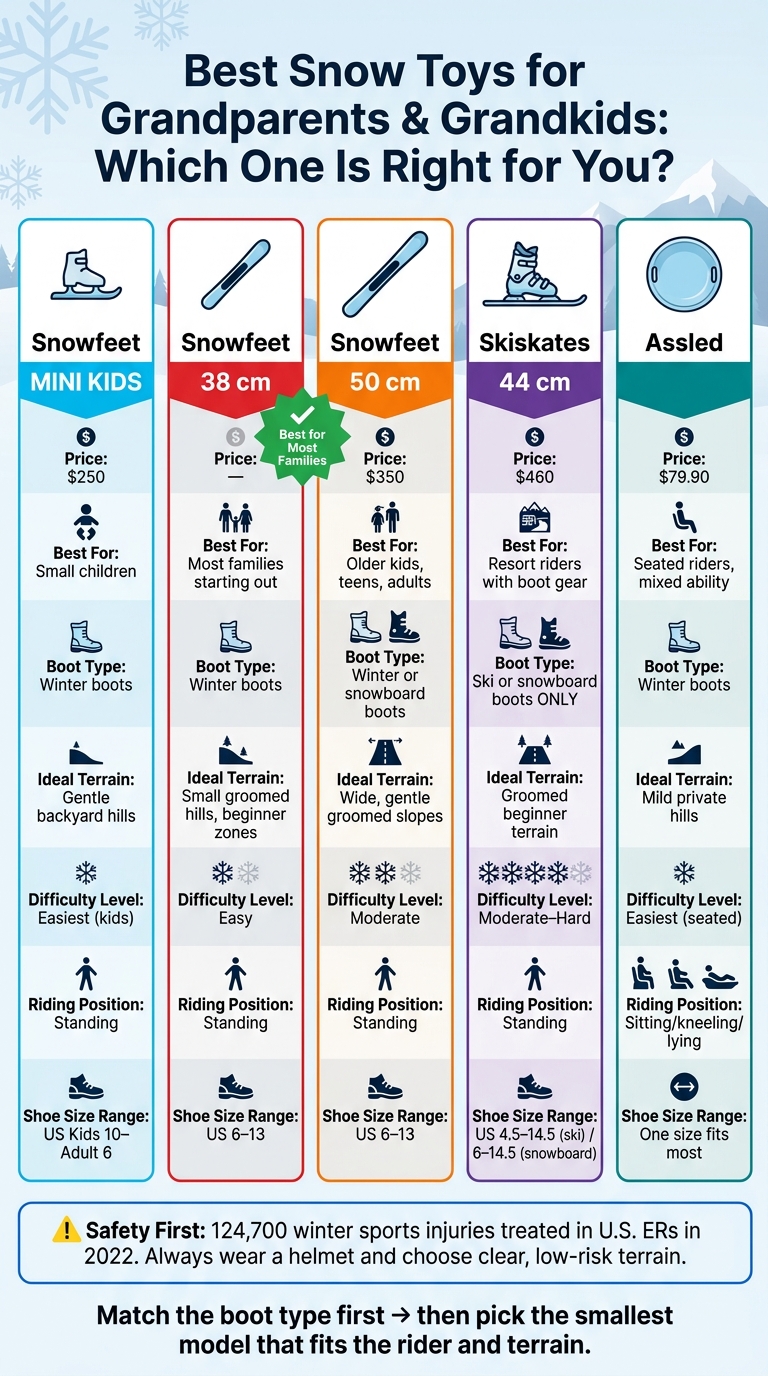
Best Snow Toys for Grandparents & Grandkids: Side-by-Side Comparison
| Product | Best for | Boots | Where I’d use it | Price |
|---|---|---|---|---|
| Snowfeet MINI KIDS | Smaller children | Winter boots | Gentle backyard hills | $250 |
| Snowfeet 38 cm | Most families starting out | Winter boots | Small groomed hills, beginner zones | - |
| Snowfeet 50 cm | Older kids, teens, adults | Winter or snowboard boots | Wide, gentle groomed slopes | $350 |
| Skiskates 44 cm | Resort riders with boot gear | Ski or snowboard boots only | Groomed beginner terrain | $460 |
| Assled | Seated riders, mixed ability groups | Winter boots | Mild private hills | $79.90 |
My quick take: if you want easy and low-stress, start small with value ski and snowboard gifts. If you want more glide, go longer. If you don’t want to stand at all, Assled is the simple answer. That’s the basic map before getting into the details.
1. Snowfeet* MINI KIDS
MINI KIDS fits US kids' size 10 to US adult size 6 (EU 27–38, about 6.7–9.1 in foot length). Measure the child's actual winter boot before ordering. That makes MINI KIDS the easiest Snowfeet pick for younger riders.
It comes with adjustable bindings for regular winter boots. It also works with snowboard boots in EU 27–33, but bigger sizes can be too wide for the binding. Before heading outside, test the fit indoors first. Have your child wear the exact boots and socks they’ll use on the hill, buckle both straps, and make sure the heel doesn’t lift and the boot doesn’t wobble side to side.
Use MINI KIDS on gentle, packed backyard hills where speed stays low. It’s best for easy gliding, not long or fast runs. Skip ice, deep powder, and bumpy slopes. That lower-speed feel also makes it easier for grandparents or parents to stay close and lend a hand.
Here’s a simple way to think about it:
- A 7-year-old in a US kids' size 12 boot fits the range.
- A child in a US adult 7 snowboard boot will likely need a bigger Snowfeet model.
Price: $250. Use a properly fitted helmet and pick a clear slope with no rocks, fences, or heavy traffic.
For bigger boots or older kids, move next to the 38 cm model.
2. Snowfeet 38 cm
If MINI KIDS feels too small, Snowfeet 38 cm is the next step up. It fits U.S. shoe sizes 6–13 and EU sizes 38–47, so the fit range is pretty broad for families.
One nice part: it works with regular winter boots. That means grandparents may not need winter sports gear. Still, check the straps before heading out. Bulky snowboard boots in U.S. sizes 12–13 may not fit every binding setup. It’s smart to test the fit indoors first. Saves hassle later :)
This 38 cm length works best on small groomed hills and beginner resort areas. Keep it to clear, low-risk terrain. That makes the ride simpler and takes some pressure off everyone.
Because it’s short, it’s easier to handle than longer models. But it still takes balance, and stopping under control matters. Start on nearly flat terrain and practice stopping before trying anything else.
Do not use it with children under 7. Everyone should wear proper footwear, protection, and a helmet.
If you want more length and a steadier ride, the 50 cm model is the next option.
3. Snowfeet 50 cm
Snowfeet 50 cm is a good pick for older grandkids, teens, and adults who want more glide and steadier tracking than the 38 cm model (deciding between longer or shorter skis depends on your balance goals), but don’t want to deal with full-length skis.
It fits U.S. shoe sizes 6–13 (EU 38–47) and works with regular winter boots or snowboard boots. That makes it easy for families to share without extra setup. One catch: it’s too large for younger kids with smaller feet.
For a resort beginner area, snowboard boots are the stronger choice because they give better ankle support.
The extra length also means more speed. So start slow on a wide, gentle slope with a clear runout. Think of it like this: a bit more length gives you a calmer ride, but it also asks for a touch more respect.
Check the fit at home before you go. A loose boot hurts control more on a longer model, and that’s the kind of problem that can turn a fun day into a clunky one.
Price: $350.
Its longer length makes it calmer and more stable for relaxed family runs. If you want something shorter and quicker to turn, the next model is the better fit.
4. Snowfeet* Skiskates 44 cm
Snowfeet* Skiskates 44 cm stand apart from the other Snowfeet models for one big reason: they work only with ski boots or snowboard boots, not regular winter shoes. If your family already has resort gear, that can make them a nice compact pick over full-length skis for groomed beginner terrain.
At about 17 inches, Skiskates feel closer to skiing on groomed beginner slopes and short runs. The ski-boot version fits U.S. sizes 4.5–14.5 (EU 36–49), while the snowboard-boot version fits U.S. sizes 6–14.5 (EU 38–49). You’ll need to pick the right version at checkout, since the bindings don’t switch between boot types.
For grandparents, there’s one thing to take seriously: the bindings don’t release. That’s why controlled, low-speed riding on easy terrain matters so much here. Gentle groomed slopes are the smart call. Also, some resorts don’t allow Skiskates, so it’s worth a quick phone call before you head out.
At $460, Skiskates make sense for resort families who want a compact, playful ride. If you want something with less boot setup and more grab-and-go fun for grandparents and grandkids, Assled is up next.
5. Assled
If Skiskates still sound a bit too technical, Assled is the easiest step down. It’s the least technical pick in this lineup: a wearable, foldable sled that lets you sit instead of balance. It straps around the waist and thighs to make a padded seat for downhill sliding. That feels a lot less intimidating than standing on narrow runners.
You can ride it sitting, kneeling, or lying down, based on what feels best. Steering and stopping mostly come from pressing or dragging your heels into the snow. That means setup stays simple, since it works with regular waterproof winter boots.
It also packs down small. Folded, it measures about 9.4 × 16.1 × 3.1 inches and weighs about 2.9 pounds. So, yeah, it’s light enough to sling over your shoulder or clip to a backpack.
That said, its limits are pretty clear. Heel braking works best on mild slopes and gets less predictable on steeper or icier terrain. Grandparents with knee, hip, back, or balance concerns should stick to the shallowest slope and skip tandem riding. There’s also very little independent data on braking distance, stability ratings, or max rider weight. So terrain choice matters more here than it does with gear that has a longer track record.
That tradeoff makes Assled friendly for casual play, but less precise than Snowfeet on groomed runs. In plain English: this is the most laid-back option here. It makes sense for families who want a low-skill ride before looking at the other models.
A SkiBlades listing shows the Assled at $79.90, down from a regular price of $140.00. It works best as a casual backyard option, while Snowfeet stays the stronger pick for control and family skill-building. So Assled fits relaxed backyard play and short family outings far better than beginner ski resorts in North America. The next section breaks down which option fits each family setup best.
Pros and Cons for Each Family Situation
Use this quick guide to match each model to rider size, boot type, and terrain.
Pick based on the rider, the boots, and the hill. That’s the whole game.
| Product | Best for | Key advantages | Trade-offs |
|---|---|---|---|
| Snowfeet MINI KIDS* | Small children on gentle backyard hills | Small, light, and easier for first-timers than full skis | Not much use for most grandparents; boots need a snug fit; one rider at a time with adult supervision |
| Snowfeet 38 cm | Casual backyard sessions and short practice runs on gentle hills | Easy to carry, simple to put on, works with regular winter boots | Less stable at higher speed or on bumpy snow; best on gentle, open hills |
| Snowfeet 50 cm | Older grandkids, teens, and adults who want more glide | More platform than the 38 cm model; a better match for short beginner runs at a resort | Takes more balance and more stopping skill; not a two-person option |
| Snowfeet Skiskates 44 cm* | Grandparents who already own ski or snowboard boots and want a compact resort option | Very small; works with existing resort boot setups | Harder to learn if you're new to standing snow gear; higher price than the foot-mounted models |
| Assled | Supervised seated rides on gentle private hills | Seated design removes the balance issue; lets you stay close to a young child | Check rider limits and stick to one rider at a time |
Check resort rules first. Some areas restrict non-standard gear.
These trade-offs make the best pick a lot easier for each family setup. The next section turns that into the final choice.
Which One Should You Buy?
Buy the least demanding option that still fits the rider's boots and balance. That usually leads to a better first day on the hill and fewer wobble-filled surprises.
Here’s the simple family cheat sheet:
| Outing type | Best pick | Why |
|---|---|---|
| Smaller child on a backyard hill | Snowfeet* MINI KIDS | Best for small children in snug winter boots; not for children under 7 |
| Cautious grandparent, older child, or smaller adult on short runs | Snowfeet 38 cm | Best first-step Snowfeet option for easy control |
| Grandparent or larger rider on a groomed beginner slope | Snowfeet 50 cm | More glide and stability for older kids and adults on groomed runs |
| Resort day with ski or snowboard boots | Snowfeet* Skiskates 44 cm | Best for riders already using ski or snowboard boots |
| Seated sliding for mixed-ability families | Assled | The easiest shared option |
| One product shared by the family | Assled for shared use; matched Snowfeet sizes for independent riding | No single foot-mounted model fits every pair |
For most grandparents and grandkids, Snowfeet 38 cm is the easiest place to start. If you want more glide, move up to 50 cm. If your group has mixed ability levels, Assled is the easiest seated option.
The main rule is simple: match the boot type first, then pick the smallest model that fits the rider and the terrain. That’s usually the move that keeps things fun instead of chaotic :)
FAQs
How do I know which Snowfeet size to buy?
Choose Snowfeet by looking at four things: age, skill level, boot type, and height.
MINI KIDS is the best place to start for young children. It fits regular winter boots in U.S. kids’ size 10 through adult 6, which makes it an easy first pick.
As riders get bigger or start to feel more sure on snow, move up by length:
- 38 cm: a small step up that stays light and easy to handle
- 50 cm: gives a bit more stability
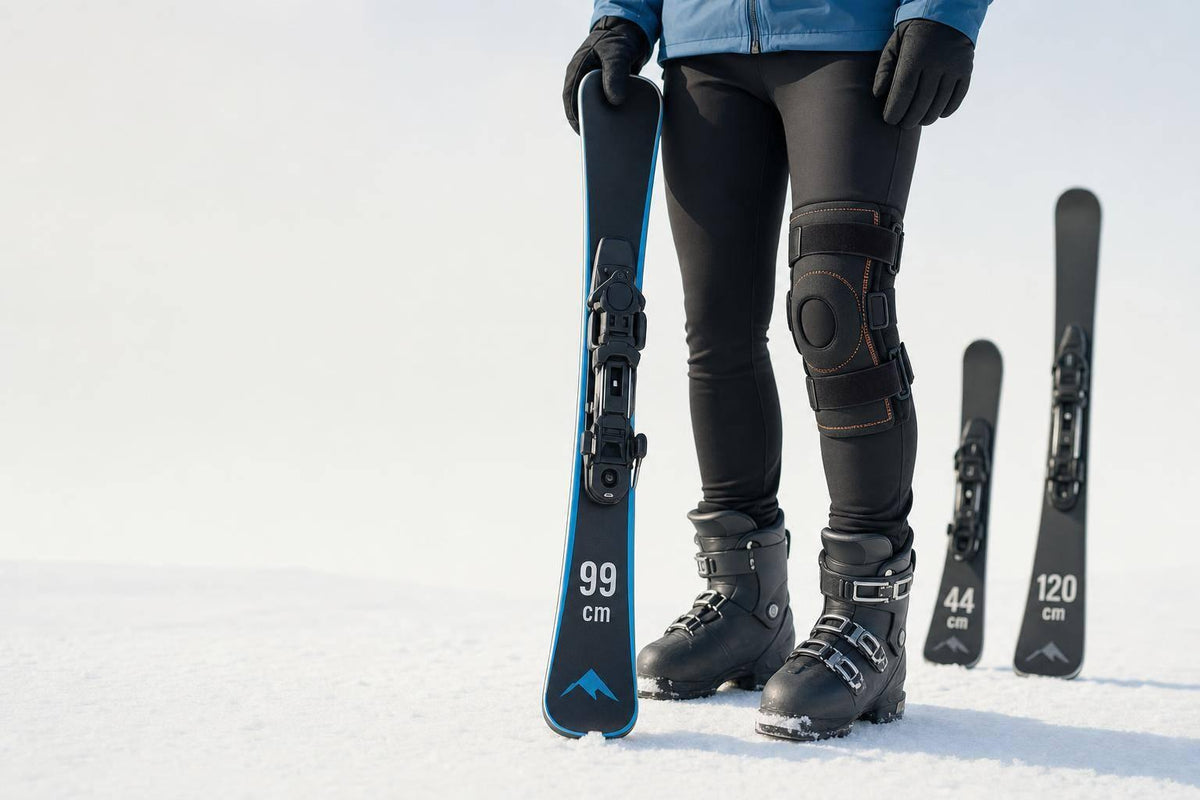
- 65 cm or 99 cm Skiblades: a good match for intermediate riders
- 120 cm Short Skis: the top choice for riders who want the most performance
If you’re stuck between two sizes, go with the shorter option. It’s easier to control, and that usually means a smoother ride :)
Can grandparents use Snowfeet with regular winter boots?
Yes. Most Snowfeet models, including the 38 cm and 50 cm versions, use adjustable strap bindings that fit regular waterproof, insulated winter boots. So you don’t need ski boots for those models.
For the best ride, go with boots that fit snug and give you solid ankle support. That extra support helps a lot once you start turning and stopping.
One thing to watch: some models, like the 44 cm Skiskates, do require ski or snowboard boots.
Which option is safest for mixed-age family outings?
Snowfeet MINI KIDS* is the safest pick for mixed-age family outings. It’s the easiest one to learn on, works with regular winter boots, and fits gentle hills plus short play sessions. It also gives kids strong control, which matters a lot when everyone’s at a different skill level. A helmet is still required.
If older kids want a step up and need one setup they can share, Snowfeet PRO 50 cm* is the next pick. Snowfeet 44 cm* skates make more sense only for kids who already have good balance.












Lascia un commento
Questo sito è protetto da hCaptcha e applica le Norme sulla privacy e i Termini di servizio di hCaptcha.