



















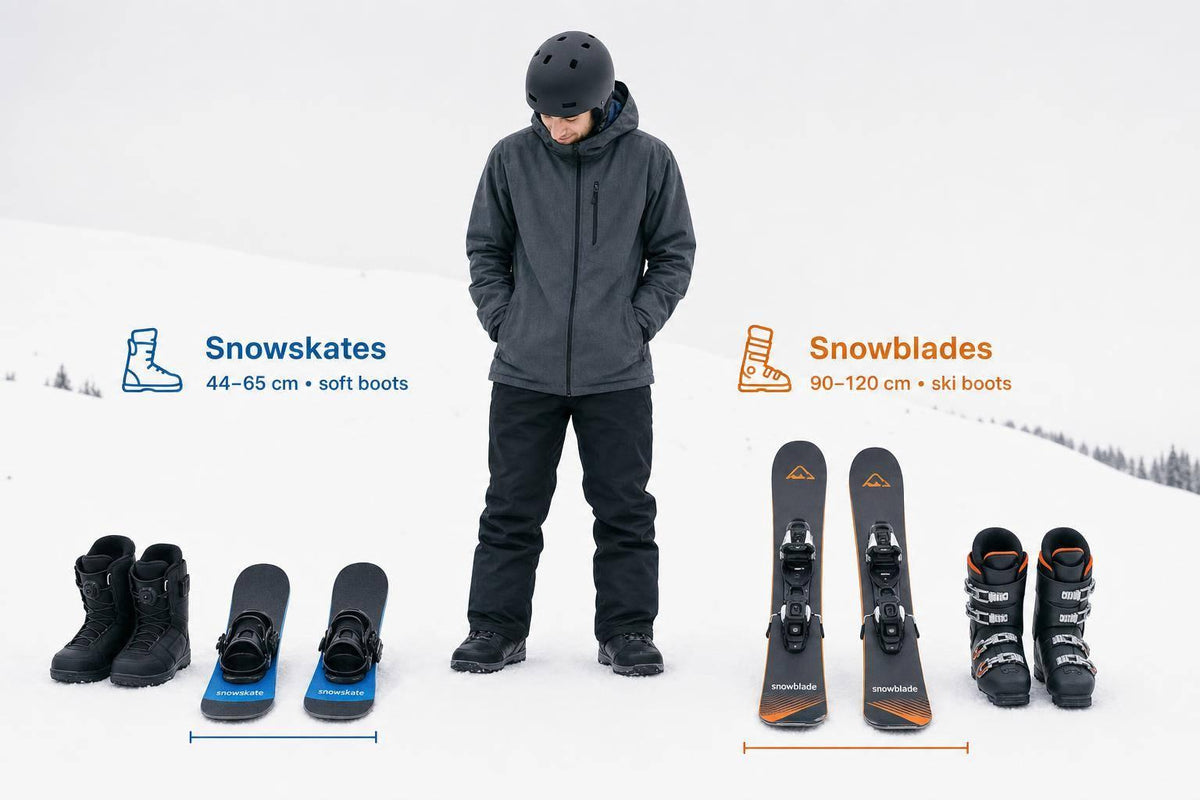
If you’re new to snow, I’d start with 65 cm snowblades for the easiest first day. If you want a more skate-like feel, go with 44 cm skiskates. If you want more balance and room to grow, 99 cm skiblades make more sense.
Here’s the short version:
- 44 cm skiskates = most playful, most compact, least steady
- 65 cm skiblades = easiest for most beginners
- 99 cm skiblades = more balance at moderate speed
- 120 cm short skis = closest feel to standard skis
One thing matters a lot: length. A study on short-ski learning found adult beginners learned faster, had more control, and felt less physical strain with shorter gear. That helps explain why short skis can feel less scary on day one.
My take:
- Pick 44 cm if you already skate and want a loose, nimble ride.
- Pick 65 cm if you want the smoothest start.
- Pick 99 cm if you want more edge hold and better support on groomers.
- Pick 120 cm if you want a setup that feels more like standard skis later on.
And yes, there’s a catch: short gear shines on groomed snow and mellow speeds, but it’s not the top choice for deep powder or fast carving. Think of it like this: short gear is fun and easy to toss around, but it won’t do every job on the mountain.
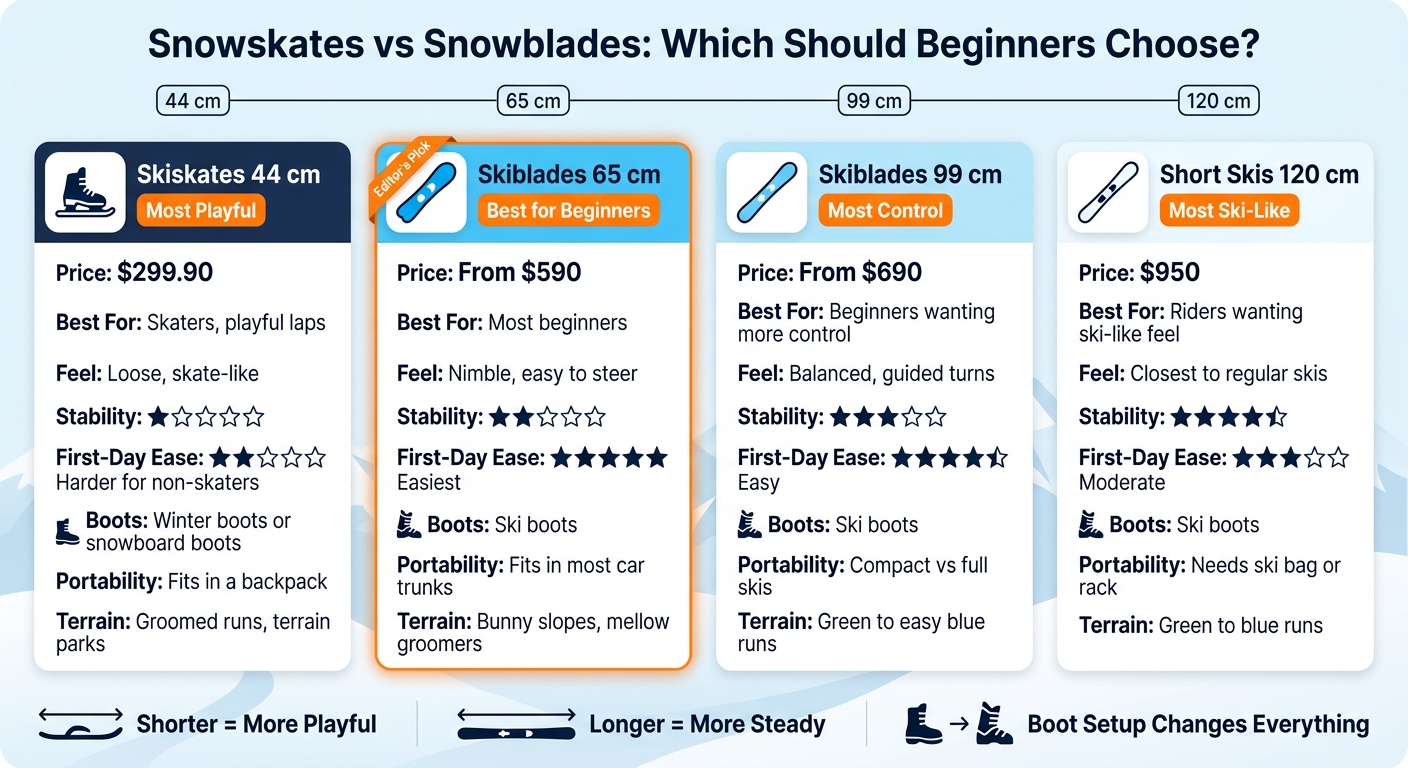
Snowskates vs Snowblades: Beginner's Visual Comparison Guide
Snowboarder tries Snowfeet* | Which Snowfeet* Short Ski is the Best? | Snowblades 44, 65, 99 Review
Quick Comparison
| Option | Best for | Feel | Stability | Boots | Price |
|---|---|---|---|---|---|
| Skiskates 44 cm | Skaters, playful laps, easy carrying | Loose, skate-like | Low | Winter boots or snowboard boots; some ski boots | $299.90 |
| Skiblades 65 cm | Most beginners | Nimble, easy to steer | Low-medium | Usually ski boots | From $590 |
| Skiblades 99 cm | Beginners who want more control | Balanced, guided turns | Medium | Ski boots | From $690 |
| Short Skis 120 cm | Riders who want a ski-like feel | More like standard skis | Medium-high | Ski boots | $950 |
A few simple rules help here: shorter = more playful, longer = more steady, and boot setup changes the feel a lot. So if you’re stuck, I’d keep it simple and match the gear to how you want your first day to feel.
If you want a quick visual before you buy, these can help:
So, if you want my shop-floor answer with no fluff: 65 cm for the safest bet, 44 cm for the most fun, 99 cm for more control. Nice and simple :)
What Are Snowskates?
Snowskates are very short snow-riding tools that feel closer to skating than to standard skiing. In this guide, the term means Snowfeet* Skiskates 44 cm, not skateboard-style snowskates. That’s an important split.
Some snowskates are flat boards. Snowfeet* Skiskates, though, are mini skis built for groomed slopes.
How Snowskates Feel on Snow
On snow, they turn fast and feel more like ice skating than skiing. That quick, lively feel can make them click fast for skaters. But for total beginners, they can be less forgiving.
Where Snowskates Work Best
Snowfeet* Skiskates work best on groomed runs, firm snow, and terrain parks. That’s where fast edge changes and tight turns matter more than top speed.
There’s a tradeoff here: they give up some stability for agility. So, once you start going faster, hit chopped-up snow, or move into powder, longer skis or snowblades tend to feel more planted. If that sounds a bit too twitchy for day one, snowblades are a nice middle ground. You get more length and stability, but you still keep that short-ski feel.
sbb-itb-17ade95
What Are Snowblades and Short Skis?
Snowblades, also called skiblades or skiboards, are short skis that usually run from 65 to 120 cm long. By comparison, standard adult skis are much longer. That’s why snowblades tend to feel faster to turn and easier to steer. They’re often a bit wider than full-size skis too, which adds to that playful, nimble feel.
If 44 cm Skiskates feel a little too loose on day one, snowblades can be a nice middle ground. You get more stability without making the full jump to long skis.
How Snowblades Feel Compared to Regular Skis
On groomed runs, snowblades turn faster and need less effort than full-length skis. For many first-timers, that makes them feel less scary and more fun. Think of it like this: instead of wrestling the ski, you’re just guiding it.
Which Snowfeet* Length Suits Which Beginner
The main difference for beginners is pretty simple:
- Shorter snowblades are easier to carry and pivot
- Longer snowblades feel steadier
| Snowfeet* Length | Price | Best For |
|---|---|---|
| 65 cm Skiblades | From $590 | Terrain parks, bunny slopes, easy carrying |
| 99 cm Skiblades | From $690 | Steady, moderate speeds, groomed runs, some park use |
| 120 cm Short Skis | $950 | Carving support, most ski-like feel, skill transfer |
The 65 cm Skiblades are compact and feel the least intimidating for nervous beginners. They work well on bunny slopes, mellow groomers, and small park features.
The 99 cm Skiblades give you more balance at moderate speeds while still keeping that short-ski feel. They’re a nice middle option for groomed runs and the occasional park lap.
The 120 cm Short Skis make the most sense for beginners who want the closest feel to regular skis. The edging and turn shape transfer more naturally to longer skis later. That choice changes your stability, how the setup feels with your boots, and where each option works best.
Snowskates vs Snowblades: Side-by-Side Comparison
Here’s the quick read: the main difference for beginners is how much room for error each length gives you. Shorter gear feels more playful, but it also asks more from you right away.
| Factor | Snowfeet* Skiskates 44 cm | Snowfeet* Skiblades 65 cm | Snowfeet* Skiblades 99 cm | Snowfeet* Short Skis 120 cm |
|---|---|---|---|---|
| Riding feel | Skate-like, loose, agile | Nimble, short-ski feel | Balanced, guided turns | Closest to regular skis |
| First-day ease | Harder for non-skaters | Easy, low intimidation | Easy, more glide | Moderate |
| Forgiveness | Low | Medium | Medium-high | High |
| Stability at speed | Low | Low-medium | Medium | Medium-high |
| Portability | Fits in a backpack | Fits in most car trunks | Compact vs. full skis | Needs ski bag or rack |
| Terrain park | Great once balanced | Good for small features | Good all-around | More carving-focused |
| Groomed runs | Fun at low speeds | Best on short, mellow slopes | Green to easy blue runs | Green to blue runs |
| Powder/deep snow | Not ideal | Not ideal | Handles light powder | Better than shorter options |
| Price | $299.90 | From $590 | From $690 | $950 |
Learning Curve and Stability for New Riders
For first-timers with no skating background, the 65 cm and 99 cm Skiblades are easier to learn on than the 44 cm Skiskates.
The 44 cm Skiskates pivot and slide with very little effort. That’s a blast once you’re dialed in. But for a new rider, it can feel like standing on two very eager squirrels. If you don’t have inline or ice skating experience, keeping both feet lined up while learning basic edge control is tough.
That said, riders with skating experience often adjust fast. The movement makes more sense to them from day one.
Boot setup matters too. A lot.
Boot Compatibility and Setup
Boot setup changes both control and convenience. Same slope, same rider, very different feel.
| Setup | Compatible Boots | Walking Comfort | Edge Control | Setup Complexity |
|---|---|---|---|---|
| Skiskates 44 cm | Regular winter boots or snowboard boots | High | Moderate | Very simple |
| Skiblades 65 cm | Ski boots; some setups may accept snowboard boots | Low with ski boots | Good | Simple |
| Skiblades 99 cm | Ski boots | Low with ski boots | Very good | Simple |
| Short Skis 120 cm | Ski boots | Low | Excellent | May need pro setup |
| Full-length skis | Ski boots | Low | Excellent | Requires professional setup |
If you already own snowboard boots or regular winter boots, the Skiskates 44 cm are the easy button. Less hassle, simple setup, and you’re not hunting down ski boots before your first day.
Snowfeet* lists binding compatibility for the 44 cm model at US sizes 4.5–14.5 for ski boots and US 6–14.5 for snowboard boots. So, most adult foot sizes are covered.
If you already have ski boots, or plan to rent them, the 65–99 cm Skiblades give you better edge transmission and better stopping control. You feel more connected to the ski, which helps a lot when you're still figuring things out.
Best Terrain for Each Option
Terrain is the last big piece of the beginner pick.
On groomed resort runs, the 99 cm and 120 cm Skiblades give beginners the most steady ride. Turns feel more predictable, braking feels more reliable, and there’s enough stability to move from green runs to easy blue runs without feeling like the gear is arguing with you.
The 65 cm blades work best on slower, shorter slopes. They’re a natural match for magic carpets and smaller hills.
Skiskates are happiest on short groomed runs and small park features. In shallow powder or soft snow, the longer 99–120 cm Skiblades do better. Skiskates and very short blades can feel twitchy or sink in looser snow, which is pretty common on storm days at U.S. resorts.
That leads straight to which one beginners should buy.
Which One Should Beginners Buy?
If you want the simple answer, go with the Snowfeet* Skiblades 65 cm.
They’re the easiest all-around pick for beginners, especially on green runs and easy blue runs. They give you a smooth start without feeling too twitchy or too limited. For most people, that makes them the safest first buy.
Here’s the quick breakdown:
- 44 cm Skiskates: best if you want the most compact, skate-like ride. They’re playful and super easy to carry. But on day one, they ask more from you. They make the most sense if you already have some feel from skating, ice skating, or skateboarding.
- 65 cm Skiblades: best for the smoothest learning curve. This is the easiest pick for most beginners.
- 99 cm Skiblades: best if you want more speed, better edge hold, and a bit more help in light powder.
So, if your goal is the easiest start, pick 65 cm. If you want the most playful setup, pick 44 cm. If you want more room to grow, pick 99 cm.
For most beginners, Snowfeet* gives the best mix of control, portability, and fun.
FAQs
Can I learn on 44 cm skiskates with no skating experience?
Yes - you can learn on 44 cm Snowfeet Skiskates* even if you’ve never skated before.
In some ways, they feel less scary than regular skis. They’re short, light, and easier to move around on. You also won’t deal with crossing ski tips, which is a nice little win when you’re starting out.
That said, there’s a catch. Because they turn fast and react right away, they ask more from your balance. You have to stay a bit more active over them. They’re also less forgiving than the 65 cm Snowfeet Skiblades*, which give you a bit more room for error.
So, yes, beginners can use them - but expect a steeper learning curve than with longer gear.
Are 65 cm or 99 cm skiblades better for easy blue runs?
Yes. Both 65 cm and 99 cm Snowfeet Skiblades work well on easy blue runs.
The 65 cm option is more beginner-friendly. It feels easier to handle and less intimidating when you're still getting the hang of things.
The 99 cm option gives you more stability and better edge control as your speed picks up and you move from green runs to blue runs. Both sizes feel more planted and predictable than 44 cm Skiskates, which makes them a solid pick for building confidence and practicing parallel turns.
Do I need ski boots, or can I use winter boots?
You don’t need stiff alpine ski boots to have fun with Snowfeet gear. The right boot depends on the binding setup. Some Snowfeet models work with ski boots or snowboard boots. And with 44 cm Skiskates, you can even ride in sturdy, waterproof winter boots with firm soles. That’s a nice bonus if you want to skip the clunky boot shuffle :)
Ski boots give you the most precision and support. Snowboard boots feel softer, more comfortable, and much easier to walk in. Before you head out, check your model’s binding compatibility so you get a secure fit.











Laisser un commentaire
Ce site est protégé par hCaptcha, et la Politique de confidentialité et les Conditions de service de hCaptcha s’appliquent.