



















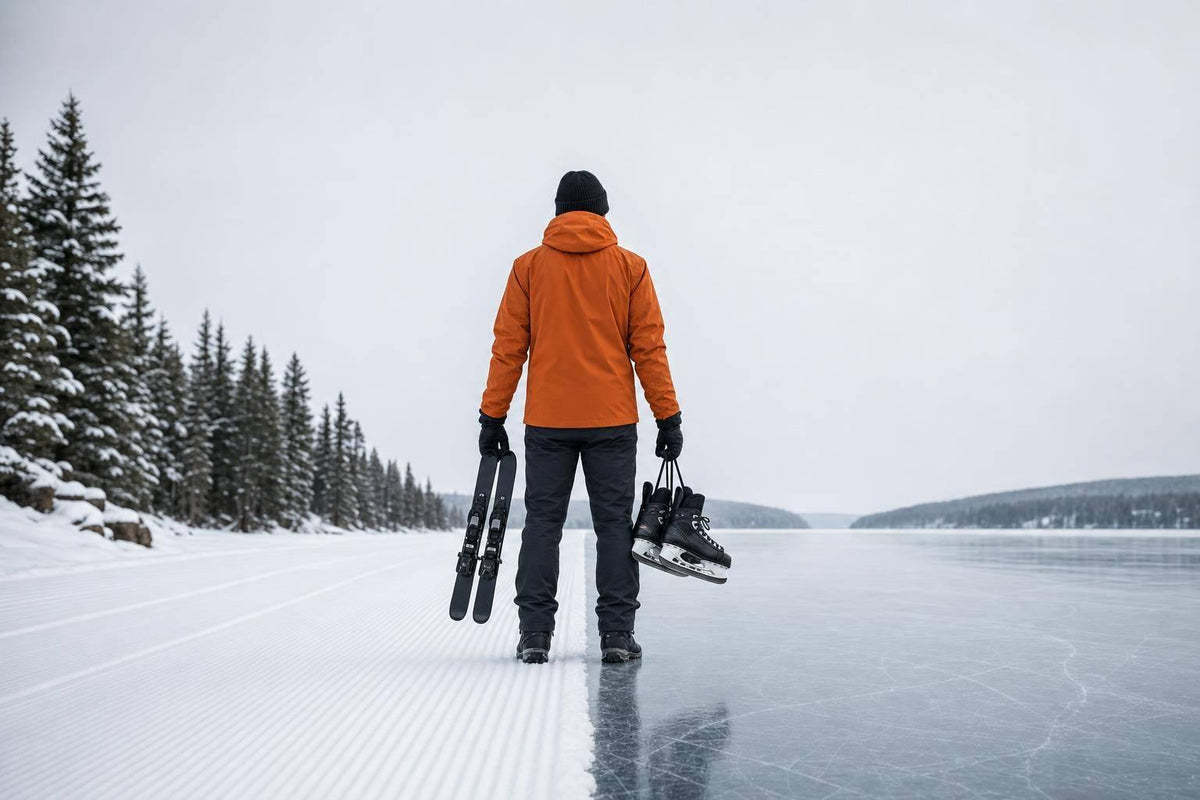
If you want one setup for more winter days, I’d pick skiskates. If you ride ice most of the time, I’d pick ice skates. That’s the whole thing in one line.
Here’s the short version:
- Skiskates work on packed snow, groomed runs, small hills, and snowy paths
- Ice skates work best on rinks, cleared ice trails, and frozen lakes with safe ice
- Skiskates are often easier for casual riders because the platform feels less sketchy than a thin blade
- Ice skates still win for grip, glide, and speed on smooth ice
- Snow depth matters: skiskates do best in about under 4 in. (10 cm) of powder
- Safe lake ice usually means about 4 in. of clear, solid ice before skating
If your winter includes road trips, resort laps, random snow days, and walking from the car without doing the penguin shuffle, skiskates make more sense for most people :)
All you need to know - Snowfeet* | Skiskates | Skiboards | Snowblades | Skiblades FAQ
Quick Comparison
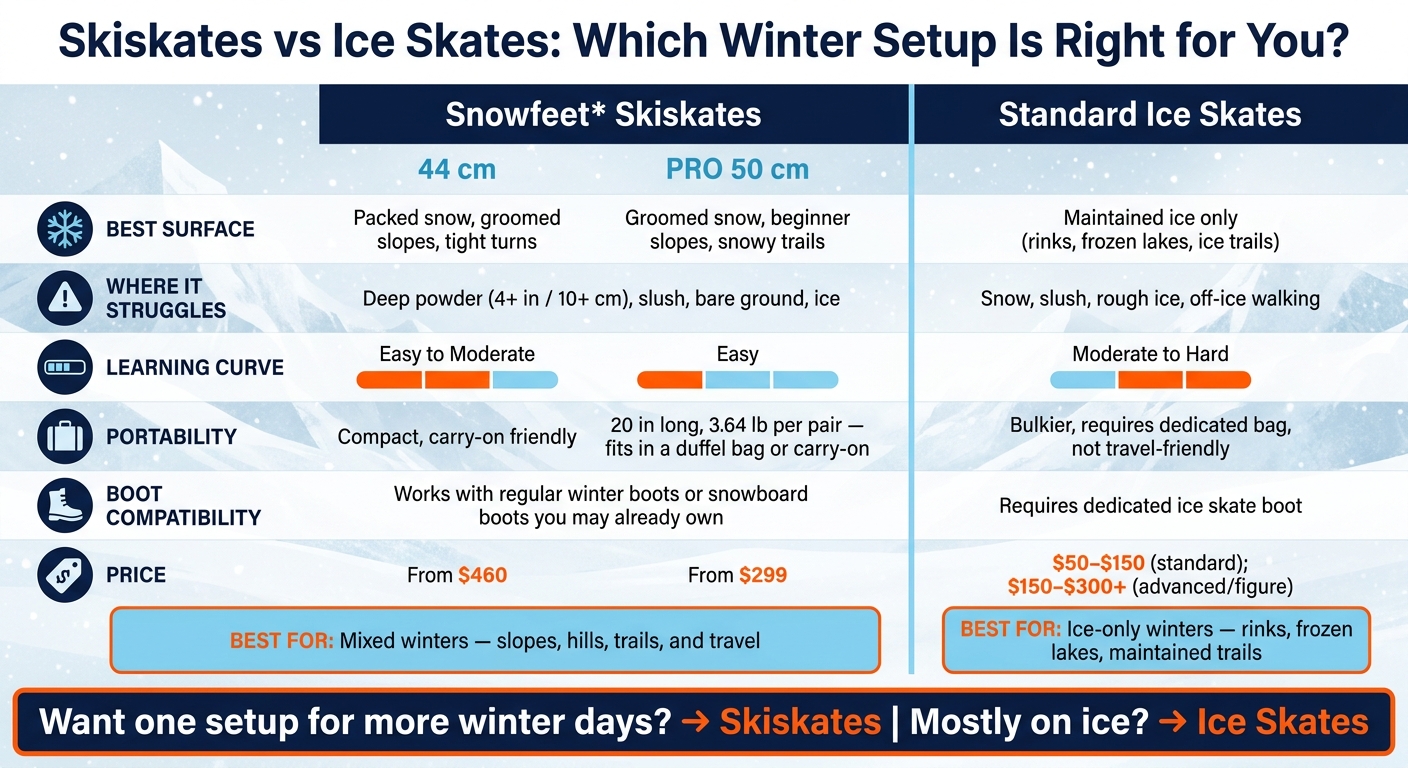
Skiskates vs Ice Skates: Which Winter Setup Is Right for You?
| Gear | Best For | Where It Struggles | Learning Feel | Price |
|---|---|---|---|---|
| Snowfeet* Skiskates 44 cm | Tight turns, packed snow, small hills | Deep powder, slush, bare ground, ice | Feels more skate-like | From $460 |
| Snowfeet PRO 50 cm | More stability on groomed snow and easy slopes | Deep powder, slush, bare ground, ice | Easier for most new riders | From $299 |
| Standard Ice Skates | Rinks, cleared lakes, ice trails | Snow, rough ice, off-ice walking | Harder at first for many people | $50–$150+ |
What I like here is simple: ice skates are a one-surface tool, while skiskates cover more of a mixed winter. So if you want the most use from one buy, skiskates usually come out on top. If your whole winter is rink time, stick with ice skates.
Where Each One Works Best
Snowfeet* skiskates on slopes, local hills, and snowy paths
Snowfeet* Skiskates do best on groomed snow, packed hills, and snowy paths. The 44 cm Skiskates are the smaller, easier-to-carry option. The PRO 50 cm gives you more stability when the snow gets softer or a bit uneven. Keep powder under about 4 inches (10 cm).
Once you get into deep powder, very steep slopes, or heavily rutted terrain, you’re asking them to do a job they weren’t built for. That’s where they start to feel out of their element.
Ice skates are a whole different story. They only work well when the surface is smooth, hard, and frozen.
Ice skates on rinks, frozen lakes, and maintained ice trails
On smooth, safe ice, standard skates give you the best edge grip, glide, and speed. That’s their home turf.
The problem is access. Safe outdoor ice usually means at least 4 inches of solid, clear ice. Add snow on top, and skating gets risky. Toss in freeze-thaw swings across much of the US, and outdoor ice days can be less predictable than snow days. Once the surface gets uneven or snowy, standard ice skates stop making much sense.
Best pick by winter scenario
If you split your time between snow, ice, and travel, the right pick can change from one day to the next. So, here’s the simple version:
| Winter Scenario | Best Pick |
|---|---|
| Weekend resort trip | Snowfeet* PRO 50 cm |
| Neighborhood snow day or backyard hill | Snowfeet* Skiskates 44 cm |
| Winter road trip with varied stops | Snowfeet* Skiskates |
| Indoor rink or maintained outdoor rink | Standard ice skates |
| Frozen lake outing (verified safe ice, snow cleared) | Standard ice skates |
If most of your winter means snow on the ground, Snowfeet* gives you more days to get out and ride. If you spend your time on ice, standard ice skates are still the better tool. Then it comes down to the next piece: learning curve and comfort.
sbb-itb-17ade95
Skills, Comfort, and Learning Curve
What skills carry over from skating, skiing, and snowboarding
Once you know where each one works best, the next thing people want to know is simple: how hard is it to ride?
If you've skated before, skiskates tend to click pretty fast. The big carryover skills are edging, balance, and quick weight shifts. If you already know how to stop on ice, there's a good chance you'll get used to Snowfeet* Skiskates 44 cm in one or two sessions on packed snow.
A skiing or snowboarding background helps too. Skiers already know the feel of carving by rolling their knees inward to engage an edge. On skiskates, that same motion works on a much shorter platform. Snowboarders already understand toeside and heelside pressure, which makes drifting and side-slipping feel more natural on snow.
That carryover helps a lot with skiskates. It doesn't help with snow use on ice skates, though. That's a big reason Snowfeet* often feels easier on day one.
Which one is easier for most casual riders
For most casual riders, skiskates are easier to learn.
Why? The short platform feels easier to control and less intimidating than long skis. It also lets you move across resort slopes, local hills, and snowy paths without the steep ramp-up that longer gear asks for. Most riders can pick up basic gliding, turning, and stopping pretty fast.
Ice skates are tougher for most beginners. The blade is narrow, so people often spend more time trying to stay balanced than actually gliding. If you only get a few winter days each year, that's a rough deal. You want to have fun, not spend the whole day doing the cold-weather version of a baby deer impression.
Ease of learning matters. But comfort over a full day matters just as much.
Boot feel, warmth, and all-day comfort
If you're moving between the car, snow, lodge, and trail, boot warmth and walkability can make or break the day.
Skiskates pair with ski or snowboard boots, and those boots are built for long days in cold weather. Snowfeet* boots stay warm and are easier to walk in. Ice skates don't offer the same kind of comfort.
Ice-skate boots use lighter materials and less insulation because most skating happens indoors or in more sheltered spots. On a frozen pond, you're depending more on movement to stay warm than on the boot itself.
Walking is another big split between the two. Ski and snowboard boots have treaded soles, so they handle mixed ground much better. Ice skates sit on smooth steel blades, which slip on hard surfaces and aren't safe to walk in off the ice. So, if your day includes any non-skating stretch, you have to sit down, change footwear, and deal with two pairs of shoes. For mixed winter outings, that's the biggest downside.
Portability, Cost, and Everyday Value
Comparison table: skiskates vs ice skates for multi-sport winters
Once comfort is sorted out, the next step is simple: which setup gives you the most use with the least fuss?
| Gear | Best Surface | Portability | Boot Compatibility | Learning Curve | Typical Use Cases | Terrain Limits | Approx. Price (USD) |
|---|---|---|---|---|---|---|---|
| Snowfeet* Skiskates 44 cm | Packed snow, groomed slopes | High - compact and easy to carry | Regular winter boots or snowboard boots | Easy to moderate | Resort slopes, local hills, snowy paths, winter travel | Ice, slush, bare ground | From $460 |
| Snowfeet PRO 50 cm | Packed snow, groomed runs | High - 20 in / 3.64 lb per pair | Regular winter boots or snowboard boots | Easy | Beginner slopes, neighborhood hills, snowy trails, winter travel | Ice, slush, bare ground | From $299 |
| Standard Ice Skates | Maintained ice only | Low - bulkier setup for travel and storage | Dedicated ice skate boot required | Moderate to hard | Indoor rinks, frozen lakes, maintained ice trails | Snow, slush, any non-ice surface | Ice skates: $50–$150; advanced/figure: $150–$300+ |
That gap hits hardest when your winter isn’t just one thing. Maybe you’ve got a resort day, a sledding hill near home, a snowy path at the cabin, and a road trip mixed in. In that kind of season, gear that only works on maintained ice starts to feel pretty limiting.
Why Snowfeet* gets more use per trip and per dollar
If you want one setup for winter, portability and total cost matter just as much as how the gear rides. The big question is how often you’ll use it.
Most casual riders ice skate only a handful of times each year. So, a lot of that gear spends most of winter parked in a closet.
Snowfeet* skiskates shift that equation a bit. The Snowfeet PRO 50 cm is 20 in long and weighs 3.64 lb per pair, so it fits in a duffel bag or car trunk without much drama. That’s a lot easier than hauling around a bulkier rink-only setup.
There’s also the boot side of the deal. Snowfeet* skiskates work with boots you may already own. That can cut out the extra footwear buy, which helps keep the total spend down. It also means you’re less likely to skip using them just because you don’t feel like packing one more piece of gear.
Here’s the plain-English version:
- Ice skates make sense if you skate often and have steady access to good ice.
- Snowfeet* makes more sense if your winter includes slopes, hills, trails, and travel.
That’s why Snowfeet* can end up giving you more days on snow from one purchase, while standard ice skates stay tied to one kind of surface.
Final Verdict: The Better One-Setup Choice for Most Riders
After looking at terrain, ease of use, and portability, the answer is pretty clear: ice skates are built for ice only. Snowfeet* skiskates work across more winter terrain, which makes them the better one-setup pick for most casual riders.
Choose Snowfeet* Skiskates 44 cm for the most skate-like snow feel
If you want the closest thing to skating on snow, go with the 44 cm model. It delivers quick turns and the most skate-like feel in the lineup. It’s a great match for resort groomers, small hills, and tight carving.
And here’s a nice bonus: it fits in a carry-on. That makes travel a whole lot easier.
Choose Snowfeet PRO 50 cm for more stability without losing portability
If you care more about stability than pure agility, move up to the Snowfeet PRO 50 cm. You get a steadier ride without giving up the easy-to-pack size that makes skiskates so handy.
It’s a smart fit for:
- Beginners
- Heavier riders
- Anyone who wants a more planted platform
Choose standard ice skates only if ice is your main winter surface
Go with standard ice skates only if ice is where you spend most of your winter time. On maintained ice, they’re still the top choice. No contest.
But if your season includes resort laps, local hills, and a bit of travel, Snowfeet* skiskates will get used more often across more winter days.
FAQs
Can skiskates replace ice skates for most winter trips?
Yes - Snowfeet skiskates can replace ice skates for most winter trips.
They work especially well on frozen lakes, packed snow, and light powder - the kind of spots where regular ice skates often start to feel useless fast.
Ice skates still win on smooth, clear black ice. That’s their home turf.
But Snowfeet skiskates give you more range on uneven or snow-covered ground. They’re also more stable, easier to control, and simple to toss in a backpack since you can use them with your own winter boots or snowboard boots.
That’s a big deal on a winter day out. You’re not stuck hunting for perfect ice. You can move across mixed terrain without switching gear, which makes the whole trip feel a lot less fussy :)
Which skiskate size is better for beginners?
For beginners, the best size comes down to where you’ll ride and which boots you want to use.
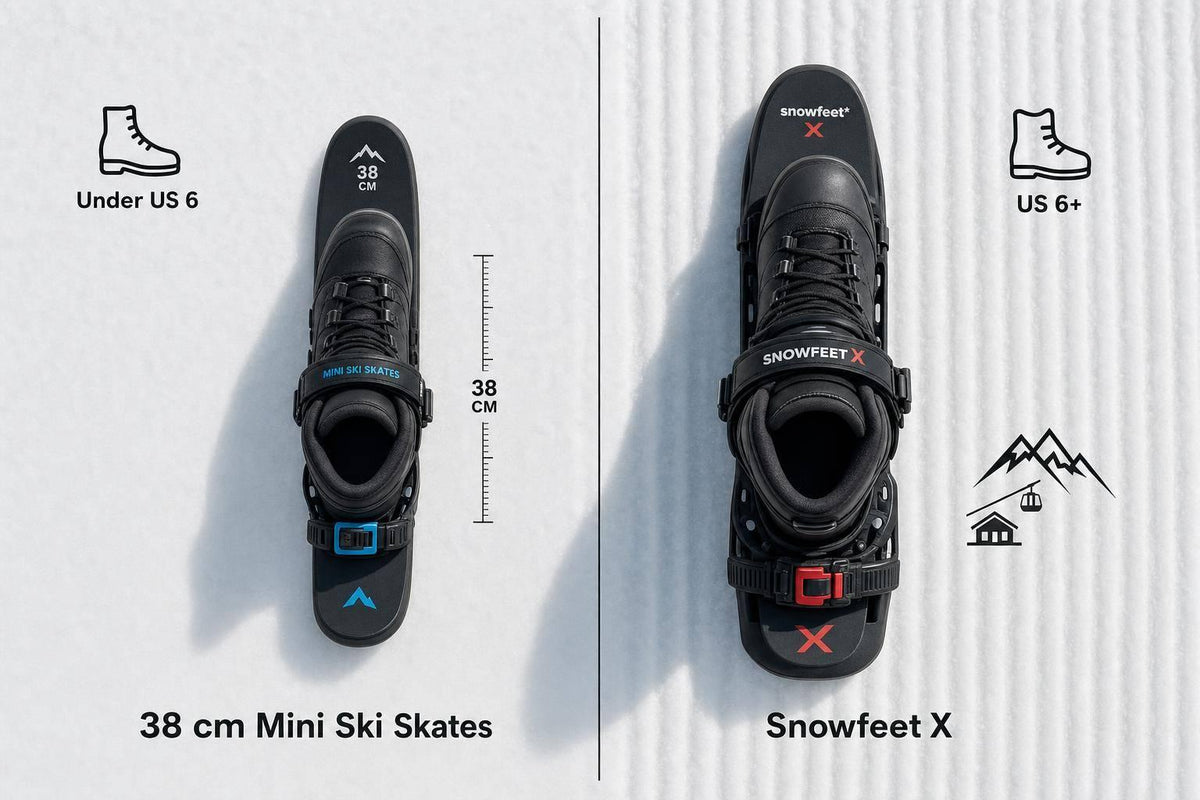
The 38 cm Mini Ski Skates are the most portable option. They’re also the easiest pick for total beginners on mellow terrain, small slopes, or backyard hills.
The 44 cm Skiskates feel more like regular skis. They work well on groomed resort runs and give you a more familiar on-snow feel.
If you want the best mix of value and stability, go with the 50 cm PRO. It offers a steadier ride, but still feels easy to control. Think of it as the “sweet spot” for many new riders.
What boots do I need for Snowfeet* skiskates?
For _Snowfeet Skiskates (44 cm)_*, you need ski boots or snowboard boots.
Unlike some other Snowfeet* models, like the 38 cm version, the 44 cm Skiskates need extra support for proper edge control and stability. A lot of riders lean toward snowboard boots because they give solid support and are much easier to walk in than stiff alpine ski boots.











Laisser un commentaire
Ce site est protégé par hCaptcha, et la Politique de confidentialité et les Conditions de service de hCaptcha s’appliquent.