




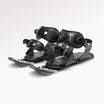
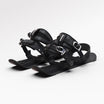
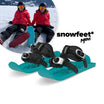
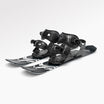
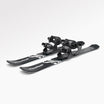
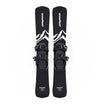
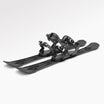
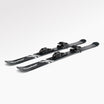
Yes - if you want a fun second setup. No - if you want to replace your skis.
That’s the short answer. If you already own skis, skiblades make sense when you want tighter turns, park laps, easier travel, or just a different feel on groomers. But if your best days are about speed, powder, and long descents, your regular skis still win.
Here’s my quick take:
-
Buy skiblades if you want:
- a more playful ride
- easier packing and travel
- help with spins, butters, and small jumps
- a setup for short resort laps
-
Skip skiblades if you care most about:
- high-speed stability
- deep snow performance
- all-day comfort on long runs
- one setup that does everything
A few numbers tell the story fast:
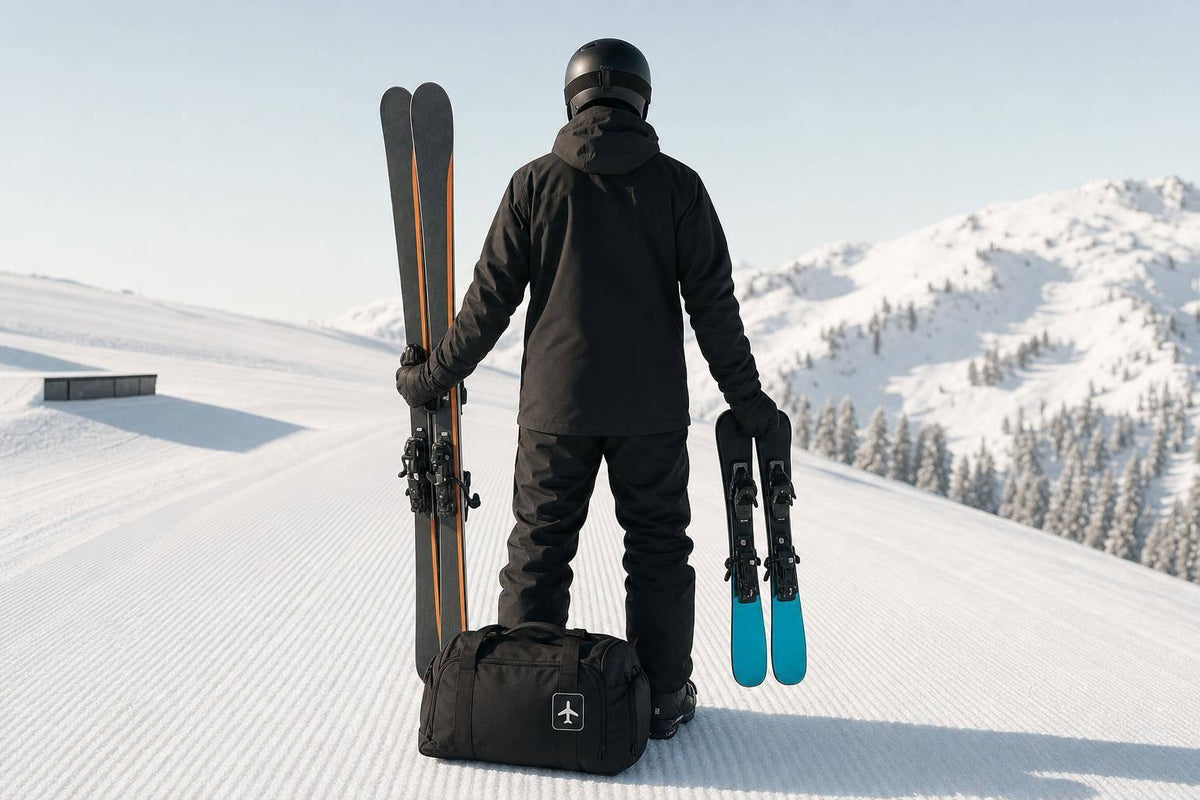
- Skiblades: about 25.6–47.2 in. (65–120 cm)
- Regular skis: about 59–78+ in. (150–200+ cm)
- Powder warning: in 8–12 in. of new snow, short skis can feel like leg day came early :)
If I had to boil the whole article down to one line, it’s this: skiblades are worth it for added fun, not for all-mountain duty.
Best fit by type:
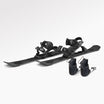
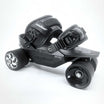
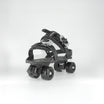
- 44 cm Skiskates - best for tricks, skate-like feel, and travel
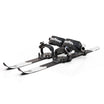
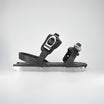
- 65 cm Skiblades - playful and easy to toss around
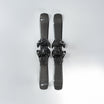
- 99 cm Skiblades - best all-around second pair
- 120 cm Short Skis - closest feel to normal skis
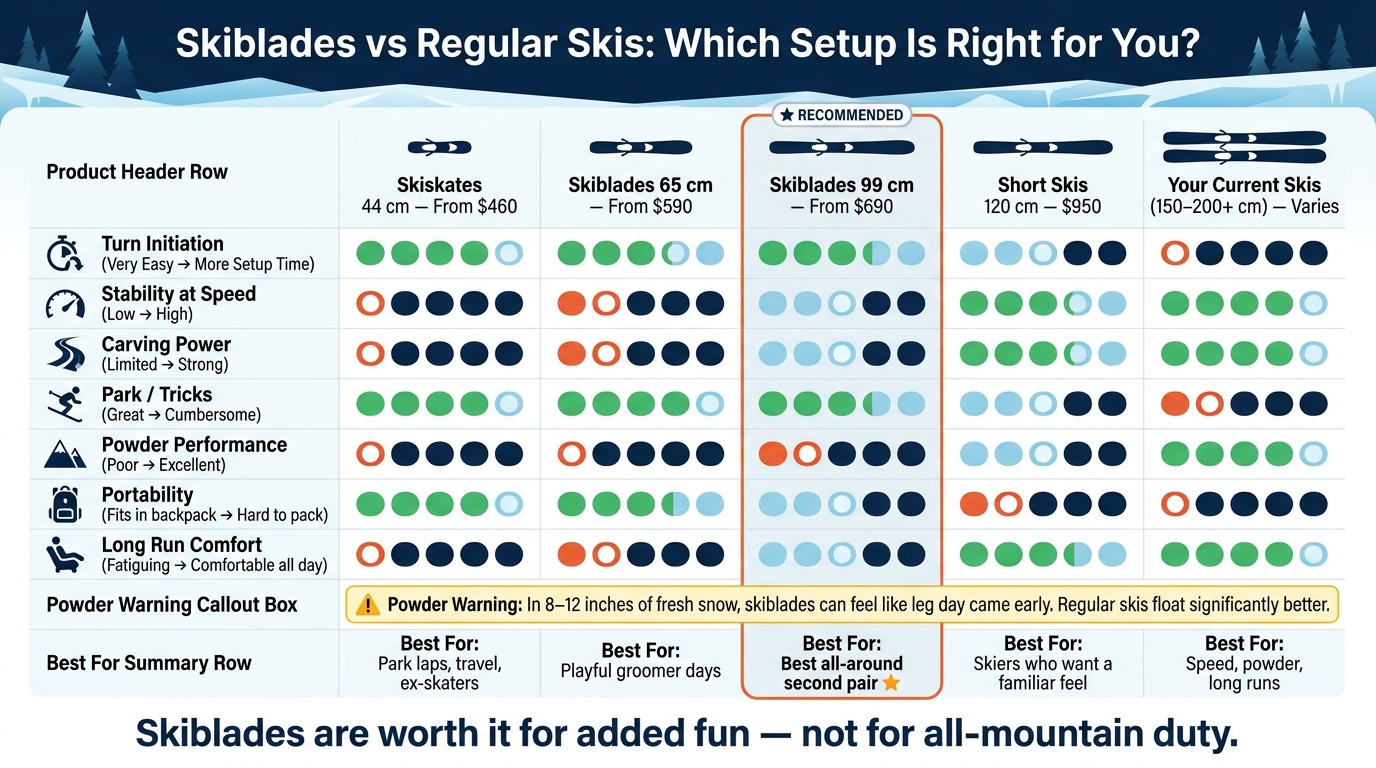
Skiblades vs Regular Skis: Which Setup Is Right for You?
Snowfeet* Snowblades | Skiboards | Skiblades | Short Skis - All you need to know
Quick Comparison
| Option | Best For | Main Upside | Main Downside | Price |
|---|---|---|---|---|
| 44 cm Skiskates | Park laps, travel, ex-skaters | Fits in a backpack | Least stable | From $460 |
| 65 cm Skiblades | Playful groomer days | Fast turns, easy tricks | Can feel twitchy on rough snow | From $590 |
| 99 cm Skiblades | Most ski owners | Best mix of fun and control | Not as loose for spins as shorter models | From $690 |
| 120 cm Short Skis | Skiers who want a familiar ride | More stable, easier transition | Less playful than shorter options | $950 |
| Regular skis | Speed, powder, long runs | More stable and better float | Harder to pack, less playful in tight spots | Varies |
So, if you already have skis and want a second toy for resort days, 99 cm is the safest pick. If you want max goof-around energy, go shorter. If you want something closer to normal skiing, go 120 cm.
If you want a quick visual before you buy, these YouTube searches help:
So, for most ski owners in the U.S., I’d say skiblades are worth it only if you’ll use them for the kind of days they’re built for: playful, short, packed, and a little goofy in the best way.
Skiblades vs. skis: what actually changes on the mountain
Skiblades don’t just cut ski length. They change how you move, how much work each run takes, and what kind of terrain feels like a good time.
| Feature | Skiblades (Snowfeet* 65–120 cm) | Regular Skis (150–200+ cm) |
|---|---|---|
| Turn initiation | Very easy, quick edge-to-edge | More setup time per turn |
| Stability at speed | Lower | Higher |
| Carving power | Limited | Strong |
| Park / tricks | Great for spins and small jumps | Possible but more cumbersome |
| Powder | Less float | Better float and control |
| Long runs | More fatiguing | Comfortable all day |
| Portability | Easier to transport and pack for travel | Less convenient to transport |
| Best use case | Fun laps, tight terrain, travel, tricks | Groomed runs, powder, speed |
This tradeoff shows up most in tight terrain, short sessions, and travel.
Where skiblades have a clear edge
Skiblades are much easier to pivot. Since they’re so short, you don’t have to lean into every turn as much. Your feet react faster, and small mistakes usually don’t punish you as hard. That can make switch turns and small spins feel more natural.
They also work well in places where longer skis can feel like a lot to manage:
- Mogul fields
- Terrain parks
- Narrow tree runs
- Quick laps
- Crowded resort runs
Portability is a big win too. Snowfeet* Skiskates fit in a backpack. And the 65 cm, 99 cm, and 120 cm Snowfeet* options are easy to pack for travel.
Where regular skis are still the better choice
Regular skis feel steadier at speed and float better in rough snow and powder. If your ski days are about charging hard, dealing with mixed conditions, or stacking long descents, regular skis will usually feel more controlled and less tiring.
Skiblades can take more effort on rough terrain because there’s less ski underfoot to smooth out bumps. Next, match the right Snowfeet* setup to your goals.
sbb-itb-17ade95
Best Snowfeet* options for skiers adding a second setup
Each Snowfeet* model fits a different kind of day on the mountain. Some lean toward agility. Some feel steadier. Some are just way easier to travel with. So the best pick comes down to what you want most: pure fun, a feel closer to skis, or the easiest setup to pack and go.
A simple way to sort them: shorter = more playful, longer = more familiar and stable.
| Model | Feel | Stability | Portability | Tricks | Carving | Best For |
|---|---|---|---|---|---|---|
| Skiskates 44 cm - from $460 | Skate-like and very loose | Low | Fits in a backpack or suitcase | Spins, quick pivots | Short turns at moderate speed | Ex-skaters, terrain park laps, travel |
| Skiblades 65 cm - from $590 | Nimble, playful | Moderate | Easy to pack or check | Spins, small jumps, park | Clean short-radius carving | Playful riders, groomer laps, travel |
| Skiblades 99 cm - from $690 | Balanced, planted | Good | Car trunk or checked bag | Butters, hops, small jumps | Best carving of the short models | Casual resort skiers, all-around use |
| Short Skis 120 cm - $950 | Most like regular skis | Highest in this group | Shorter than full skis, less compact | Small jumps, quick turns | Strong, predictable edge hold | Skiers who want a familiar feel |
Here’s what each option feels like on snow.
Snowfeet* Skiskates 44 cm and Skiblades 65 cm for maximum agility
These two are for riders who want to mess around and have fun. The Skiskates 44 cm feel closest to ice skating on snow. They’re loose, reactive, and a blast on short groomed laps. The Skiblades 65 cm give you a bit more platform underfoot, which helps with balance and makes small jumps a little easier to land.
Both are easy to bring on a trip, and both work best for short, playful laps.
The catch? They give up stability when snow gets rough or speed picks up. On longer runs, both feel more twitchy than the 99 cm and 120 cm options. So, these make sense if you want a second setup for playful resort days - not if you want to swap out your skis for good.
Snowfeet* Skiblades 99 cm: the best all-around second pair
If you want one short setup that can handle most resort days without feeling like a compromise, the 99 cm skiblades stand out.
They carve cleanly on groomers, stay stable on longer laps, and still feel quick enough to keep things fun. You can still throw in butters, small hops, and playful direction changes. They just aren’t as spin-happy as the shorter models.
This is the sweet spot for a lot of skiers. You get short-ski fun without the “whoa, okay, this is twitchy” feeling that can show up on the 44 cm and 65 cm setups.
Snowfeet* Short Skis 120 cm for skiers who want a familiar feel
The 120 cm Short Skis are the easiest jump for people who already ski.
They turn more easily than full-length skis and take less work in tight spots, but the ride still feels directional and predictable. That’s a big deal. They don’t give you the skate-style feel of the 44 cm or 65 cm options. Instead, they stay closer to what most skiers already know.
Edge hold is strong, and longer groomed descents feel comfortable with less effort on longer runs. If you want faster turns and less bulk, but still want something that feels like skiing, this is the safe bet.
That leaves the real question: which setup is actually worth buying for the way you ski?
When skiblades are worth buying - and when they are not
Buy skiblades as a second setup only if you want more fun, easier travel, or a better tool for tricks. Don’t buy them as a full replacement for skis.
Worth it for fun resort days, travel, and learning new tricks
Skiblades make the most sense when your ski days aren’t all about speed. If you spend time on groomers, lap small park features, fly to resorts, or just want a playful second setup, they can be a smart pickup.
Travel is one of the biggest reasons. The Snowfeet* Skiblades 99 cm are much easier to pack than full-length skis, and that matters when you’re dealing with airports, baggage fees, and the usual travel circus.
They also help with trick progression. Since they’re shorter, they have less swing weight. That makes spins, 180s, and presses feel easier and less awkward. For a lot of riders, that alone is a big plus.
That said, these upsides show up most on short, playful days. They’re not built for long, fast laps or storm-day powder missions.
Probably not worth it if speed, powder, or long descents are your priority
This is where the tradeoff hits. If your main goal is high-speed carving, powder, or long descents, skiblades don’t give you much back.
They give up stability and edge hold right where longer skis do their best work. So if you like to open it up and let the skis run, skiblades can feel twitchy and a bit out of their depth.
Powder is the other big stop sign. Skiblades just don’t have enough surface area to float in 8–12 inches of fresh snow. They’ll sink, work your legs hard, and turn a dream powder day into a grind. If most of your season is about big-mountain riding, you’re better off putting that money into a good pair of all-mountain or powder skis.
Conclusion: the short answer for current ski owners
After looking at speed, stability, portability, and plain old fun, the short answer is this: if you already own skis, skiblades are worth buying as a playful second setup, not a replacement.
That’s the key. They won’t beat your regular skis on fast groomers, long descents, or powder days. That’s not their lane. What they do give you is a different kind of ride - looser, more playful, and a blast on short, casual runs.
If you want one short-ski setup that can handle most resort days, go with the 99 cm model. It’s the best place to start. You get enough stability for blue runs, plus the quick, playful feel that makes skiblades fun in the first place.
Here’s the quick version:
- 44 cm for max tricks
- 65 cm for a balanced playful feel
- 99 cm for the best all-around pick
- 120 cm for the closest feel to regular skis
So, the real question isn’t whether skiblades are fun. They are :) The real question is whether you’ll use them enough to make a second setup worth it.
If you want more play, go with skiblades. If speed, powder, or long descents matter more, put that money into better skis instead.
FAQs
Are skiblades harder to learn than regular skis?
No. Skiblades are usually much easier to learn than regular skis. Regular skis often take weeks of practice and formal lessons before you feel at ease on them.
Most riders get comfortable on Snowfeet* skiblades within a day. A lot of people pick up the basics in just a few runs, or even a few minutes. That’s the big draw: their short, lightweight shape makes balance and turning feel more natural and a lot less punishing when you’re starting out.
Which skiblade length is best if I already ski?
If you already ski, the best length comes down to what you want out of the ride. For most casual resort riders, 99 cm hits the sweet spot. It gives you a nice mix of stability, agility, and control.
Want something that feels closest to regular skis? Go with 120 cm.
If you're after a more playful setup for tight turns, park laps, or tricks, 65 cm gives you the most agility.
Can skiblades handle all-day resort skiing?
Yes. Snowfeet* skiblades work well for full-day resort skiing. Their shorter, lighter build can help cut leg fatigue and ease some pressure on your joints, so a long day on the mountain can feel less draining.
They’re also easy to handle in crowded lift lines, around the lodge, and on busy runs. The 65 cm, 99 cm, and 120 cm models stay nimble on groomers, moguls, and side hits.
That’s a big deal at a resort. You’re not just skiing all day - you’re shuffling through lines, sliding into racks, dodging people who stop in the middle of a run for no good reason :) Short skiblades make those little moments a lot less awkward.











Laisser un commentaire
Ce site est protégé par hCaptcha, et la Politique de confidentialité et les Conditions de service de hCaptcha s’appliquent.