



















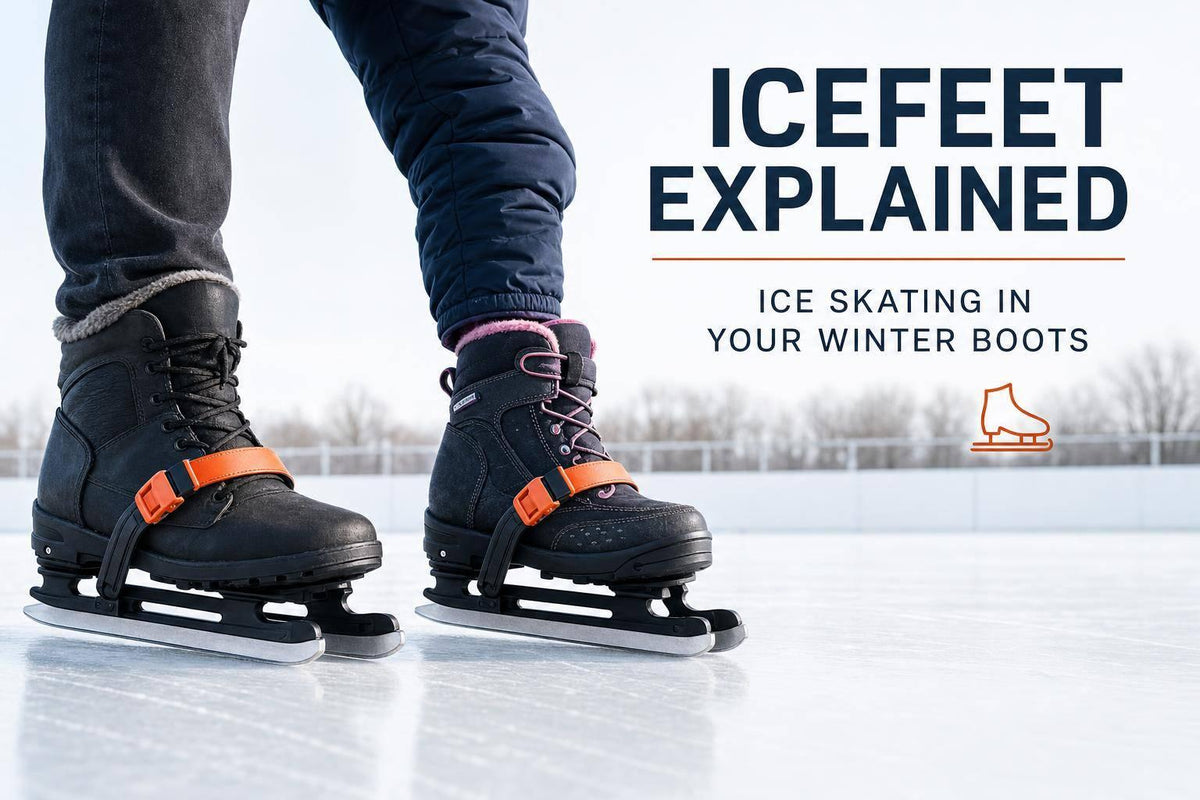
Yes - you can skate in your winter boots. That’s the whole point of Icefeet: strap-on, double-blade skates that fit many adult boots in U.S. sizes 6–13 and start at $199.
If I had to sum it up in one line, it’d be this: Icefeet are for casual skating, travel, family use, and first-timers who want more stability and less fuss. They’re not for hockey, figure moves, or hard charging at the rink.
Here’s the short version:
- What they are: Strap-on ice skates for your own winter boots
- Best for: Beginners, families, short sessions, ponds, backyard ice, and trips
- Main draw: Double blades feel steadier than single-blade skates
- Fit: Works best with firm ankle support and flat soles
- Setup time: About under 2 minutes
- Price: Starts at $199
- Use case: Fun, easy skating - not skill training
- Safety note: On natural ice, check local rules and look for at least 4 inches of clear ice for one person
So, if you want to skip rental boots, toss your skates in a backpack, and get on the ice without a whole production, Icefeet make a lot of sense :).
Quick comparison:
| Option | Best for | Footwear | Stability | Packability |
|---|---|---|---|---|
| Icefeet | Casual skating, travel, families | Your winter boots | High | High |
| Single-blade skates | Skill work, rink use | Skate boots | Lower for new skaters | Low |
| Nordic boot skates | Long-distance ice travel | Nordic boots | Good | Medium |
What stood out to me most is simple: Icefeet trade top-end performance for ease, comfort, and a lower learning curve. For a lot of people, that’s a pretty good deal.
If you want to see them in action, YouTube can help:
Bottom line: If your goal is easy winter fun in the boots you already own, Icefeet are a smart pick. If your goal is speed, sharp turns, or skill work, go with standard skates instead.
How Icefeet Work With Regular Winter Boots
Double Blades, Shorter Length, and Better Balance
The main thing that sets Icefeet apart from standard skates sits right under your foot: two blades instead of one. That extra width gives you a steadier base, so your first few steps don’t feel so wobbly. The blades are also shorter, which keeps the whole setup compact and easier to handle.
That shorter platform helps you stay in control of your speed. For casual skating, that’s a big deal. The boots-compatible setup works because the design leans toward confidence and ease, not pure performance.
Still, stability only works if the boot and straps stay locked together the way they should.
Fit, Straps, and Boot Compatibility
Icefeet use click-lock strap bindings, so you can tighten them without tools. When the fit is right, your boot stays steady as you shift side to side, and your heel stays locked in place. The system fits US sizes 6–13 (EU 38–47) and works best with insulated snow boots or stiff winter boots that have firm ankle support and flat soles.
So, the goal is pretty simple:
- A snug fit through the straps
- Good heel hold
- A boot with solid ankle support
- A flat sole for a steadier connection
Once your boot is locked in, the big win is ease. You use gear you already own, strap in, and go.
Why Icefeet Feel Easier Than Full Skate Gear
Icefeet skip the separate skate boot, the lacing routine, and the extra gear. You just wear your winter boots and strap in. That makes the setup feel a lot less fussy, which is nice if you want to get on the ice without turning it into a whole project.
The wide size range also makes them handy for sharing within a household, as long as each person’s boot size falls within the supported range.
Finally… Ice Skates Anyone Can Use!
Where Icefeet Work Best
Icefeet shine in laid-back places where ease beats performance. They’re compact, they strap onto your own boots, and they make casual skating feel simple.
Outdoor Rinks, Ponds, and Backyard Ice
Icefeet are for casual skating, not hockey drills or figure skating practice. So, they make the most sense in easygoing spots, not places built for high-skill sessions.
Outdoor community rinks and supervised park rinks are the simplest pick. The ice is maintained, and you can skip the rental line by using your own boots. That alone takes a lot of the hassle out of a quick skate.
They can work on private ice too, but only if you do a careful safety check first. Natural ice, like frozen ponds or lakes, is also an option, but this is where you don’t want to wing it. Always confirm that skating is allowed by local authorities before you head out. In the U.S., ice safety guidance says you need at least 4 inches of clear ice for one skater and 5–7 inches for groups or kids.
A few basic rules matter here:
- Check ice thickness in several spots
- Stay away from inlets, outlets, and visible cracks
- Never skate alone on natural ice
Those rules apply whether you’re wearing Icefeet or regular skates. Your weight on the ice is the same either way. Backyard rinks can work well too, as long as the surface is kept in good shape and kids are watched. For families, that can be a simple way to get on the ice without turning it into a whole production.
Travel, Weekends, and Family Outings
Icefeet fit into a backpack or car trunk without a fuss, which makes them handy for winter road trips, cabin weekends, or state park visits. You pack them, grab your boots, and go. No rental line. Less gear to haul around.
They also make things easier for families with mixed skill levels. And honestly, that’s a big deal. Icefeet’s double-blade stability and familiar boot feel can make a first session feel less nerve-racking for kids and cautious adults alike. Plus, no one has to cram their feet into stiff rental boots.
sbb-itb-17ade95
Learning Curve, Safety, and Day-to-Day Benefits
Once the fit is dialed in, the next thing people want to know is simple: what do Icefeet feel like on the ice?
What Your First Session Feels Like
Your first few minutes should be calm and pretty basic. Start with bent knees, your weight centered, and take a few still seconds to find your balance. Then take a few short steps and ease into a glide.
The double-blade setup gives you more stability, which helps first-time users feel steady faster. And because you're wearing a boot that already feels familiar, the learning curve is lower. That’s a big deal. New gear feels less weird when your feet already know the boot.
Stopping is simple at low speed. A basic snowplow works well: bring your feet parallel, point your toes slightly inward into a soft "V", and apply gentle pressure. For turns, shift your weight little by little in the direction you want to go. Keep it small. Big movements tend to get messy fast.
Basic Safety and Setup Checks
Before you step on the ice, do a quick fit and safety check. It doesn’t take long, and it can save you a rough fall.
- Wear a helmet and gloves every time.
- Tighten the straps so your boot doesn’t shift during use.
- Make sure the boot feels supportive, with a firm ankle and a stable sole.
- Inspect the blades or contact points for any damage before you start.
- Begin in a low-traffic area so you can focus on balance without dodging other skaters.
A secure fit matters more here than technical skill. If the setup feels loose or sloppy, the ride will too. Pretty simple.
Why Casual Riders Often Prefer This Format
Casual riders often pick Icefeet for one big reason: setup is fast.
No skate bag. No lacing. No rental line.
That speed matters for short outings, especially when ease matters more than top-end performance. If you're heading out for a quick park session, a family outing, or one of those spur-of-the-moment winter plans, this format keeps things easy instead of turning the whole thing into a production.
That’s also why Icefeet make the most sense when compared with traditional skates and other boot-compatible options.
Icefeet vs Traditional Ice Skates and Other Boot-Compatible Options
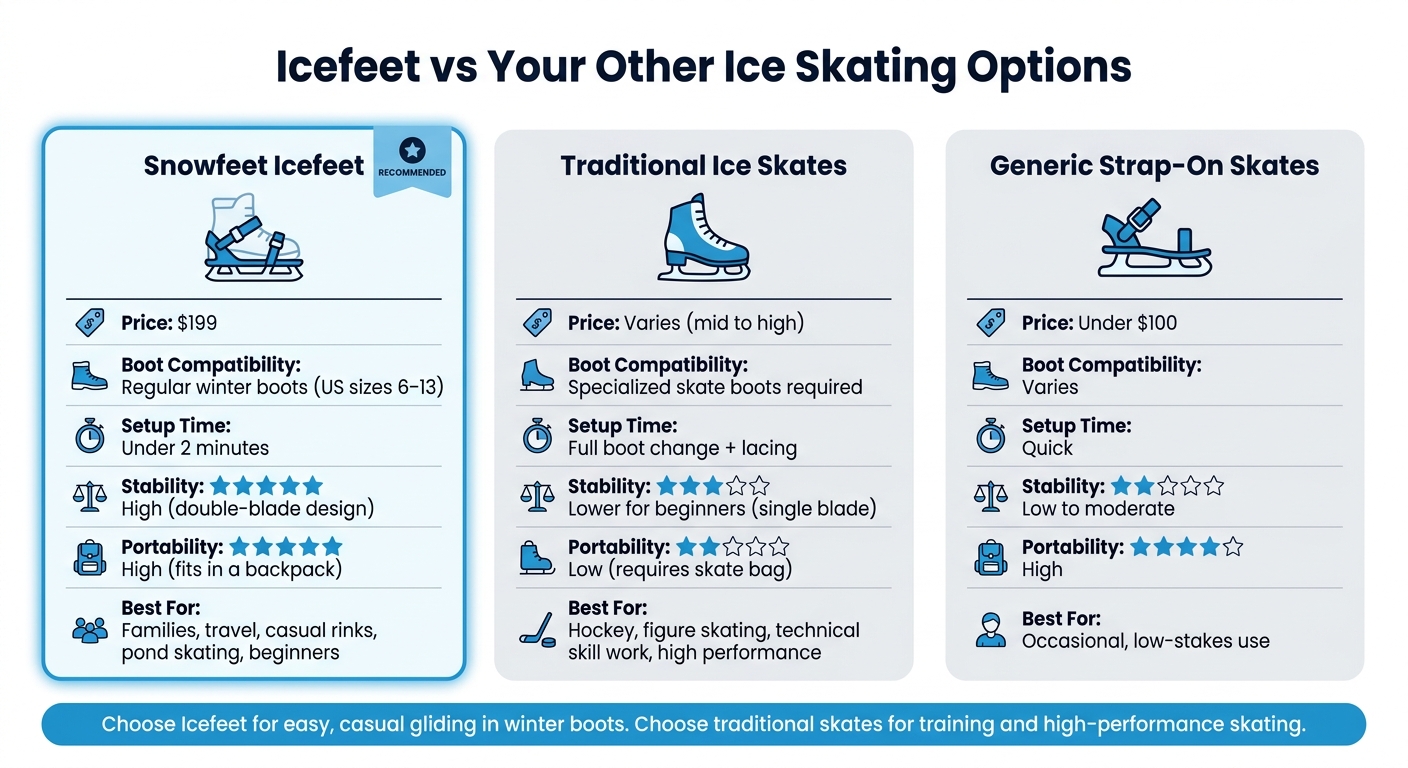
Icefeet vs Traditional Skates vs Other Strap-On Options: Quick Comparison
After fit and feel, this choice comes down to performance vs. convenience. Pretty simple.
Icefeet vs Traditional Ice Skates
Traditional skates still lead in top-end performance. Icefeet lead in convenience, comfort, and fast setup.
If you're serious about skating, hockey and figure skates are still the better tools. Figure skates are made for spins, jumps, and fine control. Hockey skates focus on speed, sharp cuts, and hard stops. Traditional skates have a much higher performance ceiling, and that’s what dedicated skaters need.
| Feature | Snowfeet* Icefeet | Traditional Ice Skates |
|---|---|---|
| Footwear Needed | Regular winter boots | Specialized skate boots |
| Setup Time | Under 2 minutes | Full boot change and lacing |
| Beginner Stability | High - double-blade design | Lower - single blade, more technical |
| Best For | Families, travel, short sessions | Hockey, figure skating, technical practice |
So, if you want to show up, strap in, and get moving fast, Icefeet are tough to beat. No extra skate bag. No bench wrestling match with frozen laces. Just boots on, bindings tight, go have fun.
Snowfeet* Icefeet vs Other Strap-On Skate Options
You’ll see the same tradeoff with other strap-on skates too, but they’re not all built the same.
Generic models are usually aimed at lower-price buyers. That often means simple frames and less control over fit. Nordic boot skates sit at the other end. They’re built for long-distance Nordic skating and need dedicated Nordic boots, which adds a lot more cost.
Snowfeet* Icefeet sit in the middle as a simpler premium pick for casual skating. At $199, they’re not a bargain-bin buy. They’re a recreational purchase for people who want better fit and a steadier ride. Their double-blade design and adjustable bindings can feel more secure than many generic strap-on options. Snowfeet* recommends US shoe sizes 6–13 (EU 38–47).
| Product Type | Typical Price (USD) | Boot Compatibility | Stability | Portability | Best Use |
|---|---|---|---|---|---|
| Snowfeet Icefeet* | $199 | Regular winter boots, US 6–13 | High - double blade | High | Casual rinks, ponds, family outings |
| Nordic boot skates | From $165.91 | Nordic-specific boots | Good with proper fit | Medium | Long-distance Nordic skating |
| Generic strap-on skates | Under $100 | Varies | Low to moderate | High | Occasional, low-stakes use |
When Icefeet Are the Better Choice
Icefeet make more sense when skating is part of a casual winter day, not a dedicated training session.
They’re a good fit for:
- family outings
- short rink sessions
- pond skating
- travel
- anyone who wants to skate in regular winter boots
Choose Icefeet for easy, casual gliding in winter boots. Choose traditional skates for training, skill work, and high-performance skating.
FAQs
Will Icefeet work with my boots?
Yes. Icefeet and Snowfeet gear work with your current winter boots, so you don't need special skate or ski boots.
For the best fit and comfort, use waterproof winter boots with:
- firm soles
- good ankle support
Snowfeet products fit US sizes 4.5–14.5.
If you want more control and support on slopes or steeper terrain, snowboard boots are a solid upgrade. And before you head out, test the fit on dry ground first. It’s a small step that can save you a lot of hassle later :)
Are Icefeet safe for ponds and lakes?
Yes - on clean, smooth, frozen ponds and lakes, Icefeet can be a safe option. Their double-blade design gives you a more stable feel, which can help beginners feel less wobbly.
They also work with regular winter boots, so casual skating feels easy and low-fuss. For the safest setup, wear boots with solid ankle support and make sure the ice is safe for recreational use.
Do Icefeet feel like real ice skates?
They give you a glide that feels close to ice skates, but it’s not quite the same as a standard pair.
The double-blade setup makes standing still and moving at a slow pace much easier for beginners. You get more balance and less of that shaky, baby deer on ice feeling :). The trade-off is pretty simple: you lose some of the fine control, edge feel, and top-end speed you’d get from pro-style skates.
So, if you want easy, casual skating on a pond or at the rink, Icefeet are a good fit.











Laisser un commentaire
Ce site est protégé par hCaptcha, et la Politique de confidentialité et les Conditions de service de hCaptcha s’appliquent.