



















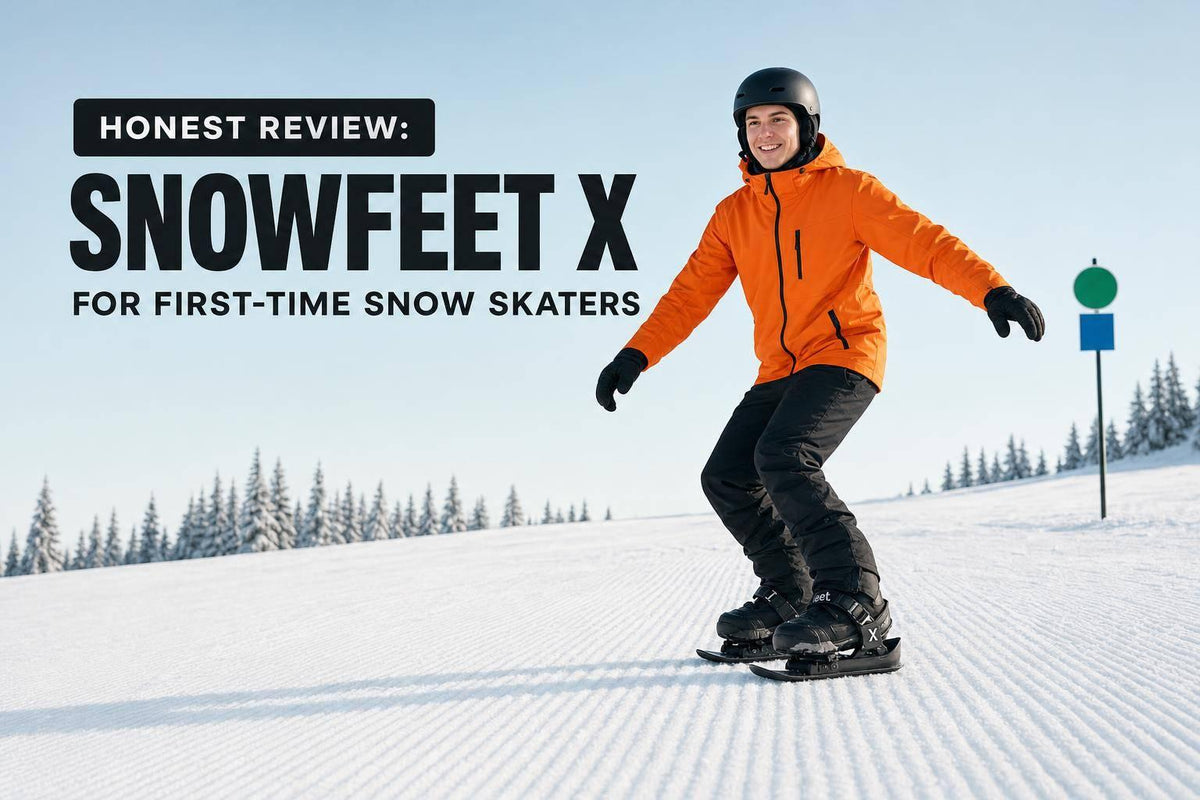
My short take: Snowfeet X are a fun first buy for new riders, but only if you plan to stick to groomed green runs and mellow blues. At 38 cm (15 in.), they’re light, easy to pack, and less awkward than long skis when you’re learning balance, turns, and stops. At $270–$290, they can make sense if you want a small setup and only ride a few days each winter.
Here’s the simple version:
- Best for: first-timers, casual riders, short resort sessions
- Works best on: packed snow, green runs, mellow blue runs
- Main weak spots: ice, steep runs, and deep powder
- Boot setup: winter boots or snowboard boots, about U.S. sizes 5–13
- What I’d pick instead: PRO 50 if you want more stability from day one
So, if you want the least scary way to try snow skating, Snowfeet X are a solid place to start. If you want a calmer ride underfoot, I’d look one step up the line.
Quick Comparison
| Model | Length | Price | Best for | My take for beginners |
|---|---|---|---|---|
| Snowfeet X | 38 cm / 15 in. | $270–$290 | Casual first-timers | Easiest entry point, but can feel twitchy |
| Snowfeet PRO 50 | 50 cm / 19.7 in. | From $299 | New riders who want more stability | Better if you feel nervous |
| Skiskates | 44 cm / 17.3 in. | From $460 | Riders with skating background | More demanding at first |
| Skiblades | 65 cm / 25.6 in. | From $590 | People who want a short-ski feel | Closer to skiing than skating |
| Long skis / snowboard | Much longer | Higher startup cost | Speed, powder, full resort days | Better at speed, harder for many beginners |
A couple of fast takeaways from my read:
- Short length helps learning. Less ski in front and behind you means fewer awkward tangles when you fall.
- Stopping is still a skill. A snowplow on easy terrain is your first friend.
- Boot fit matters a lot. Loose soft boots can make control feel sloppy.
- Snowfeet X are not powder tools. In deeper snow, they bog down fast.
If you want a visual on the style of riding, these YouTube searches can help:
Bottom line: I’d recommend Snowfeet X to a beginner who wants fun first, hassle second, speed last :). If that sounds like you, they fit the job well.
My first sessions on Snowfeet X: balance, turns, stops, and falls
What Snowfeet X feel like in the first 30 minutes
Snowfeet X feel light and quick under your feet. Tiny ankle and knee moves can change your line fast. That’s fun, and yeah, it also means stiff or choppy moves show up right away.
In those first 30 minutes, the best thing you can do is stay loose and keep your knees bent. That one habit goes a long way. It helps the skis feel less twitchy and makes your first turns and stops feel a lot less intimidating.
How easy it is to learn basic control
Start in a simple athletic stance: feet about shoulder-width apart, knees bent, and your weight centered over your feet. Think “ready,” not rigid.
Turning is one area where Snowfeet X can feel friendly for beginners. Small ankle and knee movements change direction faster than on long skis, so you don’t need a big, sweeping turn to point yourself somewhere else. It feels more like a quick nudge than a full-body project.
For slowing down, the snowplow stop works well on gentle terrain and makes a good first skill to practice. Once that starts to feel natural, the next move is a hockey-style stop - turning the skis sideways on their edges to scrub speed.
What happens when you lose your balance
When you fall, things are often less awkward than with long skis. There’s less length to get crossed up, so the skis are less likely to tangle, and getting up tends to be simpler.
If you feel yourself starting to slip, drop your hips, bend your knees more, and widen your arms. It’s not fancy, but it helps. And this is where terrain matters a lot: that fast learning curve shows up best on forgiving slopes, where beginners have more room to settle in and recover.
Where Snowfeet X work well for beginners and where they fall short
Best boots and fit for day-one comfort
Once the basics start to click, boot fit becomes a BIG deal. It has a direct effect on control.
For day one, go with sturdy, waterproof winter boots or snowboard boots with firm ankle support. That setup gives you a much better connection to the ski. Soft winter boots or loose hiking shoes can let your foot shift inside the binding. And when that happens, your movements don’t transfer cleanly to the ski. The result? Edging and stopping get a lot harder than they need to be.
Here’s the simple way to set the fit:
- Place the ball of your foot over the center of the skate
- Tighten the toe and ankle straps in stages
- Start snug, then check again after you stand up and bend your knees
A good fit keeps your boot from sliding around, while the straps stay snug but not painful. If you have narrower feet or smaller boots, a thicker snow sock or a thin foam pad can help cut down movement inside the binding. That small tweak can make the edges feel sharper.
Best beginner terrain in the U.S.
Once the boots feel right, terrain becomes the next thing that shapes how fast you learn. Groomed green runs are the best place to start, followed by mellow blues. Resort magic-carpet zones and other packed-snow beginner areas also work well.
Why these spots? They give you low-to-moderate speeds and room to turn. That’s where Snowfeet X tend to feel fun and playful, not twitchy or hard to manage.
Limitations on steep runs, ice, and deep powder
Snowfeet X do have clear limits, and it’s better to know them up front than find out the hard way halfway down a slope :)
On steeper blue and black runs, speed builds fast. Because Snowfeet X are short, they give you less fore-aft stability than long skis. That can make things feel less forgiving, fast.
On icy or very firm snow, the shorter edge means less contact with the snow. So holding a turn or making a clean stop takes more precise technique than most beginners have on day one.
Deep powder is the clearest limitation. Snowfeet X have limited floatation, the tips sink, and in ankle-deep powder, they sink and slow fast. For your first few sessions, stick to groomed snow. Those limits are a big reason model choice matters.
Snowfeet* & Skiskates Tutorial - How to Become a PRO Skiskater
sbb-itb-17ade95
Snowfeet X vs PRO 50, Skiskates 44 cm, Skiblades 65 cm, and long skis
Snow Skates Compared: Snowfeet X vs PRO 50 vs Skiskates vs Skiblades
How Snowfeet X compare to other Snowfeet* models
Those limits make model choice the main thing to sort out. Once you know where a beginner might struggle, the next step is simple: pick the Snowfeet* model that matches how you want to ride.
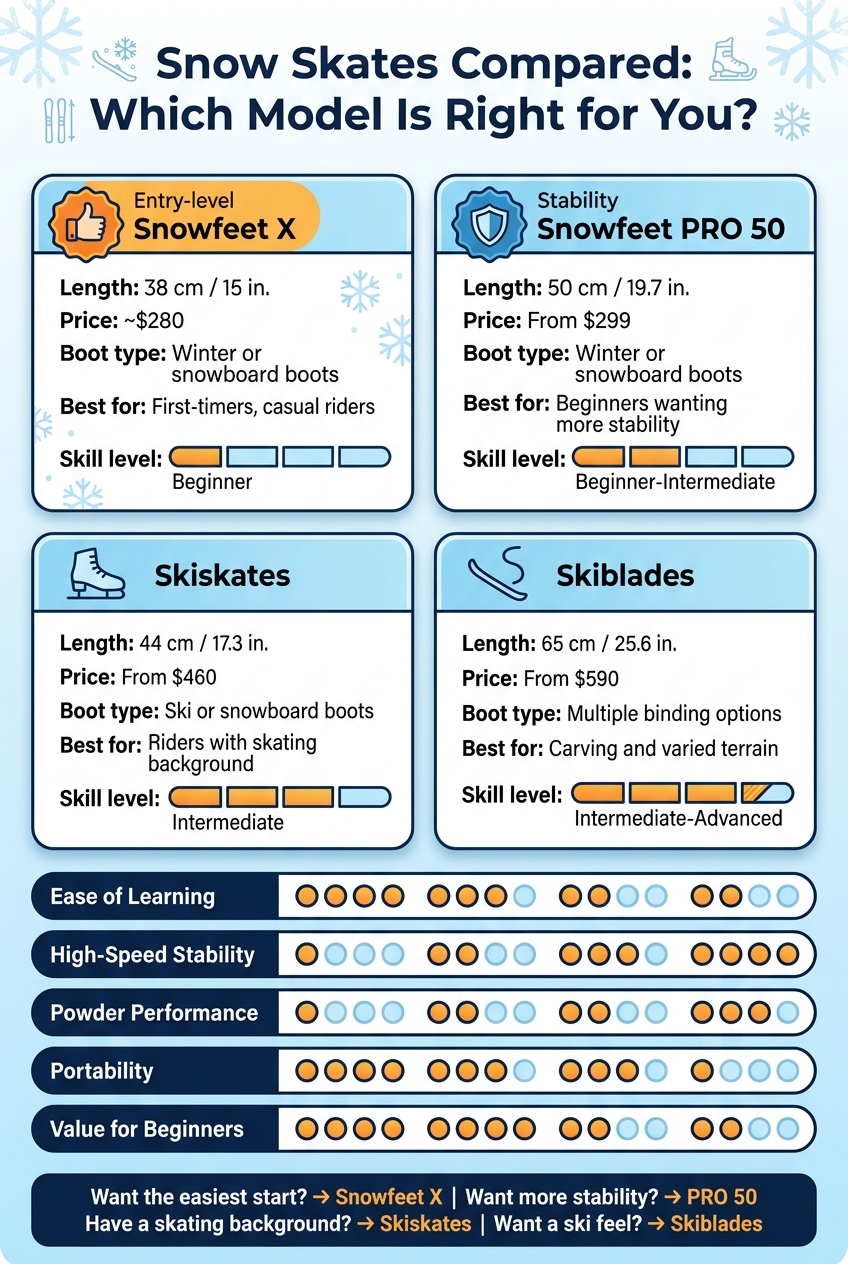
Here’s how the lineup compares by length, starting price, boot setup, and who each model fits best:
| Model | Length | Starting price | Boot setup | Best for |
|---|---|---|---|---|
| Snowfeet X | 38 cm | Around $280 | Winter or snowboard boots | First-timers, casual riders |
| Snowfeet PRO | 50 cm | From $299 | Winter or snowboard boots | Beginners wanting more stability |
| Skiskates | 44 cm | From $460 | Ski or snowboard boots | Riders with skating background |
| Skiblades | 65 cm | From $590 | Multiple binding options | Riders ready for carving and varied terrain |
For most first-timers, Snowfeet X are the easiest place to start. They’re short, simple to carry, and less intimidating when you’re just trying to get a feel for sliding on snow.
If you want a bit more stability on groomed runs, PRO 50 is the next move. Think of it like going from a small city bike to one with slightly bigger wheels. You still get that easy, playful feel, but with a touch more calm under your feet.
Skiskates 44 cm make more sense for people who already have a skating background. They’re not the best pick for a total beginner. And Skiblades 65 cm sit closer to short skis than skates. They work better for carving and mixed terrain, but they ask more from the rider.
How Snowfeet X compare to long skis and snowboards
Long skis still win when speed and powder are the goal. No surprise there. But for someone who only gets out once in a while, a full ski setup can feel like a lot: more gear, more storage, more time spent clicking into stuff when you’d rather just ride.
| Factor | Snowfeet X | Long skis / snowboard |
|---|---|---|
| High-speed stability | Limited | Excellent |
| Powder performance | Limited | Strong |
| Learning curve | Gentle | Moderate to steep |
| Setup time | Quick | More involved |
| Portability | Fits in a backpack | Requires more storage space |
| Boot compatibility | Winter or snowboard boots | Dedicated ski or snowboard boots |
| Cost to start | Lower | Higher |
That’s the tradeoff in plain English: Snowfeet X give up some top-end performance, but they make the whole day easier. Less gear. Less hassle. More grab-and-go energy :)
That tradeoff is what the verdict section weighs next.
Verdict: are Snowfeet X worth buying for first-time snow skaters?
Which beginner should buy Snowfeet X
Yes - if you want the easiest, least intimidating first step into snow skating.
Snowfeet X make a lot of sense for someone who wants to get moving fast and feel in control on gentle, groomed terrain. You skip the whole “giant skis strapped to my feet” moment, which, for a lot of first-timers, is half the battle :)
Long skis still beat them for speed and deep snow. No surprise there. But for most beginners, Snowfeet X are easier to pick up. User ratings also line up with that fun, low-pressure feel. The key is simple: they work best when you expect a casual, easy-to-learn ride instead of a full ski setup.
If that sounds a bit too stripped down, the next Snowfeet* model up gives you more stability.
When a different Snowfeet* model is the better choice
If X sounds a little too twitchy, Snowfeet PRO 50 cm ($299) is the better place to start. That extra length gives you a steadier platform underfoot, which can help a nervous first-timer feel less wobbly.
If you want to build skill on groomed slopes and make turns with more purpose, Skiskates 44 cm ($460) are a better fit. They lean more athletic and give you more control on the hill.
If the skate-style feel just isn’t your thing, Skiblades 65 cm ($590) are the closest match to skiing. They feel more like a compact ski, with smoother turns and better stability at moderate speeds.
The lineup is pretty easy to sort out:
- Snowfeet X for the easiest way in
- Snowfeet PRO 50 cm for more confidence
- Skiskates 44 cm for more control
- Skiblades 65 cm for a more familiar ski feel
FAQs
Do I need lessons to start with Snowfeet X?
No. You don’t need formal lessons to get started with Snowfeet.
Most people can pick up the basics in a single day. Snowfeet products are shorter, lighter, and easier to turn than standard skis, so they tend to feel more natural right away. They work with your balance instead of fighting it, which makes them easier to learn on than old-school ski gear.
Can I use Snowfeet X all day at a ski resort?
Yes. Snowfeet X are built for groomed slopes and can work well for a full day at a ski resort.
One nice perk: they work with winter boots or snowboard boots. That means they’re much easier to walk in through the lodge, parking lot, and lift lines than stiff ski boots. It’s a small thing, but after a long day, your feet will notice :)
Most resorts allow them because they have metal edges. Still, it’s smart to check your resort’s equipment policy before you go. Saves you a headache at the lift.
How long does it take to feel comfortable on Snowfeet X?
Most beginners start gliding with confidence in just a few minutes. That’s one of the big draws here: the learning curve is often much faster than with skis.
If you already skate or play hockey, you may feel at home in 1 to 2 hours. If you’re brand new and starting on groomed terrain, it may take up to a full day to feel steady. Even then, basic turns and stopping usually click within the first few runs.
So, no, you don’t need a week of trial and error just to get moving :)











Laisser un commentaire
Ce site est protégé par hCaptcha, et la Politique de confidentialité et les Conditions de service de hCaptcha s’appliquent.