




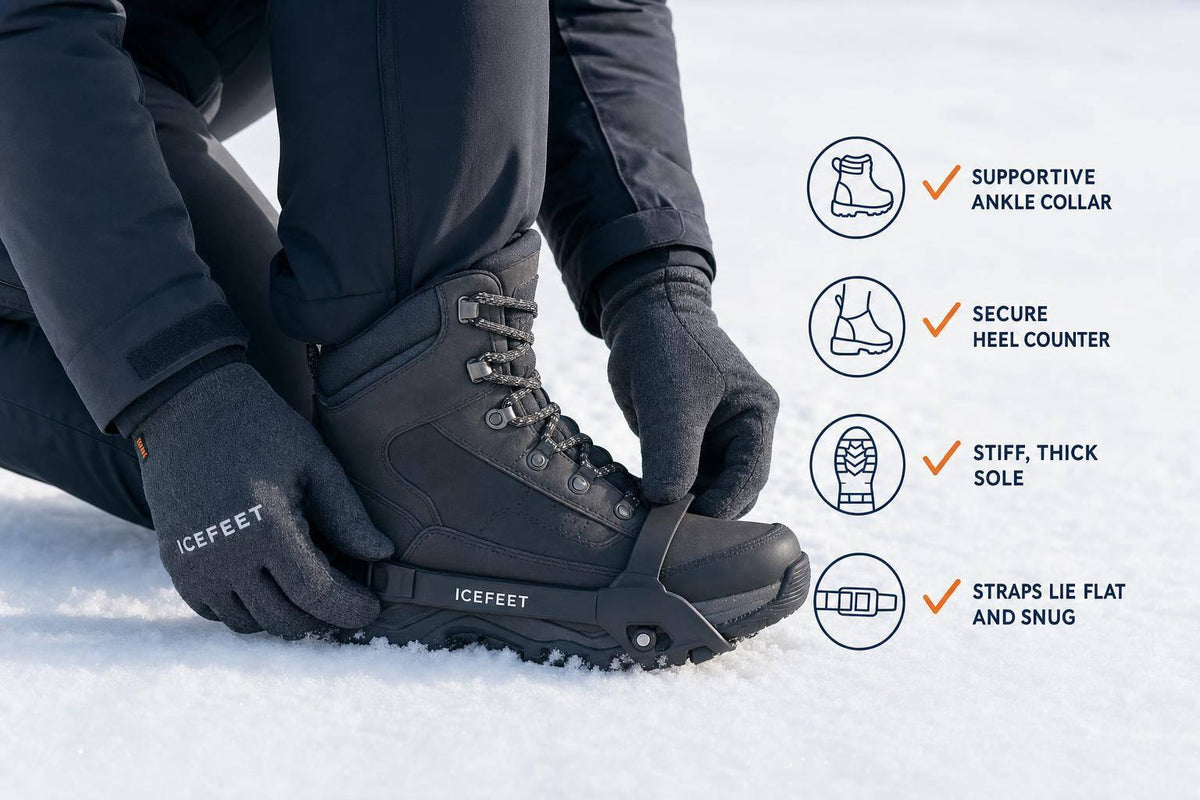
Yes - but only if your boots are snug, stiff, and supportive. If your heel lifts, your ankle shifts, or the sole bends too much, control drops fast. And on ice, that’s a bad deal.
Here’s the short version:
- Regular snow boots can work with Icefeet-style skates
- Loose, soft, bulky boots usually don’t
- You need 4 fit checks: heel hold, ankle support, sole stiffness, and strap fit
- Icefeet are for ice
- Snowfeet* models are for snow, and boot rules change by model
In other words: don’t go by the boot name alone. Go by how the boot fits on the skate.
A few fast facts from the article:
- Snowfeet* ski-boot bindings fit US 4.5–14.5
- Snowfeet* snowboard-boot bindings fit US 6–14.5
- 38 cm, 50 cm, 44 cm, and 65 cm Snowfeet* products are snow models, not ice models
- A boot that feels fine for walking can still feel sloppy on ice after a few minutes in the cold
If I had to boil it down, I’d say this: firm sole, locked-in heel, flat contact, tight straps. That’s the whole game.
Quick Comparison
| Option | Surface | Best boot match | Main thing to know |
|---|---|---|---|
| Icefeet-style skates | Ice | Supportive winter boots that fit the binding | Works only if the boot stays steady |
| Snowfeet* 38 cm | Snow | Winter boots or snowboard boots | Small and easy to use |
| Snowfeet* 50 cm PRO | Snow | Winter boots or snowboard boots | More support and glide |
| Skiskates 44 cm | Snow | Ski boots or snowboard boots | Firmer feel and more control |
| Skiblades 65 cm | Snow | Ski or snowboard boots | Best stability in this group |
So, if you already own winter boots, check the fit before you buy anything. And if your boots are soft and sloppy, don’t force it - that’s how you get the “baby deer on a frozen pond” experience :)
Icefeet vs. Snowfeet: Which Boot Works With Which Skate?
How to Use Snowfeet* Skiskates 44 CM | Skates for Snow | Mini Ski | Snowblades | Snowskates
Which Regular Winter Boots Work With Icefeet
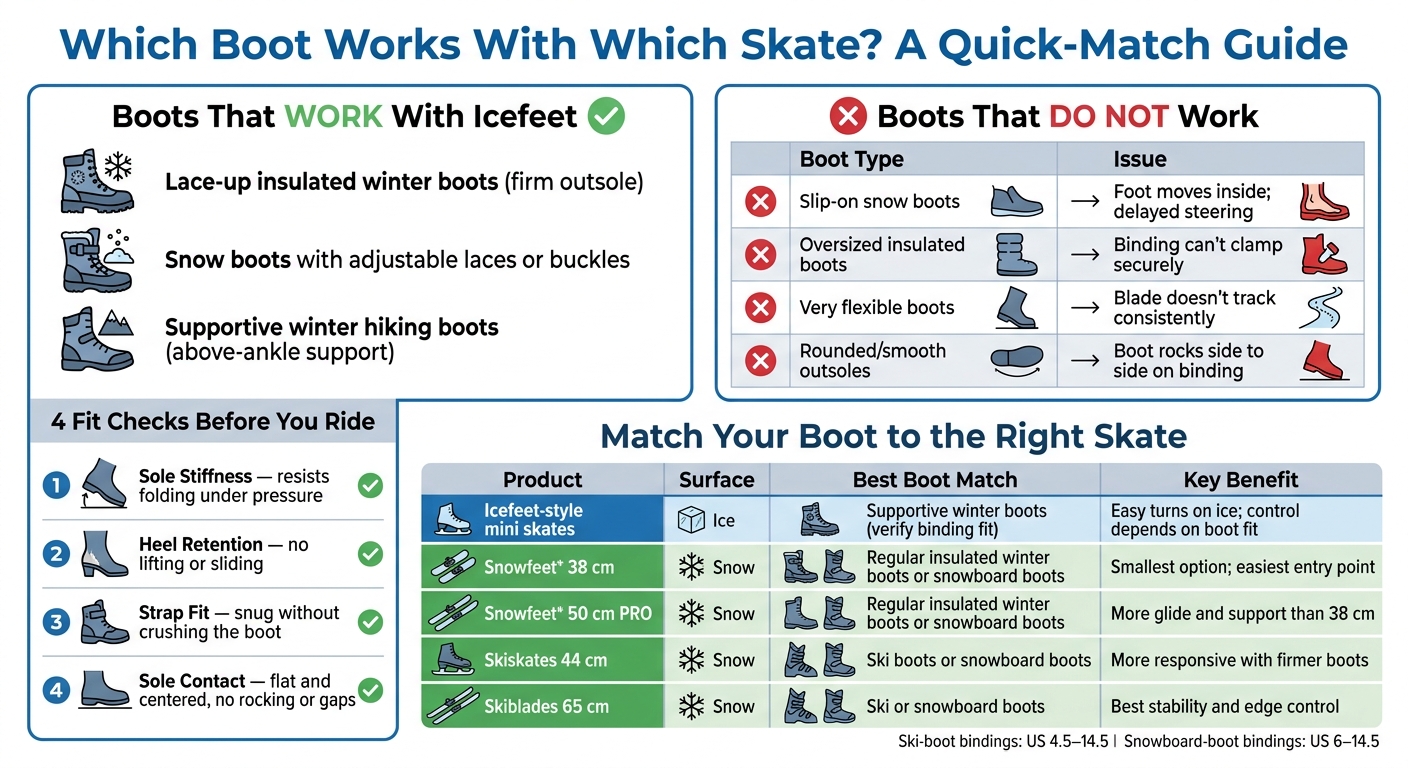
Some regular snow boots can work with Icefeet. But the boot has to be firm and supportive. You want three things: a sole that doesn’t flex much, a heel that stays put, and enough ankle support to keep the skate steady under your foot.
Boot Types That Work: Insulated Winter Boots and Supportive Hiking Boots
Three boot styles tend to work best. Lace-up insulated winter boots with a firm outsole are a solid match. They’re warm, easy to adjust, and stiff enough to help keep the platform from wobbling.
Snow boots with adjustable laces or buckles can also work, as long as you can tighten them enough to stop heel movement. Supportive winter hiking boots are often the best bet. They usually give you a firm midsole, a close fit, and above-ankle support all in one boot.
Still, even a good boot can fall short if the fit is loose. So before you head onto the ice, check the setup.
What to Check Before You Buy or Ride
Before you step onto ice, run through these four checks:
- Sole stiffness: Hold the toe and heel, then flex the boot. It should resist folding hard through the middle. If the sole bends too easily, it can flex between the skate’s contact points and hurt control.
- Heel retention: Walk around in the boots. Your heel should stay seated with no lifting or sliding. If it moves while walking, it’ll move even more on ice.
- Strap fit: Check the boot’s outer size, not just the labeled shoe size, against the Icefeet strap range. Thick insulation or a bulky toe box can make a boot too large for the straps, even if the size looks right on paper. Test the straps over the exact boots and socks you plan to wear. If the strap can’t tighten without crushing the boot or still leaves side-to-side movement, don’t use that setup.
- Sole contact: Put the skate under the boot and make sure the sole sits flat and centered. You don’t want rocking, overhang, or gaps caused by deep tread. If the skate only touches the boot at a few high spots, that’s not a safe fit.
Test everything on dry ground first. Shuffle, step, and twist a bit. If the heel lifts, a strap loosens, or the skate tilts, stop there. Cold weather can compress insulation and change the fit after a few minutes, so check it again after your first run.
If any of these checks fail, the boot isn’t the right match. If it bends too easily, slips at the heel, or rocks on the platform, it belongs in the next group: boots that do not work.
Which Boots Do Not Work and Why
Not every snow boot plays nice with Icefeet. If the upper is soft, the fit is loose, or the sole is weak, control drops off fast. Cranking the straps tighter won’t solve it. The bad matches all break down for the same reason: they can’t keep your foot centered, steady, and flat.
Soft, Loose, and Rounded Boots Reduce Control
The worst picks are slip-on snow boots, oversized insulated boots, and casual winter shoes with weak ankle support. In boots like these, your foot can slide forward, your heel can lift, or your foot can drift side to side while the blade stays locked to the boot.
That’s the whole problem. Your foot moves, but the blade doesn’t. And that lag can make steering feel sloppy or odd.
These boot types all fail in the same basic way: they shift, flex, or rock under load.
| Boot type | Core problem | Likely result |
|---|---|---|
| Slip-on snow boots | Soft upper, weak ankle, loose fit | Foot moves inside; steering is delayed or unpredictable |
| Oversized insulated boots | Too wide, internal foot movement | Binding can't clamp securely; reduced precision |
| Very flexible boots | Sole bends or twists under pressure | Blade doesn't track consistently |
| Rounded or smooth outsoles | Small or curved contact area | Boot rocks side to side on the binding |
Why Fit, Ankle Support, and Sole Stiffness Matter
The blade reacts to pressure from your foot. If your foot is shifting inside the boot, that pressure gets there late, hits at the wrong angle, or never gets there in a clean way. A snug fit keeps the blade centered. Ankle support helps hold your balance point steady, so steering feels more direct. And a firm sole sends your weight straight into the binding instead of soaking it up like a sponge.
Bulky insulation can cause trouble too. It can make the boot too wide for a secure clamp or too roomy inside. Warm boots sound nice, sure, but warmth and control are not the same thing.
If you want a more secure fit with fewer boot issues, Snowfeet* models matched to ski or snowboard boots are the cleaner option.
sbb-itb-17ade95
Snowfeet* Options That Give a More Secure Setup
If your snow boots don’t pass the fit test, switch to a Snowfeet* model that matches your boot type. That’s the big thing here. Snowfeet* makes models for different boot setups, so the binding connection is more predictable right from the start.
In plain English: boot match matters more than skate length.
Icefeet vs. Snowfeet* 38 cm / 50 cm vs. Skiskates 44 cm vs. Skiblades 65 cm: Side-by-Side Comparison
Use this chart to line up the product with the boots you already have.
| Product | Best surface | Boot match | Why it fits |
|---|---|---|---|
| Icefeet-style mini skates | Ice | Boots that fit the product's specified binding; verify before buying | Small and easy to turn on ice; control depends a lot on boot fit |
| Snowfeet* 38 cm | Snow | Regular insulated winter boots or snowboard boots | Smallest option; easiest way in if you want to use winter boots you already own |
| Snowfeet* 50 cm PRO | Snow | Regular insulated winter boots or snowboard boots | More glide and support than the 38 cm model; works well on gentle slopes without full-length skis |
| Skiskates 44 cm | Snow | Ski boots or snowboard boots | More responsive with firmer boots; the stiffer connection helps with precision |
| Skiblades 65 cm | Snow | Ski or snowboard boots (check binding version) | Most stable option here; best edge control and carving |
If you already own ski boots or snowboard boots, these rigid-boot models give you the cleanest connection.
When Snowboard Boots or Ski Boots Are the Better Match
Snowfeet's own guidance says to use boots that hold the ankle firmly. The binding versions line up with that advice: ski-boot bindings fit US sizes 4.5–14.5 (EU 36–49), while snowboard-boot bindings cover US sizes 6–14.5 (EU 38–49).
Ski boots and snowboard boots give you a firmer, more controlled connection than soft winter boots. That’s not just a small tweak. It can change how the whole setup feels on snow.
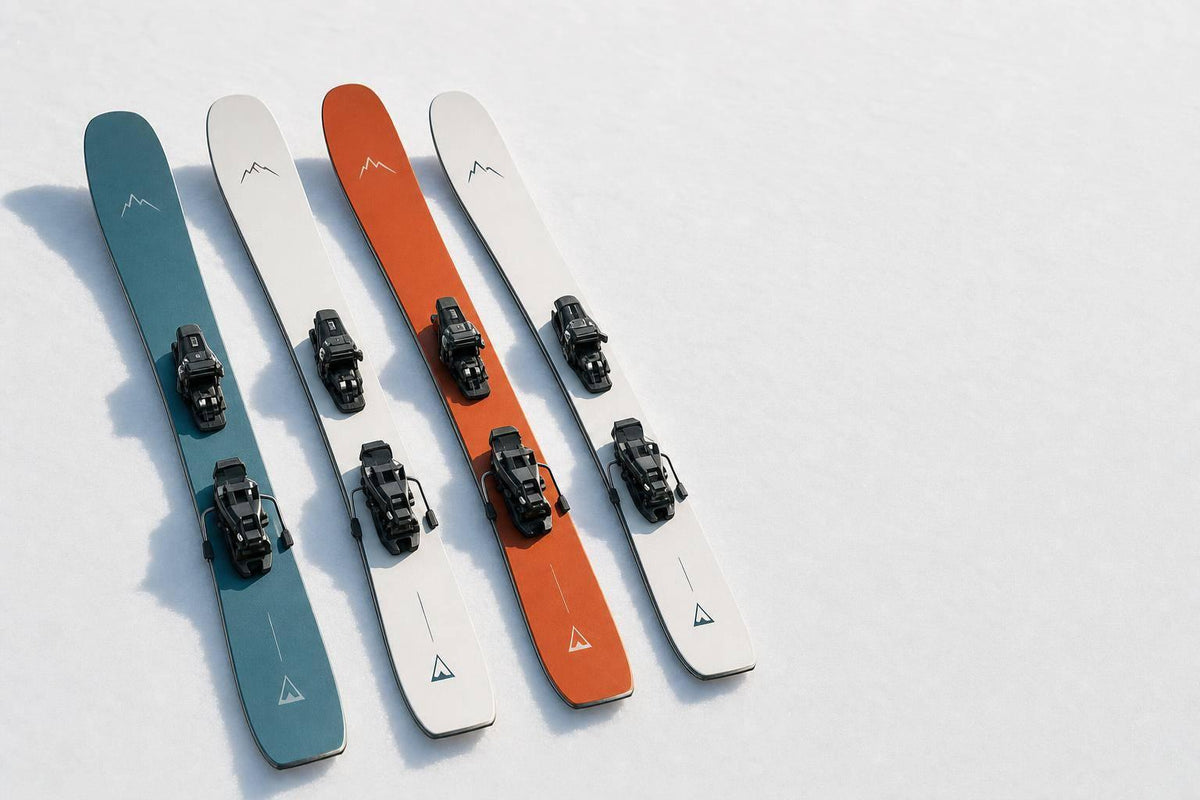
The Skiblades 65 cm push that even more. They’re the strongest pick in this group for stability and carving control, and they’re still easier to carry around than full-length skis.
Here’s the simple match-up:
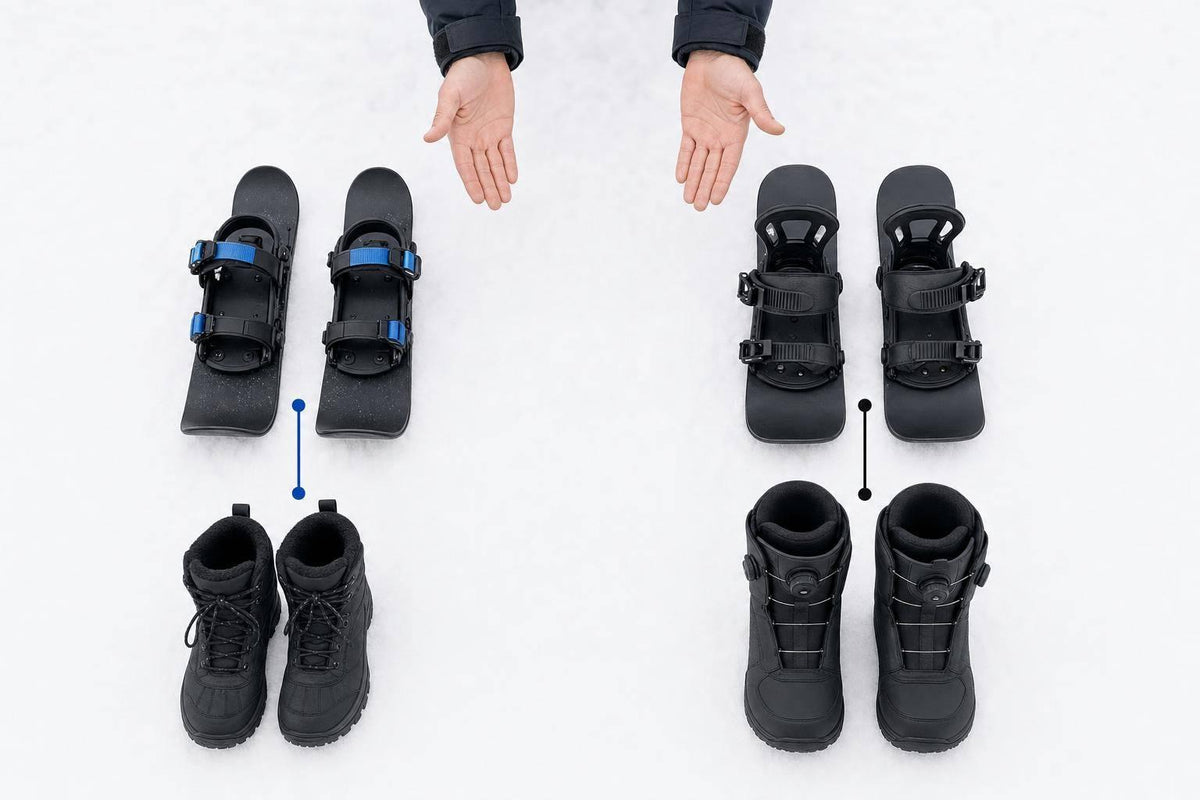
- Regular winter boots work best with the Snowfeet* 38 cm or Snowfeet* 50 cm PRO
- Ski boots or snowboard boots work best with Skiskates 44 cm or Skiblades 65 cm
So, start with your boots first. Then look at how much control, stability, and portability you want. That order makes the choice a lot easier :)
Conclusion: The Best Setup Depends on Your Boots and How You Want to Ride
Some regular snow boots can work with Icefeet-style mini skates, but the fit is everything. It comes down to four simple checks: binding match, sole shape, ankle support, and heel hold. If the boot stays centered and doesn’t move, you’re good. If it shifts, rocks, or feels loose, that setup isn’t worth forcing.
If your snow boots don’t pass those checks, switch to a Snowfeet* model that fits your boot type. For most riders, snowboard boots are the better pick because they give stronger ankle support and better heel hold. If you want to ride in regular winter footwear, Snowfeet* 38 cm or 50 cm is the better fit. Icefeet can work with the right winter boots, sure, but Snowfeet* is a cleaner match for most casual riders.
If you already use ski or snowboard boots, Snowfeet* Skiskates 44 cm or Skiblades 65 cm give you a more stable setup. At the end of the day, the best setup is the one that matches your boots and keeps your control steady and easy to trust.
FAQs
How can I tell if my snow boots are too soft for Icefeet?
Check how your boots feel once they’re strapped in. You want them to feel secure and steady. If they seem loose, wobbly, or your foot slides inside the binding, the boots are probably too soft.
Do a quick dry-ground test. Flex forward and see what happens. If your heel lifts or you can twist the boot inside the binding, the boot doesn’t give you enough support. Also, skip puffy, quilted, or heavily rounded soles.
Are snowboard boots better than regular winter boots?
Yes - snowboard boots are usually the better pick if you want more control, stability, and support.
Regular waterproof winter boots can work for casual riding, small backyard hills, or easy trails. But once the terrain gets steeper or your speed picks up, they start to show their limits. They don’t have the stiffness or ankle support that snowboarding calls for.
Snowboard boots, on the other hand, give you a more secure fit and better board response. That means your movements transfer to the board with less lag - kind of like the difference between driving with loose steering and a car that actually listens when you turn the wheel.
If you’re just messing around in the snow, winter boots may do the job. If you want better performance and a safer, more locked-in feel, snowboard boots are the way to go.
Which Snowfeet* model is best for more stability?
For the most stability, the Snowfeet 99 cm* is the best pick. The extra length gives you more edge contact, so it feels more planted and balanced when you carve at higher speeds or ride over mixed terrain.
If you want something shorter and easier to carry, the Snowfeet PRO 50 cm* is the next best option. Its added length and fiberglass-reinforced core make it smoother and more forgiving than the 44 cm Skiskates.











Laisser un commentaire
Ce site est protégé par hCaptcha, et la Politique de confidentialité et les Conditions de service de hCaptcha s’appliquent.