



















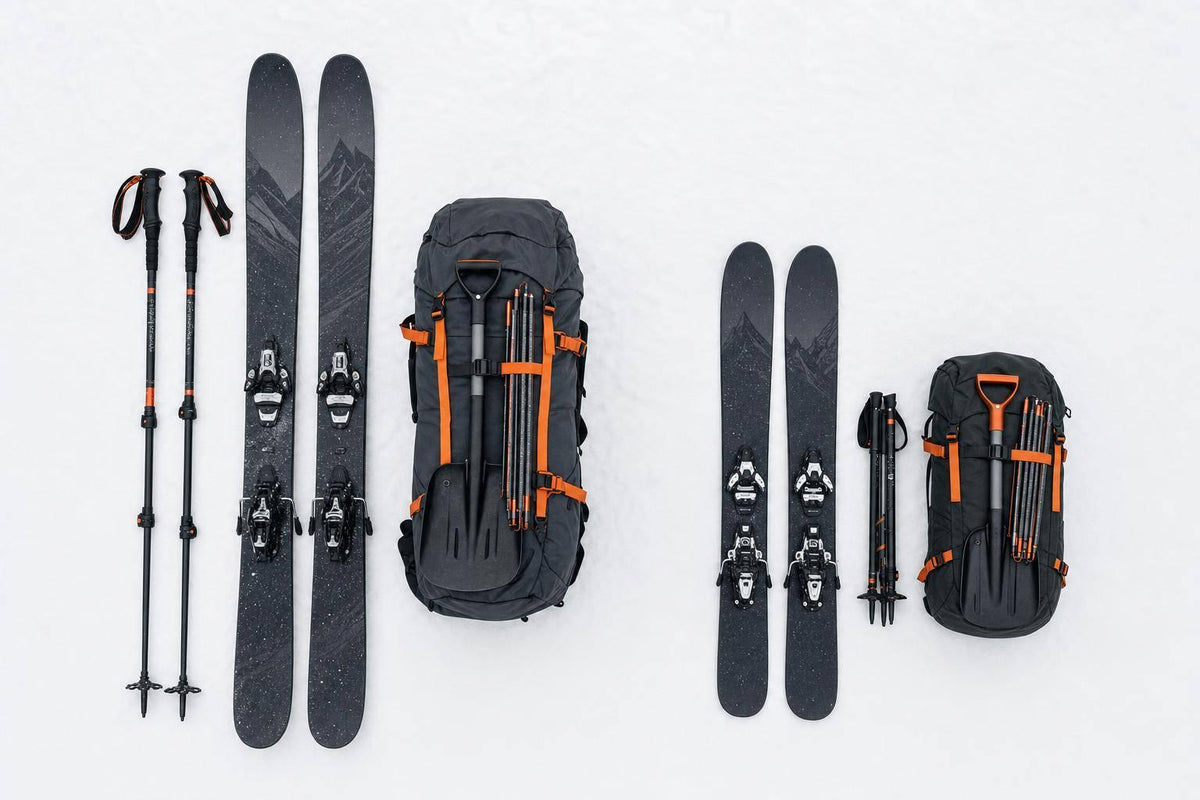
You don’t need a full backcountry touring kit for every snow day. If your plan is a short hike, mellow powder, sidecountry laps, or travel-friendly skiing, a shorter setup can save you weight, space, and cash.
I’d sum it up like this:
- A full touring setup can cost around $2,200 and weigh about 15–20 lb
- Shorter Snowfeet* options cost less and pack smaller
- The trade-off is simple: less bulk, less hassle, less support in deep snow and steep terrain
Here’s the fast takeaway:
- Full touring skis: best for long climbs, steep lines, and deep powder
- WALKSKI 100 cm: best for short touring days and easy uphill travel
- Skiblades 99 cm POWDER: best for soft snow and fun, low-speed turns
- Compact 44–65 cm models: best for travel, packed snow, and short local outings
If I were helping a friend in the shop, I’d say this: match the gear to the day. Don’t bring the big mountain setup for a mellow meadow lap unless you like carrying extra stuff for fun :)
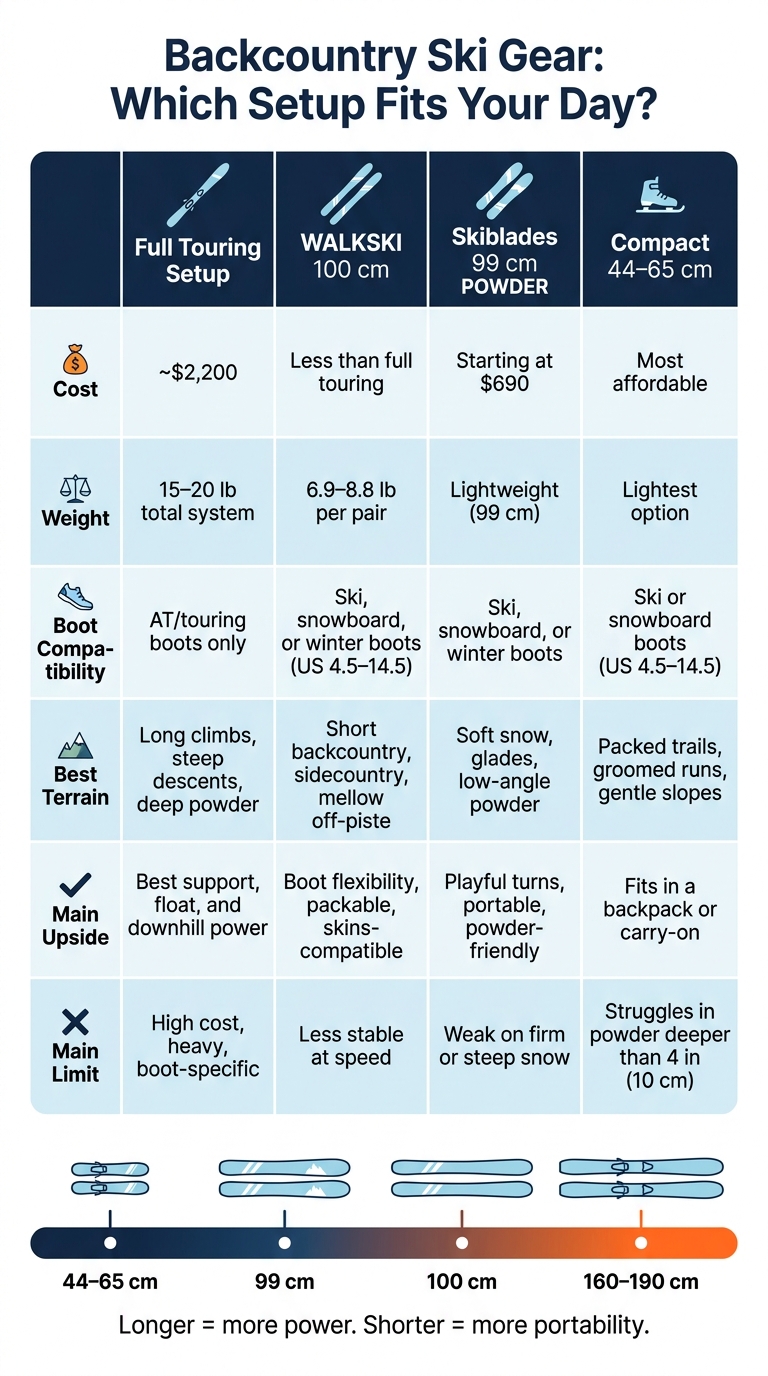
Backcountry Ski Gear Comparison: Full Touring vs. Snowfeet Options
Snowfeet* WALKSKI Backcountry Touring Skis | 100 CM
Quick Comparison
| Setup | Best For | Main Upside | Main Limit |
|---|---|---|---|
| Full touring setup | Long tours, steep descents, deep powder | Best support and float | High cost, more weight, boot-specific |
| Snowfeet* WALKSKI 100 cm | Short climbs, sidecountry, mellow backcountry | Works with many boot types | Less steady at speed |
| Snowfeet* Skiblades 99 cm POWDER | Low-angle powder, glades, playful laps | Short, easy to turn in soft snow | Weak on firm or steep snow |
| Snowfeet* 44–65 cm | Travel, packed trails, short runs | Smallest and lightest | Limited in deeper snow |
So, if you want simple gear for simple missions, shorter skis make a lot of sense. If your days are long, steep, or deep, the full touring route still wins.
1. Traditional Alpine Touring Setup
A full alpine touring kit comes down to four main parts: touring skis, AT bindings, AT boots, and climbing skins. For actual backcountry travel, you’ll also need avalanche gear: beacon, shovel, and probe. That’s where the trade-off starts. You get range and downhill power, but you also take on more weight and stricter gear matchups.
Weight and Packability
A typical touring setup adds about 6.6–8.8 lb per foot, plus the bulk of skis, skins, and safety gear. AT boots usually add another 6–8 lb (2.7–3.6 kg) per pair.
That’s not nothing. Full-length touring skis, usually 63–75 inches (160–190 cm), are also awkward to pack and often count as oversized baggage. So, yeah, this isn’t the kind of setup you casually toss in a trunk and forget about. The weight also ties you to a full boot-and-binding system.
Boot and Binding Compatibility
Traditional AT bindings usually need touring boots with tech inserts. In plain English, that means you’re locked into ski-specific boots.
That setup works fine if backcountry skiing is your main thing. If not, it can feel a bit like buying a pickup truck just to haul one bag of mulch.
Terrain and Snow Suitability
Traditional touring gear works best for long climbs, steep, technical descents, and deep powder. Wider touring skis in the 90–115 mm underfoot range give you good float in soft snow and steady performance in crust, wind-pack, and other mixed conditions.
That’s where this gear shines. But for mellow meadows or a short hike to a low-angle powder stash, it can feel like a lot of gear for a small mission.
Uphill/Downhill Trade-offs
Skins and pin bindings make long climbs more efficient, but the system still asks for time and focus during skin-on, skin-off transitions. Downhill performance is strong, but a full kit makes the most sense for committed backcountry skiers.
For casual riders, that setup can feel like extra work. And for shorter hikes or easier snow, that’s where the lighter Snowfeet* options become the more practical side-by-side match.
2. Snowfeet* WALKSKI Backcountry Touring 100 cm
If you want to move through the backcountry without AT boots, skins, and heavy skis, WALKSKI cuts the setup down in a big way. It sits in the middle: small enough to travel with, but still made for short backcountry laps and sidecountry hikes.
Weight and Packability
The wood-core version weighs 6.9 lb (3,116 g) per pair, while the fiberglass-core version comes in at 8.8 lb (3,980 g) per pair.
That smaller size helps, sure. But the bigger win is the boot freedom.
Boot and Binding Compatibility
WALKSKI uses a universal free-heel binding that works with snowboard boots, winter boots, and ski boots. For U.S. riders, the boot range is US 6–14.5 for snowboard and winter boots, and US 4.5–14.5 for ski boots.
So, no dedicated touring boots. That’s a huge plus if you don’t want to buy a whole new setup just to head uphill.
Terrain and Snow Suitability
This setup works best in powder, packed trails, and packed resort runs. It also comes with removable climbing skins for uphill travel.
That said, full-length touring skis still feel more planted on longer and faster descents. WALKSKI can handle a lot, but it’s not trying to be a big-mountain rig.
Uphill/Downhill Trade-offs
The four-mode system keeps uphill travel simple without the bulk of AT gear. You can use Climb 2 on steeper skin tracks, then switch to Ski mode for the way down.
"I found these so easy to turn and control. I have recreational Nordic experience but was able to manage these great." - Lynn, Verified User
WALKSKI is the easiest way into light backcountry travel. Full touring skis still make more sense for bigger objectives. And if you want even less bulk with a more surfy feel, the 99 cm Skiblades go shorter still.
3. Snowfeet* Skiblades 99 cm POWDER
If WALKSKI is the pick for light touring, the 99 cm POWDER is the easier soft-snow option. It keeps that short, easy-to-carry shape, but it’s built more for powder and playful, low-speed descents than for long uphill missions.
Weight and Packability
At 99 cm, they’re a lot easier to pack than full touring skis. That’s a big plus if you’re traveling, tossing gear in a small car, or just don’t want to wrestle with long skis all day.
Boot and Binding Compatibility
Like WALKSKI, it works with winter boots, snowboard boots, and ski boots. That kind of boot range can cut cost and trim packing hassle, which is nice for travelers and casual riders.
Terrain and Snow Suitability
Standard Skiskates do best in shallow powder. For deeper snow, POWDER is the better fit.
Its wide shape and short length make it easy to pivot in soft snow. That’s where these things feel fun - think mellow New England woods after a fresh dump or low-angle powder fields in the Rockies. Tight spaces? No big drama. They turn fast and don’t need much room.
There is a catch, of course. Long touring skis still do better on steep, fast, or technical descents. POWDER is the simpler pick for soft-snow fun, not for charging hard. On firm snow and at higher speeds, they lose edge hold and stability.
Uphill/Downhill Trade-offs
The short length helps on narrow tracks and tight turns, which is handy when the trail gets skinny. But on steep or crusty sections, you may still need to bootpack. No magic trick there.
On the way down, they’re made for relaxed, pivoty turns at moderate speeds. They work best for slow, playful laps, not full-send lines.
Starting at $690, they cost far less than a typical $2,200 touring setup.
For riders who want even less bulk, the 44–65 cm Snowfeet models go lighter still, but you give up powder performance.
sbb-itb-17ade95
4. Compact Snowfeet* Models (44–65 cm)
If 99 cm still sounds like too much, the compact models cut things down even more. This is the far end of the Snowfeet* range. Think minimum bulk first, downhill power second.
Weight and Packability
The 44 cm Skiskates are among the shortest ski-style options you can get, and they’re made to fit in a backpack. That’s the big draw.
The 44 cm Skiskates are the most packable of the bunch. The 65 cm models still stay compact, but they give you a bit more stability. So, if the 44 cm version feels like the ultra-light pick, the 65 cm option is the “still small, but less twitchy” pick.
Boot and Binding Compatibility
Depending on the version, compact Snowfeet* models work with either ski boots or snowboard boots.
Here’s the fit range:
- 44 cm Skiskates in ski-boot versions fit about US 4.5–14.5 (EU 36–49)
- Snowboard-boot versions fit about US 6–14.5 (EU 38–49)
That gives riders a fair amount of flexibility, and you don’t need touring boots to use them.
Terrain and Snow Suitability
These compact models do best on groomed or packed snow. Snowfeet says they can handle light powder up to about 4 inches (10 cm), but once snow gets deeper, the small surface area starts to work against you. They sink faster and get harder to control.
In plain English: they’re best for:
- Packed trails
- Low-angle terrain
- Firm snow
They make the most sense for short, low-commitment sessions, not full-day touring missions.
Uphill/Downhill Trade-offs
On the climb, compact Snowfeet* work best for short bootpack approaches, not long skin tracks. You skip the extra climbing gear that comes with a touring setup, which keeps things lighter and simpler. Nice and clean.
On the way down, the 44 cm Skiskates feel more like skating on snow than skiing in the usual sense. They’re quick to pivot, fun for small jumps, and easy to turn in tight spots at moderate speeds.
The 65 cm models add a little more edge hold and a little more float. That makes them a nice middle ground if you want more downhill confidence without jumping all the way to a full touring setup.
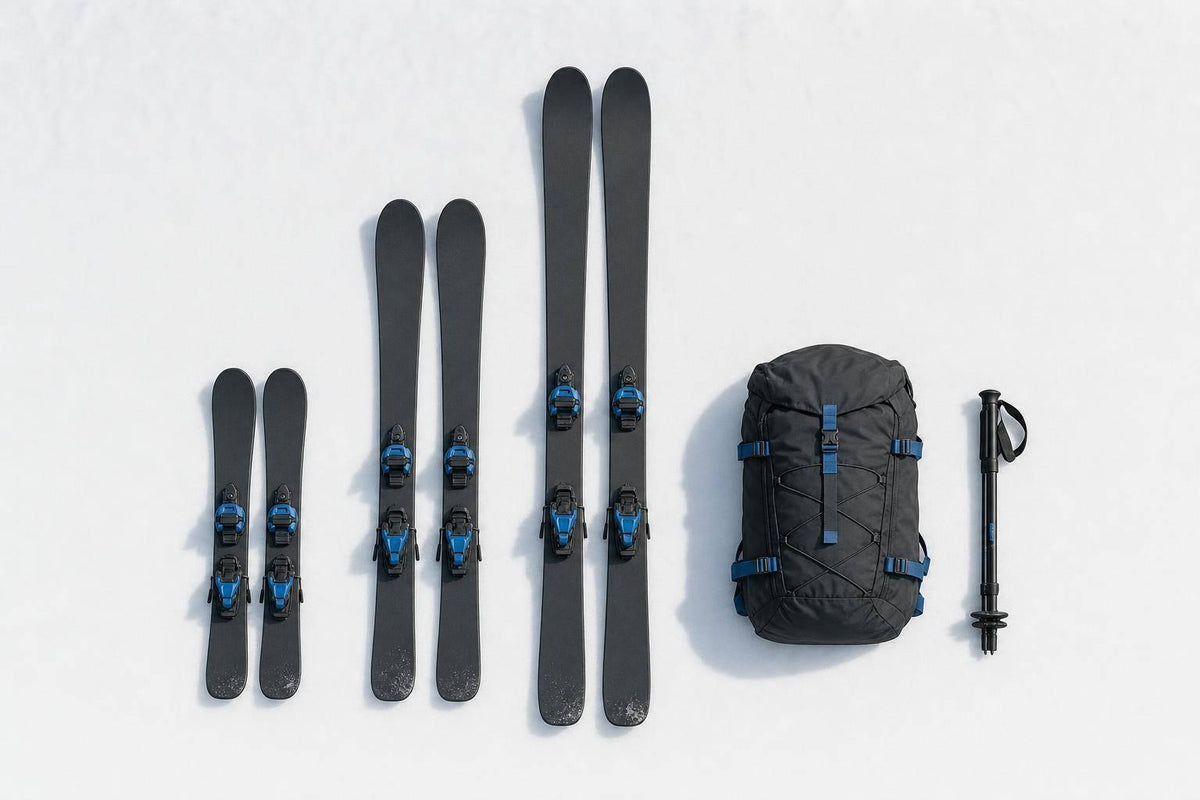
The progression is pretty simple: 44 cm = most portable, 65 cm = more stable, 99 cm = more powder-friendly, WALKSKI = most touring-capable. So yeah, length is the main trade-off here: smallest pack, more control, or more float. The next step is figuring out where each length makes the most sense.
Where Each Setup Works Best
After the gear-by-gear breakdown, here’s the quick chooser.
For travel, Snowfeet* has a clear edge. WALKSKI straps to a pack, and the 44–65 cm models can fit in a suitcase. Full touring skis are bulkier and a pain to move around. If you’ve ever tried to drag long ski bags through an airport, you know the deal.
Boot fit is the other big split. WALKSKI and compact Snowfeet* models work with boots you may already own - winter boots, snowboard boots, or ski boots. That can cut cost and save you from buying one more piece of gear.
Use this chart to match the setup to your trip.
| User Type | Best Setup | Why It Works | Best Terrain |
|---|---|---|---|
| Weekend traveler | WALKSKI 100 cm or Compact 44–65 cm | Packs smaller, no separate boot purchase needed | Mellow off-piste, forest roads, gentle meadows |
| Beginner | Skiblades 99 cm POWDER or Compact 44–65 cm | Short platform, forgiving turns, low intimidation factor | Packed snow, low-angle terrain |
| Powder-focused rider | Skiblades 99 cm POWDER or WALKSKI 100 cm | Playful in soft snow, quick turns, manageable approach | Sidecountry laps, glades, small powder bowls |
| Longer approaches | WALKSKI 100 cm | 4-mode binding and skins-compatible setup for climbs | Longer backcountry approaches, steeper pitches |
One trade-off is worth saying out loud: traditional touring skis still do better on long, steep climbs and fast descents in mixed snow.
But for short hikes, sidecountry laps, or mellow off-piste runs near a resort, Snowfeet* gives you a lighter, simpler setup without the bulk and extra fuss of full touring gear.
Next: the pros and cons of each setup.
Pros and Cons
For travelers, beginners, and casual backcountry riders, the big question is pretty simple: how much performance do you need, and how much gear do you want to haul?
That’s the trade-off in a nutshell. Full touring skis give you the most downhill and uphill ability. Snowfeet* trims down weight, price, and fuss.
| Setup | Key Strengths | Key Drawbacks |
|---|---|---|
| Traditional Alpine Touring Setup | Best edge hold on steep or icy terrain; maximum stability at speed; best float in deep powder; reliable on long climbs and long descents | High upfront cost; bulky to transport; requires dedicated touring boots. |
| Snowfeet WALKSKI Backcountry Touring 100 cm* | Works with boots you already own; light enough to carry in a backpack; practical for short backcountry laps and sidecountry hikes | Less stable at speed than full touring skis; reduced float in deep powder; not suited for steep, exposed terrain |
| Snowfeet Skiblades 99 cm POWDER* | Better float and stability in soft snow than compact models; playful, surfy turns; more portable than full skis | Struggles on icy or mixed snow; not designed for sustained long climbs; less edge power on steeper pitches |
| _Snowfeet Compact Models (44–65 cm)_* | Ultra-portable - fits in a daypack or carry-on; lightest option; works with regular winter boots; fast to put on and take off | Struggles in powder deeper than about 4 in. (10 cm); can feel twitchy on anything steeper than a gentle slope; limited edge contact |
So, yeah, the final pick depends on your terrain, your budget, and how much stuff you’re willing to carry. If you want top-end performance, go full touring. If you want something lighter and simpler, Snowfeet* starts to look pretty appealing :)
Conclusion
The real question is simple: what does your snow day look like? In most cases, a shorter, lighter setup makes more sense for shorter, easier days. That’s the whole pattern here.
For short hikes and laid-back backcountry days, WALKSKI 100 cm works well for short approaches and mellow off-piste laps. Skiblades 99 cm POWDER fit soft snow and low-angle glades. And compact 44–65 cm models are a good pick for travel, tight storage, and casual local use. On top of that, they cost far less than a full touring setup.
That said, full alpine touring gear is still the right call for long ascents, steep lines, and multi-day tours. You get more performance, sure, but you also take on more weight, more cost, and more moving parts. It’s a bit like bringing a full expedition pack for a short walk in the woods. Great when you need it. Overkill when you don’t.
Match the setup to the day:
| Your Typical Outing | Best Match |
|---|---|
| Short hike, mellow slopes, winter boots | Snowfeet* WALKSKI 100 cm |
| Soft snow, glades, low-angle powder | Snowfeet* Skiblades 99 cm POWDER |
| Travel, gentle local runs, casual fun | Compact Snowfeet* (44–65 cm) |
| Long ascents, steep terrain, multi-day tours | Full alpine touring setup |
For most casual riders and beginners, lighter gear means more fun, less hassle, and a better match for the terrain they ski. For light backcountry skiing, Snowfeet* is the simpler, more practical pick.
FAQs
Do I still need avalanche gear with Snowfeet*?
Yes. Whenever you head into the backcountry, avalanche safety gear is a must: beacon, probe, and shovel.
Snowfeet* WALKSKI and POWDER 99 can cut some bulk, cost, and setup hassle, but they do not replace critical safety steps in off-piste or unmarked terrain.
Which Snowfeet* length is easiest for beginners?
For beginners, the Snowfeet WALKSKI 100 cm* is the easiest pick and the one I’d point most people to first. It feels far less awkward than long touring skis, so new riders can get the hang of things without that “whoa, these are a lot of ski” feeling. On mellow slopes and bumpy, uneven ground, that can make a big difference for confidence.
Another big plus: it works with standard winter boots, hiking boots, or snowboard boots. That keeps things simple from the start. Smaller picks like Skiskates (44 cm) are easier to carry around, sure. But the WALKSKI 100 cm hits the sweet spot for stability, control, and ease of use.
Can I use my regular winter boots for backcountry skiing?
Yes. Snowfeet WALKSKI and related products use an adjustable binding system that works with regular winter boots, waterproof hiking boots, or snowboard boots you may already own.
For better control and a smoother ride, go with winter boots that have good ankle support. It makes a big difference. You can skip specialized touring boots and stay comfy for both hiking and skiing.











Laisser un commentaire
Ce site est protégé par hCaptcha, et la Politique de confidentialité et les Conditions de service de hCaptcha s’appliquent.