




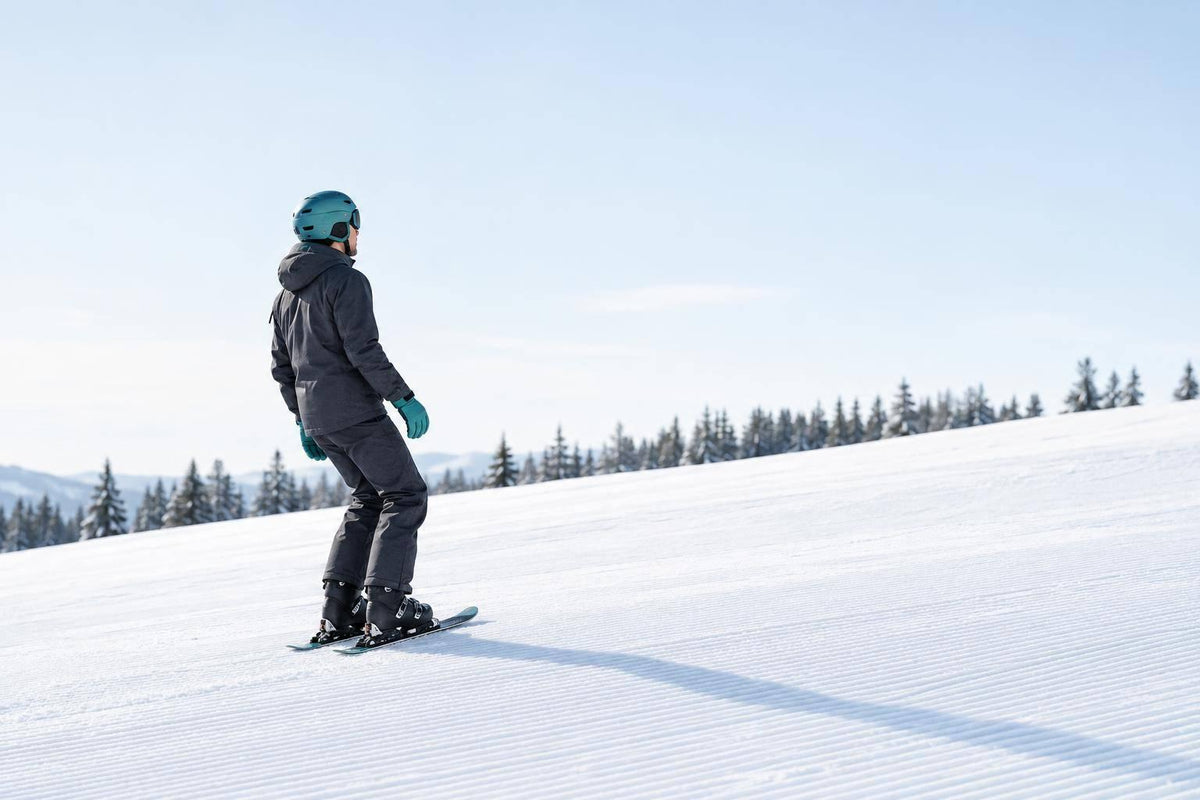
Yes - you can ski backward on 99 cm (39-inch) Snowfeet* Skiblades. My advice: learn to turn and stop facing forward first. Then try short backward glides at walking speed on a gentle, empty slope with a ski instructor.
Here’s what I’d keep in mind:
- Short skis, easy turns: The compact shape and upturned tails help with slow switch drills. Longer twin-tip skis offer more stability at speed.
- Control comes first: Keep your weight centered, look over your shoulder, and practice stopping on both sides.
- Pick smooth snow: I’d skip ice, powder, bumps, and crowds. <u>Keep your path in view</u> and leave room to stop.
- Check your setup: Wear a fitted helmet and use compatible ski boots and working bindings - not winter boots. The article lists $890; check the current price, shipping, and taxes before buying.
My take? These can suit low-speed switch practice, but short skis don’t replace sound skills. Start small - the goal is backward skiing, not backward confidence. :)
ULTIMATE SHORT SKIS 🔥 Snowfeet Skiblades 99 cm | Unboxing & First Look
99 cm Skiblades vs. Longer Twin-Tip Skis
Snowfeet* Skiblades’ 99 cm length makes them easier to pivot and redirect than full-length twin-tip skis. That helps with slow switch drills and tight turns. But stance and speed control still matter more than how fast your skis respond.
Longer twin-tip skis can ride switch, too. They just feel less nimble and need more room to turn.
| Feature | Snowfeet* Skiblades 99 cm | Longer twin-tip skis |
|---|---|---|
| Maneuverability | Easy to pivot for switch drills and tight turns. | Need more room for slow pivots. |
| Stability at speed | Best at controlled recreational speeds. | Stay calmer at higher speeds and on uneven snow. |
In soft snow, the broader 99 cm POWDER version floats better than the standard model. Longer powder skis still perform better in deep snow.
For groomed runs and low-speed switch practice, Snowfeet* 99 cm is the more practical choice. Next, focus on stance and backward control.
How to Start Skiing Switch
How to Ski Switch on 99 cm Skiblades
If the 99 cm shape feels right for switch, it’s time to learn the movement safely.
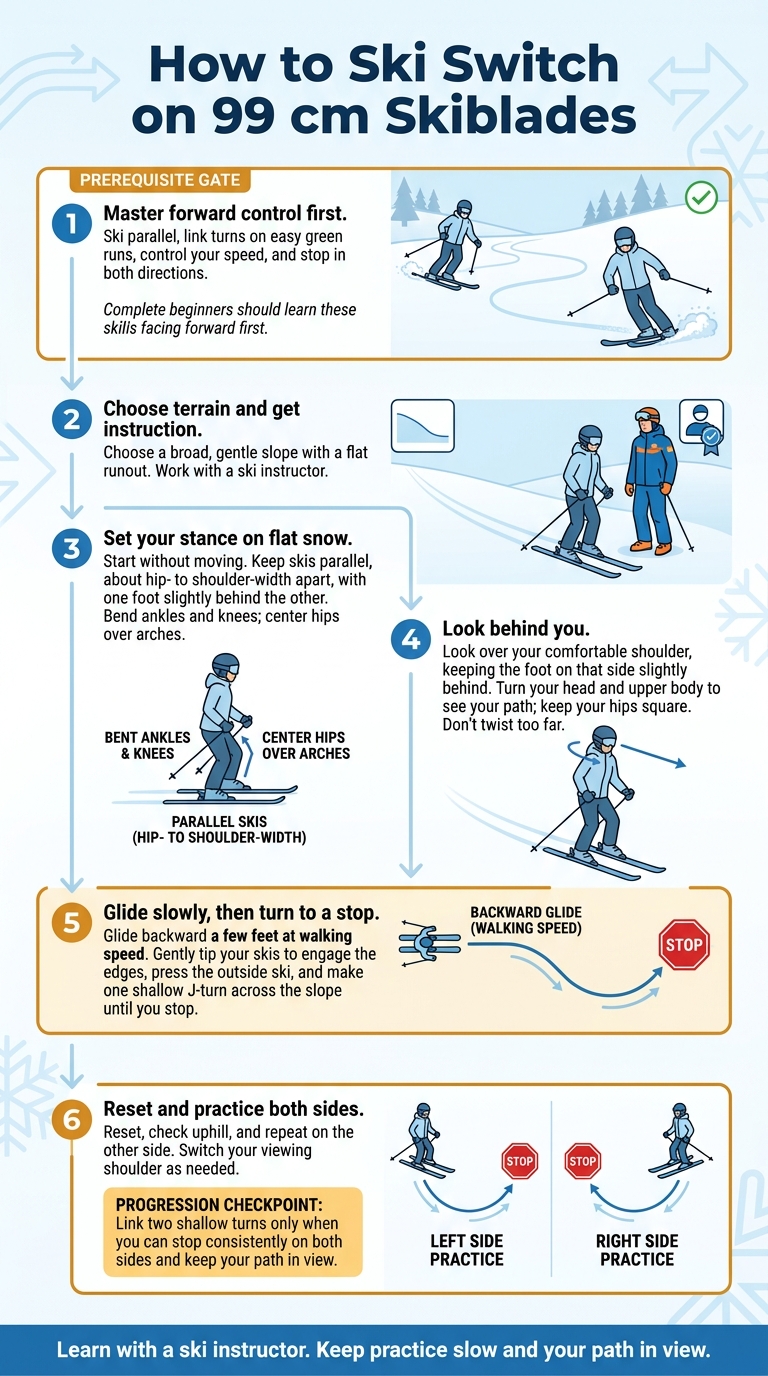
Choose a broad, gentle slope with a flat runout. Work with a ski instructor to learn backward control on Snowfeet* Skiblades 99 cm.
Learn Forward Control First
Before you try switch, get comfortable skiing parallel, linking turns on easy green runs, controlling your speed, and stopping in both directions. Complete beginners should learn these skills facing forward first.
Set Your Stance and Look Behind You
Start on flat snow without moving. Keep your skis parallel, about hip- to shoulder-width apart, with one foot slightly behind the other. Bend your ankles and knees. Center your hips over your arches.
Look over whichever shoulder feels most comfortable, keeping the foot on that side slightly behind. Turn your head and upper body so you can see your path, but keep your hips square. Don’t twist too far - it can throw off your balance. Once you feel steady, start sliding slowly.
Practice Slow Backward Turns and Stops
Start with a few feet of backward gliding at walking speed. Gently tip your skis to engage the edges. Press the outside ski and make one shallow J-turn across the slope until you stop.
Reset, check uphill, and repeat on the other side. Switch your viewing shoulder as needed. Link two shallow turns only when you can stop consistently on both sides and keep your path in view.
sbb-itb-17ade95
Switch Skiing Limits and Safety
The 99 cm (about 39-inch) platform is easy to turn, but switch skiing shows its limits. It’s less forgiving at speed or when your balance shifts. Rough snow can make it feel less stable. Looking behind you also makes it harder to spot terrain changes in time to react.
In powder and broken snow, the short platform sinks and gets pushed off course more easily. That can throw off your balance while skiing backward.
Choose Gentle Terrain and Low Speeds
Once your backward glides feel stable, stick to the easiest terrain: smooth, groomed snow. Skip ice, deep powder, moguls, narrow trails, crowds, lift lines, obstacles, and jumps. Keep each glide to a few ski lengths until you can keep your path in view and stop reliably.
Keep a Clear View and Plan Your Stop
Skiing backward takes extra route planning. Before you move, check uphill and both sides of your path. Pick an open stopping area with enough room for your stopping distance. Avoid blind rollovers and trail merges. The National Ski Areas Association’s Responsibility Code says to yield to people ahead or downhill. It also says to stop only where people above can see you, without blocking traffic.
If your view narrows or your balance slips, slow down and use your practiced, controlled stop. Don’t keep skiing backward and guess what’s behind you. Wear a properly fitted ski helmet, secure compatible boots, and use working bindings. Use the platform’s quick response only for slow switch drills, and stop when conditions exceed your control.
Are Snowfeet* Skiblades 99 cm Right for You?
Snowfeet* Skiblades 99 cm are a good fit for learning if you want compact skis for casual groomer laps and low-speed switch practice. They’re easier to carry and take less effort to redirect than longer skis. Longer twin-tip skis handle higher speeds and bigger landings better.
Check the U.S. Price, Bindings, and Boot Fit
The official product page lists Snowfeet* Skiblades 99 cm at $890. Before you order, check the live checkout total for shipping and taxes.
Match the binding type to your boot size and boot sole compatibility for a secure setup during switch practice. Ordinary winter boots won’t work.
FAQs
How do I know I’m ready to practice switch?
You’re ready to practice skiing switch once you’ve mastered parallel turns, reliable stops, and control of your stance and weight distribution while skiing forward on gentle, uncrowded terrain.
Snowfeet* 99 cm Skiblades’ asymmetrical high twin tips help with stability and maneuverability, making the move to switch easier than on standard skis. Start on flat terrain or gentle slopes. Look over your shoulder and practice starting turns while keeping your stance balanced and centered.
What if I lose balance while skiing backward?
If you lose your balance while skiing backward (switch), slow down right away. Get back in control on a gentle, uncrowded, groomed slope. Snowfeet* 99 cm Skiblades’ twin-tip design lets you ride backward, but they can feel less stable at higher speeds.
Keep your feet shoulder-width apart and your weight centered. Look over your shoulder and make small, deliberate edge adjustments. Slow down and reset your stance before you try another switch turn.
Do resorts allow switch skiing on skiblades?
Yes, most resorts allow switch skiing on skiblades, especially short skis with metal edges. Snowfeet* notes that most U.S. ski resorts welcome snowblades that meet their safety rules, such as using a suitable retention device (leash) or release bindings.
Rules vary by mountain, so check your resort’s leash and brake requirements before you head out.











Efterlad en kommentar
Denne side er beskyttet af hCaptcha, og hCaptchas Politik om beskyttelse af persondata og Servicevilkår er gældende.