



















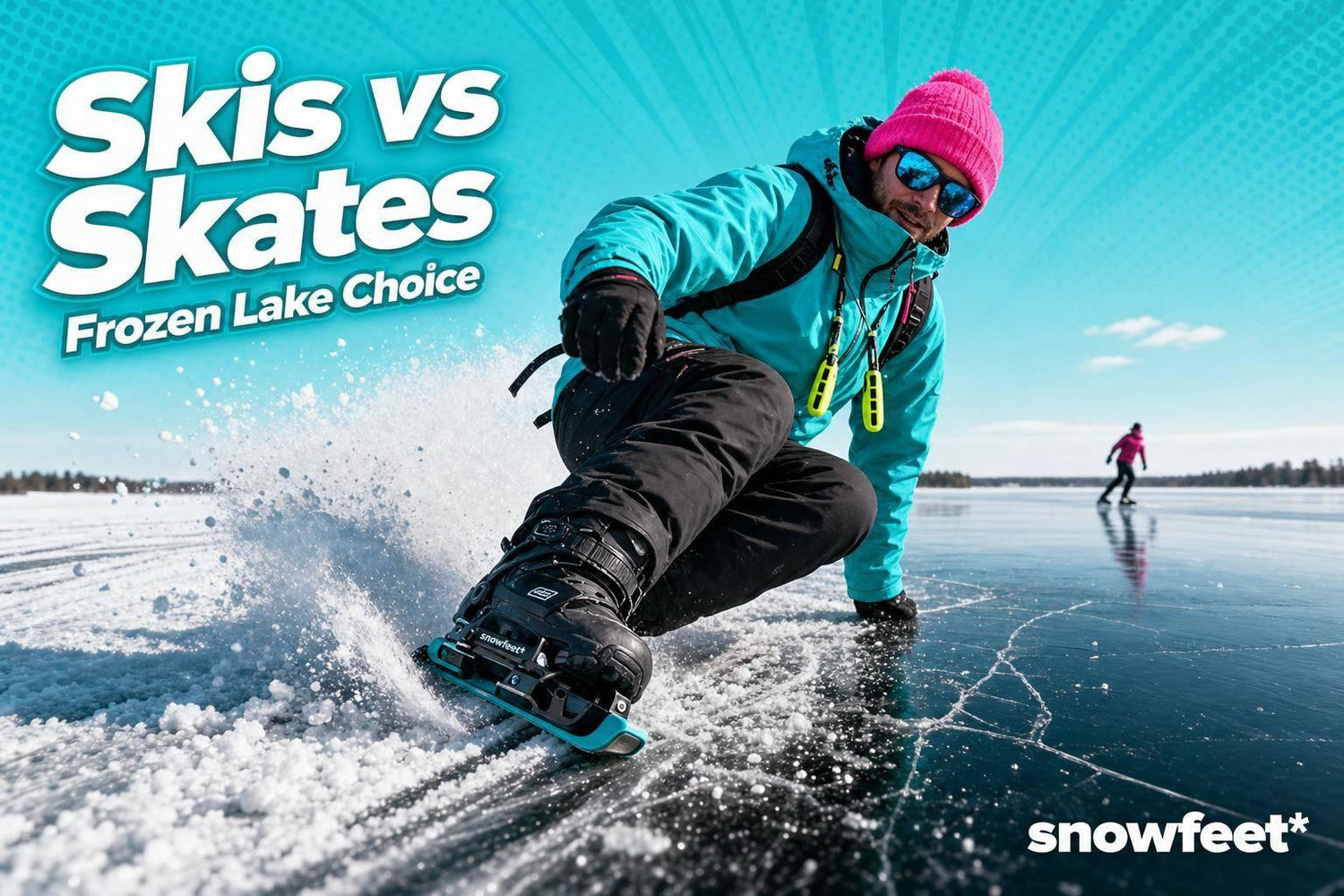
If the lake is smooth black ice, I’d pick ice skates. If it has snow, cracks, ridges, or slush, I’d go with short skis. That’s the whole call in one line.
For most people - beginners, families, casual riders, and travelers - the surface matters more than top speed. Ice skates are best on clean ice. But once even 1 to 2 inches of snow shows up, or the ice turns white, gray, rough, or wet, short skis are often easier to use and easier to trust. Also, safe lake ice starts at 4 inches for walking. That part comes first. Always.
Here’s the short version:
- Ice skates: best on clear, smooth ice
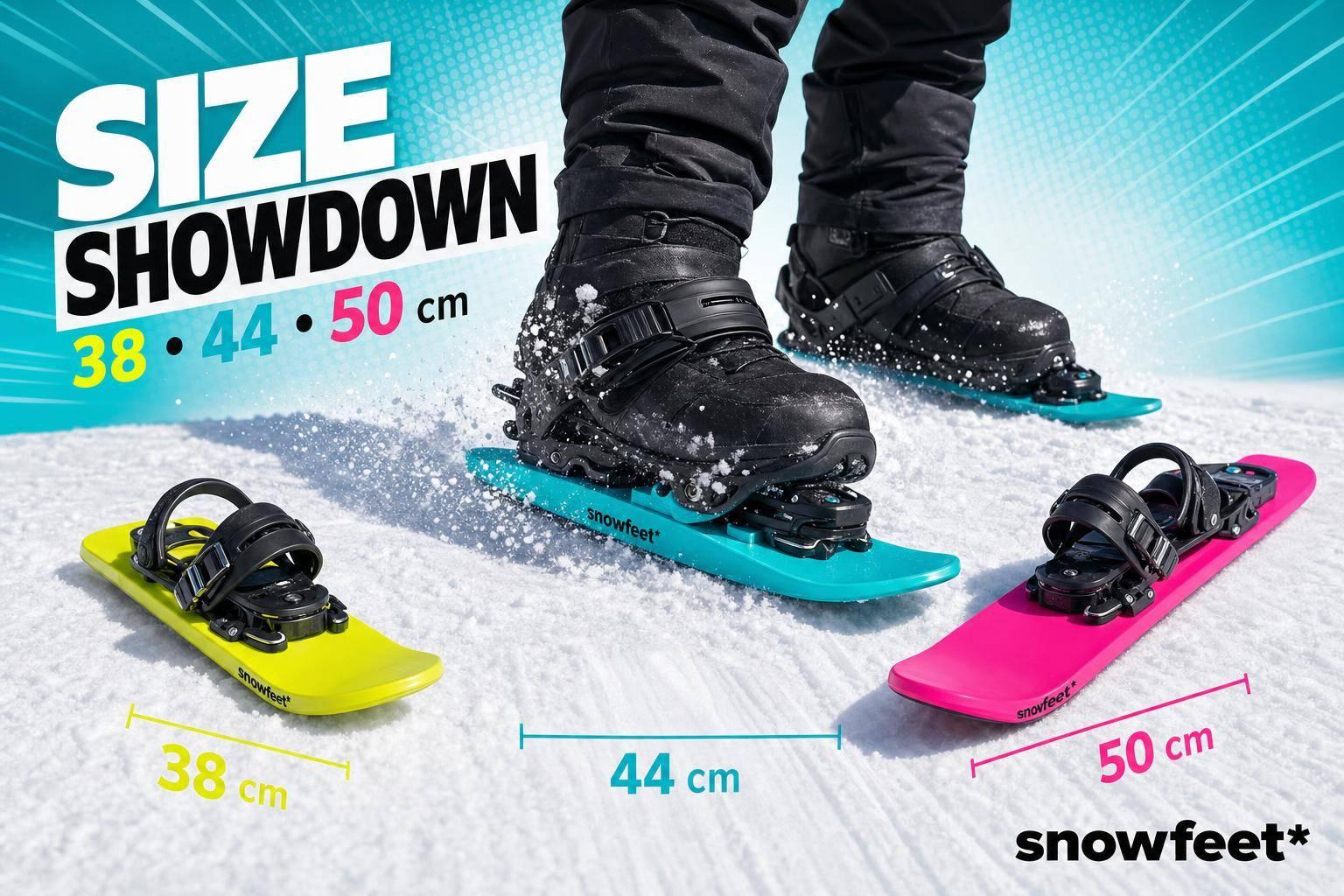
- Snowfeet* 38 cm / 50 cm: best for light snow, easy carrying, and simple setup
- Skiskates 44 cm: good middle ground if you already use ski or snowboard boots
- Skiblades 65 cm: best for rough lake ice and packed snow
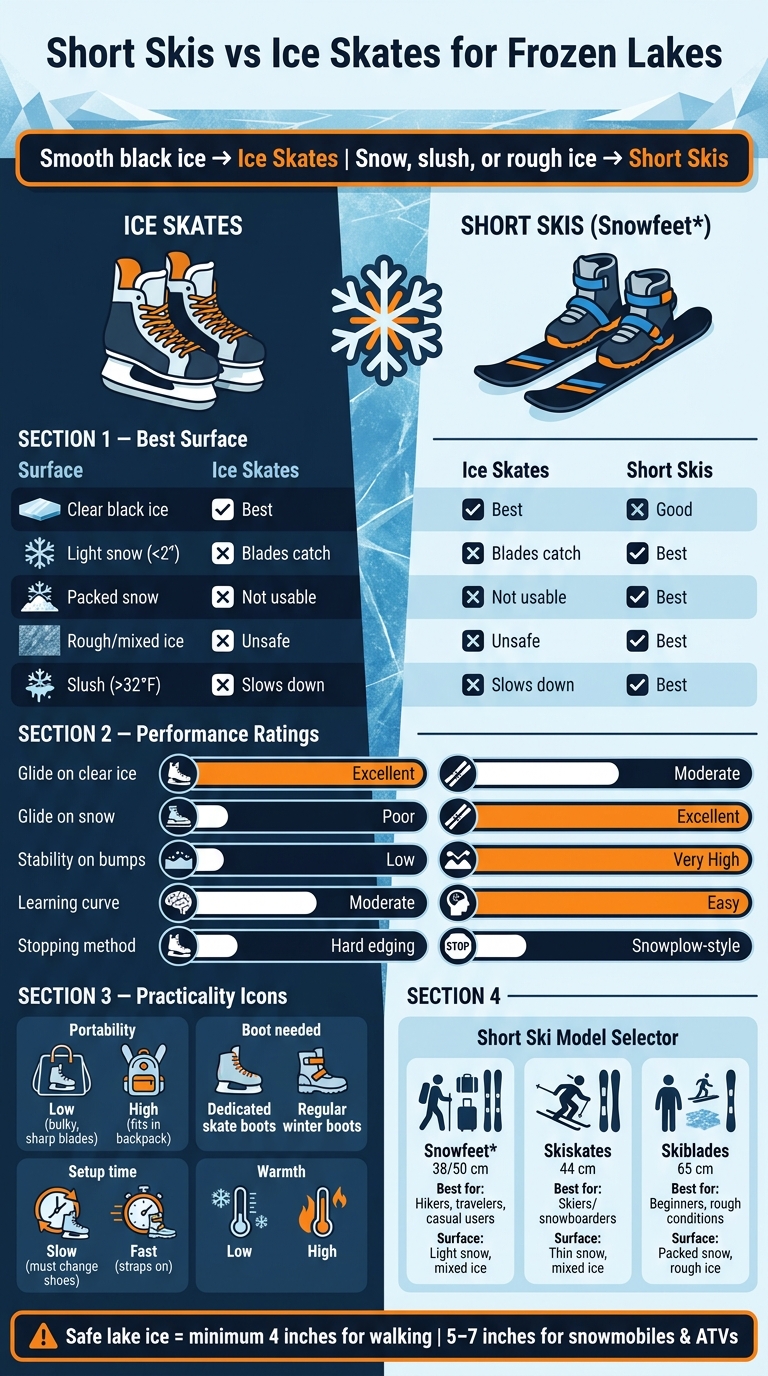
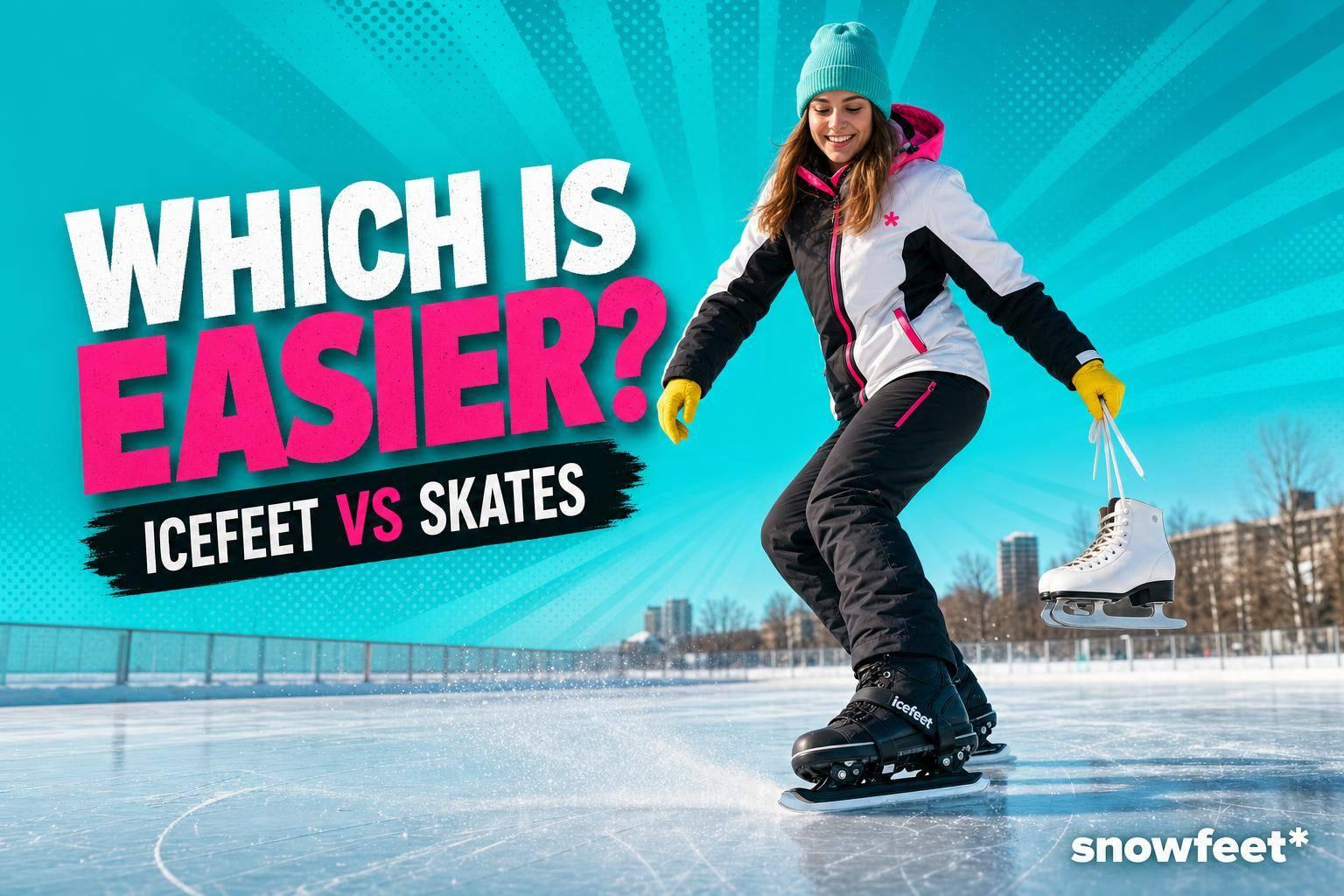
Short Skis vs Ice Skates for Frozen Lakes: Which Should You Choose?
Ski or Skate on Snow? With Snowfeet 65 CM, You Can Do Both.
Quick Comparison
| Gear | Best Surface | Main Strength | Main Tradeoff | Best For |
|---|---|---|---|---|
| Ice Skates | Clear black ice | Fast glide, sharp turns | Struggles in snow and rough patches | Good skaters |
| Snowfeet* 38/50 cm | Light snow, mixed lake ice | Easy to carry, straps to winter boots | Less glide on pure ice | Casual users, hikers, travel |
| Skiskates 44 cm | Thin snow, mixed ice | More stable than skates | Needs ski or snowboard boots | Riders who want a skate-ski feel |
| Skiblades 65 cm | Packed snow, rough ice | Most stable of the group | More gear to carry | Beginners, rough conditions |
So, if you want the plain answer: skates win on perfect ice, but short skis win on most natural frozen lakes. Nature likes to make things messy. Short skis handle that mess better :)
Lake Conditions: When Ice Skates Work and When Snowfeet* Works Better
For casual riders and beginners, the big thing is simple: what does the lake look like under your feet?
That one detail changes everything.
Clear Ice With Little or No Snow
On clean black ice, ice skates are the top pick. They’re the fastest and give you the sharpest response.
But that edge disappears fast. The second the surface stops being hard and clean, skates lose speed and control.
Once the ice gets dirty, choppy, or uneven, the better tool often changes in a hurry.
Snow-Covered, Rough, or Mixed Lake Surfaces
Natural lakes almost never stay perfect for long. A bit of snow, refrozen ridges, and rough patches can make ice skates feel twitchy and hard to trust. Snowfeet* short skis handle those surfaces better.
Why? Their wider base and upturned tips help them ride over small messes instead of getting hung up on them.
Here’s how that plays out on the lake:
- On light snow, Snowfeet* 38 cm or 50 cm keeps more of that skating feel.
- On packed snow or rough, mixed ice, Skiblades 65 cm is the standout. The longer platform helps span bumps and adds more stability.
- In slush, skates slow down in a hurry. Snowfeet* can still keep moving.
A handy rule of thumb: white or gray ice usually means Snowfeet* is the safer and more usable pick.
Check for at least 4 inches of ice before stepping out; snowmobiles and ATVs need 5 to 7 inches.
Here’s the quick surface-by-surface breakdown.
Gear by Lake Surface: Comparison Table
| Surface Type | Ice Skates | Snowfeet* 38/50 cm | Skiskates 44 cm | Skiblades 65 cm |
|---|---|---|---|---|
| Clear ice | ✅ Best choice | Good | Very good | Fair |
| Light snow (<2") | ❌ Blades catch | ✅ Best choice | Very good | Good |
| Packed snow | ❌ Not usable | Fair | Good | ✅ Best choice |
| Rough, mixed ice | ❌ Unsafe | Good | Fair | ✅ Best choice |
| Slush (>32°F) | ❌ Slows down | ✅ Best choice | Good | Fair |
Next, glide, stopping, and control show how that surface choice feels in motion.
sbb-itb-17ade95
Performance: Glide, Control, and Stopping
Glide and Speed on Natural Ice
On clear black ice, ice skates are the fastest. Their thin blades create very little drag, so they move fast and feel slick.
But natural lake ice is rarely perfect. Add frost, a light layer of snow, or rough ridges, and those thin blades can start to catch. That’s where the gap starts to show. Skiblades 65 cm give you a nice middle ground between glide and stability on mixed lake ice. Skiskates 44 cm stay smoother and more stable than skates when the surface gets a bit messy.
So, on natural lakes, the big story isn’t just speed. It’s how well you can stop and turn when the ice stops being nice.
Turning, Stability, and Stopping for Beginners
Stopping is one of the biggest differences between the two.
With ice skates, you need to edge hard into the ice to brake. That takes practice. And on bumpy or cracked lake ice, the edge can catch when you least want it to. Yeah, that can get sporty fast.
Snowfeet* products use a snowplow-style stop, much like downhill skiing. On very hard ice, they may need a bit more room to stop fully. But for beginners, the stop is easier to learn. Turning also feels more natural. You steer by shifting your weight and skidding through short turns, which tends to click faster for new riders.
On rough lake ice, stability follows a pretty clear order:
- Skiblades 65 cm
- Skiskates 44 cm
- Snowfeet* 38/50 cm
- Ice skates
Once control matters more than top speed, the day-to-day edge becomes pretty obvious.
Traction, Maneuverability, and Skill Required: Comparison Table
| Feature | Ice Skates | Snowfeet* 38/50 cm | Skiskates 44 cm | Skiblades 65 cm |
|---|---|---|---|---|
| Glide (clear ice) | Excellent | Moderate | Good | Very Good |
| Glide (thin snow) | Poor / Trips | Good | Very Good | Excellent |
| Traction | High (on ice only) | Moderate | Moderate/High | High |
| Maneuverability | High | Extreme | High | Moderate/High |
| Stopping | Hard edging | Snowplow-style | Snowplow-style | Skidding/Carving |
| Stability | Low (on bumps) | Moderate | High | Very High |
| Learning curve | Moderate | Easy/Intuitive | Easy | Easy |
Boot compatibility and portability often matter just as much as on-ice performance.
Practicality: Footwear, Portability, and Model Choice
Which Boots Work With Each Option
After ice conditions, boot fit is the next thing to sort out. You can have great control on paper, but if the gear is annoying to wear or haul around, that edge fades fast. On frozen lakes, your boot setup can make or break the day.
Ice skates require dedicated skate boots, which means bringing a separate pair of shoes and finding a dry spot to change before and after skating.
Snowfeet 38 cm and 50 cm models* strap right onto winter boots or snowboard boots. So you can wear your usual footwear on the way there and switch once you reach the lake. The Skiskates 44 cm are made for ski or snowboard boots, so they still call for dedicated footwear. That said, setup is fast if you already own those boots. The Skiblades 65 cm use ski boots and compatible bindings, which gives them the most ski-like feel in the lineup.
If the boots feel like a pain, the best setup on ice can turn into the wrong pick off the ice.
What Is Easiest to Carry to a Lake
For a lake close by, ice skates are fine. But for hikes, walks, or travel, Snowfeet* are much easier to bring along.
_Snowfeet 38 cm and 50 cm models fit easily in a backpack._* Skiskates and Skiblades are still compact, but the boots they need add bulk. That makes them a better fit for car trips. Ice skates are the biggest hassle to carry because they need separate boots and blade guards.
Here’s the practical breakdown at a glance.
Practicality and Best Snowfeet* Model by Rider Type: Comparison Table
| Feature | Ice Skates | Snowfeet* 38/50 cm | Skiskates 44 cm | Skiblades 65 cm |
|---|---|---|---|---|
| Footwear Needed | Dedicated skate boots | Winter boots / snowboard boots | Ski or snowboard boots | Ski boots |
| Portability | Low - bulky, sharp blades | High - fits in a backpack | Medium - compact, but needs boots | Low - least portable Snowfeet* model |
| Warmth | Low | High | High | Medium |
| Setup Time | Slow - must change shoes | Fast - straps onto boots | Medium - requires boot change | Medium - requires ski boots |
| Ideal User | Skaters on clear ice | Hikers, travelers, casual users | Skiers/snowboarders | Riders who want more stability and portability |
Final Verdict: Which Is Better for Frozen Lakes?
Using the same surface test from above, the call is pretty simple: ice skates win on smooth, clear black ice. Snowfeet* wins on most natural lake ice. That’s where mixed surfaces can make skates feel shaky and less forgiving. If you’re a strong skater and you want speed or fast edge-to-edge movement, skates are the right pick on clean ice.
But once the surface stops being perfect, things change fast. Snowfeet* is the better pick for most other frozen-lake conditions. On mixed natural lake ice, Snowfeet* feels more stable and easier to control.
Choose Ice Skates If
- The lake has smooth, clear black ice
- Your main goal is speed or hockey-style movement
- You're already a confident skater
Choose Snowfeet* If
You're heading to a natural lake where conditions can change from one patch to the next, you want something easier to learn, or you need gear that’s easy to pack and carry. Choose 38/50 cm if you want max portability for casual outings, 44 cm if you want a middle ground between skates and skis, and 65 cm if you want the most stability on snow-covered lake ice.
For most casual riders, travelers, and beginners, Snowfeet* is the more practical choice.
FAQs
How do I tell if a frozen lake is too rough for skates?
Look for cracks, ridges, and soft patches of ice or snow. Those spots often make single-blade ice skates catch an edge.
When the ice is uneven, full of cracks, or partly covered with snow, old-school skates can stop making sense fast. They may even get risky. In that kind of rough lake ice, Snowfeet double-blade skiskates give you more stability and better control.
Which Snowfeet* model is best for beginners on mixed lake ice?
For beginners on mixed lake ice, _Snowfeet Skiskates (44 cm)_* are the best pick. The double-blade design spreads your weight across more surface, which helps you glide over cracks, ridges, and light snow patches with less wobble.
They’re built for natural ice and uneven surfaces, so they feel more stable and a lot less sketchy. They’re also light, easy to carry, and come with universal strap bindings, which means you can use your own winter boots.
Can I use Snowfeet* on both icy patches and light snow?
Yes. Snowfeet* work on both icy patches and light snow.
Their compact double-blade short-ski design gives you better stability on rough, uneven natural ice. The metal edges help them bite into packed snow and light powder up to 4 inches.
Compared with single-blade skates, Snowfeet* give you more surface contact. That extra contact helps you stay balanced and keep control on frozen lakes.











Efterlad en kommentar
Denne side er beskyttet af hCaptcha, og hCaptchas Politik om beskyttelse af persondata og Servicevilkår er gældende.