



















Sick of dragging heavy skis and dealing with clunky rental boots? Meet Snowfeet* - the compact, lightweight gear that’s shaking up skiing. These mini skis, ranging from 17 to 47 inches, fit in your backpack and work with your regular winter boots. No rentals. No steep learning curves. Just grab them, and you’re ready to hit the slopes.
Here’s the deal:
- Skiskates (44 cm): Ultra-portable, skate-like feel. Perfect for groomed slopes and parks. ($575)
- Skiblades (65-120 cm): More stability and speed for varied terrain. ($635–$775)
- Traditional skis/snowboards: Great for deep powder but bulky and harder to learn.
Snowfeet* gear is ideal for resort skiing, terrain parks, or quick mountain trips. If you’re tired of hauling heavy equipment and want a more fun, hassle-free way to ski, this might be your new go-to.
Quick Comparison:
| Feature | Skiskates (44 cm) | Skiblades (65–120 cm) | Standard Skis/Snowboards |
|---|---|---|---|
| Portability | Fits in a backpack | Easier than full-length skis | Bulky, needs roof racks |
| Ease of Use | Beginner-friendly | Great for all skill levels | Steeper learning curve |
| Best For | Parks, groomed slopes | Varied terrain, carving | Deep powder, backcountry |
Snowfeet* makes skiing simpler, lighter, and way more fun. So, what’s stopping you? :)
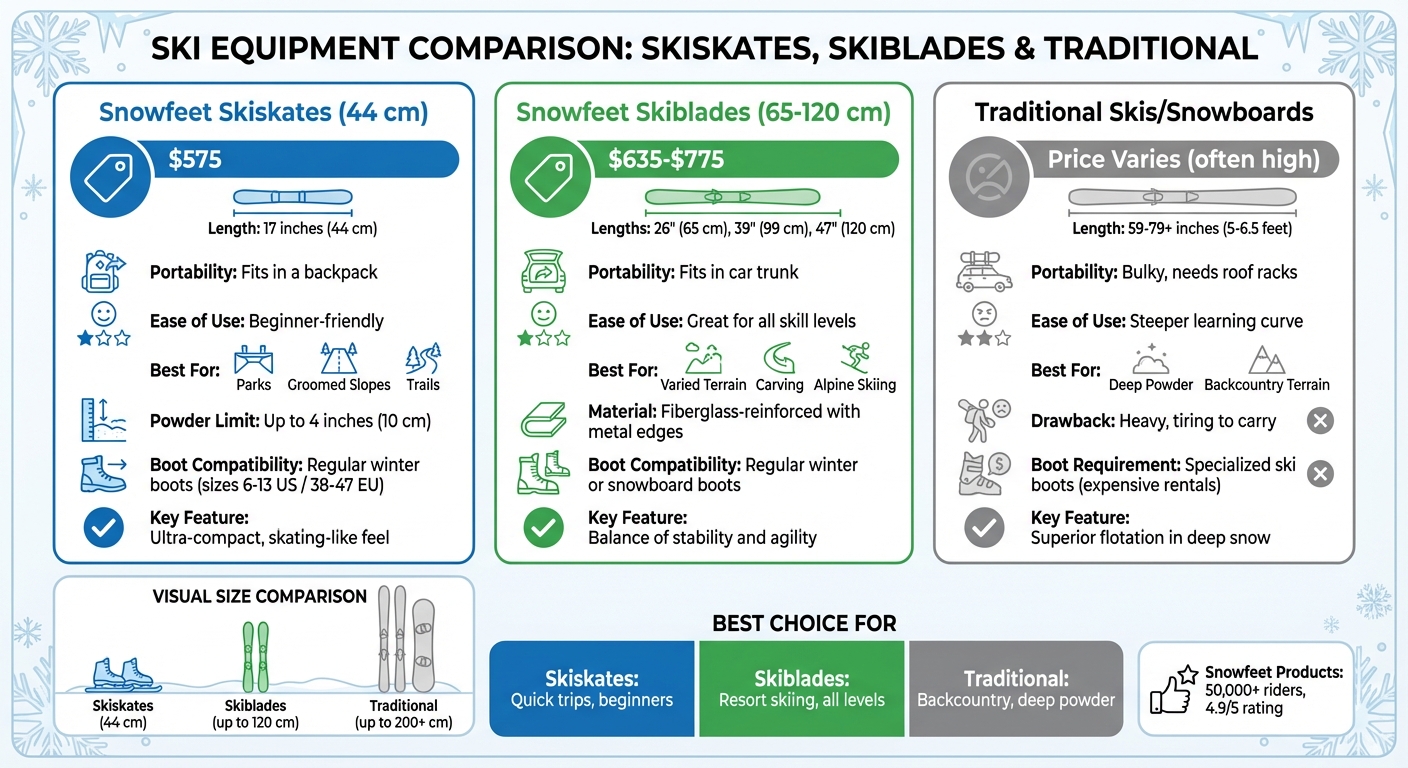
Snowfeet Skiskates vs Skiblades vs Traditional Skis Comparison Chart
Snowfeet* & Skiskates Complete Guide | All you need to know about Skiskating
1. Snowfeet* Skiskates (44 cm)
Snowfeet* Skiskates are shaking up the ski world with their compact, 17-inch (44 cm) design. Inspired by ice and inline skating, these skiskates bring a fresh twist to winter sports. If you're comfortable on hockey skates or rollerblades, you'll feel right at home.
Portability
Say goodbye to hauling oversized ski bags or struggling with roof racks. Snowfeet* Skiskates are small enough to fit in a regular backpack. Whether you're heading to a local hill after work or flying out for a weekend in the Rockies, their portability makes them a breeze to bring along.
Maneuverability
Their short length gives you incredible control. Stop easily with a hockey-style stop or use the built-in heel brake - both much simpler than managing the long edges of traditional skis. Plus, their lightweight design makes jumps and twists a lot more accessible. On crowded slopes, you can weave through traffic like a pro without worrying about bulky gear getting in the way.
"Absolute game-changer! They're light, fast, and fun to ride." – Nathan F.
Learning Curve
These skiskates are beginner-friendly and easy to master. Their forgiving design means you can hit the slopes without hours of practice. And if you take a tumble, the shorter length reduces the leverage on your legs, making falls less intimidating. They’re compatible with most winter boots or snowboard boots (sizes 6–13 US / 38–47 EU), so almost anyone can give them a try.
Terrain Versatility
Snowfeet* Skiskates are versatile enough for groomed slopes, snow parks, and even hiking trails. They handle light powder up to 4 inches (10 cm) well but aren’t suited for deep powder, steep runs, or rugged, ungroomed terrain. They're equipped with metal ski edges, so most ski resorts allow them. For extra speed and smoothness, consider the wax fiberglass-reinforced models. Priced at $575, they’re a great option for anyone looking to shake up their winter adventures. Keep reading to see how they compare to other Snowfeet* models!
2. Snowfeet* Skiblades (65 cm, 99 cm, 120 cm)
Snowfeet* Skiblades bring a fresh twist to skiing with their shorter, wider design. Available in lengths of 26 inches (65 cm), 39 inches (99 cm), and 47 inches (120 cm), they’re crafted from fiberglass-reinforced material and equipped with metal ski edges. This combo ensures durability without adding unnecessary bulk. Let’s break down how these features make them a game-changer.
Portability
When it comes to portability, Skiblades are a clear winner. The 65 cm model easily fits in most car trunks, and even the 120 cm version is far easier to manage than lugging around traditional 6-foot skis. Plus, their bindings are compatible with regular winter or snowboard boots, saving you from needing specialized footwear. With prices ranging from $635 to $775, they’re a solid option for anyone tired of hauling heavy gear up the mountain.
Maneuverability
These Skiblades are all about agility. The 65 cm version is perfect for sharp, quick turns, making it a favorite for terrain parks where precision is key. Meanwhile, the 99 cm and 120 cm models offer better stability at higher speeds while still maintaining excellent control. Thanks to their lightweight design, you’ll feel less fatigue, meaning more time carving up the slopes. Whether you’re into alpine skiing, freestyle tricks, or tackling moguls, these Skiblades can handle it all.
Learning Curve
If you’re new to skiing, Skiblades are a fantastic starting point. Their responsive handling makes them easy to control, and the 65 cm model is especially forgiving, helping beginners gain confidence fast. For seasoned skiers, the 99 cm and 120 cm options strike a great balance between the feel of traditional skis and the nimbleness of mini skis. Just remember to keep up with basic maintenance like waxing and edge tuning to keep them performing at their best.
Terrain Versatility
Skiblades aren’t just for one type of slope - they excel in a variety of conditions. The 65 cm version is ideal for crowded or tight spaces, while the 99 cm and 120 cm models provide better float in softer snow and shine on steeper runs. Their versatility makes them a go-to choice for skiers looking to explore everything from groomed trails to terrain parks. Snowfeet* is definitely shaking things up on U.S. slopes with these innovative designs.
sbb-itb-17ade95
3. Standard Skis and Snowboards
Traditional skis, typically ranging from 59 to 79+ inches, and snowboards are designed for stability and long runs through deep powder. While they have their strengths, they also come with some challenges.
Portability
At 5 to 6.5 feet long, traditional skis demand large bags or roof racks, making transport a hassle - especially if you’re driving a compact car or navigating public transit. Snowboards, though shorter, still require bulky storage and are far from convenient to carry around.
Maneuverability
Traditional skis and snowboards shine on wide, open runs, offering great stability. But their size can make quick turns and adjustments tricky, especially on crowded slopes. Compare that to the nimble Snowfeet* options, which are built for fast, precise movements in tight spaces.
Learning Curve
Let’s face it - traditional gear can be intimidating for beginners. It's heavy, awkward to handle, and often requires expensive lessons to master. That steep learning curve can turn off newcomers looking for a more accessible way to hit the slopes.
Terrain Versatility
Standard skis are a dream in deep powder or backcountry terrain, thanks to their length, which helps with flotation on ungroomed snow. But on groomed runs, they don’t offer much of an edge over shorter options. Plus, the added weight can lead to fatigue during long sessions. Snowboards perform well across various conditions and are great for tricks, but both skis and snowboards can struggle on steep or heavily mogul-covered slopes unless you’ve got advanced skills.
For many resort skiers, all that extra length feels like overkill. Snowfeet* products, on the other hand, bring a fresh approach - offering lightweight, portable, and versatile equipment that keeps your mountain adventures fun and hassle-free. They deliver the kind of control and convenience modern skiers crave, leaving traditional gear feeling a bit outdated.
Advantages and Drawbacks
Here’s how Snowfeet* stacks up against traditional skiing and snowboarding gear:
| Feature | Snowfeet* Skiskates (44 cm) | Snowfeet* Skiblades (65–120 cm) | Standard Skis/Snowboards |
|---|---|---|---|
| Portability | Ultra-compact and easy to carry anywhere | Compact and easier to transport than full-length skis | Bulky (5–6.5 feet), requiring special transport solutions |
| Maneuverability | Offers quick, playful movements with a skating-like feel | Great for fast turns, tricks, and carving | Prioritizes speed and stability, which can make turns slower |
| Terrain Use | Best for groomed slopes, parks, trails, and shallow powder (up to 4 inches) | Performs well on groomed slopes and light powder | Excels in deep powder and backcountry terrain |
| Ease of Learning | Easiest to learn - works with any winter boots and requires minimal technique | Very beginner-friendly with intuitive balance | Harder to learn due to heavier, more complex equipment |
| Drawbacks | Struggles in powder over 4 inches; not built for high-speed runs | Less portable than Skiskates; not ideal for very deep snow | Heavy, tiring to carry, and intimidating for beginners |
Snowfeet* gear brings a fresh perspective to mountain sports by blending portability and control into a compact package.
The Trade-Offs
Snowfeet* products strike a balance that’s hard to ignore. If you’re into deep powder or backcountry skiing, traditional skis still reign supreme with their superior flotation. But for most skiers - who stick to groomed runs, terrain parks, or resort skiing - Snowfeet* gear offers an unbeatable mix of fun and convenience.
- Skiskates (44 cm): Perfect for quick, hassle-free sessions. Their ultra-compact design makes them easy to carry and ideal for on-the-go adventures.
- Skiblades (65–120 cm): These provide a versatile middle ground, combining stability with agility. They’re great for carving turns and tackling varied terrain.
Why Snowfeet* Stands Out
Snowfeet* gear helps reduce fatigue, letting you enjoy longer days on the slopes without the strain of heavy equipment. Plus, they’re compatible with your own winter boots, saving you from costly rentals and the discomfort of traditional ski boots. This makes them especially appealing for beginners who want to ease into snow sports without feeling overwhelmed.
While Snowfeet* products aren’t built for deep powder (anything over 4 inches), they excel in resorts and parks. Their lightweight design and playful feel deliver a level of freedom and control that traditional skis and snowboards just can’t match. For those who value fun, ease, and accessibility, Snowfeet* sets a whole new standard.
Conclusion
Ski slopes are evolving, and Snowfeet* is at the forefront of this shift. Whether you opt for the compact Skiskates, measuring just 17 inches (44 cm) for nimble, skating-style runs, or the Skiblades, available in three sizes - 26 inches (65 cm) for beginners, 39 inches (99 cm) for intermediate riders, and 47 inches (120 cm) for advanced carving and tricks - you’re choosing gear that prioritizes fun, freedom, and easy performance. These options are designed to outshine traditional equipment in terms of convenience and agility.
With over 50,000 riders and more than 5,500 reviews averaging a stellar 4.9/5, Snowfeet* has built a reputation for lightweight, durable gear that performs exceptionally on groomed slopes and in terrain parks. Unlike traditional skis that can range from 5 to 6.5 feet long, these shorter skis reduce fatigue and make transportation much simpler, all while offering better control and maneuverability.
Traditional skis and snowboards may dominate in deep backcountry powder, but they’re often more than you need for resort skiing, park laps, or quick trips to the mountains. Snowfeet* products use their durable, lightweight construction to deliver the performance skiers want - without the bulk of wood-core alternatives.
FAQs
Which Snowfeet* size should I choose for my skill level?
Choosing the right Snowfeet* size comes down to your skill level and what you’re aiming to do on the slopes. If you’re a beginner or just looking to cruise casually, the shorter 65 cm option is ideal - it’s easier to control and makes turning a breeze. For those with a bit more experience, the 99 cm size offers a great balance of versatility and performance. Advanced skiers who crave speed and longer glides might want to go for the 120 cm Skiblades. Pick a size that suits your ability, and you’ll be set for maximum fun and steady improvement.
Are Snowfeet* allowed at most U.S. ski resorts?
There’s no definitive information about whether Snowfeet* are allowed at most ski resorts in the U.S. Policies on non-traditional ski gear, like Snowfeet*, can vary, so it’s best to contact individual resorts directly to confirm their rules.
What boots and bindings do I need for Snowfeet*?
Snowfeet* gear works with most regular winter boots, meaning you don’t need special ski boots. The adjustable bindings included with the products are designed to fit a variety of sizes, making them simple to use and accessible for many users - no extra equipment needed.











Leave a comment
This site is protected by hCaptcha and the hCaptcha Privacy Policy and Terms of Service apply.