



















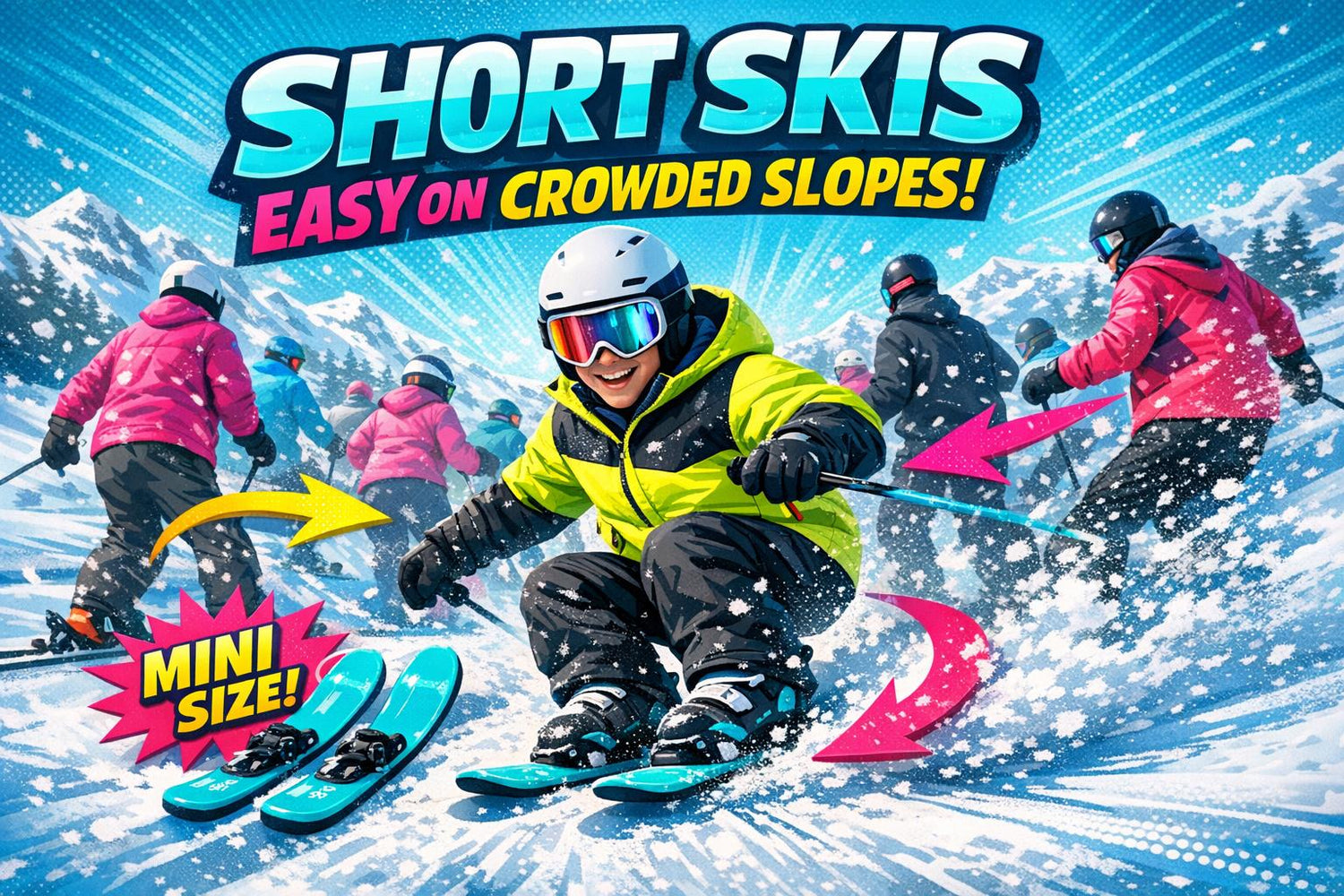
Short skis are a game-changer for skiing in crowded areas. They’re lighter, easier to control, and take less effort to maneuver compared to long skis. This means sharper turns, quicker stops, and less fatigue – all crucial when navigating tight spaces and avoiding collisions on busy slopes. Plus, they’re compact enough to fit in a backpack, so you don’t have to lug around bulky gear.
Here’s why short skis stand out:
- Better control: Short skis let you pivot easily for tighter, more precise turns.
- Less tiring: Their lighter weight means your legs won’t burn out halfway through the day.
- Safer skiing: Quick responsiveness helps you avoid obstacles and other skiers.
- Portable: Models like Snowfeet’s 44 cm Skiskates can even fit in a bag.
If you’re tired of wrestling with long skis on packed slopes, switching to short skis could make your day on the mountain smoother and more fun. Let’s break down how they work and why they’re a solid choice for crowded conditions.
Ultimate Short Skis for Any Mountain ⛷️🤩
Problems with Crowded Ski Slopes
Packed slopes can quickly turn a fun day on the mountain into a nerve-wracking experience. On crowded runs, traditional long skis often feel awkward and hard to manage. They’re designed for big, sweeping turns that need plenty of open space - something that's in short supply when the slopes are packed. Every turn becomes a test of precision as you try to avoid bumping into others.
The risks of collisions also go up in these conditions. Long skis demand more torque and effort to pivot, making it harder to react quickly when you need to. It’s all about physics: longer skis have a higher moment of inertia, which makes fast, sharp turns more difficult. That delay in response can be a real problem when you need to recover quickly. On a crowded slope, this lack of agility can turn into a safety concern.
Long skis also leave little room for error in tight spots. A small mistake can be tough to correct, and trying to make those rapid adjustments can wear you out fast. This is especially tough on beginners and intermediate skiers, who might already find navigating busy slopes intimidating. These challenges highlight why shorter skis are a game-changer in crowded conditions.
How Short Skis Work Better on Crowded Slopes
Short skis are a game-changer for navigating crowded slopes. Their compact design offers quick, precise handling, making them ideal for tight spaces. The secret lies in their responsiveness and ease of use, which can make a big difference when you're surrounded by other skiers.
Tighter Turns with Shorter Radius
Short skis are built for quick, sharp turns. Their design allows you to pivot effortlessly, making it easier to dodge obstacles or other skiers. This is especially handy on moguls, tree runs, or packed slopes where space is limited. Unlike longer skis, which require wide, sweeping arcs, short skis let you weave through tight spots without feeling clunky. This level of control can give you more confidence when precision is key.
Plus, shorter turns mean you're taking up less space on narrow pistes, which helps keep things safer for everyone. It's worth noting that about 10% of skiing accidents are due to collisions. With short skis, you can navigate more responsibly, reducing the risk of bumping into someone. And as a bonus, this agility makes skiing less exhausting - a topic we'll touch on next.
Lighter Weight Means Less Fatigue
Short skis aren't just easier to maneuver - they're also lighter. This reduced weight makes them less tiring to wear, especially when you're skiing all day. Lighter skis put less strain on your knees, helping you stay balanced and recover more easily if you stumble.
As Def Acres puts it:
"Super easy, super light; don't need to lug my skis around and you can wear them pretty much all day".
The lighter design isn't just about comfort - it's about keeping your energy up so you can enjoy the slopes longer without feeling worn out.
Easy to Carry and Transport
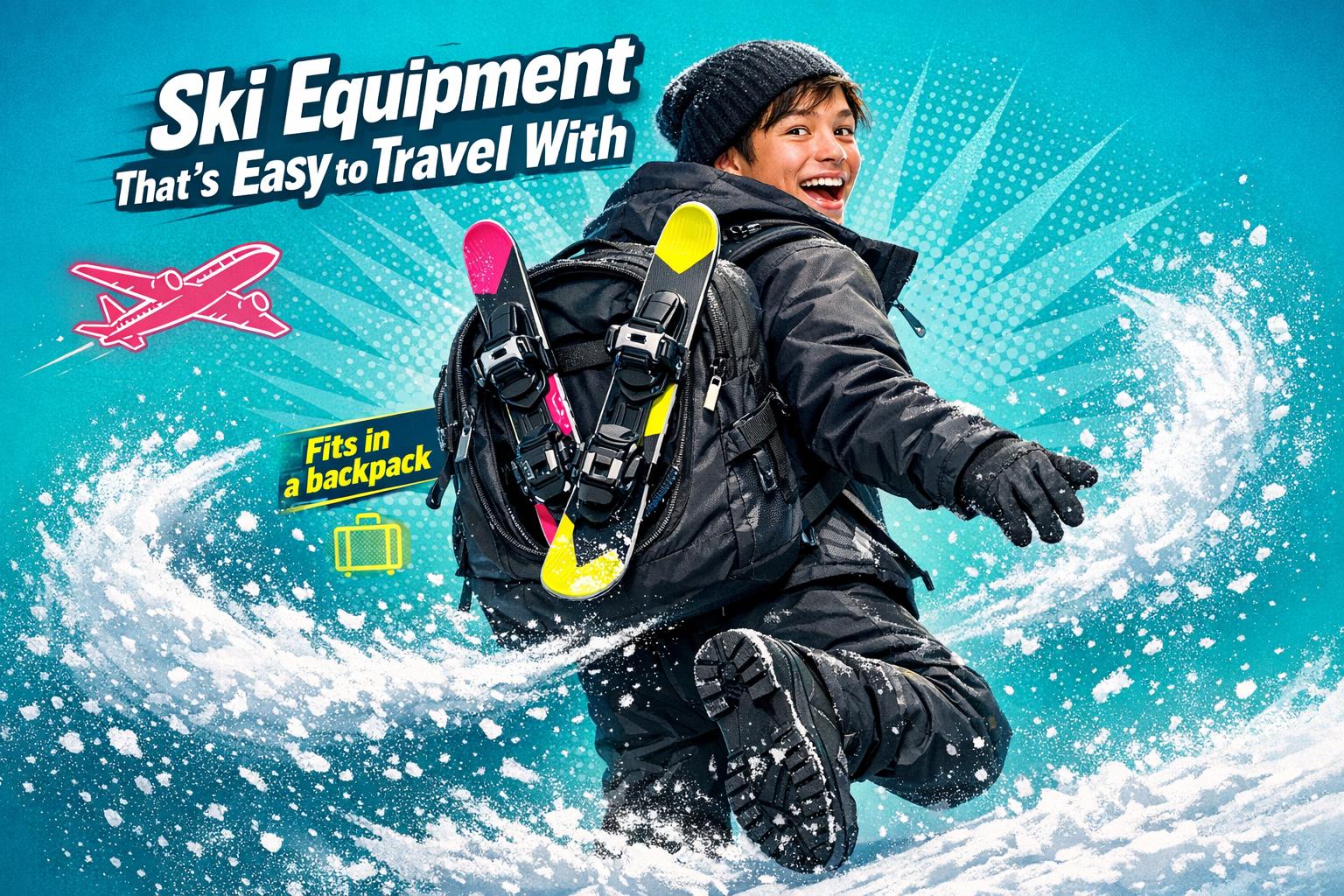
Another big perk of short skis is how portable they are. Models like Snowfeet* are compact enough to fit in a backpack, making them much easier to carry through crowded resorts or parking lots. Whether you're using the ultra-compact 44 cm Skiskates or the 120 cm Skiblades, these skis save you the hassle of dealing with bulky gear. No need for roof racks or oversized bags - just pack them up and go.
Short Skis vs. Traditional Long Skis
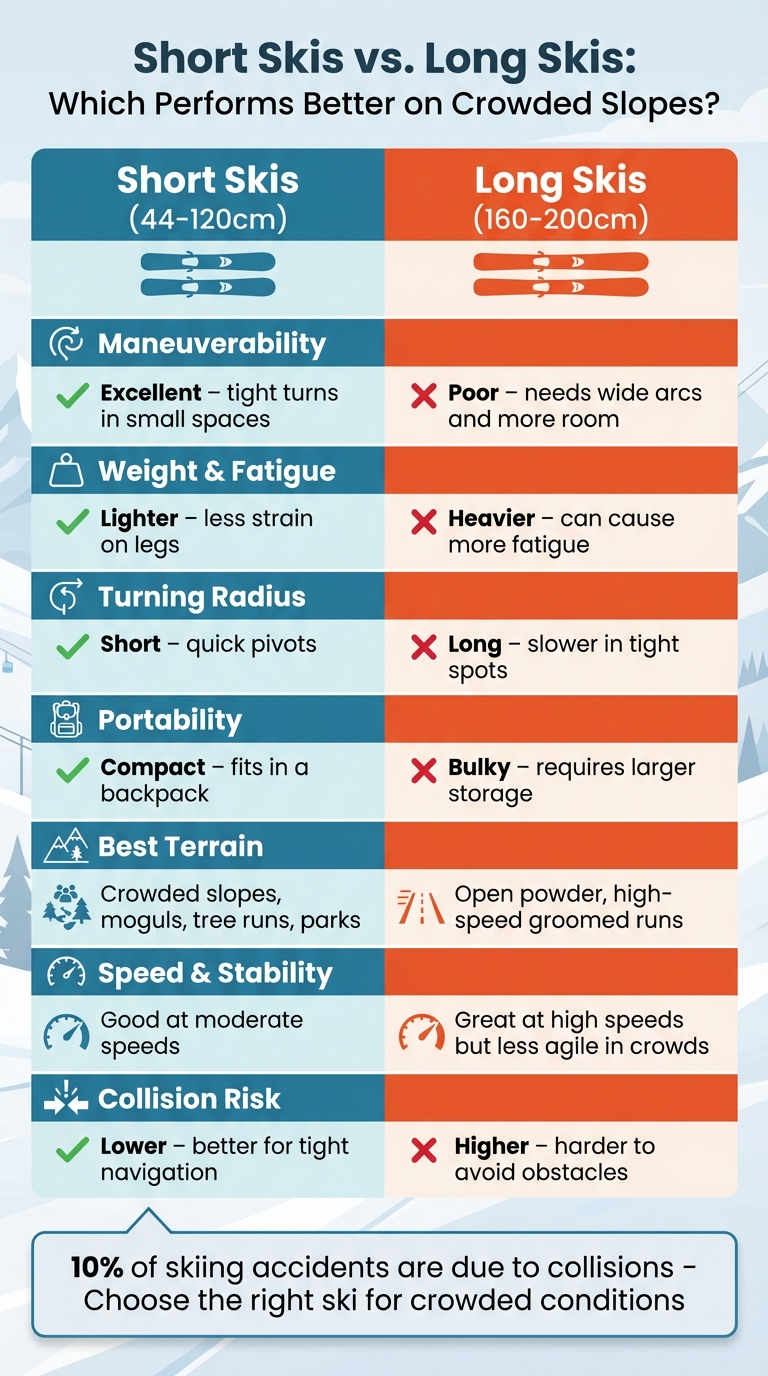
Short Skis vs Long Skis Comparison for Crowded Slopes
When it comes to crowded slopes, short skis have a clear edge over traditional long skis. Long skis, typically measuring between 63 and 79 inches (160 to 200 cm), are designed for speed and stability on open terrain. They shine on groomed runs and in deep powder, but in busy areas, they can be harder to manage.
Short skis, like Snowfeet* Skiblades (65–120 cm) and Skiskates (44 cm), are built for quick, precise movements. Their compact size makes them ideal for navigating tight spaces, allowing sharper, faster turns without needing wide arcs. On narrow, crowded runs, this agility becomes a game-changer, helping you steer clear of obstacles and safely maneuver through skier traffic. These features directly address the challenges of packed slopes, such as limited space, collision risks, and the need for fast reactions.
Another bonus? Their lighter weight reduces fatigue and makes them easier to carry. Short skis keep your legs fresher, which is especially handy when you're dodging unexpected hazards or adjusting to changing conditions. And when it’s time to pack up, short skis are a breeze - imagine slipping them into a backpack instead of wrestling with a bulky 71-inch pair of long skis.
Comparison Table: Short Skis vs. Long Skis
| Factor | Short Skis (Snowfeet*) | Traditional Long Skis |
|---|---|---|
| Maneuverability | Excellent – tight turns in small spaces | Poor – needs wide arcs and more room |
| Weight & Fatigue | Lighter – less strain on legs | Heavier – can cause more fatigue |
| Turning Radius | Short – quick pivots | Long – slower in tight spots |
| Portability | Compact – fits in a backpack | Bulky – requires larger storage |
| Best Terrain | Crowded slopes, moguls, tree runs, parks | Open powder, high-speed groomed runs |
| Speed & Stability | Good at moderate speeds | Great at high speeds but less agile in crowds |
| Collision Risk | Lower – better for tight navigation | Higher – harder to avoid obstacles |
These benefits make short skis a smart choice for anyone tackling busy slopes, offering better control, less fatigue, and easier transport. Perfect for staying safe and having fun in crowded conditions.
sbb-itb-17ade95
Tips for Using Short Skis on Busy Slopes
Want to navigate crowded slopes like a pro? Start with the basics: keep your knees bent and your center of gravity low. This makes you more stable and ready to react quickly. Using Snowfeet* gear, you can shift your weight and angle your skis to pivot smoothly through tight spots. Position your legs shoulder-width apart, with one foot slightly ahead of the other, for better balance as you weave through skier traffic.
Stopping quickly in busy areas is another must-have skill. Try a hockey-style parallel stop: shift your weight to your outside ski, press down on its edge, and use your knees to absorb the motion. The 44 cm Skiskates are perfect for this - they’re nimble, with precise edge control, so you can stop without sliding into someone else. Start practicing this move on gentle slopes to build confidence before hitting the busiest runs.
Avoid common mistakes that can throw you off balance. Over-edging in choppy snow? That’s a no-go - it can lead to chatter and loss of control. Instead, keep your shins relaxed and use light pole plants to stay in rhythm. Stay centered over your skis rather than leaning back. But when you’re dealing with rough patches, it’s okay to lean back slightly and lift your toes to keep the ski tips from digging in.
Short turns are a game-changer on packed slopes. They keep you compact, take up less space, and show consideration for others. Practicing tight-radius turns with awareness helps you avoid collisions. Snowfeet* Skiblades - available in 65 cm, 99 cm, and 120 cm lengths - are designed to make navigating crowded slopes easier and more controlled. Keep your head up, scan for obstacles, and maintain a steady rhythm to stay safe and in control.
Start on calm, groomed runs to get the feel of short skis before tackling busier terrain. Their quick response and forgiving design mean you can make small adjustments on the fly, even in chaotic conditions. With these tips, you’ll be confidently cruising through the busiest slopes with Snowfeet*.
Snowfeet*: The Best Short Skis for Crowded Slopes
Snowfeet* products are all about quick turns, lightweight handling, and smooth performance on packed slopes. With over 50,000 riders worldwide, these short skis have made their mark on busy mountains. Their lineup includes the super-compact 44 cm Skiskates for unmatched maneuverability, and Skiblades available in 65 cm, 99 cm, and 120 cm lengths, each offering a unique balance of agility and stability.
The 44 cm Skiskates are small enough to fit in a standard backpack, making them perfect for avoiding the hassle of bulky gear on crowded runs. For those looking for a mix of freedom and support, the 99 cm Skiblades are a go-to choice, suitable for all skill levels and versatile across various terrains. Meanwhile, the 120 cm Skiblades deliver fast descents and precise carving without the added weight of traditional skis. With these options, Snowfeet* ensures every skier finds the right fit for their needs.
Why Snowfeet* Outshines Traditional Ski Gear
Traditional skis, often over 170 cm in length, can feel cumbersome - especially on busy slopes. Snowfeet* flips the script by focusing on agility and ease of use, designed for quick turns, sudden stops, and navigating through crowded skier traffic.
"Short skis are in many cases better than long skis. They are suitable for a wider range of skiers than longer skis and they bring many more benefits on the slopes."
– Snowfeet Team
Beyond performance, Snowfeet* also delivers great value. The 99 cm Skiblades start at $675, and the 44 cm Skiskates at $575, both significantly cheaper than premium traditional skis, which often cost $800–$1,200 (bindings not included). Plus, the forgiving design makes learning a breeze - beginners can progress to intermediate skills in just a day. With an age range spanning 5 to 105 years and approval at most ski resorts, Snowfeet* products are accessible to nearly everyone.
Main Features of Snowfeet* Products
Snowfeet* uses high-quality wood cores for their premium models and fiberglass-reinforced materials for added durability. This sturdy build can handle everything from moguls to snow park features without breaking down. A major perk? The versatile boot compatibility. Whether you have ski boots, snowboard boots, or even winter shoes, Snowfeet* bindings adapt, letting you walk around the resort comfortably without needing a footwear change.
The compact size also offers better control on crowded slopes. Lighter weight means less fatigue, so you can keep riding longer without your legs giving out. One user, Cameron Asbell, summed it up perfectly:
"I didn't get injured because with how small they are it's easier to pick them up and it doesn't put stress on your knees as much also making it easier to control and regain balance when falling"
With over 5,500 reviews averaging 4.9/5, Snowfeet* has proven to be a top choice for skiers prioritizing agility and comfort. These ratings highlight its ability to outperform traditional skis, especially when it comes to crowded, fast-paced slopes.
More Confidence and Safety with Short Skis
Short skis can make a big difference when you're navigating crowded slopes. Their compact design gives you precise control, making it easier to handle busy conditions. With their quick responsiveness, you can smoothly execute tight turns and avoid obstacles or other skiers without breaking a sweat. This kind of control can help ease the nervousness that often comes with skiing in high-traffic areas.
Another big plus? Short skis are more forgiving. They're less likely to catch an edge or throw you off balance compared to longer skis. This forgiving nature is a lifesaver when weaving through tight spots or dealing with unexpected bumps. It reduces the chance of overcorrecting - something that often leads to spills. Instead, you can focus on enjoying your run, knowing your skis are working with you, not against you.
Take Snowfeet* models, for example. Their compact design, like the 44 cm Skiskates and 65–120 cm Skiblades, is perfect for narrow slopes. These skis not only take up less space but also promote better spatial awareness, helping you stay safe on crowded trails. Plus, their lighter weight means less fatigue, keeping your reflexes sharp and your confidence high all day long.
Conclusion
Navigating crowded slopes can be a challenge, but short skis make it easier - and more enjoyable. Thanks to their lightweight design, quick responsiveness, and tight turning radius, they offer control and maneuverability that traditional long skis just can't match. This added control not only enhances your skiing experience but also helps reduce the risk of collisions in busy areas.
On top of that, short skis are less tiring to use and much easier to carry around. Their agility makes them a practical choice for skiers looking to stay safe and have fun, even on the most packed slopes.
Snowfeet* has already empowered over 50,000 riders with gear designed for this very purpose. From the ultra-compact 44 cm Skiskates to the versatile 120 cm Skiblades, their products are built to tackle the challenges of crowded slopes head-on. With a stellar 4.9/5 rating from 5,500 reviews, it’s clear that Snowfeet* delivers on its promise of control and freedom.
So, if you’re tired of lugging around heavy gear or struggling to navigate through busy terrain, it might be time to switch things up. Snowfeet* offers the confidence, portability, and fun you need to turn chaotic slopes into smooth, enjoyable runs. Give them a try - you might just wonder why you didn’t make the switch sooner.
FAQs
How do short skis make crowded slopes safer and easier to navigate?
Short skis, like Snowfeet's skiblades and skiskates, are all about agility and control. Their compact design makes it easier to weave through tight spots and steer clear of obstacles on crowded slopes. Quick turns? No problem. These skis give you the precision you need to feel confident, even in busy areas.
Another bonus? They're lightweight and easy to carry, which means less strain on your legs and more energy to enjoy your time on the mountain. Whether you're a seasoned pro or just starting out, short skis offer a smooth, stress-free way to tackle modern ski resorts.
Why are Snowfeet* short skis easier to carry than traditional skis?
Snowfeet* short skis are built to be lightweight and compact, which makes them a breeze to carry and transport compared to traditional skis. Thanks to their smaller size, you can easily stash them in a car trunk, backpack, or even an overhead compartment when you're on the go. This portability is a game-changer for skiers who want convenience and prefer to skip the hassle of hauling around heavy, bulky gear.
Are short skis a good option for beginners on crowded slopes?
Short skis are a fantastic option for beginners, particularly on crowded slopes. Their smaller size makes them much easier to handle, giving new skiers more control and helping them gain confidence faster.
Unlike traditional long skis, models like Snowfeet Skiblades or Skiskates are perfect for making smooth turns and navigating tight spots, which can lower the chance of accidents. On top of that, they’re lightweight and easy to carry, making them a convenient and fun choice for skiers at any skill level.











Leave a comment
This site is protected by hCaptcha and the hCaptcha Privacy Policy and Terms of Service apply.