



















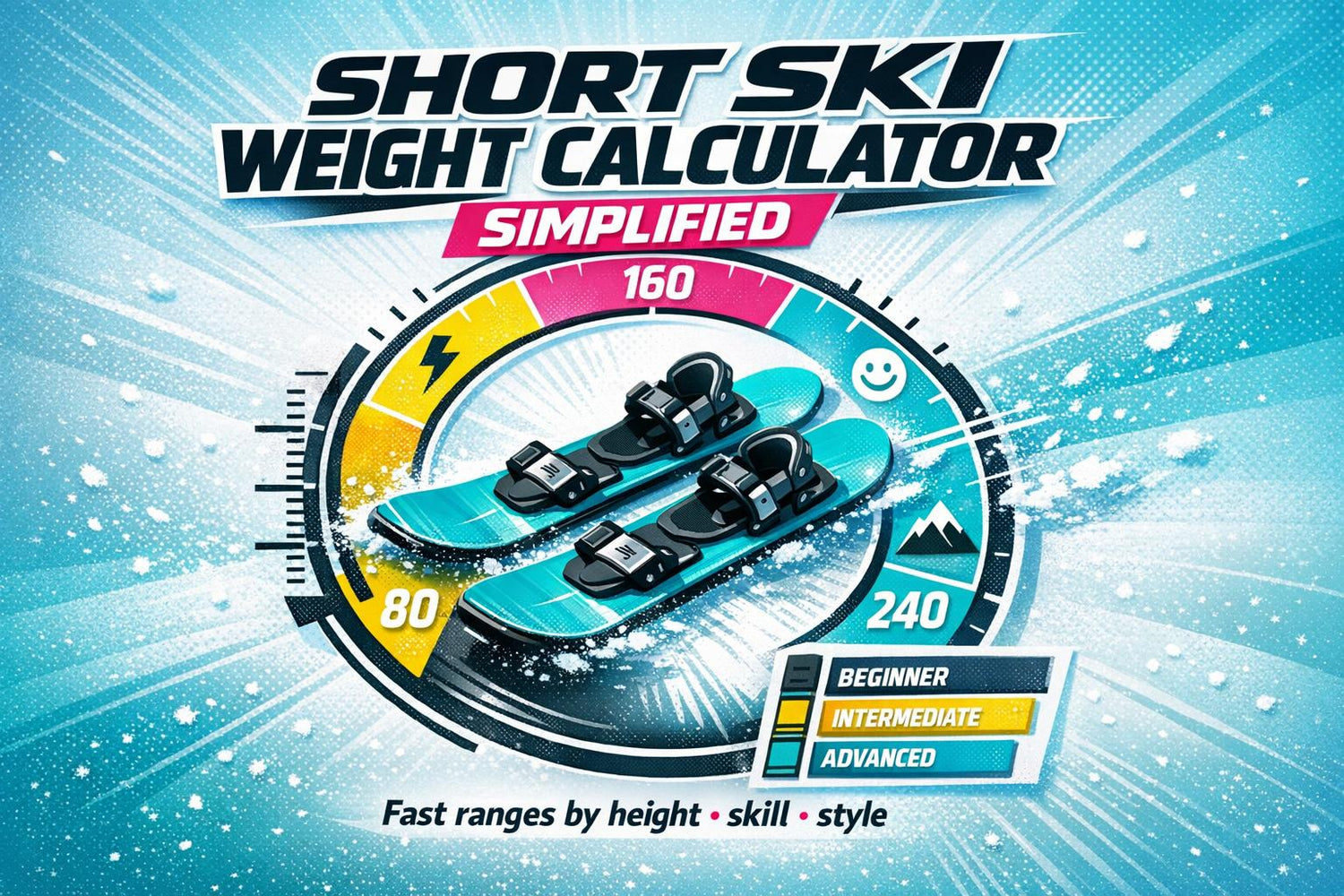
Short Ski Weight Guide
Picking the right ski setup can make a noticeable difference in how your day on the mountain feels. A Short Ski Weight Calculator helps narrow down a practical weight range for a pair of skis using a few simple details: your height, your ability level, and the kind of skiing you do most.
Why Ski Weight Matters
For short skis, weight affects agility, stability, and overall effort. Lighter skis are often a smart match for racing because they feel quick and responsive. Recreational skiers usually benefit from a middle ground that balances control and comfort. Backcountry riders may prefer a heavier setup when they want a more planted feel in mixed terrain and changing snow.
A Better Starting Point for Choosing Skis
This short ski weight calculator keeps things simple by using broad, practical guidelines instead of overwhelming you with technical specs. It also accounts for height and experience, since taller skiers may handle slightly heavier skis more comfortably, while advanced skiers often lean toward lighter gear for quicker movement.
If you’re comparing options online or in a shop, a reliable short ski weight calculator can give you a clearer starting point and help you choose skis that feel right for your goals.
FAQs
How does ski weight affect performance on short skis?
Ski weight has a big impact on feel. Lighter short skis usually feel quicker edge to edge and easier to flick through turns, which is why they’re often preferred for racing or more agile skiing. Mid-weight skis tend to offer a balanced ride for everyday resort use, while heavier skis can feel more planted and stable, especially in variable snow or backcountry conditions. The best choice depends on where you ski and how responsive or damp you want the skis to feel.
Why does height matter when estimating ski weight?
Height can be a useful starting point because taller skiers often have a larger frame and more leverage over the ski. That usually means they can handle slightly heavier skis without the setup feeling sluggish. It’s not the only factor, of course, but it helps fine-tune the recommendation when combined with skill level and intended use.
Do advanced skiers always want lighter skis?
Not always, but many advanced skiers do prefer lighter setups when they want quicker handling, faster transitions, and a more playful or agile feel. That said, some experienced skiers intentionally choose a heavier ski for stability, power, and confidence at speed. This calculator follows a general rule of thumb by nudging advanced users toward lighter options, while still keeping the recommendation tied to the type of skiing they plan to do.











Leave a comment
This site is protected by hCaptcha and the hCaptcha Privacy Policy and Terms of Service apply.