



















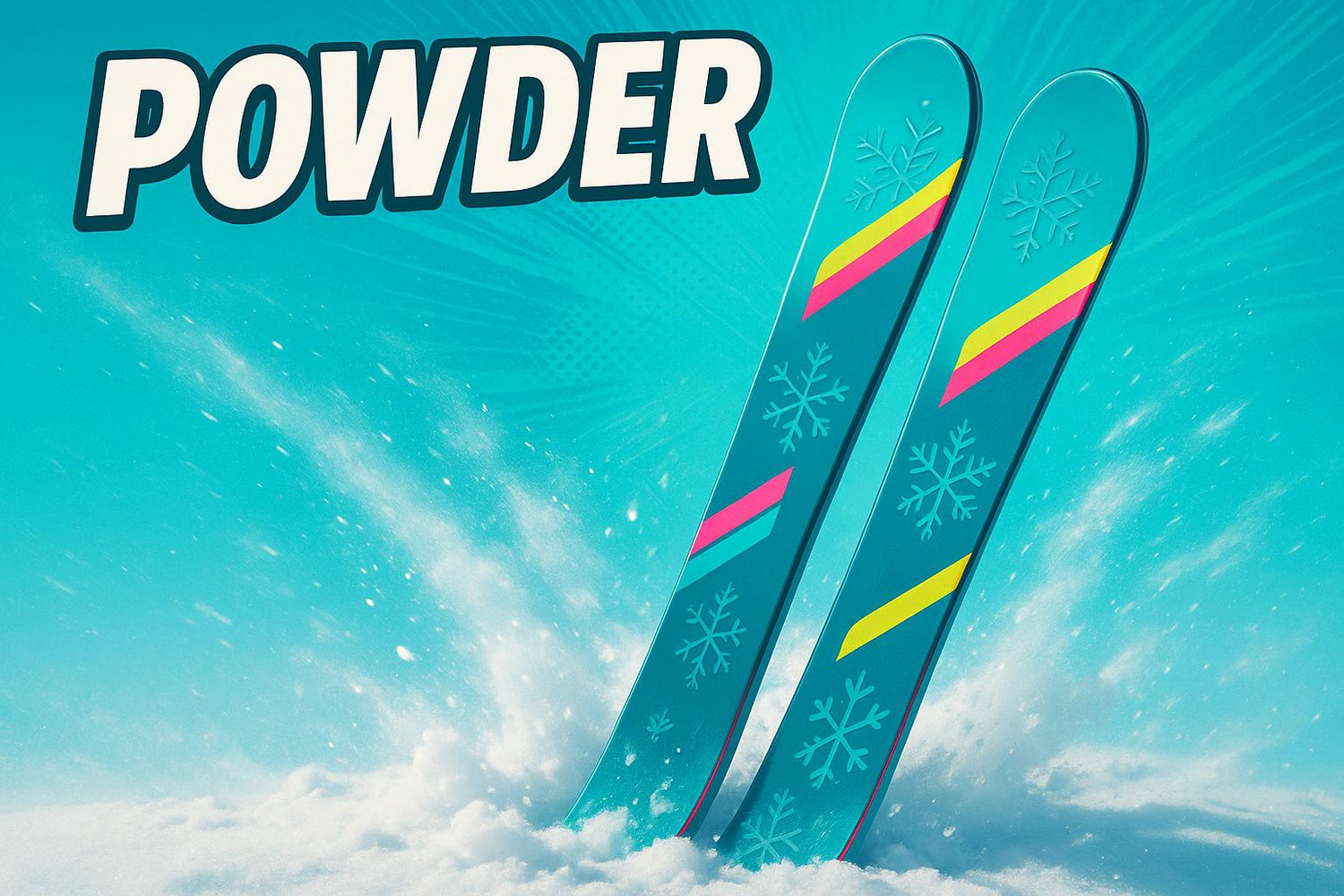
If you’re skiing in Utah or Colorado’s famous light, dry powder, your gear matters - big time. Traditional long skis can feel like a hassle in this type of snow, especially in tight tree runs or steep slopes. That’s where shorter skis, like Snowfeet models, come into play. They’re lighter, easier to control, and perfect for navigating the fluffy, airy powder these regions are known for.
Here’s what you need to know:
- Why Shorter Skis Work Better: They handle quick turns and light snow effortlessly, unlike longer skis that can drag or feel clunky.
- Key Features to Look For: Focus on ski length (shorter is better for powder), width (not too wide for agility), and weight (lighter means less fatigue).
- Top Picks: Snowfeet offers models ranging from 44 cm to 120 cm, each tailored for specific powder conditions and skill levels.
Short skis aren’t just practical - they’re fun. Whether you’re a beginner or a seasoned skier, they make powder days smoother and more enjoyable. Let’s break down why they’re the best choice for these iconic slopes.
How Inland Powder Affects Ski Selection
What Makes Utah and Colorado Powder Different
The powder in Utah and Colorado has a special quality that sets it apart from the snow in coastal regions. Thanks to the high altitudes and dry climate of the Rocky Mountains, the snow here is lighter and drier. This creates that dreamy, weightless glide skiers often describe as "floating on air." Coastal snow, on the other hand, forms in warmer, wetter conditions, making it heavier and more compact.
Why does this matter? Well, skiing on dry powder is a whole different game. Instead of cutting through dense snow, you're gliding over soft, loose crystals. This calls for a specific type of ski that complements these conditions, as we’ll break down next.
Problems with Traditional Long Skis in Light Powder
The light, airy powder of Utah and Colorado can reveal the limitations of traditional long skis. Big-name brands like Rossignol, K2, and Volkl often design their powder skis for wetter, denser snow or mixed conditions. While great for those scenarios, these skis can feel clunky and less effective in the dry powder of inland terrain.
Longer skis can be especially tricky in tight tree runs or steep slopes, where quick turns and agility are crucial. Their extended length makes it harder to pivot quickly, and their wider waists - designed for heavier snow - can create unnecessary drag in the lighter powder.
That’s why shorter skis, like Snowfeet* models, are a better match for inland powder. They’re built to handle dry, loose snow with ease, offering better maneuverability, simpler transport, and a smoother experience for skiers of all skill levels.
Short Skis vs. Long Skis
What to Look for When Choosing Skis
If you're planning to conquer the legendary powder of Utah and Colorado, picking the right skis is crucial. It's not just about going for the longest or widest pair. Instead, focus on three key factors - length, width, and weight - that make all the difference in light, dry snow conditions. Let’s break it down.
Ski Length: Short vs. Long Skis
Long skis might be great for stability and speed, but they’re not ideal for the light, fluffy powder found inland. Traditional powder skis often exceed 170 cm, which can make them cumbersome in the tight, tree-filled terrain you’ll encounter in places like Utah and Colorado.
Shorter skis, like Snowfeet* models ranging from 44 cm to 120 cm, shine in these conditions. They allow for quick, effortless turns, making it easier to weave through dense trees or avoid obstacles. Plus, their reduced swing weight means less energy spent on each turn, so you can keep carving well into the afternoon without feeling wiped out.
Ski Width and Powder Performance
Width is another biggie when it comes to powder skiing. The ski’s waist width, in particular, has a huge impact on how it handles different terrains and snow types. While wider skis offer more surface area for flotation, they can feel sluggish and require more effort to maneuver, especially in dry, light snow like Colorado’s famous "champagne powder".
In these colder, drier regions, ultra-wide skis aren’t as necessary. Many skiers prefer narrower skis as their go-to option, finding them easier to control in tight spaces like tree runs or mogul fields. Snowfeet* models strike a great balance here - they’re wide enough to provide solid flotation but narrow enough to deliver the quick, agile turns you need for navigating back bowls or tree-lined trails.
Weight and Portability
Weight is a game-changer, especially for long days on the mountain. Traditional skis can weigh anywhere from 8 to 12 pounds per pair, and that extra heft can wear you out fast.
Snowfeet* short skis are lightweight and compact, making them much easier on your legs. You’ll notice the difference when hiking to untouched powder stashes or carrying your gear through the lodge. Their compact size also means they’re easy to pack - just toss them in a regular backpack or small travel case. For backcountry adventures, where every ounce matters during uphill climbs, these lightweight skis give you the energy to enjoy the ride down. Plus, their portability opens up terrain that might be too challenging to reach with heavier, traditional skis.
Why Snowfeet* Short Skis Work Best for Inland Powder
When it comes to the legendary powder of Utah and Colorado, Snowfeet* short skis offer a unique edge over traditional long skis and snowboards. These compact skis are specially designed to thrive in the light, dry snow that makes places like Park City, Vail, and Powder Mountain a dream for powder lovers. Their design isn't just about size - it's about delivering precision and control in challenging inland powder conditions.
Better Maneuverability and Control
Navigating the tight tree runs and varied terrain of Utah and Colorado requires quick reactions and sharp control. Traditional powder skis, with their longer lengths, can feel awkward and sluggish when you need to make split-second decisions.
This is where Snowfeet* short skis truly shine. Their shorter length means less swing weight, making turns faster and smoother. Take the 99 cm model, for example - it allows for instant turn initiation, something that’s much harder to achieve with longer skis. Whether you’re gliding through fresh powder, tackling wind-crusted patches, or weaving through tight couloirs, their tighter turning radius gives you the confidence to explore challenging terrain with ease. In short, they make tricky spots feel like your personal playground.
Lightweight and Compact Design Benefits
Powder skiing at high altitudes is no walk in the park - it’s physically demanding. Traditional skis, with their bulk and weight, can add to the fatigue during long days on the slopes or backcountry adventures. Snowfeet* short skis, on the other hand, are ultra-light, helping you conserve energy so you can ski longer and explore more.
The compact size isn’t just great for skiing - it’s a game-changer for transport. Forget about lugging around bulky gear. These skis are easy to carry, making it simpler to reach those untouched powder stashes that others might skip because of the hassle.
Easy to Learn and Fun for All Skill Levels
Thanks to their agile and lightweight design, Snowfeet* short skis make powder skiing approachable for everyone. Their intuitive handling means you can spend more time enjoying the snow and less time wrestling with heavy, cumbersome equipment. The shorter length helps you feel more connected to the snow, making it easier to find your rhythm and build confidence on the slopes.
Another bonus? Snowfeet* models are designed to work with regular winter or snowboard boots. This lowers the cost and effort of getting into powder skiing, making the sport more accessible. Even better, experienced skiers often find that these short skis reignite their love for the slopes. The freedom to experiment with quick turns, playful spins, and even small jumps adds a whole new layer of fun.
For groups with varying skill levels, Snowfeet* short skis are a fantastic choice. They allow everyone - families, friends, beginners, and seasoned skiers alike - to enjoy the same powdery conditions together, without anyone feeling left out or overwhelmed.
sbb-itb-17ade95
Comparing Snowfeet* Models for Powder Skiing
Choosing the right Snowfeet* model depends on your skiing style, skill level, and the type of powder you’ll encounter. Let’s break it down.
| Model | Length | Price (USD) | Best For | Powder Performance | Skill Level |
|---|---|---|---|---|---|
| Skiskates | 44 cm | From $390 | Tricks, maximum agility | Light powder, quick turns | Beginner to Advanced |
| Skiblades | 65 cm | From $450 | Carving, park riding | Good floatation, responsive | Beginner to Intermediate |
| Skiblades/Powder | 99 cm | From $490 | Deep powder, all-mountain | Excellent floatation | Intermediate to Advanced |
| Short Skis | 120 cm | $690 | High-performance skiing | Best stability in deep snow | Advanced |
Below, we’ll dive into what makes each model shine in inland powder conditions.
Skiblades: 65 cm, 99 cm, and 120 cm Options
The 65 cm Skiblades are perfect for Utah’s famously light powder. Their compact design makes them incredibly nimble, ideal for skiers looking to tackle fresh snow without the bulk of traditional skis. These are best for powder depths of about 8–10 inches, where their quick edge-to-edge transitions provide excellent control. If you’re skiing in areas like Utah or Colorado, these skiblades offer a balance of agility and responsiveness.
The 99 cm Skiblades, including the Snowfeet* Powder model, are a step up for deeper powder days. With added length, they offer more surface area, which means better floatation on snow. This makes them a great choice for resorts like Alta or Wolf Creek, where powder can get deep. Despite the added length, they’re still much easier to handle than traditional powder skis, which often measure 180 cm or longer.
For those seeking ultimate stability, the 120 cm Short Skis are the go-to option. They provide unmatched floatation and control in deep snow while still being more maneuverable than standard long skis. These are built for advanced skiers who want to push their limits in challenging powder conditions.
Skiskates: 44 cm for Maximum Agility
The 44 cm Skiskates are all about fun and agility. Their compact size allows for quick, sharp turns, giving you a playful, skateboard-like feel on the slopes. While they aren’t designed for deep powder, they’re excellent for light to mixed snow conditions. Plus, their portability and wood core construction ensure durability and responsiveness, making them a versatile choice for varied terrain.
Snowfeet* Powder (99 cm) for Deep Snow
If deep powder is your thing, the 99 cm Snowfeet* Powder model is your best bet. Built specifically for the deep, fluffy snow found in places like Utah and Colorado, this model blends floatation and maneuverability. Its wider profile and specialized shape help you stay on top of snow depths ranging from 12–18 inches - perfect for resorts like Snowbird or Steamboat Springs. While it offers the stability of traditional powder skis, it’s far easier to handle, making it a dream for powder enthusiasts.
Whether you’re carving through light snow or tackling deep powder, there’s a Snowfeet* model tailored to your adventure.
How Snowfeet* Beats Traditional Skis and Snowboards
Snowfeet* brings a fresh twist to powder skiing by focusing on lightweight, compact performance. In places like Utah and Colorado, where dry, light powder dominates, traditional long skis and snowboards can feel clunky. Snowfeet* steps in as a sleek, practical alternative that’s built to handle these conditions with ease.
| Feature | Snowfeet* Products | Traditional Powder Skis | Snowboards |
|---|---|---|---|
| Length | 44–120 cm | 170–190+ cm | 150–165 cm |
| Weight | Lightweight design | Heavy, bulky equipment | Generally heavier as a single item |
| Portability | Fits in a standard backpack | Requires car racks or special transport | Typically needs car racks or bags |
| Learning Curve | Easy, intuitive control | Steep learning curve | Moderate to steep learning curve |
| Maneuverability | Exceptional agility in tight spaces | Limited in tight terrain | Less agile on mixed terrain |
| Boot Compatibility | Works with winter, ski, and snowboard boots | Requires specific ski boots | Requires snowboard boots |
Let’s break down where Snowfeet* shines compared to traditional skis and snowboards.
Snowfeet* vs Traditional Powder Skis
Traditional powder skis are great for wide-open spaces, but they can feel like a hassle when you’re navigating tighter spots like tree runs or moguls. That’s where Snowfeet* steps up. Their compact design makes sharp turns and quick adjustments a breeze, giving you the confidence to handle variable terrain without the bulk.
Another bonus? Snowfeet* works with regular winter boots, so you’re not stuck lugging around heavy ski boots. This not only simplifies your setup but also cuts down on fatigue, letting you spend more time enjoying the slopes. And if you’re heading off the beaten path to find untouched powder, their portability is a game-changer. No need for roof racks or oversized bags - they fit right in your backpack.
Snowfeet* vs Snowboards for Powder
Snowboards have their perks, especially when it comes to floating on deep powder, but they can feel limiting in terms of maneuverability. With both legs locked into a single board, quick, independent movements are off the table. Snowfeet*, on the other hand, combines the playful feel of short skis with the freedom to move each leg independently, making them perfect for navigating mixed terrain.
If you’ve ever ice-skated or played hockey, you’ll feel right at home with Snowfeet*. The motion is intuitive, meaning you can pick it up faster than you might with a traditional snowboard. And when conditions change - think fresh powder in the morning and packed runs by afternoon - Snowfeet* stays responsive, so you’re not stuck struggling to steer.
Another standout feature? Boot flexibility. Snowboards require specific boots that can be pricey and, let’s face it, not always comfortable. Snowfeet* works with the winter boots you already own, saving you money and making it easier to jump into the action, especially for newcomers trying powder skiing for the first time.
In short, Snowfeet* offers a lightweight, versatile, and easy-to-use option that outperforms traditional skis and snowboards in many key areas.
Choose Snowfeet* for Your Next Inland Powder Adventure
If you're heading to the powder-filled slopes of Utah or Colorado, Snowfeet* might just be your new best friend. Known for its lightweight design and incredible maneuverability, Snowfeet* is perfectly suited for the unique conditions of inland powder. Unlike traditional long skis, Snowfeet* opens up possibilities for exploring terrain that’s usually off-limits, giving you the freedom to carve your own path.
Snowfeet* gear ranges in length from 44 cm (17 in) to 120 cm (47 in), compared to the 170–190+ cm (67–75+ in) length of typical skis. This compact size isn’t just convenient - it completely changes the game. Whether you’re floating through Utah’s famous champagne powder or weaving through Colorado’s backcountry bowls, every ounce of weight saved and every bit of added agility makes a difference.
Another perk? Snowfeet* works with your regular winter boots and fits neatly into a standard backpack. That means less hassle on powder days and more time on the slopes. Its compact design and independent leg movement make it a standout choice for everything from tight tree runs in Park City to wide-open bowls in Aspen. Forget the bulky gear - Snowfeet* gives you versatility and freedom that traditional skis and snowboards simply can’t match.
The lineup includes models for all kinds of powder adventures. The Snowfeet* Powder (99 cm / 39 in) is built specifically for powder and starts at $490. The Skiblades come in two sizes - 65 cm (26 in) starting at $450 and 99 cm (39 in) for $490. For those who want a longer option, the Short Skis (120 cm / 47 in) deliver stability and performance for $690. Even the ultra-compact Skiskates (44 cm / 17 in), priced from $390, pack a surprising punch in the right conditions.
One of the best things about Snowfeet* is how easy it is to pick up. While traditional powder skiing can take years to master, Snowfeet* feels intuitive, especially if you’ve ever ice skated or played hockey. It’s a great option for beginners looking for a fun way to hit the slopes or seasoned skiers wanting to try something new.
With Snowfeet*, inland powder skiing becomes all about fun, freedom, and performance. It’s a fresh approach that leaves outdated gear in the dust. Why stick to the old ways when Snowfeet* offers something so much better?
FAQs
What makes Snowfeet short skis better than traditional long skis for dry, light powder skiing in places like Utah or Colorado?
Snowfeet Short Skis: Perfect for Powder Days
Snowfeet short skis, much like Skiblades and Skiskates, are built to shine in the dry, light powder often found in places like Utah and Colorado. Their compact size - ranging from 44 cm to 120 cm - makes them incredibly easy to maneuver. This means you can make sharp turns and stay in control, even in fluffy powder, without breaking a sweat.
One of their standout features is their lightweight build. This not only cuts down on fatigue but also boosts agility, making them a great choice for skiers of all skill levels. Whether you're a beginner or a seasoned pro, you'll appreciate the freedom and fun they bring without the bulk of traditional skis. Plus, compared to the long skis from brands like Rossignol or Atomic, Snowfeet short skis are a breeze to carry, store, and transport - perfect for anyone who values convenience.
If you're after a playful and hassle-free way to enjoy powder terrain, Snowfeet short skis are an exciting alternative to standard skiing gear.
How do Snowfeet short skis perform compared to snowboards in light inland powder?
Snowfeet short skis, including their Skiblades and Skiskates, are a solid option for tackling light inland powder. Thanks to their compact size and lightweight design, they’re perfect for making quick, precise turns. This makes them super easy to handle, even in tight spots or uneven terrain.
When compared to snowboards, Snowfeet short skis stand out for their sharp responsiveness and agility. They give you more control over your movements, especially in powdery conditions. If you’re after a smooth and confident ride through dry, light inland powder, these skis are a great pick.
Can I use Snowfeet short skis with regular winter boots, and what are the benefits?
Yes, you can use Snowfeet short skis with regular winter boots, like snow boots or snowboard boots. No need for those specialized alpine ski boots - how convenient is that? This makes Snowfeet a game-changer for skiers of all skill levels.
Why is this so great? For starters, it makes skiing way more approachable, especially if you're just starting out. Plus, it’s a comfier and more flexible option overall. Whether you’re zipping down the slopes for fun or gliding through powdery backcountry trails, Snowfeet short skis combine simplicity and performance in one neat package.












Leave a comment
This site is protected by hCaptcha and the hCaptcha Privacy Policy and Terms of Service apply.