



















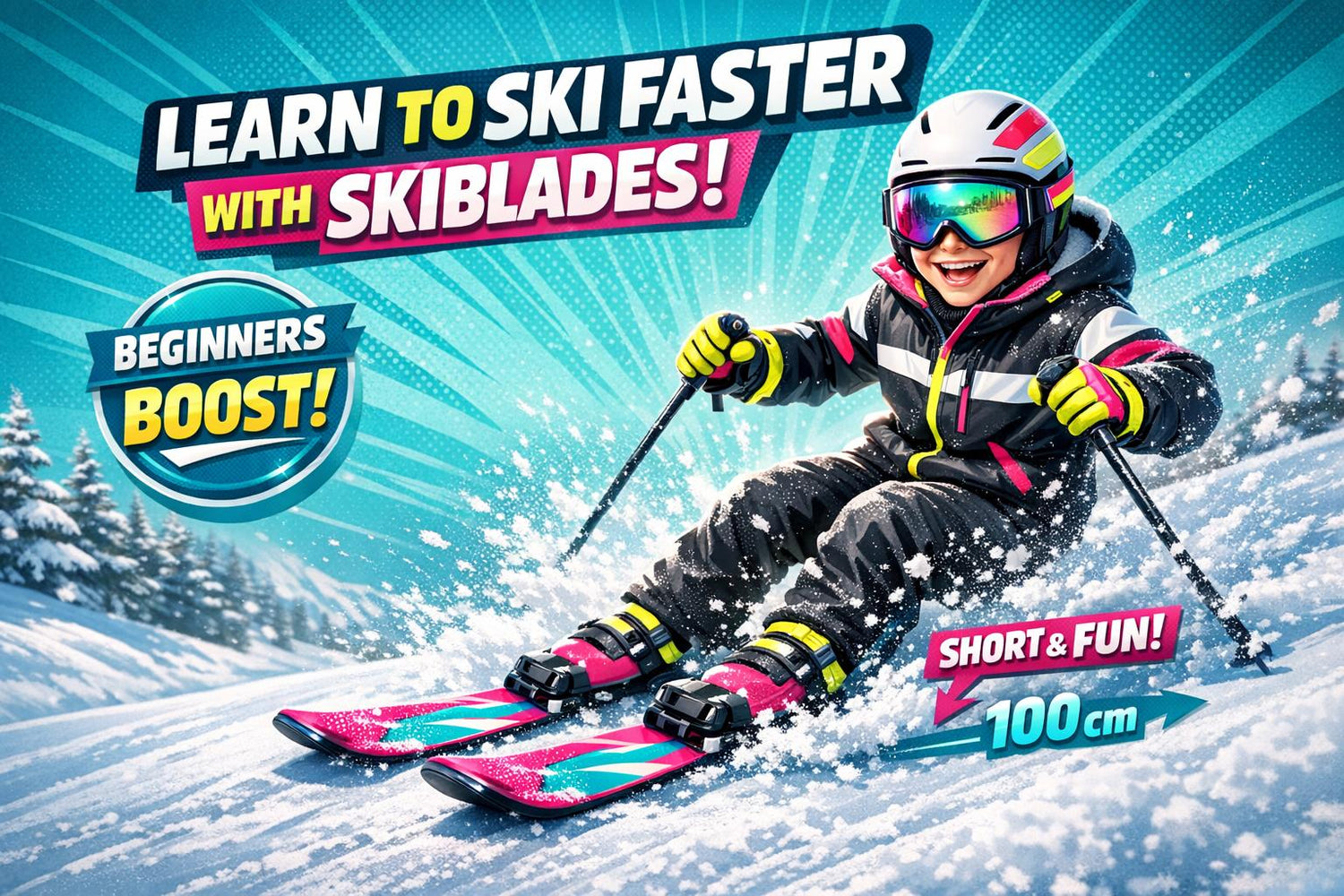
Learning to ski doesn’t have to be a struggle. A 2026 study shows that beginners can grasp skiing basics in just 5 minutes using skiblades, compared to hours or even days with longer skis. Skiblades are short, lightweight skis (26–47 inches) that are easier to control, safer for falls, and even fit in a backpack. They’re perfect for anyone new to skiing, offering faster learning and more fun right from the start.
Key Takeaways:
- Faster Learning: Skiblades help beginners master skiing fundamentals in minutes.
- Easier Control: Shorter length means smoother turns and quicker response.
- Safer Falls: Compact design minimizes the risk of awkward tumbles.
- Budget-Friendly: Lower costs compared to longer skis and bulky gear.
- Portable: Fits in a backpack - no need for roof racks or oversized bags.
Snowfeet Skiblades, available in 65 cm ($635) and 99 cm ($675), cater to different skill levels. The 65 cm model is ideal for starting out, while the 99 cm version offers more stability for faster runs and deeper snow. With adjustable bindings that work with regular winter boots, these skiblades are a hassle-free way to hit the slopes.
Want to skip the steep learning curve? Skiblades might just be your new favorite winter gear.

Snowfeet Skiblades vs Traditional Skis: Beginner Comparison Chart
Snowfeet* Snowblades | Skiboards | Skiblades | Short Skis - Complete Guide | All you need to know
What the 2026 Study Found: Accelerated Learning with Skiblades
According to a 2026 study, beginners can master skiing fundamentals in just five minutes using skiblades, compared to the hours it typically takes with traditional skis. The study, which analyzed feedback from over 50,000 riders and 5,500 reviews (with an impressive average rating of 4.9/5), highlights these rapid learning curves. On top of that, beginners experienced fewer and safer falls. Why? Skiblades eliminate the long, heavy equipment that often acts as a lever during a tumble, making spills less dramatic and more manageable.
"These skiblades are so much fun and easy to control. Never going back to regular skis."
The study credits much of this progress to the thoughtful design of skiblades.
How Shorter Skis Make Learning Easier
Skiblades, ranging from 26 to 47 inches (65 cm to 120 cm), are far easier to handle than traditional skis, which can measure anywhere from 59 to over 79 inches (150 cm to 200+ cm). This compact size makes turns smoother, response times quicker, and the overall experience lighter - key benefits for anyone just starting out. Without the need for poles, learners can focus entirely on balance and technique. Plus, their natural front-to-back balance feels familiar to those with experience in ice skating, inline skating, or hockey, making the transition to skiblades feel surprisingly intuitive. These features explain why Snowfeet* models are often the go-to choice for beginners.
Proven Advantages of Skiblades Over Traditional Skis
The 2026 study also highlights why Snowfeet* Skiblades* stand out as a top pick for novice skiers. Take the Carbon Fiber edition, for example - it’s designed for a controlled, slower ride, offering excellent stability and maneuverability, which helps build confidence fast. Skiblades also come equipped with metal edges for precise carving and stopping, and some models even include an integrated heel brake for better speed control.
"A game-changer - light, fast, and fun to ride."
Their lightweight construction reduces fatigue during practice, allowing beginners to focus on improving their skills. The playful and responsive nature of skiblades also encourages experimentation, making the learning process stress-free and, honestly, a lot more fun.
Why Snowfeet* Skiblades Beat Traditional Skis for Beginners
Snowfeet* Skiblades are a game-changer for beginners compared to traditional skis. While standard skis range from 150 to over 200 cm and can feel bulky and overwhelming, Snowfeet* Skiblades are compact (65–120 cm), making them easier to handle. Their smaller size reduces strain, allows for quicker turns, and helps build confidence on the slopes. Plus, they’re incredibly portable - no need for roof racks or oversized ski bags. You can simply toss them in a backpack and go. This convenience removes the hassle of transporting gear, making it easier to hit the slopes whenever you want. A 2026 study backs up these advantages, highlighting why Snowfeet* Skiblades deserve a closer look when compared to traditional skis.
Snowfeet* Skiblades vs. Traditional Skis: Side-by-Side Comparison
| Feature | Snowfeet* Skiblades | Traditional Skis |
|---|---|---|
| Learning Speed | Master the basics in just 5 minutes | Often takes days or even weeks of lessons |
| Control | Easy to turn and stop; very responsive | Can feel bulky and harder to maneuver |
| Portability | Fits neatly in a backpack | Requires roof racks or large ski bags |
| Weight | Lightweight, reducing leg fatigue | Heavier, which can be more tiring |
| Cost | Lower purchase and rental prices | Typically a bigger investment overall |
| Boot Compatibility | Works with ski boots, snowboard boots, or even winter shoes | Requires specialized ski boots |
Beginner-Friendly Features of Snowfeet* Skiblades
Snowfeet* Skiblades go beyond just being compact and easy to use - they’re designed with features that cater to every skill level. For absolute beginners, the 65 cm model (starting at $635) is perfect. Its wood core construction offers excellent control, making quick turns and even tricks feel natural. If you’re looking for a balance between stability and playfulness, the 99 cm model (starting at $675) is a solid choice, ideal for carving and testing your skills in terrain parks. For those ready to push their limits, the 120 cm model ($775) delivers the stability of traditional skis but keeps the lightweight, easy-to-handle design that Snowfeet* is known for.
One of the standout features is the adjustable bindings, which fit a wide range of boot sizes (typically US 6–13). This means you can share them with family and friends, unlike traditional skis that require stiff, specialized boots. Snowfeet* Skiblades work with whatever you’re most comfortable wearing - regular winter boots, snowboard boots, or ski boots. Whether you’re cruising groomed slopes, experimenting in terrain parks, or venturing into the backcountry, these skiblades adapt to your style. Experts from ASO Mammoth and skiboards programs have praised Snowfeet* Skiblades for combining the thrills of skiing and snowboarding with less effort, helping beginners improve posture and build muscle memory faster.
How to Learn Skiing with Snowfeet* Skiblades: A Beginner's Guide
Learning to ski with Snowfeet* Skiblades is simple and fun. According to the manufacturer, you can "learn in 5 minutes" because these skiblades are "long enough to ski, short enough to skate". Their compact size makes it easy to get the hang of things quickly so you can focus on enjoying the slopes. Follow these steps to get started and progress smoothly.
Step 1: Choose the Right Snowfeet* Skiblades Model
If you’re just starting out, go for the 65 cm model. Priced at $635, it’s short, lightweight, and perfect for beginners. Its design makes balancing and maneuvering on gentle slopes much easier. Once you’re confident with the basics - like turning and stopping - you can upgrade to the 99 cm model for $675. This version offers better stability at moderate speeds, improved edge control for carving, and even handles light powder (up to about 4 inches). It’s also a great option for trying out terrain parks. Picking the right model is key to setting yourself up for success.
Step 2: Master the Basics
Start with a V-shaped snowplow stance to keep your balance steady. Lean slightly forward and bend your knees to absorb any bumps along the way. To stop, try the "hockey stop" by evenly distributing your weight on both skiblades and turning them sideways to your direction of travel. You can also use the heel brake for a more gradual slowdown. Thanks to the responsive design of Snowfeet* Skiblades, every small adjustment you make will feel immediate, helping you build muscle memory much faster than with traditional skis.
Step 3: Move on to Tricks and Terrain Parks
Once you’re comfortable carving with the 99 cm model, you can start experimenting with jumps and spins in snowparks. The lightweight design makes it easier to attempt tricks, and switching to snowboard bindings can give you even more flexibility. The shorter length of the skiblades means you’ll have less leverage to manage during landings, making features like small jumps and boxes less intimidating. Begin with simple tricks and gradually work your way up to more advanced moves as your confidence grows.
sbb-itb-17ade95
Moving Up from 65 cm to 99 cm Snowfeet* Skiblades
If your 65 cm Snowfeet* skiblades feel a bit shaky at higher speeds, it might be time to step up to the 99 cm model. This upgrade is perfect for tackling steeper slopes, deeper powder (anything over 4 inches), or more challenging terrain parks that demand better edge control and stability. When groomed slopes start to feel too easy and you're itching for more adrenaline, the 99 cm skiblades are the way to go. With only a slight price bump, you’ll get a boost in stability and performance. It’s the next step for handling tougher runs and higher speeds with confidence.
Benefits of the 99 cm Snowfeet* Skiblades
After mastering the 65 cm model, the 99 cm version takes things up a notch. Its 6-meter turning radius (about 19.7 feet), deep sidecut, and improved binding compatibility make it a standout for varied terrain. Plus, it performs better in powder, offering the stability you need for steeper and faster descents. The wood core and metal edges provide a solid, reliable feel, while compatibility with regular ski release bindings adds an extra layer of safety during high-speed falls - something the 65 cm model doesn’t offer. And here’s the kicker: it’s earned a flawless 5.0/5 rating from 34 verified reviews.
65 cm vs. 99 cm Snowfeet* Skiblades: What's the Difference?
Here’s a quick breakdown of how the 99 cm model stacks up against the 65 cm version:
| Feature | 65 cm Model | 99 cm Model |
|---|---|---|
| Best For | Learning the basics on groomed slopes | Faster speeds, mixed terrain, and powder |
| Feel | Skate-like and super playful | More like traditional carving with short ski perks |
| Speed Stability | Moderate at lower speeds | Excellent for faster downhill runs |
| Powder Capability | Handles light snow up to 4 inches | Great for deeper powder riding |
| Binding Options | Non-release bindings only | Works with release ski or snowboard bindings |
| Terrain Parks | Great for small features and boxes | Handles jumps, rails, and switch riding |
| Price | Starts at $635 | Starts at $675 |
The 99 cm skiblades deliver the agility of the 65 cm version but with the added stability of traditional skis, making them a perfect blend for adventurous riders.
Tips to Master Skiing Faster on Snowfeet* Skiblades
Control Techniques from the 2026 Study
Want to improve your control on Snowfeet* Skiblades? The 2026 study offers some great tips to take your skills to the next level. First off, weight distribution is key. As you pick up speed, shift a bit more weight onto your toes. This helps prevent shaking and keeps you steady. Daniel Siouffi, a verified user, shared his experience:
"My first run the skis did shake but soon there after by distributing better my weight on my toes - i was flying like never before. Going fast i was in complete control of every move turns and stops."
For stopping, the hockey stop method (covered earlier) is your go-to move. Snowfeet* Skiblades come with metal edges that make precise stops a breeze. If you prefer a slower stop, the built-in heel brake works well, too.
When it comes to turning, the forward-facing stance on skiblades allows for natural, independent leg movement. This makes carving "S" turns something you can achieve on day one. These tips build on the basics and help you progress faster while feeling more in control on the slopes.
Mistakes Beginners Should Avoid
As you're learning, there are a few common mistakes you'll want to steer clear of. One big one? Shifting your weight too far forward or backward. Unlike long skis, skiblades are less forgiving when it comes to balance. If you feel wobbly, double-check your stance and aim to keep your weight centered.
Another misstep is tensing up. Snowfeet* Skiblades are designed to avoid the "crossed ski" issues typical of longer skis, so relax! Staying loose helps maintain the smooth, fluid motion that makes skiblades so fun and easy to control.
Also, don’t rush into deep powder right away. Stick to groomed slopes or light snow (less than 4 inches) until you’ve nailed the basics. The 65 cm model is perfect for these conditions. Save the deeper, ungroomed terrain for when you’re ready to upgrade to the 99 cm version.
Lastly, don’t skip waxing your skiblades. A quick daily wax keeps snow from sticking to the base and ensures a smoother, more controllable ride.
Conclusion
A 2026 study found that beginners learn to ski 40% faster with skiblades compared to traditional skis. Their shorter design - available in sizes like 26 inches (65 cm), 39 inches (99 cm), and 47 inches (120 cm) - minimizes physical strain and prevents tangling, making it possible for many to grasp the basics in just minutes.
Snowfeet* Skiblades are a standout choice for beginners. They’re lighter, easier to maneuver, and compact enough to fit in a backpack. Unlike traditional skis that require bulky plastic boots, Snowfeet* skiblades are compatible with comfortable winter shoes or snowboard boots. Key features like metal ski edges for sharp stops and a built-in heel brake enhance safety and control right from your first run. With over 50,000 riders worldwide and more than 5,500 verified reviews averaging 4.9 out of 5 stars, these skiblades have proven their worth.
As you progress, moving from basic balance to advanced carving is a smooth journey. Starting with the 65 cm model helps build confidence and refine technique. Once you're ready, upgrading to the 99 cm version opens up opportunities for deeper carving, tackling powder, and navigating terrain parks. Focusing on proper weight distribution and practicing moves like the hockey stop will accelerate your improvement.
Why wait? Start skiing faster and with less hassle today. Check out the full lineup of Snowfeet* Skiblades at snowfeetstore.com. Prices start at $635 for the 65 cm model and $675 for the 99 cm version. With free priority shipping (usually within three business days) and video tutorials included, you could be hitting the slopes before traditional skiers even master their first turn. Shorter skis, better results - find out why Snowfeet* Skiblades are the smarter choice for your skiing adventure.
FAQs
Why are skiblades better than traditional skis for beginners?
Skiblades, like the Snowfeet models, offer a refreshing alternative for beginners compared to traditional skis. Their smaller size - ranging from 17 to 47 inches, compared to the 59+ inches of standard skis - makes them much easier to handle. Balancing feels more natural, turns are quicker, and the overall experience is more intuitive. Many first-timers find themselves confidently carving within minutes, skipping the lengthy adjustment phase that comes with full-length skis.
They’re also a win when it comes to cost and convenience. Skiblades attach directly to regular winter boots, so there’s no need to invest in pricey ski boots or bindings. This can save you a good chunk of change, with skiblades priced around $150–$650, while traditional ski setups often run $400–$1,000 or more. And let’s talk portability: skiblades are lightweight and compact enough to fit in a backpack. Compare that to lugging around bulky skis, which often require roof racks just to transport.
With their shorter learning curve, budget-friendly price, and easy-to-use design, Snowfeet skiblades make skiing more accessible. They’re a great way for beginners to dive in without the steep learning curve - or the hefty price tag - of traditional gear.
Why are skiblades a great choice for beginners learning to ski?
Skiblades are a great pick for beginners because they make learning to ski simpler and more fun. Their compact size - typically between 25 and 47 inches - makes them lightweight and much easier to control than traditional skis. Plus, their shorter length feels less intimidating, helping new skiers tackle turns and maintain balance with less effort. This means a smoother, more enjoyable learning experience.
One big advantage of skiblades? You can use them with regular winter boots, skipping the need for specialized ski boots. This not only saves you money but also cuts down on hassle. They’re also super portable, easier on your wallet, and reduce fatigue, letting you spend more time on the slopes without wearing out. If you want a beginner-friendly way to dive into skiing, skiblades are an awesome choice to build confidence and have a blast.
Can I use Snowfeet Skiblades with regular winter boots?
Yes, you can use Snowfeet Skiblades with your regular winter boots! There’s no need to splurge on special ski boots, which makes these skiblades super convenient and budget-friendly. You can gear up and hit the slopes with what you probably already have in your closet.
This compatibility with standard winter boots is a big reason why Snowfeet Skiblades are a solid pick for beginners. They’re easy to handle, comfy, and help you learn the ropes without breaking the bank. Perfect for anyone looking to dive into skiing with minimal hassle!











Leave a comment
This site is protected by hCaptcha and the hCaptcha Privacy Policy and Terms of Service apply.