




















If you're wondering how to pick the right short skis for powder or groomed runs, here's the quick answer: ski width matters. Wider skis (over 100 mm) float better in powder, while narrower ones (under 85 mm) are perfect for sharp turns on groomed trails. Snowfeet's short skis (65–120 cm) combine wide bases for stability with the agility of shorter lengths, giving you the best of both worlds.
- Powder Skiing? Opt for wider models like the 99 cm Powder Skis or 120 cm Short Skis for better flotation.
- Groomed Trails? Narrower options like the 65 cm Skiblades make edge transitions faster.
- All-Mountain? The 99 cm Skiblades balance performance on both terrains.
Prices range from $550 to $775, making them a lightweight, portable, and cost-effective alternative to bulky, expensive traditional skis. Whether you're a beginner or an expert, there's a model to match your style.
Let’s break down how ski width impacts performance and how to choose the right setup for your needs.
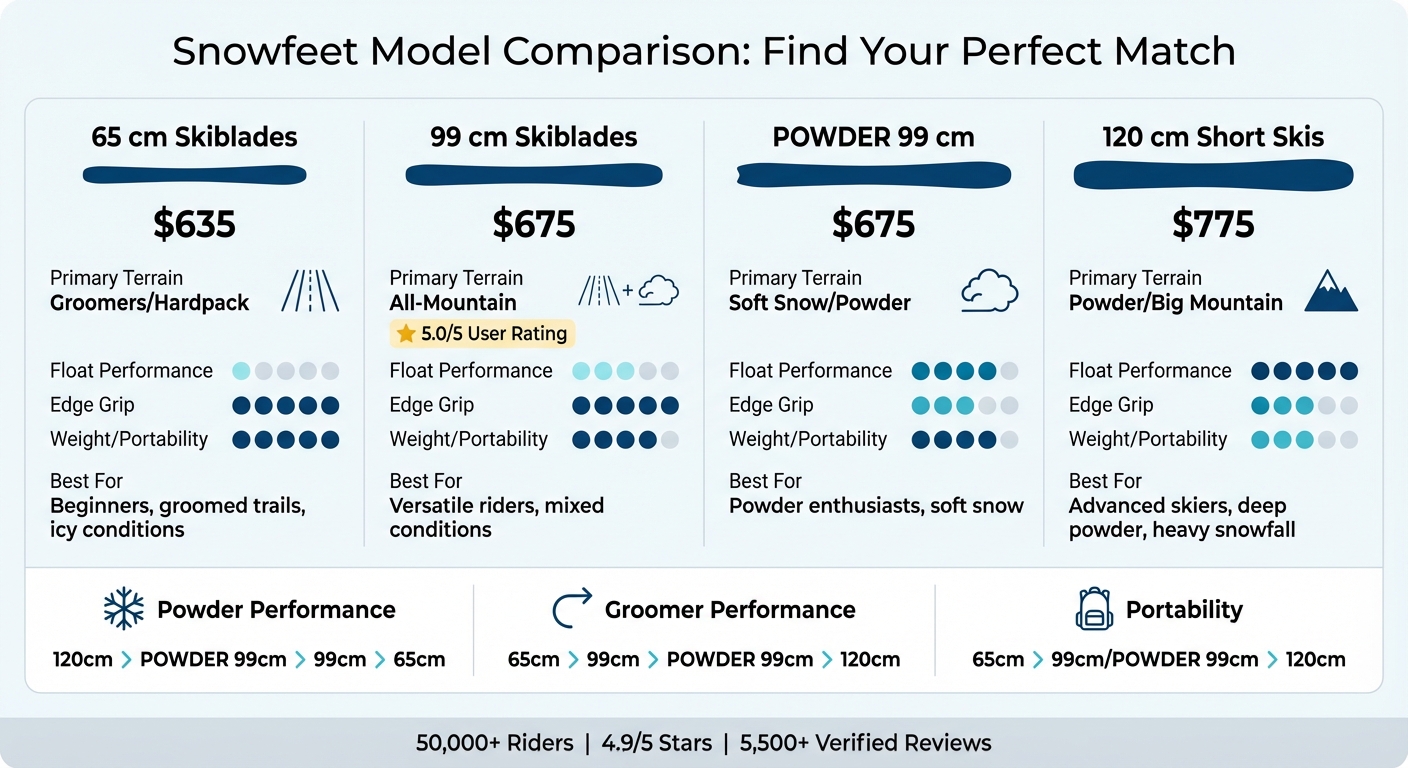
Snowfeet Short Ski Model Comparison Guide for Powder and Groomed Terrain
How to Choose the Right Ski Width
How Ski Width Affects Performance in Powder and on Groomers
The width of your skis - measured at the narrowest point underfoot, called the waist - has a huge impact on how they perform in different snow conditions. Wider skis spread your weight over a larger surface, helping you float in deep powder. On the flip side, narrower skis focus your weight, making them ideal for quick, precise turns on groomed trails.
Typically, powder skis have a waist width over 105 mm, while groomer skis sit under 85 mm. All-mountain skis fall somewhere in the middle, usually between 88 and 100 mm. Snowfeet* takes a unique approach, offering compact designs ranging from 65 to 120 cm. These skis strike a balance between flotation and agility, a key part of their design philosophy.
Wider Skis for Deep Powder Snow
When you're skiing in deep powder, having more surface area is a game-changer. Wider skis help distribute your weight evenly, keeping you from sinking. As Eli Bernstein explains:
"The more surface area a ski has, the better you'll stay on top of powder".
Snowfeet* offers models like the POWDER (99 cm) and the standard 99 cm Skiblades, which deliver excellent flotation in powder. Their compact size also makes them nimble, perfect for tight spots and tricky terrain. Jeff Thompson sums it up well:
"The wider the ski, the better the ski is going to perform in powder and variable snow".
Narrower Skis for Groomed Runs
On groomed trails, narrower skis are the way to go. They allow for faster edge transitions and sharper, more precise turns. Eli Bernstein explains it like this:
"It's easier to tip a narrow ski onto its edge than it is a wider one... this is the reasoning behind why race skis are so narrow".
The Snowfeet 65 cm Skiblades are specifically designed for groomed runs. Their slim waist and short length make edge transitions lightning-fast, all while staying lightweight and portable. You can even stash them in a backpack for easy transport. As the Snowfeet* team puts it:
"Narrower skis have less material between the edges, which facilitates faster and more responsive edge transitions. Wide skis can feel sluggish in this respect".
That quick response gives you confidence and control, whether you're carving at high speeds or tackling icy patches. Plus, you get all the precision of traditional skis without the hassle of bulky, heavy gear.
Choosing Ski Width Based on Your Skill Level and Style
Your skill level and skiing style play a huge role in deciding the right ski width for you. While snow conditions matter, your experience on the slopes is just as crucial. Beginners typically need skis that help build confidence, while seasoned skiers look for gear that matches their more aggressive style. Picking the right width ensures you’ll have a better time out there, whether you’re cruising groomers or tackling powder.
Best Options for Beginners
If you’re new to skiing, the Snowfeet 65 cm Skiblades are a solid pick. Why? They’re lightweight, easy to maneuver, and help you improve faster. Their compact design reduces fatigue, making them easier to carry and control. Plus, they grip well on groomed runs, even on icy patches. At $635, they’re an investment in accelerating your learning curve. As you gain confidence and start craving more speed and stability, you’ll likely want to upgrade to something more advanced.
Best Options for Experienced Skiers
For those who’ve mastered the basics and want to take on more challenging terrain, advanced models are the way to go. The Snowfeet 99 cm and 120 cm Skiblades are designed for skiers who want versatility and performance. The 99 cm model offers a balanced all-mountain experience, while the 120 cm version is all about control and speed.
As experienced skier Daniel Siouffi puts it:
"Going fast I was in complete control of every move, turns, and stops".
The 120 cm model, priced at $775, is perfect for aggressive carving and quick, precise movements. Both models are ideal for skiers who want the responsiveness of shorter skis without the bulk of traditional 170 cm+ lengths. With a 5.0/5 user rating, they’ve proven to handle a variety of snow conditions with ease.
sbb-itb-17ade95
Snowfeet* Model Comparison for Different Snow Conditions
Performance Comparison of Snowfeet* Models
Finding the right Snowfeet* model comes down to matching it with the terrain you'll tackle. For those sticking to groomed runs and hardpack, the 65 cm Skiblades are your go-to option. They deliver excellent edge grip but struggle in deep powder, where they tend to sink right away.
If you're looking for versatility, the 99 cm Skiblades are a solid choice. These are great for all-mountain use, offering enough surface area to float in softer snow while staying agile on groomed trails. No wonder they’ve earned a perfect 5.0/5 rating from users who love their adaptability across various conditions.
For powder seekers, the POWDER 99 cm model is designed with specialized rocker profiles to keep you floating effortlessly, minus the bulk of traditional long skis. On the other hand, if you're skiing in areas with heavy snowfall, like Washington or Alaska, the 120 cm Short Skis provide unmatched stability and flotation. Their wider design handles dense, wet snow with ease, though they can feel less responsive for quick turns on groomed runs. Off-piste, however, they shine in variable conditions.
With over 50,000 riders and a stellar 4.9/5 star rating from more than 5,500 verified reviews, Snowfeet* has carved out a unique way to enjoy the slopes. Check out the table below for a quick breakdown of each model's strengths.
| Model | Price | Primary Terrain | Float Performance | Edge Grip | Weight/Portability |
|---|---|---|---|---|---|
| 65 cm Skiblades | $635 | Groomers/Hardpack | Low (sinks in deep snow) | High | Very High |
| 99 cm Skiblades | $675 | All-Mountain | Moderate | High | High |
| POWDER 99 cm | $675 | Soft Snow/Powder | High | Moderate | High |
| 120 cm Short Skis | $775 | Powder/Big Mountain | High | Moderate | Moderate |
Conclusion: Select the Right Snowfeet* Width for Your Needs
Picking the right ski width comes down to where you ride and how you like to ski. If you're into carving on groomed trails or hardpack, narrower options like the 65 cm Skiblades are perfect for delivering that sharp edge control you need. On the other hand, if powder days are your thing, go for wider models like the 120 cm Short Skis or the 99 cm Powder version. These give you the float you need in deep snow while still keeping things light and maneuverable.
Snowfeet* are designed to be versatile, so you don’t have to clutter your gear closet with multiple setups. Take the 99 cm Skiblades, for instance - they handle groomed runs and softer snow equally well, making them a great all-terrain option without the hassle of lugging around traditional skis.
Your experience level plays a role, too. Beginners will appreciate the stability and ease of the 65 cm Skiblades, which feel much less intimidating than longer skis. Meanwhile, seasoned skiers can go for the 99 cm or 120 cm models, which offer a nice mix of versatility and performance for everything from powder to all-mountain adventures. These shorter skis strike a great balance between agility and control, so you don’t have to compromise.
Whether you’re chasing fresh powder in Alaska or carving perfect turns in Colorado, there’s a Snowfeet* model that matches your style - and probably saves you some cash compared to traditional gear.
FAQs
How do I choose the best Snowfeet ski width for my skill level and terrain?
Picking the right Snowfeet ski width comes down to your skill level and the type of terrain you enjoy most. For beginners or those sticking to groomed runs, narrower skis like the 65 cm Skiblades are a great fit. They’re lightweight, easy to control, and make quick turns a breeze. On the other hand, if you’re more experienced or love venturing into powder, wider options like the 99 cm or 120 cm Skiblades offer better stability and float. For those seeking even more versatility, the 100 cm Walkski is another solid choice for seasoned riders.
Here’s a simple breakdown:
- 65 cm Skiblades: Perfect for beginners learning the ropes and staying in control.
- 99 cm Skiblades: Ideal for intermediate skiers who want a balance of stability and agility.
- 120 cm Skiblades or 100 cm Walkski: Designed for advanced skiers tackling steep slopes or deep powder.
One of the best things about Snowfeet gear is how compact and portable it is compared to traditional skis. They’re easy to carry, but still deliver excellent performance on the slopes. So, choose a model that matches your skill level and favorite terrain, and you’ll be ready for an awesome day on the mountain!
What makes Snowfeet skis better than traditional skis?
Snowfeet skis, including the Skiblades and Walkski models, pack the performance of traditional skis into a much smaller, lighter design. With lengths ranging from 38 cm to 120 cm, these skis are incredibly easy to control. Whether you're carving quick turns on groomed trails or just starting out, their compact size makes them a forgiving option. And don't let their size fool you - they still provide enough surface area to glide smoothly through powder, offering a mix of versatility and simplicity.
One of the standout features of Snowfeet skis is their portability. They're small enough to fit in a backpack, so you can ditch the hassle of lugging around bulky ski bags or strapping gear to your car's roof. Even better, they work with regular winter boots, ski boots, or snowboard boots, giving you options that most traditional setups just don’t offer. On top of all that, they're easier on the wallet. For example, the 99 cm powder ski comes in at about $490, while traditional long skis often range from $600 to $1,200. If you're after a lightweight, beginner-friendly, and budget-conscious alternative to standard skis, Snowfeet skis might just be your new go-to.
Are Snowfeet skis suitable for both powder and groomed trails?
Snowfeet’s compact and lightweight design makes them a game-changer for both powder and groomed trails. In deep powder, they offer great flotation and smooth maneuverability, letting you glide effortlessly through the snow. On groomed trails, they shine with their precision, making sharp, quick turns feel almost effortless.
What sets Snowfeet apart from traditional skis or snowboards is their mix of portability and performance. You get the freedom to explore different terrains without lugging around bulky gear. Whether you're cruising through fresh powder or carving up the groomers, Snowfeet deliver control and adaptability to elevate your time on the slopes.












Leave a comment
This site is protected by hCaptcha and the hCaptcha Privacy Policy and Terms of Service apply.