



















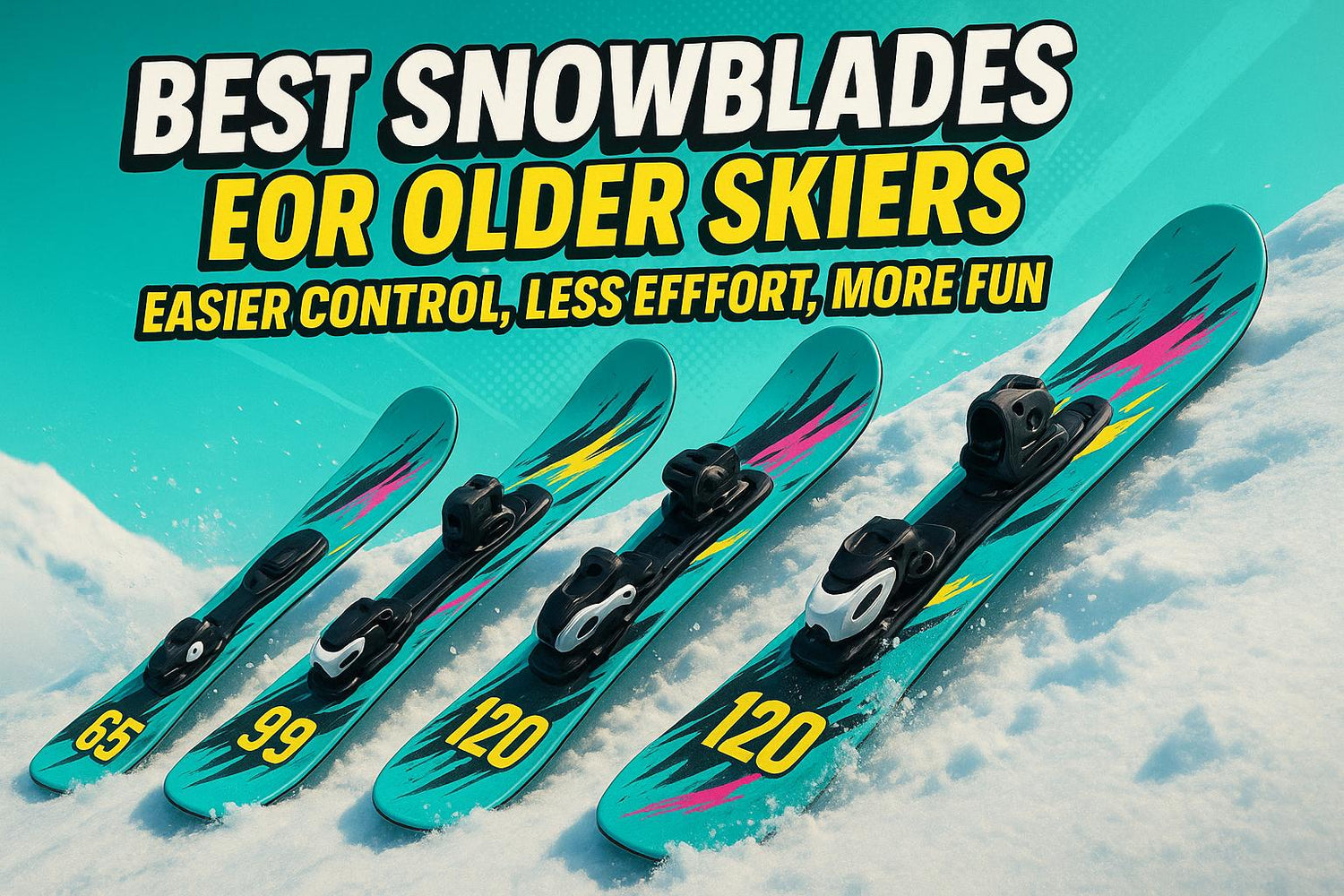
Skiing doesn’t have to get harder as you age - snowblades make it easier and more enjoyable. These shorter, lighter skis are perfect for older skiers looking to reduce joint strain, improve control, and have fun on the slopes without overexertion. Snowfeet offers three models, each designed to match different skiing styles and needs:
- 65 cm Snowblades ($635): Lightweight and super easy to control. Great for tight turns, groomed runs, and terrain parks. Best for short sessions or skiers with limited mobility.
- 99 cm Snowblades ($675): A balanced option for all-day comfort. Handles mixed terrain well, including light powder, while offering more stability at moderate speeds.
- 120 cm Snowblades ($775): Closest to the feel of longer skis but easier to manage. Ideal for those who want more stability and speed without the bulk of traditional skis.
These skiblades are portable, compatible with your existing ski boots, and designed to make skiing easier on your body. Whether you’re after agility, versatility, or stability, there’s a model that fits your style.
Quick Comparison:
| Feature | 65 cm | 99 cm | 120 cm |
|---|---|---|---|
| Price | $635 | $675 | $775 |
| Best For | Easy control, short runs | Mixed terrain, all-day use | Stability, faster speeds |
| Physical Strain | Lowest | Low to moderate | Moderate |
| Speed | Limited | Moderate | High |
| Terrain | Groomed runs, parks | Light powder, varied trails | Groomed runs, icy patches |
Ready to hit the slopes with less effort and more confidence? Let’s dive into the details of each model.
Best Skis for the Elderly? | Are Short Skis Better for Older Skiers?
1. Snowfeet Skiblades 65 cm
The 65 cm Snowfeet Skiblades are all about reducing effort while maximizing enjoyment. At just 65 cm, these skiblades are much easier to manage than traditional skis, which can range from 63 to 75 inches in length. Priced from $635, they offer a way to keep skiing fun and accessible without the physical demands of longer skis.
Physical Strain
One of the standout benefits of these skiblades is how easy they are on your body. Long skis often require greater strength and stability, but the compact 65 cm design significantly reduces strain on joints. The shorter length means less leverage on your knees and hips, which is especially helpful for older or less experienced skiers. Plus, they’re lighter - making it easier to carry them from the parking lot or between lifts.
When it comes to skiing, these skiblades make turns almost effortless. A simple shift in weight is enough, so you can enjoy longer days on the slopes without the fatigue or soreness that often follows.
Maneuverability
If you’ve ever struggled with long skis in tight spaces - like crowded lift lines or narrow trails - you’ll appreciate the agility of these skiblades. Their compact size allows for fast, precise edge-to-edge transitions, making quick direction changes a breeze.
This nimbleness is particularly valuable for older skiers who might feel less confident in their reaction times or balance. The forgiving nature of these short skis also makes it easier to recover from small mistakes, giving you a smoother, more enjoyable ride. Whether you’re navigating tricky terrain or just cruising, the 65 cm skiblades make skiing feel more intuitive and relaxed.
Terrain Versatility
Thanks to their excellent maneuverability, these skiblades perform well on a variety of slopes. They’re ideal for groomed runs and terrain parks, where their short length really shines. They’re also great for experimenting with new techniques or just having fun on the mountain without the challenges that come with traditional skis.
That said, they’re best suited for resort conditions rather than deep powder or backcountry adventures. Their smaller surface area means they’re more likely to sink in soft snow. If you’re someone who loves powder days or off-piste skiing, you might want to consider longer models, like the 99 cm or 120 cm options. On the upside, the 65 cm skiblades are super portable - they fit easily in a car trunk, making last-minute ski trips a lot more convenient.
Performance at Speed
While these skiblades excel at moderate speeds, their shorter length means they’re less stable at higher speeds.
For many skiers, especially older ones, this isn’t a drawback. Instead of chasing speed, the focus shifts to a controlled, comfortable pace where technique and enjoyment take center stage. The 65 cm model encourages a relaxed skiing style that’s easy on the body while still delivering plenty of fun. If you do decide to push the limits, you might notice a bit less stability compared to longer skis. But for most, the trade-off of effortless maneuverability and reduced physical strain makes these skiblades a fantastic choice for laid-back, enjoyable days on the slopes.
2. Snowfeet Skiblades 99 cm
The 99 cm Snowfeet Skiblades strike a nice balance between agility and stability. At about 39 inches long, they’re much shorter than traditional skis (which typically range from 63–75 inches) but offer more surface area than the compact 65 cm model. Starting at $675, these skiblades are designed to perform well across a variety of skiing conditions and styles.
Physical Strain
One of the standout features of the 99 cm skiblades is how easy they are on your body. Their lightweight design, combined with the added length, helps to spread your weight more evenly during longer runs, reducing fatigue.
The moderate leverage these skiblades provide is kind to your knees and hips. Unlike traditional long skis, which can put extra torque on your joints during turns, the 99 cm length keeps movements smooth and natural. Carving turns feels easier on your muscles compared to standard skis, yet these skiblades still give you more control and feedback than the shorter 65 cm model. If you’re planning to spend hours on the slopes but want to avoid the next-day soreness that often comes with traditional skis, these could be a great option. Their thoughtful design makes them a solid choice for handling varied terrain with ease.
Maneuverability
These skiblades offer a sweet spot of agility and stability, making them a favorite for skiers who want quick, responsive control without sacrificing predictability. Tight turns and quick pivots are a breeze, but they also provide a steadier feel that’s especially useful when navigating mixed terrain or adjusting your line mid-run.
Perfect for more experienced or mature skiers, the 99 cm skiblades allow you to tackle moguls, weave through tight spaces, or simply enjoy relaxed cruising. They’re forgiving enough for laid-back runs but also responsive when you’re feeling adventurous and want to push your limits a bit. Whether you're making sharp turns or gliding through narrow sections, these skiblades deliver consistent, reliable performance.
Terrain Versatility
Here’s where the 99 cm skiblades really stand out. They handle groomed trails beautifully, shine in terrain parks, and - unlike the 65 cm version - can take on light powder and variable snow conditions with confidence. The extra surface area helps you stay on top of softer snow, so you’re less likely to sink, opening up more of the mountain for exploration.
These skiblades are ideal for resort skiing and can adapt to a range of trails. Whether you’re cruising down blue runs, navigating bumps, or exploring less-groomed sections, they perform smoothly. While they’re not built for deep backcountry powder or extreme off-piste skiing, they handle the typical conditions at most ski resorts with ease.
Performance at Speed
When it comes to speed, these skiblades hold their own. The added length improves edge contact, giving you smooth, controlled runs even as you pick up the pace.
If you enjoy moderate speeds but don’t want the bulk or physical demands of traditional long skis, these skiblades are a great middle ground. They build on the ease-of-use of the 65 cm model but offer a bit more performance for skiers ready to go faster. You can cruise comfortably at your own pace - whether that’s a relaxed green run or a steeper, more challenging slope - without worrying about instability. While traditional skis from brands like Rossignol or Salomon might offer slightly better high-speed stability, they’re also heavier, longer, and require more effort to use - trade-offs that many older or casual skiers might prefer to avoid.
sbb-itb-17ade95
3. Snowfeet Skiblades 120 cm
The 120 cm Snowfeet Skiblades take the agility of the shorter 65 and 99 cm models and add a touch of traditional skiing feel. At $775, these skiblades strike a balance between the compact control of shorter models and the stability of longer skis. Traditional skis from brands like Rossignol, K2, or Atomic usually range from 63 to 75 inches, but the 120 cm skiblades offer a middle ground. They’re more stable and faster than the shorter skiblades while being far easier to manage than full-length skis.
Physical Strain
Although the 120 cm skiblades are the longest in the Snowfeet lineup, they’re still lighter and more manageable than traditional skis. The extra length distributes your weight more evenly, which helps reduce strain on your joints and keeps fatigue at bay during long days on the slopes.
Your knees and hips will thank you for the reduced torque during turns. Unlike traditional skis, which can demand significant effort to control, these skiblades allow for smoother, more natural movements. This means less wear and tear on your body and a shorter recovery time after a day of skiing.
Maneuverability
Even with their longer length, these skiblades retain impressive maneuverability. They offer a smooth, classic skiing experience with reliable edge control and efficient turning, although they’re not quite as nimble as the shorter models.
The 120 cm length provides a stable and predictable ride, which many older skiers find appealing. You’ll get consistent feedback from the snow, making it easier to read the terrain and adjust your technique as needed. Whether you’re carving graceful arcs on groomed runs or navigating tighter spaces in busy areas, these skiblades deliver a controlled, enjoyable experience. They’re ideal for those who want a traditional skiing vibe but with less physical effort.
Terrain Versatility
The added length makes these skiblades shine on groomed runs and in varied conditions. They have enough surface area to stay afloat in light powder, giving you the chance to explore beyond the standard trails.
On groomed runs, they carve with precision and hold edges confidently. Unlike the shorter models, they can also handle mixed conditions like icy patches, crud, or packed snow without skipping a beat. This adaptability lets you explore different parts of the resort without worrying about whether your gear can keep up. While they’re not built for deep backcountry powder or extreme off-piste terrain, they handle the majority of resort conditions across the U.S. - whether you’re skiing in Vermont, Colorado, or California.
Performance at Speed
When it comes to speed, the 120 cm skiblades deliver a stable, controlled ride. Their increased edge contact helps dampen vibrations and smooth out high-speed runs.
If you enjoy cruising down blue or black runs at a solid pace, these skiblades will keep up without feeling unstable. They’re steady and secure at speeds that might make the shorter models feel twitchy. You can confidently point them downhill and let them glide without worrying about losing control. While traditional long skis may offer slightly better stability on very steep terrain, they come with trade-offs - they’re heavier, harder to transport, and more exhausting to use. For most older skiers, the 120 cm skiblades offer plenty of speed and control while remaining easy and fun to use all day long.
Pros and Cons
Picking the right skiblades is all about figuring out what works best for your skiing style and physical needs. To make it easier, here’s a side-by-side breakdown of the three Snowfeet Skiblades models. This quick comparison highlights their strengths and limitations, so you can decide which length suits you best.
| Feature | 65 cm Skiblades | 99 cm Skiblades | 120 cm Skiblades |
|---|---|---|---|
| Price | From $635 | From $675 | $775 |
| Best For | Maximum agility, tight spaces, terrain parks | Balanced performance, all-mountain versatility | Traditional skiing feel with easier control |
| Physical Strain | Lowest strain – Ultra-lightweight, minimal joint stress | Low to moderate strain – Light enough for all-day comfort | Moderate strain – Heavier but still lighter than skis |
| Maneuverability | Highest – Quick turns, instant response, easy pivoting | High – Responsive, excellent edge control | Good – Smooth, predictable, easier than full-length skis |
| Terrain Versatility | Limited in powder, excels on groomed runs and parks | Handles groomed runs, moderate powder, mixed conditions well | Best for resorts, light powder, and icy patches |
| Speed Performance | Not ideal for high speeds, can feel unstable on steeps | Stable at moderate speeds, handles blue and black runs well | Best stability – Confident on steeps, dampens vibrations |
| Portability | Most portable – Fits in car trunks, easy to carry | Very portable, easier to transport than traditional skis | Portable but needs more space than shorter models |
| Learning Curve | Fastest – Intuitive for beginners, minimal adjustment | Quick to learn, familiar for experienced skiers | Easiest for traditional skiers, classic skiing experience |
| Main Advantage | Reduces fatigue, great for short sessions or limited mobility | Balance of control and versatility for all-day skiing | Combines stability with reduced effort |
| Main Limitation | Struggles in deep snow and at high speeds | Less stable at high speeds, less agile in tight spots | Requires more physical input than shorter models |
Let’s break this down further:
The 65 cm skiblades are perfect if you’re looking for something lightweight and super easy to maneuver. They’re great for short sessions, terrain parks, or anyone dealing with joint issues. These are the most forgiving option, ideal for skiers who want to hit the slopes without overexerting themselves.
The 99 cm skiblades are the all-rounders. They’re versatile enough to tackle most U.S. resort terrain, whether you're skiing the icy trails of New England or the packed powder in the Rockies. They strike a nice balance between control and comfort, making them a solid pick for all-day fun.
The 120 cm skiblades cater to experienced skiers who crave speed and stability but want to ease the physical strain. They feel closer to traditional skis, so if you’ve been using full-length skis for years, these will make the switch much smoother.
What sets Snowfeet Skiblades apart from traditional skis is their lightweight design, easy portability, and how gentle they are on your joints. Whether you’re after the agility of the 65 cm, the versatility of the 99 cm, or the stability of the 120 cm, these skiblades make skiing more enjoyable and less taxing - perfect for those who want to keep shredding without the heavy lifting of standard skis.
Conclusion
Snowfeet Skiblades are a game-changer for older skiers who want to keep hitting the slopes without the strain that comes with traditional long skis. These compact skis are light, easy to handle, and gentler on your knees, back, and shoulders - making every run more enjoyable. Unlike bulky, heavier gear, Snowfeet Skiblades are designed to be nimble and responsive, so you can carve down groomed trails without needing as much strength.
When it comes to picking the right size, it all depends on your experience and what kind of skiing you’re after. If you’re just starting out or getting back into it, the 65 cm skiblades are a great choice - they help boost your confidence without overworking your muscles. For those looking for versatility across different slopes, the 99 cm skiblades hit the sweet spot, handling everything from Vermont’s icy trails to Colorado’s powder with ease. And if you’re after speed and stability, the 120 cm skiblades deliver that familiar feel but with less weight, making turns easier and keeping your legs fresh all day.
FAQs
Why are Snowfeet Skiblades a better option for older skiers compared to traditional skis?
Snowfeet Skiblades are a great option for older skiers looking for a more relaxed and enjoyable time on the slopes. Thanks to their shorter length and lightweight design, they’re much easier to control compared to traditional skis. Turning and stopping feel more natural, and they put less strain on your legs and knees. The result? You can spend more time skiing without wearing yourself out.
Another big plus is how portable they are. Unlike bulky skis, Snowfeet Skiblades are compact and easy to carry, making them perfect for anyone who wants gear that’s simple to manage. If you’re tired of lugging around heavy equipment and just want to focus on having fun, these skiblades are a fantastic pick. They make skiing less of a workout and more of an accessible, carefree adventure.
How do I choose the right Snowfeet Skiblade length: 65 cm, 99 cm, or 120 cm?
Choosing the right Snowfeet Skiblade length comes down to your skill level, skiing style, and what feels right for you. Let’s break it down:
- Shorter skiblades (like the 65 cm model): These are lightweight and super easy to handle, making them perfect for skiers who enjoy a playful, skate-like feel. They’re especially great for beginners or older skiers who want quick, effortless turns and maximum agility.
- Longer skiblades (99 cm and 120 cm models): If stability and smoother rides are more your thing, these are the way to go. The 99 cm skiblades hit the sweet spot between agility and control, while the 120 cm option offers a bit more glide and performance, ideal for intermediate skiers or anyone looking for a balanced, steady experience.
No matter which length you choose, Snowfeet Skiblades make skiing simpler, more enjoyable, and less tiring than traditional long skis. They’re a fantastic option for older skiers who prioritize comfort and fun on the slopes.
Can Snowfeet Skiblades handle all snow conditions, or do they perform better in certain types of terrain?
Snowfeet Skiblades are a blast to use and shine on groomed slopes, park runs, and packed snow. They’re easy to control and make for a super fun ride. That said, they’re not the best choice for deep powder. If you’re planning to dive into those fluffy, deeper snow conditions, the Snowfeet POWDER model is your go-to. It’s built specifically to handle powder, giving you better control and performance where standard skiblades might struggle.
The 65 cm model can handle light powder reasonably well, but if powder skiing is your main focus, it’s worth going for a model that’s designed for it. All in all, Snowfeet Skiblades are a fantastic pick for most terrains, especially when the snow is hard-packed or freshly groomed.











Leave a comment
This site is protected by hCaptcha and the hCaptcha Privacy Policy and Terms of Service apply.