




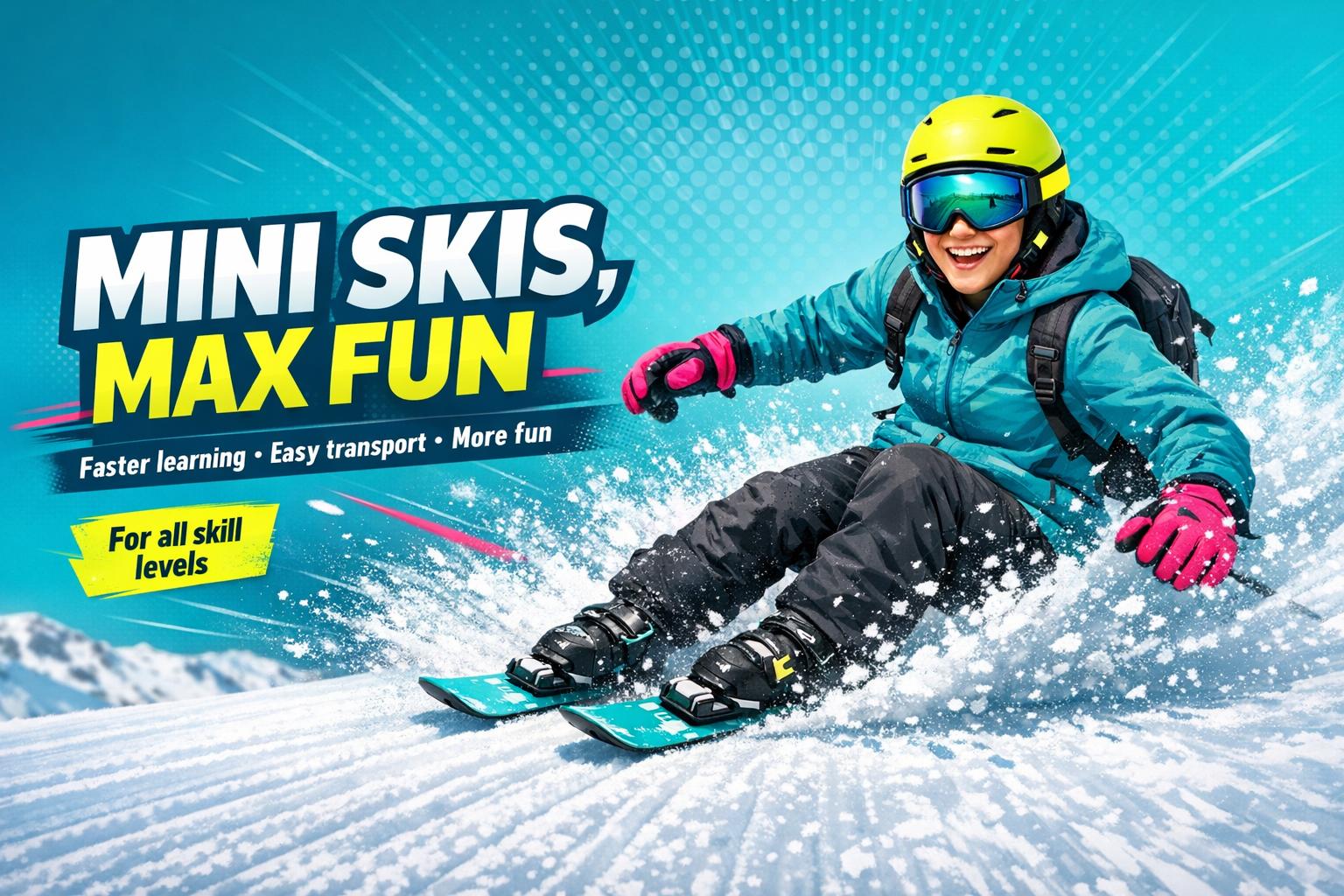
If you’re new to skiing and feeling overwhelmed by long, heavy skis, short skis might be the answer. They’re lightweight, easy to control, and perfect for learning the basics without all the struggle. Brands like Snowfeet* make short skis in lengths ranging from 15 to 47 inches, designed specifically for beginners. These skis give you better balance, quicker turns, and less fatigue compared to standard skis or snowboards. Plus, they’re compact enough to fit in a backpack - no more lugging around bulky gear.
Here’s why short skis are a great choice for beginners:
- Easier to turn and stop: Short skis respond quickly, making it simpler to control your movement.
- Lightweight: Less weight means less effort, so you can focus on learning.
- Beginner-friendly stance: Feet stay forward and independent, unlike snowboards where both feet are locked in place.
- Affordable and portable: Snowfeet* models work with regular boots, saving you money on rentals, and they’re easy to carry.
The most popular option for beginners? The 65 cm Skiblades. They’re forgiving, fun, and ideal for green runs or mellow slopes. Ready to hit the snow? Keep reading to learn how to pick the right model, set up your gear, and make the most of your first ski season.
How to Ski | 10 Beginner Skills for the First Day Skiing
Why Short Skis Are Easier to Learn On
Short Skis vs. Standard Skis vs. Snowboards: Beginner's Guide
Control, Comfort, and Confidence for New Skiers
When you're just starting out on the slopes, the biggest challenge isn't the cold or the altitude - it’s control. Long skis can feel like wrestling a stubborn piece of machinery. They’re harder to steer, more likely to catch an edge, and can leave your legs feeling like jelly after just a few runs.
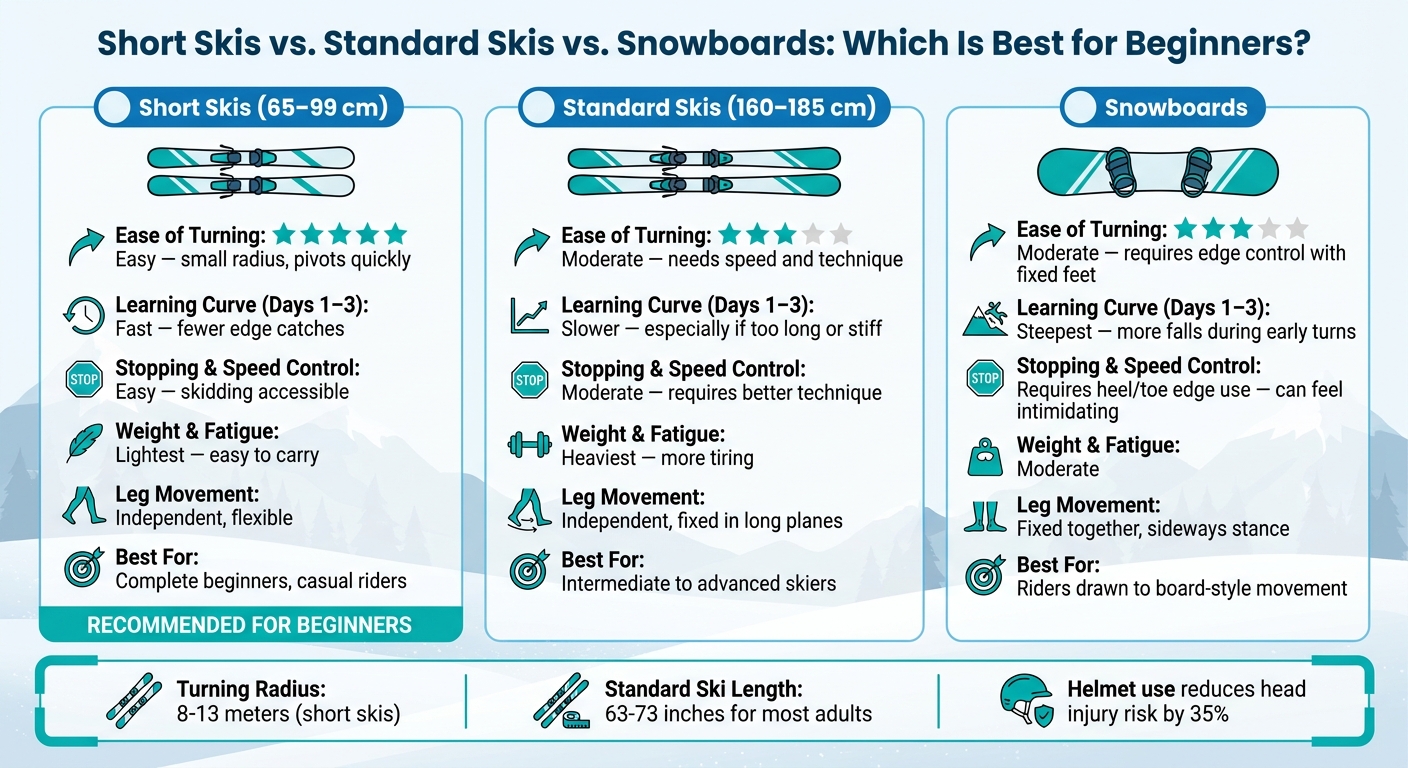
Short skis solve these problems. With a compact turning radius of 8–13 meters, they make turning almost effortless. A slight shift in your weight is all it takes to change direction, giving beginners instant feedback. This quick response helps new skiers correct mistakes quickly instead of struggling with uncooperative gear.
On top of that, short skis are lighter - several pounds less than standard skis. Less weight means less leg fatigue, so you can focus on learning instead of catching your breath.
This combination of control and comfort makes short skis a standout choice, especially when compared to standard skis or snowboards.
Short Skis vs. Standard Skis and Snowboards
Standard skis for adults are usually recommended at chin-to-nose height, which translates to about 63–73 inches (160–185 cm) for most adults. However, many ski instructors suggest beginners go for skis that are 5–10 cm shorter than this range. Why? Because shorter skis make it easier to turn and stop - two skills that are critical for first-timers.
Snowboards, on the other hand, come with their own set of challenges. Since both feet are locked in a sideways stance, beginners have to master balance and edge control simultaneously. This often leads to more falls early on. With short skis, each foot moves independently, offering a more natural and forgiving stance for newcomers.
Here’s a quick breakdown of how short skis compare to standard skis and snowboards:
| Feature | Short Skis (65–99 cm) | Standard Skis (160–185 cm) | Snowboards |
|---|---|---|---|
| Ease of turning | Easy; small radius, pivots quickly | Moderate; needs more speed and technique | Moderate; requires edge control with fixed feet |
| Learning curve (first 1–3 days) | Fast; fewer edge catches, easier to correct | Slower if too long or stiff | Steeper; more falls during early turns |
| Stopping & speed control | Easy; skidding and speed checks are accessible | Moderate; requires better technique | Requires heel/toe edge use, can feel intimidating |
| Weight & fatigue | Lighter; easier to carry and less tiring | Heavier; more tiring for less fit skiers | Moderate |
| Leg movement | Independent; flexible positioning | Independent; fixed in long planes | Fixed together; sideways stance |
| Best for | Complete beginners, casual riders | Intermediate to advanced skiers | Riders drawn to board-style movement |
Why Snowfeet* Is a Smart Pick for Beginners
Short skis already make life easier for beginners, and Snowfeet* takes this concept to the next level. Unlike traditional ski brands that focus on high-speed performance, which can be intimidating for new skiers, Snowfeet* designs their gear with accessibility and fun in mind.
Their 65 cm and 99 cm Skiblades are compact and lightweight, making them perfect for first-timers. You won’t have to wrestle with long, heavy skis in the lift line or on the bunny slope. Plus, these ski blades are compatible with regular snowboard boots, so there’s no need to invest in stiff, pricey ski boots. Lower costs and less hassle? That’s a win for beginners.
Brad Tolin sums it up perfectly:
"These ski blades are a blast to use. Super easy to control, quick to turn, and way more forgiving than traditional skis."
This forgiving design means fewer falls and less frustration, so you can focus on building your skills and having fun. Sounds like a perfect start to your skiing journey, doesn’t it? 😊
How to Pick the Right Snowfeet* Model
Snowfeet* Model Lineup at a Glance
Snowfeet* has five models, each catering to different riders and terrains. Here’s a quick breakdown to help you decide:
| Model | Length | Best For | Starting Price |
|---|---|---|---|
| Mini Ski Skates | 38 cm | Kids, gentle hills, casual fun | From $250 |
| Skiskates | 44 cm | Playful riding, skate-style movement, tricks | From $575 |
| Skiblades | 65 cm | Beginners on green/blue resort runs, fast learning | From $635 |
| Skiblades | 99 cm | Progressing beginners, stability at speed, all-mountain | From $675 |
| Short Skis | 120 cm | Ambitious beginners, steeper slopes, traditional feel | From $775 |
For U.S. beginners, the 65 cm Skiblades are the most popular choice. Once you’ve picked a model, the next step is to match it to your skill level.
Matching Ski Length to Your Skill Level
Short skis are easier to maneuver but less stable at higher speeds, so finding the right balance is essential.
Snowfeet* models are designed with new skiers in mind, offering an easier learning curve compared to traditional skis or snowboards.
- Complete beginners should stick to the 38–65 cm range. These shorter models are lightweight and forgiving, making them ideal for bunny slopes and beginner areas. The 65 cm Skiblades are a standout option - easy to handle yet long enough to give you a taste of real skiing.
- If you have an athletic background (think inline skating, ice skating, or snowboarding), the 65 cm Skiblades are a great starting point. As you gain confidence, you might want to move up to the 99 cm Skiblades, which provide more stability on groomed runs and handle rough snow better. These are perfect for full days at resorts in places like Colorado, Utah, or Vermont.
- For those aiming to ski regularly and tackle steeper terrain, the 120 cm Short Skis are a solid choice. They feel closer to traditional skis but are still easier to control. They’re a good option if you’re planning multiple ski weekends each year.
Once you’ve chosen your ski length, don’t forget to consider your binding and boot setup for the best experience.
Bindings and Boot Compatibility
Snowfeet* offers two types of bindings: snowboard-style bindings and ski boot bindings. Both are adjustable, tool-free, and fit a wide range of sizes.
| Binding Type | Compatible Boots | Best For | Size Range |
|---|---|---|---|
| Snowboard Bindings | Snowboard boots or sturdy winter boots | Comfort, casual riding, easy on/off | EU 38–49 / US 6–14.5 |
| Ski Boot Bindings | Standard ski boots | Maximum control, aggressive carving | EU 36–49 / US 4.5–14.5 |
For most beginners, the snowboard bindings are the way to go. They work with regular insulated winter boots or snowboard boots, so there’s no need to rent or break in stiff ski boots. Snowfeet* sums it up perfectly:
"If you prefer snowboard boots or you just hate the uncomfortable plastic ski boots... these [snowboard] bindings are right for you."
If you already own ski boots or want the best edge control as you improve, the ski boot bindings are a better fit. Whichever you choose, make sure your boots are waterproof and insulated, especially if you’re skiing in colder areas like the Rockies or New England, where temperatures can stay below freezing for hours.
Setting Up Your Short Ski Kit
Gear Checklist for First-Time Skiers
Here’s the thing: with a Snowfeet* setup, you don’t need to overhaul your entire winter wardrobe. Most of the gear you’d use for other winter sports works just fine. The main difference? Snowfeet* replaces the clunky, oversized ski gear - no heavy ski boots, no roof rack, no giant ski bag.
Here’s what you’ll need:
- Snowfeet* skis: A great option for beginners at U.S. resorts are the 65 cm Skiblades.
- Compatible boots: Insulated winter boots or snowboard boots work well with most Snowfeet* models, so you can skip renting traditional ski boots.
- Helmet: Make sure it’s certified for snow sports. Over 80% of U.S. ski area visitors use helmets, and studies show they cut the risk of head injuries by 35%.
- Goggles: Look for ones with UV protection and anti-fog lenses to handle flat light, wind, and snow.
- Waterproof, insulated gloves or mittens: Keep those fingers warm and dry.
- Moisture-wicking base layers: Stick to synthetic or merino wool - cotton is a no-go.
- Insulating mid-layer: A fleece or lightweight down jacket works perfectly.
- Waterproof, windproof ski jacket and pants: Essential for staying dry and comfortable.
- Ski socks: Just one pair, and avoid cotton to prevent discomfort.
The beauty of Snowfeet* is that it works with the winter gear you probably already own. All you need are the skis and compatible boots.
How to Mount and Adjust Your Snowfeet* Skis
One of the best parts about Snowfeet* skis? No need for a trip to the shop or complicated adjustments. Forget about drilling or DIN release calibrations - this setup is simple and quick. You can have everything ready in about five minutes.
Here’s how to do it:
- Position your boot in the binding: Adjust the heel piece to match your boot’s length. Make sure the boot sits flat with no gaps under the sole.
- Secure the straps or ratchets: Tighten them until your boot feels snug. It shouldn’t twist, but your toes should still feel comfortable.
- Align your foot: Center it over the middle of the ski for balanced weight distribution. Avoid angling the boot.
- Test it out: Practice clipping in and moving around in a safe, indoor space. Once you’re on the snow, recheck and tighten the straps if needed - cold weather can affect the tension.
Dressing for US Ski Conditions
Now that your skis are set, it’s time to dress for the slopes. Winter temperatures at U.S. resorts typically range from 10°F to 32°F, but wind chill can make it feel much colder. Beginners often feel the chill more because they stop frequently, so layering is key.
A simple three-layer system works well for most conditions:
| Temperature | Base Layer | Mid Layer | Outer Layer | Accessories |
|---|---|---|---|---|
| 30–32°F | Lightweight synthetic or merino | Light fleece | Insulated ski jacket & pants | Thin gloves, light beanie |
| 20°F | Midweight base layer | Warm fleece or light down | Insulated jacket & pants | Warm gloves, neck gaiter |
| 10°F and below | Midweight base layer | Heavier fleece or double mid-layers | Insulated jacket & pants | Mittens, balaclava, hand warmers |
It’s smart to pack an extra mid-layer and a spare pair of gloves in a small backpack. Mountain weather can turn on a dime - a sunny morning at 28°F might become a windy 15°F afternoon. Luckily, Snowfeet* skis are compact, so you’ll have plenty of room in your bag for both your extra gear and the skis.
sbb-itb-17ade95
Learning to Ski with Snowfeet*: Step by Step
Starting Out on Beginner Terrain
Snowfeet* are lightweight and easy to handle, making them a great choice for beginners. Start your journey on green circle runs or the magic carpet area, where there's plenty of room to practice. Early morning or late afternoon sessions are ideal since the snow is softer and there are fewer people around. Begin on flat terrain - just slide a few feet to get a feel for gliding. Stick to areas where the slope naturally flattens out, which will help you ease into the experience. Once you're comfortable with basic gliding, you can focus on balance and learning to turn.
Balance, Stopping, and Turning Basics
Your stance is key: keep your feet hip-width apart, knees and ankles slightly bent, and your weight centered over each foot. On flat snow, try rocking gently from side to side, doing small squats, and gliding straight for short distances (10–20 feet). These drills help build the muscle memory you'll need for more advanced moves.
To stop, practice the snowplow technique. Point your ski tips inward, push the tails outward, and press the inside edges into the snow to slow yourself down. Avoid leaning back - it reduces control and may cause unexpected skidding. Once you're confident stopping, start practicing turns. Shift your weight to the outside foot and steer both skis in the direction you want to go.
Snowfeet* make turning easier thanks to their quick response underfoot, giving you more control as you learn to link basic turns.
Moving On to More Fun Terrain
When stopping and turning become second nature, you're ready to explore steeper slopes. Gradually move up to steeper green or mellow blue runs to keep challenging yourself.
Use minor terrain features, like small rollers, to practice absorbing bumps. Keep your knees bent and your stance centered to stay balanced over uneven ground. If you're feeling adventurous, try the terrain park. Start with the smallest beginner park lines (marked "S" for Small) at U.S. resorts. Keep your speed low, approach features straight on, and land evenly on both feet with bent knees. Snowfeet* are short, which makes in-air adjustments easier than with regular skis, but focus on stable, straight glides before attempting tricks. Always check out the features beforehand, clear the landing area quickly, and wear a helmet every time you hit the slopes.
Maintenance and Tips for Your First Ski Season
How to Care for Your Snowfeet* Skis
Short skis, like Snowfeet*, are refreshingly low-maintenance. Their compact size means less time spent drying, waxing, and inspecting compared to traditional skis.
After each day on the slopes, start by shaking off any packed snow from the bindings and straps. Then, wipe the edges and base dry with a cloth to prevent rust from forming on the metal edges. Let your Snowfeet* air-dry at room temperature overnight, but avoid placing them near direct heat sources like radiators or fireplaces - this can damage the base material.
When it comes to waxing, it depends on your model. Wood core models, such as the 65 cm and 99 cm Skiblades, come pre-waxed from the factory, much like traditional skis. On the other hand, fiberglass core models benefit from regular waxing to maintain a smooth glide.
"Wood core Snowfeet are pre-waxed like skis; fiberglass reinforced polyamide models work great, but we recommend waxing for extra speed and smooth glide." - Snowfeet*
Waxing is typically needed every 3–5 ski days or when the base looks dry or feels sluggish. A hot wax at a local shop costs around $10–$20, or you can DIY with an all-temperature wax kit. Regular maintenance keeps your Snowfeet* performing their best, ensuring smoother rides and fewer headaches.
Renting vs. Buying: Is Snowfeet* Worth the Cost?
Renting ski gear at U.S. resorts can get pricey fast. A standard rental package - skis, boots, and poles - generally costs $40–$60 per day, with rates varying by location. If you hit the slopes three or more days in a season, those rental fees pile up quickly.
Snowfeet* Skiblades, priced between $635–$675 for the 65 cm and 99 cm models, may feel like a steep upfront investment. But let’s break it down: renting for three days at $55 per day totals $165, with nothing to show for it afterward. By your second season, owning Snowfeet* often becomes the more cost-effective option.
There’s also the convenience factor. On busy holiday weekends, rental lines can steal 30–45 minutes of your morning. With your own Snowfeet*, you can skip the hassle and head straight to the lift. Plus, Snowfeet* models fit U.S. shoe sizes 6–13, making them versatile enough to share among family members - something rentals don’t offer without extra fees.
Another bonus? Snowfeet* are incredibly portable. They fit in a backpack or carry-on bag, which means you can avoid airline ski bag fees that typically cost $30–$60 each way on most U.S. carriers. That’s a perk you won’t get with traditional skis.
| Scenario | Rental Cost | Snowfeet* (one-time) |
|---|---|---|
| 2 ski days/season | ~$110–$120 | ~$635–$675 |
| 4 ski days/season | ~$220–$240 | ~$635–$675 |
| 4 days over 2 seasons | ~$440–$480 | ~$635–$675 |
Safety and Slope Etiquette
Once your gear is prepped and you’ve figured out whether to rent or buy, it’s time to focus on staying safe and respectful on the mountain.
While short skis like Snowfeet* give you added control, they’re no substitute for good skiing habits. Snowfeet* are great for learning and improving, but safety always comes first. All U.S. skiers are required to follow the NSAA Responsibility Code, updated to "Code 3.0" in 2022–2023. This code outlines the core principles of safe and considerate skiing.
For beginners, two rules stand out: always ski in control and yield to anyone downhill or ahead of you - they have the right of way. Avoid stopping in blind spots, narrow trails, or just below terrain features where you’re hard to spot from above. When merging onto a run or starting downhill, always check uphill to ensure the path is clear.
Most U.S. resorts also mandate a leash or retention device for short skis to prevent runaway skis from becoming a hazard. Snowfeet* models with standard bindings usually accommodate this, but double-check your setup before hitting the slopes. And don’t forget the basics: stay hydrated, take breaks before you’re too tired, and always wear a helmet - fatigue significantly increases the risk of falls.
Conclusion: Short Skis Make Skiing Simple and Fun
By now, you know how to choose the right Snowfeet* model, set up your gear, master the basics on a beginner slope, and take care of your skis after an awesome day on the mountain. So, what’s next? Time to get out there and enjoy the ride.
Short skis, like the 65 cm and 99 cm Skiblades from Snowfeet*, bring a whole new vibe to skiing. They strip away the complexities of traditional skis, offering a lightweight, easy-to-turn option that even fits in a backpack. Forget lugging around heavy gear - these compact skis make hitting the slopes a breeze, especially for first-timers looking for a fun, stress-free start.
The best part? The learning curve is quick. As Brad Tolin, a satisfied customer, put it, they're "way more forgiving than traditional skis". That means you’re more likely to build confidence fast instead of spending your first day feeling overwhelmed.
Whether you're headed to Colorado for a weekend, Utah for a school break, or just a local hill in the Midwest or Northeast, short skis fit seamlessly into your plans. No need to be a pro or a daredevil - just clip in, start on an easy green run, and let the fun begin. Snowfeet* delivers the perfect mix of portability and ease, making it a no-brainer for beginners over traditional skis or snowboards.
So go ahead - pack up your Snowfeet*, hit the slopes, and see how skiing can be simple, exciting, and, most importantly, fun. Every turn is a chance to enjoy the ride.
FAQs
Are short skis stable enough for faster speeds?
Short skis are great for recreational skiing because they offer excellent stability at moderate speeds. Their wider base and lower center of gravity make them easy to handle. Take models like the 99 cm and 120 cm Skiblades, for example. These are built to provide solid stability even at speeds up to 48 mph, giving you impressive control. While longer skis are better suited for extreme speeds over 50 mph, Snowfeet Skiblades hit the sweet spot for most recreational skiers.
Can I use Snowfeet* with my regular winter boots?
Yes, Snowfeet are made to work with your everyday winter boots - no need for those pricey ski boots! They’re compatible with winter shoes, snowboard boots, and even ski boots. For the best results, go for waterproof winter boots that provide solid ankle support. Also, make sure the bindings are adjusted properly to keep everything secure and comfortable.
Do ski resorts allow Snowfeet* on lifts and trails?
Yes, ski resorts do allow Snowfeet* on their lifts and trails. These nifty devices are made for groomed runs, terrain parks, and packed snow, which makes them a great fit for resort conditions. Unlike traditional ski gear, Snowfeet* are super lightweight and easy to carry around. Just strap them on, and you're ready to glide down the slopes - no extra hassle.











留下評論
此網站已受到 hCaptcha 保護,且適用 hCaptcha 隱私政策以及服務條款。