




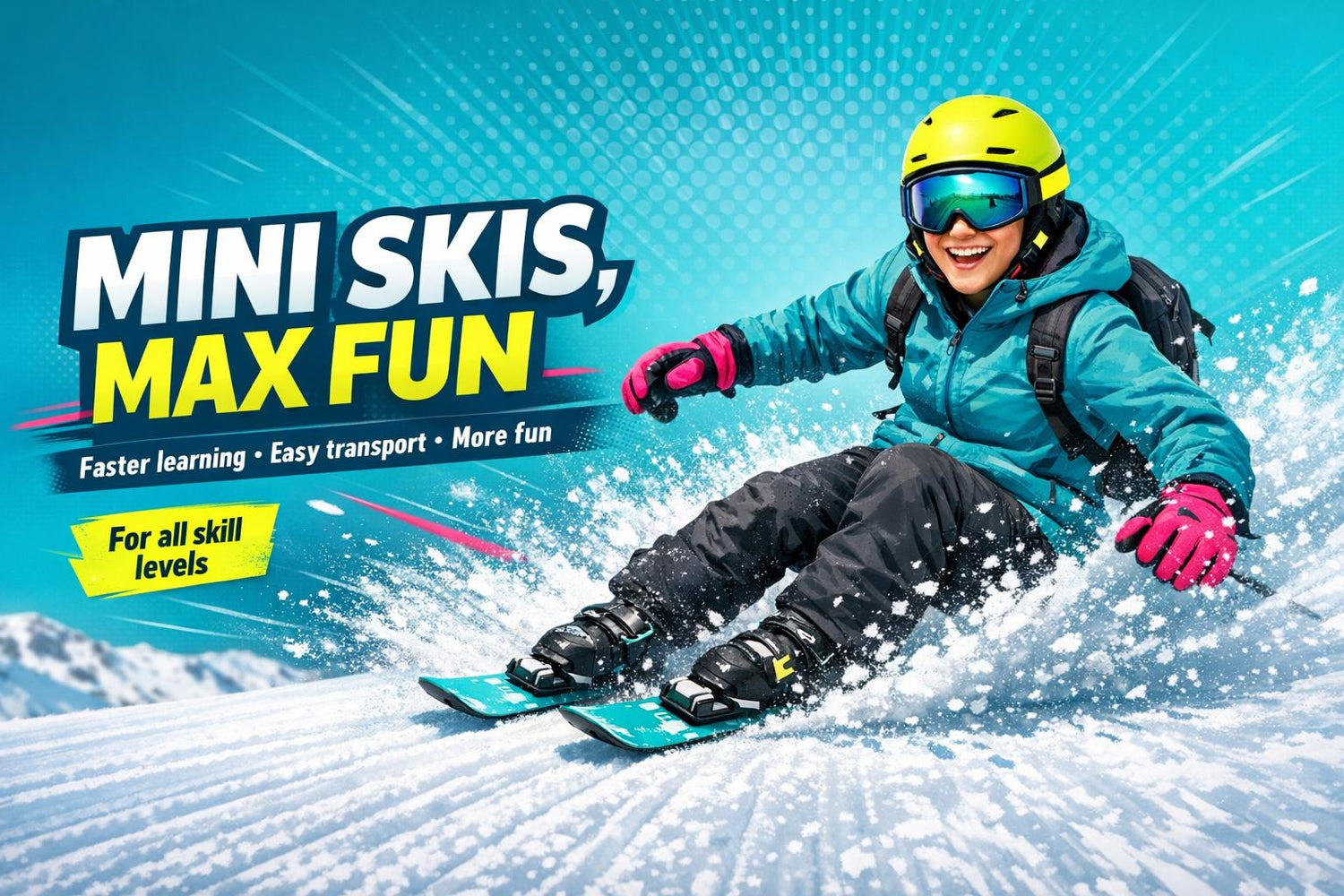
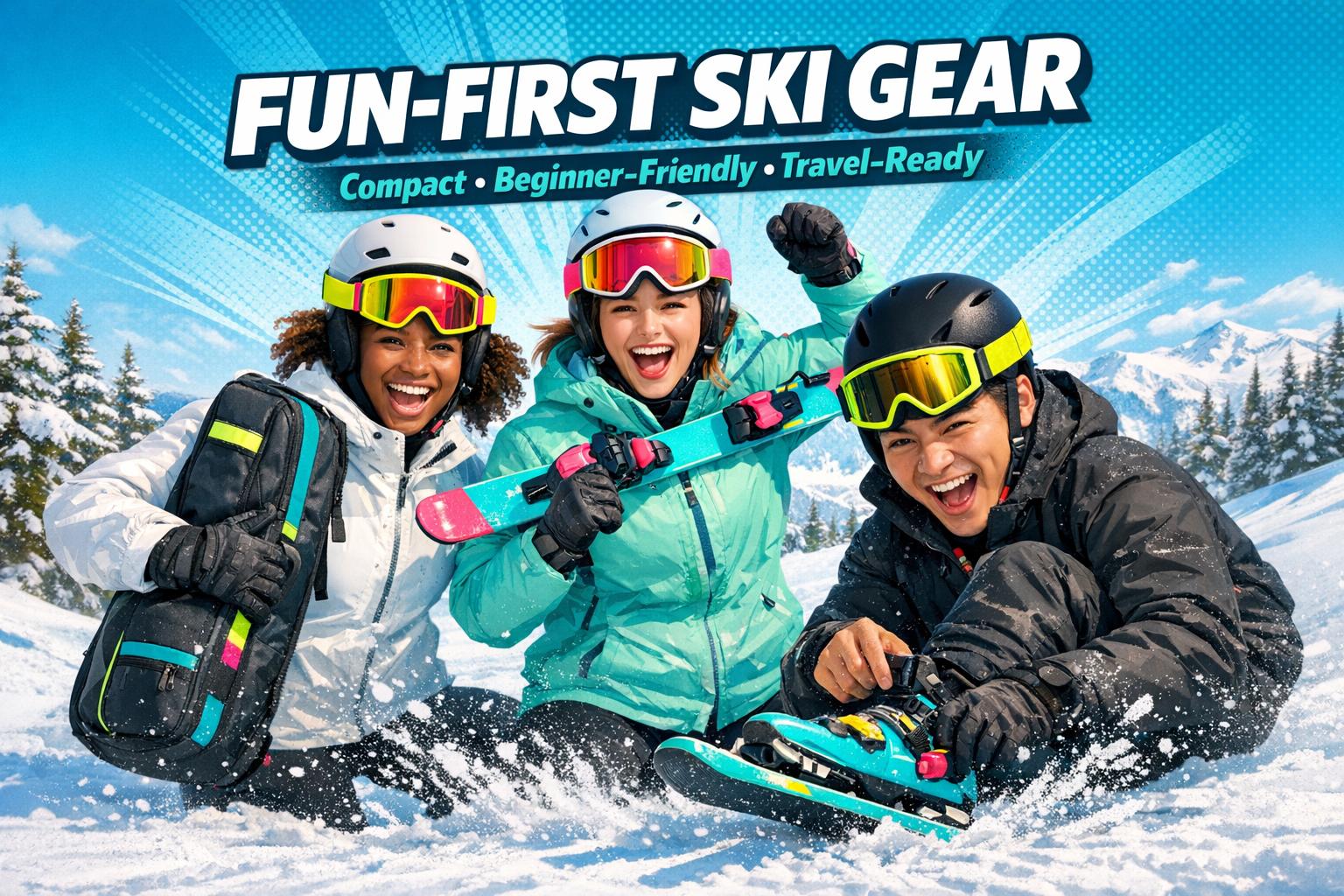
Mini skis are taking over the slopes, and here’s why: they’re lighter, shorter, and way easier to use than regular skis. Measuring just 17–47 inches (44–120 cm), these compact skis are perfect for beginners, families, and anyone who wants a fun, hassle-free day in the snow. Unlike longer skis, which require precision and practice, mini skis let you cruise comfortably after just a few runs. Plus, they’re easier to carry, store, and even fit in your car trunk - no bulky gear needed.
Key reasons mini skis are trending:
- Easy to learn: Most beginners can turn and stop on day one.
- Portable: Lightweight and small enough to fit in a duffel bag.
- Fun-first focus: Great for quick turns, small jumps, and casual rides.
- Gear flexibility: Some models work with snowboard boots or regular winter shoes.
Brands like Snowfeet are leading this shift with products like Skiskates, Skiblades, and Short Skis. Whether you’re skating on 44 cm Skiskates or carving with 120 cm Short Skis, these options make skiing accessible and enjoyable for everyone. If you’re tired of lugging heavy gear or struggling with long skis, mini skis might just be your new winter go-to.
Snowboarder tries Snowfeet* | Which Snowfeet* Short Ski is the Best? | Snowblades 44, 65, 99 Review
The Problems With Standard Ski Gear
Casual skiers often face the hassle of managing large, heavy equipment. Standard alpine skis typically measure 150–180 cm (about 5–6 ft) in length, and a full adult setup - including skis, bindings, boots, and poles - can weigh 15–20 lbs or more. These factors make traditional gear less appealing for those seeking a laid-back skiing experience.
Heavy and Hard to Carry
The sheer weight and size of traditional skis can make even simple tasks exhausting. For families, it's common for parents to find themselves juggling their own equipment along with their kids' skis, turning what should be a fun outing into a logistical headache. Traveling with full-size skis? That’s another story. Oversized baggage fees, limited car space, and the hassle of lugging them through airports can quickly sour the experience.
Tough for Beginners to Handle
For those new to skiing, long skis can feel like a major obstacle. They require precise control - managing speed, edge angles, and weight shifts - skills that take time and practice to master. Small mistakes in balance can lead to frequent falls, making the learning curve steeper. Even getting on and off chairlifts can be tricky, as longer skis are prone to tangling with other riders or catching in the snow. According to the National Ski Areas Association (NSAA), many first-time skiers cite gear challenges, discomfort, and difficulty as reasons they don’t return.
Overkill for Casual Skiers
Traditional skis are designed for performance - think high-speed carving, navigating steep runs, or floating through deep powder. While that’s perfect for seasoned skiers chasing thrills, it’s far from ideal for those who just want to enjoy a relaxed day on groomed trails. Interestingly, 50–60% of U.S. skier visits come from infrequent or casual participants, yet most gear on the market is tailored for advanced use. The result? Many casual skiers end up with equipment that feels stiff, hard to maneuver, and poorly suited for the easygoing skiing they prefer.
These issues highlight why lighter, more user-friendly options like mini skis are becoming a game changer for casual skiers.
Why Mini Skis Are Easier and More Fun
Better Control and Easier Turning
Mini skis are all about agility. Their shorter length gives them a smaller turning radius, making them much easier to maneuver compared to traditional skis. With regular skis, you need precise edge angles and carefully coordinated body movements to make smooth turns. Mini skis, on the other hand, let you pivot effortlessly with subtle ankle and knee adjustments. This comes in handy on crowded slopes or narrow trails, where quick directional changes are key. Plus, with less ski underfoot, you’re less likely to catch an edge or accidentally cross your tips.
Faster and Simpler to Learn
Mini skis also shine when it comes to learning. Snowfeet* designs their products to make skiing more approachable for beginners, removing many of the technical hurdles of traditional skiing. The movements feel natural, almost like walking, inline skating, or ice skating.
"If you play hockey, ice skate, or rollerblade, this will feel completely natural. For beginners, the short length makes learning to turn and stop significantly easier than long skis." - Snowfeet*
Ski instructors often note how early wins keep beginners motivated. Imagine being able to turn, stop, and cruise down a beginner slope within your first hour - mini skis make that possible. This quick progress means less frustration and more fun, even for casual skiers who only hit the slopes once or twice a year.
Easy to Carry and Store
One of the most practical perks of mini skis is how portable they are. Ranging from 44 to 120 cm in length, Snowfeet* mini skis can fit in most car trunks without needing to rearrange seats. At home, they slide easily into closets, under beds, or into tight storage spaces. And when traveling, you can pack them in a standard checked bag - no bulky ski bag required.
Verified users often rave about this portability:
"Snowfeet are incredible! Super fun in so many situations! I loved how easy they are to carry in a backpack with their handy waterproof bag!" - Michele, Verified User
For families juggling multiple sets of gear or city dwellers with limited storage, this convenience is a huge plus. Their lightweight design also means less fatigue when carrying them around, making the entire ski day more enjoyable.
sbb-itb-17ade95
Snowfeet* Mini Ski Options for Casual Skiers
Snowfeet* makes skiing simple and fun for everyone. Their lineup has something for every casual skier, with each model designed for a specific style.
Snowfeet* Skiskates (44 cm)
The Skiskates are the smallest and most playful option in the Snowfeet* lineup. At just 44 cm, they offer a skating-like experience, making them perfect for anyone who’s comfortable on ice skates or rollerblades. One of their best features? You don’t need special ski boots - Skiskates work with regular winter shoes or snowboard boots.
These are great for quick adventures, and they’ve earned a 4.9/5 rating from 123 reviewers for their easy-to-use design.
"In my opinion, Skiskates is the best product for slopes we developed so far. I love how easy they are to ski and skate and how many different kinds of tricks I can perform without much effort." - Zbyněk, Founder, Snowfeet*
Starting at $575, they’re a fun and approachable way to get into mini skiing.
Snowfeet* Skiblades (65 cm and 99 cm)
Skiblades combine the best of skiing and skating, offering a mix of agility and stability. The 65 cm model is great for spins, tricks, and snowpark fun, while the 99 cm model - nicknamed the "Ultimate Short Ski" - is perfect for carving at high speeds with its deep parabolic sidecut.
Both models work with ski or snowboard boots and have earned a 5.0/5 rating. If you’re looking for versatility, the 99 cm model is ideal for all-mountain use, offering speed, stability, and ease of control.
"These ski blades are a blast to use. Super easy to control, quick to turn, and way more forgiving than traditional skis." - Brad Tolin, Verified Customer
The 65 cm Skiblades start at $635, while the 99 cm Skiblades start at $675.
If you’re after something closer to the feel of traditional skiing, check out the Short Skis below.
Snowfeet* Short Skis (120 cm)
For a more classic skiing experience, the 120 cm Short Skis are the way to go. They offer the most stability in the lineup and are built for smooth carving. Think of them as a scaled-down version of full-length skis (usually 150–180 cm), but much easier to handle and store.
These skis are perfect for casual skiers who want a familiar ride without dealing with the bulk of traditional gear. Priced at $775, they’re the premium choice for those who want a smarter, lighter take on skiing.
| Model | Length | Best For | Starting Price |
|---|---|---|---|
| Skiskates | 44 cm | Skating feel, tricks, portability | $575 |
| Skiblades | 65 cm | Snowpark, spins, groomed runs | $635 |
| Skiblades | 99 cm | All-mountain carving, stability | $675 |
| Short Skis | 120 cm | Traditional feel, deep carving | $775 |
Mini Skis vs Long Skis and Snowboards
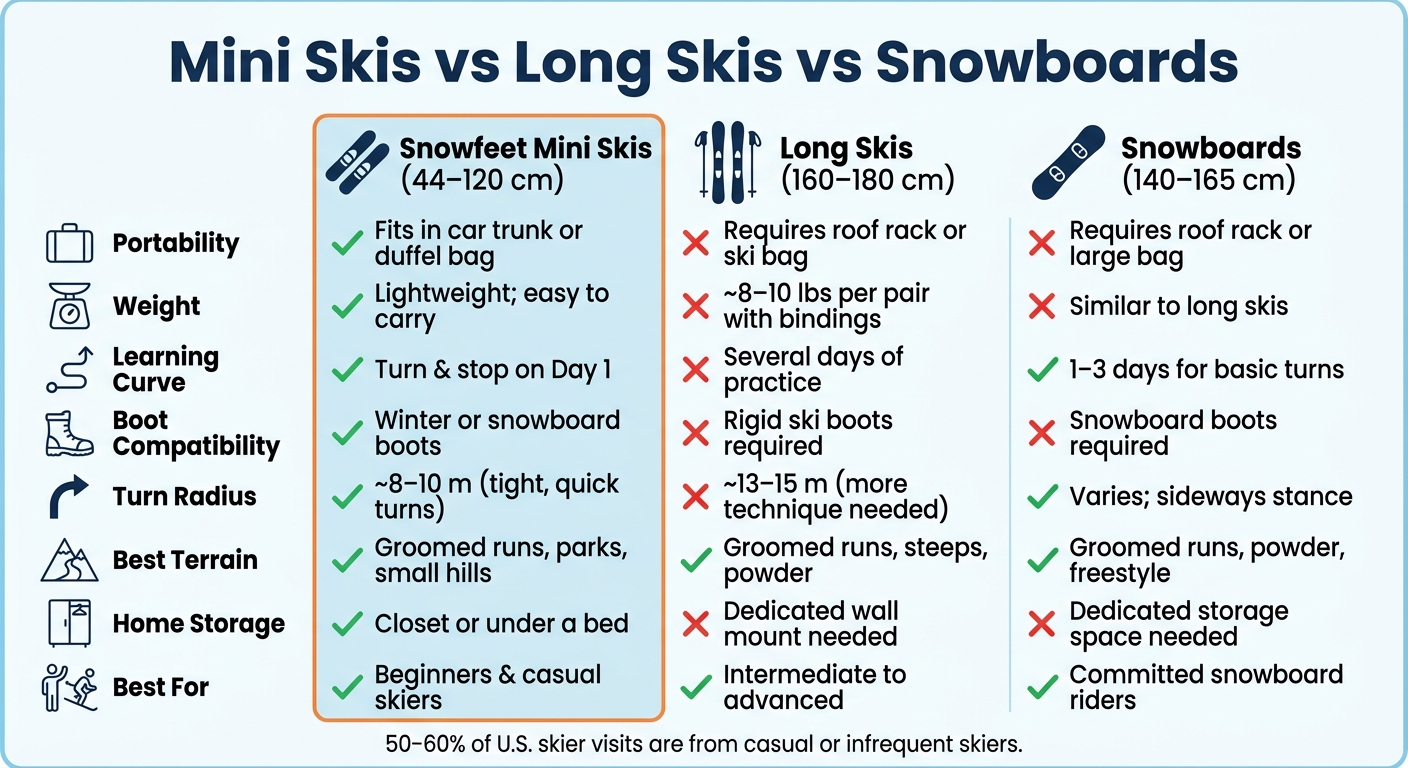
Mini Skis vs Long Skis vs Snowboards: The Ultimate Casual Skier Comparison
Traditional skiing and snowboarding gear often prioritize performance, but that comes with trade-offs in convenience. This difference becomes clear in three key areas: ease of transport, learning curve, and day-one fun factor. Let’s break it down.
A standard adult all-mountain ski measures about 160–180 cm and weighs roughly 8–10 lbs per pair (with bindings). Snowboards for adults typically range from 140–165 cm. Transporting this gear often requires a roof rack or bulky bags. In contrast, Snowfeet* mini skis - measuring between 44 cm and 120 cm - are compact enough to fit in most car trunks or even a large duffel bag. No need for extra accessories or awkward logistics. Mini skis make the trip to the slopes as hassle-free as possible.
The learning curve? It’s another area where mini skis shine. Snowboarding beginners often need 1–3 days of lessons just to master basic turns. With mini skis, most people can comfortably turn and stop on their very first day. That’s the difference between a frustrating start and a fun experience right off the bat.
However, long skis and snowboards aren’t obsolete. If you’re after steep slopes, deep powder, or high-speed carving, traditional gear offers better stability and performance. Mini skis are ideal for groomed runs, moderate speeds, and casual resort days - which, let’s face it, is what most occasional skiers are actually doing.
Comparison Table: Mini Skis vs Standard Gear
| Factor | Snowfeet* Mini Skis (44–120 cm) | Long Skis (160–180 cm) | Snowboards (140–165 cm) |
|---|---|---|---|
| Portability | Fits in a car trunk or duffel bag | Requires roof rack or ski bag | Requires roof rack or large bag |
| Weight | Lightweight; easy to carry | ~8–10 lbs per pair with bindings | Similar to long skis |
| Learning curve | Most beginners turn/stop on day one | Takes several days to develop technique | 1–3 days to master basic turns |
| Boot compatibility | Works with winter or snowboard boots | Requires rigid ski boots | Requires snowboard boots |
| Turn radius | Tight (~8–10 m); quick turns | Wider (~13–15 m); more technique needed | Varies; sideways stance required |
| Best terrain | Groomed runs, parks, small hills | Groomed runs, steeps, powder | Groomed runs, powder, freestyle |
| Storage at home | Fits in a closet or under a bed | Needs dedicated wall mount or storage | Needs dedicated storage space |
| Best for | Beginners, casual skiers, fun-first riders | Intermediate to advanced skiers | Riders committed to snowboard style |
Snowfeet* mini skis bring simplicity and fun to the forefront, perfect for casual skiers who want to skip the hassle. If you’re someone who skis just a few days a season, these mini skis eliminate the bulk and frustration of traditional gear. Snowfeet*’s lineup, from the 44 cm Skiskates to the 120 cm Short Skis, gives you options tailored to fun and convenience. No roof racks, no steep learning curves - just grab your gear and hit the slopes.
Why Casual Skiers Are Choosing Mini Skis
Mini skis are changing the game in winter sports. With 12–14 million alpine skiers hitting the slopes in the U.S. each season, most are casual skiers looking for a fun, hassle-free day in the snow. Mini skis are a perfect match for this crowd, offering an easy and enjoyable way to experience skiing without the complexities of traditional gear.
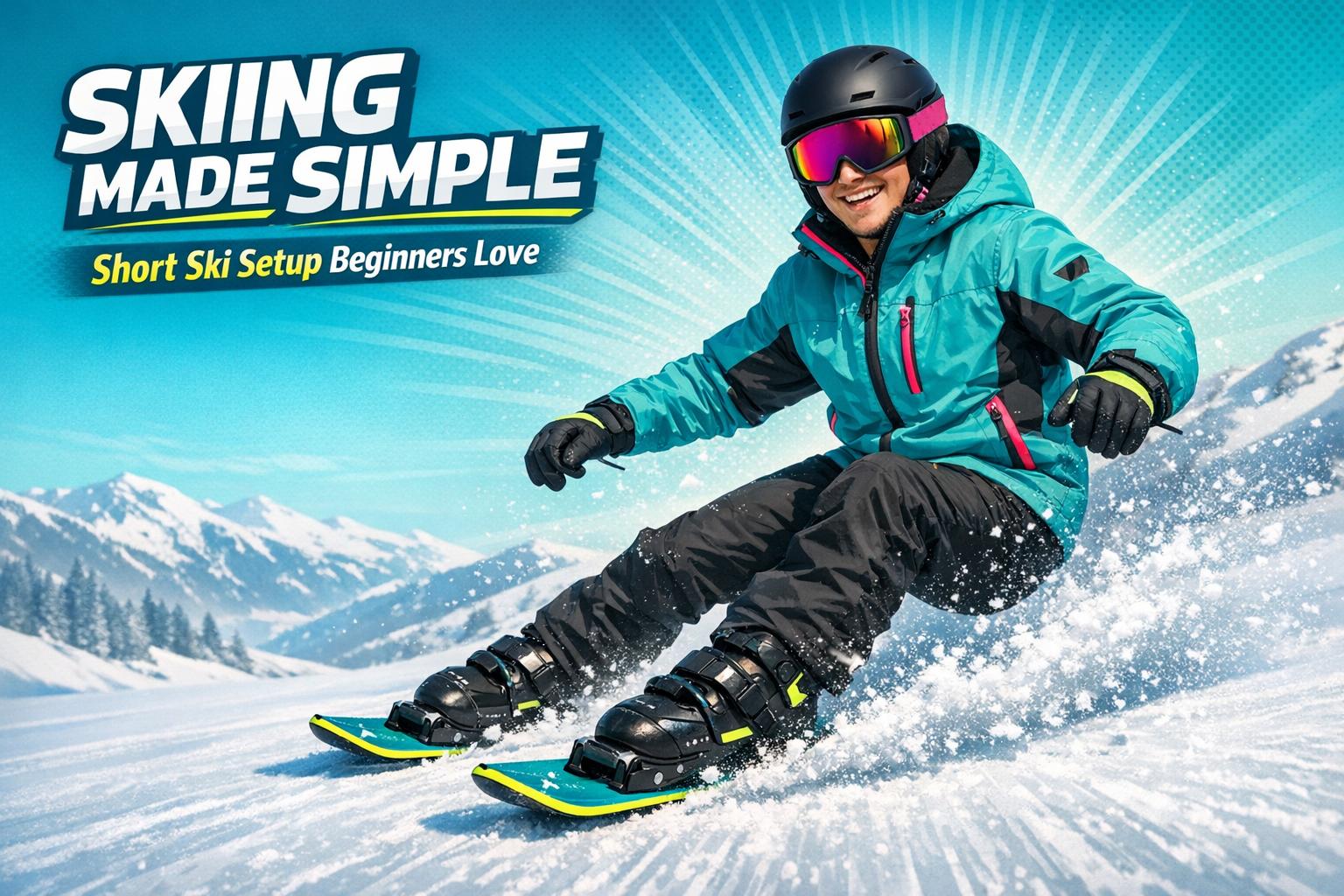
Skiing Made Simple for Everyone
Mini skis tackle two big obstacles that often keep people from skiing: complicated techniques and bulky equipment. They’re lightweight, easy to transport, and much simpler to learn on. This makes them a great option for casual skiers, but the appeal goes beyond that - they’re drawing in a wider audience than traditional skis ever have.
Their skate-like feel is a big plus for anyone familiar with ice skating or inline skating. The learning curve is much shorter, so instead of spending your first day struggling, you’re out there having fun. And isn’t that the whole point of skiing?
Mini skis also make group outings way more enjoyable. Parents can keep up with their kids on beginner and intermediate trails, while grandparents, teens, and first-timers can all enjoy the same runs at their own pace. No one gets left behind, and everyone has a good time.
Snowfeet*: Leading the Mini Ski Revolution
Snowfeet* has taken these benefits and built a product line designed specifically for casual skiers. They offer options that cater to different preferences, whether you want the smooth glide of a skate-like experience or something closer to a traditional ski feel on groomed trails.
Unlike brands focused on high-performance gear for extreme conditions, Snowfeet* centers on simplicity and fun. They’ve made it easy for anyone to gear up quickly and enjoy the slopes, bringing more people into the sport and redefining what skiing can be. Snowfeet* is at the forefront of this mini ski movement, making winter adventures accessible and exciting for everyone.
FAQs
Are mini skis allowed at most ski resorts?
Yes, mini skis are generally allowed at most ski resorts in the U.S. Products like Snowfeet*, which come with standard metal edges, meet the safety standards required by nearly all resorts. Unlike traditional skis, Snowfeet* mini skis are lightweight and easy to carry. They’re great for groomed trails, terrain parks, and slopes, offering a fun and hassle-free way to enjoy your time on the mountain.
What size mini skis should I get for my height and skill level?
When picking the right ski gear, matching it to your skill level and the terrain you’ll tackle is key. Here’s a quick guide to help:
- Beginners: Start with the 38 cm Mini Ski Skates or the 50 cm PRO models. These options offer great balance, making them ideal for learning the basics.
- Intermediate Skiers: The 44 cm Skiskates or 65 cm Skiblades are your best bet. They provide better control, helping you step up your game.
- Advanced Skiers: If you’re after speed and stability, go for the 99 cm Skiblades or the 120 cm Short Skis. These are built for performance and precision.
Snowfeet* products are compact and agile, making them perfect for playful and versatile skiing adventures.
Do I need special boots or bindings for Snowfeet* mini skis?
Nope, you don’t need special ski boots to use Snowfeet*. Most models work just fine with regular winter boots or snowboard boots, which means you can skip the hassle and extra expense. Thanks to the adjustable, tool-free bindings, Snowfeet* mini skis fit a variety of footwear. This makes them super convenient and a fun, low-maintenance way to enjoy skiing without all the bulky gear.











留下評論
此網站已受到 hCaptcha 保護,且適用 hCaptcha 隱私政策以及服務條款。