




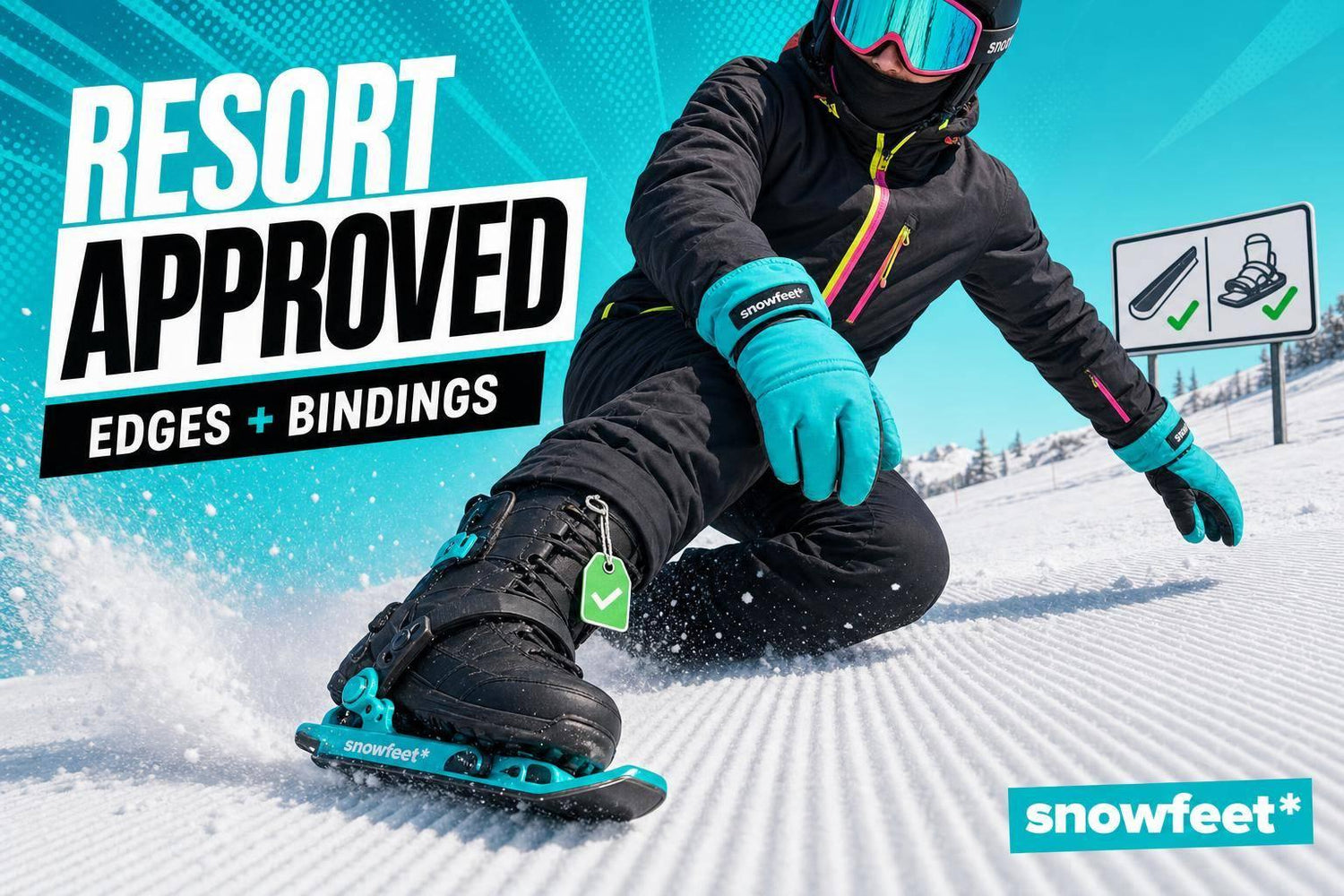
Yes - but only if the resort says yes. That’s the whole game. On groomed runs, Snowfeet* approval usually comes down to metal edges, a binding or retention system, and whether the gear looks enough like skis for lift staff to allow it.
Here’s the short version:
- Best odds on groomed runs: Snowfeet* Skiblades 99 cm and 120 cm
- Next best pick: Skiskates 44 cm
- Most likely to get questions: 38 cm, 50 cm, and PRO 50 cm strap-on models
- Big risk: one resort may allow them, while another bans them on the same day
- Before you buy a ticket: check the resort’s device policy and ask about minimum length, metal edges, brakes, and leashes
A few resort examples show how much rules can change:
- Lee Canyon and Angel Fire allow short devices like Snowfeet, snowblades, and ski skates if they meet gear rules.
- Killington lists snow skates under banned sliding devices.
- Perisher allows snowblades with brakes but bans Snowfeet.
- Alta bans ski blades and snow/ski feet.
So, if you want the plain answer: Snowfeet can work on groomed runs, but the more your setup looks like a short ski, the better your odds. If I wanted the least drama in the lift line, I’d stick with Skiblades 99 cm or 120 cm and carry proof of approval if I had it. Nobody wants a long chat with lift ops at 8:45 a.m. :)
Quick comparison:
| Model | Length | Boot setup | Groomed-run fit | Lift approval odds |
|---|---|---|---|---|
| Snowfeet* | 38 cm | Winter shoes | Low-speed groomers | Lower |
| Snowfeet* | 50 cm | Winter shoes | Easy groomers | Lower |
| Snowfeet* PRO | 50 cm | Winter shoes | More stable easy groomers | Lower |
| Skiskates | 44 cm | Ski/snowboard boots | Good | Mid to high |
| Skiblades | 65 cm | Ski boots | Good for short turns | High |
| Skiblades | 99 cm | Ski boots | Strong all-around pick | Higher |
| Skiblades | 120 cm | Ski boots | Most stable pick | Highest |
If you’re trying to avoid lift-line guesswork, think like the resort does: Can this load safely, unload safely, and stop on firm snow? If the answer looks like “short skis,” you’re in better shape.
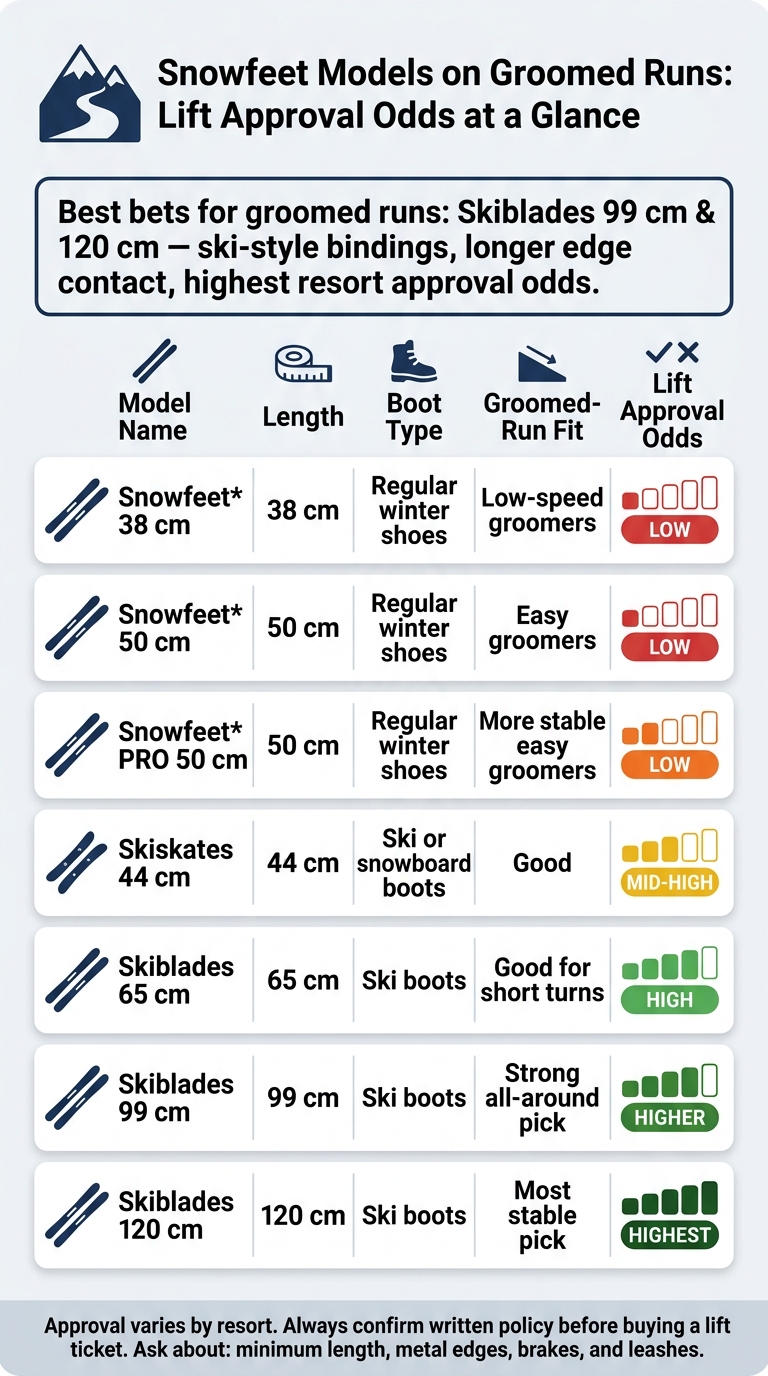
Snowfeet Models on Groomed Runs: Lift Approval Odds at a Glance
All you need to know - Snowfeet* | Skiskates | Skiboards | Snowblades | Skiblades FAQ
How Ski Resorts Classify Snowfeet* on Groomed Slopes
Resorts don’t judge Snowfeet* by the logo. They judge them by how they load, ride, and stop on a lift.
In plain English, lift staff usually look for a few basic things:
- a metal edge
- a secure retention system or binding
- a design that can be loaded, unloaded, and controlled in a safe way on groomed runs
Depending on the build, a Snowfeet* model may get treated like a short ski, a snowblade, or a ski skate. So, yeah, the model design matters just as much as the brand name.
Devices Most Likely to Pass Lift Check
The models with the best shot at approval are Snowfeet* Skiblades 65 cm, 99 cm, and 120 cm, along with Snowfeet* Skiskates 44 cm.
Why these? Simple. They use ski-style edges and bindings, so they look a lot more like gear resorts already know how to handle. And that matters. Resorts tend to favor models that look and load like short skis.
Angel Fire Resort in New Mexico groups snowblades, ski skates, and Snowfeet together and allows them only if they have metal edges and a retention device. Diamond Peak in Nevada takes a similar approach, explicitly permitting short skis as long as they have bindings.
What Lift Staff May Reject
The shorter and more strap-on a device looks, the tougher the sell.
Most staff concerns come back to the same issues: no binding, no retention system, or a strap-on design used with regular winter boots. That setup can work on snow, sure, but from a resort’s point of view, it may not fit their safety rules.
Perisher Ski Resort in Australia is a good example. Their published equipment list allows snowblades and skiboards with binding brakes, but explicitly bans Snowfeet and short mini skis alongside ski bikes and snow decks.
Wintergreen Resort in Virginia draws much the same line: snowblades are allowed with a retention device, but snowskates are not allowed at all. So even if a device rides fine on packed snow, it can still get turned away if it doesn’t match the resort’s equipment categories.
Next, the model list shows which Snowfeet* formats fit groomed runs best.
Why Snowfeet* Still Works for Most Casual Riders
Long skis still win if your goal is top speed.
But for casual riders, Snowfeet* has a lot going for it. They’re lighter, easier to learn, and easier to carry. On groomed runs, that means resort approval often comes down to the exact Snowfeet* model you bring. That one detail can make or break lift access.
Which Snowfeet* Models Fit Groomed Runs Best
Among Snowfeet* models, binding style and boot type do a lot of the heavy lifting when it comes to resort approval. On groomed runs, the big thing is simple: does the setup look and behave like normal ski gear? The closer it does, the less attention it tends to get in the lift line.
Snowfeet* 38 cm, 50 cm, and Snowfeet PRO 50 cm
These are the easiest to pack and carry. That’s the big draw. But they also tend to get the most side-eye from lift staff.
Why? They strap onto regular winter shoes. And that strap-on setup is the one most likely to spark questions at the lift. It doesn’t look much like standard ski gear, so staff may stop and check policy first.
The Snowfeet PRO 50 cm is the steadiest of the three. It has a wider and longer platform built to feel more like a ski and add stability. So, yes, they’re fun and easy to bring along. But they’re also the models most likely to need a quick approval check before you ride.
Snowfeet* Skiskates 44 cm
Skiskates sit in the middle of the lineup in a good way. They’re a solid pick for riders who want that skate-like feel without making resort staff wonder what just rolled into line.
They use ski- or snowboard-boot bindings, which makes them easier for resorts to sort into the ski-equipment bucket. That matters. A lot.
They can also handle light powder up to about 4 in (10 cm), though they work best on groomed snow and light powder only.
Snowfeet* Skiblades 65 cm, 99 cm, and 120 cm
Skiblades are the closest match to normal short skis. That makes them the safest bet in the Snowfeet* lineup for groomed runs.
They use standard bindings and fit into the short-ski category that many resorts already know. In plain English: they’re less likely to cause a lift-line debate.
The 65 cm model has a 4-meter turning radius, which makes it a good fit for short, tight turns on groomed runs. The 99 cm gives you a bit more length and a more balanced feel. The 120 cm is the longest option, and it gives you the most stability of the group.
Still, even the most ski-like setup doesn’t get an automatic pass. Resort approval comes down to the written equipment policy, and that’s the next thing to check.
| Model | Length | Boot Type | Best For |
|---|---|---|---|
| Snowfeet* 38 cm / 50 cm / PRO 50 cm | 38–50 cm | Regular winter shoes | Travel, casual use, beginners |
| Skiskates | 44 cm | Ski or snowboard boots | Groomed runs |
| Skiblades | 65 cm | Ski boots | Tight carving, groomed runs |
| Skiblades | 99 cm | Ski boots | Balanced groomed terrain |
| Skiblades | 120 cm | Ski boots | Stability, most conservative resort option |
sbb-itb-17ade95
How to Confirm Resort Permission Before You Buy a Lift Ticket
Check the Resort's Policy Page for Device Rules
Once you know which Snowfeet* model you want, check that the resort sees it the same way before you buy a lift ticket.
Start with the resort's policy page. You’re looking for approved device rules and any minimum length limit. Pages often sit under Mountain Safety, Approved Devices, or Snow Sliding Devices. Search terms like snowblades, skiboards, boot skis, skiskates, snow skates, snow sliding devices, and Snowfeet. Then compare your model with the resort’s approved device category.
This matters because resorts don’t all play by the same rulebook. Hoedown Hill in Colorado allows Snowblades and Ski Skates but does not allow Snow Feet, even with metal edges, because it says they are meant for hiking trails and sledding hills. Alta Ski Area in Utah bans ski blades and snow/ski feet, along with snowboards, snow bikes, and snow skates. Meanwhile, Lee Canyon in Nevada lists boot skis and ski-blades as approved devices.
So, the brand name alone won’t save you. Written resort policy is what counts.
If the wording feels fuzzy, call the resort.
Ask the Resort the Right Questions Before You Go
If the written policy doesn’t give you a clear yes or no, call or email.
Ask if your exact Snowfeet* model is allowed on groomed runs and lifts. Ask if there’s a minimum length rule. Ask if the resort wants metal edges, brakes, or a leash. It also helps to ask how staff classify the device: skis, skiboards, skiskates, or something else. And check for any terrain limits, like beginner areas, terrain parks, or packed cat tracks.
Hold on to written approval if you get it. If you speak with someone, note the date, their name, and their role. That small step can save a lot of hassle at the base area. Great Divide in Montana requires 72 hours' advance notice for approval of adaptive devices.
If the answer still feels murky, assume the gear could be treated as nonstandard equipment and turned away at the mountain. Not fun, but better than finding out after you’ve paid.
A Simple Pre-Trip Gear Checklist
Before you book tickets or hit the road, check these basics:
- Model and lift access confirmed - the resort approves your specific Snowfeet* model for both lifts and groomed runs.
- Metal edges present - Winter Park and Northstar California require them.
- Retention device ready - check whether the resort requires a leash, brake, or other runaway-prevention device.
- Boot fit verified - your boots work with the binding or strap system, and you can load and unload a lift with control.
Conclusion: The Safest Snowfeet* Choice for Groomed Runs
Yes, sometimes - but only if the resort allows the device. Snowfeet* can work on groomed runs, but resort policy is the gatekeeper. And those rules can change a lot from one mountain to the next.
Once you’ve confirmed the resort says yes, the choice gets pretty simple. If approval is more likely with gear that looks and works more like skis, the safest bets are Snowfeet Skiblades 99 cm or 120 cm*. Their longer length, standard bindings, and ski-style shape make them the most ski-like Snowfeet* option. The 120 cm model also gives you more stability on firm morning groomers, which is nice when the snow feels a bit hard and chattery.
Skiskates 44 cm are a solid second pick. They look the most like short skis, and that ski-style design gives them better odds of resort approval than the foot-mounted models.
The 38 cm and 50 cm Snowfeet* models win on portability. They’re easy to toss in a bag and go. But there’s a tradeoff. If you want that grab-and-go setup, this is the group that needs the strictest policy check. Their boot-mounted design can set off nonstandard-equipment rules, and the shorter edge contact makes them a better match for easy, uncrowded groomed runs at lower speeds.
Before you buy a lift ticket, confirm the resort’s policy. If you have written approval, bring it with you. That small step can save you a long, awkward chat at the lift.
FAQs
Can I use Snowfeet* on chairlifts?
Yes. A lot of users say getting on and off chairlifts feels simple and low-stress, especially when they compare it with skis or a snowboard.
Because your feet move on their own, it’s often easier to keep your balance and glide off the lift without that awkward, clunky moment. Snowfeet* products are also easier to handle in lift areas because they’re lighter, less bulky, and easier to move around with.
Which Snowfeet* model is least likely to get rejected?
Snowfeet PRO (50 cm) is usually the Snowfeet* model least likely to get turned away at ski resorts. It has metal edges, safety leashes, and a ski-like build, which lines up with what many resorts look for in their equipment rules.
All modern Snowfeet* products come with these safety features. But the PRO stands out for its stability and more predictable feel on groomed runs.
That said, resort rules can vary, so it’s smart to check with your specific resort before you go.
What should I ask a resort before I go?
Before you go, contact the resort and check its policy on short skis or skiskates. Most Snowfeet* products meet common safety standards, with metal edges and leashes, but each resort can make its own rules.
Ask if short skis or skiskates are allowed on groomed runs. If you're using models with release bindings (99 cm and longer), ask if the resort requires professionally calibrated DIN settings too.











留下評論
此網站已受到 hCaptcha 保護,且適用 hCaptcha 隱私政策以及服務條款。