



















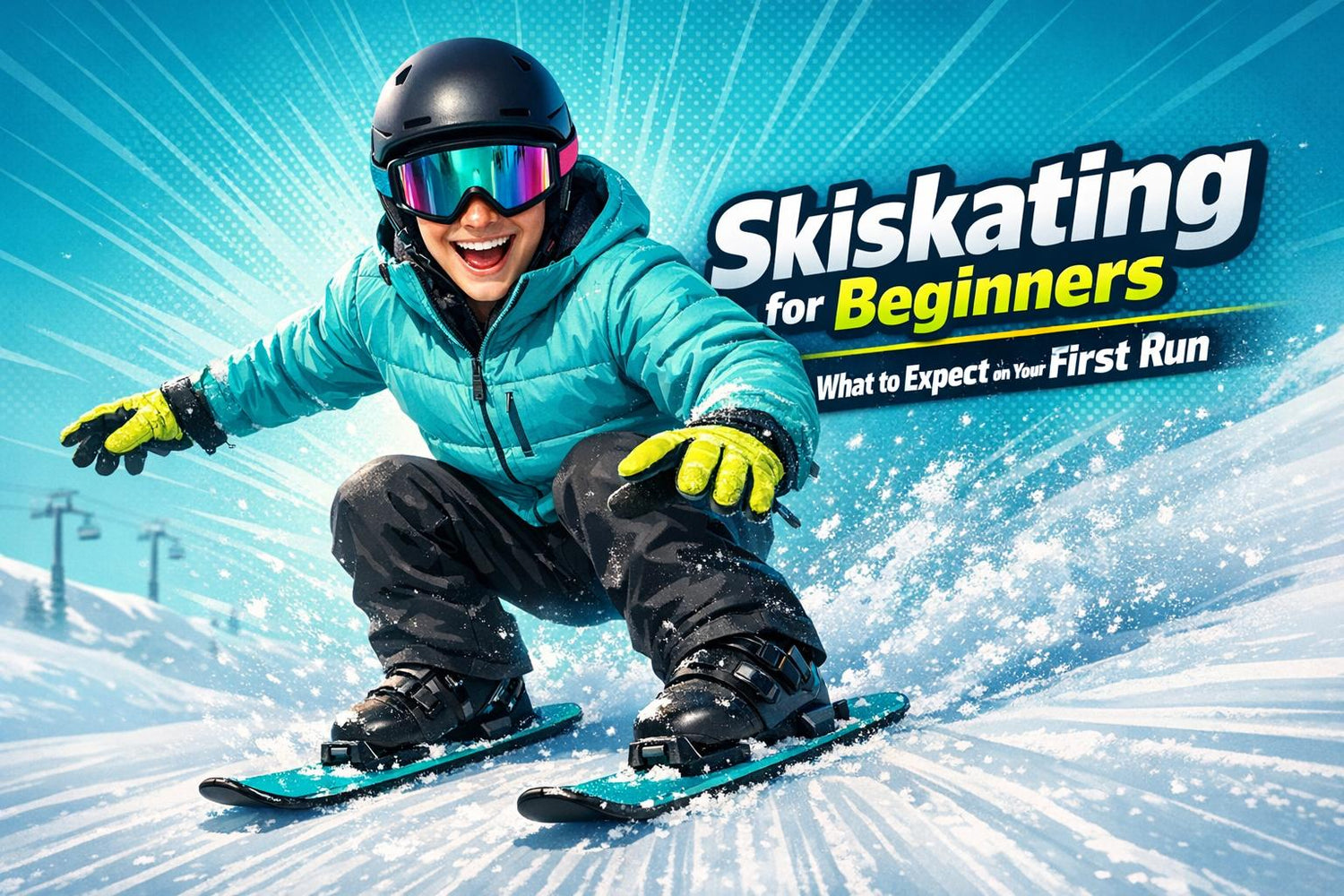
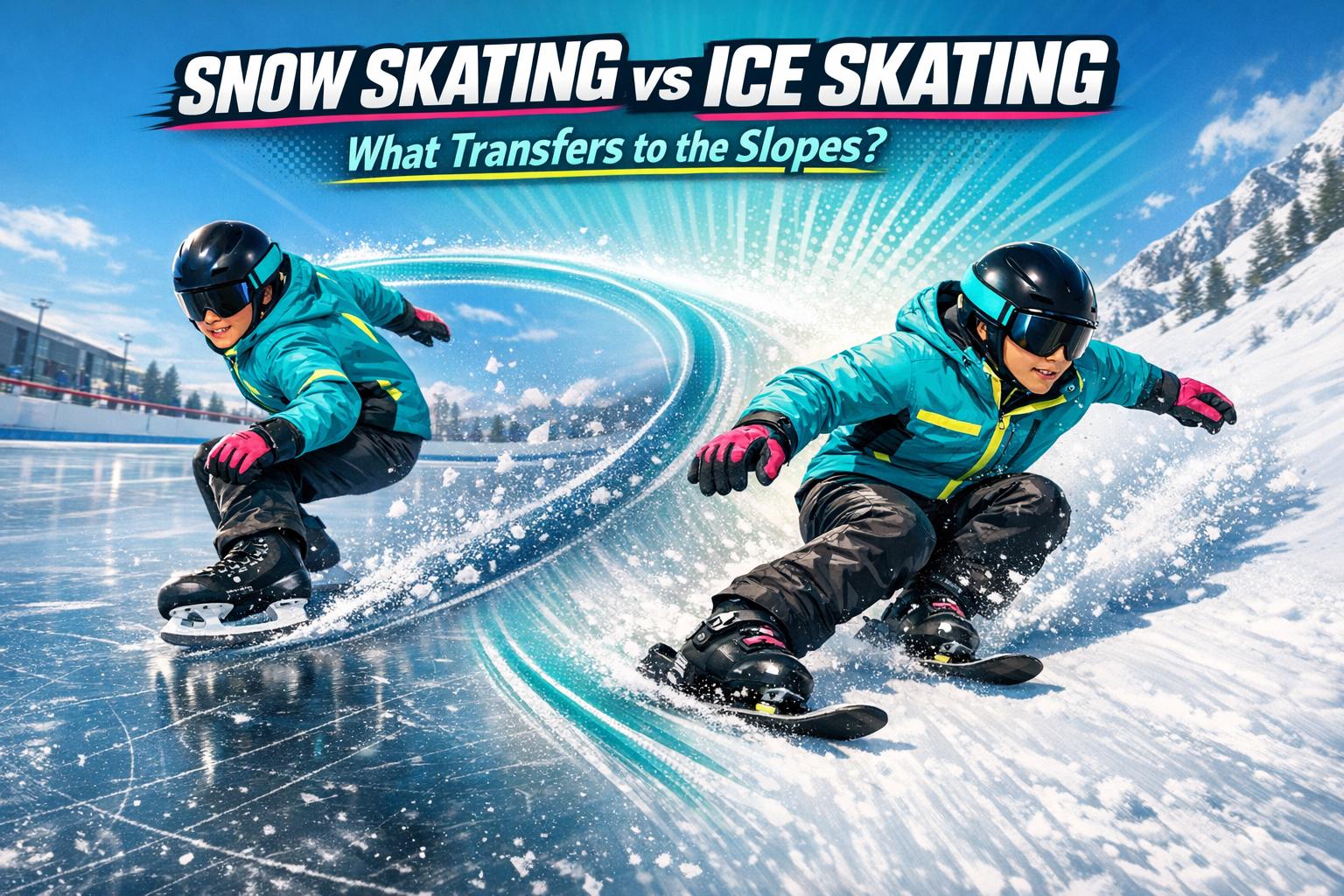
Skiskating is a fun mix of skiing and skating that’s perfect for beginners. Instead of bulky skis or snowboards, you use short, lightweight skates like Snowfeet Skiskates. These strap onto your regular winter boots, making them easy to carry and quick to set up. If you’ve ever ice skated or rollerbladed, you’ll feel right at home.
Here’s what you need to know before you hit the slopes:
- Gear: Snowfeet Skiskates (just 17 inches long) are great for control and easy turns. Pair them with a helmet, goggles, gloves, and layered clothing for safety and comfort.
- Terrain: Start on green circle slopes or bunny hills for gentle, beginner-friendly runs. Look for packed powder or groomed trails for the best learning experience.
- Techniques: Focus on balance, short strides, and gentle weight shifts for turns. Use the built-in heel brake to stop safely.
- Tips: Avoid leaning too far forward, and always check uphill for other riders. Falls happen, but with short skates, they’re easier to recover from.
Skiskating is simple to learn, and most beginners can glide and turn within 20–40 minutes. It’s a great way to enjoy the slopes without the hassle of traditional gear. Ready to give it a shot? Grab your skates, pick a sunny day, and start gliding!
Gear and Preparation Before You Start
Getting your gear sorted ahead of time can save you a lot of hassle once you're on the mountain. One of the best parts about skiskating is how little equipment it requires compared to traditional skiing or snowboarding. No long lines at the rental shop, no lugging around oversized gear bags, and no need for specialized boots that might only see the light of day a couple of times a season. Let’s break down why Snowfeet* are a great choice for beginners and how to dress to stay safe and comfortable.
Why Snowfeet Skiskates Work Well for Beginners
Snowfeet* Skiskates are just 44 cm long, making them much shorter than regular skis. This compact design gives you more control and makes it easier to navigate turns without worrying about crossing ski tips - a common struggle for beginners.
The adjustable bindings are another game-changer. They attach to boots you probably already own, so there’s no need to buy or rent extra gear. You can set them up at home in about five minutes, saving you from fumbling with adjustments in the cold. Just tighten the straps for a snug fit, and you’re good to go. To keep your skiskates in top shape, wipe the metal edges dry after each use and apply wax to the base daily.
"These skiblades are so much fun and easy to control. Never going back to regular skis." - Andrew B.
Clothing and Safety Gear for Your First Run
The right clothing is key to staying warm and safe while skiskating. A three-layer system works best:
- Base Layer: Go for moisture-wicking thermal underwear to keep sweat off your skin.
- Mid-Layer: Add insulation with a fleece or lightweight down jacket.
- Outer Layer: Finish with a waterproof shell made from materials like Gore-Tex or eVent fabric. Look for jackets with built-in snow skirts and pants with elastic gaiters to keep snow out if you take a tumble.
Safety gear is just as important. A snow helmet is non-negotiable - it reduces the risk of head injuries by 7 times compared to not wearing one. Pair your helmet with anti-fog goggles, waterproof gloves, tall ski socks, and a neck warmer. On especially cold days, hand warmers in your pockets can be a lifesaver.
| Item | What to Look For |
|---|---|
| Helmet | MIPS protection, ski/snow rated |
| Goggles | Anti-fog lens, UV protection |
| Jacket | Waterproof shell, built-in snow skirt |
| Pants | Waterproof with elastic gaiters |
| Gloves/Mittens | Waterproof, insulated |
| Socks | Tall ski socks, moisture-wicking |
With your gear dialed in and safety covered, you’ll be ready to hit the beginner slopes and start learning the basics of skiskating.
Picking the Right Terrain as a Beginner
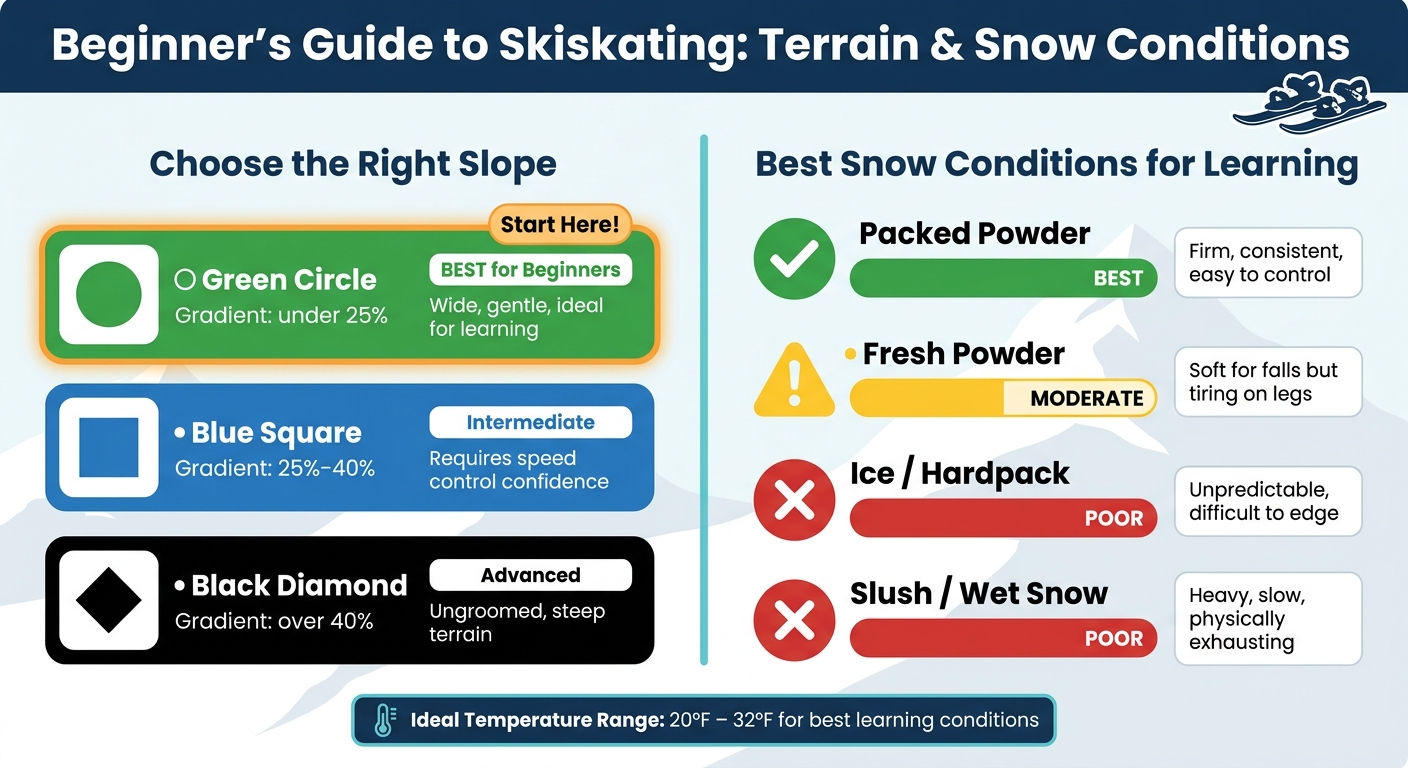
Skiskating Snow Conditions & Slope Guide for Beginners
Choosing a slope that matches your skill level is a game-changer. Snowfeet* Skiskates, with their compact 44 cm design, give you better control, making gentle terrain a great starting point for beginners.
How U.S. Resort Slope Ratings Work
In the U.S., ski resorts use a color-coded system to rate slopes:
- Green circles: Beginner-friendly with gradients under 25%. These runs are wide and gentle, ideal for learning.
- Blue squares: For intermediate skiers, with gradients between 25% and 40%. These require more confidence in speed control.
- Black diamonds: Advanced terrain with gradients over 40%, often featuring ungroomed surfaces.
As a beginner, stick to green circles or the bunny hill near the base of the mountain. Bunny hills often have magic carpet lifts, which are much easier to use than chairlifts, especially when you're just starting out. Keep in mind that trail ratings reflect the steepest section of a run, so even a green trail might have a short, steeper stretch. Take it slow and master essential skiing tips for beginners to get comfortable with the terrain before picking up speed.
"The key to skate skiing fast is preserving your forward momentum and letting gravity do all of the work for you, even if you are heading up a hill." - Charlotte Ogden, Retired Nordic Ski Team Member
Understanding these trail ratings will help you pick slopes that make learning safer and more enjoyable.
Best Weather and Snow Conditions for Learning
The weather and snow conditions can make or break your learning experience. Aim for temperatures between 20°F and 32°F. Snow in this range stays firm enough to hold an edge but soft enough to cushion your falls. Below 20°F, snow gets icy and harder to control, while above 32°F, it turns slushy, which can sap your energy quickly.
When it comes to snow surfaces, packed powder or machine-groomed trails are ideal. Many resorts, like Vail, Park City, and Mammoth Mountain, release daily grooming reports to help you plan. A freshly groomed trail provides a smooth, predictable surface, so you can focus on building your skills instead of battling tricky terrain. Avoid trails labeled "icy" or "slushy", as skiing in variable snow conditions makes controlling your speed much harder.
| Snow Condition | Suitability for Beginners |
|---|---|
| Packed Powder | Best - firm, consistent, and easy to control |
| Fresh Powder | Moderate - soft for falls but tiring on the legs |
| Ice / Hardpack | Poor - unpredictable and difficult to edge |
| Slush / Wet Snow | Poor - heavy, slow, and physically exhausting |
Basic Skiskating Techniques for Beginners
Once you've chosen your slope and checked the snow conditions, it’s time to get moving. Here’s the cool part: Snowfeet* Skiskates feel more like ice skating or inline skating than traditional skiing. So, if you’ve ever strapped on hockey skates or rollerblades, you’ll probably recognize some of the basics.
Stance and Balance on Skiskates
Getting your stance right is key to staying upright and enjoying the ride. Stand with your feet shoulder-width apart, knees slightly bent, and keep your weight centered - or just a bit back. Why? Snowfeet* Skiskates are only 44 cm long, so leaning forward too much can make the short blades catch the snow, sending you tumbling. Instead, aim to keep your weight over the middle or even slightly toward the back of the skate.
Here’s a pro tip: stagger your feet a little, with one foot a few inches ahead of the other. Lean forward slightly from your hips. This position helps you stay stable and reduces side-to-side wobbling.
How to Glide, Turn, and Stop
Once you’re feeling steady, it’s time to move! Start with a controlled, skate-like stride - kind of like how you’d accelerate on hockey skates. Push off with one foot, shift your weight onto the gliding foot, and then push off with the other. Keep your strides short and controlled; they work better for beginners than long, sweeping pushes.
Turning is a breeze with Snowfeet* Skiskates because they respond quickly to even small weight shifts. Want to turn right? Just apply gentle pressure on your right foot and let your body follow along.
Stopping is just as straightforward. To slow down gradually, spread your weight evenly across both feet. Need to stop faster? Use the integrated heel brake by pressing your heel down firmly. It’s a simple but effective way to bring things to a halt.
sbb-itb-17ade95
Common Beginner Problems and How to Fix Them
Even with the right stance and technique, your first few runs might still include some wobbles or unexpected tumbles. The good news? Most beginner issues boil down to a few common habits that are easy to fix. Plus, Snowfeet* Skiskates make learning smoother than traditional skis, so you’ll be gliding with confidence sooner than you think.
How to Recover from Falls and Stay Stable
One of the biggest challenges for new skiskaters is avoiding the "back seat" stance - where your hips drop behind your heels instead of staying balanced over your feet. This often happens when nerves kick in, causing you to lean away from the slope. Unfortunately, this makes it harder to control your edges and complicates turning or stopping on short skis. The solution? Keep your shins gently pressing forward into your boots and your hips aligned over your mid-foot.
If you do take a tumble, don’t worry - recovering with Snowfeet* Skiskates is easier than with traditional skis. At just 44 cm long, the shorter length means less leverage, so your legs are less likely to twist or cross awkwardly. To get back up:
- Swivel your skiskates so they point across the slope (not downhill).
- Bring your feet below your hips.
- Place your hands on the snow in front of you and push yourself up.
This recovery process is quick - just a few seconds - and much less daunting than it sounds. Research in alpine ski instruction shows that 70–80% of beginner falls are caused by stance and balance mistakes rather than speed or equipment issues. So, nailing your stance early can save you a lot of trouble.
Want a helpful drill? On a flat area, practice bending your ankles and knees slowly, like you’re riding an elevator down. Keep your shins pressing into your boots the whole time. A few reps of this before your first run will help you feel more stable and in control.
Staying in Control on Busy Slopes
Once you’ve got your stance sorted and feel confident recovering from falls, it’s time to tackle the challenge of crowded slopes. Busy trails can feel intimidating when you’re still getting used to your edges, but staying in control is all about awareness and quick reactions.
Here’s the number one rule, as emphasized by the National Ski Areas Association (NSAA): the downhill rider always has the right of way. It’s your responsibility to avoid skiers or snowboarders below you, not the other way around. Always check uphill before starting or merging onto a new trail section.
This is where Snowfeet* Skiskates really stand out. Their compact design makes sharp, precise turns much easier compared to traditional skis that require wide arcs to change direction. Instead of big sweeping turns, link a series of small S-turns to stay in control and maintain a manageable speed. Brad Tolin, a user, sums it up perfectly:
"They're great for carving and navigating crowded slopes without feeling bulky." - Brad Tolin
One pro tip: keep your eyes scanning 20–30 feet ahead, not down at your feet. Spotting obstacles early gives you time to react, and with Snowfeet* Skiskates’ quick response to weight shifts, it’s usually all you need to steer clear of trouble.
Conclusion: Getting Started with Skiskating
Skiskating is an easy way to dive into downhill snow sports without the hassle of bulky gear or needing years of practice. With Snowfeet* Skiskates, you’ve got a compact, backpack-friendly option that works with your regular winter boots. This means you can focus on having fun instead of wrestling with traditional ski equipment.
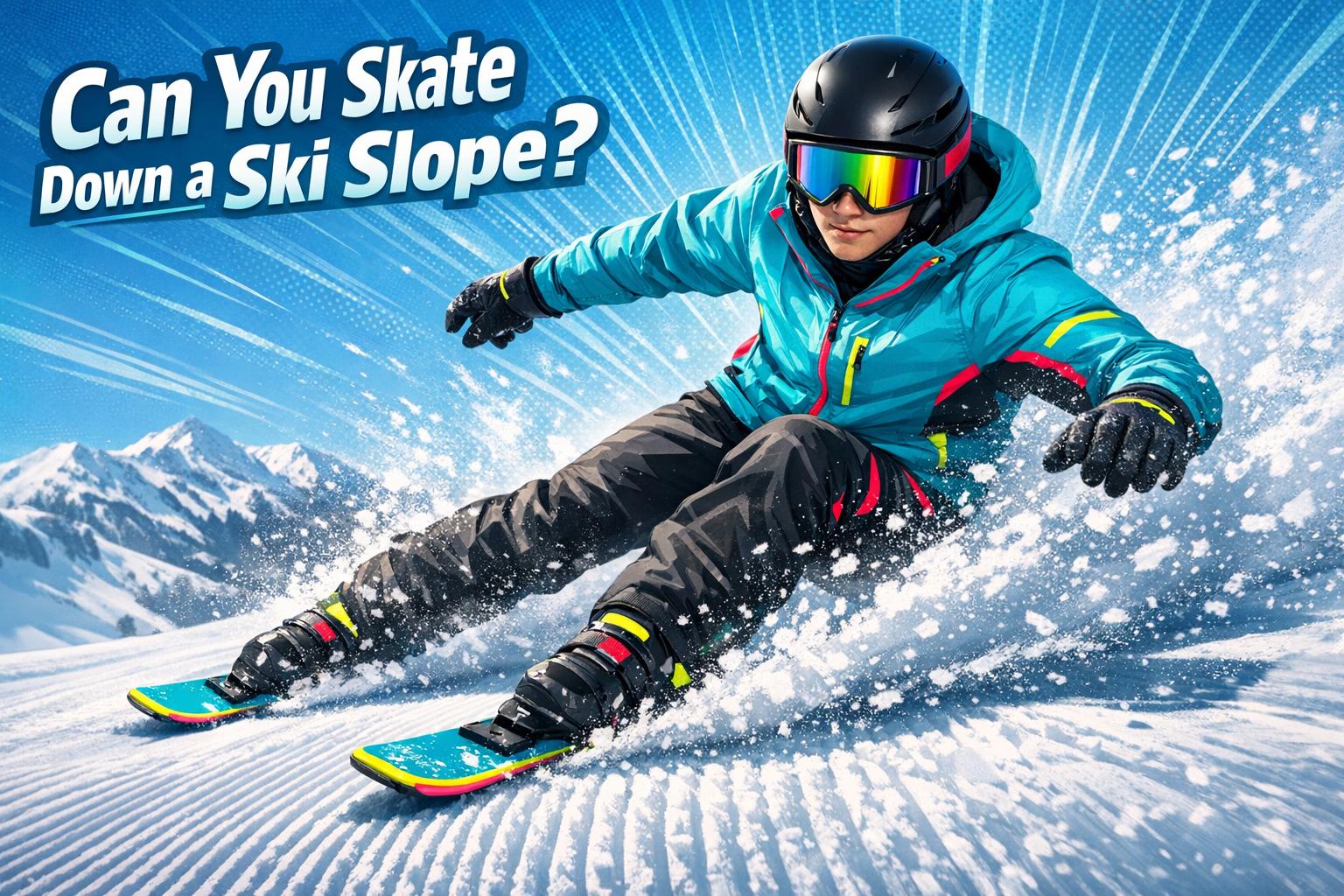
Using the gear and techniques mentioned earlier, you can master the basics - like maintaining balance, smooth gliding, controlled turns, and stopping safely - in just one afternoon on a beginner-friendly green-circle slope. And yes, falling is part of the learning process, but thanks to the shorter length of Snowfeet*, falls are usually less dramatic and much easier to bounce back from compared to traditional skis.
Start at a beginner area on a day when temperatures hover between 20–32°F. Set a manageable goal, like completing one or two controlled runs, and chances are you’ll end your day eager to come back for more.
Skiskating also fits perfectly into a winter lifestyle beyond the slopes. Whether you’re tagging along with skier friends, staying active during colder months, or heading out on a weekend trip, Snowfeet* Skiskates are easy to pack, quick to use, and simple to pick up again even after a break.
Ready to get started? It’s easy: find the best ski destinations for beginners, double-check your boot size matches your Snowfeet* setup, and pick a date. Unlike traditional skiing or snowboarding, which often require a big commitment of time and money, Snowfeet* lets you hit the slopes quickly and enjoy the ride from your very first run. So grab your gear and get out there - you’re going to love it.
FAQs
Can I use my regular winter boots with Snowfeet* Skiskates?
Yes, Snowfeet Skiskates* work perfectly with regular winter boots, making them super convenient and easy to use. They’re built to simplify skiskating, offering a fun and versatile option for those who might not want to deal with traditional skis or snowboards. Beginners, in particular, will appreciate how approachable they are.
Are Snowfeet* Skiskates allowed at most U.S. ski resorts?
Snowfeet* Skiskates are usually not permitted at most ski resorts in the U.S. Resorts often classify them in the same category as snowskates, which are commonly restricted from ski lifts and resort areas. It’s always a good idea to check the rules of the specific resort you plan to visit beforehand.
What’s the best way to ride a chairlift with skiskates?
To ride a chairlift with skiskates, start by making sure your skates are securely strapped on. Keep your feet close together to maintain balance as you approach the lift. When sitting down, ease yourself onto the chair and avoid leaning too far forward or to the side - it’s all about staying centered. Snowfeet skiskates are light and simple to handle, so with the right approach, you’ll be just fine. If you’re unsure or need extra guidance, don’t hesitate to ask the ski resort staff for tips specific to your gear.











ฝากความคิดเห็น
เว็บไซต์นี้ได้รับการคุ้มครองโดย hCaptcha และมีการนำนโยบายความเป็นส่วนตัวของ hCaptcha และข้อกำหนดในการใช้บริการมาใช้