




















Snowblades sú krátke, ľahké lyže (25–47 palcov) navrhnuté pre jednoduchú ovládateľnosť a zábavu na svahoch. Na rozdiel od tradičných lyží nepotrebujú palice a fungujú s bežnou zimnou alebo snowboardovou obuvou, čo z nich robí bezproblémovú voľbu. Perfektné pre začiatočníkov aj expertov, snowblades sú dostatočne kompaktné, aby sa zmestili do batohu, čo ich robí ideálnymi na cestovanie alebo rýchle výlety do hôr.
Kľúčové vlastnosti:
- Dĺžka: Možnosti 65 cm, 99 cm a 120 cm pre rôzne úrovne zručností.
- Kompatibilita obuvi: Použite svoju bežnú zimnú alebo snowboardovú obuv – nie je potrebné žiadne špeciálne vybavenie.
- Terén: Skvelé na upravené trate, ľahký POWDER a dokonca freestyle triky.
- Cena: Začína na 635 $ za základné modely.
Ak vás unavuje objemná výbava alebo hľadáte jednoduchší zimný šport, snowblades môžu byť vašou ideálnou voľbou. Sú ľahko naučiteľné, zábavné na používanie a cenovo dostupnejšie v porovnaní s tradičnými setmi. Čítajte ďalej a zistite, prečo získavajú popularitu v roku 2026.
Čo sú snowblades a čím sa líšia od tradičných lyží?
Definícia a základné vlastnosti
Snowblades sú zábavnou, kompaktnou alternatívou k tradičným lyžiam. Sú kratšie a širšie, čo ich robí neuveriteľne ľahko ovládateľnými a jazda na nich je skvelá zábava. Vďaka ich dvojitým špičkám – zakriveným nahor na oboch koncoch – môžete ľahko kĺzať dopredu aj dozadu, čo ich robí ideálnymi pre rýchle oblúky a hravé triky. Na rozdiel od tradičných lyží snowblades nepotrebujú palice, čo vám poskytuje voľnejší a freestyle zážitok z lyžovania.
Jednou z výrazných výhod Snowfeet* snowblades je ich prenosnosť. Zabudnite na ťahanie objemnej výbavy – tieto sa ľahko zmestia do batohu alebo kufra auta. Či už cestujete na svahy autom alebo letíte na zimnú dovolenku, cestovanie s ľahkou výbavou nikdy nebolo jednoduchšie.
Ďalší plus? Snowfeet* snowblades majú viazania, ktoré fungujú s bežnou zimnou alebo snowboardovou obuvou. To znamená, že nie je potrebná špecializovaná obuv ani zložité nastavenia. Stačí sa pripnúť a vyraziť na svah – také jednoduché. Tieto rozdiely odlišujú snowblades a robia z nich skvelú voľbu pre širokú škálu lyžiarov.
Snowblades vs. Tradičné lyže a snowboardy
Snowblades nevynikajú len svojou veľkosťou a dizajnom – sú odlišné aj v mnohých ďalších ohľadoch. Tu je rýchle porovnanie, ktoré ukazuje, ako sa stavajú oproti tradičným lyžiam a snowboardom:
| Vlastnosť | Snowblades | Tradičné lyže | Snowboardy |
|---|---|---|---|
| Dĺžka | Krátke a kompaktné | Dlhé a predĺžené | Stredne veľké |
| Hmotnosť | Ľahké a ľahko prenosné | Ťažšie, s extra výbavou ako palice | Vo všeobecnosti stredná hmotnosť |
| Krivka učenia | Rýchle a intuitívne | Vyžaduje čas na zvládnutie techník | Stredne dlhé obdobie prispôsobenia |
| Prenosnosť | Extrémne prenosné | Vyžaduje špeciálne puzdrá alebo strešné nosiče | Prenositeľnejšie ako lyže, ale menej ako snowblades |
| Požiadavky na topánky | Funguje s bežnými zimnými alebo snowboardovými topánkami | Vyžaduje špecializované lyžiarske topánky | Vyžaduje špecifické snowboardové topánky |
| Univerzálnosť terénu | Skvelé na upravené trate a hravé oblúky | Zvládne všetko od trás po hlboký POWDER | Najlepšie do parkov a na zmiešaný terén |
| Požiadavky na vybavenie | Minimálne - palice nie sú potrebné | Zahŕňa palice a ďalšie vybavenie | Bez potreby palíc |
| Efektivita nákladov | Dostupné s menšími požiadavkami na výbavu | Súčasť drahšieho vybavenia | Rôzne podľa modelu a značky |
Snowblades sú obzvlášť obľúbené pre svoju jednoduchosť použitia a rýchle učenie. Na rozdiel od tradičných lyží, ktoré často vyžadujú zvládnutie techník ako klinové oblúky alebo paralelné rezanie, snowblades vám umožnia hneď sa pustiť do jazdy. Ich stredová pozícia robí vyvažovanie prirodzeným, čo začiatočníkom dodáva sebavedomie už od prvých jázd.
A nezabúdajme ani na úsporu nákladov. S menším množstvom doplnkov a jednoduchšími viazaniami sú snowblades šetrnou alternatívou k tradičnému lyžovaniu. To z nich robí skvelú voľbu pre začiatočníkov alebo kohokoľvek, kto si cení pohodlie a dostupnosť. Snowfeet* si v tomto segmente vybudoval silnú pozíciu, ponúkajúc kombináciu jednoduchosti, prenosnosti a zábavy, ktorú je ťažké prekonať.
Technické špecifikácie a vlastnosti
Možnosti veľkostí: 65 cm, 99 cm a 120 cm
Snowblades sú dostupné v troch rôznych dĺžkach, aby vyhoveli každému od začiatočníkov po skúsených jazdcov.
65 cm skiblades sú najkratšie a ideálne pre začiatočníkov alebo tých, ktorí milujú rýchle, ostré oblúky. Sú skvelé na upravené trate alebo terénne parky, ponúkajú odpúšťajúcu a ľahko ovládateľnú jazdu. S dĺžkou len 65 cm sú ideálne na naučenie sa základov snowbladingu. Snowfeet* ich ponúka za počiatočnú cenu 635 $, čo je cenovo dostupný spôsob, ako sa pustiť do tohto športu.
Pre vyváženejšiu jazdu sú 99 cm skiblades ideálnym kompromisom medzi stabilitou a obratnosťou. Navrhnuté pre stredne pokročilých jazdcov, zvládajú rôzne podmienky, od carvingu na upravených zjazdovkách po ľahšie dni s POWDER. Tieto modely začínajú na cene 675 $, pričom je k dispozícii aj verzia optimalizovaná na POWDER za rovnakú cenu.
120 cm krátke lyže sú špičkovou voľbou pre pokročilých jazdcov. S dĺžkou okolo 120 cm poskytujú stabilitu a rýchlosť tradičných lyží, pričom si zachovávajú kompaktný, obratný pocit snowblades. Cena je 775 $, ideálne na zvládanie strmších svahov a rôznych snehových podmienok s istotou.
Tieto možnosti kombinujú výkon a pohodlie, vďaka čomu je Snowfeet* výnimočnou alternatívou k tradičným lyžiarskym zostavám.
Viazacie systémy a kompatibilita topánok
Snowfeet* posúva použiteľnosť na ďalšiu úroveň so svojimi všestrannými viazacími systémami. Ich snowblades sú navrhnuté tak, aby bez problémov fungovali so štandardnými zimnými topánkami, snowboardovými topánkami alebo lyžiarskymi topánkami. To znamená, že nie je potrebné drahé špecializované vybavenie – stačí sa pripnúť a vyraziť na svah. Je to premyslená funkcia, ktorá zjednodušuje vašu výbavu a robí zo Snowfeet* lídra na trhu.
Materiály konštrukcie a prenosnosť
Snowfeet* spája svoje všestranné dizajny s odolnou konštrukciou a bezkonkurenčnou prenosnosťou. Ľahká konštrukcia robí tieto snowblades ľahko prenosnými a skladateľnými – zmestia sa pohodlne do kufra auta alebo dokonca do batohu. Cestovanie s nimi je hračka.
A nenechajte sa oklamať ich kompaktnou veľkosťou. Tieto snowblades sú navrhnuté tak, aby podávali výkon v rôznych snehových podmienkach. Údržba je tiež jednoduchá, Snowfeet* ponúka vosk už od 6 $ na udržanie ich v top forme na dlhú dobu. Či už prenasledujete POWDER alebo sa prechádzate po upravených zjazdovkách, tieto snowblades sú stavané vydržať a cestovať kamkoľvek pôjdete.
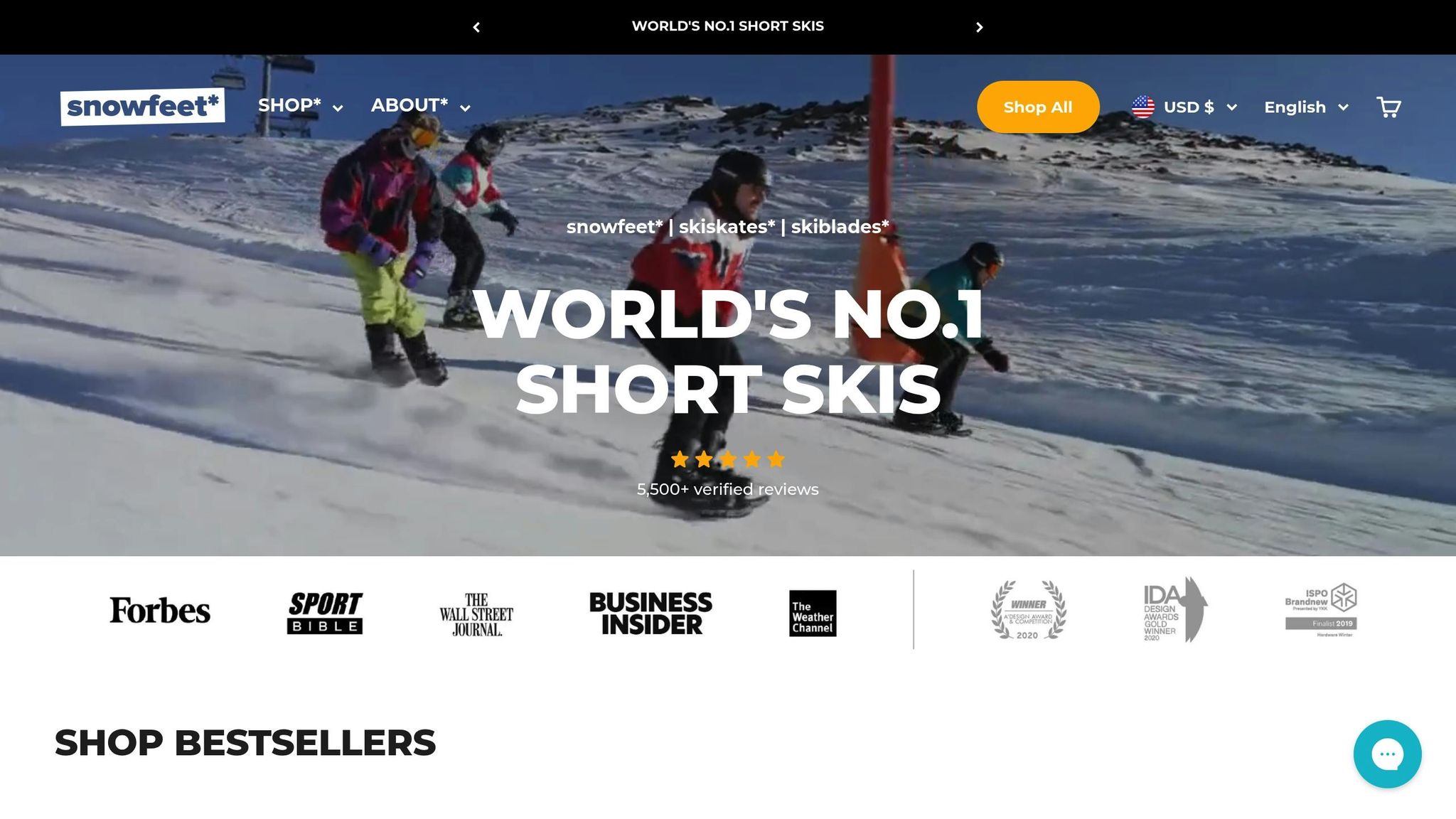
Snowboardista skúša Snowfeet* | Ktoré Snowfeet* krátke lyže sú najlepšie? | Recenzia Snowblades 44, 65, 99
sbb-itb-17ade95
Ako si vybrať správne snowblades
Výber správnych snowblades sa môže spočiatku zdať zložitý, ale ide hlavne o to, aby ste si vybrali výbavu podľa svojej úrovne zručností, obľúbeného terénu a štýlu jazdy. Snowblades, na rozdiel od tradičných lyží, sú kratšie a obratnejšie, čo vám poskytuje jedinečný spôsob, ako sa pohybovať po zjazdovkách. Pozrime sa, ako vám dĺžka čepele a preferencie terénu môžu pomôcť vybrať to najlepšie.
Výber správnej dĺžky podľa vašej úrovne zručností
Vaše skúsenosti na zjazdovkách zohrávajú veľkú úlohu pri rozhodovaní o ideálnej dĺžke čepele. Kratšie snowblades sa ľahšie ovládajú, zatiaľ čo dlhšie ponúkajú viac stability, ale vyžadujú lepšiu kontrolu.
- Začiatočníci: Ak ste nováčik v snowbladingu, siahnite po 65 cm skiblades. Sú odpúšťajúce, ľahko ovládateľné a ideálne na učenie základov. Ich kratšia dĺžka umožňuje ľahké ostré oblúky, čo vám pomôže rýchlo získať sebadôveru. Navyše sú skvelým a cenovo dostupným štartom v porovnaní s dlhšími, viac zastrašujúcimi lyžami, ktoré často nájdete v požičovniach.
- Stredne pokročilí jazdci: Ak máte základy zvládnuté a chcete niečo všestrannejšie, 99 cm skiblades sú pevnou voľbou. Vyvažujú obratnosť s dostatočnou plochou na zvládnutie rôznych snehových podmienok. Sú skvelé pre jazdcov, ktorí hľadajú jedno vybavenie vhodné na rôzne terény.
- Pokročilí jazdci: Pre skúsených snowbladerov sú 120 cm krátke lyže tou pravou voľbou. Poskytujú stabilitu pri rýchlom carvingu a náročných svahoch, pričom sú stále obratnejšie ako tradičné lyže. Vyžadujú však presnú techniku a trochu viac sily na ovládanie, čo ich robí ideálnymi na posúvanie hraníc na strmých alebo nepredvídateľných terénoch.
Keď už máte určenú svoju úroveň zručností, zamyslite sa, kde budete najčastejšie jazdiť.
Úvahy o teréne a výkone
Vaše obľúbené terény sú rovnako dôležité ako vaša úroveň zručností pri výbere správnych snowblades. Sortiment Snowfeet* pokrýva rôzne terény, takže si môžete nájsť ideálnu voľbu pre svoj štýl.
- Upravené zjazdovky: Snowblades sú vo svojom živle na dobre udržiavaných tratiach. Modely dlhé 65 cm vám umožnia ľahko robiť rýchle, ostré oblúky, zatiaľ čo čepele dlhé 99 cm pridávajú trochu viac rýchlosti a stability bez pocitu ťažkosti.
- Powder dni: Hlboký sneh si vyžaduje väčšiu plochu, aby vás udržal na povrchu namiesto toho, aby ste sa ponárali. Model 99 cm POWDER je navrhnutý špeciálne pre čerstvý, nadýchaný sneh, zatiaľ čo 120 cm krátke lyže si dobre poradia aj s ľahkým powderom. Čepele dlhé 65 cm však nemusia mať dostatočnú plochu pre tieto podmienky.
- Terénne parky a freestyle: Ak milujete otočky, skoky a triky, 65 cm skiblades sú vaša najlepšia voľba. Sú ľahké a ľahko ovládateľné, ideálne na salto a odpúšťajúce pristátia. Pre väčšie skoky ponúkajú modely 99 cm zvýšenú stabilitu a zároveň si zachovávajú obratnosť.
- Backcountry a turistika: Pre dobrodružstvá mimo vyšľapaných ciest je prenosnosť kľúčová. Čepele 65 cm a 99 cm sú ľahké a dostatočne kompaktné, aby sa zmestili do batohu, čo ich robí praktickou voľbou pre výlety do backcountry, kde je mobilita nevyhnutná.
Nakoniec by vaše preferencie terénu mali viesť vaše rozhodnutie. Ak sa držíte upravených zjazdoviek a občasných jázd v parku, modely 65 cm alebo 99 cm vám pravdepodobne najviac vyhovujú. Ak však túžite po POWDER alebo sa chcete vysporiadať s rôznorodými podmienkami, 99 cm POWDER alebo 120 cm krátke lyže sú lepšie možnosti. Sortiment Snowfeet zabezpečuje, že nájdete správnu voľbu bez preťaženia vašej výbavy.
Prečo Snowfeet Snowblades prekonávajú tradičné lyže
Tradičné lyže sú často dlhé a neobratné, čo pre mnohých predstavuje problém. Snowfeet mení pravidlá hry, zameriava sa na zábavu, slobodu a jednoduchosť použitia, čím vytvára úplne nový spôsob, ako si užiť zimné športy.
Sortiment produktov a prístup k dizajnu
Snowfeet má niečo pre každého, s veľkosťami od ultra kompaktných 38 cm Mini Ski Skates až po 120 cm krátke lyže. V porovnaní s tradičnými lyžami, ktoré zvyčajne merajú medzi 59–71 palcami (150–180 cm), je to veľký rozdiel z hľadiska ovládateľnosti a pohodlia. Sortiment Snowfeet vyhovuje všetkým úrovniam zručností a štýlom jazdy, ponúkajúc kratšie, obratnejšie možnosti.
- Mini Ski Skates (38 cm) a Snowfeet PRO (50 cm) sú perfektné pre rekreačných jazdcov. Sú také kompaktné, že ich môžete hodiť do batohu a byť pripravení na rýchle dobrodružstvo kedykoľvek.
- Stredne dlhé Skiblades sú skvelé pre nadšencov carvingu, ktorí chcú presnosť bez objemu.
- 120 cm krátke lyže predstavujú rovnováhu medzi stabilitou a obratnosťou, ideálne pre tých, ktorí chcú kombináciu oboch.
Predstava, že dlhšie lyže automaticky znamenajú lepšiu stabilitu a kontrolu? Snowfeet to vyvracia dizajnmi, ktoré uprednostňujú obratnosť a jednoduchosť. Ich kratšie lyže prinášajú zábavnú, dynamickú skúsenosť, ktorá predefinuje, čo je na snehu možné.
Vysokokvalitné materiály a všestrannosť
Jedným z najväčších problémov tradičných lyží je ich veľkosť – sú objemné, ťažko sa skladujú a nie sú práve vhodné na cestovanie. Snowfeet to rieši inteligentným a odolným dizajnom.
- Skiskates majú drevené jadro podobné tým v špičkových lyžiach, čo zaručuje odolnosť a výkon.
- Skiblades používajú odolné kompozitné materiály, vďaka čomu sú pripravené na všetko od upravených zjazdoviek po terénne parky.
Tradičné lyže často potrebujú strešné nosiče alebo extra skladovací priestor, ale kompaktné modely Snowfeet robia spontánne výlety hračkou. Či už vyrážate na miestny kopec alebo objavujete divočinu, nebudete potrebovať veľa vybavenia, aby ste to zvládli.
Ďalší bonus? Mnohé modely Snowfeet fungujú s bežnými zimnými alebo snowboardovými topánkami, takže nemusíte investovať do špecializovaných lyžiarskych topánok. S možnosťami 38 cm a 50 cm môžete rýchlo prejsť od chôdze k jazde, čo zjednodušuje vaše zimné dobrodružstvá.
Ceny a jednoduchosť použitia
Lyžovanie môže rýchlo zdražieť. Medzi lyžami, viazaním, topánkami a palicami tradičné zostavy často stoja nemalé peniaze. Požičovne nie sú o nič lepšie – počas sezóny sa to rýchlo nazbiera. Snowfeet ponúka cenovo dostupnú alternatívu. Napríklad Mini Ski Skates začínajú na 250 $, čo uľahčuje vstup do tohto športu ako kedykoľvek predtým.
Okrem ceny tradičné lyže vyžadujú od jazdcov veľa – silu, rovnováhu a schopnosť zvládnuť ich dĺžku. Kratšie dizajny Snowfeet sú viac odpúšťajúce a intuitívne, s lepšou kontrolou hrán a menším zaťažením pohybov. To znamená, že strávite viac času užívaním svahov a menej času snažením sa udržať na nohách.
Skladovanie a preprava? Žiadny problém. Na rozdiel od tradičných lyží, ktoré potrebujú objemné nosiče, väčšina modelov Snowfeet sa ľahko zmestí do batohu alebo malej športovej tašky. To je zmena pravidiel pre každého, kto žije na malom priestore alebo často cestuje.
Snowfeet nie je len ďalšia značka lyží – je to nový pohľad na zimné športy. Kým tradičné firmy sa držia starých vzorcov, kompaktné a všestranné dizajny Snowfeet otvárajú úplne nový svet možností pre milovníkov snehu.
Záver
Snowblades prinášajú v roku 2026 nový vietor do zimných športov. Vďaka kratšiemu a ľahšiemu dizajnu sa ľahšie učia a ponúkajú lepšiu kontrolu, čo uľahčuje objavovanie svahov bez obvyklých ťažkostí. Tento šikovný dizajn je veľkou súčasťou toho, prečo sa Snowfeet stalo lídrom v hre so snowblades.
Výbava Snowfeet je o pohodlí a zábave. Sú navrhnuté tak, aby zapadli priamo do vášho režimu – hodíte ich do batohu, pripnete na bežné zimné alebo snowboardové topánky a môžete vyraziť. Od ultra kompaktných Mini Ski Skates po všestranné Short Skis, ich ponuka je stavaná na prenosnosť a jednoduchosť, pričom stále poskytuje solídny výkon.
Vďaka jednoduchému prístupu Snowfeet môžete zahodiť objemné vybavenie a stráviť viac času užívaním si snehu. Tieto kompaktné lyže vám dávajú slobodu a obratnosť na to, aby ste mohli rezať svah ako nikdy predtým. Navyše ich premyslený dizajn a kvalitné materiály zaručujú, že neobetujete výkon kvôli pohodliu.
Ak sa vám tradičné lyžovanie zdalo príliš komplikované alebo drahé, teraz je čas vyskúšať snowblades. Rok 2026 je vaša šanca na zmenu, vyraziť na svahy a objaviť úplne nový spôsob, ako si užiť zimu. Kto vie? Možno sa budete čudovať, prečo ste ich neskúsili skôr.
Často kladené otázky
Ako sa snowblades porovnávajú s tradičnými lyžami pre začiatočníkov z hľadiska jednoduchosti použitia a výkonu?
Snowblades sú skvelou voľbou pre začiatočníkov, hlavne preto, že ich kratšia dĺžka ich robí oveľa ľahšie ovládateľnými v porovnaní s tradičnými lyžami. Táto zvýšená kontrola pomáha novým lyžiarom rýchlejšie získať sebavedomie, pretože sa môžu sústrediť na učenie základov bez pocitu preťaženia výzvou zvládania dlhších lyží.
Ale nejde len o jednoduchosť použitia - snowblades prinášajú na svahy hravý nádych. Ich kompaktná veľkosť znamená ostrejšie zákruty a hladšie manévrovanie, ideálne pre každého, kto chce ľahší a uvoľnenejší lyžiarsky zážitok. Pre začiatočníkov sú snowblades nízkotlakým spôsobom, ako sa ponoriť do zimných športov a užiť si kopec zábavy.
Ako si vybrať správnu dĺžku snowblade podľa mojej úrovne zručností a preferovaného terénu?
Výber správnej dĺžky snowblade závisí od vašej úrovne zručností a miesta, kde plánujete jazdiť. Tu je rýchly prehľad, ktorý vám pomôže rozhodnúť sa:
- 65 cm snowblades: Najkratšia možnosť, ktorá sa takmer cíti ako korčuľovanie. Sú veľmi obratné, čo ich robí skvelou voľbou pre začiatočníkov alebo kohokoľvek, kto miluje rýchle a ostré zákruty.
- 99 cm snowblades: Pevný stred, ponúkajúci kombináciu kontroly a stability. Fungujú dobre na rôznych terénoch a sú vhodné pre väčšinu úrovní zručností.
- 120 cm snowblades: Najdlhšia možnosť, prinášajúca tradičnejší lyžiarsky zážitok. Sú najstabilnejšie, ideálne pre pokročilých jazdcov alebo na širšie svahy.
Nezáleží na dĺžke, Snowfeet snowblades sú navrhnuté na výkon, takže máte zaručenú zábavnú a plynulú jazdu, ktorúkoľvek si vyberiete.
Môžem použiť svoje súčasné lyžiarske alebo snowboardové topánky so snowblades? Ako to ovplyvní moju skúsenosť na svahu?
Áno, určite môžete použiť svoje súčasné lyžiarske alebo snowboardové topánky so snowblades, a práve to ich robí tak univerzálnymi. Mnoho ľudí inklinuje k snowboardovým topánkam, pretože sú super pohodlné a poskytujú skvelú bočnú oporu - ideálne na triky alebo náročný terén. Na druhej strane, lyžiarske topánky sú rovnako kompatibilné a dodávajú vám ten klasický lyžiarsky pocit.
Pri výbere topánok premýšľajte o tom, čo je pre vás najdôležitejšie: komfort, výkon alebo univerzálnosť. Snowblades sú navrhnuté tak, aby bez námahy fungovali s oboma typmi, takže si užijete plynulú a zábavnú jazdu bez ohľadu na to, ktoré topánky si vyberiete.












Napíš komentár
Táto lokalita je chránená testom reCAPTCHA a vzťahujú sa na ňu pravidlá ochrany súkromia a podmienky poskytovania služby hCaptcha.