







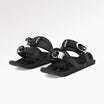












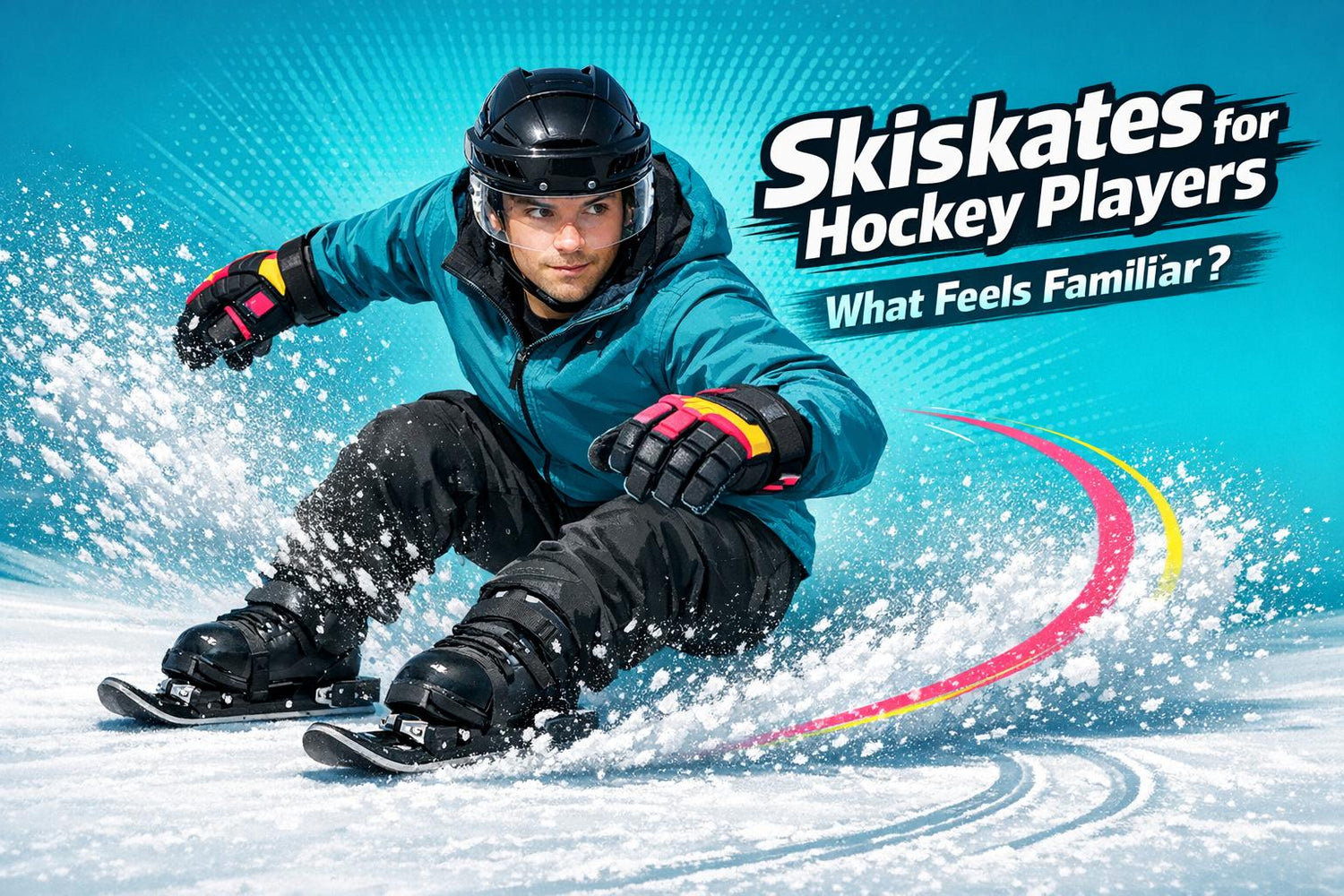
Looking to take your hockey skills to the slopes? Snowfeet* Skiskates might be your perfect match. These compact, 17-inch skate-like devices strap onto regular winter boots, giving hockey players a snow experience that feels natural and intuitive. Why? They mimic the stance, balance, and edge control of hockey skates - something traditional skis and snowboards just don’t offer.
Here’s the quick rundown:
- Familiar Feel: Forward-facing stance, independent foot movement, and sharp edge control - just like on the ice.
- Compact Size: At only 44 cm (17 in.), they’re lightweight and fit in a backpack.
- Easy to Use: No need for special boots or lessons - just strap them on and go.
- Perfect for Hockey Players: Quick turns, tight stops, and agility that matches your skating skills.
Snowfeet* Skiskates are designed to let you transfer your hockey moves to snow without the hassle of learning bulky gear or new techniques. Want to know why they work so well? Let’s break it down.
Hockey Player Tries Snowfeet* Skiskates | See What He Thinks | Skiboards | Short Ski | Mini Ski
Why Hockey Players Struggle With Standard Winter Sports Gear
Hockey players aren’t lacking in skill - they’re just using equipment that doesn’t align with how they move. Their strengths lie in agility, balance, and quick reactions, but traditional winter sports gear doesn’t play to those strengths.
Stance and Movement Differences
In hockey, the body stays forward-facing, with knees bent and weight balanced over the balls of the feet. Every action - whether it’s a sharp turn, quick stop, or sudden acceleration - comes from this athletic, forward-leaning stance. Now imagine strapping on skis that are 160–180 cm long. These force a much wider stance, making those tight, snappy pivots hockey players are used to almost impossible.
Agility and Control Challenges
Hockey thrives on short bursts of movement - think quick edge changes and sharp pivots. Standard skis, being 6–8 times longer than a hockey skate blade, make these fast maneuvers feel clunky and slow. It’s like trying to steer a canoe when you’re used to the precision of a kayak. Snowboards bring their own set of problems. With both feet locked in place, there’s no way to independently control each leg, which is second nature to a hockey player. This lack of freedom makes quick corrections feel awkward and unnatural, adding to the difficulty.
The Steep Learning Curve and Bulky Gear
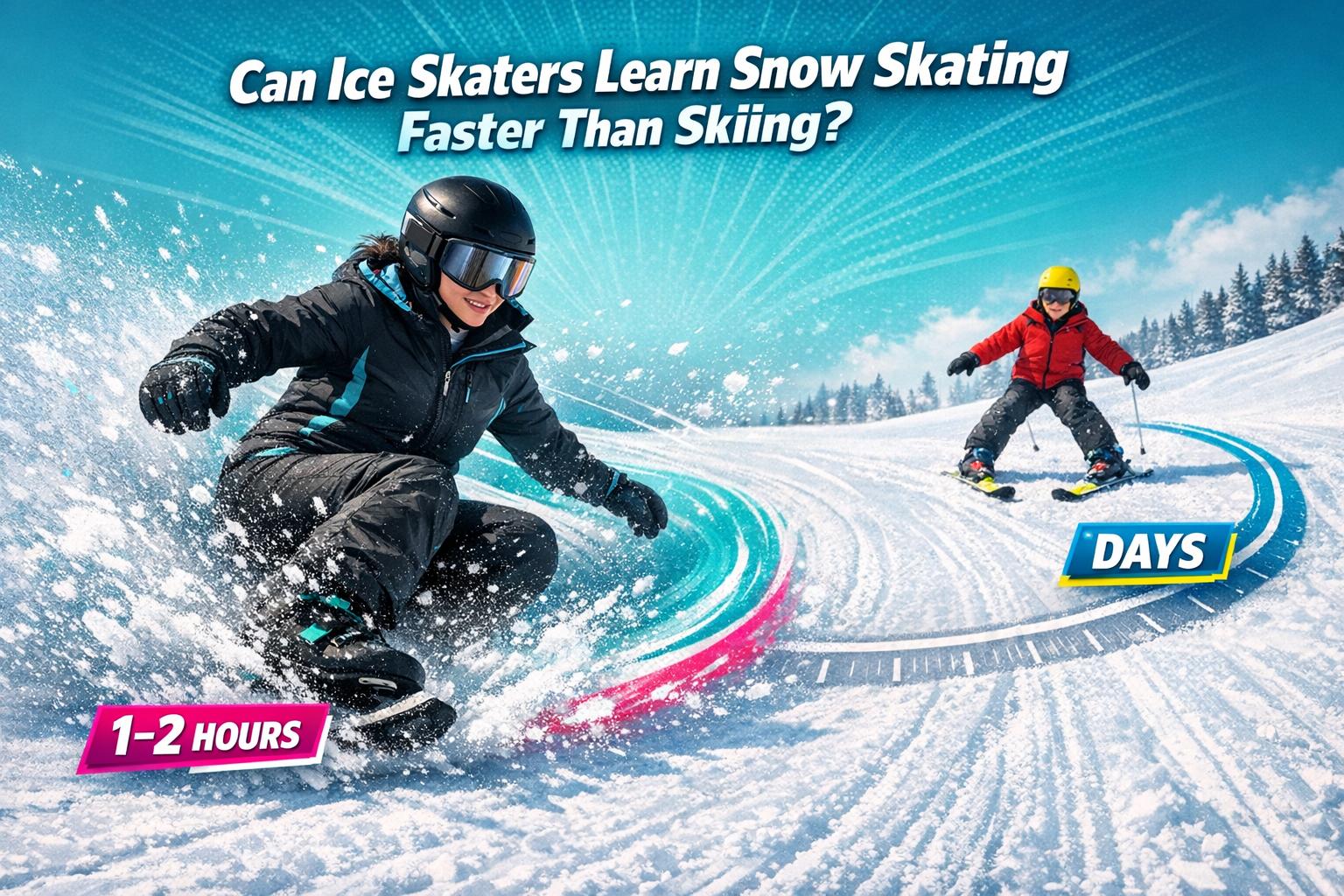
On top of movement challenges, the gear itself is a major adjustment. For hockey players, picking up skiing often means several days of lessons just to get the basics down. Ski schools even advertise 3-day beginner packages because it takes time to unlearn hockey habits and pick up new techniques. Snowboarding can be even tougher - most beginners spend the first day or two falling repeatedly while getting used to the heel-side and toe-side edges.
Then there’s the sheer bulk of the equipment. A pair of all-mountain skis with bindings weighs around 10–12 lbs, while a snowboard with bindings can hit 12–15 lbs. Compare that to a pair of hockey skates, which weigh just 2.5–3.5 lbs. Transporting all that extra weight can feel like a workout before you even hit the slopes.
The takeaway? Hockey players don’t struggle because they lack athleticism - they struggle because the gear isn’t designed for the movements they’ve already mastered.
How Snowfeet* Skiskates Feel Like Hockey Skates
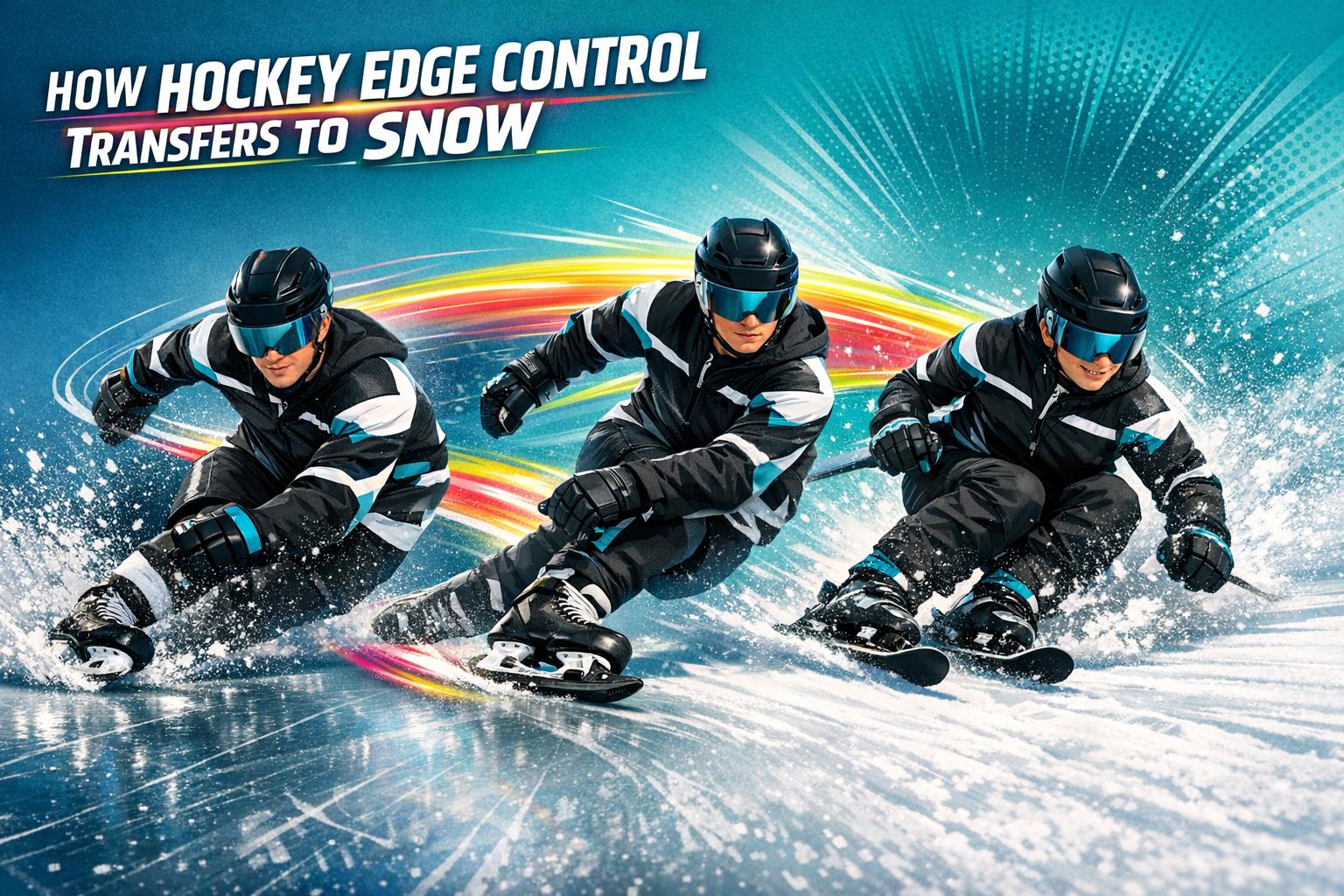
Snowfeet* bring the feel of hockey skates to the slopes, letting you transfer your skating skills directly to snow. If you've spent time on hockey skates, slipping into Snowfeet* Skiskates feels just as natural. They’re designed to match the mechanics of skating - stance, turning, and stopping - with hockey-like precision.
Familiar Stance and Balance
Snowfeet* are built for a stance that feels like second nature to hockey players. Feet stay hip-width apart, knees bent, weight over the balls of your feet, and your chest leaning slightly forward - just like on the ice. Their compact size (about 17 inches or 44 cm long) keeps things balanced without the extra length of traditional skis. That means no awkward adjustments or worrying about long tips and tails. You stick with the stance you already know, and that posture helps maintain sharp edge control.
Edge Control and Turning
Hockey players steer by engaging the inside or outside edges of their skates, using ankle and knee movements. Snowfeet* replicate this perfectly. Rolling your knees initiates turns, while shifting weight to the inside edges lets you carve smoothly. Because they’re short, Snowfeet* make tight turns feel effortless. Unlike traditional skis, you can pull off quick pivots and sharp cuts - moves that mirror your hockey footwork.
Stopping Techniques
Stopping on Snowfeet* feels just like stopping on skates. Forget the “pizza wedge” many skiers struggle to learn. Instead, hockey players can use their go-to hockey stop on snow. Just turn your body across the slope, press the edges uphill, and let friction do the rest. It’s the same movement you’ve perfected on ice. For hard-packed snow, start with a lighter edge angle and gradually increase pressure as you get used to how the edges grip.
| Movement | Hockey Skates | Snowfeet* Skiskates |
|---|---|---|
| Stance | Hip-width, knees bent, weight forward | Identical forward-facing athletic stance |
| Edge Control | Inside/outside blade edges | Inside/outside metal edges, same mechanics |
| Turning | Quick pivots, tight radius turns | Short length enables quick, tight turns |
| Stopping | Hockey stop (sideways edge skid) | Edge-based parallel stop, like hockey stops |
| Foot Independence | Two independent skates | Two independent skiskates |
sbb-itb-17ade95
Snowfeet* vs. Standard Skis and Snowboards for Hockey Players
Snowfeet Skiskates vs. Skis vs. Snowboards for Hockey Players
Compact, Skate-Like Design
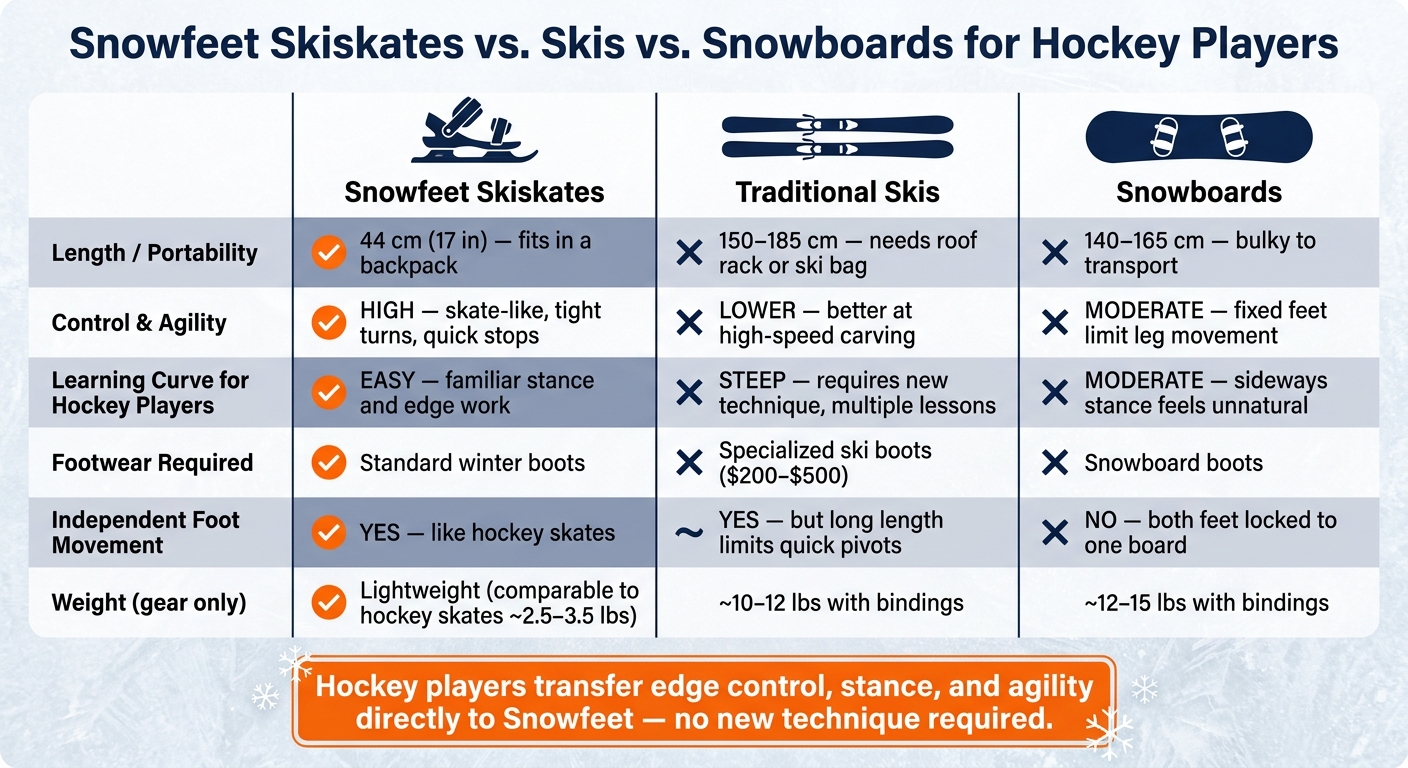
Traditional adult skis typically range from 150 to 185 cm in length, while snowboards are slightly shorter, measuring 140 to 165 cm. Snowfeet*, on the other hand, are just 44 cm (17 in) long, making them significantly smaller than both skis and skiboards (which are around 75–100 cm).
This compact size gives Snowfeet* a hockey-like feel. The edge sits directly under your foot, allowing for quick balance adjustments - similar to how a hockey skate blade works. Plus, their short length eliminates the risk of crossing tips, a common issue for beginners learning to ski.
This design makes them ideal for hockey players, offering the precise control and agility they’re used to on the ice.
Fast Response and Freedom of Movement
Thanks to their size and design, Snowfeet* offer an unmatched level of responsiveness. Hockey players rely on quick edge transitions, sharp turns, and sudden stops - movements that Snowfeet* handle with ease. Unlike traditional skis, which are built for long, smooth arcs, Snowfeet* respond instantly to subtle shifts in weight or a slight knee roll. They react as fast as you can think.
Snowboards, while great for edge hold, come with limitations for hockey players. With both feet locked onto a single deck and a sideways stance, turns require full-body movements, including torso and hip rotation. This can feel unnatural for those accustomed to skating forward. Snowfeet* allow for independent leg action, letting you pivot and redirect effortlessly - just like on the ice.
On groomed runs, Snowfeet* excel at tight, slalom-style turns that mimic the quick cuts hockey players make during a game.
Comparison Table: Snowfeet* vs. Standard Gear
| Aspect | Snowfeet* Skiskates | Traditional Skis | Snowboards |
|---|---|---|---|
| Length/Portability | Compact (44 cm / ~17 in), fits in a backpack | Long (150–185 cm), needs roof rack or ski bag | Long (140–165 cm), bulky to transport |
| Control/Agility | High, skate-like; tight turns, quick stops | Lower agility; better at high-speed carving | Moderate; fixed feet limit independent leg movement |
| Learning Curve | Easy for skaters; familiar stance and edge work | Steep; requires new technique and multiple lessons | Moderate; sideways stance feels unnatural for skaters |
| Footwear | Compatible with standard winter boots | Requires specialized ski boots | Requires snowboard boots |
| Independent Foot Movement | Yes, like hockey skates | Yes, but long length limits quick pivots | No, both feet locked to one board |
For hockey players, the comparison is clear. Snowfeet* don’t just resemble skates - they perform like them too. Whether it’s portability, control, or ease of learning, Snowfeet* align perfectly with the needs of someone transitioning from the rink to the slopes. They’re the go-to option for hockey players looking for a winter sport that feels natural and intuitive.
Practical Benefits of Snowfeet* for Hockey Players
Portable and Lightweight
Snowfeet* are incredibly easy to carry around. Measuring just 44 cm (about 17 inches) long, they’re way smaller than skis or snowboards, which often require bulky roof racks, oversized ski bags, or even checked luggage when traveling.
These fit neatly into a regular backpack - yes, even the same one you might already use for your hockey gear. Whether you’re commuting by car or public transit, they’re simple to stash and grab. For hockey players already lugging hefty gear bags to games, not having to haul a separate ski bag is a game-changer.
Works With Standard Winter Footwear
Say goodbye to dropping $200 to $500 on specialized ski boots. Snowfeet* are designed to attach directly to standard insulated winter boots, saving you money and hassle. If you already own waterproof boots for winter, you’re set to hit the slopes.
For those looking for a bit more control - similar to the snug support of hockey skates - Snowfeet* also work with snowboard boots. These provide a stiffer, more secure fit, especially helpful on steeper runs. This flexibility lets you start with what you already own and upgrade later if you want that extra performance edge.
Use on Any Terrain
Snowfeet* are versatile enough for all kinds of snowy adventures. Whether you’re tackling local hills, cruising through snowy parks, or hitting groomed runs, they adapt to your schedule - no need to plan a full day at a mountain resort.
They perform best on packed or moderately soft snow, making them perfect for quick rides after practice or on a day off. While deep powder or icy terrain might pose more of a challenge, starting on gentler slopes will help you get the hang of it. Just be sure to check the rules at your local resort regarding non-traditional gear before heading out.
Conclusion: Why Snowfeet* Work for Hockey Players
Hockey players can bring their skills straight to the slopes without missing a beat. Thanks to the centered stance and edge control they’re already comfortable with, Snowfeet* let them stay in their hockey groove on snow. Unlike traditional skis or snowboards, which demand learning a whole new technique, these skiskates feel natural.
At just 17 inches long, Snowfeet* Skiskates allow independent foot movement, giving you that skating sensation. Compare this to the 60- to 70-inch length of standard skis, which require a completely different approach. It's a game-changer for anyone who thrives on precision and quick footwork.
What’s even better? Snowfeet* are compact and portable. They fit into any backpack, attach to regular winter boots, and eliminate the need for bulky ski bags. You don’t need to plan a full day at the resort - just grab your Snowfeet* and go. It’s this mix of performance and convenience that sets them apart.
Snowfeet* calls their product "a unique combo of skiing and skating", adding, "if you love skating or ice hockey, you'll pick it up fast."
For hockey players who shy away from complicated gear, Snowfeet* offer an easy way to hit the slopes. They work with the gear you already own and are effortless to carry, making them perfect for players on the move. Ready to feel that skating-like control on snow? Visit snowfeetstore.com to explore models and see prices in USD.
FAQs
Are Snowfeet* Skiskates allowed at ski resorts?
Yes, most ski resorts permit the use of Snowfeet* Skiskates since their metal edges meet standard safety regulations. These skates offer a compact and portable alternative to traditional ski gear and are easy to control, making them a practical choice for resort visitors.
What boots work best with Snowfeet* Skiskates?
Snowfeet* Skiskates are compatible with most snowboard, ski, or sturdy waterproof winter boots. For better control, especially on steeper slopes, ski or snowboard boots are your best bet because they provide solid ankle support. Snowboard boots, in particular, strike a great balance between comfort and flexibility, making them perfect for freestyle tricks. No matter what boots you go with, make sure they’re waterproof and securely attached to the non-release bindings for a safe and fun experience.
Are Snowfeet* Skiskates safe for steep or icy runs?
Snowfeet* Skiskates are at their best on groomed slopes, where their design lets you tap into your hockey skills for better control and agility. Steer clear of steep or icy terrain until you're completely comfortable using them. For a safer experience, stick to smooth, predictable surfaces, and aim to keep your stance centered or slightly leaning back. If you decide to take on more challenging conditions, make sure the metal edges are freshly sharpened for accurate handling.











Zanechať komentár
Táto lokalita je chránená testom reCAPTCHA a vzťahujú sa na ňu pravidlá ochrany súkromia a podmienky poskytovania služby hCaptcha.