



















If you’ve ever wondered whether your hockey skills can help you on the slopes, the answer is yes - big time. The edge control, balance, and quick direction changes you’ve mastered on the ice translate directly to snow sports. Whether you're carving turns or stopping on a dime, the mechanics are surprisingly similar.
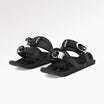
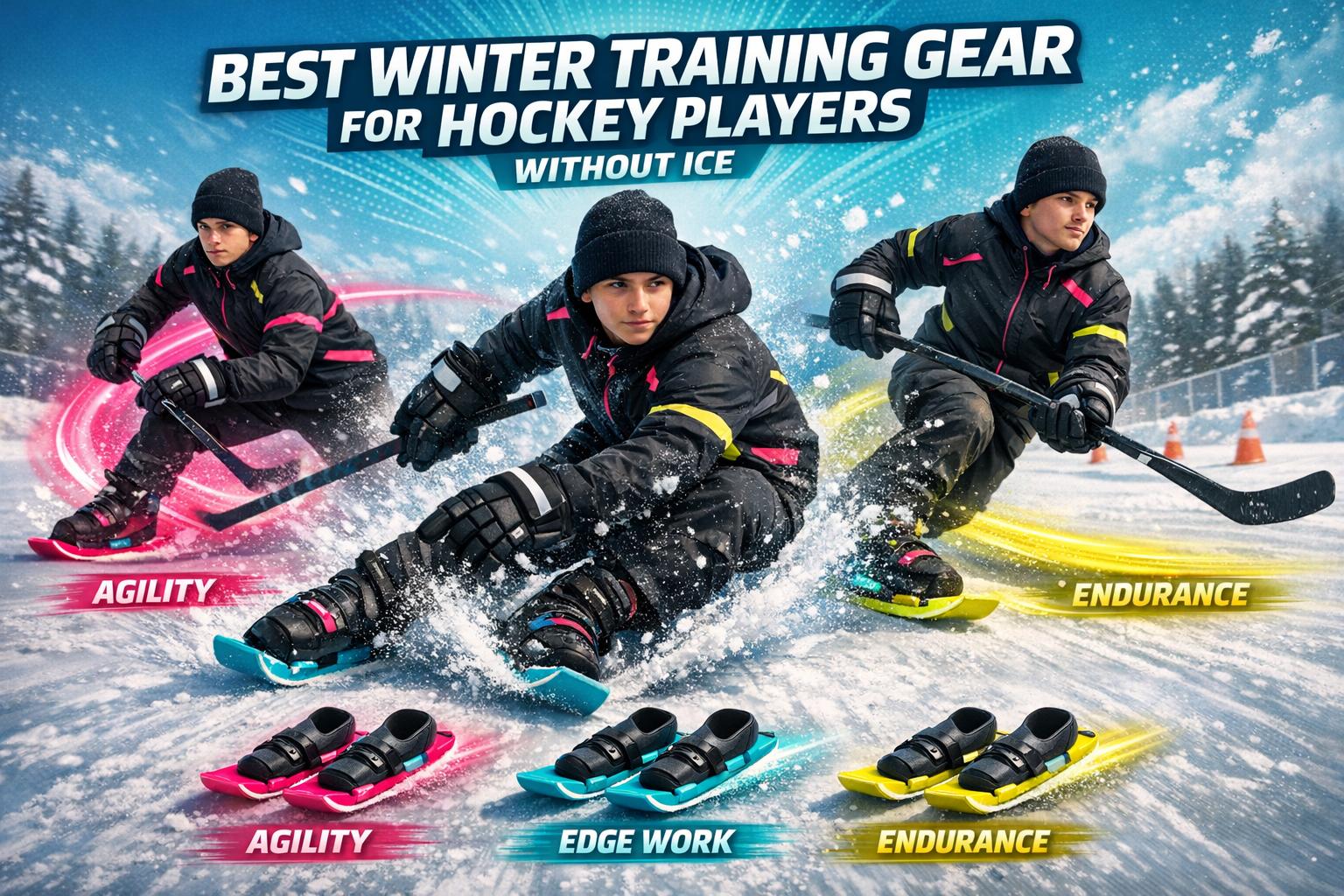
Here’s the kicker: Snowfeet* gear, like Skiskates (44 cm) and Skiblades (65 cm), bridges the gap between hockey skating and snow sports. These shorter, skate-like tools make it easier for hockey players to feel right at home on snow. They’re compact, responsive, and designed to mimic the movements you already know.
Key Takeaways:
- Hockey stance (bent knees, balanced weight) works perfectly on snow.
- Edge control skills from hockey help you carve and manage speed.
- Snowfeet* gear feels closer to hockey skates than long skis, making the transition smoother for players.
Whether you’re a casual skater or a league player, your time on the ice gives you a head start on the slopes. Grab the right gear, tweak your stance slightly, and you’ll be linking turns in no time.
Hockey Skills That Work on Snow
Balance and Stance
Your hockey stance - knees bent, hips back, chest up, and weight centered - is perfect for staying stable on both 44 cm Skiskates and 65 cm Skiblades. Think of it as your "ready position" before a face-off: quads and glutes engaged, knees soft, and eyes forward.
On snow, you'll want to stay a bit more centered. Unlike the consistent surface of ice, snow can be unpredictable, so a neutral fore-aft position helps you react better. The longer length of 65 cm Skiblades naturally adds stability, making the transition feel pretty seamless if you're used to hockey skates.
Once you're comfortable with your stance, the next step is to fine-tune your edge control to make the most of your skating skills on snow.
Edge Awareness and Control
If you're used to managing inside, outside, and flat edges on ice, you'll feel right at home with Snowfeet* steel edges. The same principles apply: rolling your ankles and knees inward or outward engages the corresponding edge. It's the same skill set you've been using since your first skating drills.
However, snow behaves a bit differently than rink ice. On a groomed slope, you won't need as steep an edge angle to turn or control your speed. Plus, the edge on a Skiblade is longer from front to back than a hockey blade, which spreads the pressure out and gives a smoother, more "carvy" feel. Start with gentle ankle rolls instead of aggressive leans to get a feel for the snow.
Lateral Agility and Quick Direction Changes
The lateral explosiveness you've mastered on the ice - whether it's crossovers, quick cuts, or blue-line shuffles - translates beautifully to snow. With the shorter 65 cm Skiblades, you can press your inside edge for quick redirections, mimicking the reactive footwork you're already familiar with. Unlike traditional skis that require long, sweeping arcs, Snowfeet* are designed for the kind of sharp, dynamic movements hockey players excel at.
The compact size also makes crossing one ski over the other way easier compared to full-length skis, which are typically 150–180 cm. Most hockey players find they feel at ease on Snowfeet* after just a couple of runs.
| Hockey Skill | How It Transfers to Snowfeet* |
|---|---|
| Low stance | Keeps you stable and centered on short, responsive platforms |
| Edge control | Helps manage steel-edge pressure for turns and speed control |
| Crossovers and cuts | Enables quick direction changes and short-radius carving |
| Soft knees | Absorbs impacts for smoother handling on uneven terrain |
How to Get Started on Snow with Snowfeet*

Picking the Right Snowfeet* Product
Choosing the right Snowfeet* gear is key to having the best experience on the slopes. If you're all about quick, reactive turns, go for the 44 cm Skiskates (starting at $575). These are compact and agile, perfect for sharp turns and tight spaces. Confident skaters with an aggressive style will feel right at home.
On the other hand, if stability is more your thing, the 65 cm Skiblades (starting at $635) are a better fit. They offer more edge contact, better float in softer snow, and a smoother ride overall. This makes them ideal for those who prefer a more forgiving platform, especially at higher speeds. Both options attach to winter or snowboard boots, so make sure your boots offer strong ankle support.
| Skiskates (44 cm / ~17 in) | Skiblades (65 cm / ~26 in) | |
|---|---|---|
| Best for | Confident, experienced skaters | Beginners or cautious riders |
| Feel | Similar to hockey skates | More ski-like with added stability |
| Turning | Quick, short turns | Wider arcs for smoother transitions |
| Terrain | Groomed runs and terrain parks | Steeper slopes and softer snow |
| Price | From $575 | From $635 |
Once you’ve picked your Snowfeet*, the next step is fine-tuning your stance to stay in control on the snow.
Adjusting Your Stance and Weight Distribution
Start by adopting your trusty hockey stance, but make a few tweaks to suit the snow. Since winter boots are bulkier, flex your ankles and knees a little extra to stay balanced. Your hockey edge control will give you a head start, but these small adjustments are what make the difference.
Keep your weight evenly centered across both feet, especially when you're on a slope. If you lean too much to one side, your Snowfeet* could over-engage its edge, throwing you off balance. To check your stance, bend your knees slightly and feel for equal pressure under both feet. Avoid letting one knee collapse inward - think of it like gearing up for a faceoff: stable, centered, and ready to react.
Once your stance feels solid, it’s time to tackle movement and stopping techniques.
Basic Movements and Stops on Snow
Your hockey skills give you a great foundation, and Snowfeet* will feel natural once you master a few simple moves. Start on flat or gentle slopes, taking short, shuffling steps to get a feel for the gear. Gradually transition to slow glides, keeping your knees bent and your arms forward for balance. As you gain confidence, practice gentle ankle rolls side-to-side to explore your edges.
When it’s time to stop, begin with the snowplow technique. Point your toes inward slightly, forming a shallow "V" shape, and push your heels outward. Apply light inward pressure to slow down - this method is reliable and beginner-friendly. Once you’ve got the hang of that, move on to a hockey-style stop. Rotate both Snowfeet* across the slope and dig in the uphill edges to brake. It’s similar to stopping on ice, but you won’t need to be as aggressive with your edge angle. Start practicing at low speeds and build up as you feel more comfortable.
Safety first! Always wear a properly fitted snow sports helmet. According to the National Ski Areas Association (NSAA), helmets can reduce the risk of head injuries by 30–50% for snow sports participants. It’s a simple step that makes a big difference, especially when you’re getting used to new gear.
Drills and Techniques to Build Your Skills on Snowfeet*
Flat Ground Drills for Edge Control
Start your practice on flat, packed snow to build confidence in edge control. Spend 10–15 minutes focusing on drills that mimic movements you're already familiar with from ice. Begin by holding an athletic stance - knees bent, hips back, and weight centered over your Snowfeet* - for 20–30 seconds. Repeat this 5–6 times to lock in your balance.
Next, move into edge rockers: tilt each foot side-to-side 10 times per side to feel the edges engage. Follow this with C-cuts, where you make small "C" shapes with each foot to simulate inside edge recovery. These drills are simple but effective in translating your ice skills to snow mechanics.
Nail these basics, and you'll be ready to take on gentle slopes with confidence.
Carving and Turning on Slopes
Once you've got the hang of edge control, it's time to tackle slopes. Start on a green run and focus on smooth, controlled turns. Use your lower legs to initiate the movement while keeping your chest facing downhill.
Begin with medium-radius turns. Tip both Skiblades onto their new edges and let the sidecut naturally guide you through the arc. The goal is smooth, gradual edge engagement - avoid jerky or rushed movements. When you're comfortable, try tightening your turns into short-radius slalom turns. These rhythmic left-right switches should have consistent timing, with each turn finishing across the hill to help manage your speed.
For an extra challenge, practice the "railroad tracks" drill. Aim to leave two clean, narrow lines in the snow with minimal sideways spray. If you notice you're skidding too much, ease up and let the edges do the work for you.
Handling Uneven Terrain
Ready to step off the groomed runs? Uneven terrain is a great way to refine your balance and reaction time. The key here is to stay loose. Relax your ankles, knees, and hips so they can absorb changes in the terrain instead of resisting them.
When you hit rough patches, make small, quick adjustments, just like you'd do skating over ruts or bad ice. Keep your hands forward, slow down before tricky sections, and let your joints act as natural shock absorbers.
If you're using 44 cm Skiskates, you'll notice terrain changes faster due to their shorter length, so stay light on your feet. For more stability in choppy conditions, 65 cm Skiblades are a better option, as they provide more float and forgiveness.
sbb-itb-17ade95
How to do The Hockey Stop on Skis (WITH BONUS TIP!)
Snowfeet* vs. Traditional Skis and Snowboards
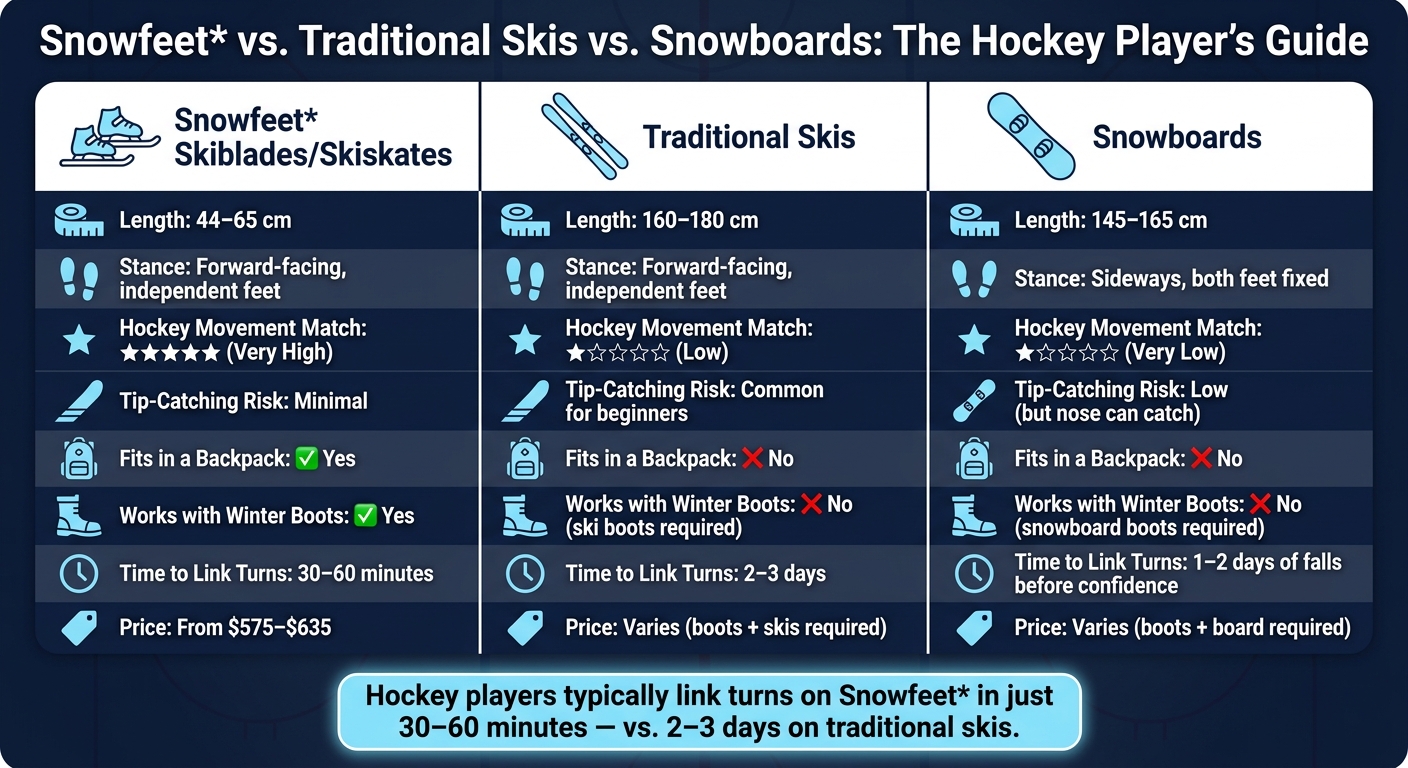
Snowfeet vs. Traditional Skis vs. Snowboards: The Hockey Player's Guide
How Snowfeet* Matches Hockey Movement Patterns
Snowfeet* are designed to align closely with the natural movements of a hockey stance. Traditional skis, often 160–180 cm long for adult men, require wide, deliberate rotations involving the upper body. Snowboards, on the other hand, lock both feet in a sideways position, which is quite different from the forward, independent stance used in hockey. Snowfeet* Skiskates (44 cm) and Skiblades (65 cm) keep your feet forward-facing and independent, allowing them to stay close together - just like on the ice. This setup mimics the edge control and agility you've developed in hockey, enabling quick edge setting, powerful push-offs, and tight turns. Essentially, it’s like cutting across the blue line on ice, but on snow. This similarity makes Snowfeet* an intuitive option for hockey players, offering agility and short-radius movements that traditional skis just can't match without years of practice.
Learning Curve and Building Confidence
Hockey players can typically link turns on Snowfeet* in just 30–60 minutes. In contrast, traditional skis often require a full day to feel stable and two to three days to master parallel turns. Snowboards can be even trickier, with beginners often spending one to two days falling before they can confidently link heel- and toe-side turns.
The compact design of Snowfeet* plays a big role in this faster progression. With only 44–65 cm underfoot, there's much less risk of crossing or catching ski tips - a common issue for beginners using longer skis. This shorter length reduces the chance of falls caused by snagging gear, offers less leverage against mistakes, and minimizes surprises. For hockey players, this means you can transfer your edge control and balance skills to the snow almost immediately, skipping the frustrating early struggles that come with traditional gear.
Portability and Ease of Use
Snowfeet* are incredibly portable - Skiblades weigh less than 6 lbs and can easily fit into a backpack. Forget about lugging around roof racks, boot bags, or poles. Snowfeet* Skiblades (starting at $635) work with many winter boots, so you don’t need to invest in specialized ski or snowboard boots. This portability and simplicity make Snowfeet* an excellent choice for hockey players looking to transition to snow sports without the hassle of bulky equipment.
| Feature | Snowfeet* Skiblades/Skiskates | Traditional Skis | Snowboards |
|---|---|---|---|
| Length | 44–65 cm | 160–180 cm | 145–165 cm |
| Stance | Forward-facing, independent feet | Forward-facing, independent feet | Sideways, both feet fixed |
| Hockey movement match | Very high | Low | Very low |
| Tip-catching risk | Minimal | Common for beginners | Low (but nose can catch) |
| Fits in a backpack | Yes | No | No |
| Works with winter boots | Yes (model-dependent) | No (ski boots required) | No (snowboard boots required) |
Conclusion: Putting Your Hockey Skills to Work on Snow with Snowfeet*
Your hockey skills give you a serious advantage when transitioning to snow. Balance, edge control, and quick weight shifts - skills you've honed on the ice - translate seamlessly to snowy slopes. You’re not starting from scratch; you're building on a strong foundation.
Snowfeet* gear takes this a step further. With compact designs (44 cm and 65 cm), they mimic the natural movements of hockey. Your feet stay forward and independent, allowing for sharp, precise control. Unlike traditional skis that demand wide, sweeping motions, Snowfeet* lets you move with the agility you're used to.
Now, it’s time to pick your gear. If agility is your thing, go for the Skiskates (starting at $575). Want more stability and carving ability? The Skiblades (starting at $635) are your best bet. Once you’ve got your pair, hit an easy green slope, bend your knees, and let your hockey instincts take over.
With Snowfeet*, snow becomes just another surface to skate on.
FAQs
Do I need ski lessons if I play hockey?
No, hockey players usually don’t need ski lessons to get started with Snowfeet* Skiskates. Their existing skills - like balance, edge control, quick turns, and the classic “hockey stop” - translate smoothly to the snow. In fact, most hockey players pick up the basics in just about 5 minutes. Within an hour, they can feel comfortable tackling gentle slopes. Plus, the compact design of Snowfeet* Skiskates makes them much easier to handle compared to traditional skis.
Which is better for hockey players: 44 cm Skiskates or 65 cm Skiblades?
For hockey players, the choice depends on what you’re aiming for. The 44 cm Snowfeet Skiskates are perfect if you’re looking for agility, quick tricks, and sharp, skate-like movements - similar to the feel of hockey skates. On the other hand, the 65 cm Snowfeet Skiblades offer more stability and work well on varied terrain, making them a solid all-around option. Both options are lighter and simpler to pick up compared to traditional skis, making the switch easier for hockey players.
What boots and safety gear do I need for Snowfeet*?
You don’t need special ski boots to use Snowfeet*. They’re designed to work with regular waterproof winter boots or even snowboard boots. For the best results, go for boots with a stiff build and strong ankle support - they’ll give you better control.
One tip: bring a screwdriver along to ensure the bindings are adjusted tightly. If you want to go the extra mile, consider packing some liquid wax to prevent snow from sticking and a sharpening tool to keep the metal edges in top shape.











Zanechať komentár
Táto lokalita je chránená testom reCAPTCHA a vzťahujú sa na ňu pravidlá ochrany súkromia a podmienky poskytovania služby hCaptcha.