



















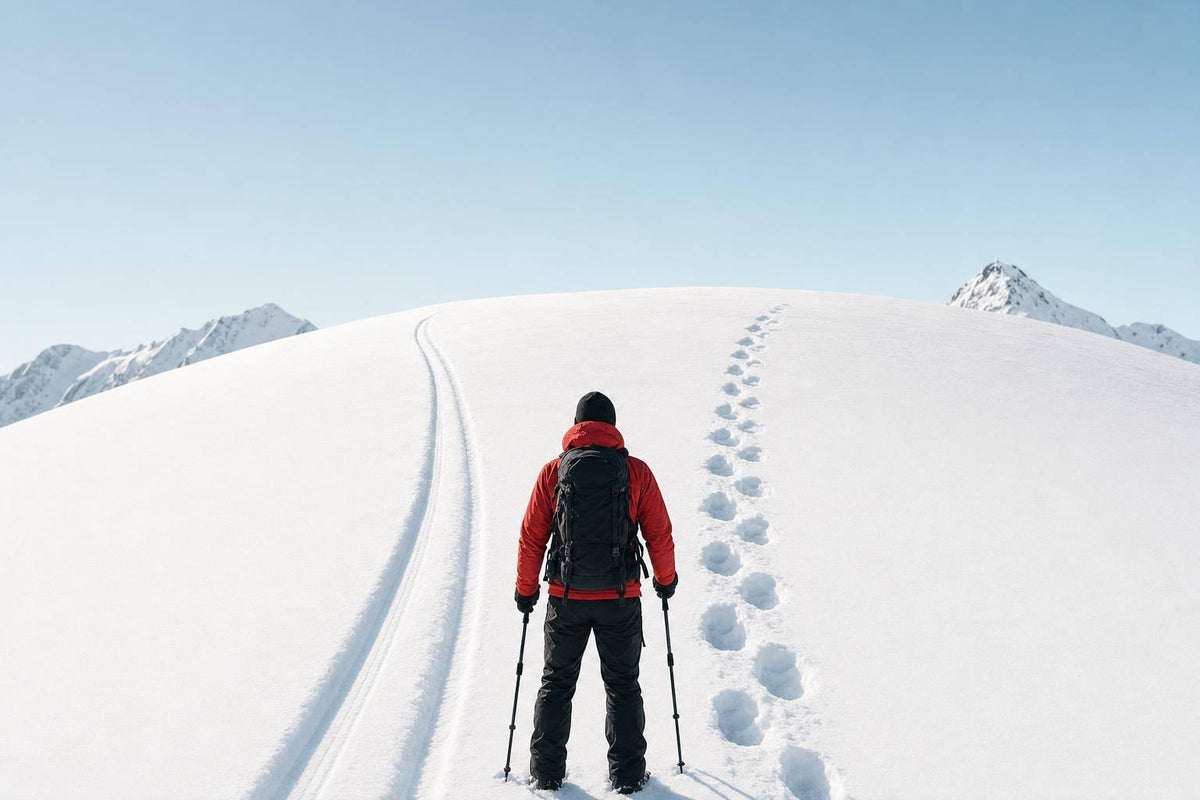
If you want to ski back down, I’d pick WALKSKI. If you only need to get up the hill, snowshoes still do the job.
That’s the whole call in one line. From what I see in this article, WALKSKI wins on packed snow, rolling terrain, and climb-and-return days, while snowshoes win in deep powder, icy spots, dense trees, and steep bootpack terrain. WALKSKI also packs smaller at 100 cm / 39 in., but snowshoes are often lighter at about 3.5–4.5 lb per pair versus 6.9 lb for the wood-core WALKSKI.
Here’s the short version:
-
Choose WALKSKI if:
- you care about the descent
- your route has open slopes or mellow forest roads
- you want one setup for up and down
- you have ski, snowboard, or winter boots that fit the binding
-
Choose snowshoes if:
- you won’t ski back down
- you expect deep powder or hard icy patches
- your route is tight, brushy, or very steep
- you want the easiest first-day learning curve
My take: for short winter approaches in the U.S., this is less about the climb and more about the return. Snowshoes are simpler. WALKSKI is more fun when the downhill is part of the plan :)
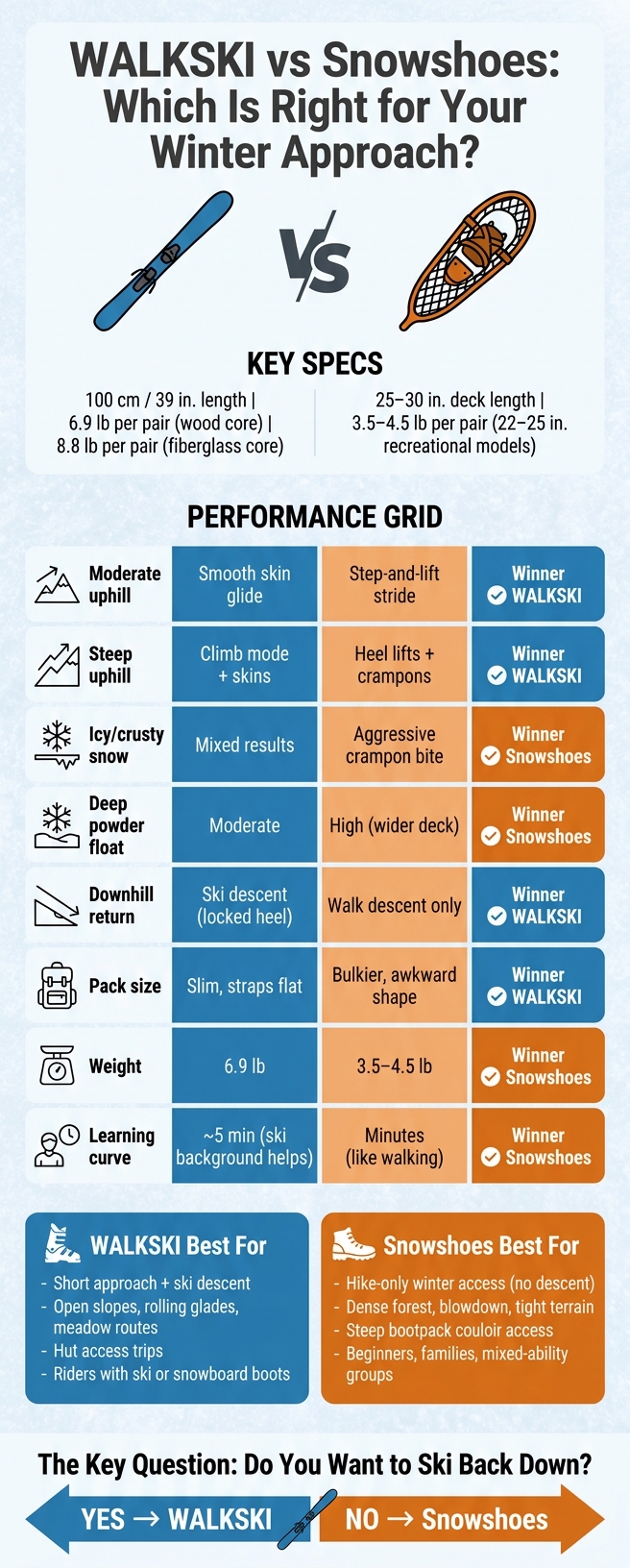
WALKSKI vs Snowshoes: Side-by-Side Comparison for Winter Approaches
Snowfeet WALKSKI | Backcountry Skiing in Georgia
Quick Comparison
| Criteria | WALKSKI | Snowshoes |
|---|---|---|
| Uphill on moderate slopes | Smooth skin glide | Simple step-and-lift |
| Uphill on steep slopes | Good with climb modes | Good bite with crampons |
| Icy or crusty snow | Mixed results | Better grip |
| Deep powder | Less float | More float |
| Downhill return | Ski back down | Walk back down |
| Learning curve | Short, but not zero | Very easy |
| Pack size | Slim, easy to strap | Bulkier shape |
| Weight | 6.9 lb per pair (wood core) | About 3.5–4.5 lb per pair |
| Best trip type | Short approach + ski out | Hike-only winter access |
So, if I were helping a friend in the shop, I’d say this: buy for the way down, not just the way up. That one choice tells you almost everything you need to know.
Head-to-Head Performance on the Climb
Traction, Cadence, and Effort on Moderate to Steep Terrain
On the climb, the tradeoff is pretty simple: glide efficiency vs. pure traction.
On moderate climbs, WALKSKI feels smoother and uses an easier rhythm. You glide forward instead of doing the direct step-and-lift stride that snowshoes require. That steady motion can feel less choppy, which helps when you want to keep moving without burning extra energy.
Once the slope gets steeper, WALKSKI starts to pull ahead in a big way. The higher climb setting helps cut calf strain, and the skins keep the ski moving uphill. Put those together, and you get a setup that’s well suited to open slopes where a steady cadence matters.
Snowshoes still win on icy or wind-crusted terrain. That’s where aggressive crampons earn their keep. When a gliding stride stops making sense, snowshoes give you more bite and a surer step.
| Condition | WALKSKI | Snowshoes | Best Choice |
|---|---|---|---|
| Moderate climb | Skin glide; efficient cadence | Direct step-and-lift stride | WALKSKI |
| Steep pitch | Higher climb setting + skins maintain uphill efficiency | Heel lifts + crampons provide secure traction | WALKSKI |
| Icy or wind-crusted snow | Edges and skins can help, but traction depends on conditions | Aggressive crampons bite well into firm snow | Snowshoes |
| Breakable crust | Metal edges help with control | Crampons punch through reliably | Snowshoes |
Float in Deep Snow and Soft Conditions
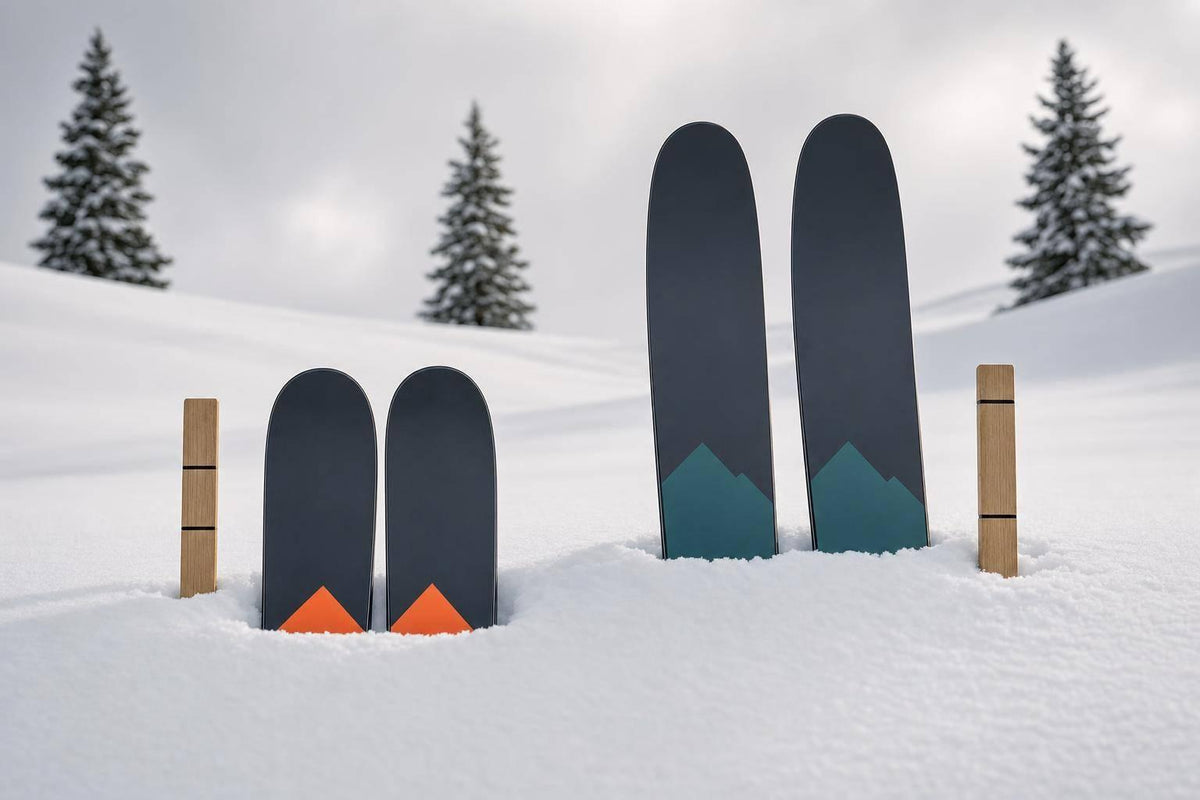
Float mostly comes down to surface area. Bigger snowshoes spread your weight across a larger deck, so you stay higher in loose powder. WALKSKI’s 100 cm length gives you moderate float, but in deep, untracked snow, a wider snowshoe will keep you on top more often.
That’s the plain truth of it. If you head into deep powder, snowshoes have the edge.
WALKSKI does best on:
- Packed snow
- Soft snow
- Mixed snow
That shows up in day-to-day use. On packed snow, WALKSKI glides with much less effort. On soft and mixed surfaces, it stays easy to handle. In spring snow or changing conditions, that can make the climb feel smoother and less like a slog.
| Snow Condition | WALKSKI Float | Snowshoe Float | Best Use |
|---|---|---|---|
| Deep powder | Moderate float; may sink more than wider snowshoes | High float; larger deck keeps you on top | Snowshoes |
| Packed snow | Smooth glide | Functional, but less efficient | WALKSKI |
| Variable/spring snow | Easy to maneuver on mixed surfaces | More step-and-lift effort | WALKSKI |
| Breakable crust | Metal edges can help with control | Crampons punch through reliably | Snowshoes |
What Happens After the Climb: Downhill Control and Return Efficiency
This is where things stop being close.
Snowshoes are built for walking. Once the climb is over, you walk back down at hiking speed. WALKSKI switches to Ski Mode with a locked heel, which means you can ski the descent instead.
That changes the whole outing. You’re not just getting up the hill. You’re also getting back down with more speed, more control, and less leg work.
| Descent Factor | WALKSKI | Snowshoes | Practical Impact |
|---|---|---|---|
| Return speed | Fast; gravity-assisted skiing | Slower; walking descent | WALKSKI saves time on the return |
| Control | Locked heel; stable, controlled turns | Walking/stepping only | WALKSKI adds directional control |
| Effort | Low; gliding descent | Higher; continuous leg engagement | WALKSKI reduces overall fatigue |
| Best terrain | Open slopes and moderate trails | Dense brush and tight woods | WALKSKI works best where you can glide |
If your main goal is to get up and back with the least fuss, snowshoes still make sense. They’re simple, steady, and work well in rough snow.
But if the descent matters at all, WALKSKI changes the outing. Instead of hiking back out, you ski it.
From there, the next differences are pack size, boot fit, and learning curve.
sbb-itb-17ade95
Day-to-Day Gear Factors: Pack Size, Boots, and Learning Curve
Pack Size, Weight, and Travel Convenience
For uphill approaches, the best tool is the one that climbs well and doesn’t turn your pack into a clumsy mess.
At 100 cm (39 in.), WALKSKI packs flat and straps cleanly to a backpack or slides into a ski bag. Snowshoes are a different story. The 25–30 in. decks often suggested for deeper snow or heavier loads stick out more and can feel awkward on tight approaches.
Weight can go either way, depending on the build. The wood-core WALKSKI is listed at 6.9 lb per pair, and the fiberglass-core version at 8.8 lb per pair. Typical adult recreational snowshoes usually come in around 3.5–4.5 lb per pair for 22–25 in. models, so yes, snowshoes can be lighter. But bulk is where WALKSKI has the edge.
Its narrow shape is easier to live with day to day:
- It stacks neatly in a gear closet
- It lies flat in a car trunk
- It fits inside a standard ski bag
Snowshoes often eat up more luggage space than you’d expect. That can get annoying on flights and road trips. One compact system replaces two separate gear sets.
Once you’ve dealt with carry size, boots are the next thing that hits you in the face.
Boot Compatibility and Setup Simplicity
Snowshoes are dead simple right out of the box. Modern ratchet and Boa-style bindings fit almost any insulated winter boot or hiking boot, and setup takes seconds. If your family already has winter boots, you’re set. No extra shopping trip. No wallet pain.
WALKSKI works with more boot types - ski boots, snowboard boots, and winter boots across US sizes 6–14.5 - but the best setup depends on what you already own. Snowshoes lean toward plain winter boots. WALKSKI makes more sense for people who already have ski- or snowboard-style boots sitting in the garage.
If you’re mostly a hiker and your closet has pac boots or winter hiking boots, snowshoes are the easier path.
After boots, the next thing that matters is how fast each option starts to feel normal on snow.
Learning Curve for Beginners and Casual Riders
Snowshoes feel a lot like walking, which is why people get comfortable on them so fast. Most users are moving fine within minutes. That’s a big reason guides often point beginners, families with kids, and mixed-ability groups toward snowshoes. There’s almost nothing to figure out.
WALKSKI has a short but real learning curve. Snowfeet* puts it at about 5 minutes, and that tracks for people who already ski or snowboard. They already know the feel of gliding, edging, and staying centered.
If someone has zero ski or snowboard background, sidehills and mixed snow can take a few outings to click. Still, that effort pays you back on the descent. Instead of walking downhill on tired legs, you ski it. That changes the rhythm of the whole day in a pretty big way.
That’s why terrain and trip style matter more than the gear label alone.
Choosing the Right Tool by Terrain and Use Case
Once fit, packability, and the learning curve are sorted out, the next step is simple: look at the shape of the route.
When WALKSKI Is the Better Tool
WALKSKI makes more sense when you plan to ski the way back down. For short, low-angle approaches, one 100 cm setup can cover both the climb and the descent. That’s a nice deal. Less fuss, less gear swapping, more skiing.
It also works well on rolling terrain. Think open glades, meadow approaches, and hut access routes. In spots like these, WALKSKI lets you keep moving without stopping to change gear every few minutes.
When Snowshoes Still Make More Sense
When the route gets tight, steep, or technical, snowshoes are usually the better call.
Use snowshoes for dense forest, blowdown, and narrow approaches where skis can catch on branches, brush, or deadfall. That kind of terrain can get annoying fast.
They also shine on steep bootpack routes. Snowshoes bite right into existing steps. WALKSKI doesn’t fit those steps well, so you’ll often end up breaking a separate track. That’s extra work, and, yeah, not the fun kind.
If the main goal is getting to a summit or viewpoint - and skiing down isn’t part of the plan - snowshoes keep the day simpler and safer, especially for riders who don’t feel fully at ease on the descent.
Quick Decision Matrix
The matrix below turns those tradeoffs into a fast choice.
| Scenario | Terrain / Snow | Descent Matters? | Best Tool |
|---|---|---|---|
| Short powder lap | Open ridge, moderate powder | Yes | WALKSKI |
| Rolling glades or open hills | Mixed packed/soft, open forest | Yes | WALKSKI |
| Hut approach | Groomed road + open meadows | Yes | WALKSKI |
| Dense forest hike | Tight trees, blowdown, brush | No | Snowshoes |
| Steep couloir access | Bootpack, very steep | No | Snowshoes |
Conclusion: The Right Choice Comes Down to Whether the Descent Matters
This choice comes down to one simple question: do you want to ski back down?
Once the climb is done, that's where the gap shows up. Snowshoes still make sense when the route is awkward, steep, or technical. They work well for pure access days, when skiing back down isn’t part of the plan.
But for most casual backcountry users, the descent is half the fun. WALKSKI matters because it turns the way back into a ski, not a slog on foot. That’s why WALKSKI works so well for short approaches, hut trips, and rolling terrain. For most casual riders, that makes WALKSKI the better all-around pick.
Snowshoes still have their place in dense, technical, or bootpack terrain. If the descent matters, go with WALKSKI. If it doesn’t, snowshoes are enough.
FAQs
Can beginners use WALKSKI?
Yes. Snowfeet WALKSKI is beginner-friendly.
The 100 cm length makes it easier to turn, control, and move around than long touring skis, which can feel a bit scary when you’re just starting out.
It also works with standard winter boots, hiking boots, or snowboard boots. That means beginners can skip specialized touring gear, which is a nice bonus for both cost and hassle.
Most new users feel comfortable within a few hours, so the learning curve is short and manageable.
Are snowshoes safer on steep terrain?
Usually, yes. Snowshoes are the safer, more dependable pick on steep, narrow, technical, or obstacle-filled terrain where careful foot placement matters more than glide.
Why? Their traction-first design gives you better stability and grip on:
- long, steep climbs
- icy surfaces
- uneven ground
WALKSKI 100 cm does well on rolling terrain, packed trails, and open, moderate slopes.
But when you’re dealing with dense trees, deep or loose powder, or steep routes where you want the most secure footing, snowshoes are the better call. Think of it this way: if the terrain feels more like careful hiking than smooth sliding, snowshoes usually win :)
What boots work best with WALKSKI?
WALKSKI works with winter boots, hiking boots, and snowboard boots. So, you don’t need specialized alpine touring gear.
For the best control and comfort, go with boots that have solid ankle support. Supportive waterproof hiking boots and snowboard boots both work well.
The universal binding fits boot sole lengths from 9.5 to 15 inches (24–38 cm), which covers U.S. sizes 6–14.5.











Оставить комментарий
Этот веб-сайт защищается hCaptcha. Применяются Политика конфиденциальности и Условия использования hCaptcha.