



















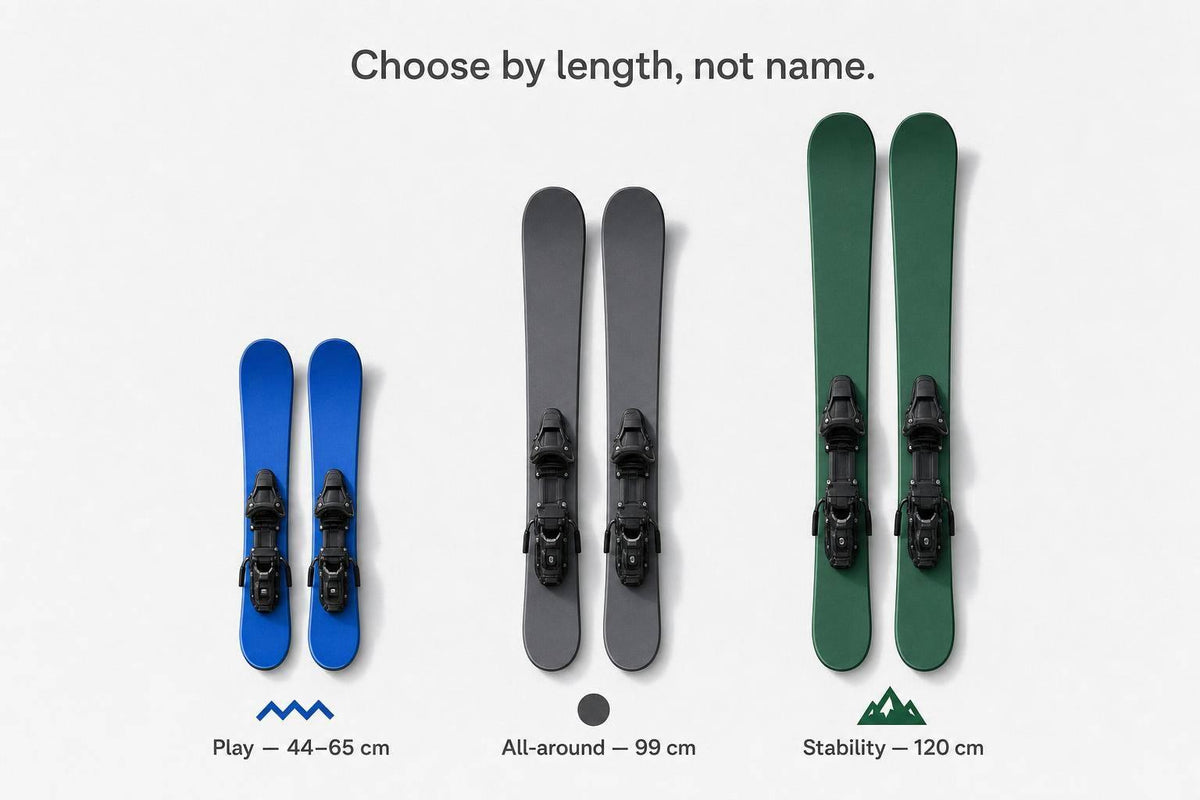
Here’s the short answer: don’t buy by name. Buy by length, binding type, and where you ride. In most cases, 65–99 cm means snowblades/skiblades, while 120 cm rides more like a short ski. That one detail changes how the gear feels on snow.
If I were helping you in a ski shop, I’d put it like this:
- 44 cm: smallest option, most skate-like feel
- 65 cm: easiest for slow-speed turns and first-timers
- 99 cm: best middle ground for groomers, park laps, and all-around fun
- 120 cm: most stable and closest to a standard ski feel
That’s the whole buying logic, uh, without the naming mess.
A fast rule: if the ski is under 100 cm, expect a looser, more playful ride. If it’s around 120 cm, expect more calm at speed, more edge hold, and a feel that’s closer to what most skiers know.
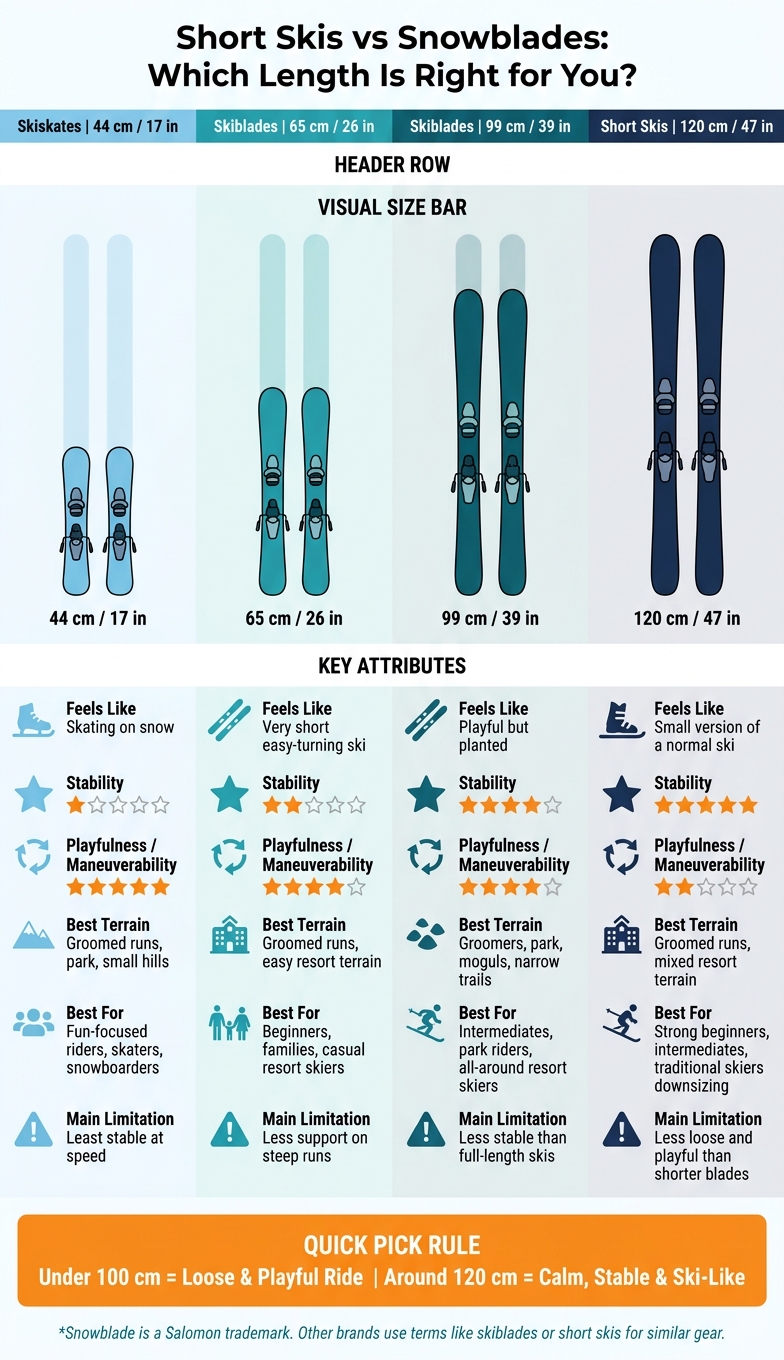
Short Skis vs Snowblades: Size Comparison Guide by Rider Type
Snowboarder tries Snowfeet* | Which Snowfeet* Short Ski is the Best? | Snowblades 44, 65, 99 Review
Quick Comparison
| Option | Length | Feels Like | Best For | Main Limitation |
|---|---|---|---|---|
| Skiskates | 44 cm / 17 in | Skating on snow | Travel, tricks, snowboarders, skaters | Least stable at speed |
| Skiblades | 65 cm / 26 in | Very short, easy-turning ski | Beginners, families, mellow resort runs | Less support on steep runs |
| Skiblades / Snowblades | 99 cm / 39 in | Playful but more planted | Groomers, park, moguls, crossover riders | Still less stable than longer skis |
| Short Skis | 120 cm / 47 in | Small version of a normal ski | Casual resort skiers, strong beginners, intermediates | Less loose and playful than shorter blades |
A few facts make this easier:
- “Snowblade” started as a Salomon trademark, so other brands use terms like skiblades or short skis for gear that may be very close.
- The names overlap a lot, so two products with different labels can ride almost the same.
- For most buyers, length matters more than the label. That’s the part you’ll feel on your first run.
So, if you want my plain-English take:
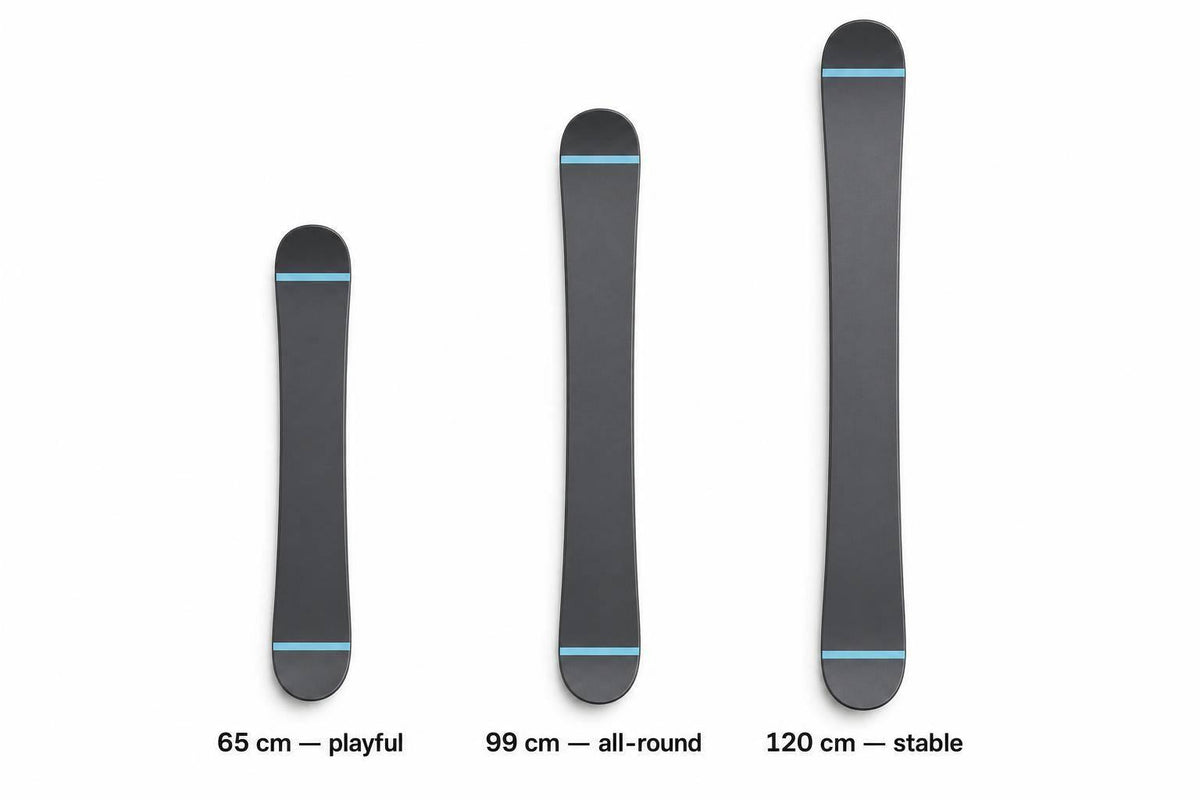
- Pick 44–65 cm if you want the lightest, most playful setup.
- Pick 99 cm if you want the best all-around blade feel.
- Pick 120 cm if you want more control and a ride that feels more like a normal ski.
And yep, that’s the answer most people need before they get lost in product names :) If you want extra help, these videos can make the size gap easier to picture:
Now you can read the full piece with one simple filter in mind: ignore the name, check the length.
Short skis vs snowblades: what actually sets them apart
Short skis and snowblades do overlap. But they don’t feel the same once you’re on snow.
The main split comes down to length, stability, and intended use. And that changes the whole ride. A beginner may want something easy and forgiving. A traveler may care most about size. A park rider may want gear that feels loose and quick. So, yeah, the trade-off matters.
Here’s the simple breakdown:
| Category | Typical Length | Stability | Powder Performance | Best For |
|---|---|---|---|---|
| Snowblades / Skiblades | 65–99 cm | Lower | Limited in deep powder | Beginners, snowboarders, park riders, travelers |
| Short Skis | Around 120 cm | Moderate to high | Better than skiblades | Casual resort skiers, all-mountain recreational use |
You feel that gap right away on groomed runs.
How short skis around 120 cm ride on groomed runs and resort terrain
A 120 cm short ski sits in a nice middle zone. It turns with less effort than full-length skis, but it still has enough length to stay calm at normal resort speeds. That makes it easier to learn on, easier to steer, and closer to the feel most skiers already know.
If you want short skis without giving up that familiar ski feel, this is usually the sweet spot.
The Snowfeet* Short Skis 120 cm are a clear example of that in-between ride. They give riders a shorter setup, but one that still feels pretty close to a standard ski. For many people, 120 cm is a forgiving place to start.
Go shorter, though, and the whole vibe changes. Less planted. More playful. More “let’s mess around and slash turns” :)
How snowblades and skiblades ride at 65–99 cm
Once you drop below 100 cm, the ride gets faster and looser. Skiblades in the 65–99 cm range are made for sharp direction changes, tight park laps, and quick turns in narrow lines. That’s a big reason snowboarders and park riders often like them.
This length range is best for riders who want maximum maneuverability over extra stability.
The Snowfeet* Skiblades 65 cm push hardest into that skate-like feel. They’re nimble, compact, and easy to pack or carry. The Snowfeet* Skiblades 99 cm keep that playful snowblade feel, but add a bit more composure, which makes them a better fit for riders who want agility with a touch more control.
At the shortest end, the Snowfeet* Skiskates 44 cm feel the most like skating on snow.
That said, there’s no free lunch here. Shorter lengths give up some stability and powder float. Longer skis still do better in deep powder and at higher speeds. But on groomers, packed snow, and resort terrain, shorter gear can be an absolute blast.
sbb-itb-17ade95
How to choose by rider type, not by product name
Once the labels make sense, picking the right option gets a lot easier. The fastest path is to choose based on how you ride, not what the product is called. Snowfeet* has four main lengths: 44, 65, 99, and 120 cm (17, 26, 39, and 47 in).
| Rider Type | Recommended Style | Suggested Length | Main Benefit | Main Trade-Off |
|---|---|---|---|---|
| Nervous first-timer / family | Snowblade-style | 65 cm (~26 in) | Easy, confidence-building turns on green/blue runs | Less stability at higher speeds |
| Progressing casual skier | Short ski | 120 cm (~47 in) | More stability and closer to the feel of a standard ski | Less playful than very short blades |
| Snowboarder / park rider | Skiblade | 99 cm (~39 in) | Fast to pivot and easy to spin, still capable on groomers | Not as stable as full-length park skis for big features |
| Compact / travel-focused rider | Skiskate | 44 cm (~17 in) | The shortest, quickest-to-turn setup | Demands more balance at speed and on steep runs |
| Traveler / occasional buyer | 44–65 cm short gear | 44–65 cm (~17–26 in) | Easy to pack and store, less airline hassle | Lower performance ceiling than longer skis |
Best picks for beginners, families, and casual resort skiers
Shorter gear starts turns faster and feels easier to control at low speed. That’s a big deal when you’re new and just trying to make it down a green run without your legs tying themselves in knots :)
The Snowfeet* Skiblades 65 cm are easy to steer at low and moderate speeds. That shorter platform also helps beginners avoid the tip-and-tail crossover that trips up a lot of first-timers on green and easy blue runs.
If you plan to ski more often and want something with a bit more room to grow, the Snowfeet* Short Skis 120 cm make more sense. They give you more stability and better edge hold as speed picks up and your technique moves from snowplow toward parallel skiing. The catch? They’re less playful than the shorter blades. If you want a middle ground, 99 cm is a smart move.
Best picks for snowboarders, park riders, and crossover users
The Snowfeet* Skiblades 99 cm sit in that sweet spot between stable and nimble. They’re long enough to feel solid on groomers, but still short enough for spins, pivots, and playful laps. If you’re a snowboarder who wants to try skis without feeling like you strapped on giant planks, this is often the easiest switch.
The trade-off is simple: they won’t match full-length park skis on big features.
If you want the most compact setup, go with the Snowfeet* Skiskates 44 cm. They work well for tight spins, flat-ground tricks, and quick switch-ups on smaller features. They make the most sense for riders who already feel at home on a snowboard or inline skates. The downside is that they ask more from you at speed, and they’re less comfortable on long, steep groomers.
If your main goal is portability, not park-style messing around, 44 cm is the compact pick.
Best picks for travelers and occasional ski-trip buyers
For travel, the Snowfeet* Skiskates 44 cm are the easiest to pack. If you want a bit more of a ski feel without dragging around long gear, the Snowfeet* Skiblades 65 cm are a nice step up.
For occasional buyers, that usually means two simple wins:
- Easier storage at home
- Less airline hassle than 150–180 cm skis
That’s the appeal in plain English: less bulk, less fuss, and a setup that’s easier to bring along for the trip.
Which Snowfeet* model fits each short-ski category
Use the model name as a simple shortcut:
- 44–65 cm = blade-style gear
- 99 cm = classic snowblades
- 120 cm = short skis
Think of it like a quick length-to-name cheat sheet. Then match the model to how you like to ride.
| Model | Length | Common search terms | Best terrain | Who it suits best |
|---|---|---|---|---|
| Snowfeet* Skiskates | 44 cm / 17 in | Mini skis, snow skates, skiskates, shortest skis | Groomed runs, park, small hills | Fun-focused riders, skaters/snowboarders, beginners who want the quickest learning curve |
| Snowfeet* Skiblades | 65 cm / 26 in | Short snowblades, mini skis, skiboards | Groomed runs, easy resort terrain | Beginners, families, casual resort skiers |
| Snowfeet* Skiblades | 99 cm / 39 in | Snowblades, skiblades, skiboards, short skis | Groomed runs, park features, moguls, narrow trails | Intermediates, park riders, all-around resort skiers |
| Snowfeet* Short Skis | 120 cm / 47 in | Short skis, longer skiblades, snowblades, skiboards | Groomed runs, mixed resort terrain | Strong beginners, intermediates, traditional skiers downsizing |
Snowfeet* Skiskates 44 cm and Skiblades 65 cm for the shortest, most playful setup
The 44 cm Skiskates are easy to pack and feel the closest to skating on snow. So if you come from skating, hockey, or snowboarding, this setup tends to click fast. It’s playful, light, and simple to get the hang of. Bindings come in versions for ski boots or snowboard boots, which makes them one of the better picks if you want to ride in snowboard boots.
The 65 cm Skiblades give you a bit more platform underfoot. That extra length helps with edge grip and stability, but the ride still feels compact and easygoing. They’re still easy to carry and beginner-friendly, especially on groomed runs and mellow resort terrain.
Snowfeet* Skiblades 99 cm for all-around snowblade-style riding
If you want that classic snowblade feel, 99 cm is the sweet spot. The parabolic shape and narrow waist make them quick edge to edge and easy to carve, while the added length over the 65 cm model gives you more stability for all-around resort use.
That makes them a good fit for groomed runs, park features, moguls, and narrow trails. And if you dip into soft or deep snow, there’s also a powder-tuned 99 cm version with a wider shape plus a raised tip and tail for better control in powder.
Snowfeet* Short Skis 120 cm for riders who want more stability
If you want more stability and a feel that’s closer to regular skis, step up to 120 cm. The 120 cm Short Skis hold an edge better at higher speeds and give strong beginners or intermediate skiers more room to build technique.
They’re still shorter and easier to handle than full-length skis, which is a big part of the appeal. But they feel less playful than the shorter models. So if you want the most ski-like ride without jumping all the way to full-length skis, this is the one to look at.
Conclusion: Choose by length, terrain, and feel - not the label
After looking at the lengths side by side, the main point is pretty simple: these names mostly refer to the same family of compact skis. The labels aren’t standardized, so the actual differences come down to length, width, and construction.
Pick the length based on how you like to ride. If you want the most playful setup, go with 44 cm or 65 cm. If you want the best all-around snowblade feel, 99 cm is the sweet spot. If you want the most stability, choose 120 cm.
There’s always a trade-off with shorter gear. It’s easier to carry, easier to pivot, and just plain fun in tight spots. Longer skis still do better at speed, hold an edge better, and handle deep powder with more control. On groomed runs, though, that trade-off is pretty small.
Snowfeet* makes the choices across each length easy to see, so pick based on terrain and feel - not the label.
FAQs
Can I use snowboard boots with Snowfeet*?
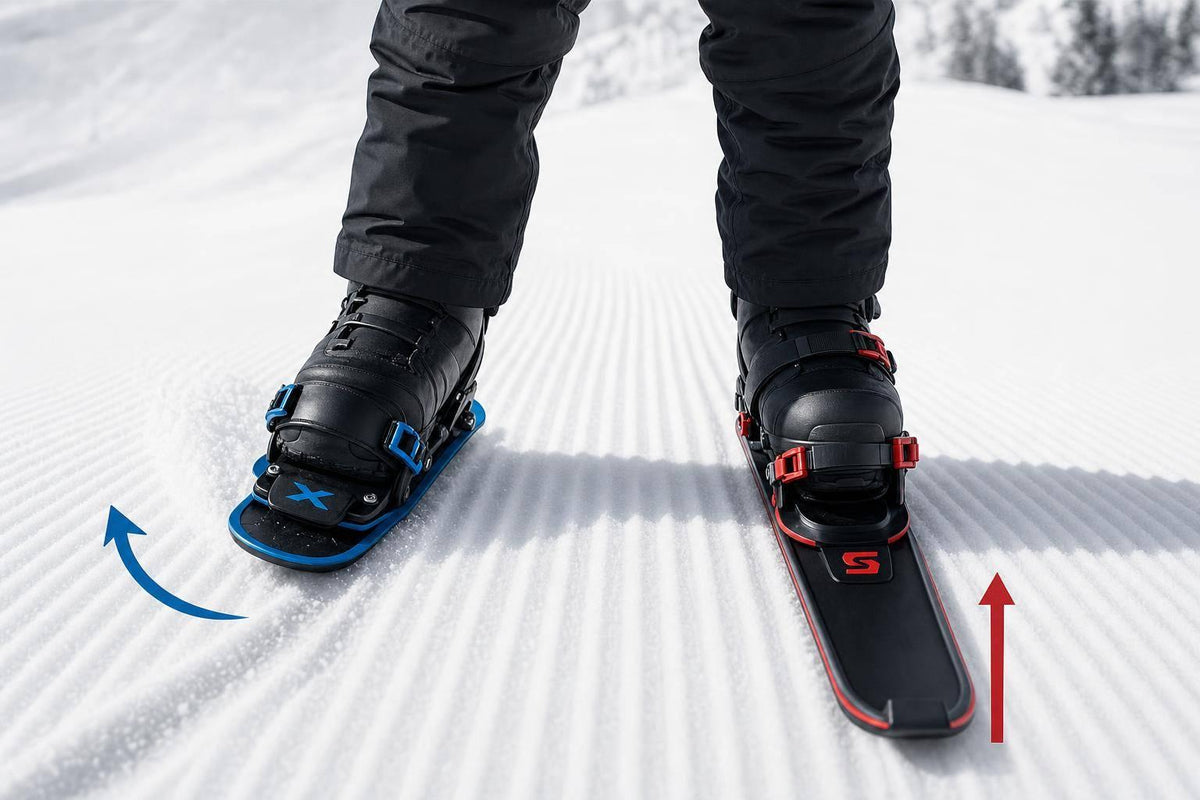
Yes. Most Snowfeet* models work with snowboard boots, including the 44 cm Skiskates, 65 cm Skiblades, and 99 cm Skiblades.
The 99 cm model stands out here. It gets a nice boost from snowboard boots because they give you more support and better control. Think of it like this: a bit more length under your feet means your boots matter more.
That said, the longer models are a different story. The 120 cm version uses pro ski bindings, so it needs ski boots.
Are short skis harder to control on steeper runs?
Short skis and skiblades are often easier to handle than full-length skis on groomers. Their shorter length makes fast turns and quick stops feel more natural. That’s a big part of the appeal - they’re simple, playful, and easy to get used to.
The trade-off shows up on steeper runs. Long skis tend to feel more stable when you pick up speed or hit icy sections. They track better and give you a calmer ride when the slope gets steep.
If you want more confidence on steeper pitches without going back to full-length skis, 120 cm Snowfeet* models sit in a nice middle ground. They give you better edge hold and a more planted feel, while still being much easier to turn than long skis.
Which length should I choose if I want one pair for everything?
If you want one pair that can do a bit of everything, the 99 cm Snowfeet skiblades are the best all-around pick.
They sit right in the sweet spot for most casual resort riders. You get a nice mix of agility, control, and enough stability for groomers, park laps, and light powder.
The 65 cm model feels more playful and loose. The 120 cm model skis more like a standard, speed-focused ski.











Lasă un comentariu
Acest site este protejat de hCaptcha și hCaptcha. Se aplică Politica de confidențialitate și Condițiile de furnizare a serviciului.