



















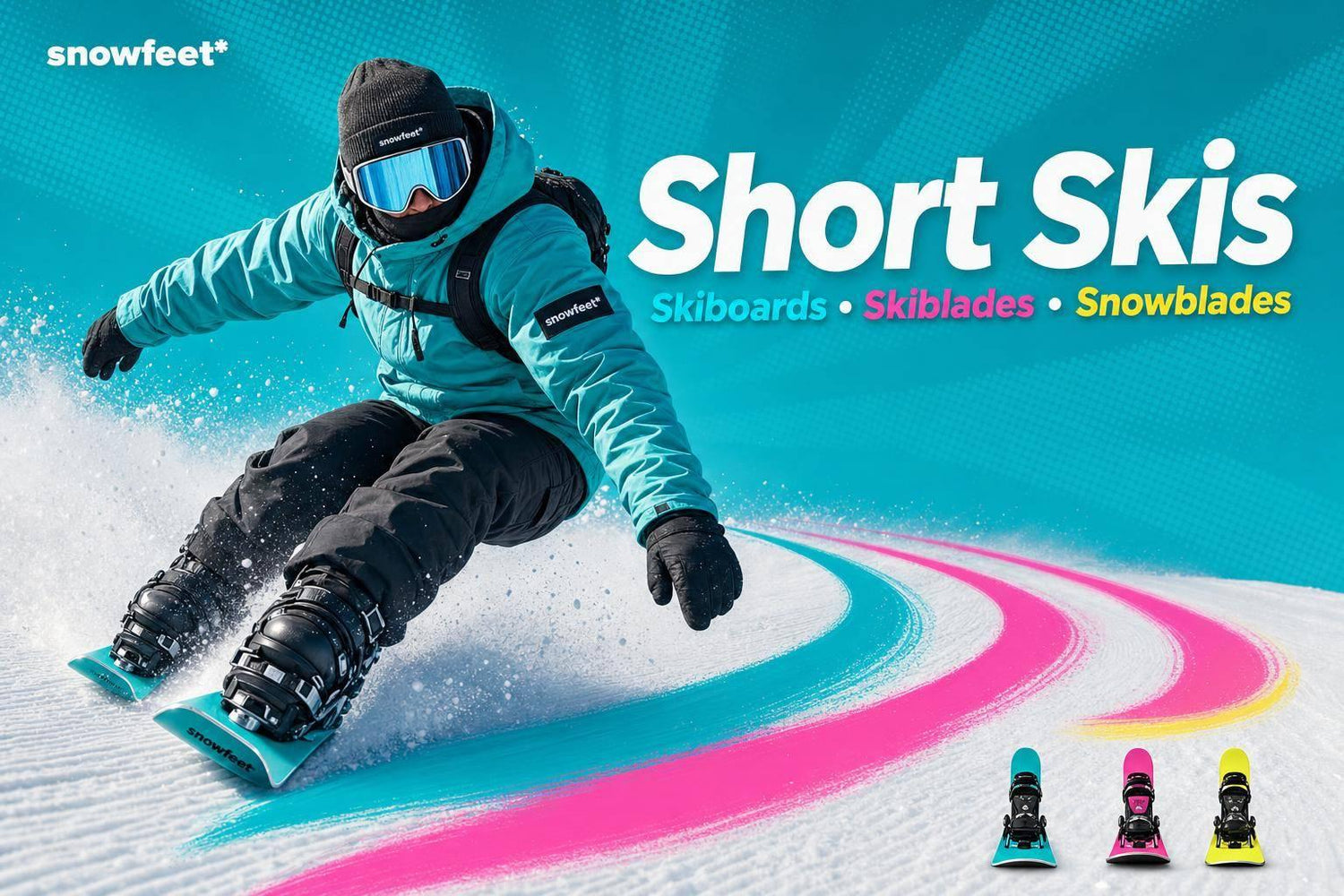
Here’s the short answer: skiboards, skiblades, and snowblades often mean the same type of gear. In most shops, all three point to short skis, usually about 26 to 47 inches (65 to 120 cm) long. The name can change from brand to brand, but the stuff that changes how they ride is simple: length, shape, width, and bindings.
If I were helping you in a ski shop, I’d say this:
- Search all three names when you shop
- Check the ski length first
- Look at binding and boot fit
- Pick based on how you ride, not the label
One key fact: “Snowblade” started as a Salomon product name back in the late 1990s. Now people use it like a general term. That’s a big reason these names get mashed together.
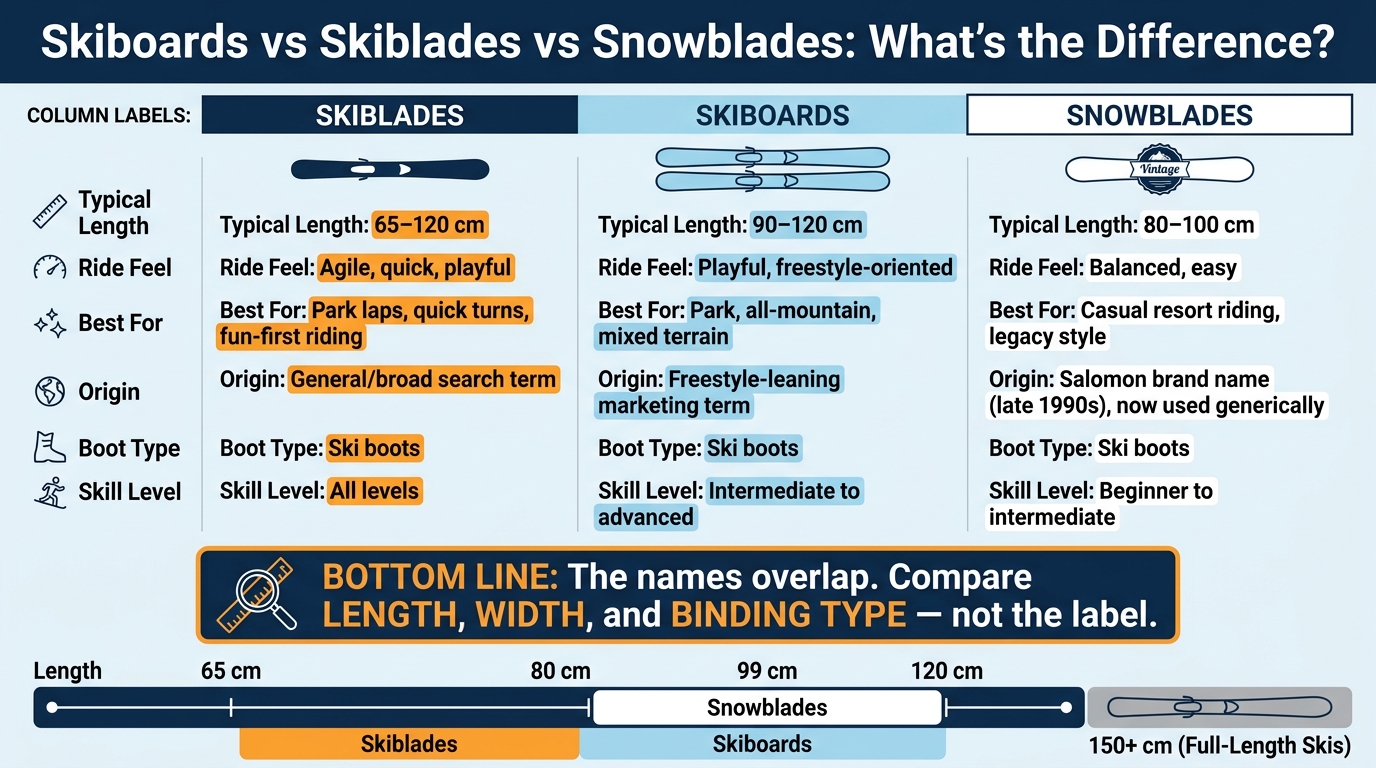
Skiboards vs Skiblades vs Snowblades: Quick Comparison Guide
Snowfeet* Snowblades | Skiboards | Skiblades | Short Skis - Complete Guide | All you need to know
Quick comparison
| Term | What people usually mean | Common length | Best fit for |
|---|---|---|---|
| Skiblades | General term for short skis | 65 to 120 cm | Shoppers who want the broadest search term |
| Skiboards | Short skis with a freestyle slant | 90 to 120 cm | Park, playful turns, mixed terrain |
| Snowblades | Older Salomon name, now used loosely | 80 to 100 cm | Buyers looking at older-style short skis |
So, don’t let the naming circus mess with your head :) The smart move is to compare specs, not stickers. For most riders, the main question isn’t “What is it called?” It’s “Do I want a 65 cm, 99 cm, or 120 cm ride feel?”
What Skiboards, Skiblades, and Snowblades Usually Mean
Skiboards: The Freestyle-Leaning Term
"Skiboards" usually points to a playful short ski made for freestyle and all-mountain riding. Think twin-tip shapes, wider bodies, park laps, small jumps, and tight, snappy turns. That wider waist also helps in softer snow.
The Snowfeet* POWDER 99 cm is a good fit for this label, since it’s built wider for all-mountain and soft-snow use. The Snowfeet* Skiblades 99 cm and 120 cm can land in this bucket too when riders use them for carving and hitting features. There isn’t a clean line between skiboards and skiblades. Brands toss these terms around pretty loosely, so shops often treat them like the same thing.
Skiblades: The Most Common Broad Search Term
"Skiblades" is the broadest and most useful search term of the three. It usually covers short skis that are about 65 to 120 cm long. Snowfeet* sells 65 cm for quick moves, 99 cm for a nice middle ground, and 120 cm for more stability and speed. That’s a pretty wide range under one label.
The 120 cm length starts to feel more like a standard ski, with more edge hold and a calmer feel at speed. Snowfeet* says they’re easier to balance than ski-skates and work well for carving, park landings, and powder. So, if you’re shopping and don’t want to get lost in the wording, this is usually the safest term to search first.
Snowblades: Originally a Brand Term, Now Often Generic
Snowblade started as a Salomon product line in the late 1990s and early 2000s. These were short skis in the 80 to 100 cm range, with integrated or non-release bindings and an easy, fun feel. These days, "snowblades" often gets used as a catch-all term for any short ski.
That’s why the name matters less than the actual specs. Look at the length, sidecut, core, and bindings first. The label on the topsheet? Nice to know, sure. But the build tells you way more.
sbb-itb-17ade95
How Brands, Shops, and Riders Actually Use These Names
Why the Same Product Appears Under Different Names
These names get used pretty loosely. There isn’t one fixed rule that separates them. Older names and newer labels often overlap in the same short-ski category.
That’s why you’ll see two very different products sold under a similar label. A twin-tip freestyle model and a narrow carving model can both carry the same name if they’re both short skis. Even specialist brands swap these terms around.
So, yeah, the names can be messy. The smart move is to stop focusing on the label and look at the specs.
The Simplest Shopping Rule
Search all three terms, plus "short skis." That gives you a much better view of what’s out there.
Then check the stuff that actually shapes how the ski rides:
- Length
- Width
- Riding style
- Boot compatibility
That’s what tells you if a model will feel playful, stable, or more beginner-friendly.
From there, your main filter is simple: length and binding type.
This is where Snowfeet* is easy to compare. Snowfeet* sorts its lineup by length and binding type, with 65 cm, 99 cm, and 120 cm models. Pick the length first, then make sure the bindings work with your boots.
Which Option Makes Sense for You
Best Picks by Riding Style and Skill Level
Now that the names make more sense, the next move is picking the right length. After that, the label doesn’t matter much. How you ride matters more.
The 65 cm length feels quick and playful, kind of like skating on snow. That’s the size most shops would call skiblades. It works best for park laps, mellow groomer fun, and trips where you want gear that’s easy to pack.
The 99 cm is the easiest all-around choice for most resort riders. It handles groomed runs and mixed terrain well without asking much from the skier. If you want one size that does a bit of everything, this is usually the safe bet.
The 120 cm fits riders coming from full-length skis who want something shorter and lighter but still steady underfoot. It uses a parabolic shape, narrow waist, metal edges, graphite bases, and camber-rocker construction.
So the choice gets pretty simple:
- Go shorter if you want ease, playful turns, and more range across casual resort riding.
- Go longer if you want more stability and top-end speed.
Snowfeet* vs Full-Length Skis and Older Snowblade-Style Products
Full-length skis (150+ cm) are still the right tool for high-speed carving, racing, and hard-charging runs on firm snow. They give you more edge contact and a higher performance ceiling. But for most recreational riders, Snowfeet* brings a more modern setup with a clearer lineup based on length and intended use.
Here’s the fast match-up between the label and the ride feel:
| Term Used | Typical Length | Feel on Snow | Common Boot Setup | Best Use Case | Closest Snowfeet* Example |
|---|---|---|---|---|---|
| Skiblades | 65 cm | Agile | Ski boots (EU 36–49 / US 4.5–14.5) | Park laps, quick turns, fun-first riding | Snowfeet* 65 |
| Snowblades / Skiboards | 99 cm | Balanced | Ski boots | All-mountain, beginners, families | Snowfeet* 99 |
| 120 cm short skis | 120 cm | Stable | Ski boots (26–36.1 MP) | Transitioning from long skis | Snowfeet* 120 |
| Full-Length Skis | 150+ cm | Maximum stability | Ski boots | Racing, aggressive high-speed carving | N/A |
For most riders, Snowfeet* hits a sweet spot between portability, ease, and plain old fun. In other words, don’t get too hung up on the name. Length and ride style are what count on the mountain.
Conclusion: What to Search for and What to Buy
Bottom line: these names blur together. So the safest move is simple: ignore the label and compare the specs. If one brand says skiblades and another says skiboards, look at the stuff that changes how they ride: length, width, binding type, and intended use.
For most riders, Snowfeet* keeps things simple. Each length lines up with a clear use case, which saves you from playing detective in a gear shop. The 65 cm works best for quick, playful movement. The 99 cm is the go-to all-around resort pick. And the 120 cm fits riders who want something shorter than full-length skis without making the jump feel too abrupt.
Key Takeaways at a Glance
- "Skiboards" usually means a freestyle-leaning and often wider short ski.
- "Skiblades" is the most common everyday term shops and brands use for short skis of all kinds.
- "Snowblades" started as a Salomon brand name in the late 1990s and is now often used generically, especially for older or legacy short-ski designs.
In practice, these labels overlap all the time. On snow, length and ride style matter most. For most casual riders, Snowfeet* is the clearest way to buy short skis without having to decode a pile of brand jargon.
FAQs
Are skiboards, skiblades, and snowblades actually different?
Usually, no. Skiboards, skiblades, and snowblades are mostly different names for the same kind of short ski. They’re usually 26 to 47 in. (65 to 120 cm) long.
In everyday talk, people use these names like they mean the same thing. The only time you’ll see a split is in marketing, where brands may sort them by length or by what they’re meant for.
Snowfeet* sells durable models across this size range, including 65 cm, 99 cm, and 120 cm options.
What length should I choose for my riding style?
It depends on your goals and the terrain you ride:
- 65 cm for tricks, spins, and a skating-like feel
- 99 cm for a mix of park laps, groomed runs, and light powder
- 120 cm for high-speed carving, deeper snow, and more of a ski-like feel
Short version: shorter skis feel more nimble, while longer skis feel more steady.
Will these work with my ski boots?
Yes, but it depends on the model.
The 38 cm Mini Ski Skates and 50 cm PRO work with regular waterproof winter boots or snowboard boots.
The 44 cm Skiskates and 65 cm or 99 cm Skiblades work with snowboard or ski boots.
The 120 cm Short Skis require ski boots for proper support, safety, and performance.











Lasă un comentariu
Acest site este protejat de hCaptcha și hCaptcha. Se aplică Politica de confidențialitate și Condițiile de furnizare a serviciului.