



















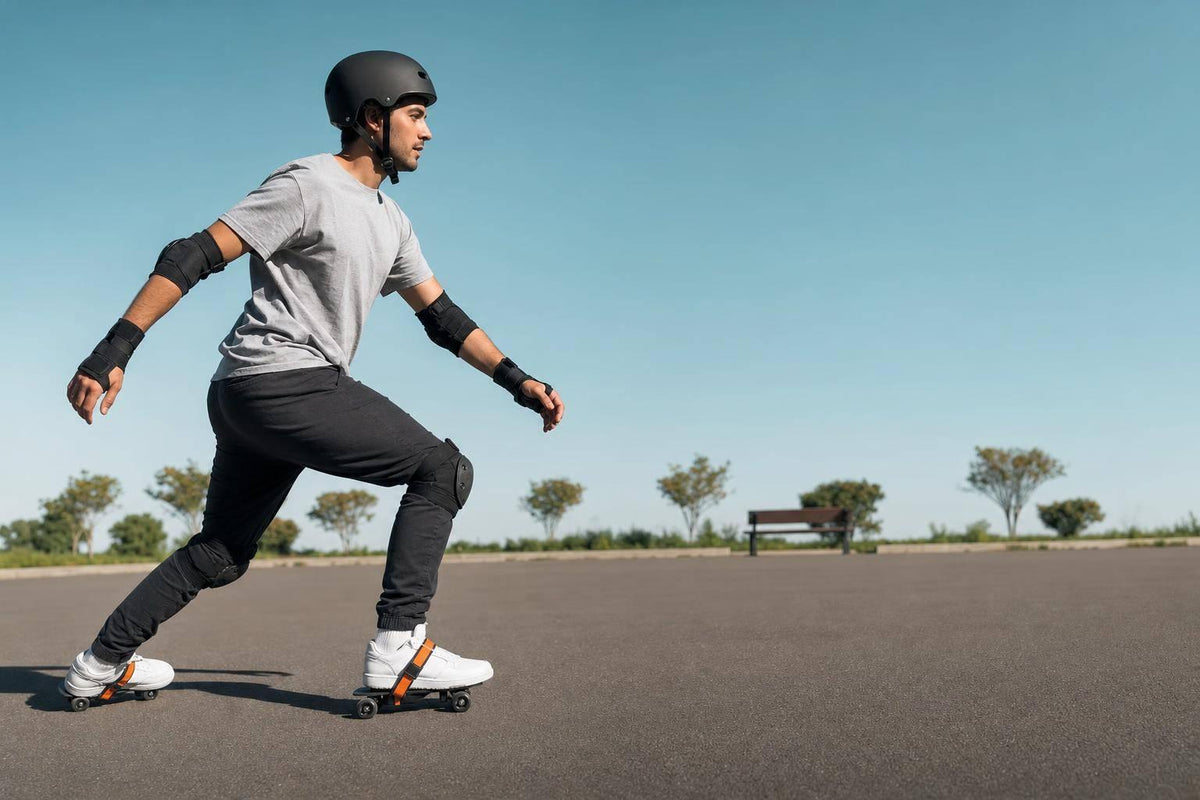
Short answer: yes, but only on the right ground and with low expectations for day one. If you’re new, Wheelfeet-style skates can feel fun and simple to carry, but they’re often less stable than booted skates, and stopping is the hardest part for most people.
Here’s the fast take:
- Best for: smooth, flat pavement
- Hardest parts: stopping, slow-speed balance, rough ground
- First-session goal: stand, roll a bit, stay loose :)
- Early learning time: about 1 to 3 hours to get the basic feel on flat ground
- Gear you should wear: helmet, wrist guards, knee pads, elbow pads
- Big fit tip: use flat, firm shoes and tighten straps so the skate doesn’t shift
- Better for first-timers: non-electric models over electric ones
- Price point mentioned: $199 for non-electric vs. $674 for electric
One stat stands out: 32.7% of falls on dry, plain surfaces were linked to surface issues. Another one is even more blunt: riders without wrist guards were 10.4 times more likely to get a wrist injury. So, uh, don’t treat pads like an optional fashion choice.
If I had to sum it up in one line: Wheelfeet are easy to carry, not always easy to master. They can work for beginners, but they work best when you keep things slow, stick to clean pavement, and don’t expect instant hero mode.
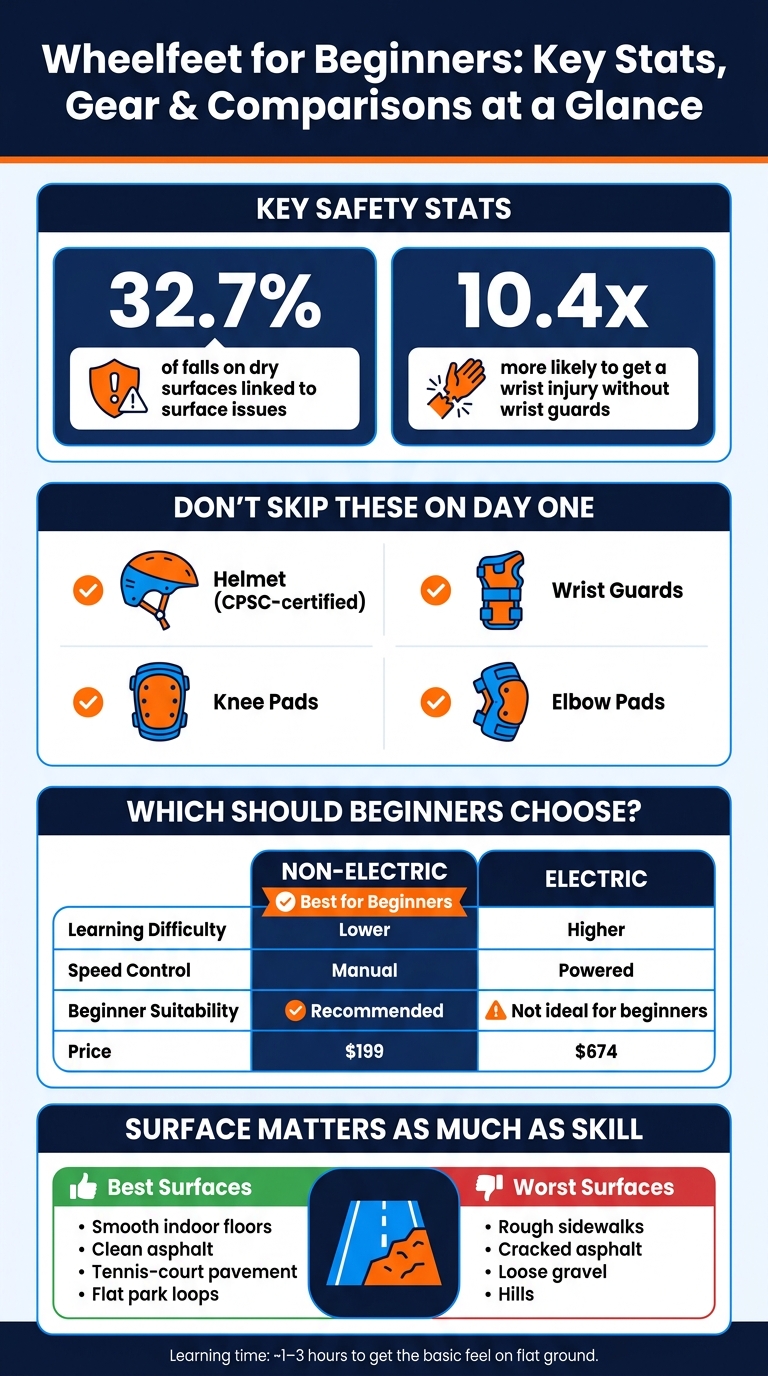
Wheelfeet for Beginners: Key Stats, Gear & Comparisons at a Glance
Wearable Skates | Roller Blades | Skate on Shoes | Wheelfeet | Non-electric
Quick Comparison
| Item | Beginner Take |
|---|---|
| Wheelfeet on smooth pavement | Easier to learn |
| Wheelfeet on rough sidewalks or hills | Much harder |
| Non-electric Wheelfeet | Better first pick |
| Electric Wheelfeet | More to control |
| Booted skates | More ankle support |
| Snowfeet gear | Better pick for snow, not pavement |
For me, the main point is simple: wearable skating can be easy enough to start, but not carefree. The setup is convenient. The learning curve is still real.
Who Picks Up Wheelfeet Quickly and Who Takes Longer
Beginners Who Usually Learn Faster
If your first session feels a little awkward, that’s normal. But if you’ve skated, boarded, or skied before, you’ll often get the hang of Wheelfeet much faster. True first-timers usually need more reps.
The big reason is muscle memory. Your brain already has a rough map for what to do when your feet start moving under you. So that shaky, hesitant phase that slows down many new riders tends to pass a lot faster.
Some backgrounds help more than others:
- Skiers and snowboarders often come in with bent knees, centered hips, and a habit of steering with the lower body instead of flailing with the arms.
- Inline skaters already know how rolling feels and how pressure on the edges affects movement.
- Skateboarders are used to making small balance fixes to stay upright.
For people with that kind of background, the balance pattern feels more familiar from the start. That’s a huge head start.
Beginners Who May Need More Time
Complete first-timers start from zero. If you’ve never roller skated, skied, or ridden a board, having each foot roll on its own can feel strange at first. That part alone takes time.
Fear of falling also slows things down. A lot of beginners react the same way: they stand too tall, lock their knees, and stare at their feet. That usually makes balance worse, not better. And, well, the fear tends to spike most when it’s time to stop. Rolling is one thing. Speed control is where many people tense up.
The main factors here are practice, coordination, and fitness. Age matters less than most people think.
A Realistic Beginner Timeline
The biggest split is experience, not age.
People who have skated or ridden boards before often feel usable after a few sessions. True first-timers usually need several weeks of short practice.
sbb-itb-17ade95
The Learning Curve: Balance, Turning, Stopping, and Surfaces
That beginner timeline mostly comes down to three things: stance, stopping, and the surface under your feet.
Basic Stance and Balance on Strap-On Skates
For most beginners, Wheelfeet start to feel easier once three basics click.
Bend your knees. Keep your feet about shoulder-width apart. Stack your hips over the skates. Lean a bit forward. Hold your arms out for balance. That setup keeps your weight centered and cuts down on wobble.
Fit matters just as much as posture. Loose straps let the skate move around. Soft shoes make it harder to stay in control. Fix those first. They can change the ride more than most people expect.
Turning and Stopping Take the Most Practice
Wide turns are often the first move beginners settle into. They need less sudden weight shift, so you can start with slow arcs and then work up to bigger S-turns before you try anything tighter.
Stopping is a different story. Early on, most people start by rolling slowly on flat ground, using wide turns to bleed off speed, or practicing a light one-foot drag stop. Practice stops on flat, empty ground first - not on a busy path where you need them in a hurry.
Surfaces Where Wheelfeet Feel Easy vs. Hard
Surface choice matters just as much as skill in your first few sessions. Smooth indoor floors, clean asphalt, and tennis-court-style pavement are the easiest places to start. In the U.S., that often means a smooth suburban cul-de-sac, a flat park loop, or a lightly used community rec path. You want steady pavement, low traffic, and enough open space to practice stopping without feeling rushed.
Rough sidewalks, cracked asphalt, loose gravel, and hills are a whole different beast. Surface irregularities caused 32.7% of falls on dry, plain surfaces. So if a beginner has a rough time on a cracked sidewalk, that doesn’t mean they’re bad at skating. It may just mean they picked the wrong surface for this stage. Rough pavement can make wearable skating feel much harder than it needs to.
Once balance, stopping, and surface choice feel manageable, comfort and safety gear become the next big factor.
Safety, Comfort, and Beginner Setup in the US
Safety Gear You Should Not Skip
For beginners, safety and setup go hand in hand. On day one, the big question is simple: does the ride feel easy to control, or does it feel sketchy?
If you're new to Wheelfeet, don't skip these four basics:
- A CPSC-certified helmet
- Wrist guards
- Knee pads
- Elbow pads
Wrist guards matter more than a lot of new riders think. When you start to fall, your hands usually shoot out on their own. That's just human nature. And the numbers back it up: skaters who didn't wear wrist guards were 10.4 times more likely to suffer a wrist injury than those who wore them. For first-time riders, that's money well spent.
If you're riding electric Wheelfeet, use the same level of care you'd use with other micromobility devices. More speed and powered braking mean mistakes can get ugly fast. So, full protective gear isn't a nice extra. It's the starting point.
Once you've got protection covered, the next part is control. And that starts with fit, then with how much stuff you want to manage on your first ride.
How Shoes, Fit, and Comfort Affect Control
If you feel wobbly in your first few sessions, it may not be all about skill. Sometimes the issue is just fit.
Flat, supportive shoes with firm soles and secure lacing work best with strap-on Wheelfeet. Classic skate shoes or flat athletic sneakers with good heel support help the platform sit even under your foot and keep your foot lined up inside the device.
Some shoes make things harder right away. Heavily cushioned running shoes, loose slip-ons, sandals, or shoes with a tall sole can compress in uneven ways. That lets your foot roll inside the skate, which can feel a lot like poor balance. It’s a bit like trying to stand on a ladder while wearing pillows on your feet.
When you tighten the straps, go from bottom to top until the shoe can't twist in the frame. Only back off if you feel numbness or pinching. If your heel lifts when you push, or the skate feels shaky when coasting, the straps are too loose.
Once fit is dialed in, the learning curve mostly comes down to one thing: do you want the simplest setup possible, or do you want to deal with motor power too?
Non-Electric vs. Electric Wheelfeet for First-Time Riders
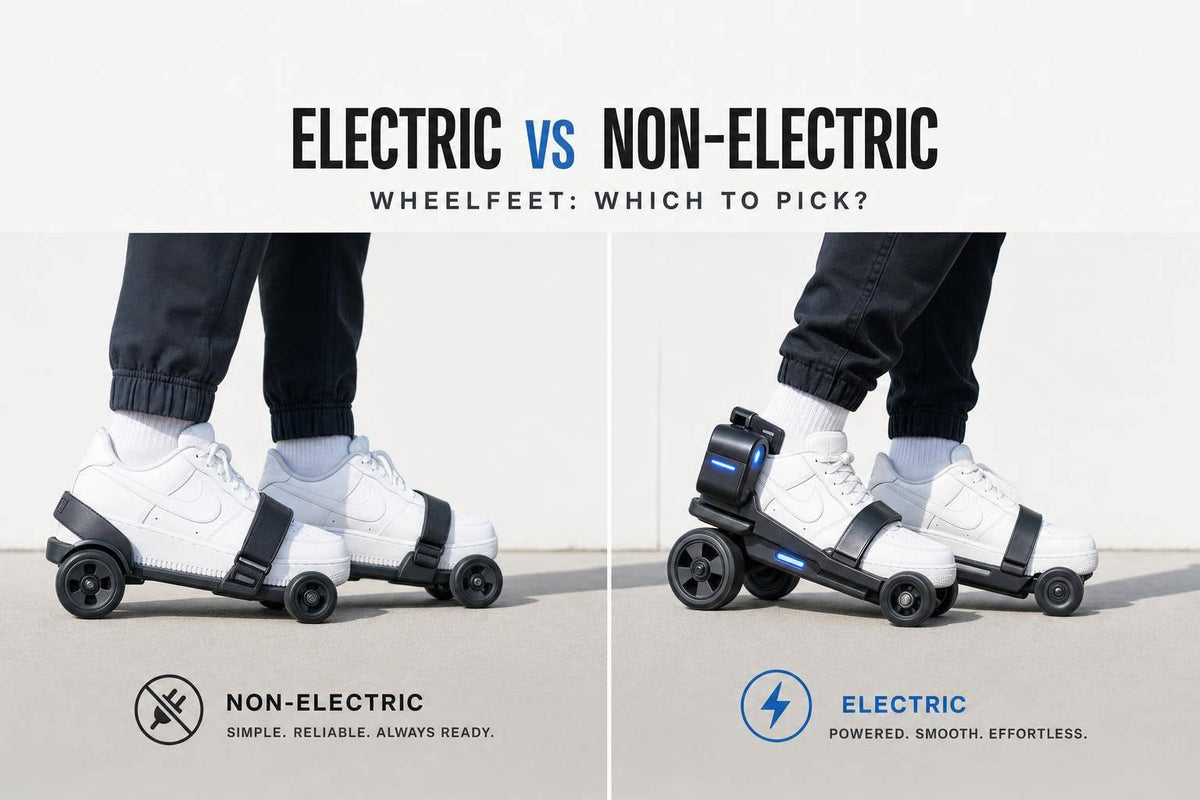
For first-time riders, non-electric Wheelfeet are easier.
| Non-Electric Wheelfeet | Electric Wheelfeet | |
|---|---|---|
| Learning difficulty | Lower - focus on stance, balance, and push | Higher - adds throttle and braking management |
| Speed control | Manual - you set the pace by pushing | Powered - requires active speed and brake management |
| Best use case | Skill building, short recreational rides | Commuting, longer distances, tech-focused fun |
| Beginner suitability | ✅ High - recommended for first-time riders | ⚠️ Moderate to low - better after basics are solid |
The non-electric version starts at $199. The electric version costs $674. For most people starting from scratch, the lower-cost and lower-complexity option makes more sense.
That trade-off is what separates simple beginner gear from Snowfeet-style options built for lower-stress first rides.
How Wheelfeet Compare to Snowfeet Products and Which One to Choose
Why Casual Riders Often Prefer Snowfeet-Style Gear
If Wheelfeet feels too locked into pavement, Snowfeet brings that same small, easy-to-carry idea to snow. The brand makes mini ski skates and Skiskates that attach to winter shoes or snowboard boots, based on the model.
That’s a big deal for casual riders. Both can fit in a backpack, which makes things a lot easier for students, families, and weekend travelers who don’t want to drag around big, awkward gear. And let’s be honest: not everyone wants to show up looking like they’re moving into a ski lodge for the weekend.
For fun-first riders, that easy entry point matters more than top-end performance. You can try something new without spending a pile of money on large gear right away.
Trade-Offs vs. Full-Size Skates, Skis, and Snowblades
Full-size gear still has the edge in some cases. So the main question for beginners is pretty simple: do you want top performance, or do you want the easiest setup to carry, store, and learn on?
| Snowfeet-Style Gear | Full-Size Skates / Skis | |
|---|---|---|
| Portability | Fits in a backpack | Takes more space to carry and store |
| Learning curve | Shorter, more playful | Steeper, more practice needed |
| Stability at speed | Moderate | High |
| Best use | Smooth pavement, groomed slopes, small hills | All-mountain, deep powder, high speed |
| Ideal rider | Casual, beginner, fun-first | Performance-focused, advanced |
Shorter Snowfeet models give up some deep-snow ability in exchange for easier handling and better portability. That’s the trade. If your goal is higher speed or deeper powder, longer skis are the straight answer. But for most other situations, Snowfeet-style gear makes more sense for casual use.
Conclusion: Is Wearable Skating Easy, and Which Beginner Option Makes Sense
If you’re picking between pavement and snow, the choice is pretty clear: Wheelfeet for dry ground, Snowfeet for slopes.
For snow, Snowfeet’s short-ski lineup tends to make more sense for beginners, especially Skiskates (44 cm) if you want the most skate-like feel, or Snowfeet 50 if you want a bit more stability on groomed slopes and small hills.
For most casual riders who want snow fun without the bulk, Snowfeet is the better beginner choice.
FAQs
Can I use Wheelfeet on normal sidewalks?
Yes. Wheelfeet are made for urban paved surfaces like sidewalks, park paths, and recreational trails. They’re also more portable and convenient than traditional inline skates.
They work best on smooth pavement. If you’re just starting, stick to low-traffic spots like empty parking lots or quiet paths. And wear sturdy shoes with firm ankle support so you feel more stable.
How do I stop safely as a beginner?
Stopping with Snowfeet is pretty simple, even if you’re brand new.
The main move to learn is the snowplow stop. Turn your toes inward to make a V shape, push your heels outward, and keep your knees bent. That puts more friction on the snow and helps you slow down. A wider V will slow you faster.
You can also use a hockey-style stop by sliding your edges sideways across the snow. And if your model has an integrated heel brake, put one foot a bit in front of the other and bend your knees to engage it.
Should I start with Wheelfeet or Snowfeet?
It comes down to where you plan to ride.
Wheelfeet are built for pavement and city use. They’re easy to carry around, which is a big plus. But compared with full-size inline skates, they give you less stability and less support.
If you want to ride on snow, go with Snowfeet. They’re made for groomed runs and light powder, and they work with your current winter boots or snowboard boots. For most beginners, they’re also easier to learn than old-school skis.











Zostaw komentarz
Ta strona jest chroniona przez hCaptcha i obowiązują na niej Polityka prywatności i Warunki korzystania z usługi serwisu hCaptcha.