



















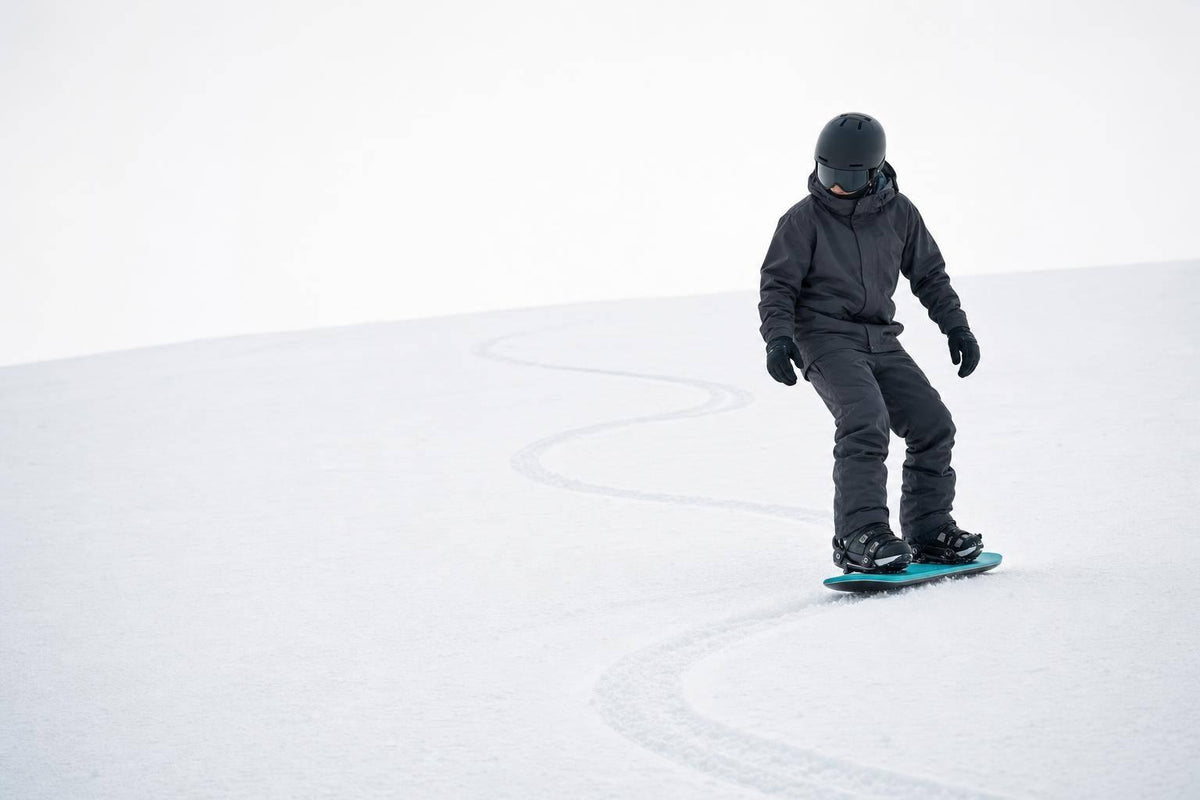
If you want the easiest way to start sliding on snow, snowskates are one of the best first picks. They’re short, light, and far less intimidating than long skis for many new riders.
Here’s the short version: I’d start with a 44 cm to 50 cm setup, use boots that match the binding, wear a helmet every time, and practice on a gentle green slope or packed sled hill. The first skills to learn are simple: balanced stance, slow stops, then short turns. In this guide, I also compare Snowfeet* Skiskates 44 cm and Snowfeet* PRO 50 cm, plus when each one makes more sense.
What matters most on day one:
- Short length = easier control on mellow terrain
- Helmet first, then gloves, and pads if you want more protection
- Packed snow beats ice and powder for first practice
- Stop before you chase speed
- 44 cm and 50 cm models are the main beginner sizes covered here
A few quick facts stand out from the article:
- Snowfeet* PRO 50 cm uses strap-on bindings for US men’s sizes 6–13
- Snowfeet* Skiskates 44 cm start at $460
- Snowfeet* PRO 50 cm is listed at $299
- Snowskates in this guide are much shorter than long skis: 17–20 in vs. 63–75 in
Snowfeet* & Skiskates Tutorial - How to Become a PRO Skiskater
Quick Comparison
| Model | Length | Price | Boots | Best for |
|---|---|---|---|---|
| Snowfeet* PRO | 50 cm / 20 in | $299 | Winter shoes or snowboard boots | First-timers who want a simple setup |
| Snowfeet* Skiskates | 44 cm / 17 in | From $460 | Ski-boot or snowboard-boot versions | Beginners who want more ski-like feel |
So, if I were helping a friend in the shop, I’d say this: pick a short model, keep your first session slow, and don’t leave the bunny hill until stopping feels boring :)
What Snowskates Are and How They Compare to Skis and Snowboards
If you're picking your first setup, it helps to sort out the names first. They sound close, but they’re not the same.
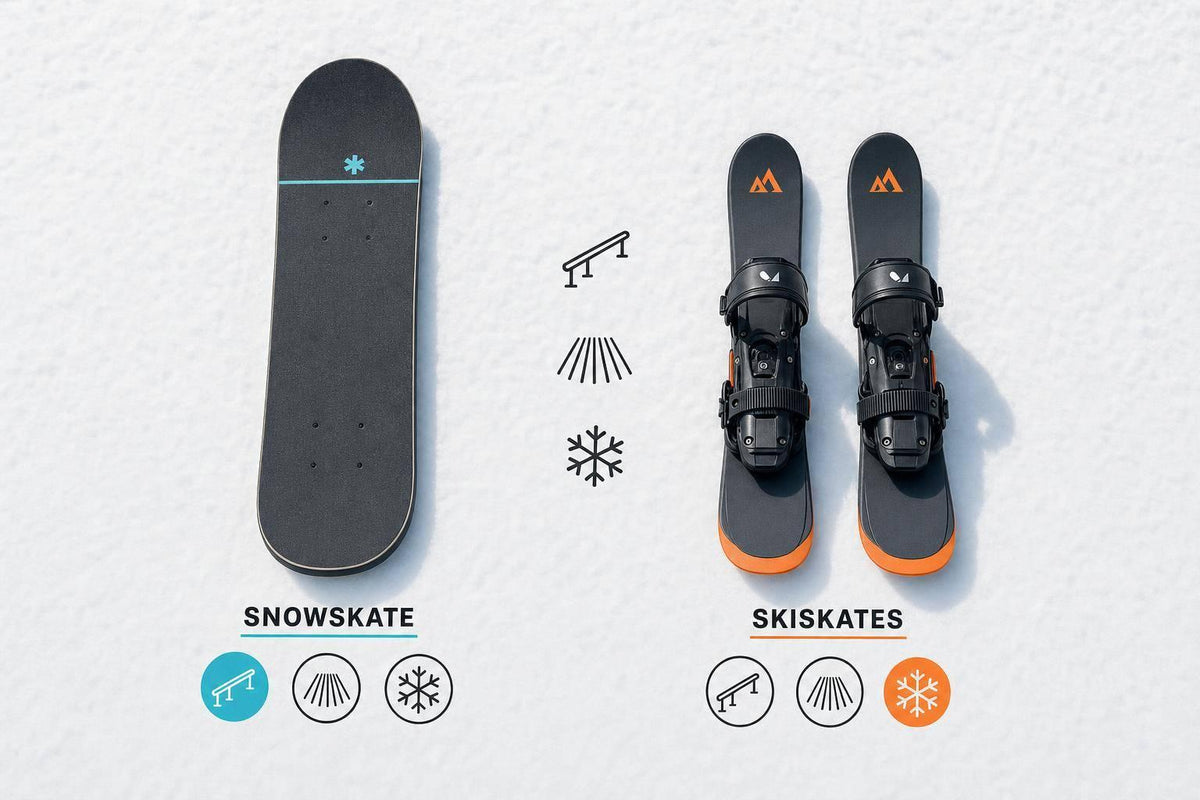
Snowskates are small, ski-like devices made for sliding on snow. Skiskates are the shortest version. Snowblades and mini skis are longer, and they usually need standard ski boots and bindings. This guide focuses on Snowfeet* Skiskates 44 cm and Snowfeet PRO 50 cm because they’re the easiest place for most beginners to start.
How Snowskates Feel on Snow
On snow, snowskates feel quick, light, and a bit more like skating than skiing. You don’t have long skis out in front of you, which makes the whole thing feel less awkward at first.
The big difference is response. A short platform reacts fast when you shift your weight. That means new riders can make small corrections without throwing their whole body into a big turn. If your balance gets a little off, it’s often easier to recover.
Compared with a snowboard, snowskates let each foot move on its own instead of locking both feet onto one board. For many beginners, that feels less restrictive and easier to manage.
Long skis still win when you want more speed, steeper terrain, or deep powder. But for a first day on groomed snow, snowskates tend to feel far less intimidating. On gentle runs and small slopes, they’re often more forgiving too.
Who Snowskates Are Best For
Snowskates make sense for beginners who want a simple, low-commitment way to try sliding on snow without buying a full ski setup.
They’re a good fit if you want:
- A setup that feels less intimidating than long skis
- Fast, easy turning on gentle terrain
- Less gear to buy and carry
Long skis are still the better pick for speed, steep terrain, and deep powder.
Snowskates vs Short Skis vs Long Skis
| Feature | Snowfeet* Skiskates / PRO | Short Skis / Snowblades | Long Skis |
|---|---|---|---|
| Length | 44–50 cm (17–20 in) | 90–140 cm (35–55 in) | 160–190 cm (63–75 in) |
| Boot compatibility | Firm winter or snowboard boots | Standard ski boots required | Standard ski boots required |
| Learning curve | Easiest on gentle slopes | Moderate | Steeper |
| Portability | Very portable - fits in a backpack | Moderate | Bulky, needs ski racks |
| Turning | Very quick, agile | Quick but slightly more stable | Smooth, larger-radius turns |
| Stability at speed | Best at moderate speeds | Medium | High |
Now that the differences are clear, the next move is choosing the right beginner model and boots.
sbb-itb-17ade95
How to Choose Beginner Snowskates and Gear
If you're just getting started, go short. Shorter setups are easier to handle, and that matters a lot on mellow slopes. The goal is simple: pick the smallest model you can still control without feeling wobbly.
Best Snowfeet* Models for Beginners
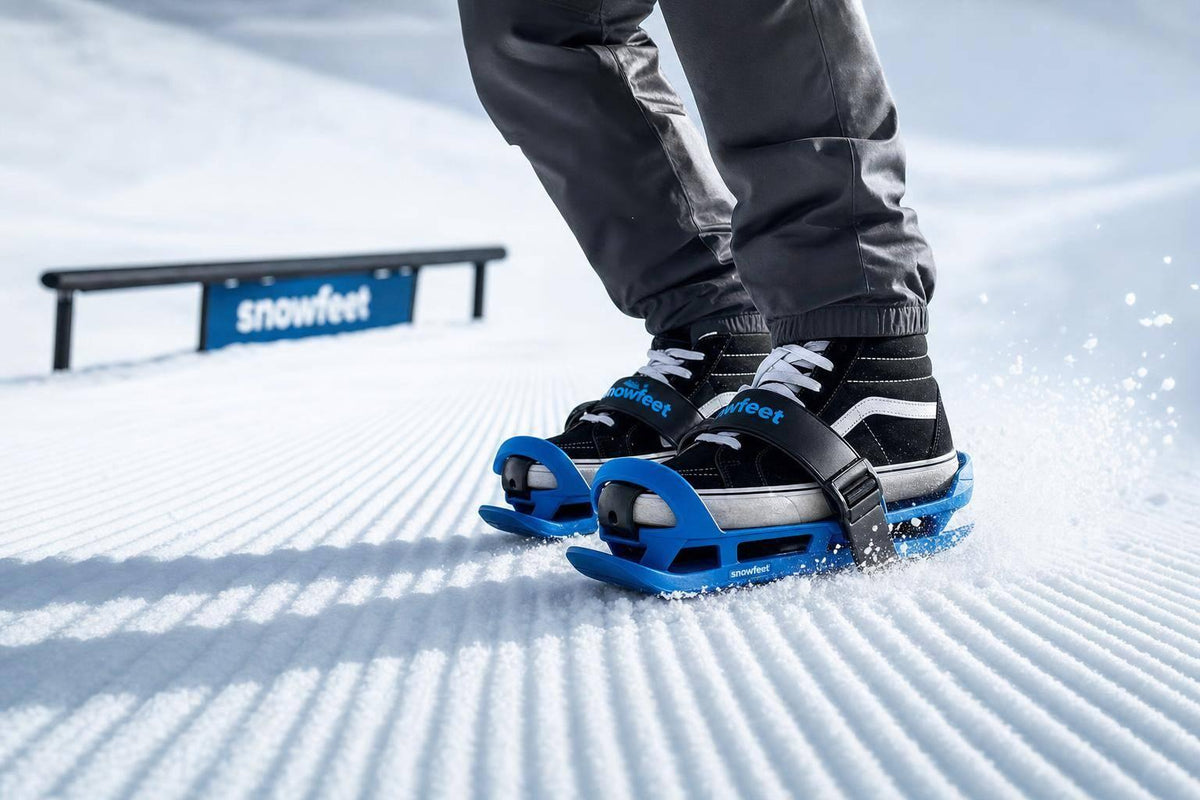
Snowfeet* PRO 50 cm ($299) is the easiest place to start. It uses strap-on bindings that fit US men's shoe sizes 6–13, so setup is simple. You can use most regular insulated winter shoes or snowboard boots. It's small, easy to carry, and a clean first setup.
Snowfeet* Skiskates 44 cm (from $460) make more sense if you want something that feels closer to skiing right away. The wood-core build, steel edges, and sintered base give you better edge hold on groomed snow. That means more grip when you're learning, and they still make sense once you've got the basics down.
Once you've picked the model, it's time to sort out boots and a few safety basics.
Boots, Helmet, and Basic Protective Gear
Your boots depend on the model.
- Snowfeet* PRO works with regular insulated winter shoes or snowboard boots.
- Snowfeet* Skiskates 44 cm comes in ski-boot and snowboard-boot versions. The bindings fit US 4.5–14.5 for ski boots and US 6–14.5 for snowboard boots.
Match the boot to the binding, then go with the warmest secure fit. Cold feet can ruin a day fast :)
For safety gear, start with a certified snow sports helmet. It's required. Then add wrist guards, knee pads, and waterproof gloves. Those first-day falls usually happen at low speed, but your wrists and knees still take the hit.
What to Buy First and What Can Wait
Buy the main stuff first:
- the model
- boots
- helmet
- warm layers
That's enough for day one. Edge tools, replacement straps, and wax are nice to have later for upkeep, but you don't need them before your first run.
With the right setup ready, the next move is learning balance, stopping, and easy turns.
How to Start Riding: Balance, Stopping, and Turning
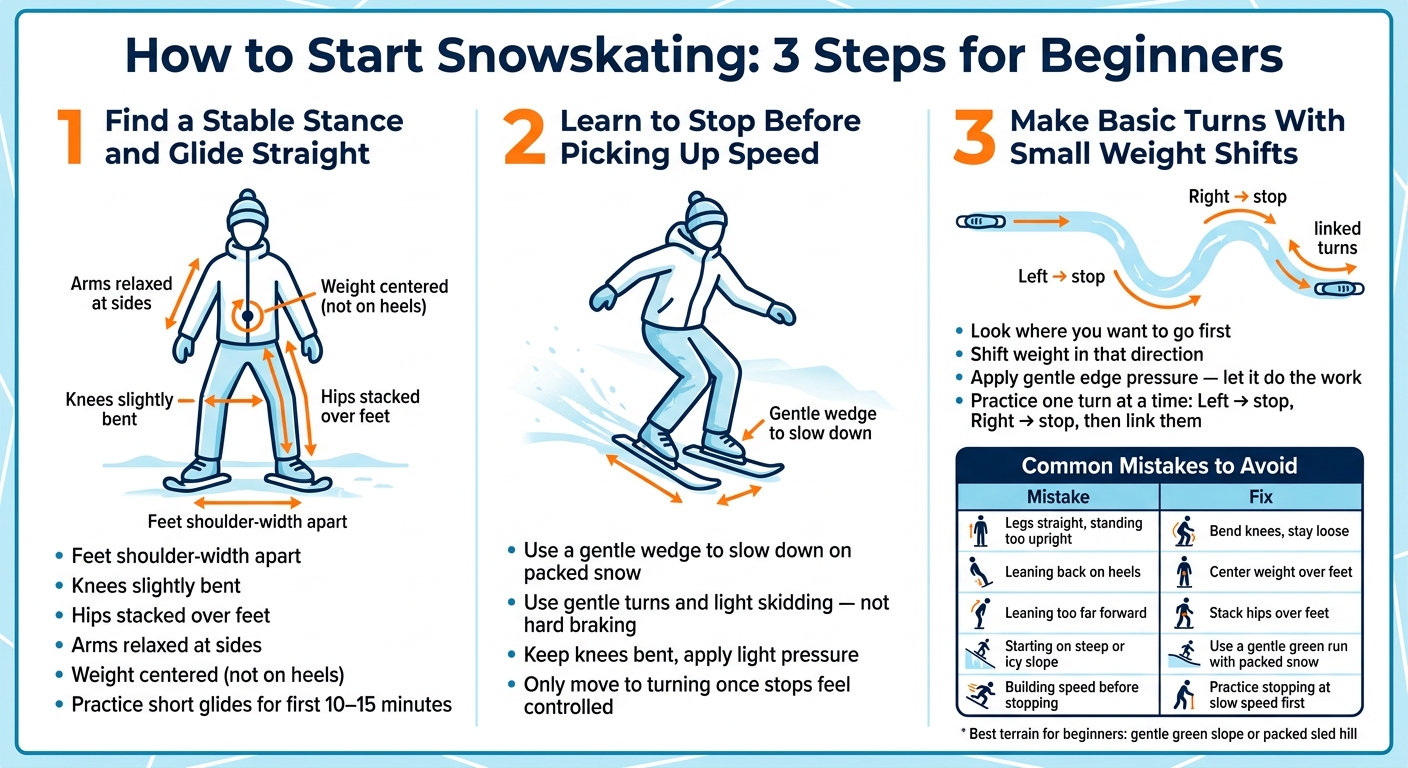
How to Start Snowskating: Beginner Steps & Key Tips
Treat your first session like practice, not a race. Start on a mellow green slope or a packed-snow hill with a wide runout. That gives you room to breathe and room to stop. Skip steep terrain, icy patches, and deep powder for now. Those conditions make balance and stopping a lot tougher before you’ve built any feel for the gear. Early on, the goal is simple: get steady, then get moving.
Step 1: Find a Stable Stance and Glide Straight
Start on flat snow before you point anything downhill. Stand with your feet about shoulder-width apart, keep your knees slightly bent, stack your hips over your feet, and let your arms hang in a relaxed way at your sides. Keep your weight centered. Don’t lean back on your heels like you’re sitting in a lawn chair :)
Once that feels steady, move into small steps and short glides. Step on, glide a few feet, stop, and do it again. Keep it short and low-pressure. In the first 10–15 minutes, put your full attention on straight glides and balanced posture. If you can glide straight without that side-to-side wobble, you’re ready to work on stopping.
Step 2: Learn to Stop Before Picking Up Speed
Work on stopping on your starter slope before you head any higher. A gentle wedge can help you slow down on packed snow. Go easy with it. Don’t kick your feet way out all at once.
Use gentle turns and light skidding to control speed, not hard straight braking. Think smooth, not sudden. Keep your knees bent and apply light pressure instead of making sharp, jerky moves. When your stops start to feel under control, that’s your green light to begin turning.
Step 3: Make Basic Turns With Small Weight Shifts
To turn, look where you want to go first, then shift your weight in that direction and apply gentle pressure on the edges. Let the pressure do the work. No need to muscle it.
Compact snowskates steer fast, which makes small corrections easier for beginners. Their short length also makes balance fixes and turns feel simpler than on long skis. A good way to practice is one turn at a time:
- Left, stop
- Right, stop
- Then start linking them
That slow, stop-start rhythm helps the movement click without things getting out of hand.
Common Beginner Mistakes and Key Takeaways
Mistakes That Cause Most Early Falls
Once you’ve got the basics of balance, stopping, and turning, this is the stuff that trips most people up first.
Most beginner falls happen for a simple reason: not enough balance, weak stopping control, and turns that come too late.
| Mistake | Fix |
|---|---|
| Standing too upright, legs straight | Bend your knees a bit and stay loose |
| Leaning too far back on your heels | Keep your weight centered over your feet |
| Leaning too far forward | Stack your hips over your feet, not over your toes |
| Starting on a steep or icy slope | Stick to a gentle green run with packed snow |
| Picking up speed before you can stop | Practice stopping at slow speed first, every time |
One of the biggest beginner habits is locking your body up. That sounds safe, but it usually does the opposite. Stiff legs make it harder to react, and bad posture throws your weight out of place fast.
Terrain matters too. A mellow green run with packed snow gives you room to learn without feeling like the hill is trying to fight you. Icy patches and steep slopes? Save those for later.
Long skis still work best for deep powder, high speed, and long groomed descents. But for first-timers, Snowfeet* Skiskates 44 cm and Snowfeet PRO 50 cm are easier to control, easier to carry, and less intimidating to learn on.
What to Remember Before Your First Session
Before your first run, keep the order simple: gear, terrain, balance, then stopping.
Use the beginner setup you already picked. Head to easy terrain. Wear full protective gear. A helmet is a must, and protective gloves help too. If you want more peace of mind, add knee or wrist pads. Stay away from steep or icy terrain.
Out on the snow, do this in order:
- Practice stopping before you work on turning
- Practice turning before you chase speed
That order matters more than most people think. If you can’t stop, speed gets sketchy fast. If you can stop and turn with control, the whole day feels calmer and way more fun :)
Start slow, stop early, and turn only when control starts to feel automatic.
FAQs
Are snowskates easier to learn than skis?
Yes. Snowskates are often easier to learn than regular skis because the gear is shorter and lighter. That makes it feel less intimidating right away, and it reacts fast to small balance and weight shifts.
So, for a lot of beginners, the first wins come fast. Many can learn basic turning and stopping in about five minutes.
Which Snowfeet* size is best for beginners?
For absolute beginners on groomed resort runs, the 65 cm Snowfeet Skiblades* are the best pick. They strike the right balance between stability and control, and they tend to feel more forgiving than shorter models.
If you come from ice skating or rollerblading, the 44 cm Skiskates may feel more natural. They’re nimble and easy to move around on. If you want a solid option for your first season, the Snowfeet PRO 50 cm* gives you a nice middle ground between stability and maneuverability.
Can I use regular winter boots with snowskates?
Yes. Snowfeet* snowskates are built to strap onto regular winter boots or snowboard boots, so you don’t need ski boots to get started.
Just make sure your boots fit snugly in the bindings and feel secure on your feet. Good warmth and ankle support matter too. For the 44 cm and PRO 50 cm Snowfeet* models, the bindings are made for ski or snowboard boots.











Zostaw komentarz
Ta strona jest chroniona przez hCaptcha i obowiązują na niej Polityka prywatności i Warunki korzystania z usługi serwisu hCaptcha.