



















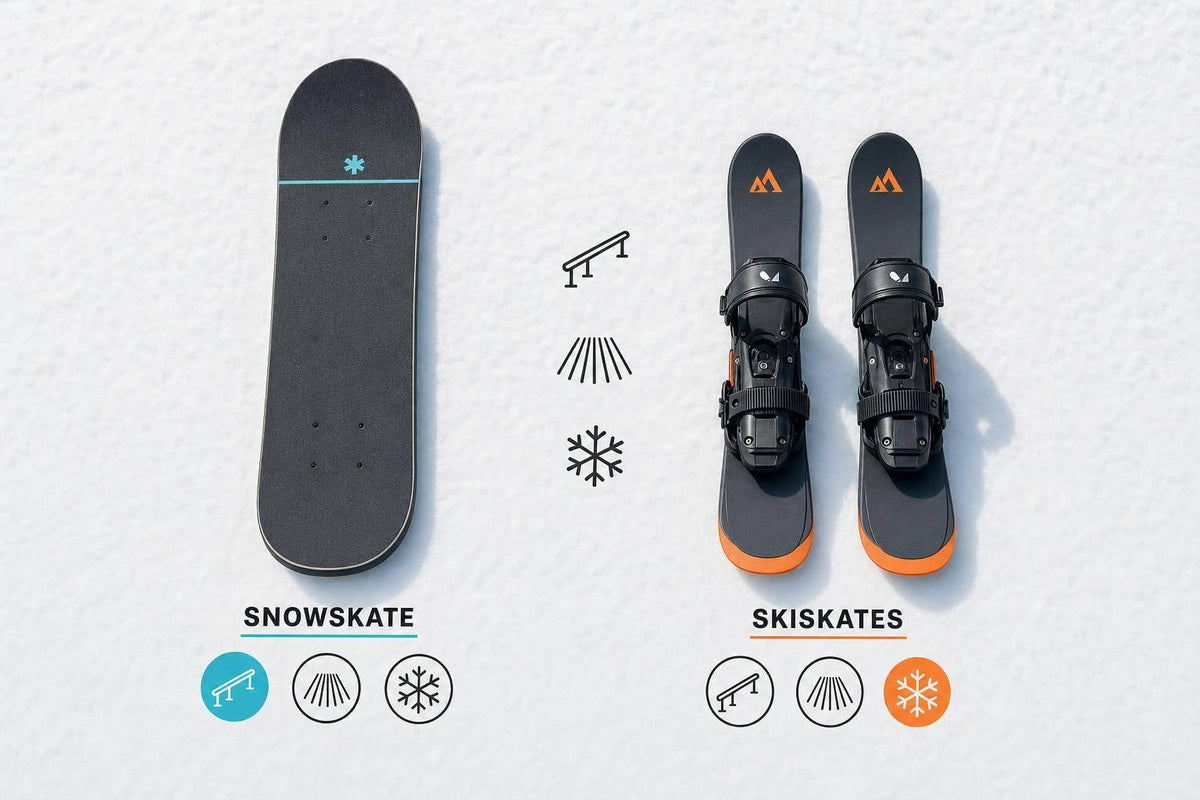
Snowskates are small snow riders that borrow from skateboards, skis, and snowboards. If I had to boil it down fast: binding-free snowskates feel loose and trick-focused, while short ski skates with bindings feel easier to control on groomed runs.
If you’re trying to pick one, here’s the short version:
- Classic snowskates = best for park laps, jibbing, and skateboard-style feel
- 38 cm (15 in) mini ski skates = tiny, light, and best for small hills and backyard use
- 44 cm (17 in) Skiskates = the sweet spot for most riders who want easy turns plus decent stability
- 50 cm (20 in) ski skates = more glide and a calmer ride on green and blue runs
- Long skis still win in deep powder, steep terrain, and high-speed riding
So, yes - these short setups do work on snow. But they work best when you match the tool to the terrain, your boots, and how you like to ride.
What matters most:
- Bindings or no bindings
- Length: 38 cm, 44 cm, or 50 cm
- Groomed snow vs. powder
- Playful feel vs. more stability
| Option | Length | Best For | Main Trade-Off |
|---|---|---|---|
| Classic snowskate | Skateboard-sized | Tricks, park, urban spots | Less grip on icy or steep runs |
| Mini ski skates | 38 cm / 15 in | Small hills, low-fuss fun | Can feel twitchy at speed |
| Skiskates | 44 cm / 17 in | Resort laps, turns, mixed casual use | Less float in soft snow |
| Ski skates | 50 cm / 20 in | More stability, longer groomers | Still not a powder tool |
| Long skis | 150–190 cm / 59–75 in | Speed, steep runs, deep snow | Big, bulky, harder to carry |
I’d sum it up like this: if you want a fun, compact setup for groomed snow, short ski skates make a lot of sense. If you want deep snow or fast charging, stick with full-size skis. Simple as that :)
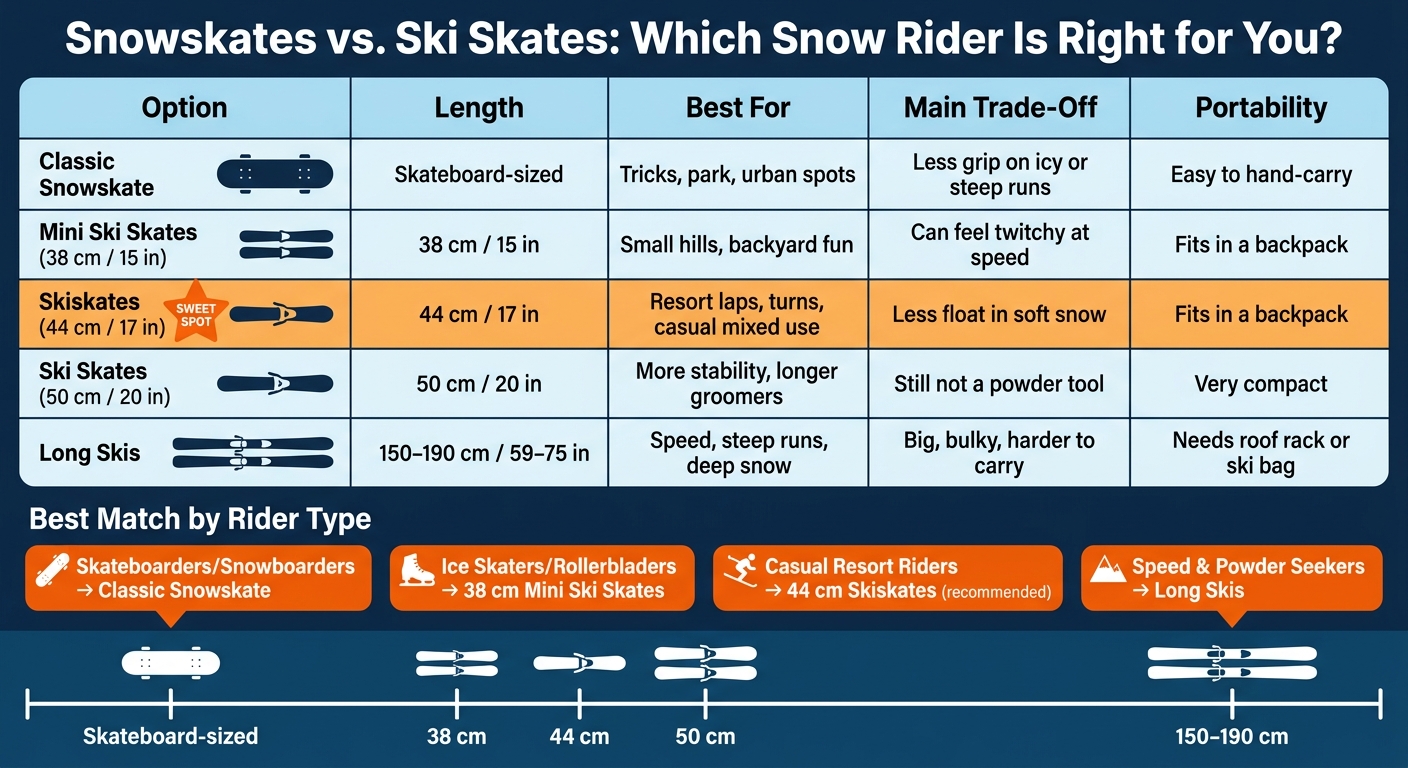
Snowskates vs. Ski Skates: Which Snow Rider Is Right for You?
How to Use Snowfeet* Skiskates 44 CM | Skates for Snow | Mini Ski | Snowblades | Snowskates
Snowskates vs. Skis, Snowboards, and Short Skis: What Sets Them Apart
"Snowskate" can mean two different things: a bindingless deck or a short ski with bindings. That one detail changes a lot. It’s why some models feel close to skate gear, while others ride more like small skis.
Snowskates: Skateboard-Style Boards for Snow
The classic snowskate usually comes in two forms: single-deck and bi-deck.
A single-deck looks a lot like a skateboard built for snow. It has a grooved base to help it track across the surface. Up top, you get foam or rubber grip instead of bindings, so your feet can move around as needed. That loose feel is a big part of the fun.
A bi-deck adds a ski-like base under the top deck. Many models also use steel edges, which helps with grip and carving. You still ride without bindings, but the extra base gives you more hold on the snow.
Both styles keep your feet free. That’s great for tricks and park riding. The trade-off is less security on steep runs or icy sections.
Bindingless decks lean hard toward tricks. The next group gives up some of that freedom and gives you more control instead.
Short Ski Skates: Snowfeet* and Similar Compact Gear
Snowfeet* short ski skates use bindings that connect to ski or snowboard boots. So your feet stay locked in, you face forward, and each leg helps steer.
For a lot of people, that feels more familiar right away, especially if they’ve done skating or inline skating before. The setup also makes edging and turning feel more direct. That’s a big reason many casual resort riders find them easier to learn than bindingless snowskates.
Quick Comparison: Long Skis, Snowboards, Skiblades, and Snowblades
Here’s the fast version.
| Gear | Typical Length | Bindings | Portability | Best At | Where It Falls Short |
|---|---|---|---|---|---|
| Traditional long skis | 150–190 cm (59–75 in) | Yes | Needs a roof rack or ski bag | High speed, deep powder | Heavy, hard to store |
| Snowboard | 140–170 cm (55–67 in) | Yes (sideways stance) | Large, needs a bag | Edge control, powder | Fixed stance, less agile |
| Skiblades / Snowblades | 60–100 cm (24–39 in) | Yes | Easier to carry than long skis | Freestyle, tight turns | Still larger than ultra-short |
| Snowskates (single/bi-deck) | Skateboard-sized | No | Very portable | Tricks, parks, urban spots | Steep slopes, icy conditions |
| Snowfeet* 38–50 cm | 38–50 cm (15–20 in) | Yes | Backpack-friendly | Groomed runs and casual resort use | Deep powder and extreme speeds |
Long skis still come out on top in powder and at high speed. But for most casual riders, Snowfeet* skiskates and mini ski skates are easier to carry, easier to learn, and more playful on groomed runs. Snowfeet* skiblades land in the middle, between mini skates and full skis.
Next, see how deck shape, edges, and boot setup create grip on snow.
How Snowskates and Snowfeet* Skiskates Are Built and How They Grip Snow
Snowskate Construction: Decks, Grooves, Edges, and Grip
Single-deck snowskates are simple, one-piece boards. They have a grooved plastic base on the bottom and a foam or EVA traction surface on top. Those grooves help the board track straight and cut down on side slip on groomed snow. But there’s a catch: without metal edges, grip falls off fast on hardpack or icy spots.
Bi-deck snowskates use a different setup. They pair a skateboard-style top deck with a ski-like lower deck. That gives them better edge hold and makes carving on groomed snow feel more stable.
Snowfeet* goes the other way. Instead of a loose board feel, it uses locked-in boots and metal edges for more direct control. Think less “slide around and hope for the best,” more “point it and go.”
Snowfeet* Product Setup: 38 cm, 44 cm, and 50 cm Models
Snowfeet* sticks with the same short, easy-to-carry idea, but adds boot bindings and steel edges for more control.
| Model | Length | Build | Boot Type |
|---|---|---|---|
| Mini Ski Skates | 38 cm (15 in) | Compact build with a grooved base | Regular winter shoes or snowboard boots |
| Skiskates | 44 cm (17 in) | Wood core, cap construction, steel edges, graphite or sintered base | Ski boots or snowboard boots |
| PRO Ski Skates | 50 cm (20 in) | Fiberglass core with steel edges | Winter shoes or snowboard boots |
The 38 cm model is the shortest of the bunch, so it’s the easiest to toss in a bag and carry around. It uses built-in adjustable bindings that work with regular winter shoes or snowboard boots in US sizes 6–13 / EU 38–47.
The 44 cm Skiskates step things up with cap construction, a certified sustainable wood core, steel edges, and a graphite or sintered base for smoother glide. They also come with grip pads, safety leashes, and quick-adjust bindings for ski or snowboard boots.
The 50 cm PRO uses a fiberglass core with steel edges. Its longer platform gives you more stability than the 38 cm model, which can feel a bit more twitchy - fun, but twitchy.
How Snowfeet* Short Formats Compare with Skiblades and Long Skis
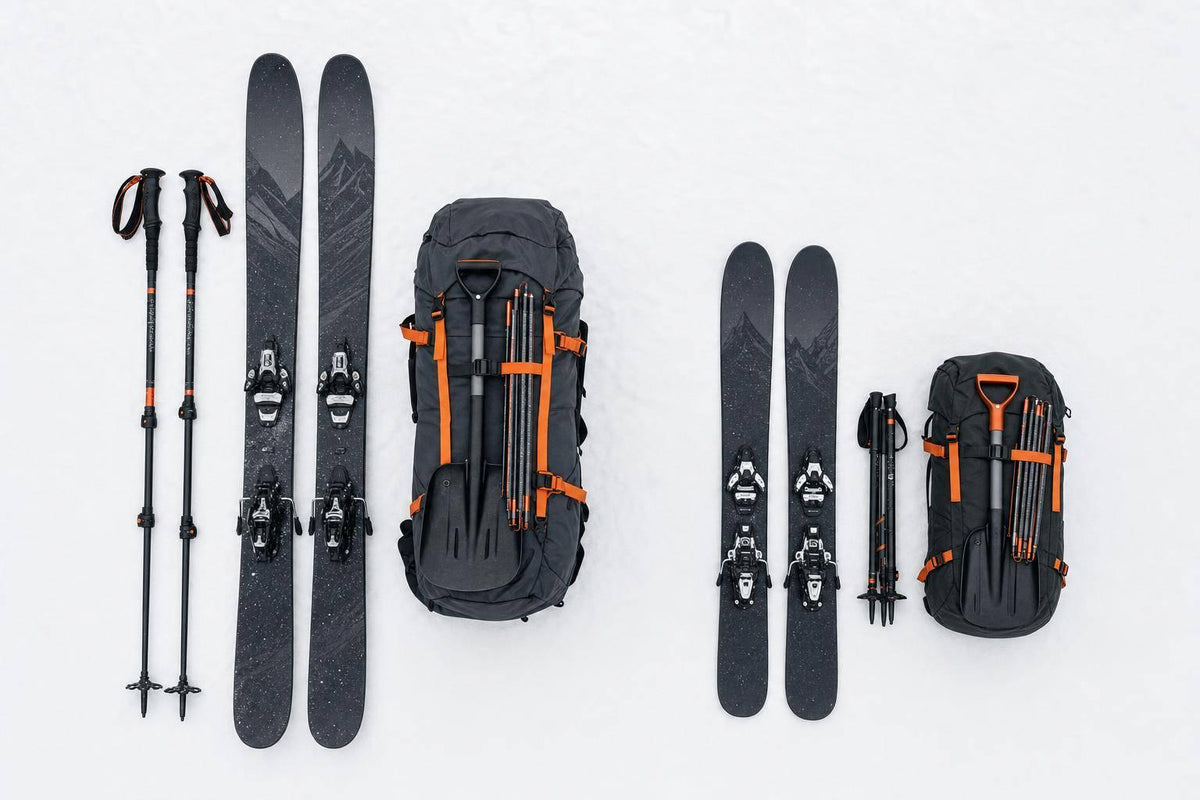
Longer short skis in the 65–100 cm range track better at speed, float better in soft snow, and feel more planted on steeper terrain. Snowfeet* makes longer short skis in those lengths too, but the 38–50 cm models lean hard into portability and quick turns.
Next, see how these designs balance, turn, and stop on snow.
sbb-itb-17ade95
How They Work on Snow: Balance, Turning, Stopping, and Terrain
With the build and boot setup covered, the next step is simple: how do these short tools feel once they’re on snow?
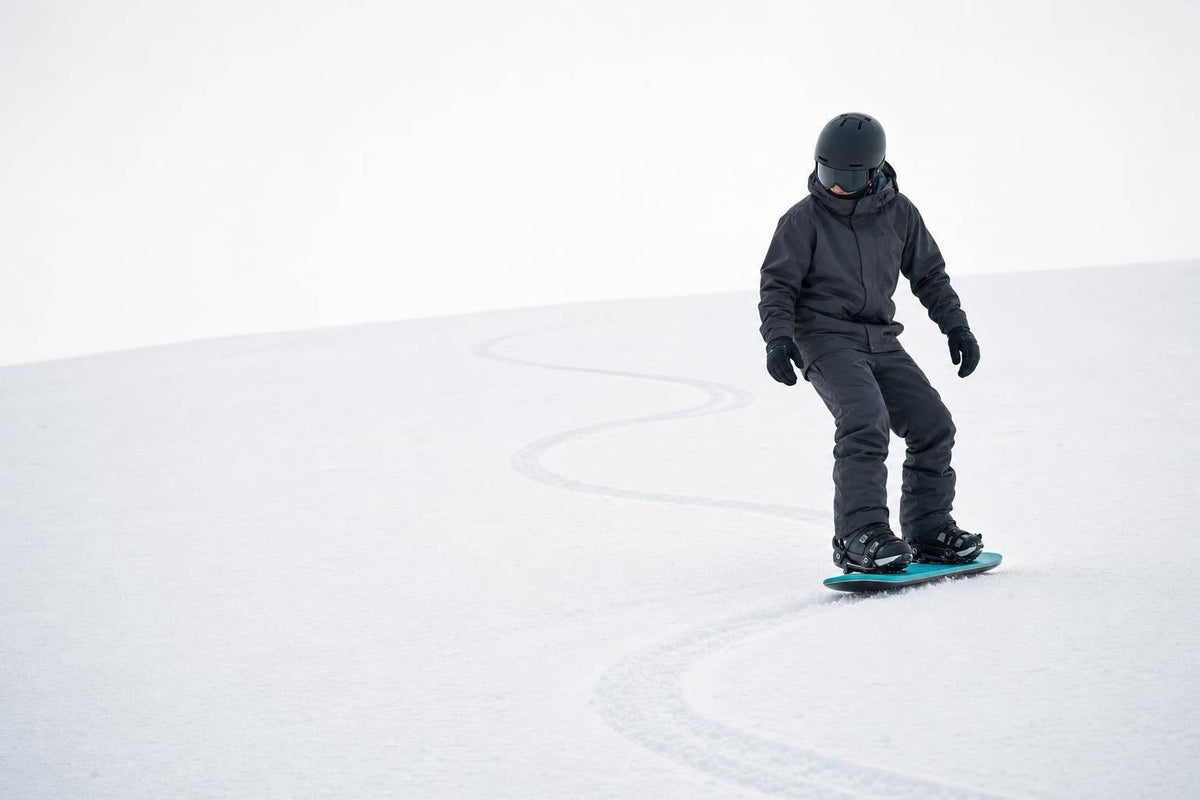
How to Stand and Balance on a Snowskate
Start with your feet about shoulder-width apart. Put your front foot a bit forward and angle your back foot out. Keep your knees bent, hips centered, and upper body loose. Your shoulders should line up with your hips so you stay centered over the deck.
On a snowskate, there are no bindings to save you. Both feet need to stay planted and centered. If your weight slips too far forward or too far back, you can lose contact in a hurry. Grip tape helps, sure, but active foot control matters more.
Once your feet are set, balance becomes a game of edge pressure and upper-body control.
How to Glide, Turn, and Stop on Snowfeet* Skiskates and Mini Ski Skates
Start on a mellow groomed slope. Stand with your feet shoulder-width apart, keep your knees soft, and point both skis straight downhill. Let your ankles stay loose so the skis can track on their own, and keep your weight centered.
To turn, roll both skis onto their left or right edges while turning your shoulders and head the same way. It’s a smooth move, not a jerky one. The curved shape helps the skis arc through the turn, so small inputs usually work best.
To stop, use edge control along with a heel drag or wedge stop. The feel is a lot like a hockey stop or an inline-skating stop. Since each foot moves on its own, Snowfeet* skiskates feel closer to skating than riding one fixed board.
Best Snow Conditions and Slope Types for Each Style
Classic snowskates do best on firm, groomed snow. Think resort groomers, backyard hills, and park approaches where the base stays even. That means terrain choice matters almost as much as skill. Icy patches are workable if you stay balanced, but deep powder can bog down the short deck and make turning and stopping tougher.
Snowfeet* options each have their sweet spot:
- The 44 cm Skiskates work best on groomed runs, parks, and moguls, thanks to the wood core and metal edges.
- The 38 cm Mini Ski Skates fit small hills, sledding hills, and backyards.
- The 50 cm Ski Skates give you a more stable platform for general resort use.
Who Each Option Suits and the Real Pros and Trade-Offs
Best Match by Skill Level and Riding Background
Riding background matters. But balance, turning, and speed matter too. Once you know how each setup works, the next step is simple: which one fits the way you ride?
Classic snowskates make the most sense for people who already skateboard or snowboard. The stance feels familiar. Your balance instincts carry over. Even your trick bag translates pretty well. That said, if you're brand new, the no-binding setup can feel slippery and hard to manage on groomed resort runs.
Snowfeet* products fit a much bigger mix of riders. The 38 cm mini ski skates work best for ice skaters, rollerbladers, and hockey players. If you're used to edge control and balancing on a short platform, this one clicks fast. The 44 cm Skiskates are a good fit for riders who want fast turns but still want enough stability for normal resort laps. The 50 cm format is a smart pick for beginners who stick to groomed green and blue runs and want more stability without hauling around full-length skis.
Choose skiblades if you want a more ski-like feel and don't care much about backpack-level portability.
Pros and Cons: Portability, Control, Speed, and Versatility
This is where the trade-offs jump off the page.
| Feature | Classic Snowskate | Snowfeet* 38 cm | Snowfeet* 44 cm | Snowfeet* 50 cm | Skiblades | Long Skis |
|---|---|---|---|---|---|---|
| Groomed slope control | Loose, surfy | Nimble, moderate | Balanced, forgiving | Stable, confident | Very stable | High |
| Park playfulness | Excellent | Excellent | Excellent | Good | Good | Limited |
| Deep-snow performance | Poor | Poor | Poor | Limited | Limited | Excellent |
| Top-speed stability | Low | Low | Low-moderate | Moderate | Moderate | High |
| Transport convenience | Easy to hand-carry | Fits in a backpack | Fits in a backpack | Very compact | Easier than long skis | Bulky, often needs a roof rack |
The big takeaway: Snowfeet* 44 cm and 50 cm formats hit the sweet spot for a lot of U.S. weekend riders. They blend fun, ease of learning, and day-to-day convenience. Long skis still feel steadier once speeds climb. Snowfeet*, though, stays easier to turn and simpler to carry. That's a nice combo if you want more riding and less fuss :)
Conclusion: When Snowskates Make Sense and When Snowfeet* Is the Better Pick
At this point, the choice comes down to three things: control, convenience, and terrain.
Classic snowskates make sense in a pretty specific lane. You already skateboard or snowboard. You want a binding-free setup for jibbing, park laps, and urban-style riding. And you're not chasing speed or powder days. Outside that lane, they can feel tough for new riders and aren't the best tool for fast runs or deep snow.
For most casual U.S. resort riders, Snowfeet* is the more practical pick. Snowfeet* has strong user reviews. The 44 cm Skiskates fit ski or snowboard boots, pack into a backpack, and are quick to learn. The 50 cm format gives you more stability if you want extra confidence on longer groomed runs. The 38 cm version stays the most portable option for small hills and quick day trips.
Long skis still win on steep, fast, or deep terrain. That's a real edge, no question. But for a fun, low-hassle day on groomed slopes, Snowfeet* stands out as the stronger choice.
FAQs
Are snowskates hard to learn?
No - snowskates are usually easy to learn, especially next to standard skis. Most riders get the basics down in 5 to 30 minutes, and if you’ve done ice skating or inline skating, the side-to-side motion often feels natural right away.
Their short, light build makes them feel less intimidating. It also helps stop that awkward crossed-tip problem that can trip up new skiers. For the best first session, stick to groomed, mellow terrain.
Snowfeet products are especially beginner-friendly.
Which Snowfeet* length should I choose?
Choose based on your experience, riding goals, and build. Beginners will usually have an easier time on the 50 cm Snowfeet PRO. It gives you more stability, better balance, and more control when it's time to slow down or stop.
If you’ve got more time on snow and want tight turns, easy movement, and room to throw in tricks, the 44 cm Skiskates are the better pick. If you weigh over 170 lbs or wear larger boots, it’s smart to lean toward the 50 cm model for a steadier ride.
Can I use snowskates at any ski resort?
Most ski resorts in the United States allow Snowfeet Skiskates*.
Why? They have metal edges and secure bindings, much like regular skis. That usually means you can take them on lifts and use them on groomed runs and in terrain parks.
That said, resort rules can vary. One mountain may wave you right through, while another may want a closer look. So it’s smart to check the resort’s equipment policy before you go.
If a staff member asks about your gear, keep it simple:
- Explain that your Snowfeet Skiskates* have metal edges
- Mention that they use secure bindings and meet standard metal-edge rules
And, of course, follow the Responsibility Code. That part always matters, no matter what you’ve got on your feet.











Zostaw komentarz
Ta strona jest chroniona przez hCaptcha i obowiązują na niej Polityka prywatności i Warunki korzystania z usługi serwisu hCaptcha.