




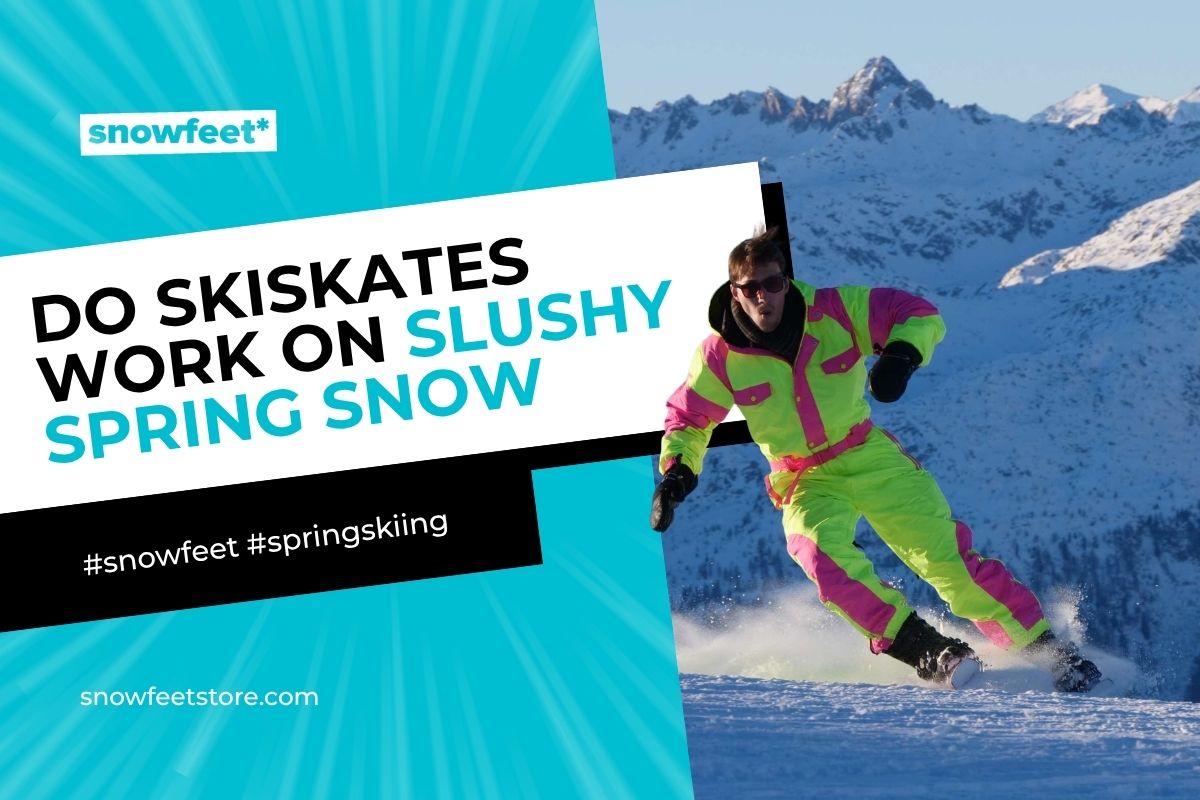
Quick Summary:
Skiskates work well on spring slush only in a specific sweet spot of shallow, groomed snow, offering a fun, nimble, and quick-turning ride for mellow runs. As slush gets deeper, heavier, or rutted, short skiskates require much more physical effort and lose stability, making longer options like 65 cm or 99 cm skiblades or traditional long skis necessary for better float and control. Timing is critical because morning firmness quickly softens into smooth corn before degrading into sloppy afternoon mashed potatoes, meaning riders should match shorter setups like the 44 cm and 50 cm to smooth, shallow slush and switch to longer gear as snow depth and roughness increase.
Yes - but only in a pretty small sweet spot. If I’m riding shallow, groomed spring slush, Snowfeet* skiskates can feel fun, loose, and easy to turn. If the snow gets deep, sticky, rutty, or heavy, they start to feel like a chore fast.
Here’s the short version:
- 44 cm skiskates feel best when I want the fastest turns on mellow groomers
- 50 cm gives me a bit more calm when the snow gets uneven
- 65 cm, 99 cm, and 123 cm skiblades make more sense once slush gets deeper
- Long skis still win when I want the most float and the steadiest ride in rough spring snow
- Timing matters a lot: late morning is often the best window, while sloppy afternoon snow is the toughest
Spring snow changes a lot in one day. In the morning, it may be firm. By late morning, it softens into smooth corn or light slush. By afternoon, it can turn into mashed potatoes with ruts - and yeah, that’s when short skiskates stop being much fun.
What I’d tell a friend is simple: pick skiskates for playful, low-speed laps on soft groomers. If you want more support, more float, or plan to ski faster, go longer.
Quick Comparison
| Option | Best use in spring slush | Feel | Main limit |
|---|---|---|---|
| Snowfeet* Skiskates 44 cm | Smooth, shallow slush on mellow runs | Most nimble | Least stable in rough snow |
| Snowfeet* 50 cm | Groomed slush with mixed patches | A bit calmer | Still not made for deep slush |
| Skiblades 65 cm | Shallow to mid-depth soft snow | More support | Less loose than skiskates |
| Skiblades 99 cm | Chopped spring snow | Better float | More work in tight turns |
| Skiblades 123 cm | Rougher, faster spring laps | Most planted in Snowfeet* line | Bigger and less playful |
| Long skis | Deep, heavy, cut-up slush | Best float and tracking | More ski to handle |
So, if you’re heading out in spring, I’d keep it simple: short for smooth slush, longer for deep slush. That one rule gets you most of the way there :)
 Product Link: Snowfeet* Skiskates 44 CM | Skates for Ski Slopes | Skiblades Mini Skis
Where Snowfeet* Skiskates Work Best in Spring
Skiskates can be fun in spring, but the setup matters a lot. They work best on groomed beginner and intermediate runs with snow that has softened a bit. Not deep, heavy slush.
You’ll get the best ride on wide, moderate slopes where you have space to turn and fix mistakes fast. Short runs also make sense here, since spring skiskating is more about control than top speed.
The sweet spot looks like this:
- Mellow groomers
- Small side hits
- Snow that’s soft, but not wet and grabby
Big jumps and hard landings? Yeah, skip those. Once the slush gets deeper or the surface gets chopped up, things change fast. You’ll feel less stable, and every turn starts to take more work.
Best Spring Conditions for Snowfeet* Skiskates 44 cm
In that small sweet spot, the 44 cm model feels the quickest and sharpest. The Snowfeet Skiskates 44 cm are about 17.3 inches long, and they’re the most agile option.
On compact groomers with a light spring softening, they turn fast and move through soft patches well. They’re at their best before the snow gets too deep or sticky.
When Snowfeet 50 cm Is the Better Pick
When spring snow gets less even, the 50 cm starts to make more sense. The Snowfeet 50 cm adds 6 cm of length, which gives it a calmer feel and more support in changing snow and shallow ruts.
It’s still small and easy to handle, but it deals better with snow that changes from one turn to the next.
44 cm vs 50 cm for Spring Riding
| Feature | Snowfeet* Skiskates 44 cm | Snowfeet 50 cm |
|---|---|---|
| Length | 44 cm (~17.3 in) | 50 cm (~19.7 in) |
| Maneuverability | Fastest pivots, most skate-like feel | Highly maneuverable, slightly calmer |
| Stability | Best on firm or lightly softened groomers | More supportive in variable or mildly pushy slush |
| Boot compatibility | Ski boots US 4.5–14.5; snowboard boots US 6–14.5 | Winter shoes or snowboard boots US 6–13 |
| Best spring conditions | Compact resort snow, mellow groomers, short runs | Groomed runs with changing snow, shallow slush |
Stability, Edge Hold, Speed, and Effort on Slush
Once spring snow gets wet, control matters more than speed. Slush can grab the base in the middle of a turn and knock you off line. That’s where the shorter platform on skiskates becomes a bit of a trade-off.
They’re easier to redirect, sure. But in dense slush, they’re also less forgiving because there’s less surface area to deal with that grabby snow. The 44 cm feels quicker and more nimble. The 50 cm feels calmer when the surface gets choppy. You’ll notice that gap most on groomed runs, refrozen spots, and those first ugly afternoon ruts.
What to Expect on Slushy Groomers and Refrozen Patches
On smooth, shallow slush, skiskates still turn well. You can make controlled skids or smooth, gradual turns without much drama.
Once the snow gets deep and wet, things change. Edge precision drops and drag goes up. The snow gives way under the bases, so clean carving becomes less likely. Expect more skidding and less sharp edge-to-edge response than you’d get on a firm morning groomer.
Refrozen patches need the most respect. A sharp edge can hold reasonably well on firm snow, but the move from soft slush to a hard or icy patch is where people get surprised. Slow down before you get there, stay centered, and let the edge engage bit by bit instead of trying to force it.
Riding Tips That Make Slush Easier to Handle
To keep skiskates more predictable in slush, ride with intent. Don’t just stand there and hope for the best :)
- Keep your hips centered, bend your knees, and stay light on the front of the skiskate.
- Use smooth, gradual turns. Start easy, hold a soft edge angle, and finish across the slope to scrub speed.
- Avoid sudden, hard edge sets. In uneven snow, that can lead to a skid or a catch.
- Hold a steady pace. Too slow, and the bases bog down. Too fast, and ruts or dense patches show up before you can react.
- For braking, use a gradual sideslip or a wide turn. Sharp stops can catch in rough slush.
Before you head out, apply warm glide wax for wet spring snow. Also check your edges before you hit firm morning patches. Clean, intact edges help when the surface firms up out of nowhere.
 Product Link: Snowfeet* | High-Quality 50 CM Mini Ski Skates
sbb-itb-17ade95
When Longer Snowfeet* Models Outperform Skiskates
When spring slush gets deeper or more chopped up, a longer platform starts to make more sense.
Snowfeet* Skiskates vs Snowfeet* Skiblades 65 cm, 99 cm, and 123 cm
Think of the Snowfeet* lineup like a length ladder: shorter rides turn fast, longer rides feel more planted. The 44 cm Skiskates are the smallest option. They’re nimble and easy to flick around, but they lose some float and composure once the slush gets deeper. The 50 cm Snowfeet gives you a little more platform while still staying quick and compact.
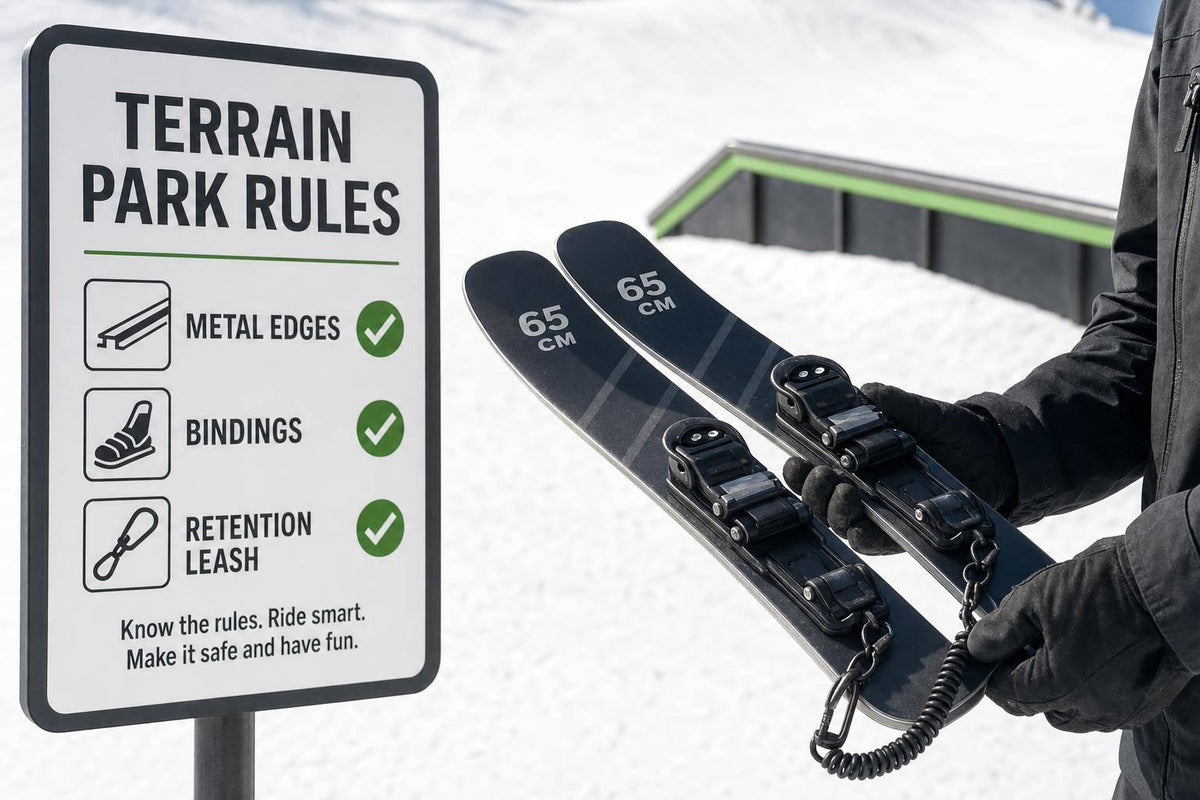
Move up to the 65 cm Skiblades (from $590) and you get better tracking and more support. The 99 cm Skiblades (from $690) bring more flotation and need fewer little corrections, which feels nice when the snow gets mashed up. The 123 cm model ($950) is the steadiest choice in the Snowfeet* range. It handles rougher, faster spring snow with more confidence.
So, the tradeoff is pretty simple: more length gives you more calm, but less snap in tight pivots.
How Snowfeet* Compares With Long Skis
Long skis - usually 159–192 cm for adults - give you the most flotation and the steadiest tracking in chopped spring snow. That part isn’t much of a debate.
But there’s a catch. Long skis are tougher to carry around, slower to start a turn at low speed, and not as playful on narrow or mellow terrain. Snowfeet* products are lighter, easier to pack, and much easier to pivot. For casual resort laps, spring play zones, and short exploratory runs, a compact setup will often feel like more fun, even if long skis still win on deep snow performance.
Which Option Fits Your Snow Depth and Slope Type
| Product | Stability | Float in Slush | Turn Effort | Portability | Best Spring Conditions |
|---|---|---|---|---|---|
| Skiskates 44 cm | Lowest | Limited | Very low | Excellent | Smooth slushy groomers, mellow slopes, short laps |
| Snowfeet 50 cm | Slightly better than 44 cm | Limited to modest | Very low | Excellent | Groomed slush, packed snow, casual riding |
| Skiblades 65 cm | Moderate | Moderate | Low to moderate | Very good | Variable groomers, shallow soft snow |
| Skiblades 99 cm | Clearly higher | Good | Moderate | Good | Wet soft snow, wider runs, tracked-out conditions |
| Skiblades 123 cm | Highest (Snowfeet*) | Best (Snowfeet*) | Highest (Snowfeet*) | Moderate | Rough, deep, or fast spring conditions |
| Long skis | Highest overall | Best overall | Highest | Lowest | Deep, heavy, high-speed, or expansive spring terrain |
A simple way to think about it:
- Go short for smooth, shallow slush
- Go longer when the snow gets deeper
- Go longer again when it gets rougher or you plan to ski faster
At that point, the call comes down to what the spring snow feels like under your feet: how deep it is, how chopped up it is, and how much speed you want to carry.
Conclusion: Who Should Ride Skiskates in Spring
The verdict is pretty simple: Snowfeet* Skiskates are a solid pick for spring if you're riding groomed slush, lapping short runs, and looking for a playful, low-speed feel. They make the most sense for riders who care more about fast turns than maximum stability.
If you want a smoother, calmer ride in mixed spring snow, go with the PRO 50 cm. It's the better fit when the surface is uneven or a bit chopped up.
Timing matters a lot in spring because slush can change in a hurry. Skiskates do best on softened groomers before the snow gets deep and sticky. Once the slush turns heavy and cut-up, the short platform starts to lose its edge. That’s when 65 cm or 99 cm Skiblades give you more float and better support.
Before you head out, check your boot fit. If your boot shifts or lifts in the binding, slushy snow gets harder to handle fast. Lock everything down well, then test it on a mellow slope first.
So, here’s the simple way to think about it:
- Pick Skiskates for fun, agility, and quick turns
- Switch to 65 cm, 99 cm, or 123 cm Skiblades for deeper, rougher spring snow
FAQs
Are skiskates good for spring skiing?
Yes - Skiskates and short skis work GREAT in spring snow, from firm morning corn to soft afternoon slush.
Snowfeet* models feel more agile and easier to control than standard skis. That matters a lot in spring, when the snow can change by the hour. One run feels smooth and packed, and the next feels like skiing through a giant Slurpee :)
For most casual riders, the 99 cm Skiblades are the best all-around pick.
Here’s the quick breakdown:
- 44 cm Skiskates: best on groomed runs
- 99 cm Skiblades: the best all-around option for most casual riders
- 123 cm Short Skis: better for steeper, faster, rougher slush
One small tip that goes a long way: regular waxing helps cut down on sticky drag. In wet spring snow, that makes a big difference.
What snow depth is too much for skiskates?
Skiskates are built for groomed, hard-packed snow. That’s where they feel best and stay easy to handle.
Once snow gets deeper than about 4 inches (10 cm), things can get sketchy. Short models like the 44 cm Skiskates can start to sink, feel less stable, and take more effort to control.
If you’re riding in deeper snow, softer snow, or messy spring conditions, Snowfeet Skiblades in 99 cm or 123 cm are the better pick. They give you a smoother ride and better edge hold, which makes a big difference when the snow turns slushy or uneven.
Should I choose 44 cm or 50 cm for slush?
For slushy spring snow, the 44 cm and 50 cm models work best for playful, low-speed laps on groomers or in the park.
They feel nimble, light, and easy to carry. That makes them a lot of fun when the snow is soft and the vibe is mellow.
But there’s a catch. In deep, heavy, or chopped-up slush, these shorter Skiblades can feel slow, draggy, or like they want to sink.
If the snow is wetter, rougher, or more beat up, go with 65 cm or 99 cm Skiblades instead. They give you better stability, more float, and stronger control when spring snow starts skiing back :)
Editor: Karolina R.
Last Update: September 30, 2026











1 komentarz
Jenna
How can I tell the exact moment to switch from 44 cm skiskates to longer skiblades as the spring snow transitions throughout the day, and are there any warning signs in how the snow feels underfoot before it becomes too heavy or dangerous?
Zostaw komentarz
Ta strona jest chroniona przez hCaptcha i obowiązują na niej Polityka prywatności i Warunki korzystania z usługi serwisu hCaptcha.