




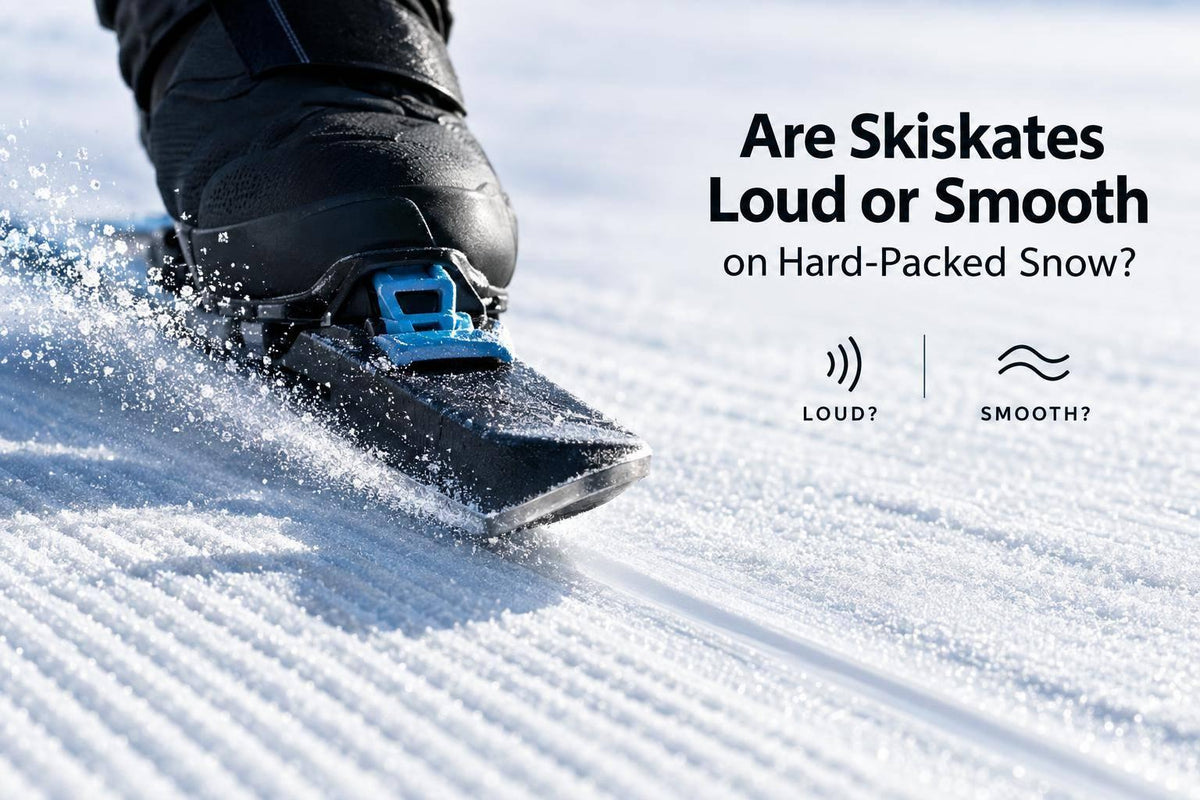
Skiskates can sound loud on hard-packed snow and still feel smooth. My advice: start with slow turns and check how they feel - not just how they sound. A steady scrape is one thing; shaking, skipping, or slipping calls for less speed.
With Snowfeet* Skiskates 44 cm (17.3 inches), I’d keep these points in mind:
- Firm groomers: Expect scraping, with control shaped by snow texture, edge condition, and your turns.
- Ice and refrozen ridges: Grip can drop. Slow down before you reach them.
- Chatter: Ease your edge angle and pressure, bend your knees, and make rounded turns.
- Shaking that won’t stop: Stop and check the edges, bases, and bindings. Get a ski technician’s help if needed.
My rule of thumb: <u>aim for control, not silence</u>. These short skiskates suit playful turns at moderate speeds - not the fast, steady ride you’d expect from longer skis.
Snowboarder tries Snowfeet* | Which Snowfeet* Short Ski is the Best? | Snowblades 44, 65, 99 Review
Scraping vs. Chatter
Skiskates on Hard Snow: Scraping vs. Chatter
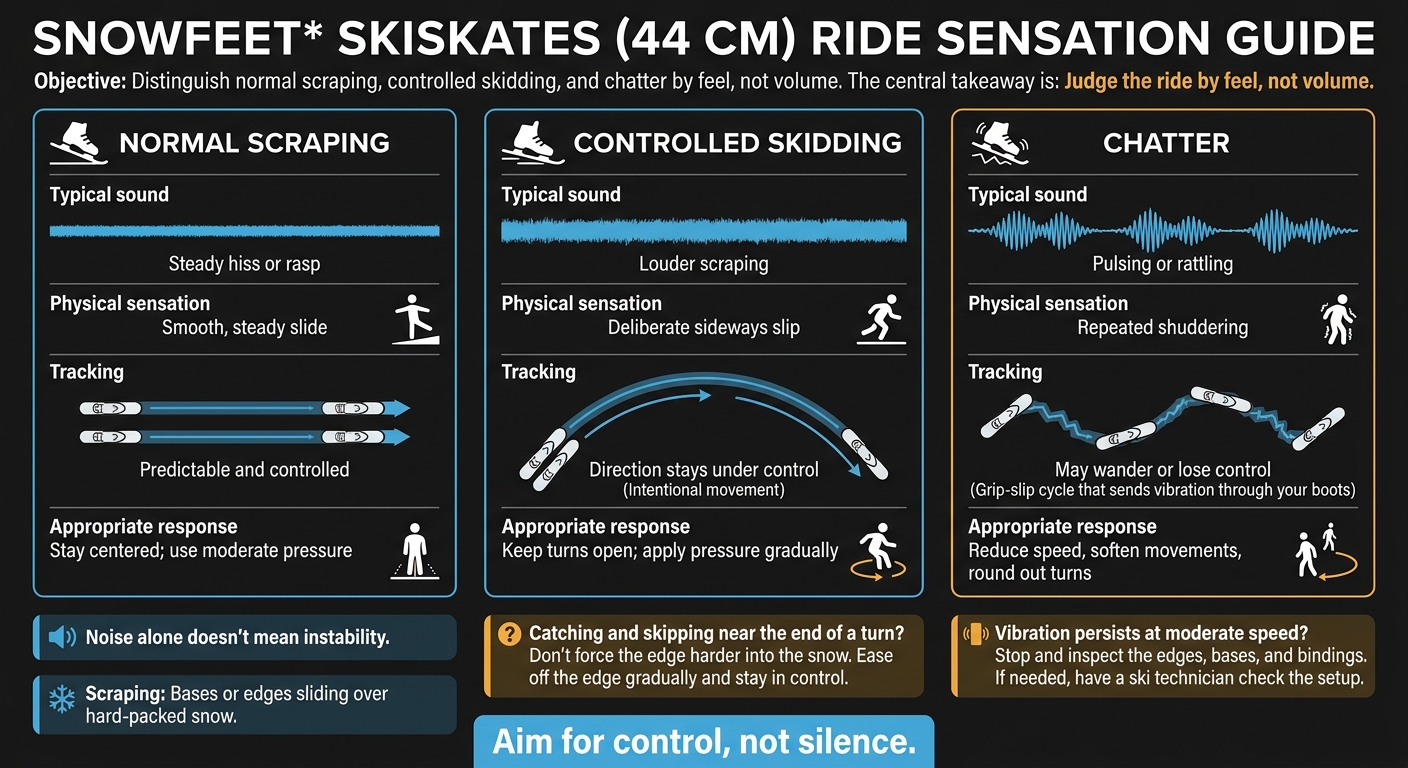
On hard-packed snow, Snowfeet* Skiskates 44 cm may sound rough but still feel controlled. Scraping comes from the bases or edges sliding over hard-packed snow. Chatter is a grip-slip cycle that sends vibration through your boots. Judge the ride by feel, not volume.
Compare Sound, Feel, and Tracking
Use this quick check to tell normal scraping from chatter. Tracking shows whether you’re sliding with control or starting to lose it.
| Ride condition | Typical sound | Physical sensation | Tracking | Appropriate response |
|---|---|---|---|---|
| Normal scraping | Steady hiss or rasp | Smooth, steady slide | Predictable and controlled | Stay centered; use moderate pressure |
| Controlled skidding | Louder scraping | Deliberate sideways slip | Direction stays under control | Keep turns open; apply pressure gradually |
| Chatter | Pulsing or rattling | Repeated shuddering | May wander or lose control | Reduce speed, soften movements, round out turns |
Noise alone doesn’t mean instability. As snow gets harder and speed increases, the difference between scraping and chatter becomes easier to hear and feel.
If you start catching and skipping near the end of a turn, don’t force the edge harder into the snow.
The Snow Pros recommends reducing edge angle in the finishing phase so the ski can skid rather than skip.
Ease off the edge gradually and stay in control.
If vibration persists at moderate speed, stop and inspect the edges, bases, and bindings. If needed, have a ski technician check the setup.
How Snow Hardness and Speed Affect the Ride
Surface texture matters as much as hardness. Firm, even snow feels predictable. Ice and refrozen ridges make grip less reliable, especially at higher speeds. On these surfaces, the difference between normal scraping and true chatter becomes clear.
Firm Groomers vs. Icy Patches
Skiskates feel most predictable on packed groomers. On ice, they scrape harder and may skip.
| Surface | Expected sound and feel | Riding adjustment |
|---|---|---|
| Firm groomer | Steady scraping; predictable turns | Apply edge pressure gradually; keep turns rounded |
| Glazed ice | Louder scraping, less grip, possible skipping | Slow down before entering; use small inputs; don’t force a deep carve |
| Refrozen ridges | Brief vibration and deflection | Stay loose, slow down, and choose a smoother line |
Look ahead and slow down before the surface changes. Finish turns across the slope to control speed. If direction changes become unpredictable, choose a flatter, smoother route rather than trying to force grip.
When the ride gets rough, reduce speed first, then make smaller edge changes.
Why Longer Skis Are More Stable at Speed
Skiskates respond fast, so small balance errors show up sooner at speed. Edge control and turn shape matter more than they do on longer skis.
If you feel vibration, check the edges, bindings, and how sharply you’re finishing each turn.
sbb-itb-17ade95
How Edges and Technique Affect Chatter
When scraping turns into a buzz in your legs, check your edges and how you apply pressure through turns. On Snowfeet* Skiskates 44 cm, build pressure gradually - don’t stomp or switch edges suddenly.
Match Ride Problems to Adjustments
Let the symptom guide your next adjustment.
| Ride symptom | Possible causes | Adjustment |
|---|---|---|
| Loud but smooth scraping | Normal edge or base contact on firm snow | Keep speed moderate and turns smooth. |
| Rattling with leg vibration | Abrupt edging, too much edge angle or speed, or uneven pressure | Slow down. Build edge angle and pressure gradually. |
| Repeated slipping on ice | Limited grip, leaning back, sudden loading, or dull or damaged edges | Stay centered and reduce speed. Have the edges checked if slipping continues. |
| Instability at higher speeds | Short platform, leaning back, or sudden corrections | Slow down and use smaller, smoother steering inputs. |
If technique changes don’t stop the problem, inspect the skis and bindings.
Check Edges, Bindings, and Turn Shape
Small edge flaws can show up fast on hard-packed snow. Check bindings for loose parts or damage. Inspect edges and bases for bends, chips, deep scratches, or separation. Follow your model’s setup and maintenance instructions. If bindings are damaged or grip problems persist, contact Snowfeet* support or a qualified ski technician. Don’t improvise repairs.
Stay centered over your feet, with your ankles flexed slightly forward and your hands ahead. Keep pressure on the outside skiskate without sudden weight shifts. Steer through rounded turns. For an intentional skid, lower the edge angle slightly and release it gradually.
On a gentle stretch, test just one change at a time: speed, edge angle, or pressure.
Conclusion: Keep Speed Under Control
When edge and pressure changes no longer help, focus on speed.
Judge control by feel, not sound alone. Light scraping is normal on hard-packed snow. Vibration, bouncing, or chatter means you’re losing grip. Aim for a controlled glide, not silence, and keep Snowfeet* Skiskates 44 cm (about 17 inches) at moderate speeds.
Before Your Next Firm-Snow Run
Start on an easy groomer. Make a few slow turns to test your grip, then stay centered as you link gradual, rounded turns.
Slow down before shiny or refrozen patches - don’t wait for chatter. If you prefer playful turns and portable gear over high-speed stability, Snowfeet* Skiskates are a better fit than longer skis for casual firm-snow riding.
FAQs
How can I test my grip before a hard-packed run?
Start with tight check turns or a controlled hockey stop on a gentle part of the slope. This lets you feel how the steel edges of Snowfeet 44 cm Skiskates* grip the snow before you head onto steeper terrain.
Keep your weight centered and your knees bent in an athletic stance. If the edges slip or vibrate, adjust your pressure or slow down. The short platform needs active ankle control and precise, balanced movements to keep the edges gripping.
Can waxing my skiskates reduce scraping noise?
Waxing your Snowfeet* Skiskates won’t reduce scraping noise. That sound comes from the metal edges touching hard-packed snow, not friction from the base. Wax helps you keep your speed on sticky or wet snow.
Compact Skiskates focus on easy turns, but they have less mass to absorb vibration than long skis. That makes them more sensitive to the snow’s surface texture. To cut noise and vibration, focus on a centered, compact stance and precise edge angles, rather than waxing.
When should I have my skiskate edges professionally tuned?
Snowfeet* Skiskates have high-quality steel edges, just like standard skis. Have a professional tune them when they lose grip on firm or icy snow. Signs include slipping during turns or having trouble staying in control on hard-packed groomers.
Well-kept edges help preserve the precise, skate-like control that makes Snowfeet* a top choice for playful resort riding with easy turns.











Zostaw komentarz
Ta strona jest chroniona przez hCaptcha i obowiązują na niej Polityka prywatności i Warunki korzystania z usługi serwisu hCaptcha.