



















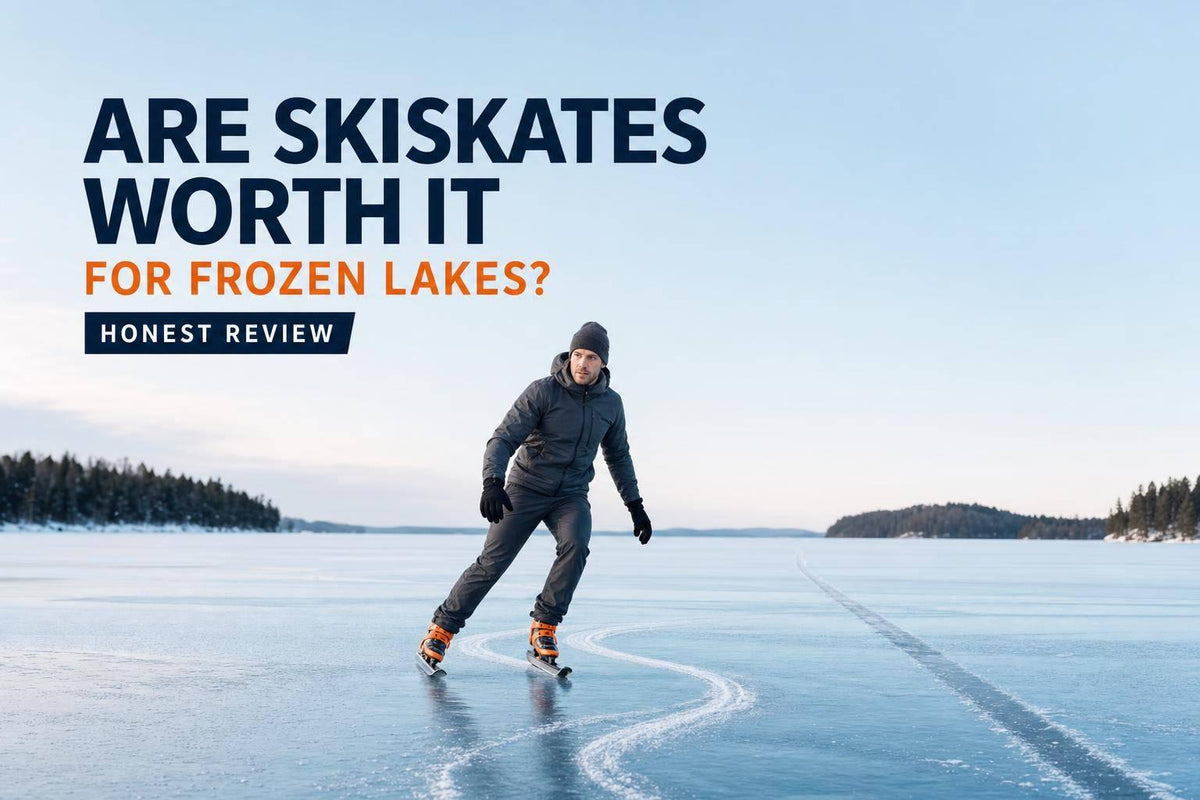
Yes - if you want short, fun rides on mixed lake surfaces. No - if you want long, fast glides on clean ice.
I’d put it this way: skiskates make sense when your lake has rough ice, light snow, crust, and shoreline junk all mixed together. They’re easier to pack, easier to learn, and less fussy than long skis or long-blade skates. But they won’t match the glide of Nordic skates or the sharp stop of ice skates.
Here’s the short answer:
- Buy skiskates if you want simple lake fun, short sessions, and easy transport
- Pick ice skates if your lake is smooth and you want hard edge grip
- Pick Nordic skates if you want to cover miles on clean natural ice
- Pick XC skis if the lake is more snow than ice
A few facts matter here:
- Snowfeet PRO 50 cm: $299
- Snowfeet Skiskates 44 cm: $460
- Snowfeet NORDIC: 90 cm long
- Safe ice starts around 4 inches of clear ice for foot traffic in Minnesota guidance
- Some Canadian guidance says 6 inches for one skater and 8 inches for groups
- Buyer ratings sit around 4.9/5 from nearly 5,800 reviews
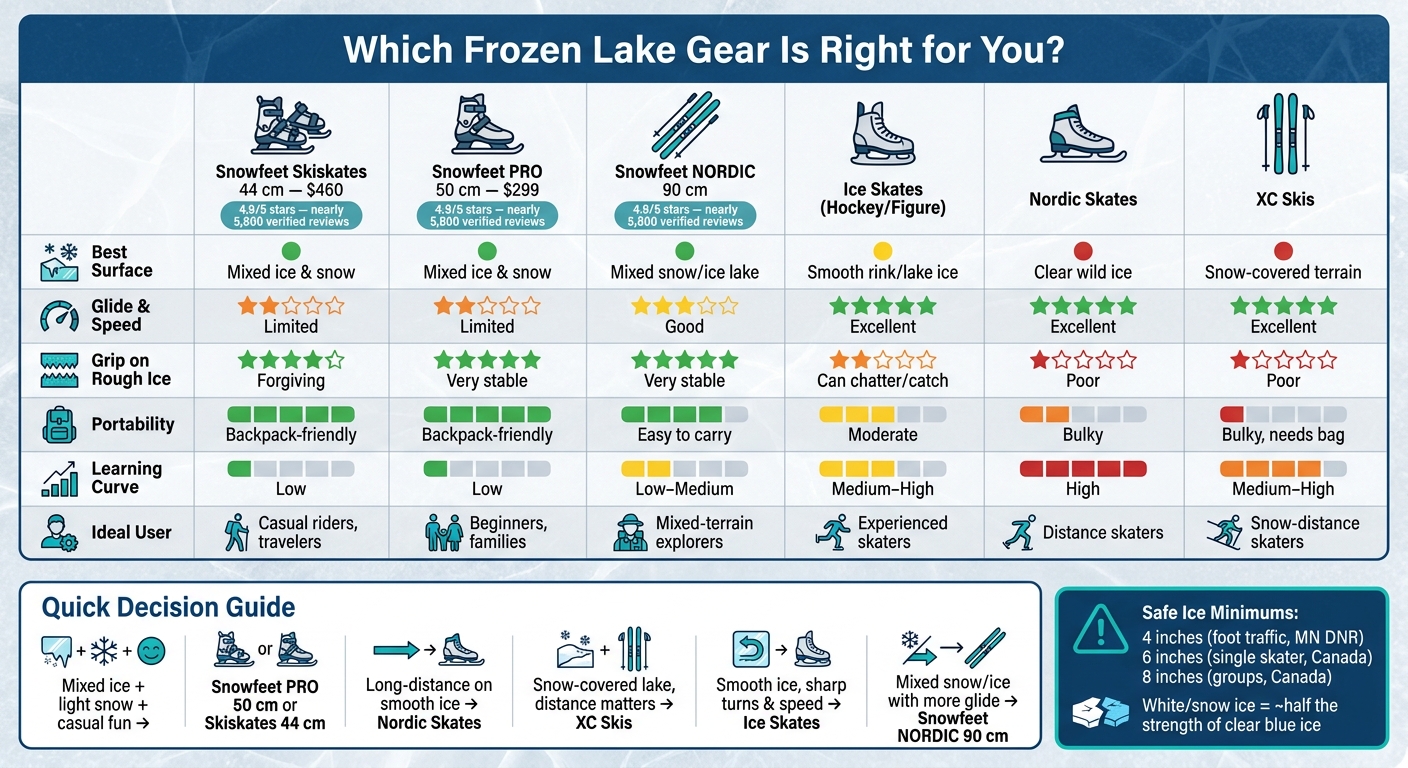
Skiskates vs Ice Skates vs Nordic Skates vs XC Skis: Which Is Best for Frozen Lakes?
Snowfeet* & Skiskates Complete Guide | All you need to know about Skiskating
Quick Comparison
| Gear | Best for | Main upside | Main downside |
|---|---|---|---|
| Snowfeet Skiskates 44 cm | Mixed ice and light snow | Small, playful, easy to carry | Less glide on long flat ice |
| Snowfeet PRO 50 cm | Beginners, families, mixed lake use | More stable, fits winter boots | Not as fast as skates |
| Snowfeet NORDIC 90 cm | Mixed lake travel with more glide | Better tracking than short models | Still behind full XC skis for distance |
| Ice skates | Smooth, clean ice | Best bite and stopping | Rough lake ice can feel harsh |
| Nordic skates | Long tours on natural ice | Best glide on clean wild ice | Long, less handy to carry |
| XC skis | Snow-covered lakes | Best float and distance in snow | Clunky on mixed ice |
So, if you’re asking me shop-counter style - “Would you take skiskates onto a frozen lake?” - my answer is: yes, for mixed conditions and fun; no, for pure speed or long tours. That’s the whole game in one line :)
How Skiskates Perform on Frozen Lakes
Grip and Edge Hold on Bare Ice, Rough Ice, and Thin Snow
On smooth, bare ice, Skiskates do a good job. But plain old ice skates still grip harder.
The metal edges on the Snowfeet* Skiskates 44 cm and Snowfeet PRO 50 cm give you real traction. Still, they have less blade length than standard ice skates. That means less bite in turns and less edge pressure when you push off to the side. That’s the point where Skiskates start to feel different from both ice skates and longer skis.
Where skiskates shine is on rough or mixed ice. Think frozen footprints, wind crust, ruts, or thin patches of snow. A narrow skate blade can catch and rattle on that stuff. A skiskate’s wider base rides over many of those little bumps with less drama. Add about 0.5 to 2 inches of snow on top, and the short ski platform spreads your weight better than a blade, so you’re less likely to punch through soft spots.
The Snowfeet* NORDIC 90 cm feels more stable in those mixed sections. It has more of a cross-country-style feel, which helps when the lake surface is messy. That’s the whole pitch with skiskates: they’re made for mixed frozen-lake conditions, not for perfect-ice performance.
| Surface Type | Skiskates 44/50 cm | NORDIC 90 cm | Traditional Ice Skates |
|---|---|---|---|
| Smooth bare ice | Good grip, less bite | More stable, still limited | Best grip and edge hold |
| Rough ice | Forgiving, rides over bumps | Very stable | Can chatter or catch |
| Thin snow over ice (0.5–2 in) | Strong - edges cut in well | Strong - good glide | Punches through, poor grip |
Control, Stopping, and Stability at Casual Lake Speeds
At a relaxed family pace, skiskates are easy to steer. They’re short, so you can pivot, step-turn, or change direction fast without those big sweeping moves. That helps a lot when you’re weaving around kids, snow patches, or funky shoreline ice.
Stopping works best with ski-style moves:
- A gentle wedge or snowplow
- A step-turn across your line of travel to let friction slow you down
The Snowfeet PRO 50 cm adds a heel brake. That helps. A hard hockey stop is still possible, but it won’t bite as hard as it does on true ice skates. So, yeah, there’s a tradeoff. You get more agility at low speeds, but less braking force once you’re moving fast. On a lake, at casual speeds, that usually works in your favor.
Safety Limits You Should Know Before Heading Out
Skiskates can’t make bad ice safe. If the lake isn’t safe to walk on, it isn’t safe to ride on either.
Check ice thickness before you head out. Minnesota DNR guidance says the minimum for foot traffic is 4 inches of clear ice, and anything below that falls into the "stay off" category. Canadian guidance recommends at least 6 inches for a single skater and 8 inches for groups. Clear blue ice is much stronger than white or snow ice, which can be about half as strong at the same thickness.
A few basic checks matter a lot:
- Measure the ice thickness
- Stay away from snow-covered or discolored patches
- Carry ice picks and a waterproof phone
Skiskates are worth using only when the lake is already safe enough to be out on.
That tradeoff becomes clear when you compare Skiskates with ice skates, Nordic skates, and longer skis.
sbb-itb-17ade95
Skiskates vs Other Frozen-Lake Options
Snowfeet* Skiskates 44 cm and Snowfeet PRO 50 cm vs Ice Skates and Nordic Skates
On frozen lakes, each option has its lane.
Ice skates do best on smooth ice. Nordic skates shine when you want long, clean glides. And Snowfeet* do their best work on mixed surfaces. Hockey and figure skates are made for groomed rink ice, so on a natural frozen lake, their short blades can catch on cracks, rough spots, and uneven patches. Nordic skates use long touring blades built for wild ice, which lets them glide over big frozen areas with less effort.
Snowfeet* tackle a different problem: lakes that aren't neat and perfect. If the surface shifts between ice, light snow, crust, and messy shoreline sections, they stay useful. The 44 cm model works with ski boots or snowboard boots. The PRO 50 cm gives you more stability and attaches to regular winter boots or snowboard boots.
| Gear Type | Best Surface | Handling | Portability | Learning Curve | Ideal User |
|---|---|---|---|---|---|
| Snowfeet* 44 cm | Mixed ice and snow | Easy to manage on mixed terrain | Backpack-friendly | Low | Casual riders, travelers |
| Snowfeet PRO 50 cm | Mixed ice and snow | More stable than the 44 cm model | Backpack-friendly | Low | Beginners, families |
| Hockey/Figure Skates | Smooth rink ice | Sharp, precise stopping | Moderate | Medium–High | Experienced skaters |
| Nordic Skates | Clear wild ice | Best for straight-line glide | Bulky, long blades | High | Distance skaters |
So, the tradeoff is pretty simple. Snowfeet* aren't built for top speed on perfect ice. They're built for frozen-lake days that are a bit rough around the edges. If your lake is smooth and you want to cover miles, Nordic skates are the better tool. If you're going out for a laid-back ride on a lake with wind crust, snow patches, or rough shoreline ice, the Snowfeet* models make more sense.
Snowfeet* NORDIC 90 cm vs Full-Length Cross-Country Skis
The Snowfeet* NORDIC 90 cm lands in a nice middle spot. It gives you more glide and better tracking than the 44 cm and 50 cm skiskates, which helps when the lake has a light layer of snow and you want to move farther without fighting the surface. At the same time, it's much shorter and easier to carry than full-length cross-country skis.
| Attribute | Snowfeet* NORDIC 90 cm | Snowfeet* 44 cm | Snowfeet PRO 50 cm | Traditional XC Skis |
|---|---|---|---|---|
| Length | 90 cm | 44 cm | 50 cm | Much longer |
| Glide and tracking | Good | Limited | Limited | Excellent |
| Snow flotation | Moderate | Low | Low | High |
| Portability | Easy to carry | Fits in a backpack | Fits in a backpack | Bulky, needs a bag |
| Learning curve | Low–Medium | Low | Low | Medium–High |
| Best surface | Mixed snow/ice lake | Mixed ice | Mixed ice | Snow-covered terrain |
That extra efficiency only pays off when the surface is smooth enough to reward it. Full-length XC skis still beat the NORDIC 90 cm on long routes or in deeper snow. They spread your weight better, track straighter, and stay steadier when you keep a steady pace across snow-covered terrain.
Where Ice Skates and Long Skis Still Come Out Ahead
On clear, smooth lake ice, ice skates give you the sharpest turns and the most speed. Nordic skates are made for that same kind of surface. Their long touring blades glide across the ice instead of biting in, which helps you cover distance with less energy.
If you're an experienced skater planning a long tour on clean wild ice, skiskates can be a blast, but they won't be the top pick. The same goes for fully snow-covered lakes where distance matters. In those conditions, full-length XC skis track straighter, glide farther, and stay steadier at speed than any short ski.
That’s why the real question is who these are best for.
Who Should Buy Skiskates for Frozen Lakes, and Who Should Not
Best Fit: Casual Riders, Beginners, Families, and Travelers
Skiskates make a lot of sense for casual days on frozen lakes, short sessions near shore, and family use. They shine when you want one setup that can handle mixed lake surfaces without turning the day into a gear headache.
The Snowfeet PRO 50 cm costs $299 and works with regular winter boots. The Skiskates 44 cm cost $460 and are compatible with ski or snowboard boots. That makes both options easier for first-timers than full-length skis.
A Good Match for Skaters, Snowboarders, and Curious Winter-Sport Fans
Skiskates are also a nice fit for skaters, snowboarders, and winter-sport fans who want a more playful, skate-like feel on the lake. They’re easy to pick up on mixed ice and shoreline snow, which is a big deal on frozen lakes where conditions can change every few feet. If you care more about fun and freedom than a one-condition setup, skiskates are easy to like.
Skip Skiskates If Your Goal Is Long-Distance Speed on Smooth Ice
Skip skiskates if your goal is long-distance speed on smooth ice. Nordic skates use long touring blades tuned for natural ice that glide farther per push and require less energy than any short ski.
If distance matters more than portability, the gear choice gets pretty simple.
| Your Goal on the Lake | Best Gear Choice |
|---|---|
| Short lake sessions and mixed ice | Snowfeet PRO 50 cm or Skiskates 44 cm |
| Long-distance touring on smooth ice | Nordic skates |
Final Verdict: Good for Mixed-Surface Fun, Not for Every Frozen Lake
The call is pretty simple: skiskates are worth it for frozen lakes when mixed ice and easy carry matter more than top speed.
If your lake days include patchy ice, thin snow, and spots that change from one minute to the next, the Snowfeet PRO 50 cm ($299) and Skiskates 44 cm ($460) make a lot of sense. They handle shifting conditions well, so you don’t have to swap gear every time the surface changes.
That said, they don’t glide as well as ice skates or Nordic skates on long, smooth stretches. So if you plan to cover a lot of ground, expect to work harder.
Buyer feedback backs this up. Verified reviews average 4.9/5 across nearly 5,800 reviews. The same themes show up again and again: easy control and more forgiving handling on uneven lake surfaces.
These are a good fit for short, laid-back lake sessions and playful riding. Here’s the quick call:
| Your situation | Verdict |
|---|---|
| Mixed ice, thin snow, casual sessions | Buy - Snowfeet PRO or Skiskates fit well |
| Smooth, large lakes available but unsure | Test first before committing |
| Long-distance speed or fitness skating | Skip - dedicated skates serve you better |
FAQs
Are skiskates hard to learn?
No. Skiskates are usually easier to learn than skis or snowboards.
Most beginners start to feel comfortable on Snowfeet* products within a single day. And if you already play hockey or have ice skating experience, you may get the basics down in as little as five minutes.
The reason is pretty simple: the side-to-side motion feels natural. Plus, the gear is less bulky, so it’s easier to focus on balance and movement instead of wrestling with long skis or a board.
You might take a few small spills at first - that’s just part of the deal :) But the learning curve is still gentle.
Can I use skiskates with regular winter boots?
Yes - most Snowfeet skiskates work with regular winter boots.
Models like the Snowfeet 38 cm and 50 cm use universal strap bindings that fit standard waterproof winter boots or snowboard boots. So, you can skip stiff ski boots.
There’s one main exception: Skiskates 44 cm are made for ski or snowboard boots.
For the best control and comfort, pick the model that matches your boot type. And if you’re using regular winter boots, go with a pair that has solid ankle support. It makes a big difference out on the snow.
What lake conditions are too rough for skiskates?
Snowfeet skiskates do a nice job on messy surfaces compared with standard skates. But let’s keep it honest: they’re not built for every snow condition.
You’ll want to avoid:
- Deep, loose powder over 4 inches
- Extremely rough, chopped-up terrain
Here’s why. Their short length can cut down glide and make them feel less steady in those conditions. When the snow gets deep or the surface gets beat up, long skis are the better technical pick.











Zostaw komentarz
Ta strona jest chroniona przez hCaptcha i obowiązują na niej Polityka prywatności i Warunki korzystania z usługi serwisu hCaptcha.