



















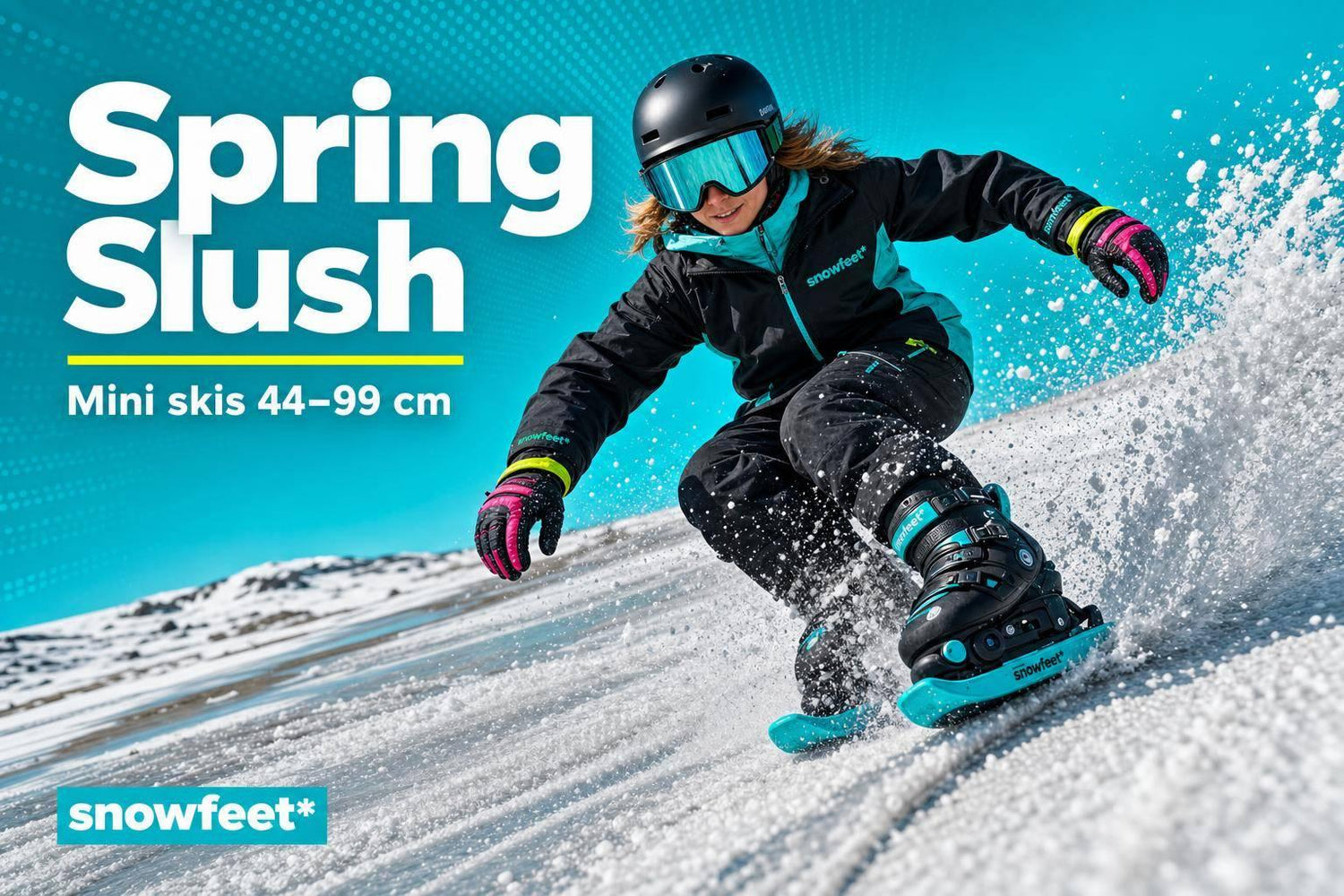
Yes - for most casual spring days, mini skis are a smart pick.
If you ski soft groomers, slush, park laps, or mellow resort runs, mini skis make spring skiing feel easier and more fun. They turn with less effort, weigh less on your feet, and are simple to carry. But if you ski fast, hit steep terrain, or deal with deep chopped-up slush, longer skis still win.
Here’s the whole thing in plain English:
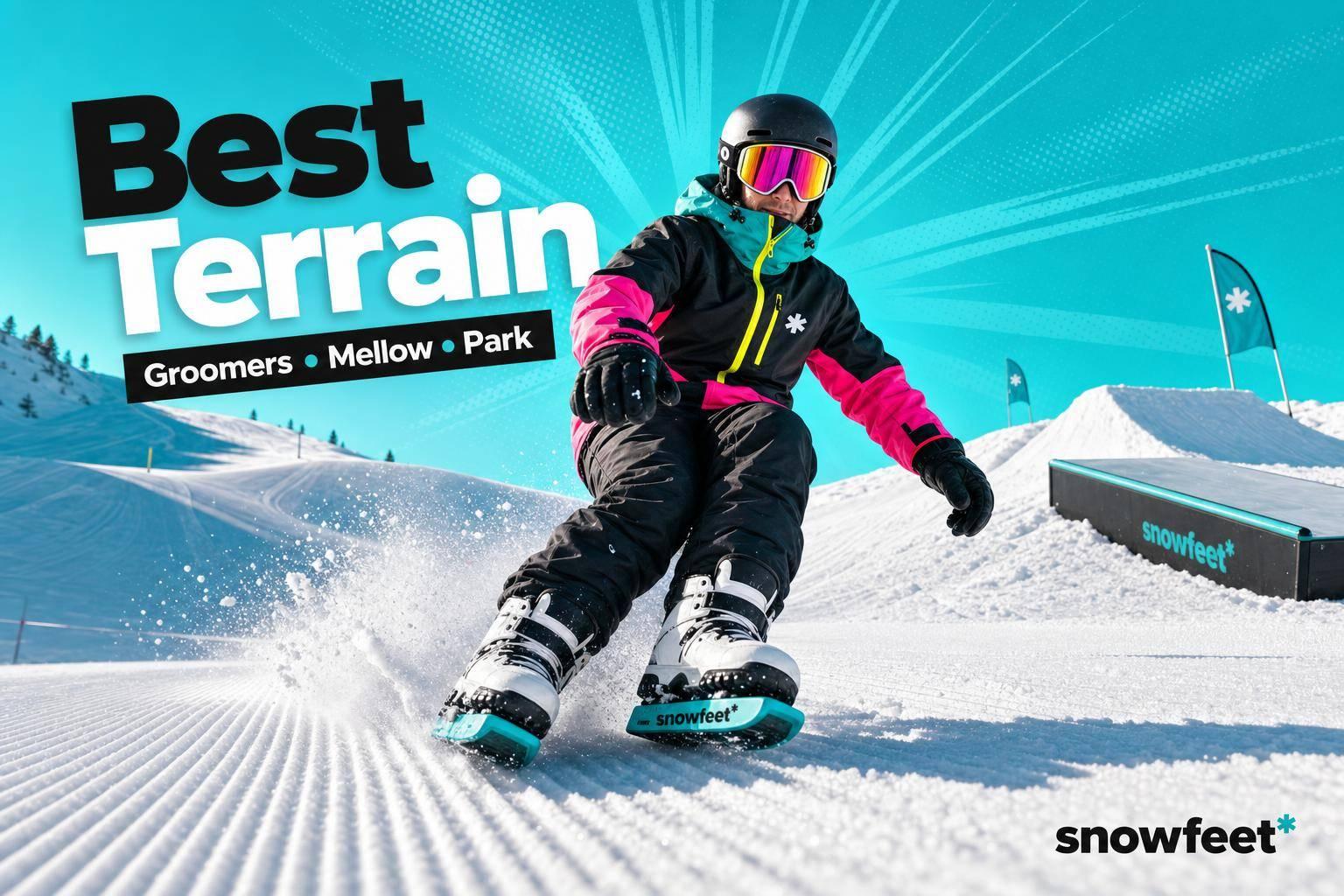
- 44–65 cm mini skis work best for playful laps, soft snow, and low-to-mid speed riding
- 99 cm mini skis make more sense if you want more stability in chop and rough spring snow
- Long skis are still the better call for speed, steep runs, and deep late-day slush
- Spring resort snow often changes from firm in the morning to soft corn by late morning to heavy slush by afternoon
- At many U.S. resorts, spring highs often land in the upper 30s to low 50s °F, so snow can change a lot in just a few hours
If I had to sum it up in one line: mini skis are great for fun spring skiing, but not for charging through mashed-potato snow like a maniac :)
| Setup | Best use | Main upside | Main drawback |
|---|---|---|---|
| 44 cm / 65 cm mini skis | Soft groomers, park, mellow laps | Easy turning, low effort, easy to pack | Less stable in deep slush or on steep firm runs |
| 99 cm mini skis | Mixed spring snow, chop, slush | Better balance of control and playfulness | Not as nimble as shorter options |
| Long skis | Fast runs, steep terrain, deep slush | More support, more edge hold, better float | More work in soft messy snow |
So, if you want a short answer before you read the rest: mini skis are a good spring tool for beginners, casual riders, snowboarders trying skis, and anyone who wants a laid-back resort day. If your spring plan is speed, steep lines, and rough snow, go longer.
If you want a quick visual before you buy, these videos can help:
- Snowfeet official YouTube
- Skiblades and short skis riding clips on YouTube
- Spring skiing conditions overview
Ski or Skate on Snow? With Snowfeet 65 CM, You Can Do Both.

How Mini Skis Perform on Spring Snow
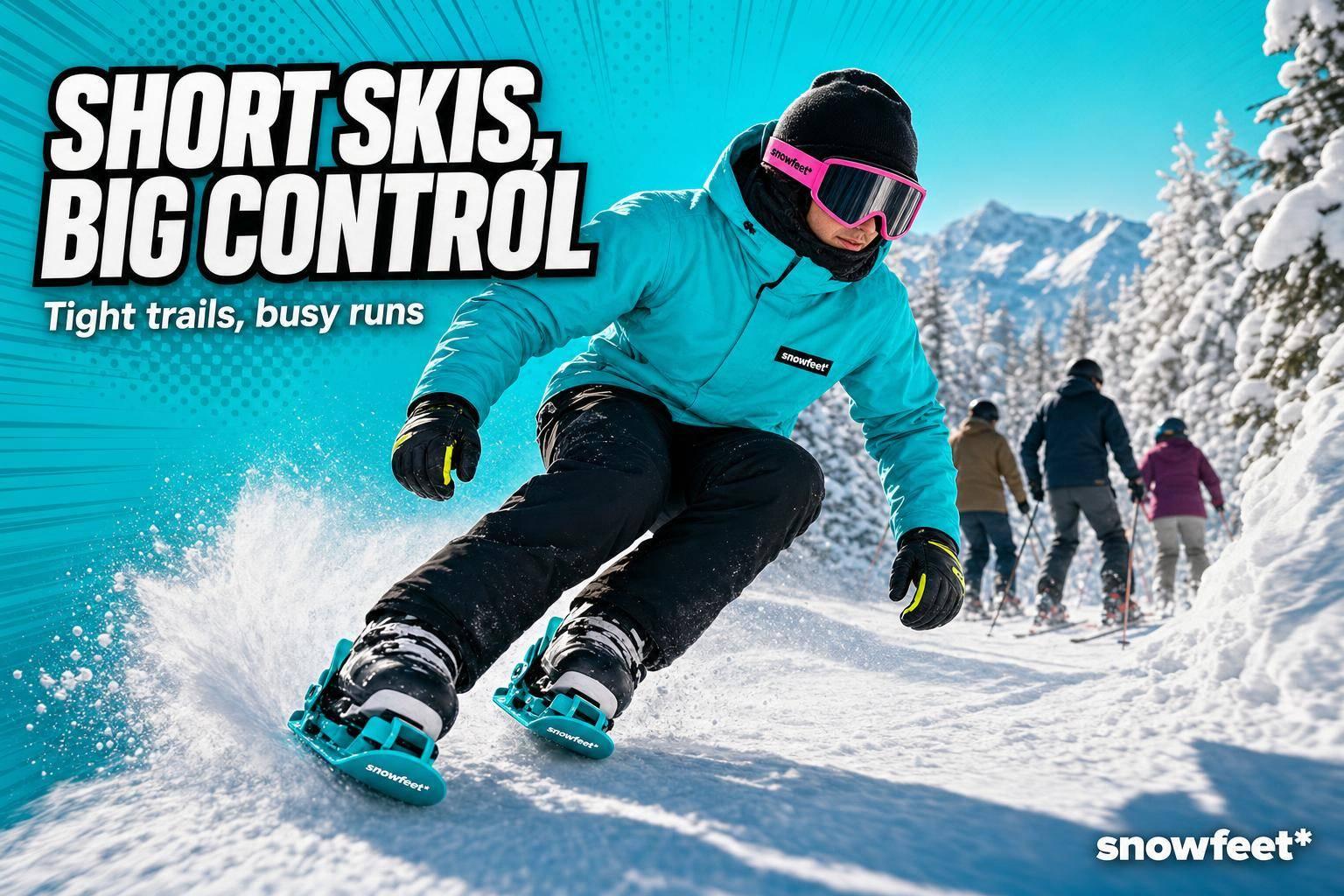
Once groomers soften, mini skis start to shine. Spring snow is all about easy, quick steering, and that’s where short skis feel like a blast. They start turns fast on soft groomers and corn snow. Since they have less edge on the snow, you can pivot and change direction with small inputs. It feels light and easy, especially during that sweet soft-morning window before the hill turns into mashed potatoes.
Why Short Skis Feel Fun on Soft Groomers and Slush
Short skis have low swing weight, so turning takes less work and your legs stay fresher through spring laps. That’s a big deal in heavy, wet snow, where longer skis can wear you out in a hurry.
They’re also a good match for side hits, small park features, and playful lines. You don’t need much speed to pop them off the snow, which adds to the fun. And for snowboarders trying skis, the feel can seem more familiar and less intimidating.
But there’s a catch: those upsides start to fade when the snow gets deeper and more cut up.
Where Very Short Skis Start to Struggle
In deeper slush, ultra-short skis like the Skiskates 44 cm just don’t have enough surface area. They sink more and start to feel slow and draggy. Chopped-up snow is another problem. Longer skis can smooth out ruts and uneven patches. Mini skis, on the other hand, make you feel every bump.
On steeper runs with mixed snow, the shorter edge contact makes things tougher too. Speed control gets harder. Edge hold drops off. And when the slope is busy or the snow has refrozen, that light, playful feel can turn into extra work.
Mini skis tend to work best on:
- Green and blue runs
- Mellow side hits
- Moderate park terrain
Steep, crowded, or refrozen terrain is still where longer skis have the upper hand. That tradeoff stands out even more when you put mini skis next to standard skis.
Mini Skis vs. Long Skis for Spring Conditions
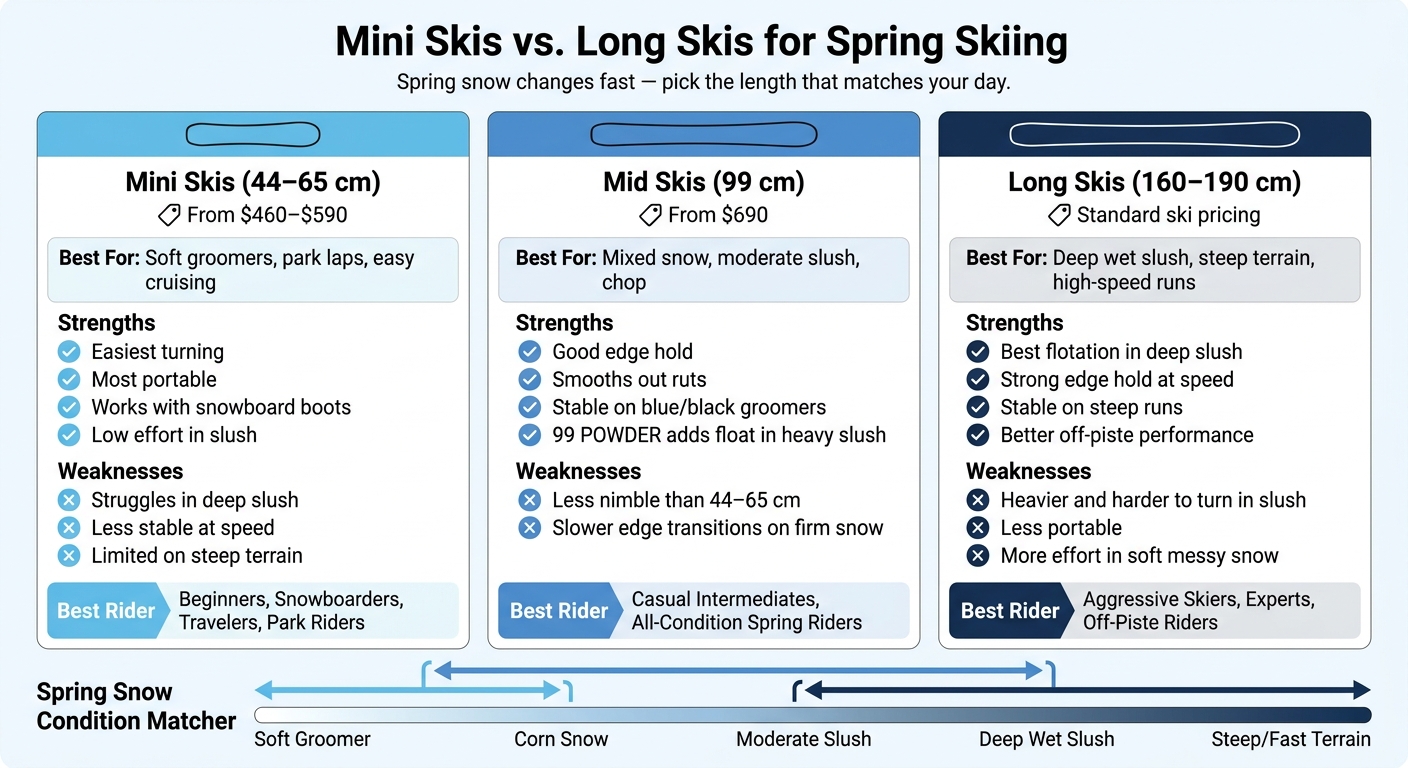
Mini Skis vs Long Skis for Spring Skiing: Which Should You Choose?
Spring skiing is where ski length stops being a theory and starts feeling very real. A setup that feels smooth on firm winter groomers can turn into a chore once the mountain gets soft, wet, and chopped up. So the better pick comes down to the kind of spring day you want.
What You Gain with Mini Skis
The big plus with mini skis is simple: they take less work. They turn fast, feel easy underfoot, and don't ask much from you when you're pushing through heavy afternoon slush. Over a long day, that lower effort adds up.
Snowfeet* Skiskates (44 cm) and Skiblades (65 cm) are also easy to pack. They fit in a compact bag, which makes spring trips a lot less of a hassle. Some Snowfeet* models work with snowboard boots or sturdy winter shoes too, so you can skip ski boots. For a lot of people, that's a big deal.
That said, there’s a catch. Once the snow gets deep, messy, or fast, very short skis start to give up ground.
What Long Skis Still Do Better
Traditional long skis, usually around 160–190 cm for adults, still shine in spring when you need more flotation and edge hold at speed. That extra length and surface area help them ride higher in deep, wet slush, especially on lower-mountain runs late in the day. On steep groomers, fast sections, or rough off-piste terrain, the longer edge contact gives skilled skiers more control and a steadier feel. Very short skis just can’t match that all the way.
For more casual spring skiers, Snowfeet* Skiblades 99 cm and 99 POWDER sit in a nice middle spot. They handle mixed snow well and still stay easy to steer.
Here’s the quick breakdown:
| Setup | Best spring conditions | Strengths | Weaknesses | Best for |
|---|---|---|---|---|
| Skiskates 44 cm / Skiblades 65 cm | Soft groomers, park laps | Easiest turning, most portable | Struggles in deep slush or at speed | Beginners, snowboarders, travelers, park riders |
| Skiblades 99 cm / 99 POWDER | Mixed snow, moderate slush | Good mix of stability and easy turning, better in chop | Less nimble than 44–65 cm options | Casual intermediates, riders who want one spring setup for a bit of everything |
| Traditional long skis | Deep wet slush, steep terrain, high-speed runs | Better flotation, strong edge hold, stable at speed | Heavier, harder to turn in slush, less portable | Aggressive skiers, experts, off-piste terrain |
sbb-itb-17ade95
Best Snowfeet* Models for Spring Skiing
Use 44–65 cm for playful laps on soft groomers. Go with 99 cm or 99 POWDER for chop and slush. Spring snow can flip fast, sometimes within one lift ride, so the best Snowfeet* model comes down to what you ride most: soft groomers, mixed chop, or sticky afternoon mush.
Skiskates 44 cm and Skiblades 65 cm for Playful Resort Laps
The Skiskates 44 cm (starting at $460) are a fun pick for park laps, side hits, and easy spring cruising. They pair well with snowboard boots and feel easy to handle in soft afternoon slush. The tradeoff is simple: they’re less stable on firmer snow and steeper terrain.
The Skiblades 65 cm (starting at $590) feel steadier on mixed snow and less twitchy at moderate speeds. If you want one spring setup that stays playful but gives you a bit more control, this is the sweet spot. For a do-it-all spring option, the 65 cm is the safest pick.
When the snow gets heavier, rougher, and more cut up, it makes sense to move up to 99 cm.
Skiblades 99 cm and 99 POWDER for Mixed Snow and Heavy Slush
The Skiblades 99 cm (starting at $690) are the better choice if you want more confidence on steeper groomers, chopped-up snow, and faster resort laps. The added length helps smooth out ruts and chop, holds an edge better, and gives you more stability when the mountain gets busy later in the day. If you deal with refrozen morning tracks or steeper blue and black groomers, you’ll notice the change fast.
The Skiblades 99 POWDER (also starting at $690) adds a wider platform that helps it stay on top of heavy spring slush. That extra surface area cuts down on tip dive and helps keep your speed more even. If most of your spring skiing stays on groomed runs, the standard 99 cm is the safer call. If you often end up in deep afternoon slush or drift off the groomed middle into soft snow along the sides, the POWDER version starts to make a lot of sense.
How Snowfeet* Compares to Snowblades and Other Short Ski Brands
Classic snowblades like Salomon and Bigfoot were a blast on groomers, but they often came in one short length, needed standard ski boots, and used older binding designs. ODR-style mini skis are even shorter. They can work on small hills or in backyard setups, but they’re not as solid for full resort days at higher speeds.
Snowfeet* gives you a much broader range, from 44 cm Skiskates up to 99 cm Skiblades. A lot of the models also work with snowboard boots, which is a big plus for travelers and snowboarders who don’t want to haul a separate pair of ski boots.
| Model | Length | Spring strength | Spring limitation | Best rider |
|---|---|---|---|---|
| Snowfeet* Skiskates | 44 cm | Very nimble, great for low-speed slush laps and park | Less stable on steeper or firm morning runs | Beginners, travelers, park riders, snowboarders |
| Snowfeet* Skiblades | 65 cm | Balanced agility and stability for spring groomers and moderate slush | Less confidence-inspiring at higher speeds than 99 cm | Casual intermediates wanting one do-it-all spring setup |
| Snowfeet* Skiblades | 99 cm | Best edge hold and speed stability in the Snowfeet* line for mixed spring snow | Less nimble than shorter models in tight spaces | Intermediate/advanced riders on faster resort laps |
| Snowfeet* Skiblades 99 POWDER | ~99 cm, wider | Extra width for float in heavy slush and soft snow off the groomed line | Slower to switch edges on firm patches | Riders who frequently ski very soft, slushy afternoons |
Use this breakdown to match the model to the kind of spring snow you ride most.
Final Verdict: Who Should Buy Mini Skis for Spring Skiing?
After looking at spring snow, stability, and how easy these are to carry, the answer is pretty simple. Mini skis are a great match for most casual spring skiers. When the snow gets soft and slushy, easy turning matters more than flat-out speed. That’s where Snowfeet* shines.
So, length is the big thing to get right:
- 44 cm or 65 cm for playful laps and easy turns
- 99 cm if you want more stability
- 99 POWDER for softer slush
There’s one clear line in the sand. If you ski hard, chase speed, drop into steep lines, or spend a lot of time in deep, wet off-piste snow, longer skis will still be the better pick.
For pretty much everyone else, mini skis make spring skiing easier to handle, lighter to carry, and a lot more fun :)
FAQs
Can beginners use mini skis in spring slush?
Yes. Mini skis can be a good pick for beginners in spring slush because they’re often easier to handle than long skis.
Snowfeet* options like Skiskates (44 cm) and Skiblades (65 cm to 120 cm) are light and easy to turn in mixed snow. Their short length helps cut down drag and makes soft, slushy terrain less of a chore.
If you want more balance and better control, go with the 65 cm or 99 cm Skiblades. Those lengths tend to feel more forgiving for beginners, which is a big plus when the snow gets wet and messy.
Are 99 cm mini skis enough for steep spring runs?
Yes. 99 cm Skiblades are a strong pick for steep spring runs, but they do a different job than long skis.
You give up some stability at high speed. In return, you get a lot more agility. And in spring snow, that trade can make a ton of sense.
Slush, crust, and corn snow can change fast, sometimes in the same run. That’s where shorter skiblades shine. Their compact shape makes fast, edge-to-edge turns easier, which helps when the snow feels a little weird underfoot. You can react faster, adjust your line, and stay in control without fighting a long ski.
If you're heading into steeper terrain or softer snow, the 99 cm POWDER model adds more flotation. That can help keep you from feeling bogged down when the snow gets deep and heavy.
So, if your goal is quick turns and better control in mixed spring conditions, 99 cm Skiblades are a smart option :)
Do mini skis work in the morning before the snow softens?
Yes. In the early morning, snow is often firm or even icy after an overnight freeze. In those conditions, Snowfeet Skiskates and Skiblades can feel solid underfoot, with good response and control.
Models like the 44 cm Skiskates come with a wood core and metal edges, which helps them hold on hard-packed or icy terrain. They also stay nimble as the snow softens later in the day and turns to slush.











コメントを残す
このサイトはhCaptchaによって保護されており、hCaptchaプライバシーポリシーおよび利用規約が適用されます。