



















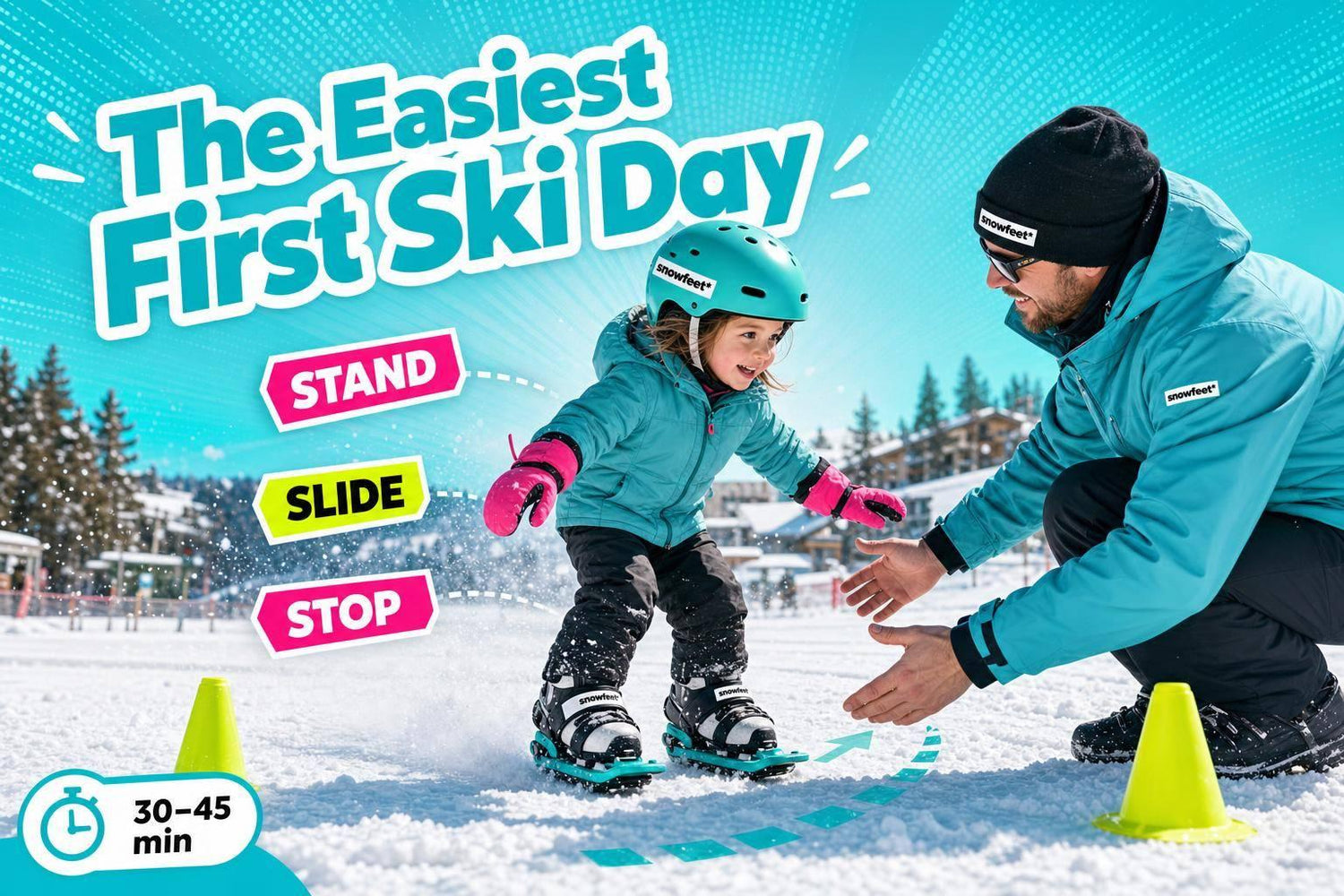
Want your kid to like skiing on day one? Keep it short, flat, warm, and low-pressure. I’d aim for 30–45 minutes total, use short, light gear, and stick to just three goals: stand, slide, stop.
Here’s the simple version:
- Pick easy terrain. A tiny hill with a flat run-out beats a big resort run.
- Use short gear. It’s less awkward for small legs and less scary to look at.
- Skip long sessions. Many young kids do best with under 45 minutes on snow.
- Keep teaching simple. Use short cues like “soft knees” and “feet straight.”
- Let the hill do the stopping. On day one, flat terrain can do a lot of the work.
- End early. If your child still wants “one more run,” you nailed it :)
I also like gear that cuts setup time. Snowfeet* products stand out here because some models work with regular winter boots, which means less gear, less hassle, and fewer parking-lot battles.
How to Choose the Best Skis for Kids
Quick Comparison
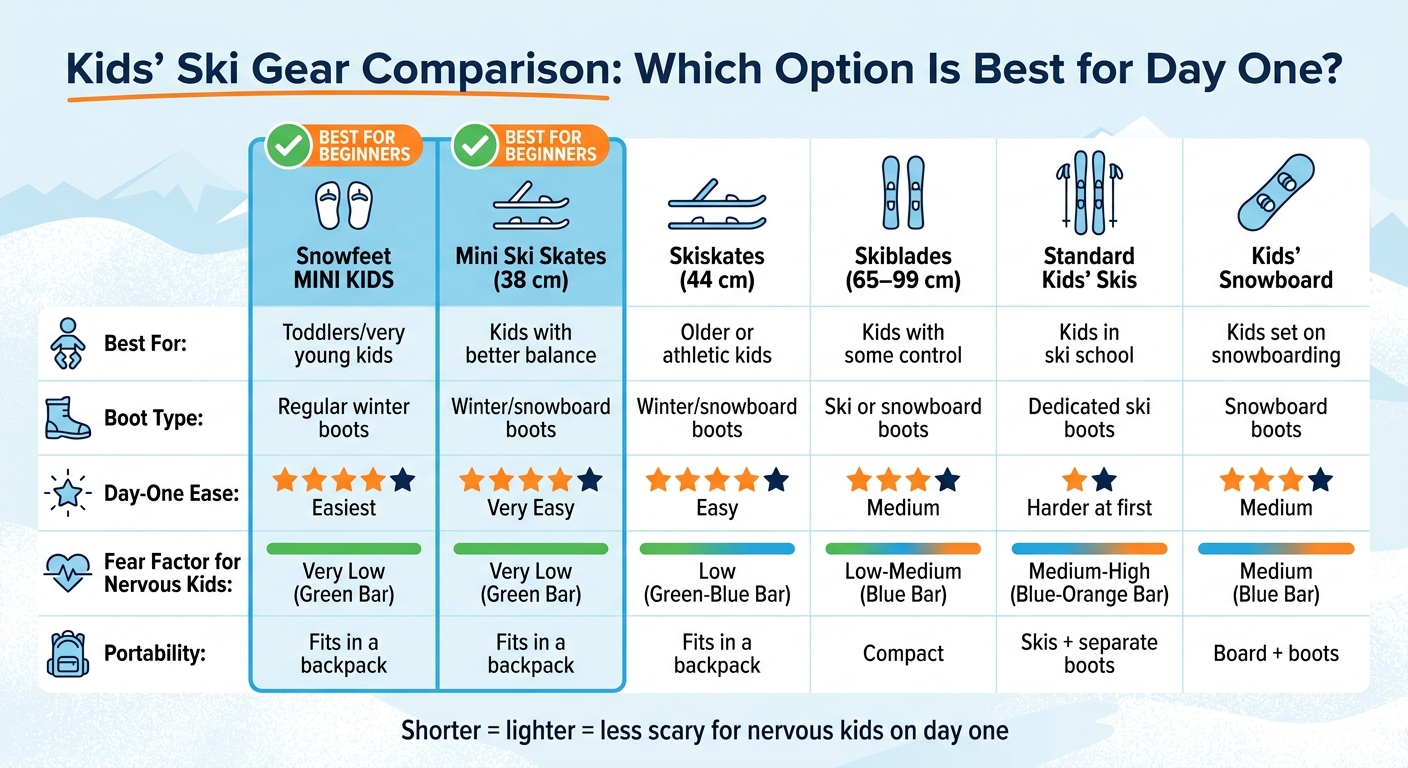
Kids' Ski Gear Comparison: Snowfeet vs. Standard Skis & Snowboards
| Option | Best for | Boot type | Day-one feel | Notes |
|---|---|---|---|---|
| Snowfeet* MINI KIDS | Toddlers and very young kids | Regular winter boots | Easiest | Small, light, low stress |
| Mini Ski Skates (38 cm) | Kids with better balance | Winter boots / snowboard boots | Very easy | Good next step after MINI KIDS |
| Skiskates (44 cm) | Older or more athletic kids | Winter boots / snowboard boots | Easy | More glide, still short |
| Skiblades (65–99 cm) | Kids with some control already | Ski boots or snowboard boots, depending on model | Medium | Closer to a ski feel |
| Standard kids’ skis | Kids in ski school or on full resort setup | Ski boots | Harder at first | More weight, more setup |
| Kids’ snowboard | Kids set on snowboarding | Snowboard boots | Medium | More early falls for many kids |
So, if I had to sum up the whole article in one line, it’d be this: make the first ski day feel like play, not practice.
Choose beginner gear that cuts fear and setup time
The right gear can make day one feel simple instead of chaotic. With kids, that usually means one thing: short and light wins.
Best Snowfeet* options for young beginners

If you want the first day to feel easy, start with the shortest Snowfeet* your child can handle with comfort and control.
Snowfeet* MINI KIDS are a great fit for toddlers and young kids on backyard hills or very gentle slopes. They keep things small, light, and less scary.
When a child can run, jump, and hold balance well, Snowfeet* Mini Ski Skates (38 cm) are a nice next step. They add playful sliding and short glides without the size and weight of full-length skis.
After that, Skiskates (44 cm) give older kids, or kids who are more athletic, a bit more glide while still feeling easy to manage.
Skiblades (65–99 cm) come later. They make sense once a child is already comfortable sliding, stopping, and turning. They help kids move toward a more classic ski feel, but they’re still much easier to handle than standard kids' skis.
Start with the shortest option your child can control with ease. That one choice can save a lot of stress.
Snowfeet* vs. standard kids' skis and snowboards
The biggest difference is boot compatibility.
Snowfeet* products work with regular winter boots or snowboard boots. That means no rental line, no stiff ski boot fitting, and no pile of extra gear to drag around the parking lot. Honestly, that alone can make the morning go a lot better.
Standard kids' skis are longer and heavier, and they need dedicated ski boots. Youth snowboards are bulky too, and they often come with more early falls. That’s part of learning, sure, but for nervous kids, less drama is usually better.
Snowfeet* gear looks smaller and feels less intimidating. For a kid who’s unsure, that matters a lot.
| Feature | Snowfeet* MINI KIDS / Mini Ski Skates | Standard kids' skis | Kids' snowboard |
|---|---|---|---|
| Typical feel | Very short and light | Longer and heavier | Longer and heavier |
| Boot required | Regular winter boots or snowboard boots | Dedicated ski boots | Snowboard boots |
| Ease of learning (day one) | Very easy | Moderate | Moderate, with more early falls |
| Portability | Fits in a backpack | Skis + separate boots | Board + boots |
| Fear factor for nervous kids | Very low | Medium-high | Medium |
Safety and comfort gear parents should bring
Skip windy days with poor visibility, and dress for wind chill that feels colder than the forecast says.
Bring:
- A properly fitting ski or snow sports helmet
- Goggles for wind and glare
- Waterproof mittens instead of gloves
- Moisture-wicking layers
- A waterproof insulated jacket and pants
- Mid-calf wool or synthetic socks, not cotton
The helmet is non-negotiable, even on backyard hills.
Since Snowfeet* MINI KIDS and similar models use regular winter boots, check that the boots fit the model’s recommended range and feel snug in the bindings without being tight. Your child should be able to bend their ankles and knees with no pinching or pressure points.
If the bindings need manual adjustment, practice at home first. You do NOT want to learn that with cold fingers in the snow.
Do a quick boot-and-binding test at home before you leave.
sbb-itb-17ade95
Get ready at home before the first slope visit
Once you’ve got the gear sorted, do a quick test run at home. It sounds simple, but it helps a lot. The first hill feels less strange when the clothes and gear already feel normal.
Have kids try on all gear before the trip
Have your child wear the full setup at home: base layers, socks, snow pants, jacket, helmet, goggles, neck gaiter, and mittens. This is the best time to spot little problems, like a helmet that pinches, goggles that slide around, or layers that make it hard to move. It’s much easier to fix that stuff at home, where no one’s cold, rushed, or melting down :)
If you’re using Snowfeet* MINI KIDS or Mini Ski Skates, let your child try the basics first. Have them step into the bindings, march around, stand on one foot, and practice getting up after a fall. That kind of short practice helps a lot. Snowfeet* gear is short, so it’s easier to use at home and can feel more familiar before the first glide on snow. Also, check that the helmet fits snugly and that the goggles sit flush with no gaps when worn together.
After the gear feels normal, the next step is picking the right day.
Pick the right age, energy level, and conditions
A lot of kids start around age 4 or 5, but age isn’t the main thing. Readiness matters more. A curious, rested child will often have a better first day than one who’s tired, cranky, or not into it.
Try to plan the first outing for the morning, after a good night’s sleep and a solid breakfast. Go for mild temperatures, soft snow, and clear visibility. A quiet beginner hill is your friend here, with soft snow, low wind, and plenty of room to stop.
With the gear checked ahead of time and the day picked with care, the first snow session can stay short, calm, and low-pressure.
How to run the first snow session step by step
Start with standing, walking, and short slides
On the gentle hill you picked earlier, start on flat snow first. Stay there for 10–20 minutes so your child can get used to how Snowfeet* MINI KIDS or Mini Ski Skates feel before trying short slides. After that, move to a tiny sledding hill with a flat run-out and do a few straight glides.
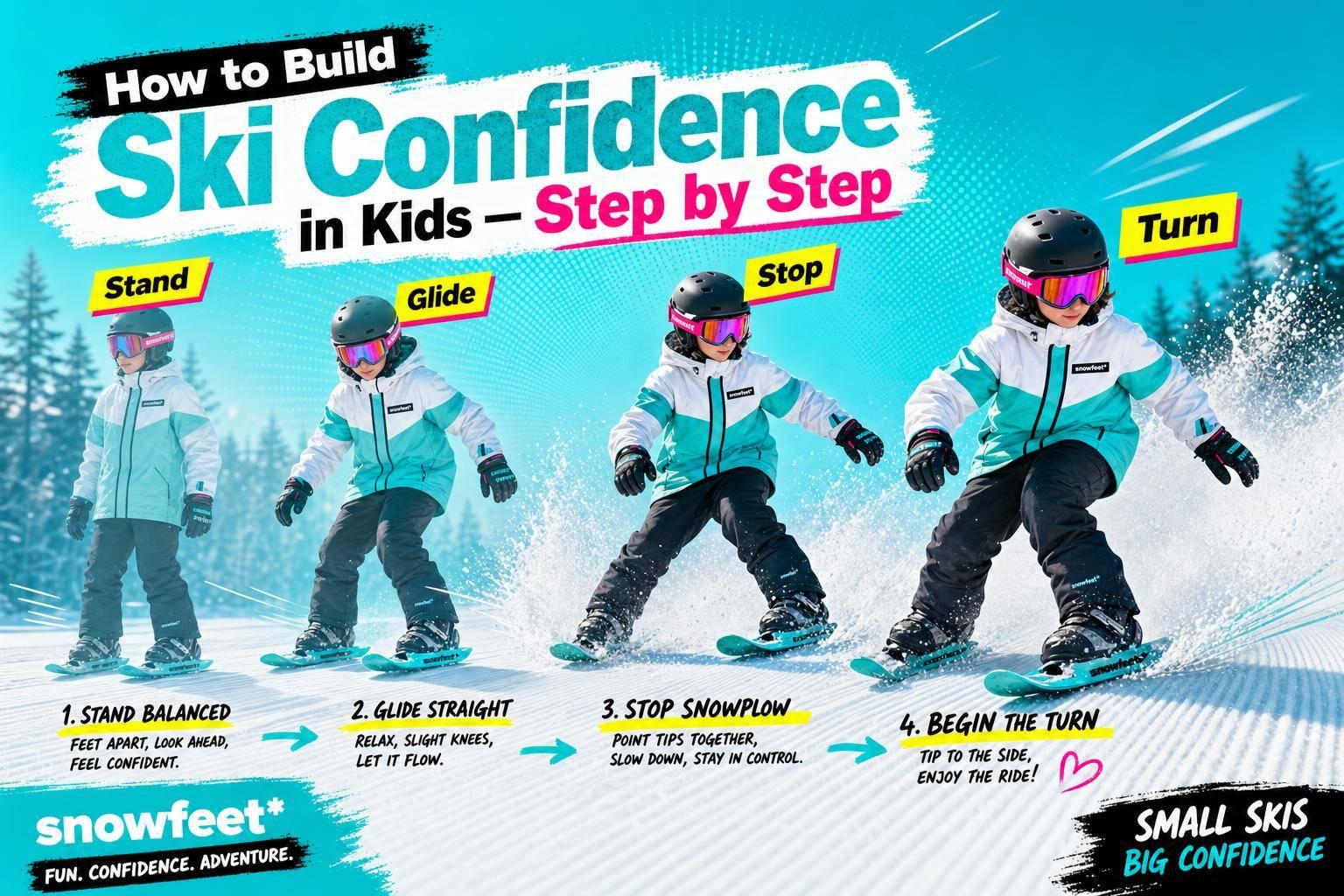
Ask your child to stand with feet about shoulder-width apart and knees a little bent. Simple cues work best: "soft knees" or "a slight squat." Then have them march in place and shuffle forward a few steps. Short Snowfeet* gear makes these first moves less intimidating and easier to repeat. The tips are less likely to cross, and it’s much easier to reset on flat snow than with full-length kids' skis.
Once their balance looks steady, let them try the first straight glide. Point both feet straight downhill, count 1–2–3, and let them slide. Let the flat run-out do the stopping. That’s it. No turning drills. No pressure about form. If they’re grinning and want another lap, you’re in a good spot.
How to help without throwing off their balance
Where you stand matters more than most parents think. Stay beside your child and a bit downhill. Don’t stand in front and pull their hands. Don’t stand behind and push their back either. If you need to help, hold the forearm, elbow, or side of the jacket. Avoid lifting under the arms, since that can pull their weight backward and make balance harder.
The short length of Snowfeet* gear helps a lot here. You don’t have long ski tails getting in the way, and you can walk close without everything turning into a yard sale on snow. Keep your own knees bent so you can react if they wobble, and match their pace instead of trying to steer them.
Keep stopping simple and end the session early
After a few easy glides, teach only the most basic way to slow down. For MINI KIDS and Mini Ski Skates, skip the wedge on day one. Pick slopes that flatten out on their own so your child can coast to a stop. Save wedge practice for kids who are already at ease on Skiblades.
Keep the first session to 30–45 minutes on snow, breaks included. Watch for early signs that it’s time to stop:
- More small falls
- Slower reactions
Finish with one easy, successful slide instead of the hardest run of the day. Then head inside for a warm drink. Praise one clear win, like steady balance on the last slide. Focus on effort and fun, not performance.
Build confidence and avoid the mistakes that ruin day one
After that first easy session, don’t jump to more speed. Go for more comfort and control instead.
A clear path from MINI KIDS to Skiblades

Move up only when your child can glide, stop, and stand back up with confidence.
Stick with the same low-pressure approach from day one. That means moving up only after several good short sessions. Start with Snowfeet* MINI KIDS or Mini Ski Skates, then move to Skiskates and Skiblades as control gets better. Each step adds more glide without the bulk of full-length skis. Let your child set the pace. Not the calendar.
Once the gear path makes sense, the next step is simple: don’t let bad conditions wipe out a good start.
Common mistakes parents should avoid
The biggest mistakes are steep terrain, long sessions, and too much instruction. That stuff can turn a fun day into a rough one, fast.
- Avoid steep terrain and crowded runs. A nervous child on a busy slope can lose confidence in a hurry.
- Avoid long sessions. Stop while your child is still smiling and asking for one more run.
- Avoid too much coaching. Short cues and simple games beat technical corrections every time.
Portable Snowfeet* gear makes short practice sessions easier, so families can build confidence little by little over several outings instead of putting all the pressure on one resort day.
Keep the day short, easy, and positive, and your kid will want to go again.
Conclusion: Short, playful, and low-pressure is the way to go
The families who have the best first days usually aren’t the ones with the biggest plan. They’re the ones who keep it simple. Lightweight Snowfeet* gear, a gentle hill, a warm drink ready to go, and zero pressure to "make progress" is enough.
Move through the gear stages only when your child shows steady control and wants more. Not because some schedule says it’s time. One small win and a fun day on snow goes a long way :)
"The kids had a blast with these. Everyone was asking where they got them." - MindySue
FAQs
How do I know if my child is ready to start skiing?
It’s not so much about a set age. It’s more about whether your child feels okay with basic balance and movement.
A good sign? They can spend 15 to 20 minutes walking indoors or out in the backyard in snow boots or Snowfeet gear without getting frustrated.
You can also watch how they handle light, playful practice. If they seem happy doing simple moves like:
- squats
- gliding on flat ground
that’s usually a good point to try a beginner-friendly slope.
The big thing here is comfort. If it feels fun and low-pressure, you’re on the right track :)
Which Snowfeet* option should I choose for my child’s age and balance level?
Choose based on your child’s age, balance, and progress:
- Ages 3–8: 15-inch (38 cm) Snowfeet MINI KIDS*. These are light, simple to use, and work with regular winter boots, which makes them a nice first step.
- As confidence grows: 20-inch (50 cm) Snowfeet PRO*. They give your child more stability without making things feel too big too soon.
- Ages 6–10, or for more terrain: 26-inch (65 cm) Skiblades. These offer a solid mix of control and performance for kids who are ready for a bit more.
What should I do if my child gets scared or frustrated on day one?
If your child feels scared or frustrated, that’s normal. First-day nerves happen to almost every kid. Keep each session short, focus on balance, and let them go at their own speed.
Big, clunky ski gear can feel like too much on day one. That’s why lightweight, compact gear like Snowfeet MINI KIDS can help. It’s easier for small hands and feet to manage, which can help kids feel more in control and more sure of themselves.
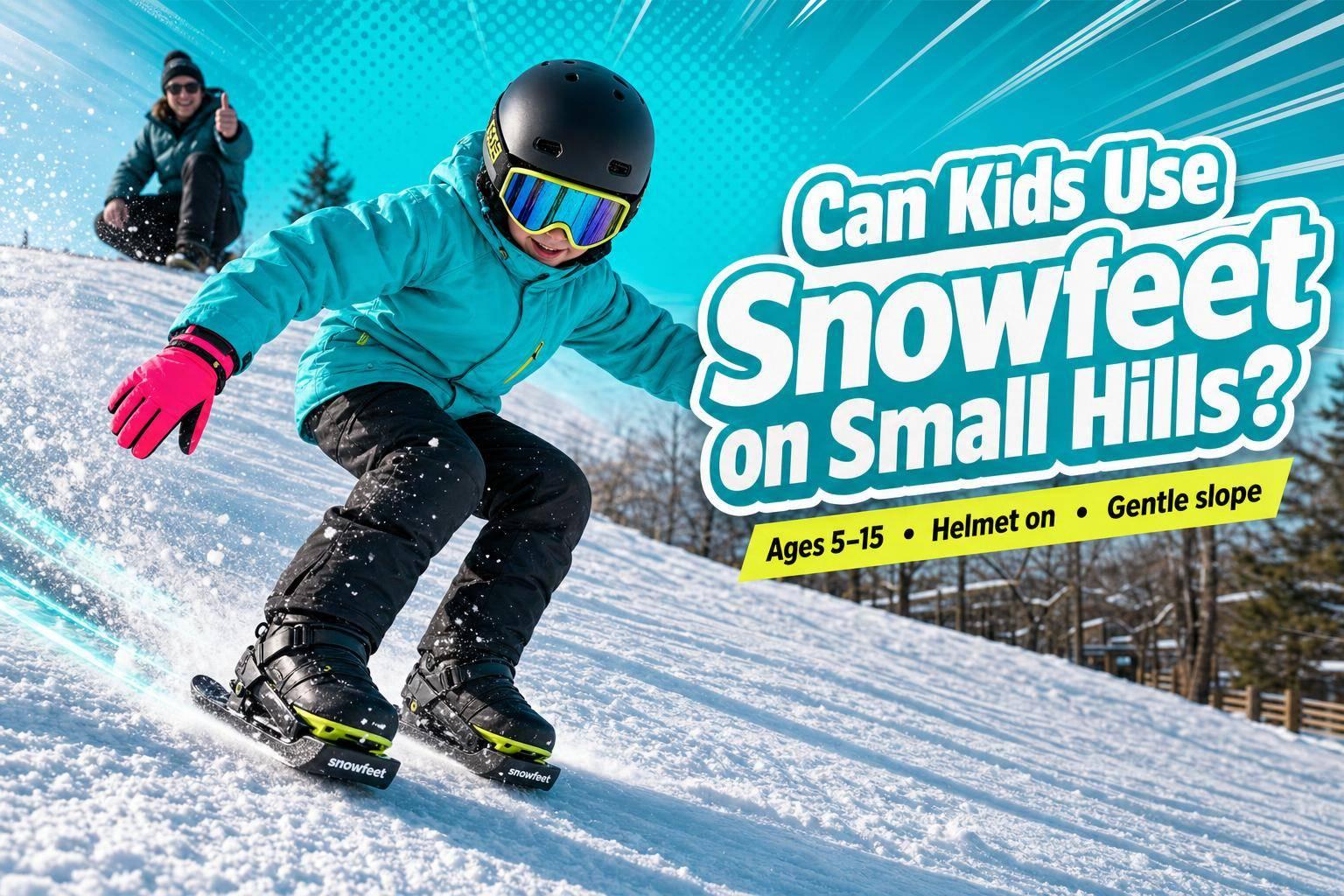











コメントを残す
このサイトはhCaptchaによって保護されており、hCaptchaプライバシーポリシーおよび利用規約が適用されます。