



















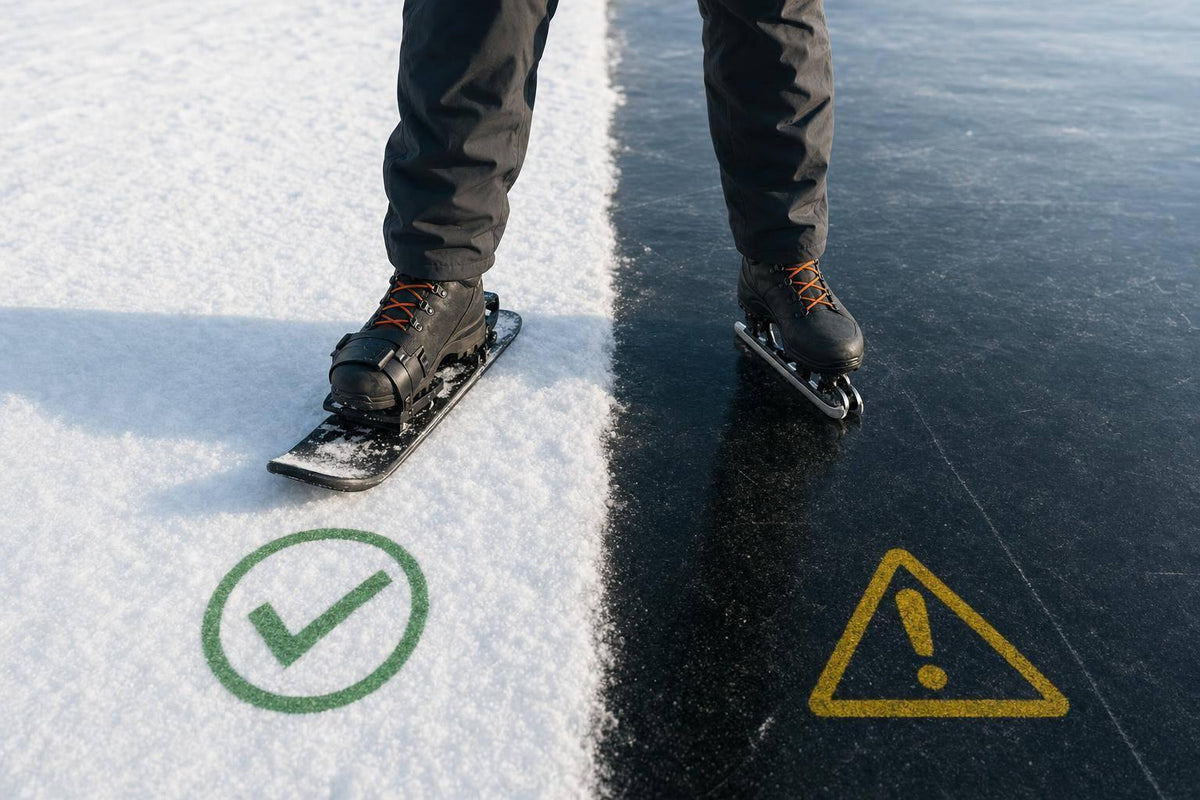
For most people, I’d start on snow. If you’re new, Snowfeet* Skiskates 44 cm are often the simpler first step because snow gives you more grip, more places to ride, and softer falls than ice.
Here’s the short version:
- Pick Skiskates if you have access to ski slopes, local snowy hills, or groomed runs
- Pick Icefeet if you already skate and have safe, reliable ice
- Snow is easier for most first-timers
- Ice needs safety checks - many public guidelines call for at least 4 inches of clear, solid ice
- Skiskates travel better - at about 44 cm / 17.3 in long, they fit in a backpack
A big reason this matters: U.S. ski areas see tens of millions of visits each year, while skate-ready natural ice is hit-or-miss. So if you want more ride days and less hassle, snow usually wins.
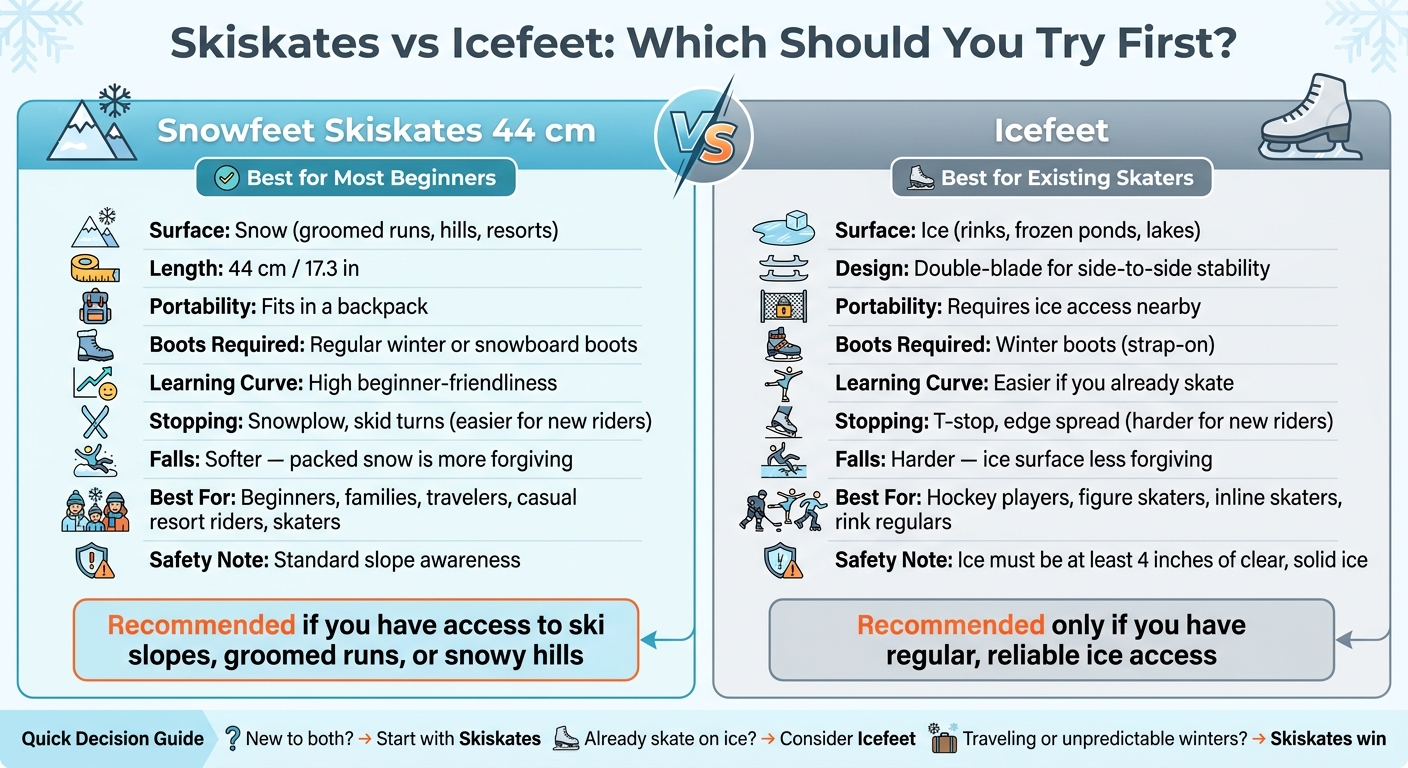
Skiskates vs Icefeet: Which Should You Try First?
Snowfeet* & Skiskates Complete Guide | All you need to know about Skiskating
Quick Comparison
| Category | Snowfeet* Skiskates 44 cm | Icefeet |
|---|---|---|
| Surface | Snow | Ice |
| Best for | Beginners, casual riders, travelers | Skaters with steady ice access |
| Feel | Short-ski meets skate | Glide-heavy, skate-like |
| Learning | Easier for most people | Easier if you already skate |
| Stopping | Simpler on snow | Harder for new riders |
| Access | Resorts, hills, groomed runs | Rinks, ponds, frozen lakes |
| Safety note | Falls are often less harsh | Ice must be thick enough |
If I had to give one plain answer, it’s this: start on snow unless ice is the place you already spend your winter time.
Skiskates vs Icefeet: Surface, Feel, and Learning Curve
Snowfeet* Skiskates 44 cm on Groomed Snow
Snowfeet* Skiskates are 44 cm long, or about 17 inches, and they come with metal edges that bite into packed snow. That edge hold makes them feel closer to skating than full-on skiing. On a groomed resort run or a firm local hill, you can link quick, short turns just by shifting your weight side to side. If you’ve ever used inline skates or hockey skates, the motion will feel pretty familiar.
They do best on groomed runs, hardpack, and small park features. Deep powder is a different story. Once the snow gets soft and deep, control drops off. That bit of friction on snow also helps new riders a lot. You’re not sliding all over the place from the first second, which is nice :)
Icefeet on Frozen Lakes, Ponds, and Outdoor Rinks
Icefeet make more sense if your winter setup is rink-first, not hill-first.
They strap over winter boots and use a double-blade design. That gives beginners more side-to-side stability than a single-blade skate. On smooth, solid ice, like a maintained outdoor rink or a trusted pond, the glide feels easy. One small push and off you go. That’s a big part of the fun.
The catch is access and safety. Natural ice can be hard to judge, and most public guidelines recommend at least 4 inches of clear, solid ice before skating.
Which One Is Easier to Learn First
If you have no skating background, Skiskates on a mellow groomed slope are usually easier to learn on. Snow friction helps slow you down, and the platform under your feet feels more stable than a blade on ice. You can shuffle, glide, and make small turns without that extra-slippery feel that throws off a lot of first-time skaters.
Here’s the plain-English version for a first session:
| Factor | Snowfeet* Skiskates 44 cm | Icefeet |
|---|---|---|
| Best surface | Groomed runs, packed hills, firm snow | Solid lakes, ponds, outdoor rinks |
| Riding feel | Skate-like, playful, medium speed | Smooth glide, low friction, faster feel |
| Balance demands | More forgiving; wider platform on snow | More exact; easier if you already skate |
| Speed control | Snow friction + slope angle; builds bit by bit | Depends more on technique and edge use |
| Turning | Fast edge-to-edge; feels natural for skaters | Curved, blade-based; takes skating skill |
| Stopping | Snowplow, skid turns, small hockey stop | T-stop, edge spread; tougher for new riders |
| Beginner friendliness | High for most casual riders | Better if you already skate |
So, hockey and figure skaters usually click with Icefeet faster. Most casual riders, though, tend to get the hang of Skiskates sooner.
sbb-itb-17ade95
Who Should Start on Snow and Who Should Start on Ice
For most riders, this choice comes down to two things: where you can ride and how you like to move. In most cases, snow is the easier first surface. That matters even more when you line the product up with your background and what your winter looks like.
Beginners, Families, and Casual Resort Riders
Snowfeet* Skiskates 44 cm are the easier place to start. Short skis mean smaller movements and fewer crossed tips, which helps new riders get comfortable faster. That can make those first runs feel a lot less awkward.
There’s also a simple travel perk. They fit in a backpack, so you don’t need a roof rack or a ski bag. For casual riders, that kind of low-fuss setup often matters more than extra glide.
Hockey Players, Figure Skaters, and Inline Skaters
This group actually has a strong case for starting on snow, not ice.
Why? Because Skiskates feel a lot like skating. You’re still working with quick edge changes, short turns, and side-to-side balance. If you’ve spent time on hockey skates, figure skates, or inline skates, a lot of that muscle memory carries over to groomed snow. So a resort run can feel like a pretty natural first step.
If ice access is easy, Icefeet can make sense. But if you want the winter option that works in more places, Snowfeet* take it.
Travelers and Riders Dealing with Changing Winter Conditions
Snowfeet* Skiskates fit in a backpack and work on most groomed hills, which means more trips can turn into ride days. Icefeet depend on ice, and that’s the catch. You need frozen water that’s thick enough and actually available where you are.
When winter conditions shift from year to year, snow usually gives you more ride days each season. For travelers, Snowfeet* Skiskates are the more flexible first purchase.
| Rider Profile | Likely Winter Access | Recommended First Product |
|---|---|---|
| Beginner or family | Ski resorts, tubing hills, local snowy slopes | Snowfeet* Skiskates 44 cm |
| Hockey / figure / inline skater | Rinks + occasional resort trips | Snowfeet* Skiskates 44 cm |
| Ice specialist (rink or lake regular) | Reliable outdoor rinks or consistently frozen lakes | Icefeet |
So, for most casual riders, Snowfeet* are the default pick. Icefeet make the most sense when ice is your main winter surface. That practical advantage is also a big reason Snowfeet* often beat long skis for casual riders.
Why Snowfeet* Skiskates Beat Long Skis for Most Casual Riders
Snowfeet* Skiskates vs Long Skis and Snowboards
Once you decide to get on snow, the next step is simple: do you want full-size gear, or do you want the easiest setup for casual laps?
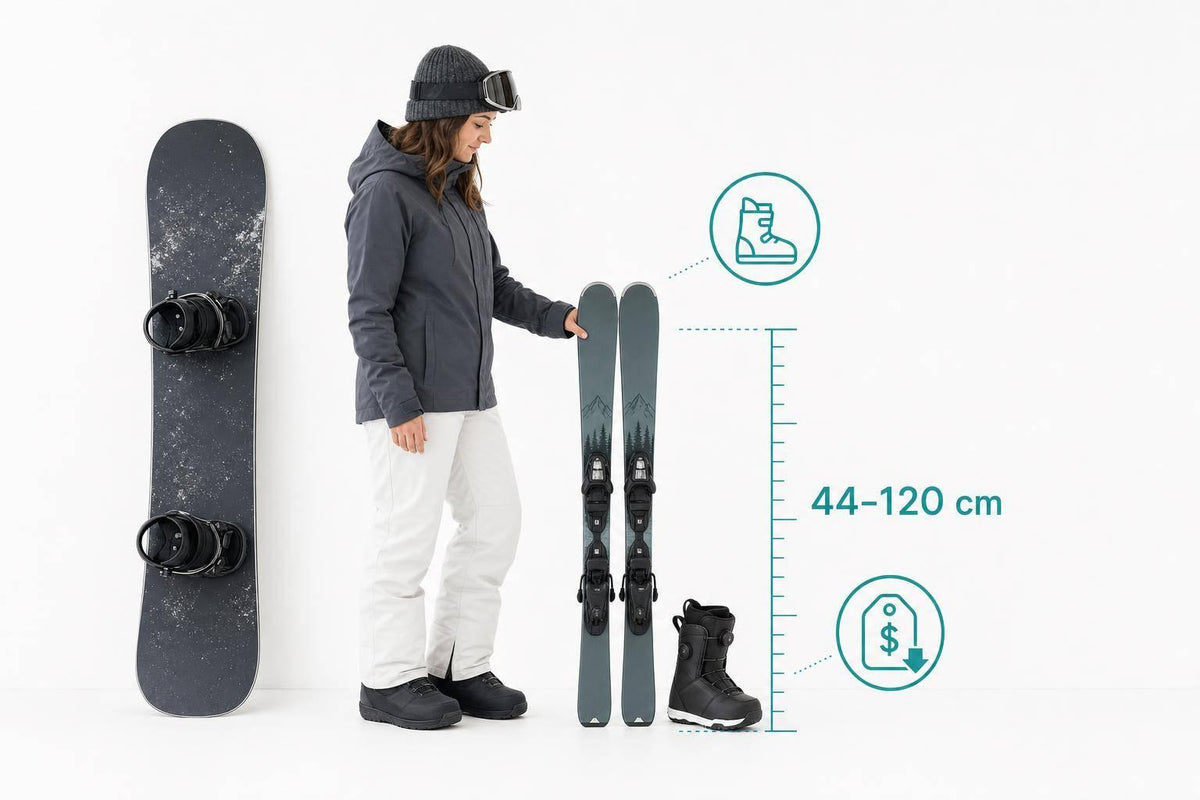
Long skis and snowboards do better at speed, in powder, and on big-mountain terrain. Their longer edges and larger surface area give them more stability and float than short skis can offer in those conditions.
But for most casual riders, that’s not the day they’re having.
Most people are heading to a local hill on a Saturday afternoon. Maybe they want a few runs before lunch. Maybe they’re just trying skiing for the first time and don’t want to go all-in on a full kit. For that kind of day, Snowfeet Skiskates 44 cm* are a much easier fit. They slip into a backpack, and unlike long skis, they let you skip ski boots and avoid rental lines altogether.
Snowfeet* Skiskates vs Other Short-Ski Options
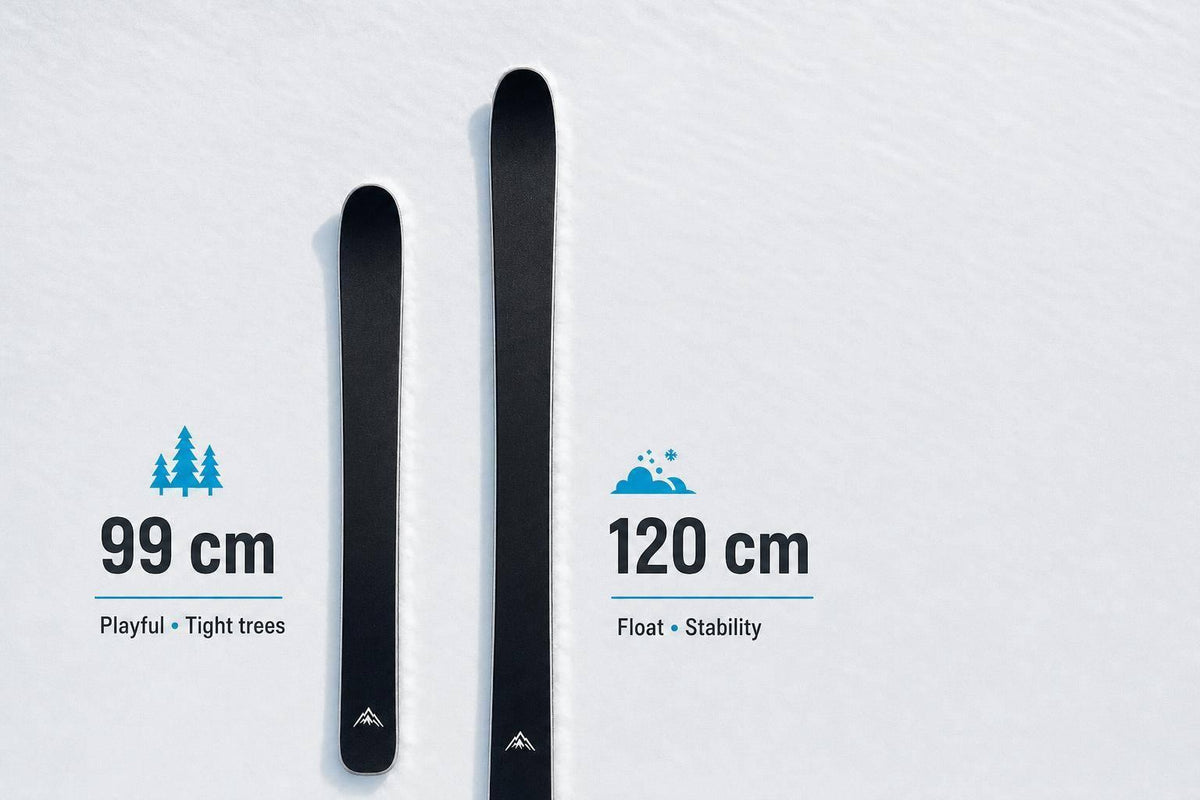
Older short-ski options like BigFoot, Figl, and snowblades are easier to turn than long skis. That said, many of them still depend on ski boots, which can be a pain for casual riders.
Snowfeet Skiskates work with regular winter boots or snowboard boots*, and that removes one of the biggest hassles right away.
That’s the big draw here. Less gear. Less setup. More time on snow. Kind of like grabbing a sled from the garage instead of loading half the house into the car :)
| Product Type | Approx. Length | Portability | Boots Required | Best Fit |
|---|---|---|---|---|
| Snowfeet Skiskates* | 17.3 in (44 cm) | Very high (backpack) | Regular winter or snowboard boots | Casual riders, travelers, skaters |
| Long Skis (Alpine) | 59–75 in (150–190 cm) | Low (car racks, ski bags) | Ski boots | Performance-focused resort skiers |
| Snowboards | 55–65 in (140–165 cm) | Low–medium | Snowboard boots | Park, powder, freeride riders |
| BigFoot / Figl / Snowblades | 20–39 in (50–100 cm) | Medium | Usually ski boots; some Figl-style models use universal bindings | Skiers who prioritize ski-boot setups |
Conclusion: Start on Snow Unless Ice Access Is Your Main Goal
After looking at feel and learning curve, the main thing comes down to this: where can you ride most often?
If your winter usually means resort laps, local hills, or quick snowy outings, Snowfeet* Skiskates 44 cm are the better first pick. They fit in a backpack, strap onto boots you already own, and work on groomed runs, beginner slopes, and local parks across much of the U.S. That makes getting started a whole lot easier.
There’s also the crash factor. Falling on packed snow is usually more forgiving than slamming onto hard ice. And when you’re still dialing in your balance, that matters. A lot.
Choose Icefeet first only if you have regular, reliable ice access - like a well-kept outdoor rink you visit every week or a lake that freezes well and stays rideable. If you don’t already skate often, start on snow. If you already feel at home on ice skates or aggressive inline skates and have dependable ice, Icefeet can be a fun first choice.
Best First Pick by Rider Style
That breaks down pretty simply by rider type.
| Your Riding Style | Best First Pick |
|---|---|
| Casual resort rider - beginner slopes, groomed runs, occasional ski trip | Snowfeet* Skiskates 44 cm |
| Ice-focused rider - outdoor rinks, frozen lakes, skating background | Icefeet |
For most U.S. riders, Snowfeet* Skiskates 44 cm are the simpler first step and the one that works in more places. Choose Icefeet only when reliable ice is your main winter surface.
FAQs
What boots work best with Skiskates?
For Skiskates 44 cm, use ski boots or snowboard boots. Regular winter boots are not compatible and shouldn’t be used. They don’t have the support you need for edge control and stability.
For most riders, snowboard boots are the best pick. They give you good support, feel better on your feet, and are much easier to walk in than alpine ski boots. Ski boots give you the most precise edge control, which helps with speed and carving.
Can I use Skiskates on small local hills?
Yes - Skiskates work well on small local hills. They’re a simple, portable option when you don’t want to haul a full ski setup around.
Because they fit in a backpack, they’re great for short sessions at:
- sledding hills
- neighborhood slopes
- small ski areas
That’s a big part of the appeal. You can grab them, head out, and get a few runs in without turning it into a whole production :)
Pair them with waterproof winter boots that have good ankle support. And for the best ride, stick to groomed or packed snow instead of deep powder or very steep terrain.
Are Icefeet safe on natural ice?
Yes, but only on smooth, clean natural ice like a backyard rink, a small rink, or a flat frozen pond with clear ice.
Icefeet work best for casual skating now and then on even surfaces. Once the ice gets rough, slushy, snowy, or bumpy, they can feel shaky and less safe. That’s where their limits show up fast.
So, if the ice looks clean and flat, you’re probably good to go. If it looks messy or uneven, I’d skip it :)











Lascia un commento
Questo sito è protetto da hCaptcha e applica le Norme sulla privacy e i Termini di servizio di hCaptcha.